
Joined December 2010
- Tweets 264
- Following 727
- Followers 125
- Likes 144
62 Photos and videos





Pinned Tweet

21 Nov 2025
Whenever feel impetuous, ask yourself, “What are you really doing?”
2
3
1,523
Jun 12
Again
21 Nov 2025

Whenever feel impetuous, ask yourself, “What are you really doing?”
21
Jun 11
That's remind me of the classical architecture ReAct. But still something different I think.
ReAct is a pattern for how a single agent reasons during one task: it alternates between thinking, taking an action, and observing the result inside a single conversation. It mainly lives inside the context window, and when the session ends, most of its memory disappears; the same agent that proposes a solution also decides when the task is done, which is like grading its own exam.
Loop engineering, in contrast, is about designing a long‑running system that keeps finding new work, assigning it to agents, checking the results, writing progress to external state, and repeating on a schedule. It operates at the level of your whole workflow or lifecycle (for example, daily CI triage and continuous bug fixing), is driven by an external orchestrator with automations and tools, and relies on persistent external memory such as skills files and logs so each run can continue where the last one stopped, often with separate maker and checker agents and clear termination conditions.
So the answer is to replace manual prompting with a self-running loop built from 5 primitives plus external state.
1. Automations
2. Worktrees
3. Skills
4. Plugins/MCP
5. Sub-agents
The loop runs continuously: automation discovers → skill triages → worktree isolates → sub-agent implements → sub-agent verifies → connector ships (PR, ticket update) → state logs unresolved items → next run picks up where it left off.
Thanks @addyosmani for this great article. Some engineering ideas are pragmatic and useful for me.

76
Jun 8
很优质的文章 非常好的 insight

69
Neo retweeted

May 31
A new and possibly controversial perspective:
In this video, I explain the sense in which generative AI trained by supervised learning is incapable of making novel discoveries.
youtu.be/K5LAFEjTlBA
The text of the speech:
AI Creativity and Discovery
Good day ladies and gentlemen. I regret that I am unable to be with you all today to engage in a back-and-forth discussion, but I am nevertheless pleased to be able to share with you, via this recording, some high-level thoughts about the current and future state of artificial intelligence, and in particular about AI’s relationship to science and mathematics, which is, as I understand it, the central focus of this meeting and of the SAIR Foundation.
I would like to start with an old joke; I am sure you have heard it before. It is the one about the researcher whose work is being evaluated, and the review comes back, and says “This work is both novel and good. Unfortunately, the parts that are good are not novel, and the parts that are novel are not good.”
My first point about AI is that this assessment applies exactly to large parts of AI as we know it today. Not all of today’s AI, but a large part of it. Pretty much all of what we mean by “Generative AI”---which includes large language models, and the images and video models, and even the new methods for learning world models. All of these AIs take large numbers of examples and produce a “model” which behaves similar to the examples, that is, which generates text like people, or images like artists or nature, and videos like we find on the internet. Don’t get me wrong, Generative AI can be extremely useful. No doubt about that. But the assessment of the joke still applies. These systems can produce output that is both novel and good, but not at the same time.
In many ways this is just absolutely not a problem. When we ask an AI for an answer from the internet, or to summarize a document, we don’t want it to be novel. We are happy if the quality of the answer, the goodness, comes from the source material—from the people who wrote the document or the articles on the internet. If the AI’s answer is novel it means it is going beyond the source material, adding something beyond it. This is what we call “hallucinations”. In most cases, we don’t like it when the AI makes something up, when it adds something novel.
One exception, of course, is when we are looking not for facts or reality, but for fiction and entertainment. We might ask for a bedtime story for a child, or an image based on existing images on the internet but which is nevertheless different and distinct from them. In these cases, it is never easy for us to know how creative the AI is actually being, as we do not know how close the AI’s story, poem, or image is to the source material. In a real practical sense we can not know this because the internet is too big, the possible sources that the AI may draw upon are too numerous.
When we ask for a fiction or novelty, the AI can give it to us because its processing is in part stochastic. Every decision can go multiple ways and will go different ways and produce a different trajectory every time. The trajectory can be random—and thus novel—or it can be based on the training data—and thus “good” because the training data is good, sourced from people or reality. Thus, the trajectory is either novel or good—based on randomness or based on data—but never both at the same time.
Really, I think it is okay if the output of Generative AI is never good and novel at the same time. For the researcher in the joke this is a devastating criticism, but for most things it is not, and for Generative AI it is not. Generative AI is meant to be a mimic. This is what supervised learning is for. Generative AI can be extremely useful, even when it just mimics, if it is faster, or cheaper, or smaller, or more customizable, or more copy-able, than the thing being mimicked. It is okay if Generative AI cannot be both novel and good at the same time. It is still a transformative technology.
But it is a limitation. And remember we are here to use AI for science and mathematics, and for these areas the assessment of the reviewer in the joke is devastating. For these areas we need true creativity and discovery. Generative AI—or Mimicking AI—will never get where us there. For these we need something more, and indeed we have something more in other parts of AI. We have many AI systems which can give us more. We have AlphaGo with its world-changing move 37, or AlphaZero with its brilliant original chess-playing style. We have GT-Sophy that drives simulated racecars better than any human. We have AlphaFold and AlphaProof and Claude-Code, which have brought true advances in science, mathematics, and programming. We have RL-Lyft which optimizes the assignment of cars to passengers in the ride-hailing business. All these systems have found things that are both novel and good. And, truth be told, some language models have been augmented in ways that make them more than Generative AI based on supervised learning.
All these systems have some additional features that make them capable of true creativity and true discovery. It is important for us to recognize what this is—and that it is not present in ordinary, garden-variety Generative AI. It is something that can not come from just supervised learning, from learning from examples. What is it? Well, it is a simple thing, a commonsense thing. It is not new. We have many names for it, but unfortunately none of them are very good names. I will call it Discovery. Basically, Discovery is just the idea of trying many things and seeing which of them work, then keeping those that worked the best. Evolution by natural selection works this way. The scientific method works this way. And just ordinary life and learning works this way. We try things and remember what works. What could be more obvious? In this behavioral case, psychology has two names for it— “instrumental learning” and “operant conditioning”—and in machine learning it is what we mean by “reinforcement learning”. We also see the idea of Discovery in planning and combinatorial search—anything that involves the idea of “generate and test”.
The essence of Discovery is to combine three steps:
1. Variation,
2. Evaluation, and
3. Selective retention.
Of course, I am not the first to say this. I am not the first to point out that this combination of steps is key to science, to evolution by natural selection, and to animal behavior. I think particularly of papers by Donald Campbell, by Daniel Dennett, and by Gary Cziko. What is new in my remarks is to directly relate the idea of Discovery to modern AI to help us see that it is not present in supervised learning or Generative AI—in particular, that Discovery is not present in backpropagation or gradient descent.
Let me say explicitly what is missing from Generative AI. As we have remarked, these systems do have a stochastic aspect, so they do generate a variety of trajectories and behavior. What is missing is the Evaluation step. The generator was pre-trained by supervised learning, leaving no way at runtime to Evaluate what it generates. And of course without Evaluation there can be no Selective retention, and thus no Discovery. The variation can bring novelty, but without evaluation there is no Discovery, and arguably, no creativity. That is, I would say that creativity requires that the new things generated be Evaluated. Without evaluation, and retention of the best, there is nothing created. The novelty flickers into existence but, if its value is unrecognized, it flickers away and is lost.
In many cases, Evaluation is done by people to make a discovery. As when we have Generative AI make many pictures for us, and then we pick the one that we like the best. The human AI system completes the discovery.
In many other cases, the Evaluation comes from a clear objective. Some moves lead to checkmate, some steps lead to a proof, some actions result in high reward, some genotypes make more copies, some theories explain the data better.
Some prefer the Variation step to be called Blind variation, where “blind” here means that it is uninformed, a shot in the dark. It does not need to be completely uninformed; a good scientist does not select theories to test at random. But neither can it be completely informed and determined. There must be some uncertainty about where the answer lies in order for there to be a discovery. In practice, the variation is partly informed and partly blind, but it is the blind part that corresponds to the discovery.
Now let us briefly go all the way to modern deep learning, to the backpropagation algorithm. At first it might seem that backpropagation is incapable of discovery because it is deterministic and thus incapable of variation. But this is not correct. The weight updates of backprop are deterministic, but the weights are initialized to small random values. The random initialization is often downplayed, but in fact it is a necessary form of variation; it must be done properly to get good performance. In backprop this Variation is done once, at network initialization, so its effect is temporary, and later the network may lose its ability to learn. This is the weakness of deep learning that is alleviated with a new algorithm that my group presented in Nature a couple of years ago. Our “continual backpropagation” made one small change: every so often a less-used neuron would be re-initialized to small random weights. This allows the variation to continue and plasticity to be retained.
Although there is much more to be said about Creativity and Discovery, this is the key point: they are more than supervised learning, more than pattern recognition, more than prediction, and more than world modeling. Those things are important, but they alone will not bring us to discovery. Discovery requires Evaluation from a person or from an explicit goal, and only in the latter case will we attain full autonomy.
So that is my call to arms. If we want the full power of AI scientists, then we should share the goals with them so they can create, evaluate, discover, and in these ways fully participate in achieving the goals. Let’s be bold! Let’s fully automate Creativity and Discovery!
105
283
1,686
678,544
Jun 6
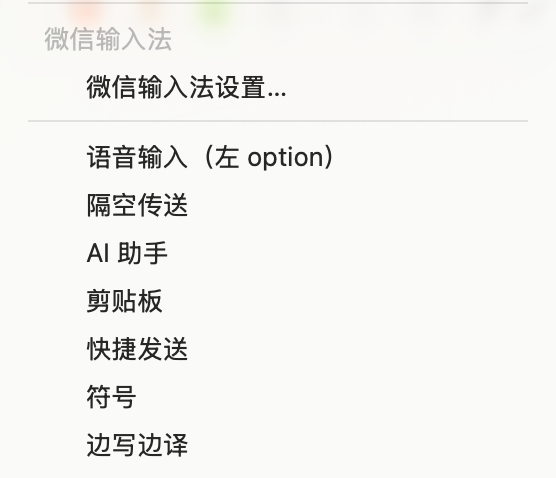
中文语音输入法的竞争到最后一定是微信输入法 winner takes all.
现在微信输入法也越来越好用了,刚刚发现新版本也能做到 AI 自动规整思路,补充内容,在质量差不多的情况下居然还比 Typeless 响应要更快。
当然对我最常用的还是多设备同步粘贴板以及快捷指令输入。我设置的“地址”指令,打出地址两字的时候会自动快捷出现你提前设置好的一长串中文地址,“好评”两字会自动候选你写好的 50 字以上的通用好评,还有“钱包”,“ID” ,“手机号”等等,很大程度上节省了一些场景下重复输入然后逐个检查的心智。
此外移动端 AI 可以自动帮你生成填充的内容。有一次在大众点评写好评的时候,它能直接根据场景帮你生成专属店家的好评内容甚至图片都生成了。
最重要的是隐私,尽管互联网企业难免会收集大量隐私数据,但是比起某家接近疯狂地收集和探测,腾讯明显收敛且克制。
最后,这些功能完全免费,除了私钥场景不要用以外,很难想到其他场景不用微信输入法的理由。尽管前几个月某家出了自己的输入法,各种营销号统一“杀死比赛”、“Typeless已死”一顿 hype,但是实际这么长时间我用的最久的,对我帮助最大的,还是微信输入法。
为什么微信输入法 winner takes all?
以上我说的这些 feature 都可以被复制,各家相互抄总会收敛。但是有些东西是注定无法被取代的。
输入法的本质上还是生态,不可否认人们输入最多的场景就是微信,没有第二个。尽管可能有些人在其他软件比如 飞书 钉钉 office 等软件的输入大于微信,但是比起国内日活堪称恐怖的十亿级别软件,其他软件的百万到刚刚千万的日活基本上可以基本忽略不计。大街小巷,各行各业,不一定用复杂软件,但是他一定不会没有微信。第三方的输入法兼容微信生态注定没有腾讯自己适配权限多,优化好。
如果提到日活,那大部分人可能想到的是 ChatGPT 和豆包等 AI 应用。但仔细分析一下也能得出,在这些平台上直接问 AI,用什么输入法、用什么语音其实都无所谓。用 Typeless 或者用 whisper 语音输入,没有什么输入法层面上的区别。
当然,有人在同类级别的日活上可能会说抖音,但是没有人会在抖音上一直扣字评论,这不是高频场景。或许也有人说,TikTok 在海外也是有巨量日活的,但是一个不可忽视的问题是,我们国内不用系统原生的输入法,是因为苹果以及安卓原生的输入法对中文兼容并不好;但苹果的输入法对英文的兼容和优化是非常好的。
所以又回到那个问题,输入法的本质就是生态,输入法在手机系统层面上的优化,一定没有手机厂商自己编译系统对输入法的优化更好。(比如说一个常见的场景是,当你在 iOS 上用语音输入时,它会先跳转到对应的输入法页面触发,然后再跳转回来开始语音输入。)
如果你想要优化得更好,想要突破手机沙箱的束缚,那你就只能自己编译安卓,自己做操作系统。但是你做的操作系统,各家厂商没有理由使用,因为大家还要云控旧手机的性能参数,为自己下一代手机开售铺路呢 : )。
所以大概率还是得自己凑硬件,磨工艺,然后坚信进入一个高投入低毛利的红海行业里能把苹果三星拉下马,颠覆乔布斯遗产,并且假设所有互联网企业的 app 入口都放弃各自的商业行为,愿意化身成 MCP 等接口被你统一调度,然后你再次改变世界。这一定程度上可能比重做一个微信先替代个一亿日活的日常社交更难。
1
1
828
Jun 5
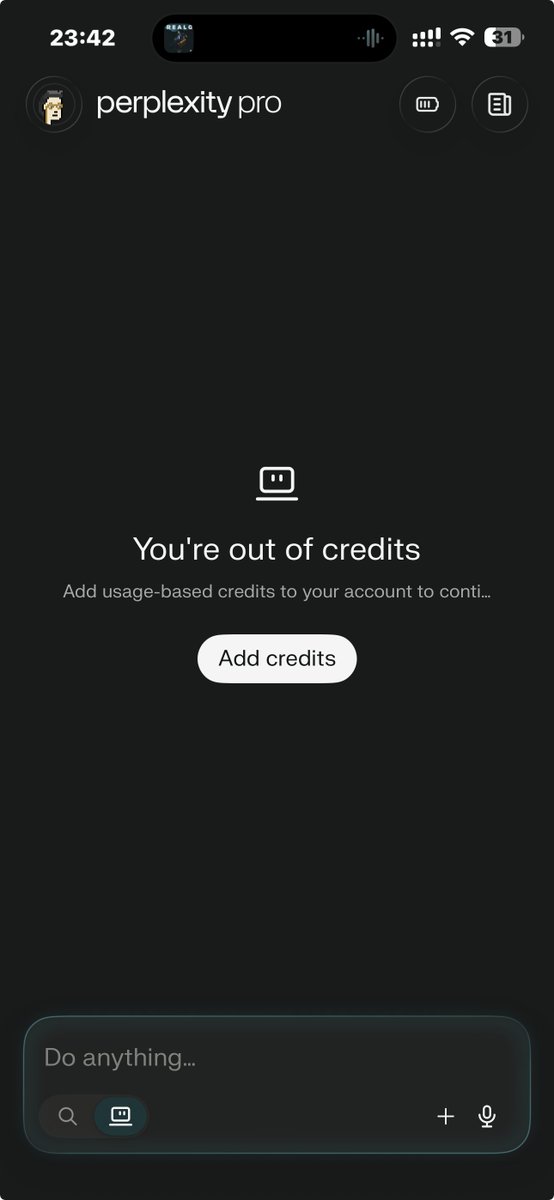
LOL 巧合了,几个月没变的布局,昨天发了推文的一天内,Perplexity 重新调整了 UI 布局。
Jun 4
最近在开发 APP 的时候有一些感受,虽然平时我们对软件界面觉得"理所应当",但是真的只有一张空白画布让你规划每个页面每个功能分别在什么位置,具体怎么设计更符合逻辑,我相信绝大多数人是毫无思路的。
因此我选择观察下市面上大多数 AI 类型的软件都是怎么布局的(市面上的社交类软件已经统一模版了,基本都是类抖音排版以及类小红书排版)。
在观察了 Notion 豆包等一众软件之后,我对它们都不是很满意,里面有大量不常用的页面占用着宝贵的空间,有些又总感觉少了点什么,寻找功能也异常麻烦。
直到我打开一直 bullish 的 @perplexity_ai ,APP 的每个页面,精简美观且实用,功能层叠放置非常合理,你总能精准地找到想要的功能,非常的符合乔布斯所定义的"禅道"。每次回想起 Apple 最终放弃收购 Perplexity 的决定都感到异常可惜。
不得不说,Perplexity 是近年来我认为最符合苹果理念的 AI 产品,我很难找到第二个。
65
Jun 4
最近在开发 APP 的时候有一些感受,虽然平时我们对软件界面觉得"理所应当",但是真的只有一张空白画布让你规划每个页面每个功能分别在什么位置,具体怎么设计更符合逻辑,我相信绝大多数人是毫无思路的。
因此我选择观察下市面上大多数 AI 类型的软件都是怎么布局的(市面上的社交类软件已经统一模版了,基本都是类抖音排版以及类小红书排版)。
在观察了 Notion 豆包等一众软件之后,我对它们都不是很满意,里面有大量不常用的页面占用着宝贵的空间,有些又总感觉少了点什么,寻找功能也异常麻烦。
直到我打开一直 bullish 的 @perplexity_ai ,APP 的每个页面,精简美观且实用,功能层叠放置非常合理,你总能精准地找到想要的功能,非常的符合乔布斯所定义的"禅道"。每次回想起 Apple 最终放弃收购 Perplexity 的决定都感到异常可惜。
不得不说,Perplexity 是近年来我认为最符合苹果理念的 AI 产品,我很难找到第二个。
290
Neo retweeted

2 Feb 2025
Never sell your Bitcoin.
5,057
6,871
60,201
5,934,844
May 28
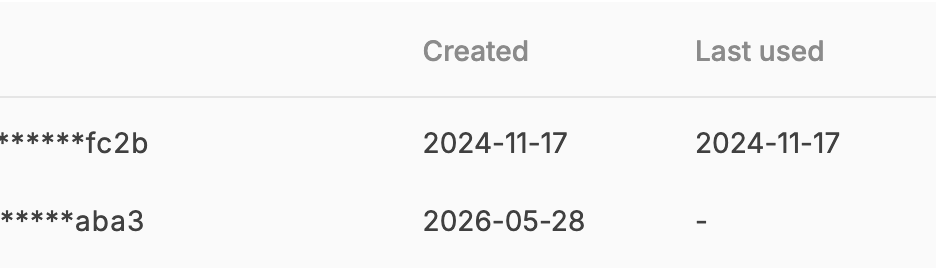
Recently, everyone has been recommending deepseek because it has a high cache rate, good intelligence, and the price has dropped, so I simply recharged a little more.
After logging into the api platform, I discovered that the first time I used deepseek was at the end of 2024. At that time, everyone was still using it for immersive translation because it was large in volume and affordable. At that time, no one knew another story four months later . . .
Still have to do something valuable, I think.
1
137
May 27
PRL back again

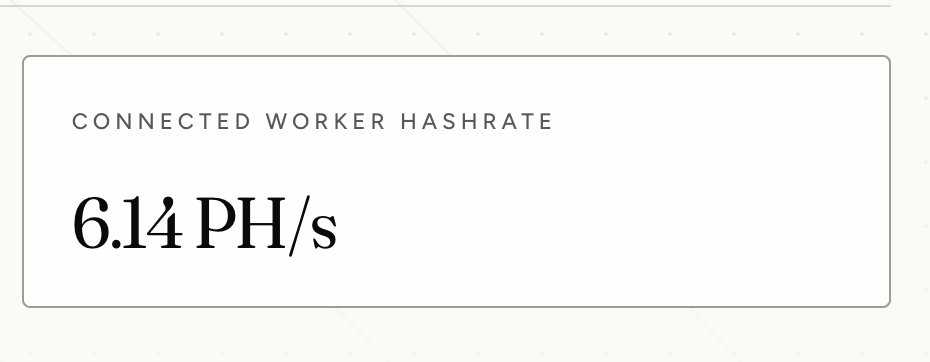
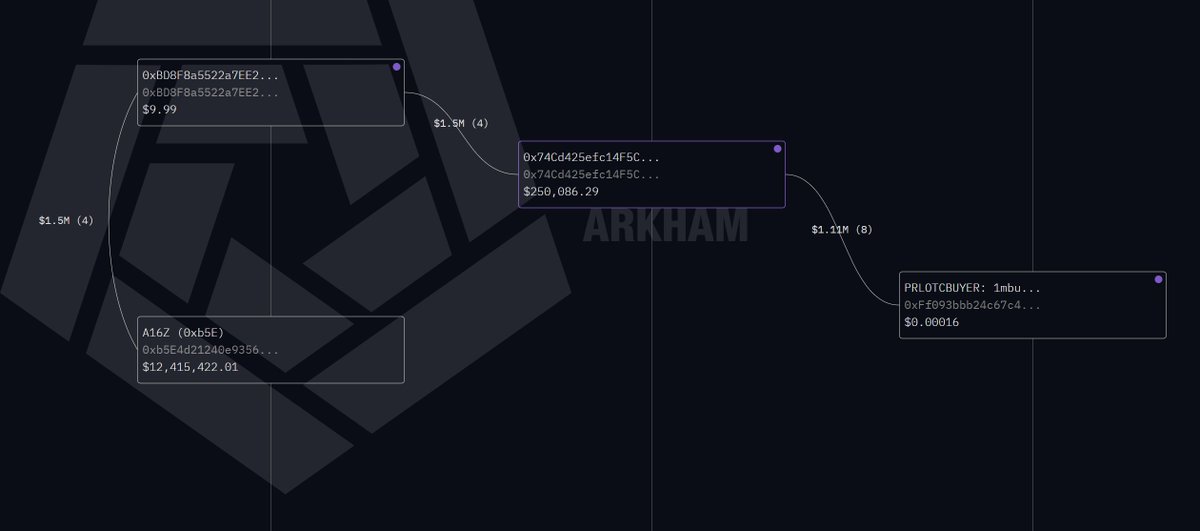
0xFf09, allegedly a wallet funded by 0xb5E (a16z-affiliated wallet), has been slowly accumulating over $1.5M of PRL.
Pearl is seemingly the silent liquid play in the blockchain-enabled computation space, unlike any other.
A list of VCs who have followed @prlnet PRL:
a16zcrypto, Dragonfly, BH Digital, VanEck
USV, Variant, Framework, Delphi, 1kx, CoinFund, 1confirmation, BigBrain, Hypersphere, y2z Ventures, Lattice, GBV Capital, Slow Ventures, BanklessVC, CompoundVC, Caballeros Capital, Amentum Capital, Relayer Capital, and 3rd Street Capital.
1
304
May 26
😢
May 25

It is with profound sadness that we announce the unexpected passing of Nathan Allman, Ondo's founder. Our hearts are with his family and loved ones.
Nate’s brilliance, humility, and drive shaped every part of what Ondo is today. His belief in the power of technology to create a more open, accessible financial system lives on in everything we build. The impact he had on this industry, and on all of us personally, cannot be overstated.
Nate also helped us build a durable organization with experienced leaders across all facets of the business. Ian De Bode, Ondo Finance’s longtime President, will serve as CEO. Ian has been leading our strategy, product, and day-to-day operations for over two years and has the full confidence of the leadership team.
We will continue building what Nate started. That is the most meaningful way we know to honor him.
79
May 24
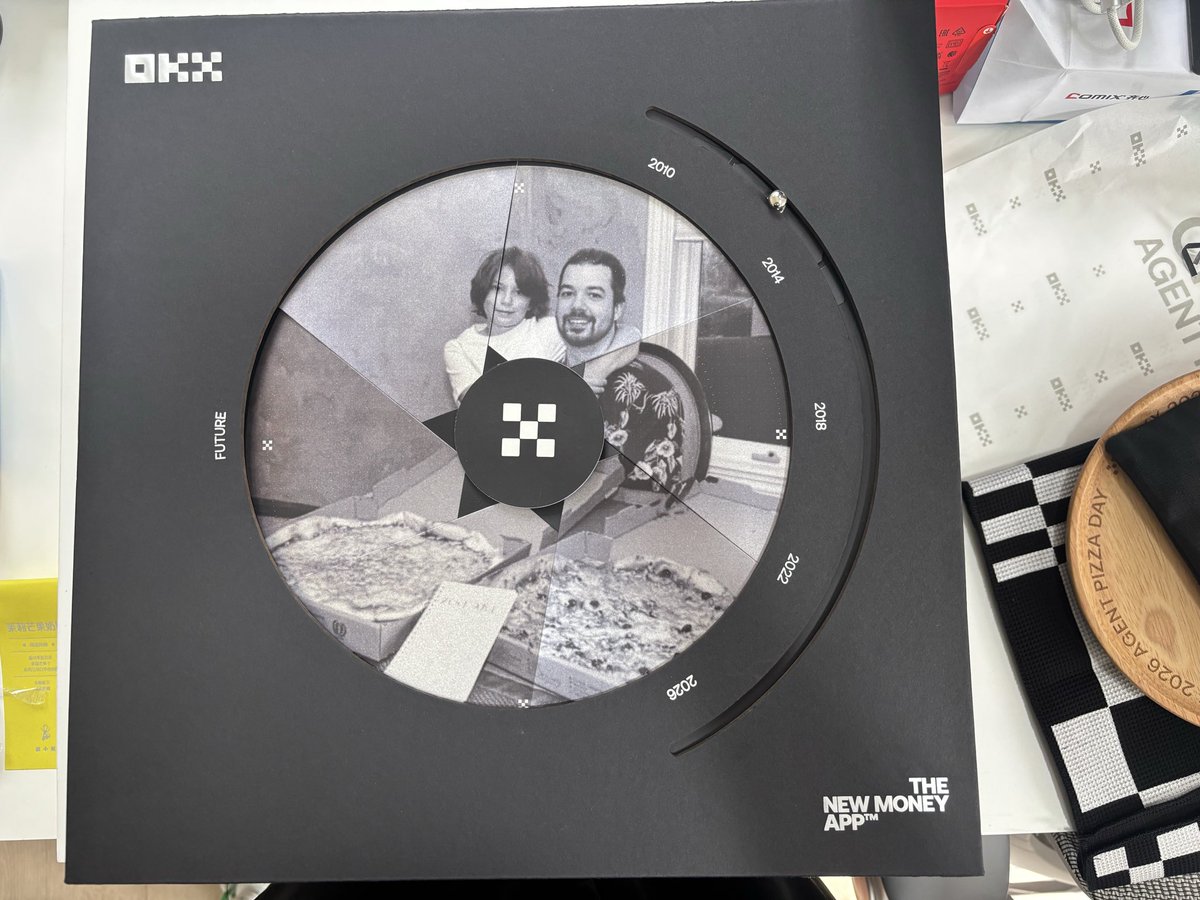
Happy Pizza Day.
Though you might not be happy, and it might not even be Pizza Day.
67