
co-founder and cto @manakoai | core-contributor @webuildscore subnet 44 ⎸ opinions are my own
Joined June 2017
- Tweets 583
- Following 1,097
- Followers 961
- Likes 826
51 Photos and videos



Bittensor is an incentive network.
Many subnets compete on model quality.
They optimise for benchmark scores.
That phase is necessary.
It is not sufficient.
The long-term value in decentralised AI does not come from isolated models.
It comes from networks that solve real-world economic problems.
@manakoai is building production-grade visual infrastructure.
That changes the role of the subnet.
Instead of training a single general-purpose vision model,
the subnet becomes a distributed engine for continuously optimising production elements.
Production vision is not static.
Latency requirements change.
Hardware profiles change.
Vertical constraints change.
That creates a constant optimisation surface.
A centralised team can improve models incrementally.
A decentralised incentive layer can improve them continuously.
That’s the opportunity.
The subnet is not a research playground.
It is a competitive model factory.
Miners compete to produce better production-ready elements.
Validators score based on deployment-relevant metrics — not just academic benchmarks.
The result is compounding optimisation.
As Manako scales deployment across enterprises,
it generates real performance feedback.
That feedback informs scoring.
Scoring drives incentives.
Incentives drive better elements.
The subnet becomes economically aligned with real-world adoption.
That is our difference.
We are aligning emissions with infrastructure value creation.
When Manako becomes the standard execution layer for production vision,
the subnet becomes the optimisation engine underneath it.
That creates structural demand for better elements.
Better elements improve endpoints.
Better endpoints increase adoption.
Adoption increases economic weight.
The loop compounds.
Far beyond speculative value.
It is usage-aligned incentive design.
Infrastructure markets reward standards.
Standards reward optimisation.
Optimisation is what decentralised networks are structurally good at.
The subnet is not a side experiment.
It is a force multiplier.
Centralised orchestration.
Decentralised optimisation.
That combination is difficult to replicate.
As Manako grows, the subnet benefits from:
- Increased demand for production-grade elements
- Continuous benchmarking against real deployments
- Economic weight tied to utility, not hype
In the long term, the subnet becomes the most efficient place to produce production-ready computer vision components.
That is how decentralised networks create durable value.
Manako defines the standard.
The subnet accelerates the optimisation.
Together, they compound.
4
8
75
8,236
Video has unique challenges which force it to operate on the edge in production.
So we turned the subnet into a vision distillation machine, and the numbers are now clear.
Jun 12

That is what we are building, and the miners on our subnet are the engine.
The incentive mechanism turned an open, adversarial competition into a model that beats the giants at its job.
Point the same mechanism at the next task and it does it again.
6
23
1,912
I truly enjoyed telling this story as a way to demonstrate were building at score and manako
Vision AI is not solved.
We are solving it in the open. On Bittensor.
Accurate enough to trust. Fast enough to act. Efficient enough to deploy.
Up to 400x more efficient than a frontier model, equal or better accuracy, small enough to run next to the camera.
@tm0klc's full @proofoftalk keynote below 👇
2
4
36
2,046
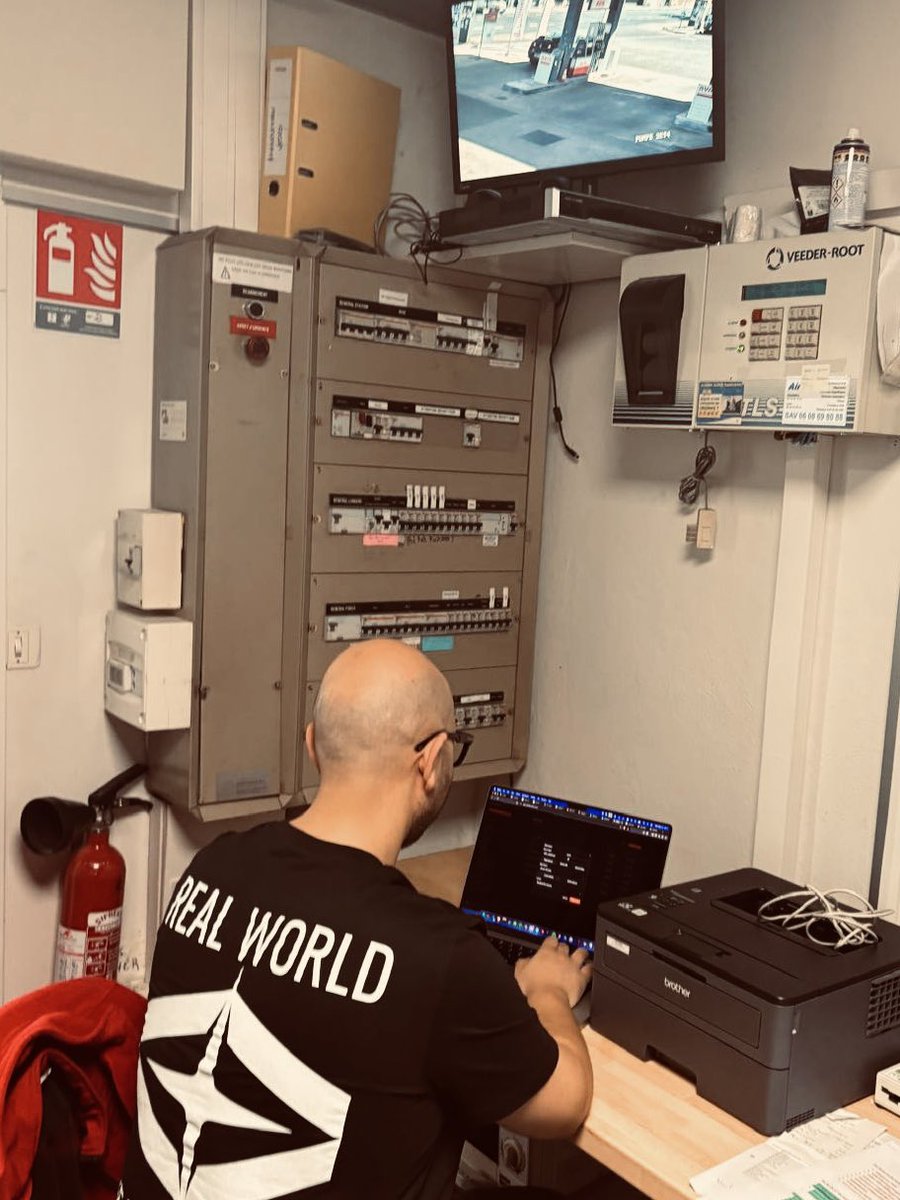
Returning from forwarded engineering @manakoai in Lyon with @MaxScore and @arnod3f
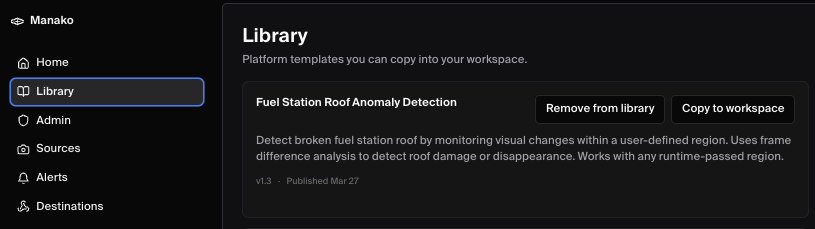
Another subnet 44 vision skill, created by bittensor miners on @webuildscore , deployed and running 24/7 on a mini pc in a petrol station
permissionless intelligence -> trusted operator -> client
This is the pattern which brings @bittensor to the world.
What time to be alive
2
9
58
3,055
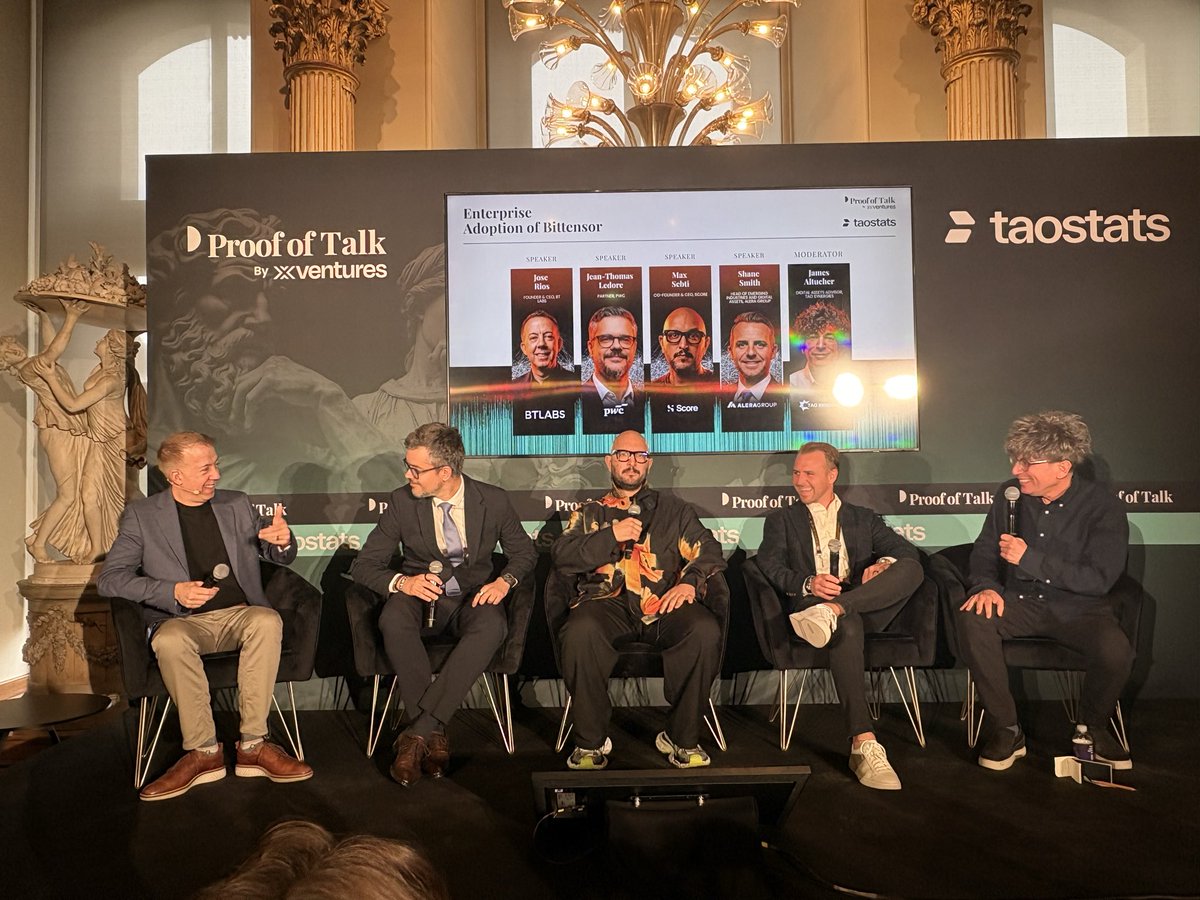
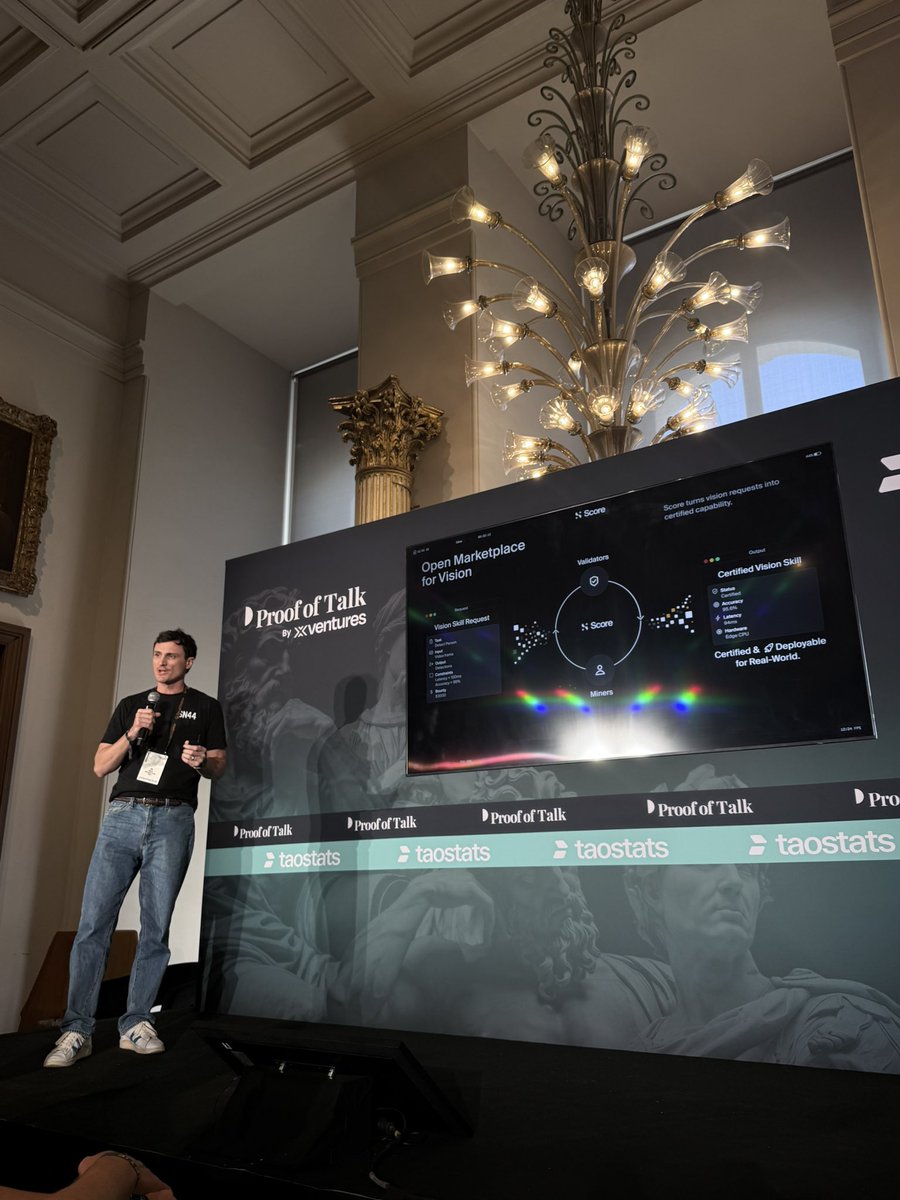
Proof of Talk @proofoftalk was the perfect place to bring the world of @bittensor, finance and crypto up to date with what we’re building on subnet 44
@webuildscore provides an open marketplace for deployable vision capabilities
@manakoai is an enterprise product combining those vision capabilities into vision agents, running locally where the cameras are at.
.@tm0klc live from @proofoftalk
Presenting the current state and the future for sn44
“Open Marketplace for Vision”
1
9
55
1,579
τim retweeted
Today’s announcement is a milestone for our ecosystem.
To match it, we’re locking $1M in perpetual conviction today.
We’re here for the long game.

Manako turns the camera infrastructure organisations already have into real-time understanding of their operations, no new hardware or specialist AI expertise required.
Today we’re announcing that TaoWeave (@oblong_inc) (Nasdaq: TWAV) has invested in Manako and partnered with us on North American commercialisation, accelerating our expansion into the world’s largest market for AI adoption powered by sn44 (@webuildscore) on Bittensor.
Link to PR in first comment 👇
9
28
201
14,034

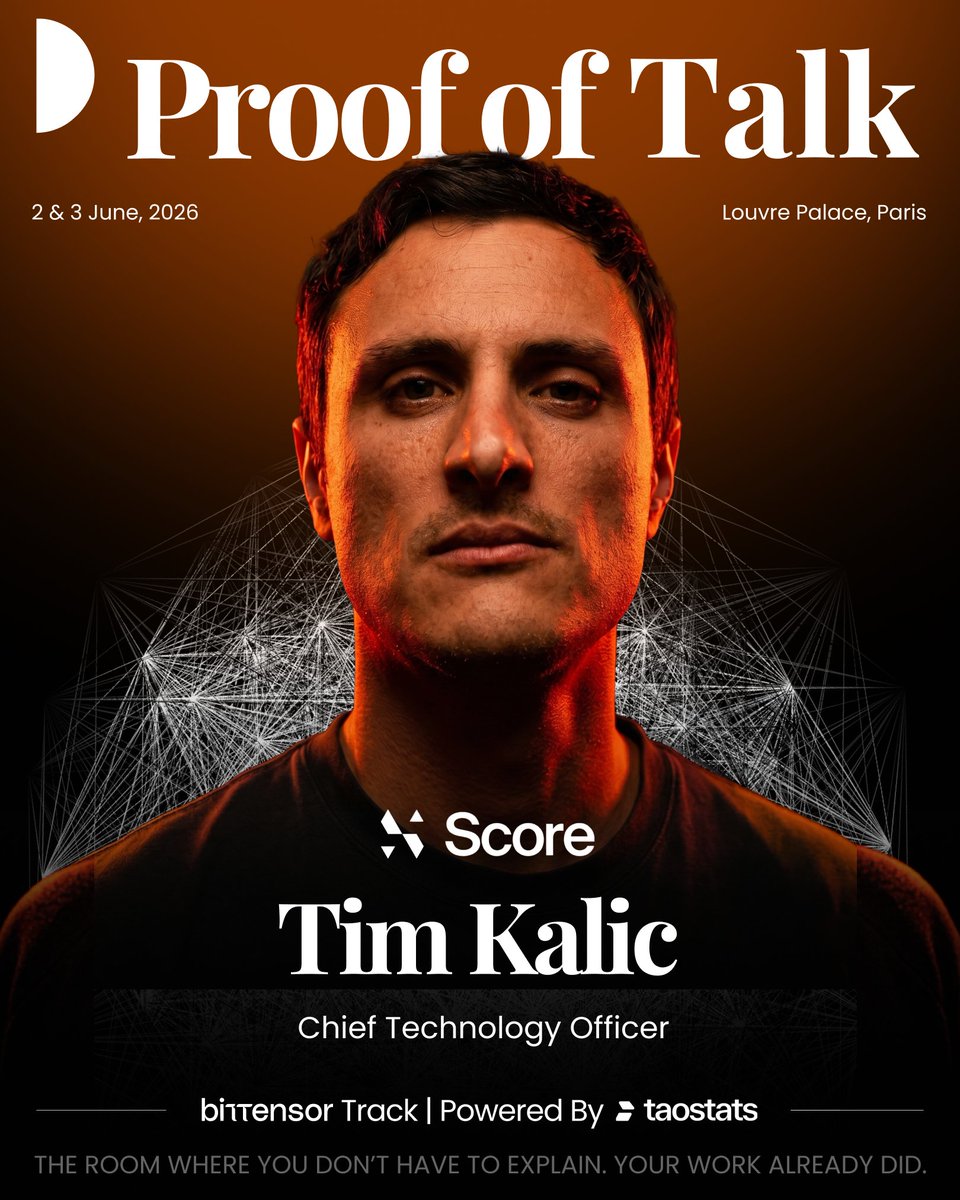
Honoured to be part of this excellent event. And excited to talk about what we’re building with @webuildscore, @manakoai on Subnet 44.
The real work is making decentralised vision systems useful, measurable, and production-ready.
Looking forward to Paris.
May 19

We’re pleased to welcome Tim Kalic @tm0klc to Proof of Talk 2026.
Tim is the Co-founder and CTO of @webuildscore and @manakoai, where he leads the technical development of Subnet 44 on Bittensor. His work focuses on building the incentive layers and infrastructure needed for decentralised computer vision at scale, while also productising that intelligence through Manako into production-ready vision systems for real-world use cases.
This summer he joins us at the Louvre,
June 2–3, Bittensor Track at Proof of Talk.
1
2
33
1,369
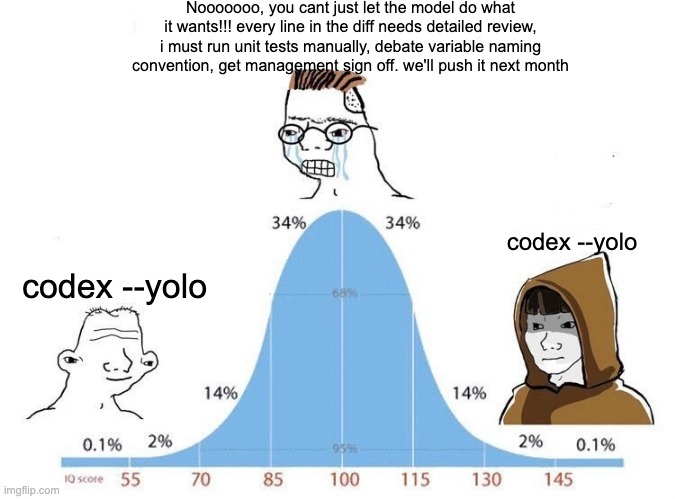
building products has changed.
I started using AI for code ~2 years ago. autocomplete. marginal speedup. fine.
late 2025 the harnesses caught up to the models. claude code, then codex. a task that took days started taking hours. then the cycle just… collapsed.
now an agent finishes something and looks at me …. what next boss
if I hesitate, it feels like time is bleeding. if I’m vague, it confidently builds the wrong thing, beautifully, in an afternoon.
so the bottleneck isn’t engineers anymore. it’s taste and clarity. knowing what’s worth building, and compressing a month of thinking into the next instruction fast enough to keep up.
smart engineers are multipliers on this.
(we’re hiring, hmu)
I’m basically a chief unblocker now. context-holder. direction-giver. the human in the loop is mostly there to keep the loop pointed somewhere worth going.
agents will probably absorb this part too eventually. but for genuinely novel stuff I think a human still has to hold the thread. and honestly it’s the most fun I’ve had building in years.
golden age. keep a hand on the agents. touch grass.
3
3
27
902
We’re building the vision intelligence substrate - and making it available to anyone and everyone
Apr 28

YC just put out the call for dynamic software interfaces.
This is the official beginning of the end for monolithic software.
Users become their own forward deployed engineers. Shared primitives at the bottom and bespoke customization on top.
It is already happening in the trades. I see it every day.
For my entire career in software, the vendor decided the schema, the workflow, the screen, and the buttons.
The customer rented a finished product and bent their business to fit it.… we called this SaaS.
Coding agents collapse this completely. The customer generates the interface and the logic now.
What the vendor has to build instead is the layer underneath. Stable primitives, permissioned tool calls, agent-readable schema and composable workflows.
Every pre-AI SaaS company is about to discover what they built was the wrong abstraction.
They built applications.
They should have built substrates.
1
37
1,214
Mine bittensor
Apr 28

The students at your favorite elite uni use AI to do the homework, the teachers wrote it with AI and will score with AI also. Those same schools market their historically built prestige globally so that international students can exploit the immigration system. The work you do at every level is taken by the same uni at a 40% cut. They hire international marketing teams to feed you that lie.
Exploit the system. Go straight to the workforce. Mine Bittensor.
1
19
434
We’re hiring a senior platform/backend engineer at Manako @manakoai
We’re building vision systems that have to work outside the lab — where deployment, runtime reliability, workflows, and product/backend integration actually matter.
If you’ve built strong systems in infra, orchestration, edge, or developer platforms, and want to help turn model capability into real production systems, I’d love to talk.
DM me if that’s you, or if someone comes to mind.
5
13
76
10,513
It was excellent to watch Greg present this in Spain last week.
building deep in the stack as a subnet owner, threads like this are a valuable reminder of the broader stakes
and validation that we're working on exactly the right things
Apr 27

Last week at the @YumaGroup Summit I had the opportunity to present on The State of Bittensor.
That presentation is in the thread below. If you choose to read it, I'd ask that you keep the following three things in mind:
1. This is just one guy's view of what was the most relevant for a 25-minute talk; a difficult filter for such a dynamic industry
2. The slides were designed to supplement a talk; I've done my best to replicate what I recall of the talk in the accompanying X posts
3. The topic of the Summit was "The Tipping Point" - a candid assessment of what could lead to Bittensor's breakout success and what evidence we see of that today - which also thematically anchored this presentation
Let's dive in:
1
17
605
τim retweeted

Apr 23
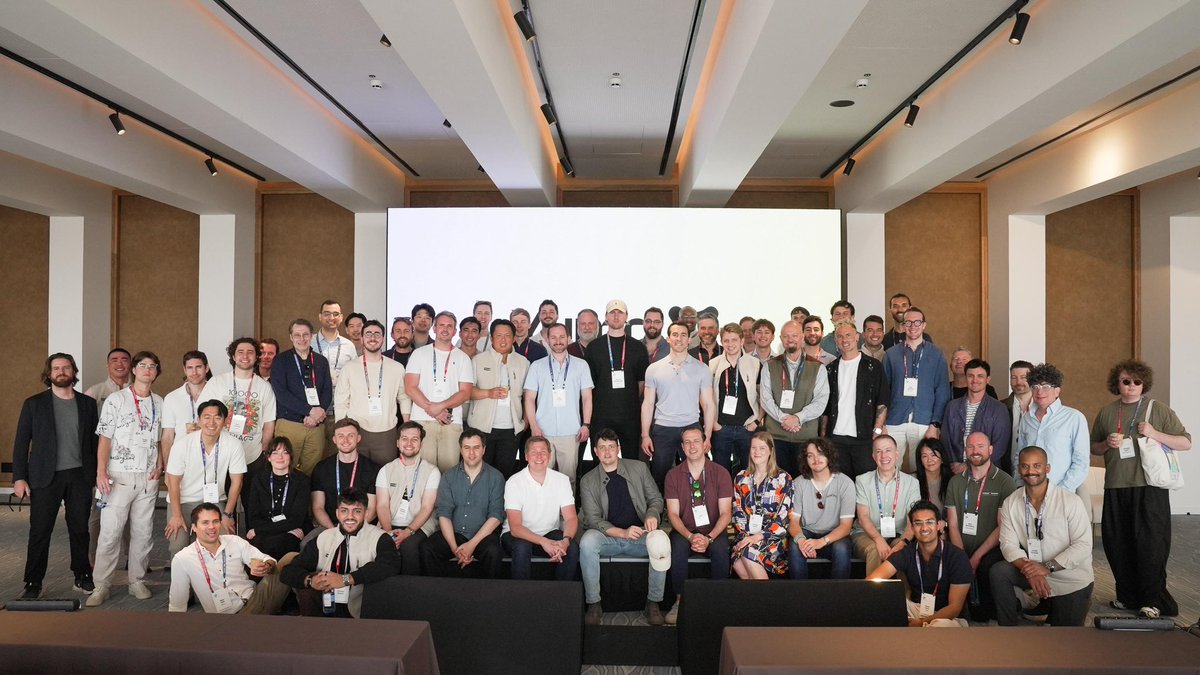
Fantastic to spend time with many of the leaders in the Bittensor $TAO community at Yuma's first ever summit. The vibes, enthusiasm and camaraderie reminded me of DCG's first Summit in 2015
x.com/BarrySilbert/status/20…
Truly an inspirational group. Big things are happening
Apr 23

For the second time, we brought our partners in the Bittensor community together at the @dcgco Summit to dive deep into Bittensor $TAO. A lot of momentum in the ecosystem and we’re excited for what’s ahead.
34
137
788
39,248
The next major enterprise AI layer won’t live only in text boxes and copilots.
It will live in the physical world.
Cameras, sensors, operations, environments — turned into systems that can understand what’s happening and trigger action in real time.
That’s why our alliance with @PwC_France matters.
We’re building toward deployable physical AI for enterprise at real scale — not PoCs that look good and go nowhere.
Huge moment for Manako.
Manako × @PwC_France
We've formed an alliance to bring physical AI to enterprise at global scale.
PwC France will lean on Manako's Business Operations World Model, powered by @webuildscore to turn their clients' existing camera networks into real-time systems of action.
1/5
1
9
63
1,526

AI is already doing real work.
Codex. Claude Code. They don’t just suggest—they ship. Quietly removing hours of human effort.
That’s the leading edge.
But it points to a bigger shift Jensen Huang recently called out: from reasoning to work.
And once you see it, the pattern is clear:
the winners aren’t single models, they’re systems — composed, orchestrated, repeatable
the bottleneck isn’t intelligence, it’s reliability, evaluation, and trust
and more of this work moves closer to the source — edge, on-device, in situ
Coding is just the first place this becomes undeniable.
Now zoom out.
Most domains don’t have tight feedback loops. No clear benchmarks. No incentive to keep improving once something “works.”
That’s where Bittensor fits.
It turns performance into a game you can’t fake.
Specialised models, measured on real tasks, competing continuously.
Better outputs, more reward. Worse outputs, you disappear.
Not one frontier model.
A network that compounds capability, domain by domain.
The gap now isn’t whether AI can do the work.
It’s how fast you can make it reliable.
Bittensor accelerates that.
2
17
608
This week we shipped workspace-scoped model management on @manakoai, along with a shared library flow.
Approved models can now be published once, then copied or forked into customer workspaces with lineage, auditability, and role-based controls intact.
We also tightened the subnet and benchmarking tooling behind the scenes to make training, validation, and deployment loops more reliable.
1
5
45
3,353
τim retweeted

Mar 25
We’re live on @twistartups
@MaxScore is speaking on the future of vision AI and Score’s & @manakoai approach to programmable vision.

This Bittensor Subnet Could Cut Drug Discovery Costs in Half x.com/i/broadcasts/1pKdRbyVV…
2
14
100
5,918
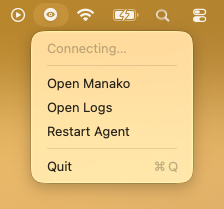
The @manakoai desktop agent is born...
No cloud pipelines. No egress tax. No latency games.
Download → it finds your cameras → deploy vision agents locally → inference runs on your hardware.
Only evidence telemetry hit the cloud.
We're moving vision compute to where it belongs: the edge.
7
19
91
9,365