
Account Abstraction (@erc4337) & Interop @ethereumfndn | Previously CEO of @portis_io (acquired by @ShapeShift) | TLV 🇮🇱
Joined October 2015
- Tweets 1,030
- Following 576
- Followers 966
- Likes 4,097
107 Photos and videos







And just like that, ERC-4337 is final 🎉
eips.ethereum.org/EIPS/eip-4…
10
36
9,860
Tom Teman retweeted

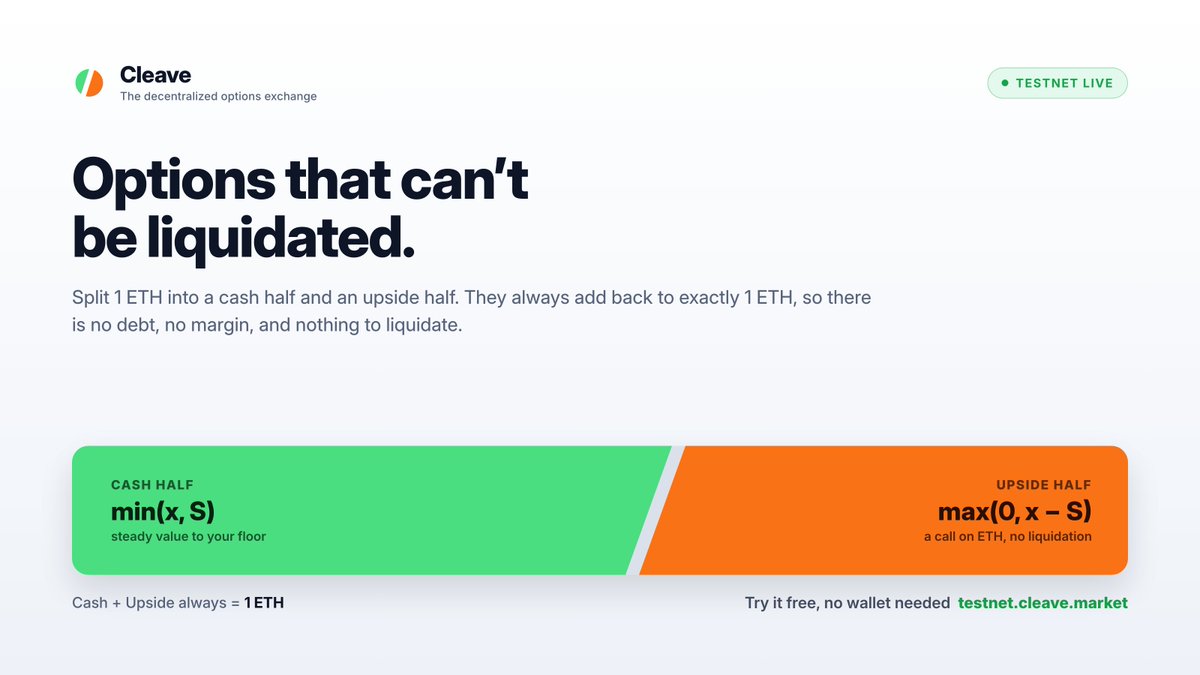
Leverage on ETH that can't be liquidated. Now live on testnet.
Cleave splits 1 ETH into a cash half and an upside half that always add back to 1 ETH. No loan, no margin, nothing to liquidate.
Try it free, no wallet needed 👇
testnet.cleave.market
13
10
122
14,229

if you're building a project with claude/codex and want to take it to the next level, I highly recommend paperclip
it's a great way to manage multiple agents, each focusing on a different aspect (frontend, backend, QA, web3, algorithms, etc)
exactly what I was looking for

We just open-sourced Paperclip: the orchestration layer for zero-human companies
It's everything you need to run an autonomous business: org charts, goal alignment, task ownership, budgets, agent templates
Just run `npx paperclipai onboard`
github.com/paperclipai/paper…
More 👇
4
11
595
also, the person who built it ( @dotta ) is the CEO of @ForgottenRunes , an NFT project I personally love - it's my pfp
3
96

Hating Jews is the laziest position in the world.
Instead of confronting the problems at home like islamists raping your daughters, woke/ideological capture that destroys your future, or China literally gutting out your entire economy/industrial base, you focus on a small country fighting what you're afraid to face.
The irony is you completely ignore actual genocides and mass killings in places like nigeria, iran, and sudan.
Hating Israel is the one issue that unites every failing ideology on earth: islamists, far left activists, and authoritarian regimes. they all agree on this one thing.
And you think repeating their slogans makes you a critical thinker.
“free palestine.” lmao


1,339
1,194
7,531
370,490
Tom Teman retweeted

Mar 14
I do find it kind of hilarious that the a main criticism of Ethereum has been that it remains laser focused on the reasons blockchains exists at all
15
58
369
11,648
We can't have mainstream adoption without privacy. Nobody wants their financial activity out in the open for everyone to see. Stealth addresses and ZK is the way
Feb 22

Ethereum needs privacy.
Not as a luxury feature, but as a default.
Otherwise, every transaction just feeds the surveillance machinery.
2
4
186

C I V I L I Z A T I O N A L
I N F R A S T R U C T U R E

Jan 12

Ethereum itself must pass the walkaway test.
Ethereum is meant to be a home for trustless and trust-minimized applications, whether in finance, governance or elsewhere. It must support applications that are more like tools - the hammer that once you buy it's yours - than like services that lose all functionality once the vendor loses interest in maintaining them (or worse, gets hacked or becomes value-extractive). Even when applications do have functionality that depends on a vendor, Ethereum can help reduce those dependencies as much as possible, and protect the user as much as possible in those cases where the dependencies fail.
But building such applications is not possible on a base layer which itself depends on ongoing updates from a vendor in order to continue being usable - even if that "vendor" is the all core devs process. Ethereum the blockchain must have the traits that we strive for in Ethereum's applications. Hence, Ethereum itself must pass the walkaway test.
This means that Ethereum must get to a place where we _can ossify if we want to_. We do not have to stop making changes to the protocol, but we must get to a place where Ethereum's value proposition does not strictly depend on any features that are not in the protocol already.
This includes the following:
* Full quantum-resistance. We should resist the trap of saying "let's delay quantum-resistance until the last possible moment in the name of ekeing out more efficiencies for a while longer". Individual users have that right, but the protocol should not. Being able to say "Ethereum's protocol, as it stands today, is cryptographically safe for a hundred years" is something we should strive to get to as soon as possible, and insist on as a point of pride.
* An architecture that can expand to sufficient scalability. The protocol needs to have the properties that allow it to expand to many thousands of TPS over time, most notably ZK-EVM validation and data sampling through PeerDAS. Ideally, we get to a point where further scaling is done through "parameter only" changes - and ideally _those_ changes are not BPO-style forks, but rather are made with the same validator voting mechanism we use for the gas limit.
* A state architecture that can last decades. This means deciding, and implementing, whatever form of partial statelessness and state expiry will let us feel comfortable letting Ethereum run with thousands of TPS for decades, without breaking sync or hard disk or I/O requirements. It also means future-proofing the tree and storage types to work well with this long-term environment.
* An account model that is general-purpose (this is "full account abstraction": move away from enshrined ECDSA for signature validation)
* A gas schedule that we are confident is free of DoS vulnerabilities, both for execution and for ZK-proving
* A PoS economic model that, with all we have learned over the past half decade of proof of stake in Ethereum and full decade beyond, we are confident can last and remain decentralized for decades, and supports the usefulness of ETH as trustless collateral (eg. in governance-minimized ETH-backed stablecoins)
* A block building model that we are confident will resist centralization pressure and guarantee censorship resistance even in unknown future environments
Ideally, we do the hard work over the next few years, to get to a point where in the future almost all future innovation can happen through client optimization, and get reflected in the protocol through parameter changes. Every year, we should tick off at least one of these boxes, and ideally multiple. Do the right thing once, based on knowledge of what is truly the right thing (and not compromise halfway fixes), and maximize Ethereum's technological and social robustness for the long term.
Ethereum goes hard.
This is the gwei.
33
33
435
26,090
Tom Teman retweeted

Jan 13
This is Part 2 of the EIL explainer. You can find in Part 1 below the "happy" path, now let's consider what happens if not just Bob but both Bob and Charlie provide vouchers for Alice x.com/bkiepuszewski/status/2… 🧵👇
Jan 12

In the next few threads, I will do a deep dive into EIL - Ehtereum Interoperabiliy Layer. The protocol allows for trust-minimized cross-chain execution with many interesting use cases and it's worth building intuition around it. This is Part 1 of the explainer 🧵👇
11
5
31
1,573
Tom Teman retweeted
Jan 12
In the next few threads, I will do a deep dive into EIL - Ehtereum Interoperabiliy Layer. The protocol allows for trust-minimized cross-chain execution with many interesting use cases and it's worth building intuition around it. This is Part 1 of the explainer 🧵👇
16
9
77
6,936
Ethereum will be the internet of value. It'll disrupt the world like the internet of information did 💰🌐
We must minimize middlemen from the protocol before we ossify it. It should be complex yet secure. Eternal and elegant. Trustless
This is no time to put our chips down
Jan 12
Ethereum itself must pass the walkaway test.
Ethereum is meant to be a home for trustless and trust-minimized applications, whether in finance, governance or elsewhere. It must support applications that are more like tools - the hammer that once you buy it's yours - than like services that lose all functionality once the vendor loses interest in maintaining them (or worse, gets hacked or becomes value-extractive). Even when applications do have functionality that depends on a vendor, Ethereum can help reduce those dependencies as much as possible, and protect the user as much as possible in those cases where the dependencies fail.
But building such applications is not possible on a base layer which itself depends on ongoing updates from a vendor in order to continue being usable - even if that "vendor" is the all core devs process. Ethereum the blockchain must have the traits that we strive for in Ethereum's applications. Hence, Ethereum itself must pass the walkaway test.
This means that Ethereum must get to a place where we _can ossify if we want to_. We do not have to stop making changes to the protocol, but we must get to a place where Ethereum's value proposition does not strictly depend on any features that are not in the protocol already.
This includes the following:
* Full quantum-resistance. We should resist the trap of saying "let's delay quantum-resistance until the last possible moment in the name of ekeing out more efficiencies for a while longer". Individual users have that right, but the protocol should not. Being able to say "Ethereum's protocol, as it stands today, is cryptographically safe for a hundred years" is something we should strive to get to as soon as possible, and insist on as a point of pride.
* An architecture that can expand to sufficient scalability. The protocol needs to have the properties that allow it to expand to many thousands of TPS over time, most notably ZK-EVM validation and data sampling through PeerDAS. Ideally, we get to a point where further scaling is done through "parameter only" changes - and ideally _those_ changes are not BPO-style forks, but rather are made with the same validator voting mechanism we use for the gas limit.
* A state architecture that can last decades. This means deciding, and implementing, whatever form of partial statelessness and state expiry will let us feel comfortable letting Ethereum run with thousands of TPS for decades, without breaking sync or hard disk or I/O requirements. It also means future-proofing the tree and storage types to work well with this long-term environment.
* An account model that is general-purpose (this is "full account abstraction": move away from enshrined ECDSA for signature validation)
* A gas schedule that we are confident is free of DoS vulnerabilities, both for execution and for ZK-proving
* A PoS economic model that, with all we have learned over the past half decade of proof of stake in Ethereum and full decade beyond, we are confident can last and remain decentralized for decades, and supports the usefulness of ETH as trustless collateral (eg. in governance-minimized ETH-backed stablecoins)
* A block building model that we are confident will resist centralization pressure and guarantee censorship resistance even in unknown future environments
Ideally, we do the hard work over the next few years, to get to a point where in the future almost all future innovation can happen through client optimization, and get reflected in the protocol through parameter changes. Every year, we should tick off at least one of these boxes, and ideally multiple. Do the right thing once, based on knowledge of what is truly the right thing (and not compromise halfway fixes), and maximize Ethereum's technological and social robustness for the long term.
Ethereum goes hard.
This is the gwei.
2
117
Tom Teman retweeted

Jan 7
Calling all bundlers. From @ambire v5.34.6, we're allowing a custom bundler URL for each network.
We're trying to give space to ERC-4337 developers to experiment more. If you are a bundler, place your bundler URL and broadcast a few userOps with Ambire!
2
7
28
5,904
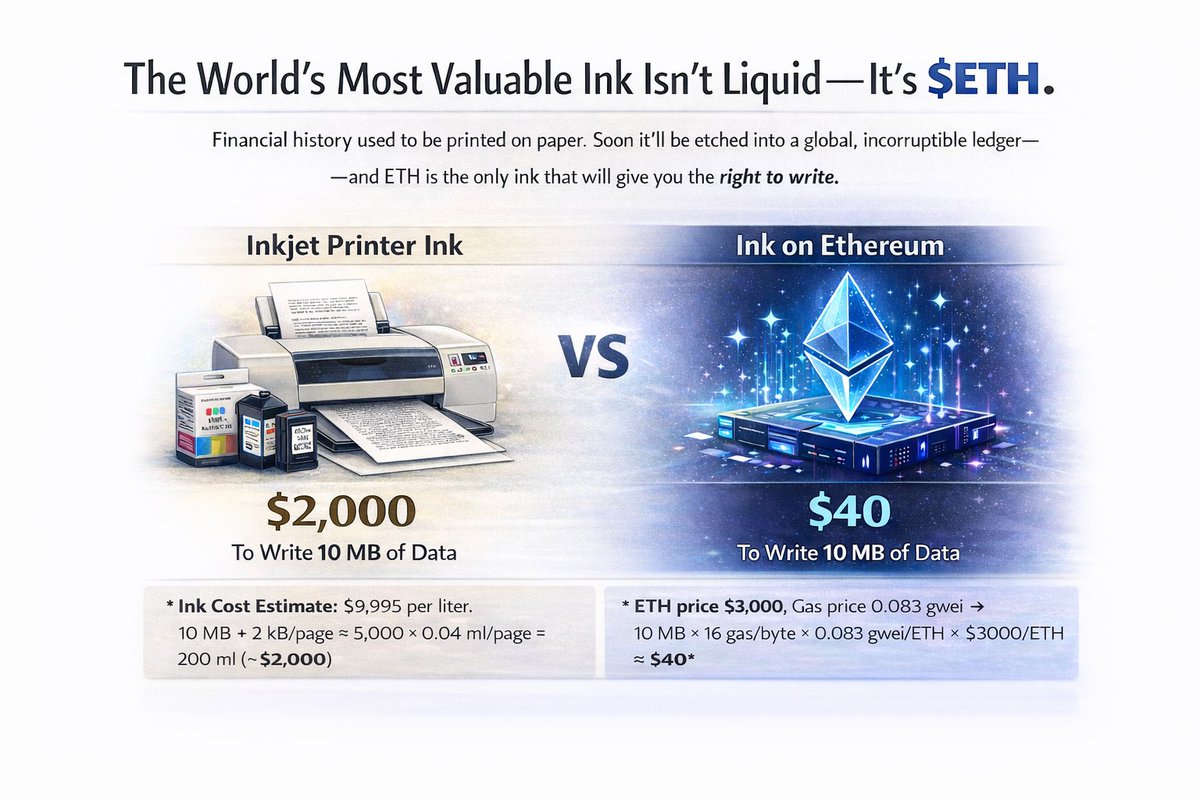
Had a showerthought: I used to say buying $ETH early is like buying oil when cars first appeared, but “digital ink” might be a better analogy
Blockspace is finite. Demand to write into this global magical book will rise
Loose analogy, of course. Just a fun way to look at it
2
9
625

This was a great read and it confirmed my sense of why EIL's work is so important: we don't need to compromise between UX and trust minimization.
Achieving both is harder but worth the effort if we're serious about building a better world ledger

L2BEAT's view of EIL is spot on. EIL makes cross-L2 interop trustless and seamless,
Making Ethereum feel like one chain again - without introducing intermediaries and trust assumptions.
Check it out 👇
1
2
19
598
EIL raises the interop bar
22 Dec 2025

Walletbeat isn't here to pick a specific cross-chain interop mechanism for wallets to implement.
But Walletbeat 𝙞𝙨 here to encourage wallets to implement cross-chain interop while upholding trustlessness.
And as @l2beat has analyzed, @ethinteroplayer upholds trustlessness. 👀
8
1
27
3,663
Tom Teman retweeted

22 Dec 2025
EIL will change how users interact on-chain by introducing three new primitives:
- Multichain Accounts: wallets create multiple UserOps but users sign once
- CrossChainPaymaster: pay gas on any chain using assets from another
- Voucher system: enables atomic, trust-minimized cross-L2 value transfers
Its goal is simple: remove intermediaries, reduce user overhead, and make Ethereum feel like one chain.
Similar to how Account Abstraction introduced bundlers, paymasters, and a new UX model for wallets, EIL rethinks execution for a multichain world.
We’re excited to contribute to this vision, Functor keystore layer complements EIL by unifying signers and permissions into a single identity layer that EIL can execute across.

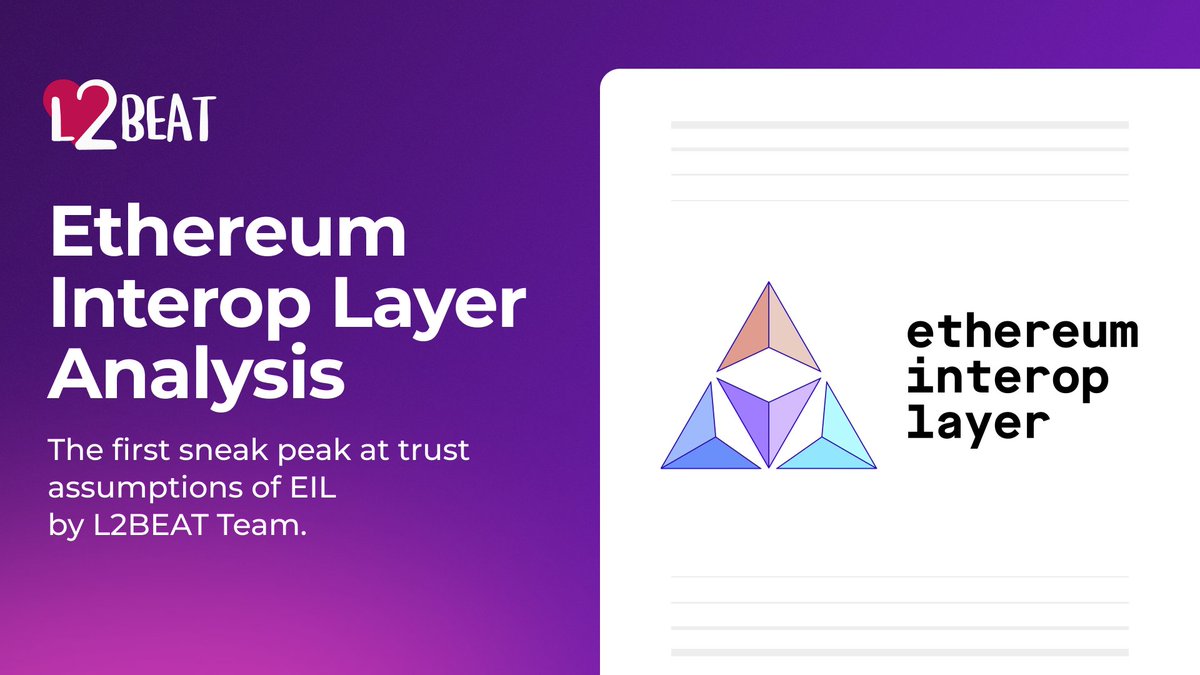
At DevConnect Buenos Aires, the details of EIL @ethinteroplayer - Ethereum Interoperability Layer were unveiled.
We’ve been deep-diving interop protocols for months and our initial assessment of EIL contracts (deployed on testnets already) is following 🧵👇
2
5
11
1,072
Tom Teman retweeted

22 Dec 2025
trustlessness is not a nice to have. it’s the entire point. kudos to @ethinteroplayer team and contributors for making ethereum cypherpunk again
At DevConnect Buenos Aires, the details of EIL @ethinteroplayer - Ethereum Interoperability Layer were unveiled.
We’ve been deep-diving interop protocols for months and our initial assessment of EIL contracts (deployed on testnets already) is following 🧵👇
5
4
15
911