
Jurgen Proschinger is CEO of Triangle Forces, a holistic-thinking advisory dedicated to helping ventures in the technology, media, and entertainment industries.
Joined January 2007
- Tweets 6,860
- Following 215
- Followers 557
- Likes 35,869
240 Photos and videos


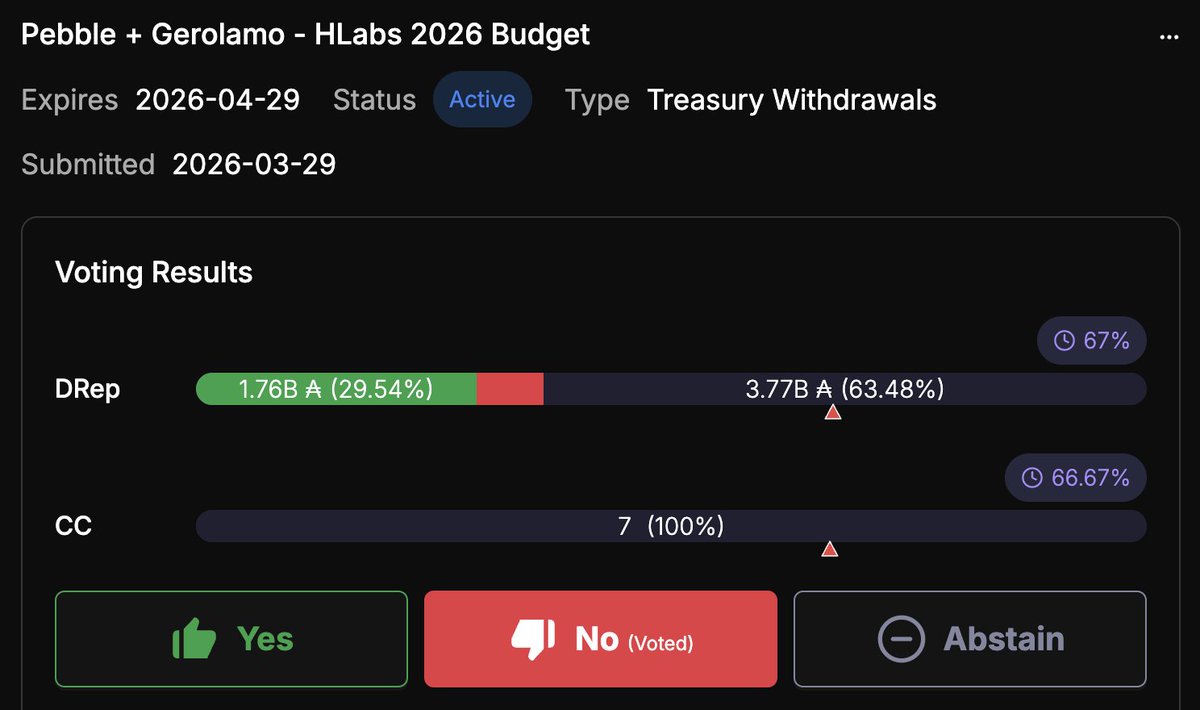
Jurgen Proschinger retweeted

“I never thought I’d live to see the day when the right wing would become the cool ones giving the middle finger to the establishment, and the left wing becoming the snivelling self-righteous twats, going around shaming everyone.”
- John Lydon, The Sex Pistols

922
19,648
95,199
1,305,775

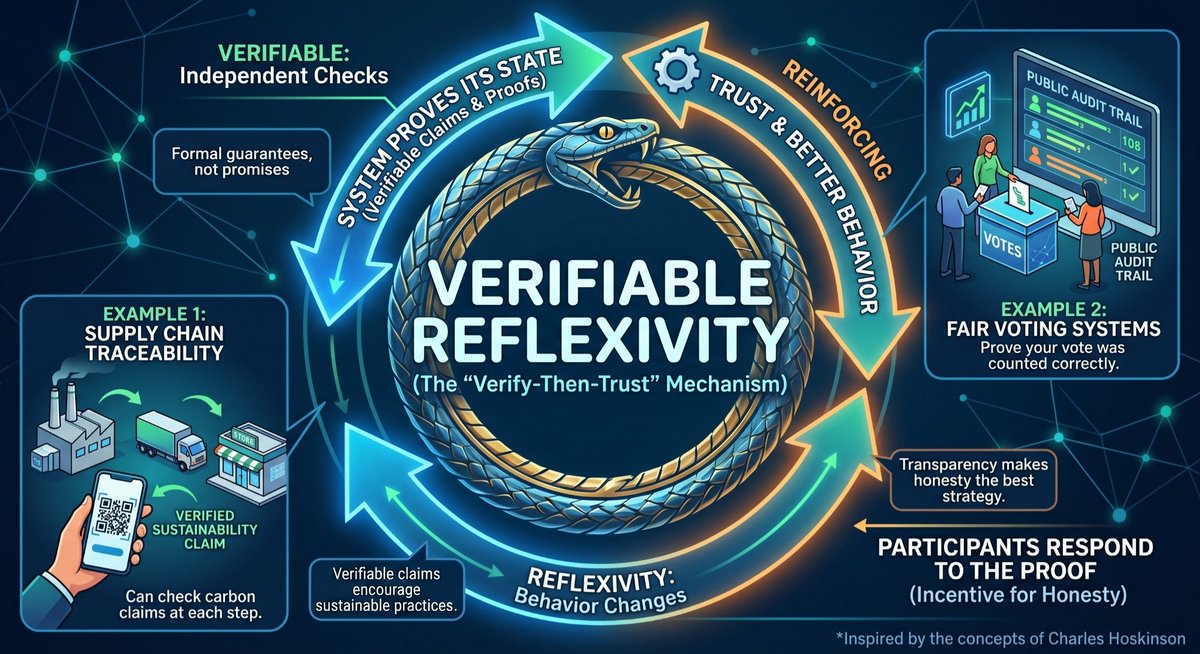
I can’t get “verifiable reflexivity” out of my head.
It’s the intellectual equivalent of a track stuck on repeat, except I’m not mad about it.
Best term I’ve heard in ages. If “concept of the year” exists, this has my vote.
Made a small infographic because I’m in love with it
3
8
207
I wish @IOHK_Charles would do more of those musings than the recent rants. Amazing stuff!! And so much better than the OG whiteboard.
Yet it seems there's little reaction from the media. Is it only hate and negative news that sustains their clicks now? Where's the analysis?

Why Cardano is the only Ecosystem that can run the world x.com/i/broadcasts/1YxNrrBdD…
24
32
348
10,011
It’s amazing to realize how many people don’t seem to comprehend that a drop from $0.50 to $0.15 signifies a 70% decline… but that, in order to get back to that level, a 233.33% rise is required!
1
2
56
The supreme art of war is to subdue the enemy without fighting.
All competing blockchains have to do now is await a technically superior blockchain to crash, because his founder made a rather stupid comment that is taken out of context.
Similar to Musk's tweets about Tesla.
Jun 5

Do you know what the 20 biggest crypto influencers and media outlets spreading $ADA FUD have in common?
👉 They all work with the same 3 PR agencies… All of those agencies work for Cardano’s competitors. 👀
It’s time for someone to end up in prison.
Dig into this, people. Don’t give up. Follow the money… 💰🚓
70
Jurgen Proschinger retweeted

Jun 2
This may be a wake-up call for all those who think we don't need DAOs.
Innovation & Growth DAO can support ecosystem growth. Everyone will benefit from the users. Every DRep can join us and help.
2
7
96
4,023
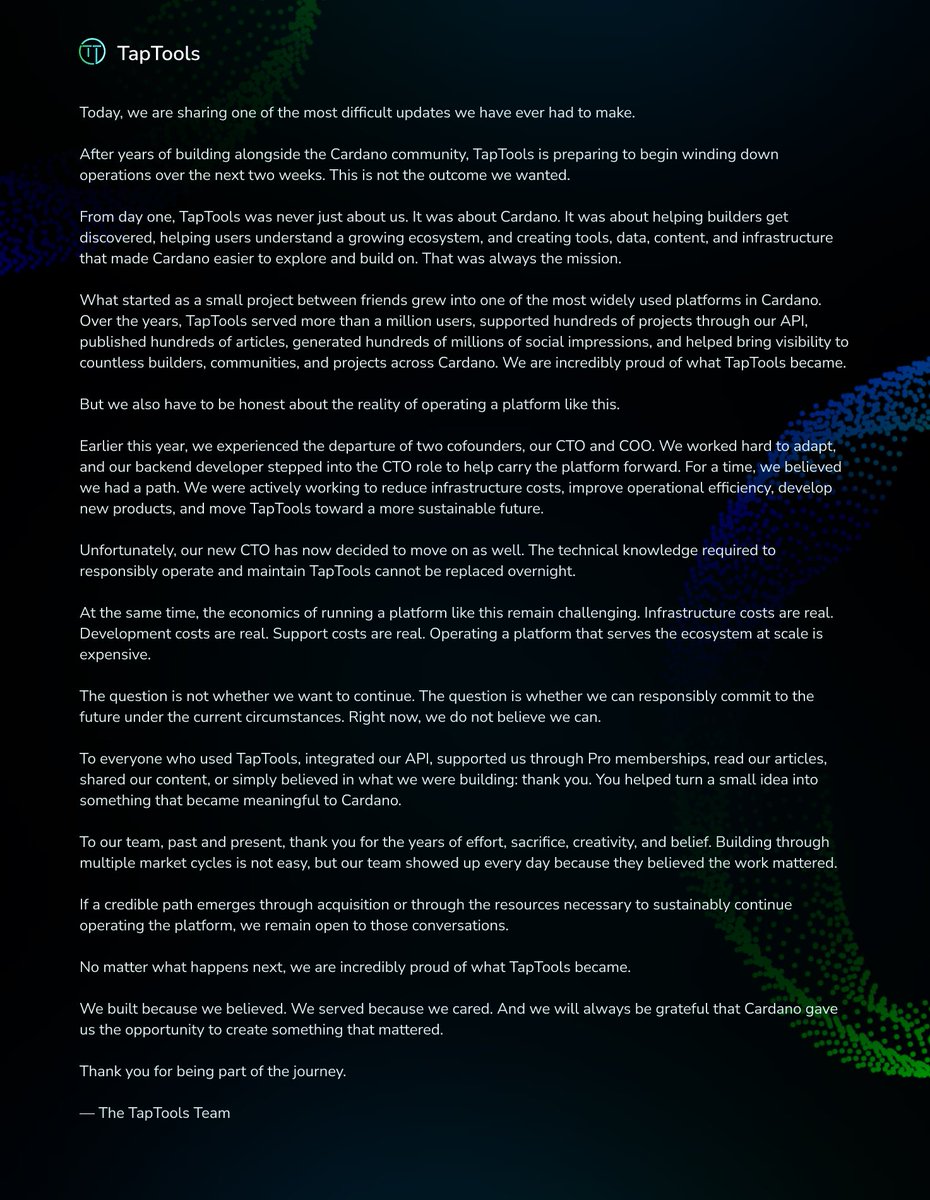
Sorry to say, but TapTools was another outfit with no sustainable revenue. Ever. It was grant-funded to hand out big titles and build another stats/token-swap tool with no USP or business model.
You got to think revenue from day 1. Rainy days expose the rot.

After four years of building for Cardano, today we have difficult news to share.
3
2
17
1,166
Jurgen Proschinger retweeted

📌 Surfacing Innovation & Growth DAO Feedback and Misconceptions
Chapter 2: Why another funding mechanism?
🔹 Misconception #1
"Why create the Innovation & Growth DAO if Treasury Withdrawals and the Intersect Budget Process already exist?"
This is a fair question.
But I believe it starts from a flawed premise.
The existence of a funding tool does not automatically make it the right tool for every funding need.
The Innovation & Growth DAO is not being proposed because Treasury Withdrawals and Budget Proposals are useless.
It is being proposed because they solve different problems.
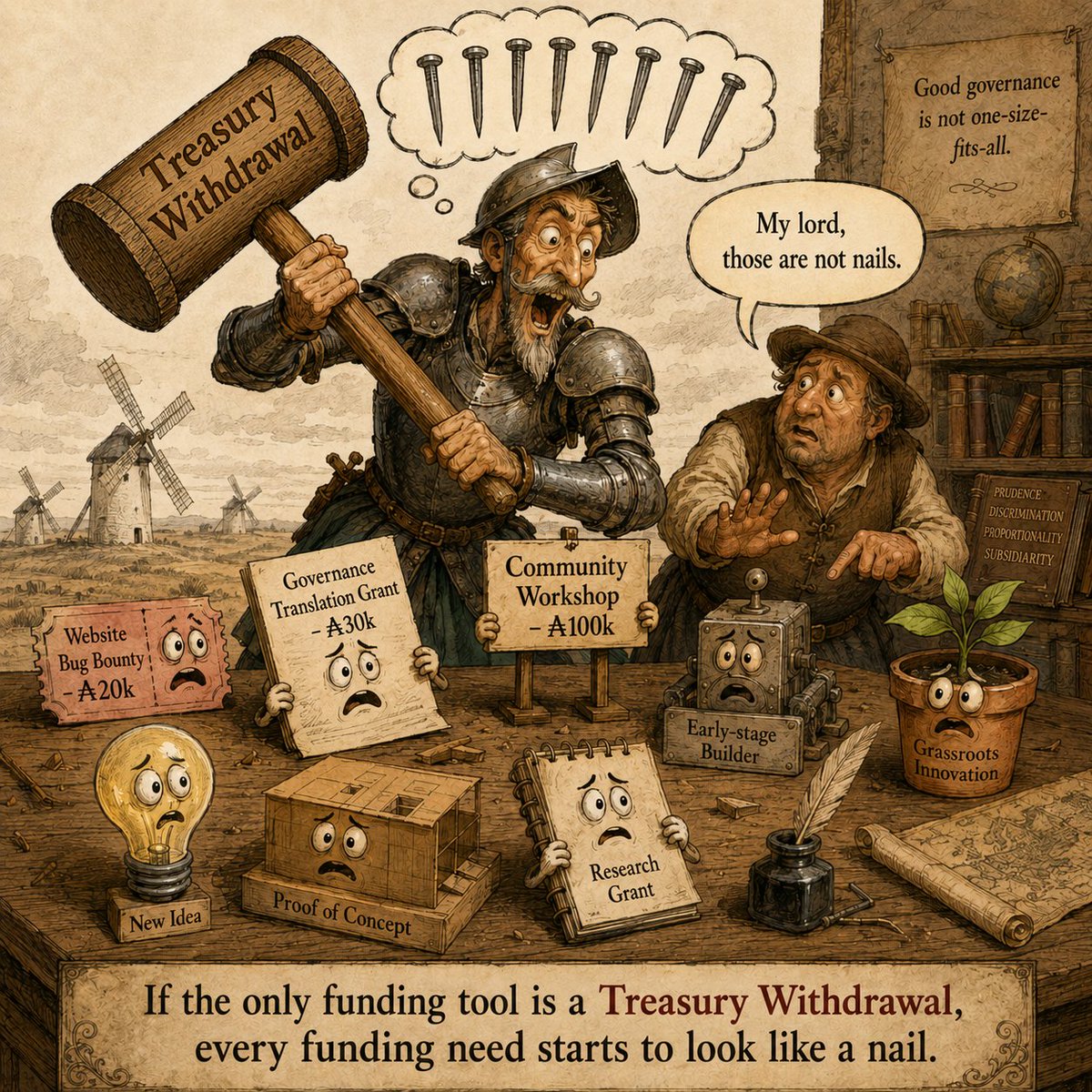
If the only funding tool we allow ourselves to use is a hammer labeled "TWGA", every problem starts to look like a nail.
So let’s examine this misconception through four points:
🔹 1. Not every funding decision requires the same governance machinery
Treasury Withdrawals are an important governance mechanism.
They make sense for large, high-impact, ecosystem-level decisions that justify extensive scrutiny from DReps, the Constitutional Committee, SPOs, and the wider community.
But that level of scrutiny comes with a cost.
A Treasury Withdrawal requires proposal review, community discussion, rationale writing, constitutional assessment, voting, and potentially ongoing milestone or quality assurance oversight.
That machinery is not free.
Even when much of the work is voluntary, Cardano still pays for it through time, attention, coordination, and opportunity cost.
Every hour DReps, CC members, SPOs, and community contributors spend reviewing funding requests is an hour not spent building, researching, operating, educating, or contributing in other ways.
That cost may be fully justified for a multi-million ADA initiative.
But it does not scale well when applied to every funding request, regardless of size.
A ₳50k grant and a ₳10M Treasury Withdrawal do not create the same level of risk, complexity, or treasury exposure.
They should not require the same governance machinery either.
Not because small grants are irrelevant.
They are not.
But because the decision process should be proportional to the size, risk, and complexity of the funding request.
Otherwise, the collective cost of reviewing, evaluating, coordinating, and later performing quality assurance on smaller grants can become too large relative to the grant itself.
That is not treasury protection.
It is governance inefficiency.
Different funding needs require different levels of governance overhead.
Treasury Withdrawals are excellent tools for large strategic decisions.
That does not automatically make them the best tool for every funding decision.
If the only funding tool we allow ourselves to use is a hammer labeled “TWGA,” every problem starts to look like a nail.
You do not use a hammer to turn a screw, and you do not need a bazooka to kill a mosquito.
You should not need to mobilize the full governance machinery of DReps, CC members, SPOs, rationales, debates, votes, and oversight to evaluate a ₳50k grant.
🔹 2. Long funding cycles create treasury rush incentives
Treasury Withdrawals and long-cycle budget proposals are valuable governance tools.
But they also create a predictable incentive problem.
When funding demand exceeds available treasury capacity, proposers are encouraged to move early.
The logic is simple:
🔹If I submit now, I may get funded.
🔹If I wait several months, the available treasury capacity will likely have been largely exhausted by proposals submitted earlier in the cycle.
This becomes even stronger when the NCL is defined over a long period, such as one year, 500 days, or more.
The longer the funding horizon, the stronger the incentive to secure resources early.
The result is a treasury rush.
Funding activity becomes concentrated into relatively short periods of intense competition for treasury resources.
Projects compete to secure funding before available capacity is consumed.
That may work reasonably well for large organizations with long planning horizons and dedicated governance resources.
It works much less well for emerging opportunities, unexpected needs, new builders, or projects that appear later in the funding cycle.
A healthy ecosystem should not require contributors to predict every funding need many months in advance.
Nor should it depend exclusively on periodic races for treasury access.
It should also have mechanisms capable of distributing funding more gradually throughout the cycle.
That is another gap a dedicated innovation fund can help address.
🔹 3. Catalyst is paused, leaving a gap in early-stage funding
Catalyst was far from perfect.
But it provided an entry point for:
🔹 New builders
🔹 MVPs
🔹 Local initiatives
🔹 Research experiments
🔹 Grassroots contributors
It provided a place where ideas could be be tested before becoming mature organizations, large products, or ecosystem-wide initiatives.
Today, Catalyst is officially paused. Only operations related to managing proposals already in progress remain active.
No new Catalyst Funds have been announced, and there is currently no confirmed information regarding the launch of a future Fund. In addition, it has been publicly communicated that the budget previously allocated for Funds 15 and 16 will be returned to the treasury.
With Catalyst paused, funding discussions have naturally shifted toward other governance mechanisms. The Intersect Budget Process plays an important role in ecosystem planning and resource allocation, but it is not designed to function as a continuous small-grants mechanism for early-stage experimentation.
Treasury Withdrawals are important, but they are generally better suited for initiatives that already have defined scopes, established teams, clear deliverables, and the organizational capacity to navigate complex governance processes.
As a result, there is currently no active Catalyst funding round serving as an accessible entry point for early-stage experimentation.
And that gap matters.
Innovation rarely emerges on a predictable schedule.
New opportunities, local initiatives, research ideas, MVPs, and promising experiments can appear at any point during a funding cycle.
Without an accessible top-of-funnel funding layer, many of those ideas may never get the opportunity to prove themselves.
So the real question is not whether Treasury Withdrawals and budget proposals exist.
They do.
The real question is how Cardano intends to support early-stage builders and experimentation while Catalyst remains paused.
🔹 4. Resilience should apply to funding, not only infrastructure
Over the past months, Cardano has had serious debates about infrastructure resilience and node diversity.
The Amaru and Dingo Treasury Withdrawals made that discussion very concrete.
Many reasonable arguments were made in favor of strategic redundancy.
Cardano should not depend on a single node implementation, a single client, or a narrow set of infrastructure providers.
I agree with that principle.
But if redundancy matters for the technical stack, why does it matter less for the contributor stack?
Why do we defend decentralization for nodes, clients, and infrastructure while accepting increasing concentration in who can realistically access treasury funding?
Treasury Withdrawals require a 100,000 ADA deposit, governance expertise, stakeholder outreach, community engagement, and the ability to coordinate support from DReps.
Large organizations typically have more resources, visibility, relationships, governance experience, and organizational capacity to navigate that process.
Smaller builders often do not.
Funding systems shape ecosystems.
If Treasury Withdrawals and long-cycle budget processes become the dominant funding pathways, they will naturally favor actors with existing capital, existing networks, and existing organizational capacity.
Over time, this creates a self-reinforcing cycle.
The actors most capable of securing funding become even more capable of securing future funding.
Meanwhile, smaller teams and emerging contributors face increasingly higher barriers to participation.
The result is not only concentration of funding.
It is concentration of development capacity, institutional knowledge, and ecosystem influence within a smaller subset of actors. Gatekeeping.
Infrastructure resilience protects the network we have today.
Funding resilience helps ensure that the ecosystem continues to attract, develop, and retain a diverse set of contributors tomorrow.
👉So the real question is not whether TWGAs and Budget Proposals should exist.
They should.
The real question is what funding layer is still missing between large treasury decisions and early-stage ecosystem experimentation.
That is where the Innovation & Growth DAO enters the discussion.
#Cardano #Governance #Treasury #DRep

📌 Surfacing Innovation & Growth DAO Feedback and Misconceptions
In #Cardano governance, proposals are often judged not only by what they actually say, but also by DReps’ and community members’ assumptions, prior frustrations, fears, expectations, and interpretations projected onto them.
The Innovation & Growth DAO proposal was submitted to the Intersect Budget Process a few weeks ago, and over this period we received community feedback on it, including comments on X and two reviews directly on the Intersect Hydra Voting platform from DReps outside the proposal’s core working group: @yutazzz and @SIPO_Tokyo
We responded to these comments both on X and on the Hydra Voting platform. You can check the proposal itself, the reviews, and many of the responses directly through the link below👇
hydra-voting.intersectmbo.or…
However, instead of leaving the discussion scattered across tweets, DMs, and buried inside the Intersect Hydra voting app, which, despite good intentions, almost nobody reads consistently, let’s be honest 😅, I decided to surface and address the most recurring questions and concerns in a short public series on X over the next few days.
But before getting into the responses themselves, I think some additional context matters.
Misconceptions, assumptions, and incomplete interpretations have played a major role in Cardano governance discussions since the early #ProjectCatalyst days, and they continue to shape how people evaluate on-chain Governance Actions today.
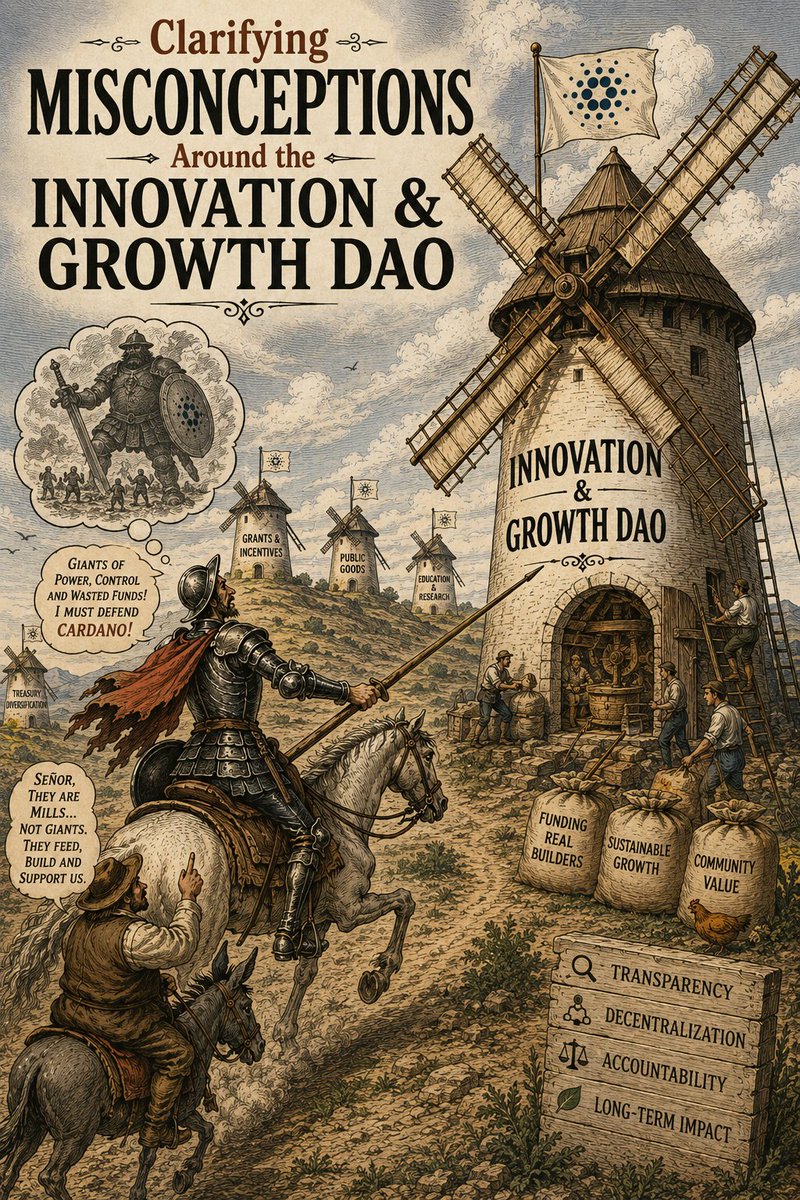
There is a reason Cardano’s governance testnet was named SanchoNet, it was a homage to Sancho Panza, Don Quixote’s grounded companion in Cervantes’ classic. 🏰
In Don Quixote, the famous scene is not only about a man fighting windmills. It is about perception: Don Quixote sees threatening giants where there are, in reality, windmills.
Governance discussions can work in a similar way. Every proposal has two versions:
🔸 The actual written proposal, with its stated purpose, scope, and definitions;
🔸 And the version each reader reconstructs through assumptions, skepticism, prior frustrations, fears, expectations, or ideals.
Sometimes the “giant” being debated is not the proposal itself, but an imagined version of what people fear it might be. ⚔️🌪️
That does not mean skepticism is wrong. Quite the opposite. Sancho Panza matters because he brings realism, common sense, and grounded judgment into a world of projections and dramatic interpretations.
As a DRep, I understand the skepticism. Our ecosystem has developed some scar tissue from past problems, and stronger scrutiny is a natural response. We are not trying to avoid criticism. Solid proposals should be challenged, refined, and improved through serious feedback.
Some questions and concerns reflect healthy scrutiny from an ecosystem that wants to avoid repeating past mistakes. Others seem to come from incomplete interpretations of the proposal’s purpose, design, and intended role within Cardano’s funding architecture.
At the same time, the Innovation & Growth DAO proposal was developed through an internal DRep collaboration process, including multiple meetings, questionnaires, and joint drafting work with experienced Cardano ecosystem contributors such as @JaromirTesar, @Cardanians_io, @jonahkoch, @triangleforces, @Lo_Ponch, @GrendelMarco, @genwealth_app, myself and others. 🤝
I am confident that the group of DReps involved in the @adaGrowthDAO has the experience needed to design, manage, and operate this project in a way that avoids repeating problems observed in Cardano’s funding history.
So in that spirit, this short series is my attempt to bring the discussion back from imagined giants to the actual windmills: what the Innovation & Growth DAO proposal really says, what it is trying to solve, and where legitimate concerns still deserve clarification. 🌾
📌 Here are the main recurring questions and concerns surrounding the proposal:
🔹 Why create a new funding mechanism or DAO if Treasury Withdrawals and the Intersect Budget Process already exist?
🔹 How will the DAO avoid overlap with Catalyst, Builder DAO, Cardano Tooling DAO, Orion Fund, and other funding vehicles?
🔹 How will DReps and “experts” be selected, matched, compensated, and held accountable?
🔹 Could this DAO become a group of people voting for themselves, and how will conflicts of interest be handled?
🔹 Who audits the DAO itself, and what happens if a funding round underperforms?
🔹 Who is eligible to participate, how to participate, and what are the requirements?
🔹 Why is the DAO requesting this budget, and are operational costs too high?
Over the next few days, I’ll publish tweets addressing recurring questions, concerns and misconceptions. 🧵
If we want serious governance, we need to evaluate what is actually being proposed, not only the versions reconstructed through fear, frustration, assumptions, or incomplete context. This is not unique to our proposal. It is a natural human bias that can affect how any proposal is interpreted, and we need to keep it in check to make better collective decisions.
#DRep #Governance #Intersect
3
6
15
1,898
Jurgen Proschinger retweeted
📌 Surfacing Innovation & Growth DAO Feedback and Misconceptions
In #Cardano governance, proposals are often judged not only by what they actually say, but also by DReps’ and community members’ assumptions, prior frustrations, fears, expectations, and interpretations projected onto them.
The Innovation & Growth DAO proposal was submitted to the Intersect Budget Process a few weeks ago, and over this period we received community feedback on it, including comments on X and two reviews directly on the Intersect Hydra Voting platform from DReps outside the proposal’s core working group: @yutazzz and @SIPO_Tokyo
We responded to these comments both on X and on the Hydra Voting platform. You can check the proposal itself, the reviews, and many of the responses directly through the link below👇
hydra-voting.intersectmbo.or…
However, instead of leaving the discussion scattered across tweets, DMs, and buried inside the Intersect Hydra voting app, which, despite good intentions, almost nobody reads consistently, let’s be honest 😅, I decided to surface and address the most recurring questions and concerns in a short public series on X over the next few days.
But before getting into the responses themselves, I think some additional context matters.
Misconceptions, assumptions, and incomplete interpretations have played a major role in Cardano governance discussions since the early #ProjectCatalyst days, and they continue to shape how people evaluate on-chain Governance Actions today.
There is a reason Cardano’s governance testnet was named SanchoNet, it was a homage to Sancho Panza, Don Quixote’s grounded companion in Cervantes’ classic. 🏰
In Don Quixote, the famous scene is not only about a man fighting windmills. It is about perception: Don Quixote sees threatening giants where there are, in reality, windmills.
Governance discussions can work in a similar way. Every proposal has two versions:
🔸 The actual written proposal, with its stated purpose, scope, and definitions;
🔸 And the version each reader reconstructs through assumptions, skepticism, prior frustrations, fears, expectations, or ideals.
Sometimes the “giant” being debated is not the proposal itself, but an imagined version of what people fear it might be. ⚔️🌪️
That does not mean skepticism is wrong. Quite the opposite. Sancho Panza matters because he brings realism, common sense, and grounded judgment into a world of projections and dramatic interpretations.
As a DRep, I understand the skepticism. Our ecosystem has developed some scar tissue from past problems, and stronger scrutiny is a natural response. We are not trying to avoid criticism. Solid proposals should be challenged, refined, and improved through serious feedback.
Some questions and concerns reflect healthy scrutiny from an ecosystem that wants to avoid repeating past mistakes. Others seem to come from incomplete interpretations of the proposal’s purpose, design, and intended role within Cardano’s funding architecture.
At the same time, the Innovation & Growth DAO proposal was developed through an internal DRep collaboration process, including multiple meetings, questionnaires, and joint drafting work with experienced Cardano ecosystem contributors such as @JaromirTesar, @Cardanians_io, @jonahkoch, @triangleforces, @Lo_Ponch, @GrendelMarco, @genwealth_app, myself and others. 🤝
I am confident that the group of DReps involved in the @adaGrowthDAO has the experience needed to design, manage, and operate this project in a way that avoids repeating problems observed in Cardano’s funding history.
So in that spirit, this short series is my attempt to bring the discussion back from imagined giants to the actual windmills: what the Innovation & Growth DAO proposal really says, what it is trying to solve, and where legitimate concerns still deserve clarification. 🌾
📌 Here are the main recurring questions and concerns surrounding the proposal:
🔹 Why create a new funding mechanism or DAO if Treasury Withdrawals and the Intersect Budget Process already exist?
🔹 How will the DAO avoid overlap with Catalyst, Builder DAO, Cardano Tooling DAO, Orion Fund, and other funding vehicles?
🔹 How will DReps and “experts” be selected, matched, compensated, and held accountable?
🔹 Could this DAO become a group of people voting for themselves, and how will conflicts of interest be handled?
🔹 Who audits the DAO itself, and what happens if a funding round underperforms?
🔹 Who is eligible to participate, how to participate, and what are the requirements?
🔹 Why is the DAO requesting this budget, and are operational costs too high?
Over the next few days, I’ll publish tweets addressing recurring questions, concerns and misconceptions. 🧵
If we want serious governance, we need to evaluate what is actually being proposed, not only the versions reconstructed through fear, frustration, assumptions, or incomplete context. This is not unique to our proposal. It is a natural human bias that can affect how any proposal is interpreted, and we need to keep it in check to make better collective decisions.
#DRep #Governance #Intersect
2
9
14
6,351

Outrageous double-standard!
Jun 1


9,443
70,154
477,617
27,895,238
Excited to share a video about the Innovation & Growth DAO, a funding body for early Cardano projects chosen by DReps. It supports initiatives too small for the Treasury but too good to miss.
As a founding member, I’ll abstain, but urge you to review and vote on Intersect.
2
9
544
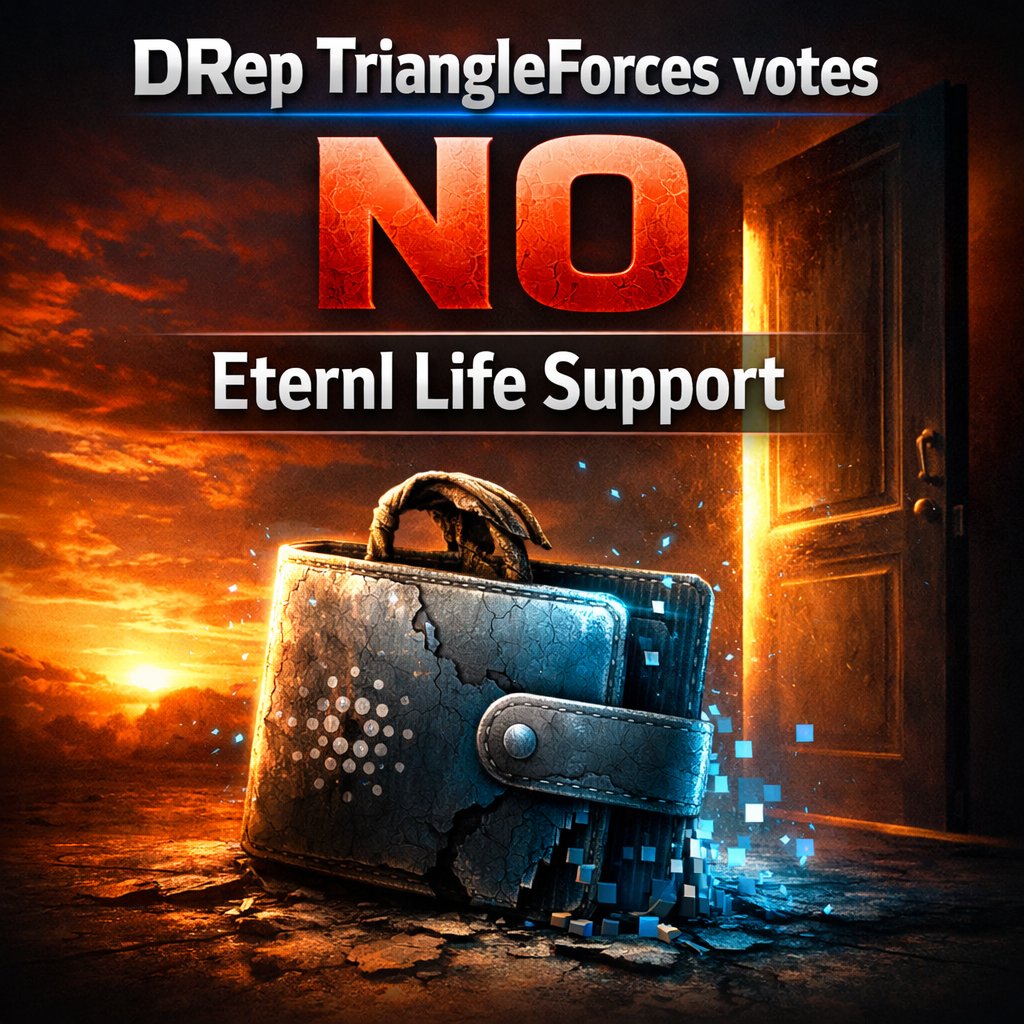
If a damn wallet needs permanent welfare and life support, Cardano is doing something seriously wrong at ecosystem level.
And if Eternl doesn’t need the funds to sustain itself, then this proposal shouldn’t exist in the first place.
Nuff said.
1
127
As DRep TriangleForces, I vote with prudence and diligence. Cardano must plan ahead, budget sensibly, or the fast-depleting Treasury will explode into a full-blown crisis soon. In investing, you get what you don't pay for; costs matter, and denial won't defuse this ticking bomb.
1
1
6
259
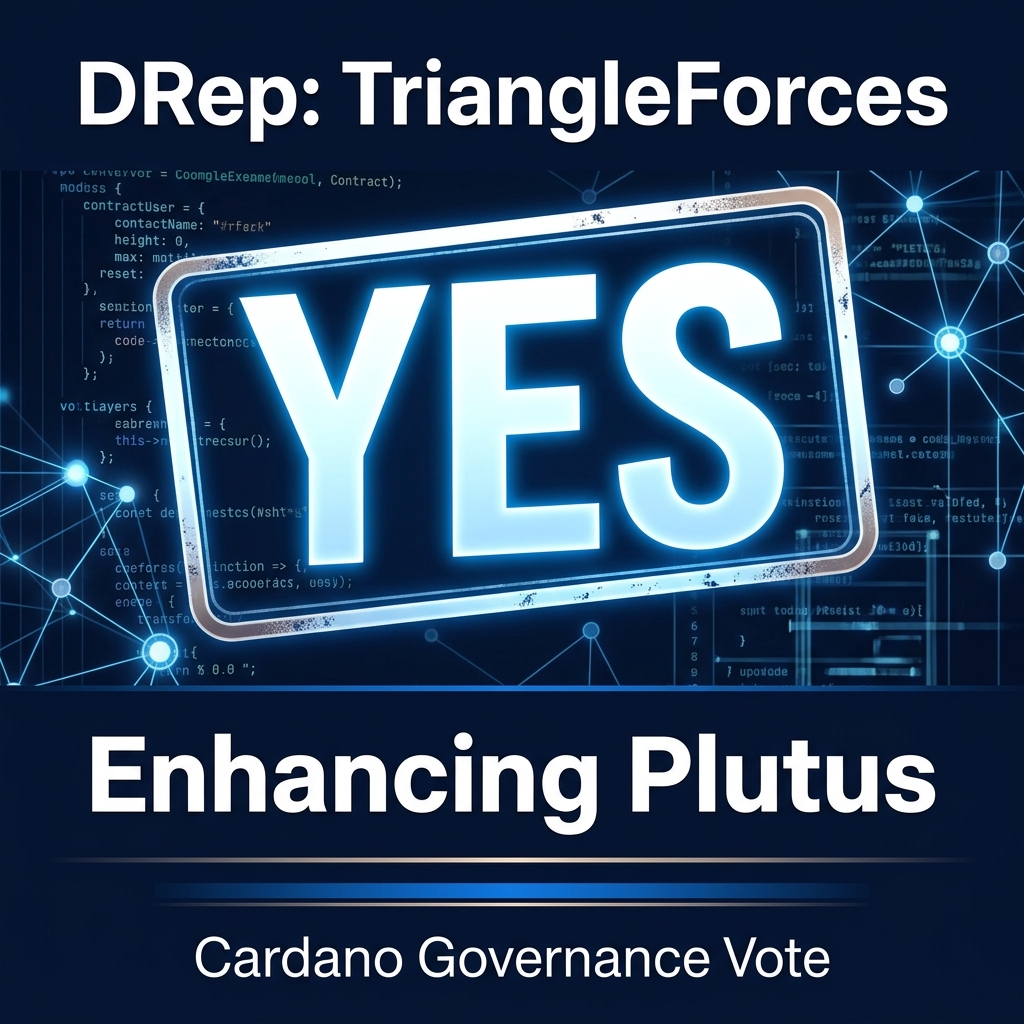
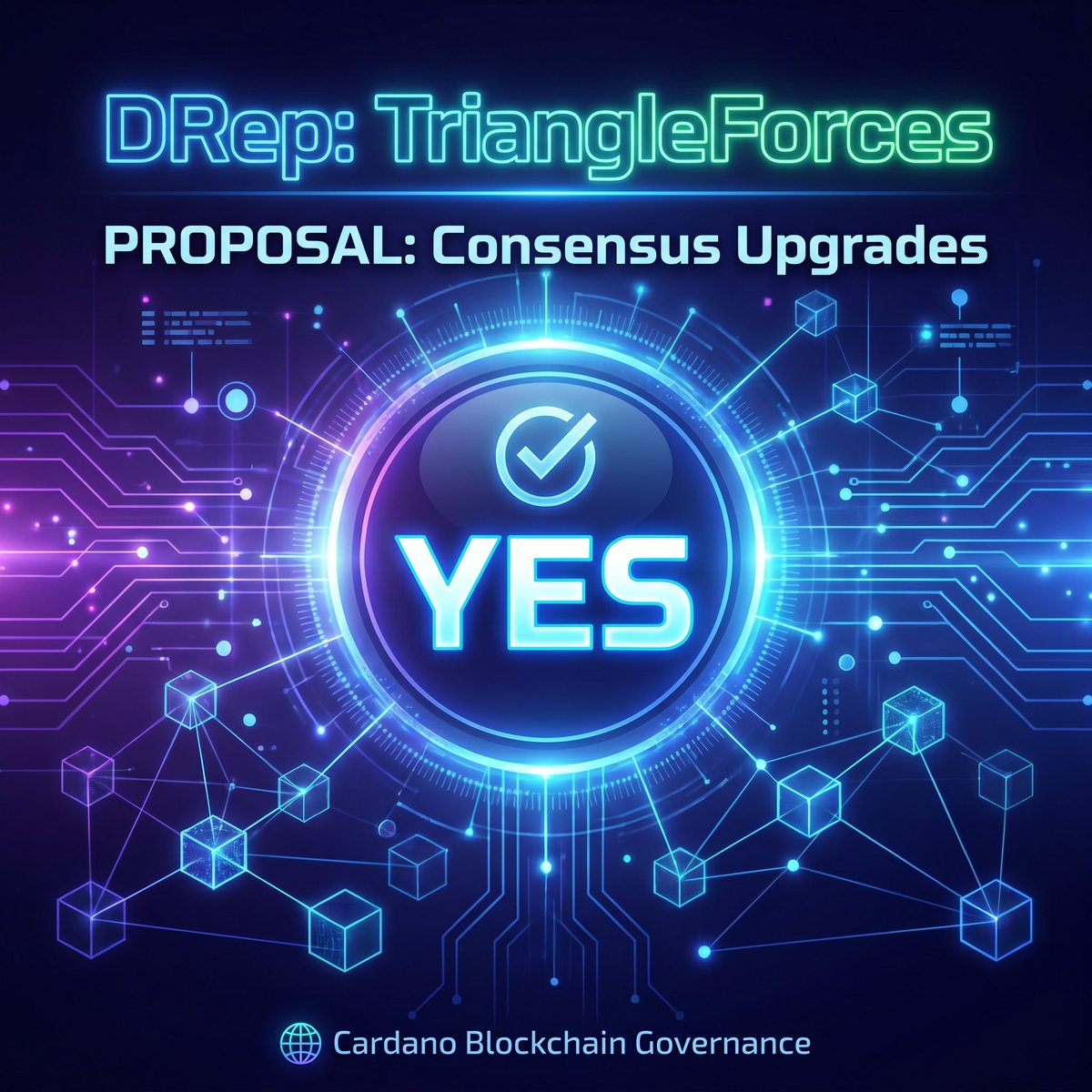
I vote Yes, not because the proposal is perfectly framed, nor do I think its' cost efficient, but because strengthening Plutus is strategically necessary at this crucial stage of the Cardano ecosystem. Full voting record and reasons are public.
3
71
I remain protective of the treasury, but starving Layer 1 of its necessary evolutionary leap is false economy.
Cardano must invest strategically in its core capabilities to ensure the network stays a tier-one smart contract platform capable of absorbing global demand.
1
2
4
109
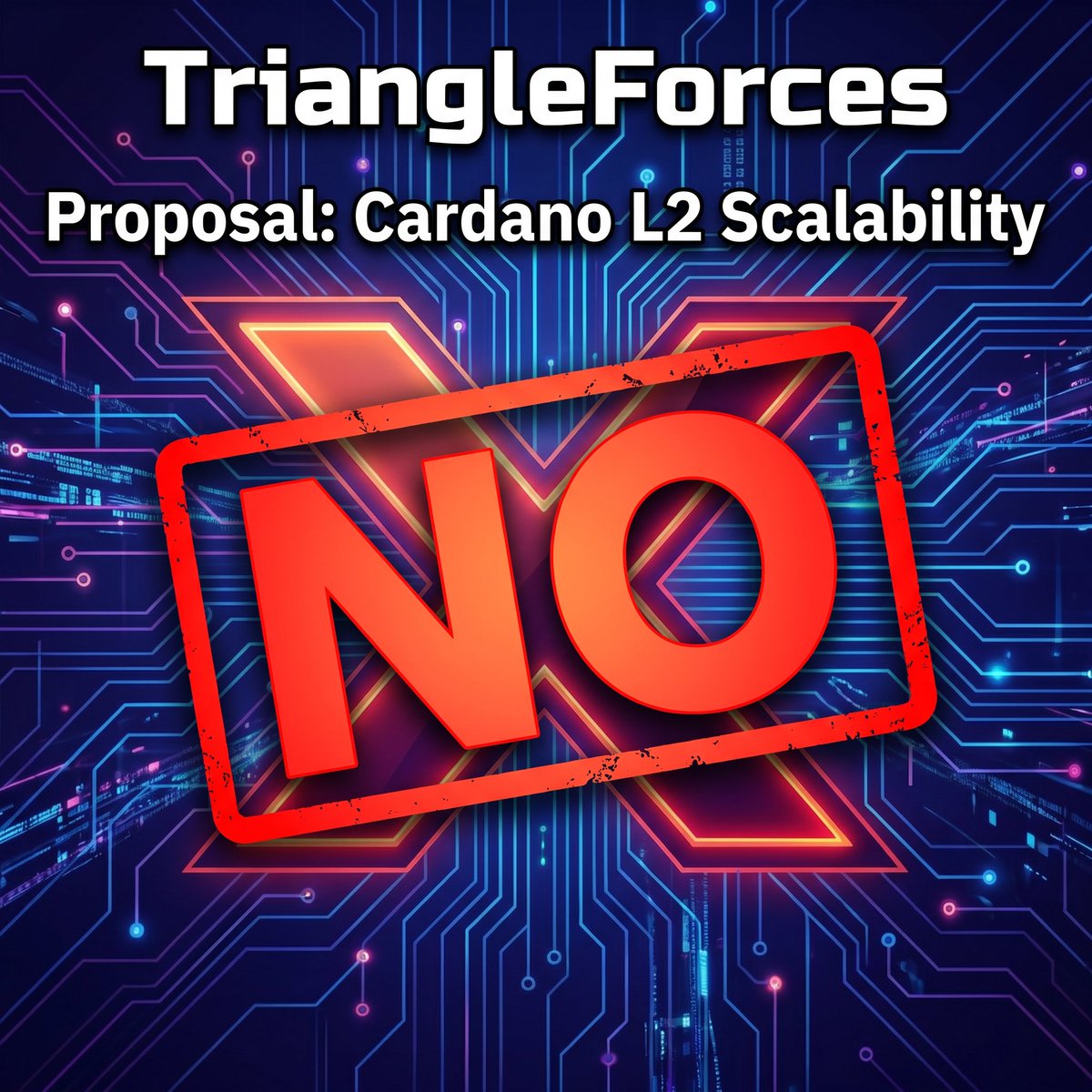
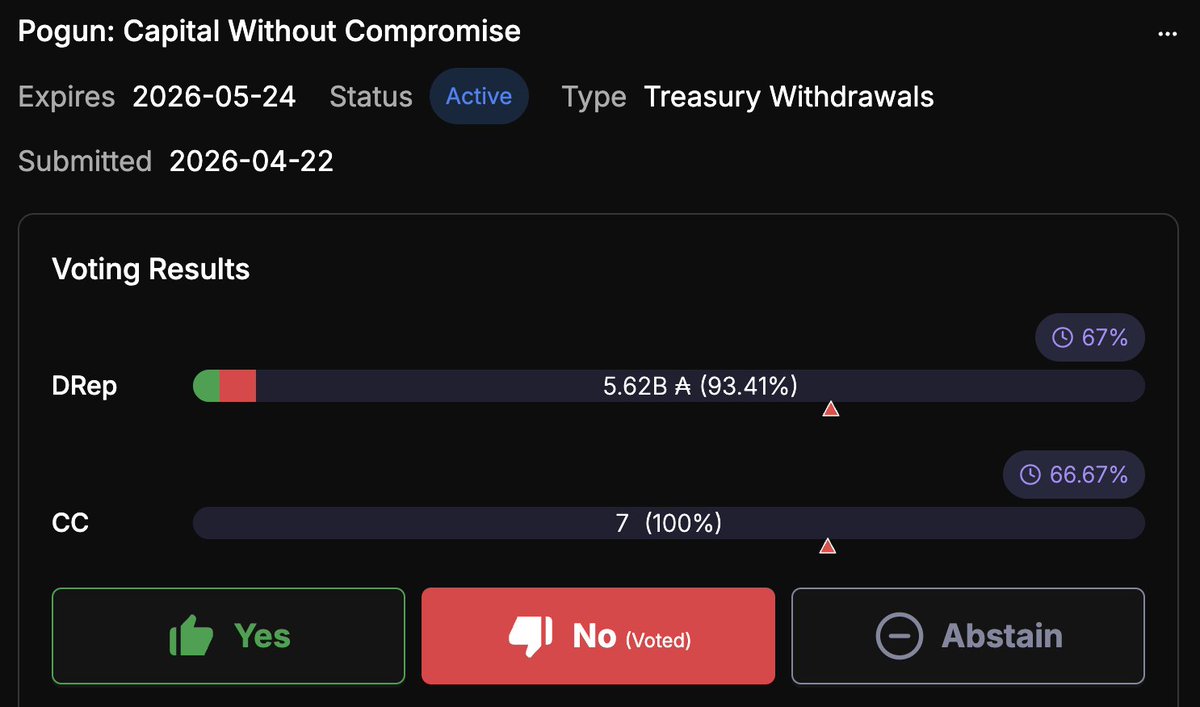
I support Cardano L2 scaling, but I do not support a bundled withdrawal on the high-level case presented.
The proposal is directionally right, but at this stage the treasury must be protected from subsidizing private execution risk under the banner of ecosystem necessity.
1
44
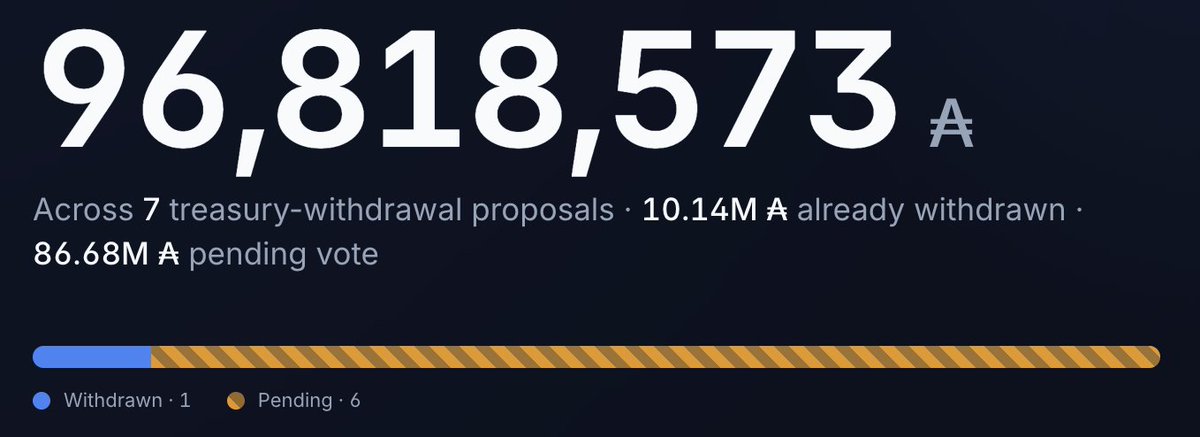
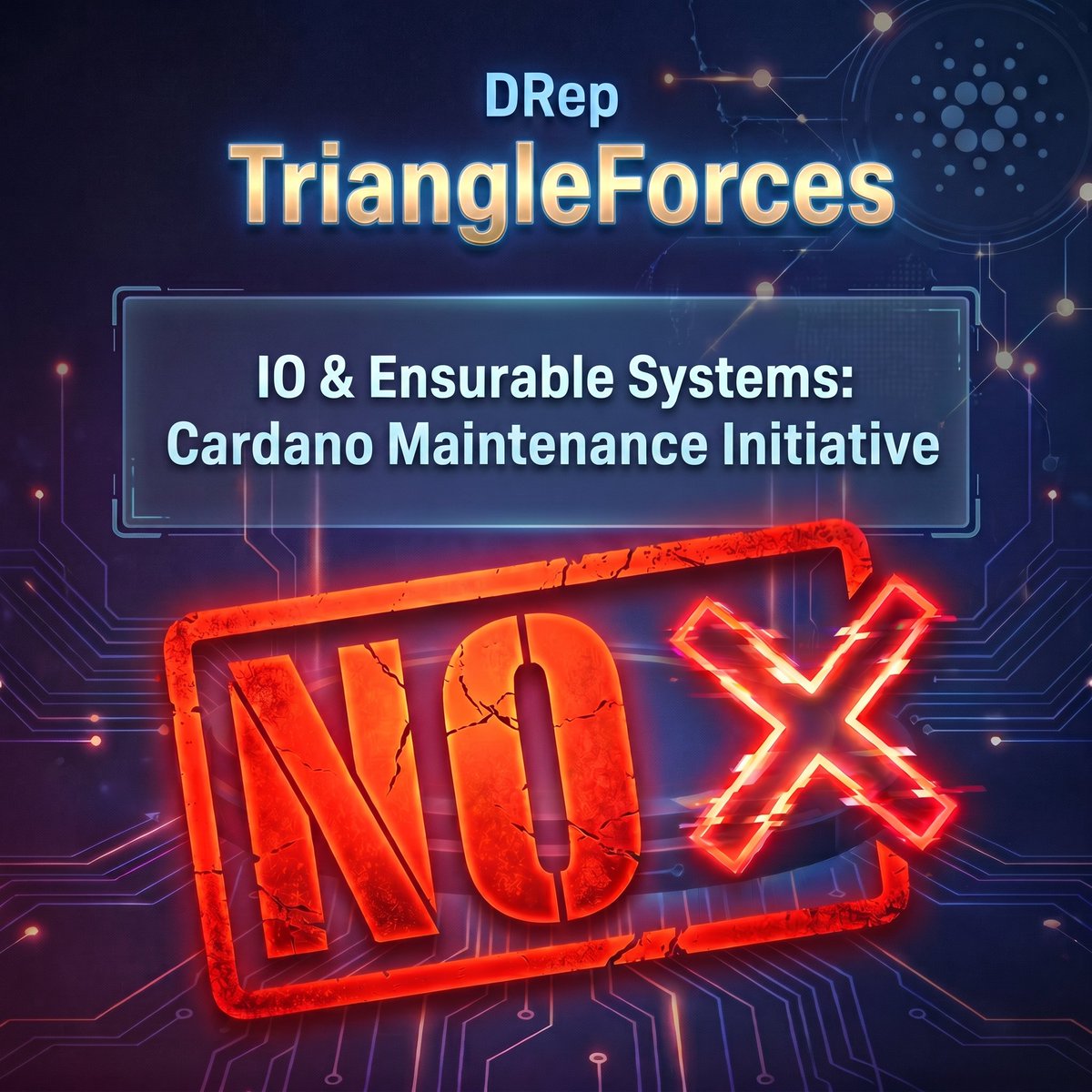
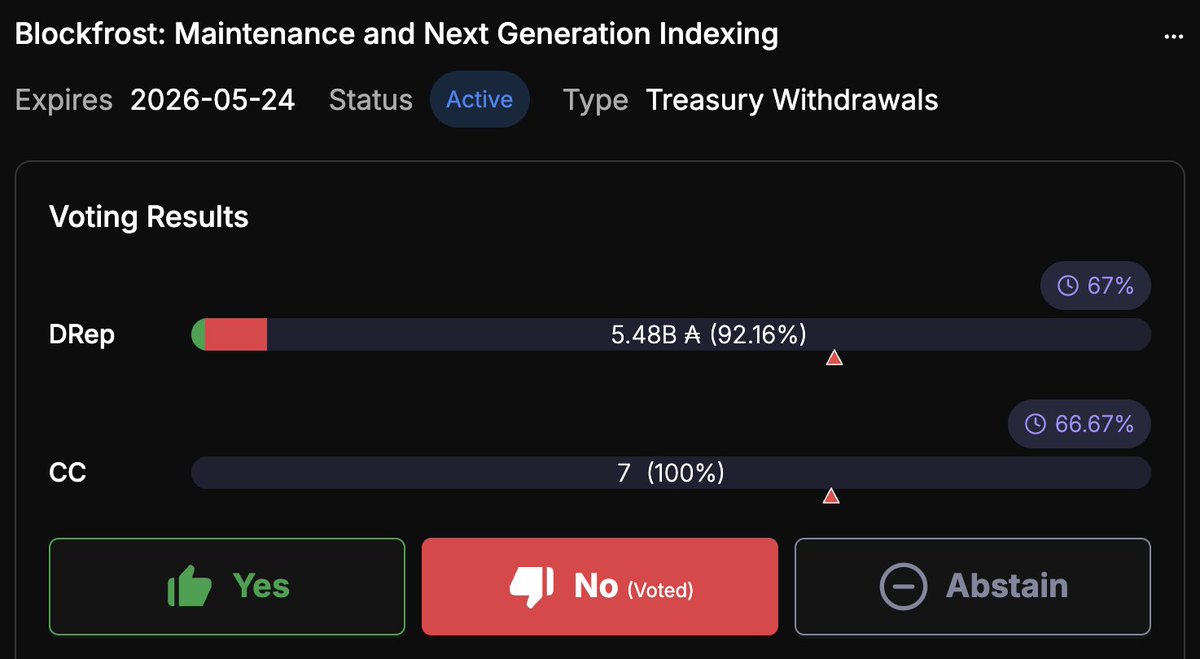
I support funding core maintenance, but I do not support a ₳62M bundled high-level ask without stronger proof of cost reasonableness, non-duplication, and competitive alternatives.
Cardano’s stability deserves funding; the treasury deserves discipline.
1
3
16
346
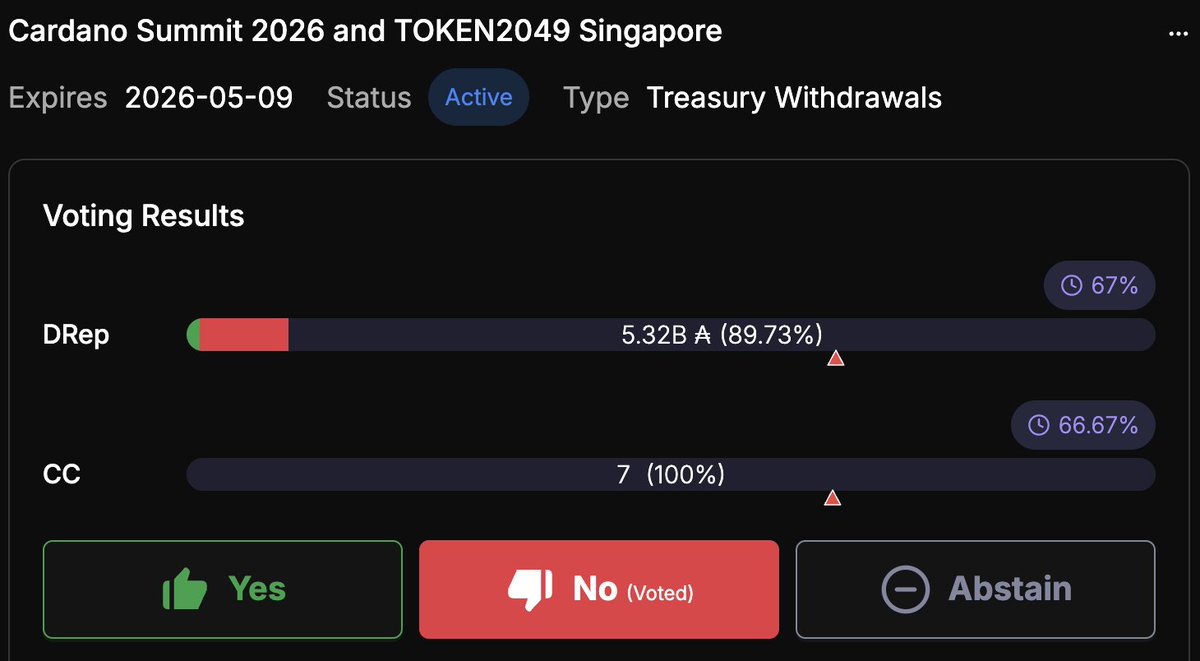
Take those funds and open small hubs in key cities, budget $200k each, two staff each, offer paid-for workshops and free events. You’d get for the whole year 25 hubs and 50 staff employed… instead of a couple of days playing platinum for a chain that’s dropped out of the top 10.

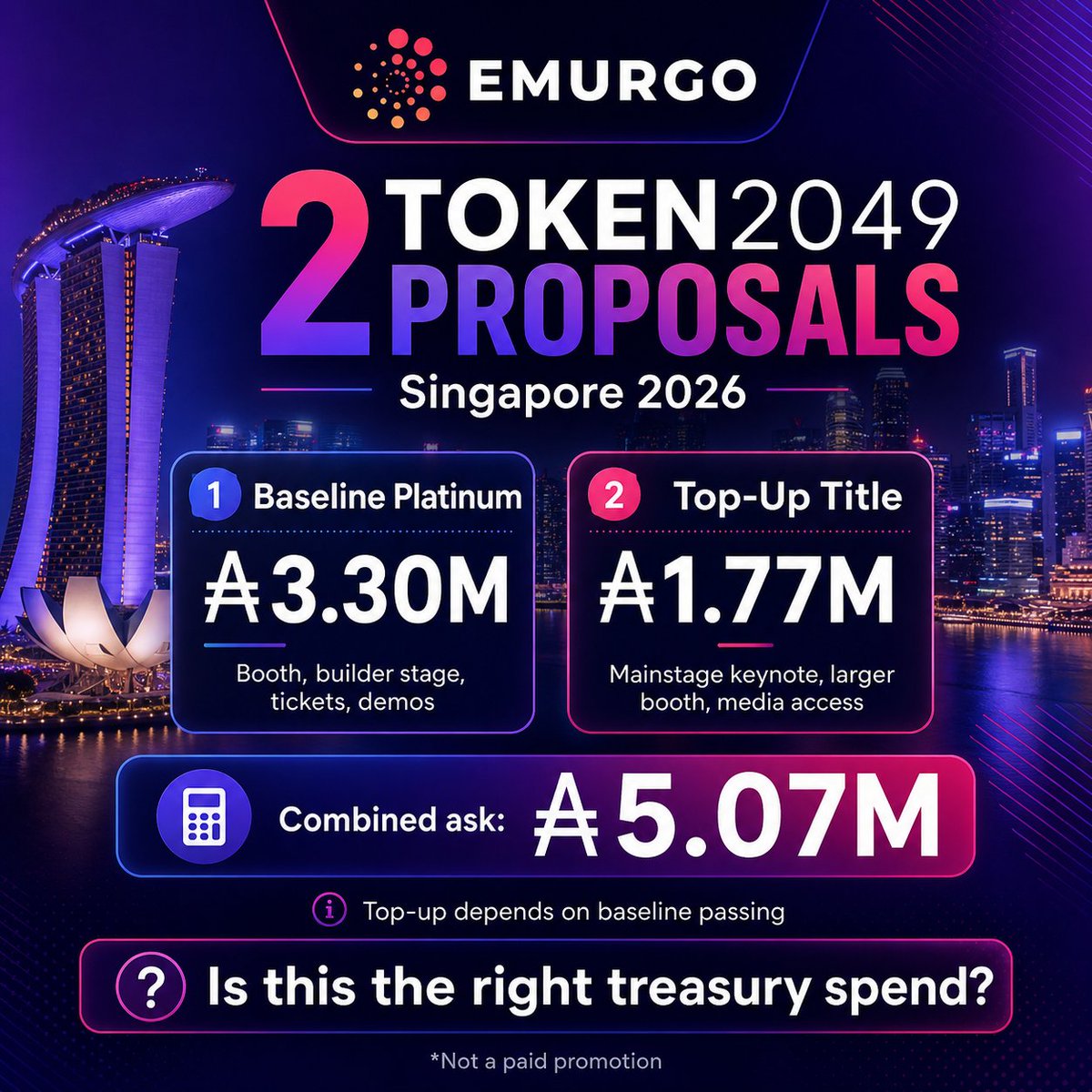
EMURGO now has two TOKEN2049 proposals on-chain.
Baseline: ₳3.3M for a Platinum Cardano presence in Singapore with booth space, builder stage, tickets, demos and networking.
Top-up: another ₳1.77M for Title sponsorship, mainstage keynote, larger booth and media access.
Combined ask: ₳5.07M.
Good exposure, but still a serious treasury spend.
Is TOKEN2049 the right place for Cardano to go loud?
*Not a paid promotion
1
1
81
I’ve been a @lace_io fan since day 1. Simple, secure, reliable. That’s how trust is built.
Lace 2 broke that trust. Releasing an update that locks wallets is inexcusable. Not to speak of the horrible UI/UX.
Making it shitty isn’t how you drive adoption.
youtu.be/T4Upf_B9RLQ?si=Ex8_…
15
4
42
2,728
The little one had to do a commercial with gen-AI for a product… this is what he came up with…:)
45