
Restore Britain.
Joined November 2013
- Tweets 30,623
- Following 909
- Followers 533
- Likes 75,613
713 Photos and videos












The Sun. retweeted

Jun 11
Reality check you say Mr Pitman?
What about your truth?
hampshirehospitals.nhs.uk/ne…
assets.publishing.service.go…
1
1
13
169
The Sun. retweeted
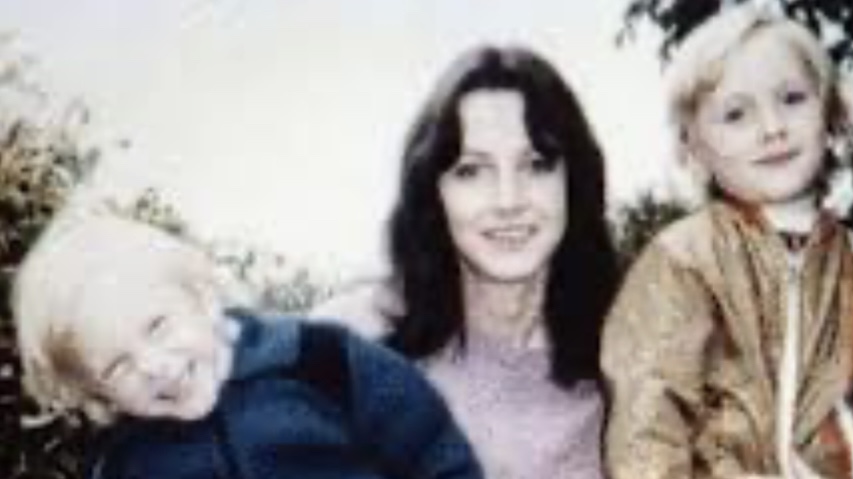
Psychopathic mass murderer & child killer Jeremy Bamber, who continues to pretend Sheila Caffell committed his heinous crimes, has been banned from communicating with the media #InnocenceFraud
2
6
308
The Sun. retweeted

7 Jul 2021
Re Michael O’Brien from 2013 by @WalesOnline
‘The judges considered that the possibility of pauses in the alleged conversation making it easier for Mr Lewis to record what was said was “fatal” to Mr O’Brien’s position, and they dismissed the application for judicial review’
1
1
1
The Sun. retweeted
7 Jul 2021
Michael O’Brien has NOT been ‘proven innocent’ of murdering Philip Saunders - this is a myth perpetuated by some of the Welsh media including the journalist Martin Shipton
The Court of Appeal overturned O’Brien and his 2 co-d’s murder convictions on technicalities of law
6 Jul 2021

@ITVWales @WalesOnline @BBCWales @BBCWalesNews
Bruce Burgess was the man who carried out the ‘lie detector’ test on convicted but exonerated murderer Michael O’Brien back in 2008
#hisnameisphilipsaunders
@AndyJehring
thesun.co.uk/tvandshowbiz/90…
1
1
1
The Sun. retweeted

Jun 8
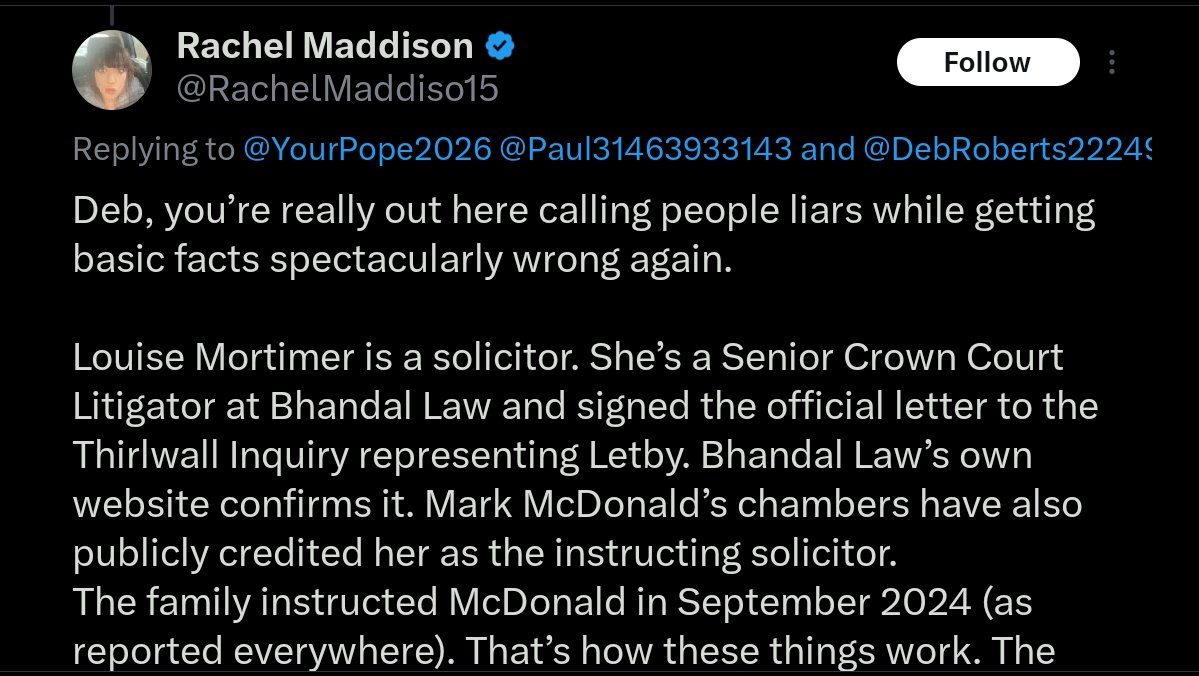
On a deeply technical level, you must have missed this.
But thanks for admitting LM isn't a solicitor. I respect that.
Even a receptionist can sign things off.
You should correct your tweet.
Hurry up.
1
1
6
115
The Sun. retweeted

May 31
While the language of "witch hunts" carries historical weight and rightly warns against miscarriages driven by speculation or institutional panic, applying it here to Lucy Letby's case overlooks the reality of a lengthy, evidence-led criminal process that resulted in unanimous jury verdicts after extensive scrutiny. True accountability isn't the same as persecution; it demands weighing contemporaneous records, patterns and corroborative proof, exactly what the original trials delivered over nearly 10 months.
The prosecution didn't rest on retrospective feelings or assumptions. Key elements included:
1) Stable infants collapsing exclusively or predominantly on Letby's shifts, with sudden deteriorations inconsistent with their clinical trajectories.
2) Specific mechanisms like air injection (supported by medical testimony on skin discolorations and X-rays), insulin poisoning (with lab results showing unnaturally high levels in non-diabetic babies), and other interventions.
3) Letby's presence as the consistent factor amid the spike in deaths/collapses at the under-resourced but previously lower-mortality unit.
4) Her own writings (e.g., notes expressing guilt and "I did this"), alongside hospital documents and behavioral evidence.
The juries at both trials heard from multiple experts and considered alternative explanations, including staffing issues at Countess of Chester. They still convicted on 14 counts initially, with a further retrial conviction. Appeals have been refused and while new defense panels (like those led by figures revisiting their own prior research) now offer reinterpretations favoring natural causes or poor care, these come after the fact and haven't yet overturned the verdicts in court.
Historical witch hunts typically targeted the powerless with spectral evidence, coerced confessions and no real forensic basis, often amid mass hysteria without individualized proof. Here, we have a trained professional in a position of trust, a police investigation spanning years, detailed neonatal records, statistical clustering, and physical/chemical indicators reviewed in open court. Systemic failures in the NHS are real and tragic (as inquiries like Thirlwall continue to examine), but they don't automatically negate individual culpability when one person's shifts align so precisely with harm.
Modern "rebranded" accountability isn't persecution when juries (presented with the full picture, not selective summaries) reach verdicts beyond reasonable doubt. The victims' families deserve recognition that this wasn't abstract speculation but a pattern the court found deliberate. Claims of scapegoating warrant rigorous review via the CCRC process, but dismissing the convictions outright as a "clear cut witch hunt" risks inverting the very evidentiary standards we should uphold. The process, with its safeguards, distinguished this from historical miscarriages.
15
3
19
1,859
The Sun. retweeted

"May have…" 🙄
And at least two of the babies attacked by Letby were Asian, which may make her the Grand Exalted Cyclops of the Cheshire KKK. Be quiet fool.
Also, Jayaram was not the only medical witness to behaviour linking Letby to a baby's death. So that's the end of that.
1
1
7
174
The Sun. retweeted
"focus on the evidence not what the media are telling you"
... says the man referring to the waffle of an irrelevant American on a radio talk show. 🤡
1
1
1
106
The Sun. retweeted

Your claims suggest to me that you're a conspiracy theorist. As for unscientific, you're the one who believes that 2 engineers have overturned paediatric endocrinologists with claims that defy basic immunology. Antivaxxers also believe things that defy basic immunology.
2
2
18
196
The Sun. retweeted

No you're riding a coat tail for publicity noise and chaos.
Its transparent. Any official complaints have been dealt with. Why do you think you have jurisdiction to pursue and step outside professional procedures?
1
2
42

New episode of Trial out today with a fascinating chat with Dr Sandie Bohin, please give it a listen mol.im/a/15681469
20
8
32
10,131
The Sun. retweeted

Jun 5
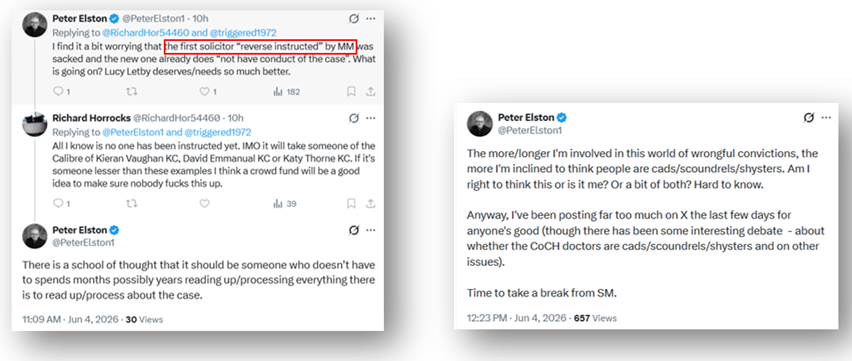
Peter Elston - Mark McDonald’s right hand man at the first press conference - has now basically confirmed what I’ve been saying for some time.
He’s openly talking about "the first solicitor 'reverse instructed' by MM" and worrying that the new one "does not have conduct of the case."
Translation: McDonald was never instructed by Letby’s actual legal team. He was operating entirely outside the formal defence structure, and now his own ally has said the quiet bit out loud.
Without a formal instruction McDonald cannot act in a legal capacity for Letby as he has no public access. His actions have been that of a layman throughout - beautifully confirmed by Lady Thirlwall.
And while they’re busy fantasising about KCs and crowdfunding, nobody can answer the real question:
How exactly would Svilena Dimitrova and Neil Aiton, or Shoo Lee, have had access to any data‑protected medical records claimed at the two press conferences? Everything they’ve ever commented on appears to come from information and Thirlwall Inquiry documents already in the public domain - and not from confidential clinical records.
So Elston’s post doesn’t just expose McDonald’s lack of formal instruction. It also accidentally underlines the absurdity of the wider Letbyist narrative: people with no access to protected records claiming to have "reviewed the evidence." Where on earth would they have got it from?
It's possibly excellent timing that Elston is taking a break from Twitter.
#innocencefraud
9
8
39
2,888
The Sun. retweeted

Jun 4
Just try responding to the questions posed Martyn.
Then I’ll show you why you’re wrong 👍
Jun 2

You don’t know what you’re talking about though.
Please explain what you think Marnerides did wrong, and therefore what he should have done.
Then I’ll methodically prove you wrong using the transcripts.
2
5
247
The Sun. retweeted

Attacking an idea requires engaging with evidence, building counter-arguments, and tolerating uncertainty. Psychologically, attacking a person bypasses all of that being cognitively cheaper. It's also often a sign of threat response.
1
2
105

The Sun. retweeted

May 12
… and medicolegally pretty much worthless.
4
3
19
1,037

Jun 3
The investigation will be comprehensive, involving a detailed examination of all evidence presented during the trials.
Letbys case will take yrs to review.
Beautiful. At least they will sift thru all the evidence... inc her bullshit under oath.
11
208
Jun 3
From what I've just read read thirlwall inquiry, letbh aint going anywhere.
The barrister for the families have destroyed maccy donut.
It's professional & precise.
Maacy d is a clown.
Fact.
5
11
554