I make stories and software. Books: Geek Sublime, Sacred Games, Love and Longing in Bombay, Red Earth and Pouring Rain.
Joined September 2018
- Tweets 7,607
- Following 946
- Followers 4,561
- Likes 3,585
890 Photos and videos







Pinned Tweet

6 Jul 2021
I'm part of an effort to build a next-generation writing environment. Check out our backstory here. wired.com/story/code-obsesse…
7
20
115
There's some mid-career Hemingway stuff that really didn't work for me, but reading The Old Man and the Sea was a transcendental experience. Sublime.
Jun 6

William Faulkner on The Old Man and The Sea:
“His best. Time may show it to be the best single piece by any of us. I mean his and my contemporaries. This time, he discovered God, a Creator. Until now, his men and women had made themselves, shaped themselves out of their own clay; their victories and defeats were at the hands of each other, just to prove to themselves or one another how tough they could be. But this time, he wrote about pity: about something somewhere that made them all: the old man who had to catch the fish and then lose it, the fish that had to be caught and then lost, the sharks which had to rob the old man of his fish; made them all and loved them all and pitied them all. It's all right. Praise God that whatever made and loves and pities Hemingway and me kept him from touching it any further.”
8
1,209
Whenever I read about the fighting in Burma and further Easy during WW II, I am struck by the extreme brutality exercised by the Japanese army. The incident that for some reason sticks with me: in February 1944, during The Battle of the Admin Box at Ngakyedauk, the Japanese overran an Allied field hospital. They deliberately and in cold blood murdered all the patients and the doctors and other medical personnel. An eyewitness account was provided by Lieutenant Salindra Mohan Basu of the Indian Army Medical Corps. Two execution shots grazed his ear, he fell over, played dead, later daubed his head with blood from a dead colleague and managed to get away.
7
21
84
6,432
It's wonderful to watch the young 'uns discover the classics. I'd also recommend The Devil's DP Dictionary by Stan Kelly-Bootle (1981) and The Hacker's Dictionary (The Jargon File), which started off as a text file in 1975. Links below.

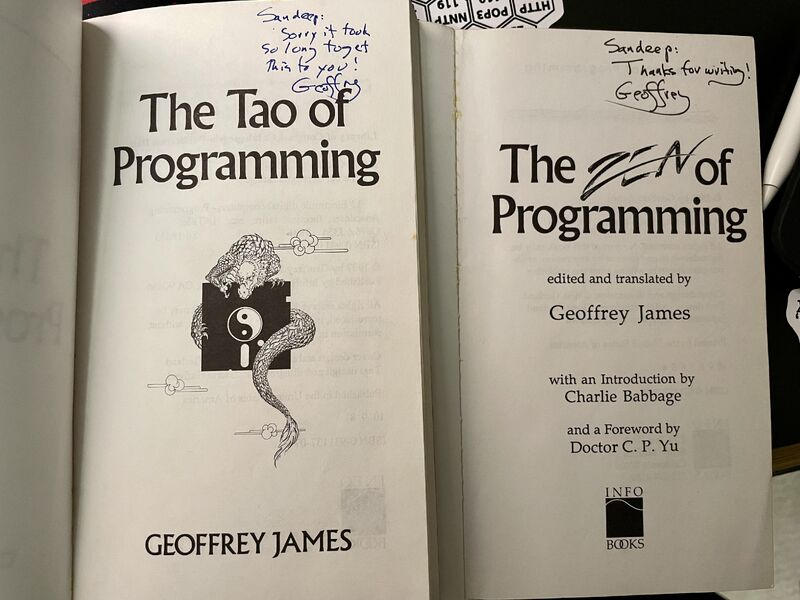
A journalist in 1987 rewrote the 2,500-year-old Tao Te Ching as a series of short parables about programmers, and the book became required reading inside Silicon Valley because every line of the joke turned out to be deadly serious.
His name was Geoffrey James.
He was not a famous engineer. He was a technology journalist who had spent years inside the offices of early software companies watching the same disasters play out over and over again.
Managers piling more programmers onto failing projects. Codebases collapsing under their own weight. Corporate hierarchies producing endless documents that nobody read. Geniuses being interrupted by meetings until they quit and went home.
He could have written a serious management book. Plenty of serious management books already existed and almost nobody in software was reading them. He decided to do something stranger.
He picked up a copy of the Tao Te Ching, the foundational text of Taoist philosophy written in China around 500 BC, and he rewrote it line by line as if Lao Tzu had been a master programmer.
The result was published in 1987 as The Tao of Programming. 151 pages. Nine books. Roughly 50 short parables. A comedy book on the surface and a philosophy book underneath, written in deliberately ornate language that made you smile while you were absorbing arguments that have aged better than almost anything else published about software in the last 40 years.
The opening line of the book is the giveaway. Thus spake the master programmer. When you have learned to snatch the error code from the trap frame, it will be time for you to leave. The joke is that he is parodying the kung fu master from the old Kung Fu TV show. The argument underneath the joke is that real mastery in software is not measured by what you can build. It is measured by how cleanly you can recover when the system fails.
The book has been passed around hacker communities continuously since the late 1980s. It sits alongside Fred Brooks's Mythical Man-Month on the required reading list of serious software teams. People who have never heard of Geoffrey James still quote his lines without knowing where they came from. The reason it has refused to die for 40 years is that every line of the parody was always disguising a piece of real wisdom that nobody else was willing to say plainly.
Here are some of the lines, and what each one is actually saying.
"Even a perfect program still has bugs."
The line is funny because it sounds like a contradiction. The truth underneath is that there is no such thing as a finished program. Every system you ship is alive. It is going to encounter inputs you did not anticipate, hardware you did not test on, and edge cases your imagination could not produce.
Treating any piece of software as finished is the single most common reason production systems fail. The masters in the book are calm about bugs because they have stopped pretending bugs are exceptions. Bugs are the default state. The programmer's job is to keep them from compounding.
"Let the programmers be many and the managers few. Then all will be productive."
The line is funny because every software company in the world does the opposite. The truth underneath is that programming is a kind of work that runs almost entirely on uninterrupted thought, and the more layers of management you stack on top of it, the more interruptions you create, the more meetings the programmers have to attend, the fewer actual hours of deep work get done.
Every manager you add to a software team subtracts more productive hours from the engineers than the manager could possibly add through coordination. Brooks proved this formally in 1975. James said it in nine words in 1987.
"After three days without programming, life becomes meaningless."
The line is funny because it sounds like an addict talking. The truth underneath is that genuine craft work produces a kind of meaning that almost nothing else in modern life provides. The programmer who has not touched real code in three days is not just bored.
They are emotionally underfed. The masters in the book understand that the work itself is not a means to a paycheck. The work is the reward. The paycheck is a side effect. Everything that interferes with the actual work, no matter how prestigious or well-paid it looks, is making the programmer's life worse, not better.
"A manager went to the master programmer and showed him the requirements document for a new application. The manager asked the master, how long will it take to design this system if I assign five programmers to it? The master replied, it will take one year. The manager said, but we need this system immediately or even sooner. How long will it take if I assign ten programmers to it? The master programmer frowned. In that case it will take two years."
The line is the punchline of Brooks's Law disguised as a koan. Adding programmers to a late project makes it later, because every new person has to be brought up to speed by the existing team, which slows the existing team down, which extends the timeline. The book teaches this in 60 words. The same lesson takes most managers 20 years of failed projects to learn, if they ever learn it at all.
The deeper pattern is the one most readers miss the first time through.
James was not really writing about programming. He was using programming as a setting for a much older argument that Taoist philosophy has been making for 2,500 years.
The argument is that the world is governed by simple principles that get harder to see the more cleverness you stack on top of them. Force does not work. Pressure does not work. More resources do not work. The only thing that works is restraint, simplicity, and the patience to let the right shape emerge.
Lao Tzu was talking about how to govern a kingdom. James was talking about how to ship software. The wisdom is the same. The kingdom is the codebase. The emperor is the project manager. The advisors are the developers. And the entire collapse of every doomed software project in the last 40 years has had the same root cause that the collapse of every doomed dynasty has had for the previous 4,000.
People mistook complexity for competence.
The book has been sitting on the internet for free for almost 30 years. You can read all 151 pages in an afternoon. Most people who run it as a joke walk away quoting it for the rest of their careers.
What James understood in 1987 is even more true in 2026. AI can now generate millions of lines of code in seconds. The bottleneck has shifted entirely. The bottleneck is no longer typing speed. The bottleneck is judgment. The bottleneck is taste. The bottleneck is the ability to look at a generated codebase and feel, without quite knowing why, that something is wrong with it. That kind of feel is exactly what the book was teaching all along.
The Tao of Programming flows far away and returns on the wind of morning.
The masters in the book were never joking. The world just took 40 years to figure out they were not.
2
6
30
1,933
Eric S. Raymond maintains a live version of The Jargon File here. catb.org/jargon/html/online-…
1
2
91
I told a student recently that using em-dashes would make her prose more effective. She didn't want to because of this AI paranoia. I love em-dashes and have been using them my entire life, as have many other writers. LLMs train on decades of texts, good and bad. They use patterns that have been working well across the years. LLM detectors make mistakes. And yet we are caught up in this frenzy of fear. Bizarre loop we are caught in.
Jun 2

No one is more annoyed by the AI revolution than people who can actually write a sentence. Basically, having any ability to write now is suspect - you will get accused of being AI at some point. It feels like you are being accused of being a witch, of holding a type of rare magic that only the machines are now allowed to have.
5
27
207
16,217
Vikram Chandra retweeted

Jun 2
Hindi and Urdu are the same in the context of spoken, what we call as Hindustani, but you will rarely hear this from a native Hindi or Urdu speaker.
There are two primary reasons for this.
One is the issue of late acceptance (adults don't change their mind very easily) in combination with ego.
The other is the problem of scholars or educated. Once you learn a language, you over focus on written script and literature aspects. The knowledge of written words is necessary and a natural step to grow in a language. But once you reach the higher levels, you tend to forget the primary purpose of language, which is communication.
So no one argues for the common person, as they consider the highest form of hindi from written, kind of a reverse mapping. So the written often is detached or a little far away from the spoken. That's why a certain Bollywood literature may be better representative of spoken & changing lingo of Hindustani which incorporates nouns from persian, sanskrit and english almost equally.
Pure Hindi and pure Urdu live in books, speeches, and identity. Hindustani lives in the mouth.
1
1
8
580
.@yajnadevam With the Janapadas, there is the famous "literacy gap" question. Why are they not writing anything before Ashoka's edict, pretty much? It's not clear what they did write, even if they were writing on perishable materials.
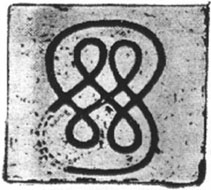
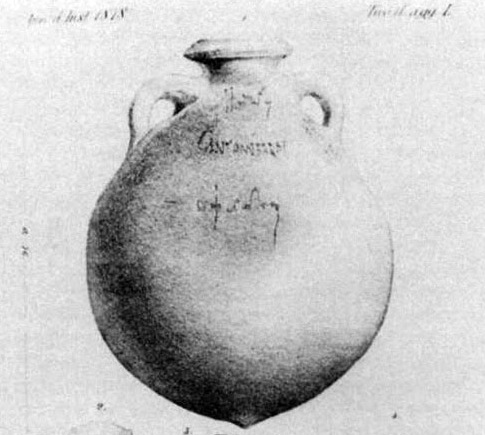
With the TN sherds, the number of non-Brahmi marks far outweighs the actual writing. The Brahmi writing are mostly names, probably ownership labels, right? What was the function of the other marks? Perhaps production marks, lineage or guild marks, votive symbols.
Nobody seems to read the TN inscriptions as measurements. This doesn't mean that the symbols and labels were not functionally related to admin and trade functions of various sorts.
The IVC was a great trading civilization obsessed with precise and uniform measurements (brick size, weights). It interacted directly with Mesopotamia. That IVC used its writing for admin purposes (measures or otherwise) is entirely likely.
Potter's marks and similar are often pure symbols. To read all marks (even now) as phonetic writing is precluding many possibilities. The interface on my phone (which I'm looking at now) is full of symbols.
Even when letters do appear on this surface, they have many and complicated meanings. "5G" tells me something about my connection speed. The letter ABC under the number 2 on my keypad comes from the old legacy exchange number dialing system ("PEnnsylvania 6-5000"), which later got adapted into T9 text input.
The meaning of these symbols and text symbols is heavily and inevitably interwoven with the socio-cultural-technological context. Why are there no letters under the number 1 on my keypad?
Answer: The 1 key has no letters because, in the old North American system, a number couldn't begin with 1 or 0. A leading 1 was the long-distance or toll signal and was unreliable on early automatic switches, and 0 was reserved for the operator.
Exchange names mapped their first letters to the first digits, and no name ever started on 1 or 0, so those keys never needed letters.
This convention was originally American. Now users across the world see and use these structures. Symbols flow across geographies. The context gets even more complex.
This is why it's so damn difficult to figure out the semantics, particularly when you don't know the underlying language.
The notion that the IVC people would have used only some rough measure like "which pot is bigger" for estimating value is strange, to put it mildly. Measurement or other markings for tax and other purposes is not "presentism," it shows up everywhere in the ancient world.
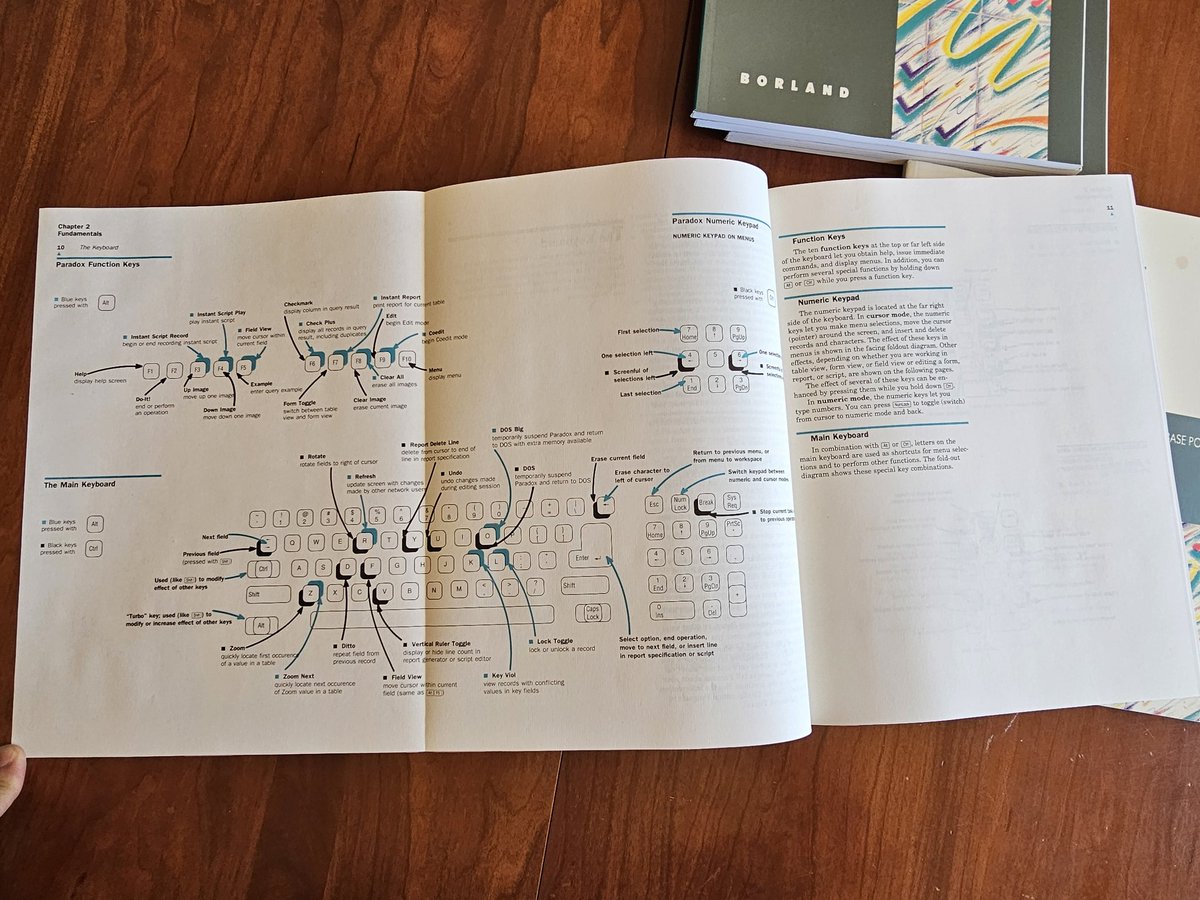
Administrative functions are arguably the origin of writing. IVC pot markings are material UI. What they were supposed to mean to contemporary users is the marvelous and complex question.
Jun 1

Did it happen in Tamil Nadu or Sri Lanka or Janapadas?
2
3
5
1,967
May 31
Ancient Art of War (1984) was a pioneer--one of the first in real-time strategy, first in real-time tactics. You could drop down from strategy to tactics. Amazing for the time. Close Combat (1996) was the first to do real-time morale modelling. Get your people shot up and the refused orders. Both were incredible playing experiences.
May 31

Anyone who used a computer between 1985-2010. What’s the one game you still think about?
1
3
1,329
May 31
.@yajnadevam What's your timeline for the IVC script? When was it pristine and when did it become mature?
May 31
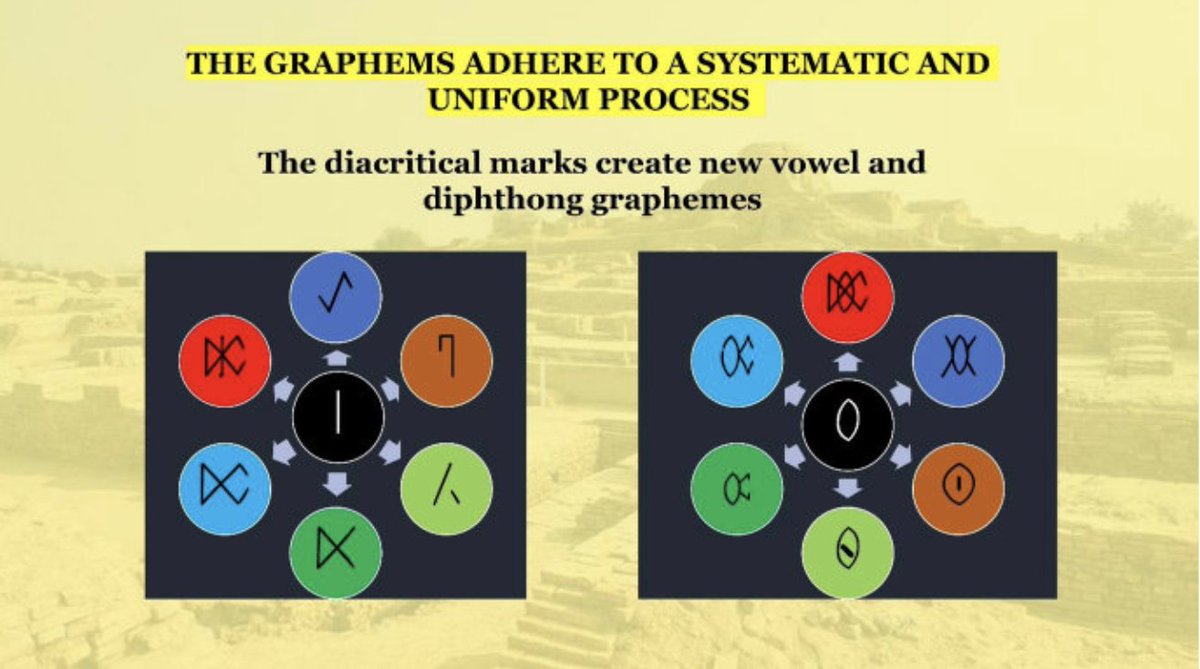
Many decipherers try to fit in "diacritics" into the Indus script. Diacritics are a late-stage technology. Pristine scripts are highly iconic and visual at their birth. The concept of abstracting a sound modifier down to a floating dot, dash, or accent line requires centuries of alphabetic evolution, standardisation, and script-borrowing, none of which exist when a pristine script is being freshly minted.
The probability of diacritics in the IVS is nearly zero. The conjoined glyphs should be first attempted to be read as just glyphs that have been squeezed in for space.
1
7
2,556
Vikram Chandra retweeted

May 30
Why much of the rightwing hand-wringing over the Mohenjo Daro seal stems from under-appreciation of the historical process and context:
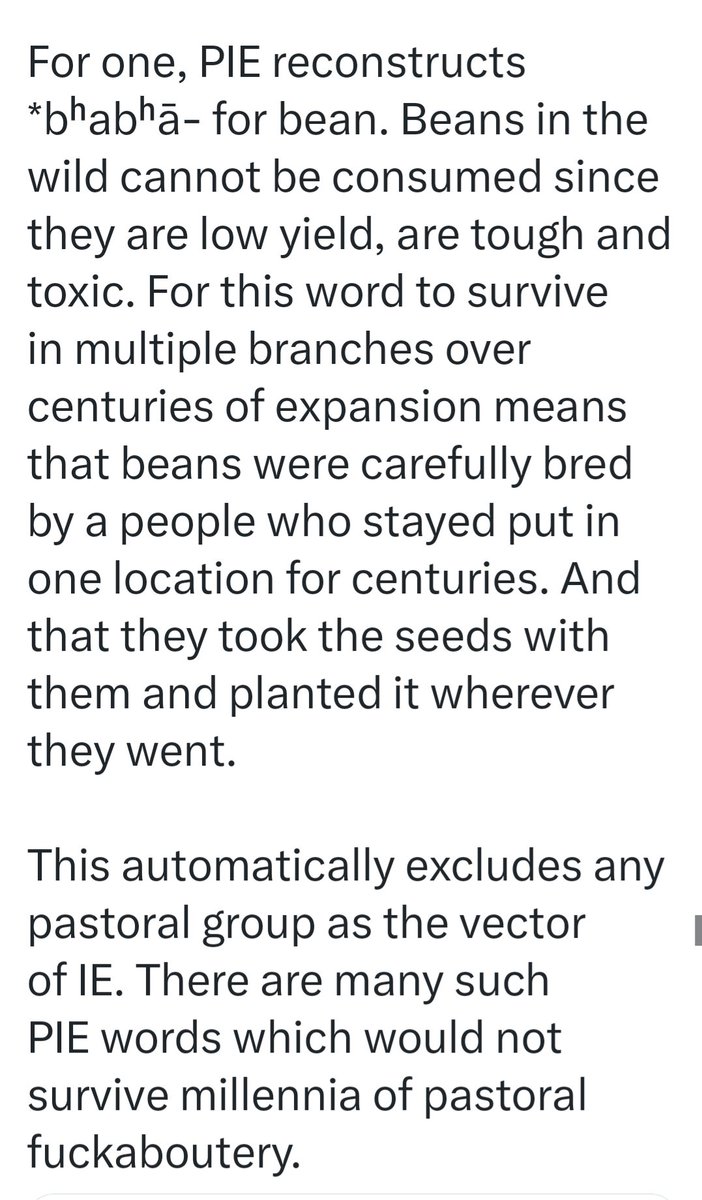
The Vedic period begins AFTER the Harappan Civilization started declining and after the arrival of the Indo-European language-speaking pastoral tribes from the Eurasian Steppe. Therefore, any Harappan deity identified IS a pre-Vedic one. In the centuries that followed, as the incoming culture mixed with the existing culture, there were adaptations and borrowings. Some Harappan customs and practices continued as folk traditions and found their way into later Sanskrit texts. The sacredness of the peepul tree, or designs and motifs in jewellery and pottery, games of dice... This is to expected and is the natural result of mass migrations.
Excerpt from Early Indians paperback edition, Pages 203 to 205:
"Remnants of a civilization
The Vedic corpus was composed over many centuries, and it is important to remember that the discrepancy between it and the Harappan Civilization reduces over time. The later the Vedic text, the more the likelihood of finding connections to the Harappan cultural heritage. If the Rigveda was antagonistic to, and disdainful of, ‘shishna-deva’, by the time of the Upanishads, composed between 500 BCE and 100 BCE, this was no longer the case. The number of borrowed words from Dravidian languages is also higher in the later Vedic texts than in the earlier ones. There are many Harappan seals, sealings and terracotta figurines that remind one of yoga, but there are no clear references to yoga in the Rigveda. But by the time of the Katha Upanishad, there are explicit references to it. A Harappan seal shows a figure wearing a horned headdress sitting in a yoga-like posture surrounded by animals, and it has been interpreted by some as an early depiction of Siva. Many historians and archaeologists reject this interpretation on the grounds that this is projecting later-day concepts into the distant past. While that may be so, it still leaves open the possibility of a convergence between later-day ideas of an ascetic Siva and the seal images, beliefs and myths of the Harappans.
This is not surprising because over time incoming cultures often do adopt, adapt to and intermingle with existing cultures, and the Arya and the Harappans may have done the same to varying degrees across cultural domains and geographic regions. And, of course, a lot of the cultural continuity from the Harappan Civilization is reflected in popular practices rather than in the Vedic corpus.
The way houses are built around courtyards; the bullock carts; the importance of bangles and the way they are worn; the manner in which trees are worshipped and the sacredness of the peepul tree in particular; the ubiquitous Indian cooking pot and the kulladh; the cultic significance of the buff alo; designs and motifs in jewellery, pottery and seals; games of dice and an early form of chess (dice and chess-like boards have been found at multiple Harappan sites); the humble lota which is used to wash up even today; and even the practice of applying sindoor and some measurement systems – the ways in which we carry on the traditions of the Harappan Civilization are too many to count.
A vase discovered at the Harappan site of Lothal in Gujarat has a painting that shows a crow standing next to a pitcher with a deer looking back at it, seemingly depicting the tale of the thirsty crow in the Panchatantra. So some of the tales we tell our children may have been the same ones told by the Harappans to their own children.
What ended around 1900 BCE, therefore, was the power structure that had kept the civilization going for over seven centuries, and with it went the script, the seals, the standardized bricks and some of the ideology as well – such as the unicorn. But many other things that are part and parcel of the common man’s life continued, along with some of the philosophical and cultural underpinnings of south Asia’s first civilization..."
51
86
281
26,940

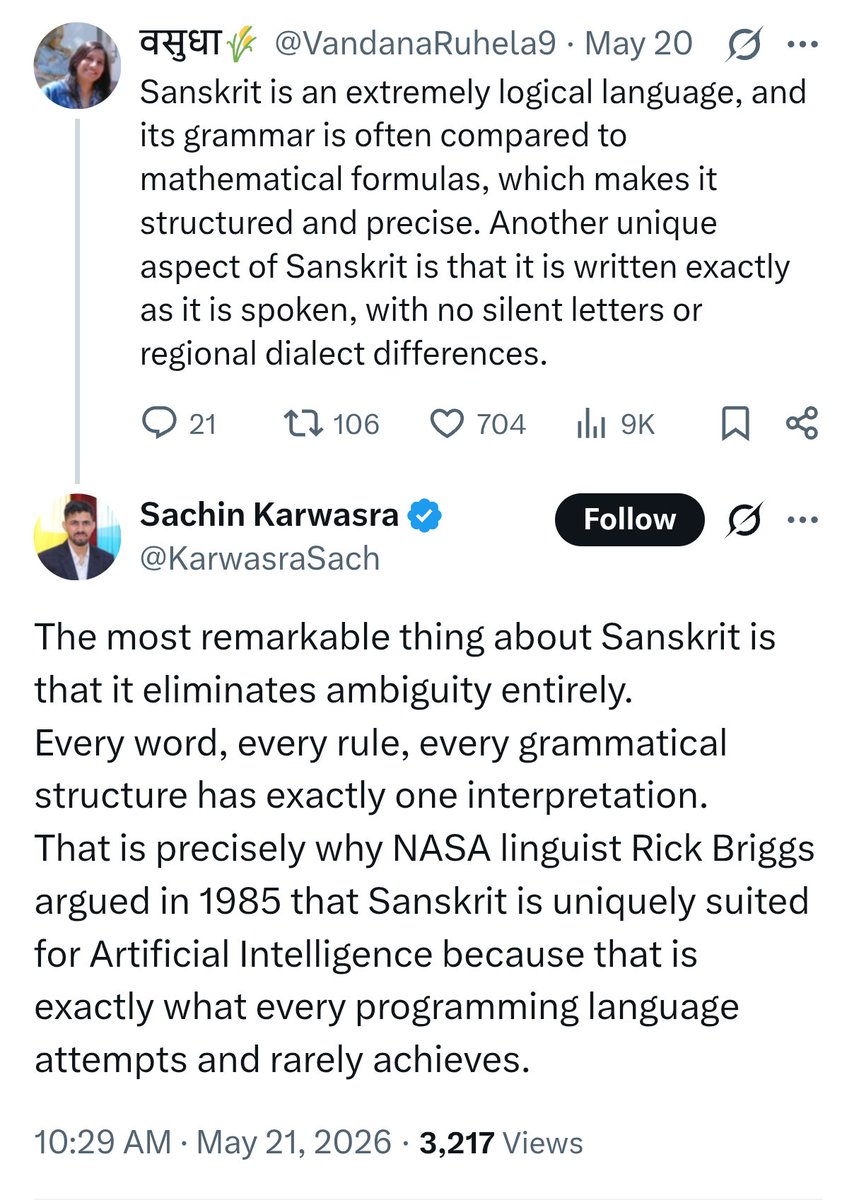
Why do Indians mythologize and hype Sanskrit without actually learning it. Sanskrit definitely has ambiguities and words can have multiple meanings. Consider the phrase हरिः गच्छति which can have multiple meanings without context.
May 22

So many inaccuracies:
1. Sanskrit eliminates ambiguities.
2. Sanskrit is written exactly as it is spoken with no regional dialectical differences.
3. Every Sanskrit word, grammar rule and grammarical construction has only one interpretation.
4
2
37
2,988
May 22
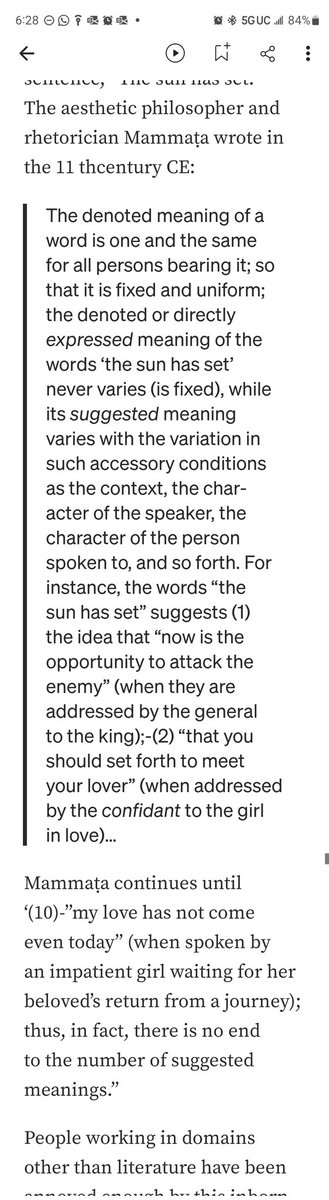
Oh, man. Here we go again. That Sanskrit was formally defined by Panini doesn't mean that it doesn't produce semantic ambiguity. "Natural" spoken or written Sanskrit is semantically as ambiguous as any other language on earth. Briggs was talking about an artificial rule-bound language designed by Navya-Nyāya philosophers. This very specialized and very artificial dialect was never spoken or written in daily use. Everyday Sanskrit is formally precise and amenable to parsing, but it is ambiguous. This is why the Navya-Nyāya guys created their dialect in the first place. Ambiguity is an unavoidable aspect of natural language. This is why you need artificial context-free languages when you search for semantic precision.
May 21

The most remarkable thing about Sanskrit is that it eliminates ambiguity entirely.
Every word, every rule, every grammatical structure has exactly one interpretation.
That is precisely why NASA linguist Rick Briggs argued in 1985 that Sanskrit is uniquely suited for Artificial Intelligence because that is exactly what every programming language attempts and rarely achieves.
4
18
78
6,227