
applying and developing Value Management practice internationally #valuemanagement #value #management
Joined February 2011
- Tweets 1,062
- Following 221
- Followers 89
- Likes 872
27 Photos and videos
















A goal for Scotland. A goal for ALL OF SCOTLAND! 🏴🏴🏴
John McGinn fires his nation ahead against Haiti!
#FifaWorldCup

100
248
3,460
1,076,452
Michael Graham retweeted

Jun 11
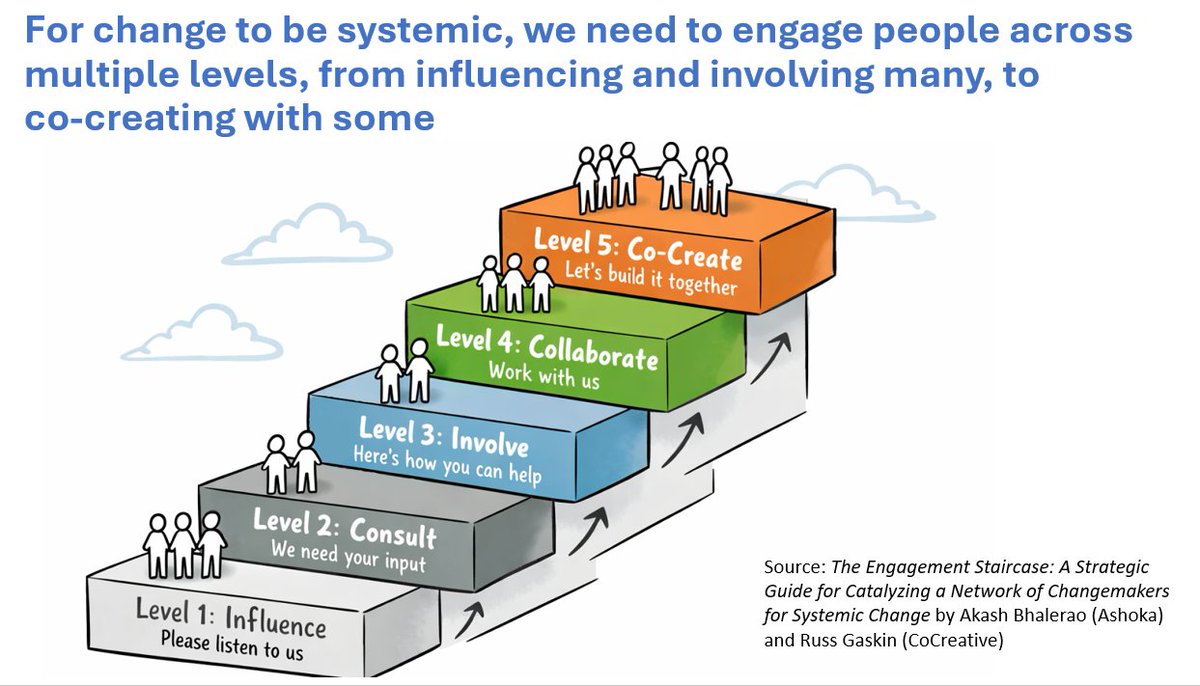
If we want change to be systemic, we need to engage people across multiple levels, from influencing and involving many, to co-creating with some.
The "Engagement Staircase" from Russ Gaskin (CoCreative) and Akash Bhalerao (Ashoka) is a really helpful, research-informed framework for thinking about who we need to engage and how.
Their core premise is that engagement is not a single act. It exists on a spectrum of levels, from communicating to many, through consulting, involving, and collaborating, to co-creating with a smaller core. Each step represents a progressively deeper level of stakeholder participation, ownership and shared power.
In health and care, that tends to mean a lot of communication and consultation, and not enough collaboration and co-creation. We often inform people about change. We ask for their views. We call it engagement. But informing is the bottom step of the staircase, and consulting, however well-designed, still positions the leader as the one who decides.
Working at higher levels of engagement requires a different kind of change leadership capacity. Co-creation is likely to mean relinquishing control over outcomes. Collaboration requires an ongoing investment in relationships, not just in on-off tasks. Most change leadership development is better at building lower-level engagement skills than upper-level ones.
In our sector, there is a big push towards “co-production” or “co-creation” which is a positive thing. However, It is also problematic to think that we need to co-create with a lot of people. The higher up the staircase, the fewer people are involved, and that's by design. We communicate to many; we co-create with some. We have to be intentional about this distribution. The risk is trying to get everyone to the top step, or, just as problematic, keeping everyone at the bottom. Both are strategic errors.
We should seek to work across all five levels simultaneously. It’s about holding large-scale awareness and influence across a wide network while nurturing a smaller network of co-creators who are deeply invested in the work. This requires thinking about engagement like a portfolio, mapping who needs to be where on the staircase, and actively managing upward movement over time.
There is also an equity dimension. Who gets invited to collaborate and co-create? In too many change initiatives, the higher levels of engagement get reserved for those who already hold formal power or existing relationships with the change leader. Creating the conditions for systemic change means actively seeking out people whose experience is closest to the problem, even when that requires bridging structural divides.
We might treat the Engagement Staircase as a mirror - reflecting on which levels we are working at, with whom, and what it would take to move the right people to higher levels of ownership of the change.
The article: lnkd.in/eaDX8z5p. It has links to some great resources.
26
63
3,873
Should you be a standards maker? Now is your opportunity.
linkedin.com/posts/ukvaluema…
6

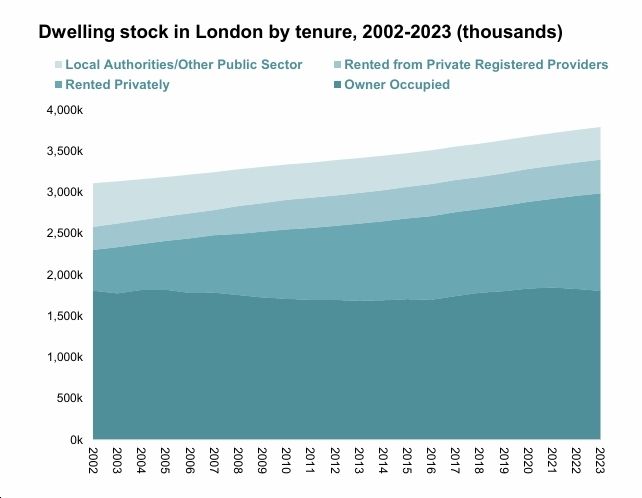
This graph is a shocker, the fixes are easy, just undo what Thatcher did:
- End right to buy totally
- Let councils borrow at discount rates from the Bank of England for house building
- Reintroduce rent controls
No cost to the tax payer and will create revenue stream for councils.

The benefits of the growth in London's population and employment over the last quarter of a century have largely been captured by private landlords. The city is not an example of economic dynamism but of rentierism. More ...
fromarsetoelbow.blogspot.com…
5
26
34
1,360
I just signed a @theactionnet petition: Scotland Needs a Nature Minister. Sign here: actionnetwork.org/petitions/…
10
Michael Graham retweeted

May 20
Ben isn’t exaggerating about the order of magnitude difference.
In constant $:
🇬🇧 HS2: $626 mn/km
🇫🇷 LGV to Bordeaux: $43 mn/km
🇮🇹 Brescia–Verona: $63 mn/km
🇰🇷 Suseo line: $89 mn/km. Pricey. But that’s because it’s 87% in tunnel.
May 20

HS2 was a brilliant idea for £10bn, and is a terrible one for £100bn. That’s why getting costs down is the most important thing for Britain to do if it wants infrastructure abundance.
50
296
2,726
340,550
Michael Graham retweeted

May 20
HS2 was a brilliant idea for £10bn, and is a terrible one for £100bn. That’s why getting costs down is the most important thing for Britain to do if it wants infrastructure abundance.
May 20

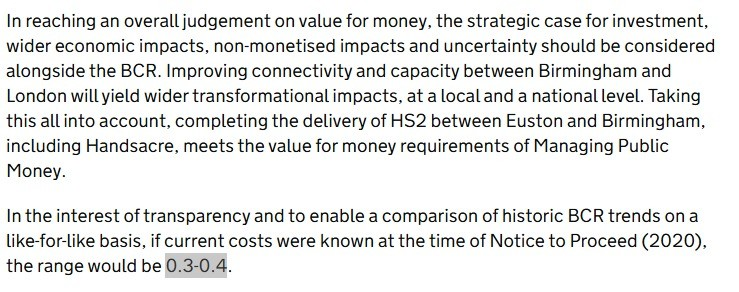
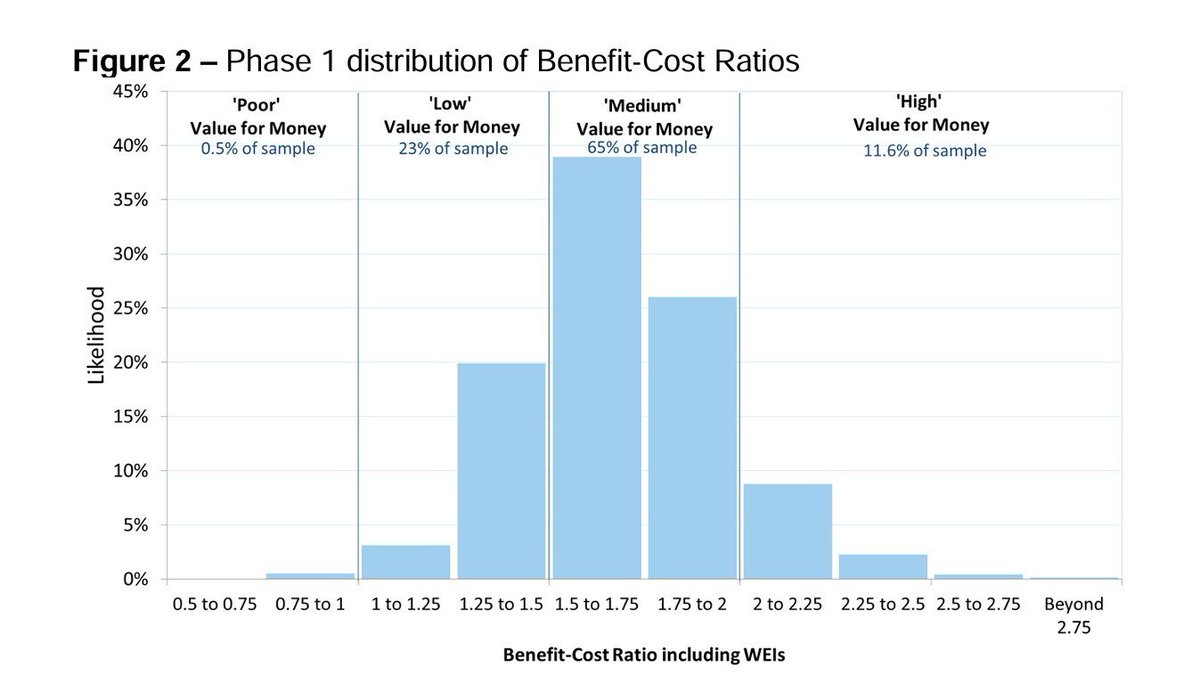
Government now calculates HS2's benefit cost ratio to be 0.3-0.4
The original 2013 business case said there was a ZERO per cent chance the BCR would be below 0.75
34
46
515
255,248
Michael Graham retweeted

Apr 27
📢 Early bird registration discount extended to May 15 📅
Register for the 2026 Value Summit, being held June 8-10 in Milwaukee, before May 15 to take advantage of the discounted rates! Visit value-eng.org/2026ValueSummi… to register.

1
16
Michael Graham retweeted

Feb 2
This guy built 9 different types of bridges made out of LEGO to demonstrate the complexity of each one.
They get better and more advanced each each time.
68
1,148
10,256
621,816
Michael Graham retweeted

Jan 27
The scale of this landslide is mind-blowing!
About 1,500 people have been evacuated from Niscemi in Sicily after a landslide caused by heavy rain from Cyclone Harry tore through a hillside on the town’s edge.
The landslide, which started moving on Sunday, has now formed a 4 km-long chasm that keeps widening, putting homes and the historic centre at risk of collapse. Officials say buildings within 50 to 70 metres of the slide are expected to fall.
No one has been hurt, but homes have been damaged, schools are closed, and the road to Gela is shut. Ongoing movement and more rain are making the situation worse.
📹 Italian Fire Brigade
58
672
2,445
113,315
Michael Graham retweeted

Jan 20
An across-government technical assessment published today recognises that "nature is the foundation of national security" and that "every critical ecosystem is on a pathway to collapse". A rational response to this would be to get very serious about nature recovery.
gov.uk/government/publicatio…
29
191
319
14,262
Michael Graham retweeted

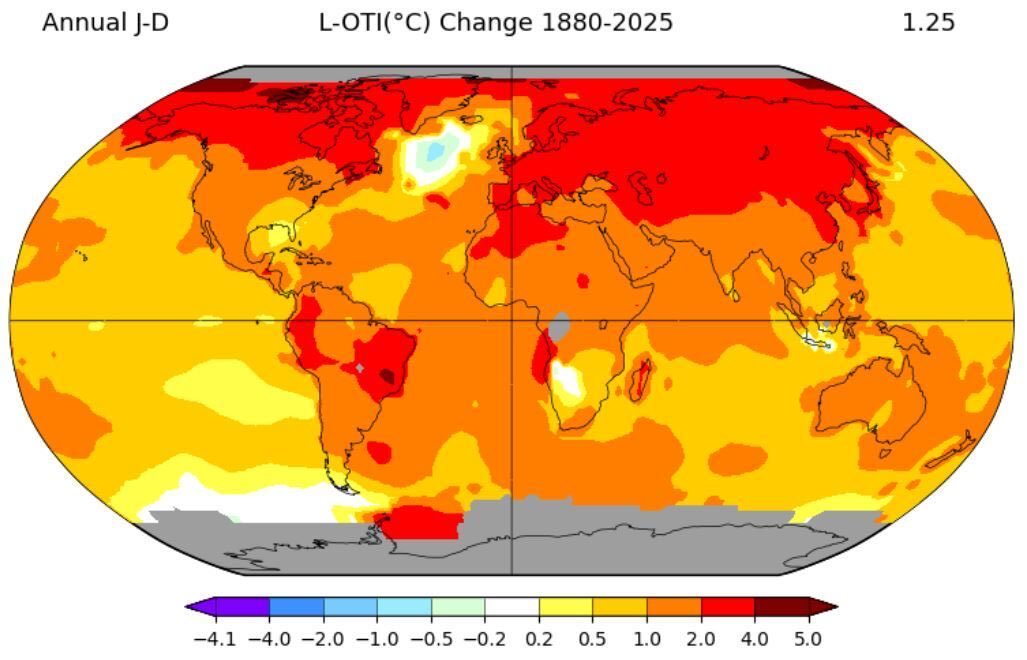
Trouble understanding the idea of an ‘average’? Then just look at a map of temperature change since the year 1880. It’s from NASA.
12
71
682
7,486

Registration is now open for experts interested in reviewing the first draft of the IPCC Methodology Report on Inventories for Short-lived Climate Forcers!
Register here 🔗 apps.ipcc.ch/comments/slcf/ until midnight CET on 13 February 2026.
Read more 🔗 bit.ly/SLCFfod

8
34
49
16,777
Michael Graham retweeted

Jan 9
Ministers and advisers often complain about how hard it is to make government work. They pull a lever and nothing happens.
I've been lucky enough to work in govt in several guises. Here are 14 lessons on how to get things done that I learnt the hard way.
(Please note I’m not giving a view on how govt should work or if it should be reformed. But rather how best to make things happen within the confines of the current system.)
1. KNOW WHAT YOU WANT AND SET A DIRECTION.
Sounds obvious but it is surprisingly common for Ministers to not ask for anything.
The civil service flooded their time with advice and questions, and the Minister responded. But the Minister never put a fresh demand on the system.
They never invented something new or decided to go in a new direction, said it had to happen, and forced the civil service to reorganise itself to deliver.
This isn’t just about being ‘demanding’; plenty of Ministers know how to fuss about small items of business.
They splash around on the surface while the river carries on its usual course. What’s hard, and rare, is for Secretaries of State to redirect the river.
That is a lot of work. The first reaction of the civil service will be fatigue - they are already busy.
But deep down, all officials know that Secretaries of State with clear demands make for happier departments.
The civil service craves that direction. Without it, they float in the wind, buffeted by external events, the media and whims.
2. BE WILLING TO UPSET PEOPLE.
If you redirect the river this will mean new winners and new losers.
The civil service - incentivised to be risk averse - will raise this as a reason to take no action. This fear of “new losers” is one of the common reasons for Government inertia.
You have to look past these concerns, make the trade-off, tell people you accept the downside and that there will be costs but we have to get to a new position.
You have to provide the political cover for unhappiness.
3. MAKING IT HAPPEN IS YOUR RESPONSIBILITY.
It’s a myth that an adviser spends their whole time practicing “dark arts”, wooing MPs or conspiring with the media.
A good adviser spends 90% of their time project managing priorities.
What does that mean?
It’s basic stuff. Meet the team responsible on Monday afternoon. Then Thursday. Then Monday again.
Repeat until it's done.
If you aren't willing to do this then don't complain if nothing happens.
4. PEOPLE, PEOPLE, PEOPLE.
Steve Jobs once said “the most important job of someone like myself is recruiting”.
A good startup CEO spends 80% of their time recruiting.
I guarantee you that the Prime Minister, Ministers and advisers all spend <10% on recruitment.
This is madness.
Go find the best talent.
Identify the best civil servants in the system and persuade them to work in your department.
Recruit from outside.
5. ONLY EVER WRITE “GOOD” ON A MINISTERIAL SUBMISSION.
Ministers receive a red box of memos at the end of each day.
These memos - submissions - have a covering page in which advisers can pass their commentary on the material within (‘the box note’).
The only thing an adviser should write is:
"I've worked with the team on this. I am happy and agree with their approach and recommendation."
Anything else and you haven't done your job properly.
That doesn’t mean you are going easy on the civil service.
On the contrary: it means that you have been up in their business for weeks getting the advice to the right place.
You asked them to take you through the model, the options disregarded, the assumptions made, the assumptions rejected.
Now, you’re able to give your endorsement to the place they’ve reached.
This is how you build mutual respect and trust.
Advisers who use that little comment box to slag off the advice aren’t helping their Minister.
They’re signalling that they think the role of an adviser is to pass comment, not to help get things done.
The Minister has a role here in not indulging this mindset.
They should ask advisers who are disappointed with a submission: “what have you done to make it better?”
There will be legitimate occasions for advice to differ. In that case openly present two conflicting opinions for a decision.
But these should be rare.
Box notes rubbishing advice tend to represent a failure of the SPADs to get upstream and work with the civil service team.
6. DO AS LITTLE AS POSSIBLE CROSS GOVERNMENT.
Getting stuff done in your own department is hard enough.
Requiring other departments to do what you want is 200% harder.
Focus on what you can control.
7. NEVER DO A 'WRITE-ROUND”.
A write round is when one dept asks all the other depts to give their view on their policy and veto it.
It’s obviously ludicrous for education to ask transport if it is ok to change A-levels.
All it does is lead to cross Whitehall negotiations slowing things down.
Officials will always suggest one because of “protocol”.
But ask to see the written rules about this. They don’t exist. Get No10/HMT backing and crack on.
8. LEGISLATION IS A LAST RESORT.
It takes forever. And once every MP and Lord has had their say it will be compromised into oblivion.
Use other levers to get what you want done. Statutory instruments, guidance or whatever is appropriate. Find a way.
9. FIND A FORCING FUNCTION.
Govt moves slowly.
Summits, speeches, deadlines. Nothing concentrates the mind like a public event.
Create your own moments to force the system to act.
The Bletchley Park AI Summit led to the AI Security Institute, the Bristol Isambard data centre, AI tools for teachers to cut their admin & the Bletchley declaration signed by 30 countries inc the US & China.
No summit = none of that. Or taken years longer.
10. NO MACHINERY OF GOVERNMENT CHANGES.
Reorgs stop everything for 6-9 months. Avoid unless absolutely necessary.
11. DO NOT OVER CLAIM.
Never say "The PM or Secretary of State wants X" if it isn't true. You will be found out and lose all credibility.
Conversely, it can help an adviser early on in their tenure if their principal makes it clear that the adviser speaks for and on the Minister’s behalf.
The civil service will look for and want these signals.
Equally a SoS should never undermine their adviser in front of officials. Even if they disagree they must wait until behind closed doors.
An adviser that officials suspect doesn’t speak for their principal loses their ability to get things done.
12. CONTROL YOUR DIARY.
Seems obvious but it’s shocking how many people complain about their diary.
Private office will fill it up. That's their job.
I have no sympathy for any cries of how full your diary is. It’s your job to clear it for your priorities.
13. IT’S ALWAYS COCK UP NOT CONSPIRACY.
Government is huge. Leaks and failures happen.
Don't immediately jump to conclusions or assume malice.
Overreacting will make things worse.
14. STAY UPBEAT.
Government is slow and painful. It gets you down.
You need to bring optimism, agency and energy to push through.
Yes, it is hard. But there is no other place in the world where you can affect so much positive change.
FINAL THOUGHT:
A lot of these lessons apply in any large organisation.
The real divide in performance is not Public vs Private.
It's Small vs Large.
As orgs grow, they slow. Become more bureaucratic. That isn’t unique to the public sector.
So while I wrote this as advice for advisers in government, I hope a lot of it applies more broadly than that.
Being an adviser is a privilege. I’m lucky to have done it in a few different guises. I hope these lessons are helpful. And look forward to any critiques.
This is an abridged version of a piece I wrote for @Samfr's great substack. You can read the full version at the link in the next tweet.
27
70
468
138,684
Michael Graham retweeted

18 Dec 2025
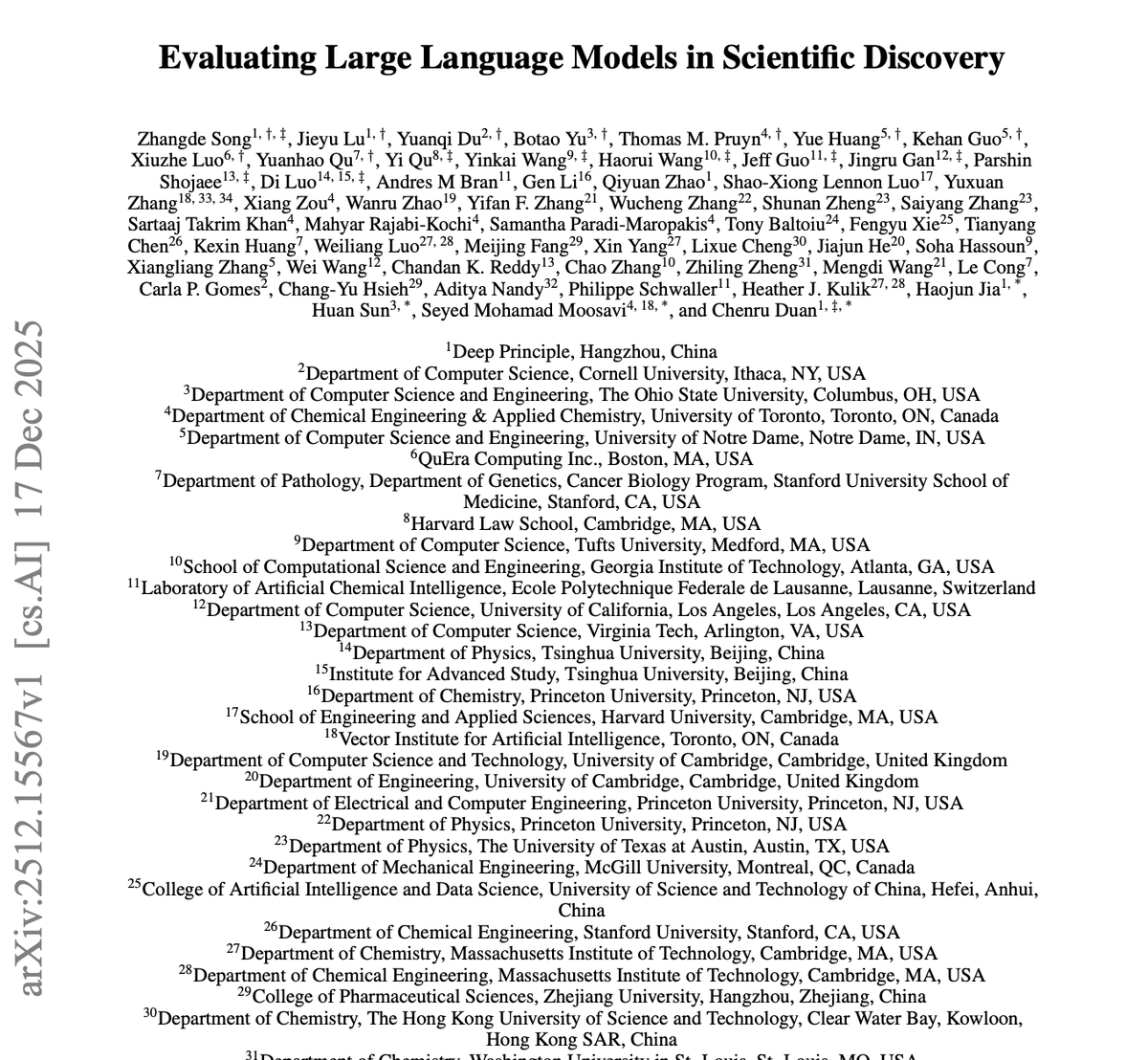
This paper from Harvard and MIT quietly answers the most important AI question nobody benchmarks properly:
Can LLMs actually discover science, or are they just good at talking about it?
The paper is called “Evaluating Large Language Models in Scientific Discovery”, and instead of asking models trivia questions, it tests something much harder:
Can models form hypotheses, design experiments, interpret results, and update beliefs like real scientists?
Here’s what the authors did differently 👇
• They evaluate LLMs across the full discovery loop hypothesis → experiment → observation → revision
• Tasks span biology, chemistry, and physics, not toy puzzles
• Models must work with incomplete data, noisy results, and false leads
• Success is measured by scientific progress, not fluency or confidence
What they found is sobering.
LLMs are decent at suggesting hypotheses, but brittle at everything that follows.
✓ They overfit to surface patterns
✓ They struggle to abandon bad hypotheses even when evidence contradicts them
✓ They confuse correlation for causation
✓ They hallucinate explanations when experiments fail
✓ They optimize for plausibility, not truth
Most striking result:
`High benchmark scores do not correlate with scientific discovery ability.`
Some top models that dominate standard reasoning tests completely fail when forced to run iterative experiments and update theories.
Why this matters:
Real science is not one-shot reasoning.
It’s feedback, failure, revision, and restraint.
LLMs today:
• Talk like scientists
• Write like scientists
• But don’t think like scientists yet
The paper’s core takeaway:
Scientific intelligence is not language intelligence.
It requires memory, hypothesis tracking, causal reasoning, and the ability to say “I was wrong.”
Until models can reliably do that, claims about “AI scientists” are mostly premature.
This paper doesn’t hype AI. It defines the gap we still need to close.
And that’s exactly why it’s important.
378
2,111
8,188
1,171,711
Michael Graham retweeted

12 Dec 2025
Side note: International agencies like ILO measure productivity by dividing gross output (GDP) by the number of hours worked
WIL focuses on net output (GDP minus capital depreciation)
This is more meaningful: producing assets that depreciate fast is not particularly productive
3
11
126
14,125
Michael Graham retweeted

8 Dec 2025
Physics is Powerful
120
4,547
57,921
3,974,470
Michael Graham retweeted

8 Dec 2025
✅😁 Stirling is beaming with pride after being named as the happiest place to live in Scotland for the second year in a row.
A study conducted by Rightmove ranked Stirling as the eighth happiest place to live overall in the UK, climbing up from 12th place last year.
Full story: stirling.gov.uk/news/stirlin…

1
4
16
1,643
Michael Graham retweeted

2 Dec 2025
Some interesting content here. Not only AI!
1
1
536
18 Nov 2025
What a game. Congrats to Scotland football team. We won the hard way! An Andy Murray special!!
1
107