
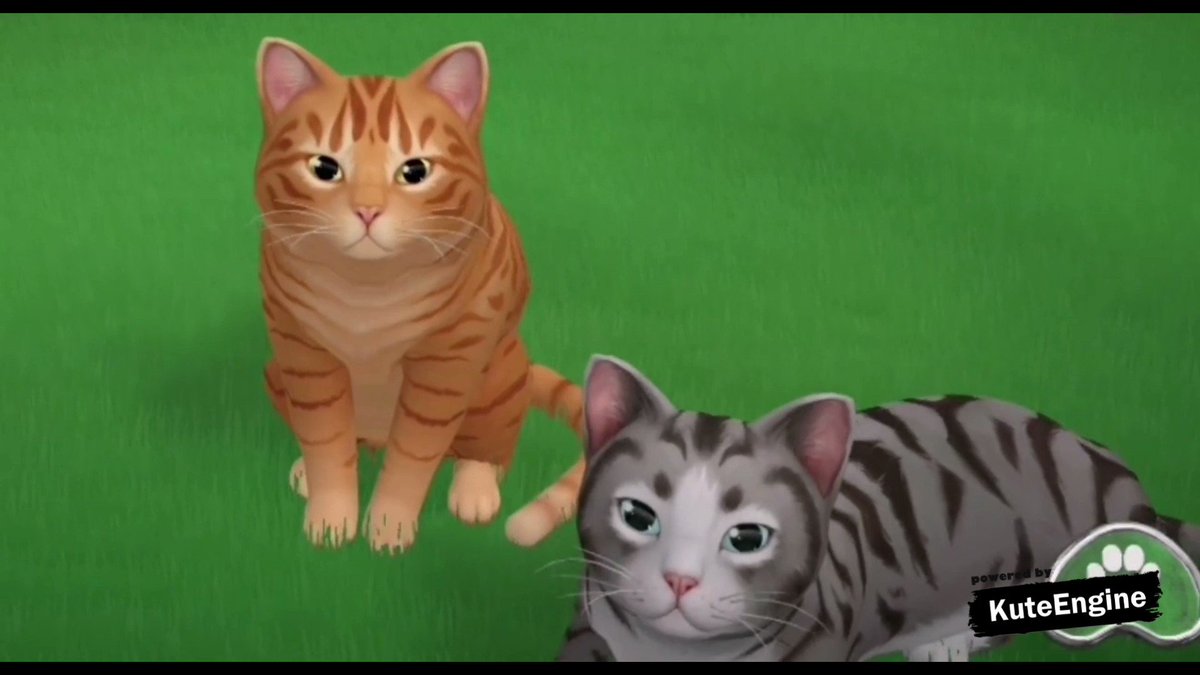
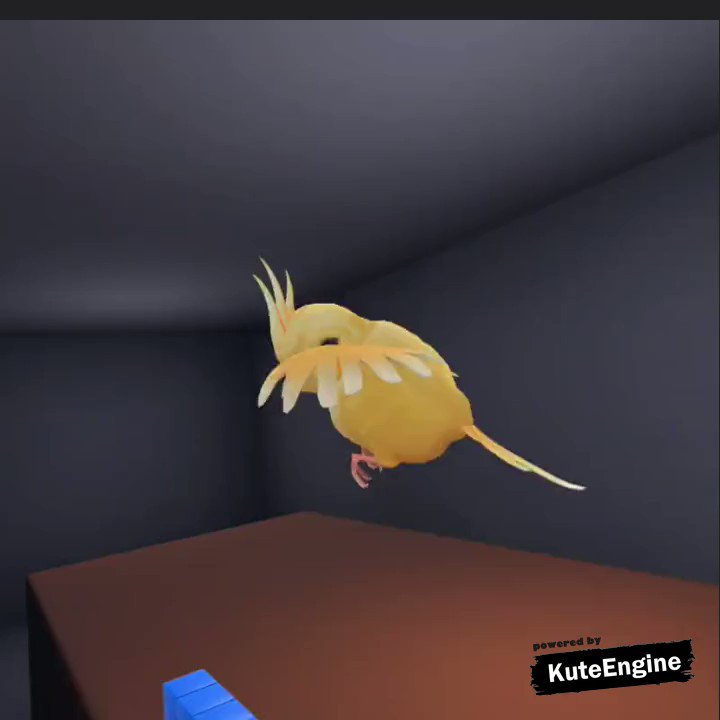
We build #BehavioralAI that brings 3D characters to life. Powering #GameDev, #Metaverse, and beyond. Meet #KuteEngine in action: @ForeverPets_✨
Joined August 2015
- Tweets 153
- Following 60
- Followers 177
- Likes 210
24 Photos and videos







VIRTUAL BEINGS retweeted
Gorilla Tag-style movement is great for high-energy VR, but it has real UX costs: nausea unless you're a kid, no hand tracking, and both hands tied up for locomotion.
So we created a new type of grab-based locomotion. 🧵 1/5
1
2
4
156
VIRTUAL BEINGS retweeted

May 28
If you're still debating how much agents can actually help with gamedev in unity, here's a few numbers: earlier this year, Claude Code & Codex helped us decrease D0 churn by more than 30% and increase revenue for by 50% in less than 8 weeks. Meta just posted the break-down.
May 27

A two-person studio shipped 25 VR builds in 4 weeks. 🚀
They used AI agents, Meta analytics, and a tight feedback loop to overhaul their onboarding and grow revenue. Read how Virtual Beings, the team behind @ForeverPets_ did it 👉 bit.ly/4vhNldW
#VR #MetaQuest
1
2
133
VIRTUAL BEINGS retweeted
7 Aug 2025
One week after launch, Forever Pets has D1 retention of 46%, and it's still climbing.
I'm told successful VR games average 25%, because of the friction of using headsets.
youtube.com/watch?v=PRSBfR2g…
5
3
11
752
VIRTUAL BEINGS retweeted

7 Aug 2025
Yay, @Fynnpire played our game and liked the birbs! youtu.be/PRSBfR2gOpI
1
1
4
338
VIRTUAL BEINGS retweeted
2 Aug 2025
📣LIVE NOW: VR pets that feel truly alive. Play for free on Meta Quest.
No scripted behaviors - just companions that learn, grow, and bond like real pets.
It’s not just a game. It’s comfort, company, and connection - whenever you need it.
Try free: meta.com/en-gb/experiences/f…
#vr #vrgame #metaquest #gamedev #virtualpets
4
7
627
VIRTUAL BEINGS retweeted
2 Aug 2025
After a decade in behavioral AI, I made a VR pet game.
It started as a tech demo. Then my daughter played the early builds like the pets were real, and I knew we had something special.
To those of you who can't have real pets: I hope Forever Pets gives you some of that joy.
2 Aug 2025

📣LIVE NOW: VR pets that feel truly alive. Play for free on Meta Quest.
No scripted behaviors - just companions that learn, grow, and bond like real pets.
It’s not just a game. It’s comfort, company, and connection - whenever you need it.
Try free: meta.com/en-gb/experiences/f…
#vr #vrgame #metaquest #gamedev #virtualpets
11
4
8
361
VIRTUAL BEINGS retweeted

30 Jul 2025
2
5
259
VIRTUAL BEINGS retweeted
20 Jun 2025
I often get asked if we use Behavior Trees for the birds in Forever Pets. The answer is no, and here's why:
1. Constrained parallelism. BTs offer only limited parallel execution. Most implementations (for example, Unreal Engine's Parallel node) require one child to be a single task node. Real people and animals do lots of things on overlapping timelines. The body of Aria below in the video has more than a dozen things going on at any given moment (root, head, eyes, tail, breathing and so forth).
2. Low reusability. Trees and animations are tightly coupled: you end up reinventing behavior branches for each new creature instead of sharing generic logic across species.
3. Poor scalability and performance. As you add actions or richer environments, tree size (and its CPU footprint) grows exponentially. In a VR game with dozens of pets, that quickly becomes unsustainable.
4. High production overhead. Every tree demands dedicated behavior designers, animators and engineers to craft and maintain bespoke nodes, leading to heavy people-costs.
Let me know if you found this useful and I'll long-tweet more about BTs and the alternative we've developed (Behavior Composition).
PS: Do you like Aria's red hat? That's the exclusive reward we've added for our alpha players. Join the alpha to claim it, link in first reply!
2
3
9
702
VIRTUAL BEINGS retweeted
19 Jun 2025
Dear long-time followers, we have some good news. Tender Paws is being reborn as Forever Pets for VR.
If you like cute little birds, please join our alpha (link in comment). If you prefer cats, fear not, they are coming too. In the meantime, give us a like to make FP a success!
1
8
12
567
VIRTUAL BEINGS retweeted
19 Jun 2025
Hey VR friends! Forever Pets is now in closed alpha. You teach and care for little birds that feel believably alive, thanks to our behavioral AI. It's the culmination of 10 years of work.
We're looking for a few animal-loving testers. Link in reply! 🕊️
2
11
68
6,640
VIRTUAL BEINGS retweeted
3 Jun 2024
Another XR design breakdown by @benz145 that will be an instant classic.
My takeaway is that 'immersion' isn't really a design goal for XR because it comes free with the platform.
Instead, strive for embodiment. Allow players to use their bodies to interact with your world in unique and meaningful ways. If you get this right, you will give them superpowers they couldn't experience in any other medium.
3 Jun 2024

Why 'Embodiment' is More Important Than 'Immersion' – Inside XR Design
Watch (or read) the episode 👉 roadtovr.com/synapse-embodim…

1
2
5
2,735
VIRTUAL BEINGS retweeted
21 Mar 2024
SceneScript is a bigger deal than most people in XR will realize at first.
For years we've been saying that "XR and AI need each other". This wasn't just riding the AI hype-wave, and it's now clear why.
-> Generative AI is moving gradually towards realtime 3D, from text to images to video to 3D. This was always inevitable because the world is 3D, and GenAI needs to understand better it in order to be more useful. Yann LeCun regularly talks about the fact that LLMs don't have a world model - yet. Enter Large World Models that represent not just text, but objects and their relationships. Meta's research leads the way in making 3D worlds palatable to modern ML architectures.
-> Realtime 3D in general, and AR/MR in particular, desperately need to become smarter about space in order to weave the real and the virtual together. This is currently a huge bottleneck for MR devs like ourselves who want virtual objects to interact with real ones in your living room - but don't want to have to build custom infrastructure for scene understanding.
Meta's research represents a real, meaningful collaboration between their AI and Reality Labs. My best guess is that many more will follow, and that this will create virtuous feedback cycle between their AI and XR efforts.
21 Mar 2024

We believe SceneScript represents a significant milestone on the path to true AR glasses that will bridge the physical and digital worlds. As we dive deeper into this potential at Reality Labs Research, we’re thrilled at the prospect of how this pioneering approach will help shape the future of AI and ML research. ai.meta.com/blog/scenescript…
1
6
428
VIRTUAL BEINGS retweeted
10 Feb 2024
The (educational) virtual pet idea got the most likes in @tipatat's thread - and it's what we're building @virtualbeings. Take a look at our vertical slice on App Lab and let us know what you think!
meta.com/en-gb/experiences/7…

A Virtual Pet Game like Nintendogs, fun but also has a mode that is much more sim like and gives you a grade after 1 month, so that way, any kid asking their parents for a pet must take care of the virtual one and get a A ranking to prove they are responsible enough for a pet 4/x
3
6
1,033
VIRTUAL BEINGS retweeted
7 Feb 2024
We often get compliments for the quality of our "animations". In reality it's all procedural - we built an engine that synthesizes plausible movements automagically. As a result, interactive behaviors like this can be created in 1-2 hours.
4
8
546
VIRTUAL BEINGS retweeted
24 Jan 2024
Celebrating #Disney100 and exploring the legacy of 'Disney Animation: The Illusion of Life'!
At VIRTUAL BEINGS, we’re inspired by these 12 principles to enhance our approach to #AI character interaction.
Full insights here 👉 linkedin.com/feed/update/urn…
#gamedev #behavioralai
1
4
230
VIRTUAL BEINGS retweeted

29 Dec 2023
💯agreeing with @DrJimFan. I think there will be a point of time we won't be able to distinguish if we interact with real humans or virtual agents and NPCs within virtual worlds.
Metaverse platforms are looking to drive further engagement in their virtual world, (re)inventing social interactions and the way we communicate with each other. The Creators Economy and Economy of Attention are closely connected and will further be.
Besides @nvidia, companies like @inworld_ai or @virtualbeings among many others are building solutions for platforms like @TheSandboxGame @decentraland @Roblox @FortniteGame and many others to integrate easily

Before we have a million robots in the physical world, we will first see a billion embodied agents in virtual worlds. Gaming is the second major area I'm dedicated to in 2024. AI and Gaming are born for each other, and their happy marriage is just getting started.
On one hand, open-ended games provide a "primordial soup" for generalist AI to emerge. An agent's capabilities are upper-bounded by the complexity of the world it lives in. Minecraft is a prime example. In 2023, we saw an explosion of new algorithms enabled by Minecraft. To name a few:
- MineCLIP (from our team's open-source framework MineDojo): learn reward functions by watching 100,000s of YouTube gameplay videos.
- VPT (OpenAI): imitate behavior by pseudo-labeling actions from YouTube.
- Voyager: in-context lifelong learning with an explicit Skill Library of code.
- STEVE-1: guide actor to follow commands in MineCLIP's latent space, inspired by DALLE-2
- And many more: DEPS, Jarvis-1, DreamerV3 ...
Besides Minecraft, there are a lot more games that require extremely advanced perception, agility, exploration, reasoning, and planning. We are just starting to scratch the surface.
I believe games (and simulation in general) will provide the next trillion high-quality tokens to train our foundation models. What's cool is that these tokens are actively selected by the agent itself through exploration. It can choose to experiment with things that maximally reduce its internal uncertainties - kind of like how human curiosity works.
On the other hand, AI will lead to a paradigm shift in the Gaming industry. This year, we see a surge of community interest in Stanford Smallville, where 25 AI agents inhabit a digital town. They go to work, gossip, organize socials, make new friends, and even fall in love.
It's an exciting experiment, but we still have not felt any impact on the real games out there. This is because our LLMs are too boring and too expensive. If you take a look at Smallville's chat log, you will find that the conversations are not fun at all. No parents talk to their kids in such polite manner. The unit economy of deploying so many agents also does not make sense at scale.
That being said, I believe 2024 is an inflection point. The Digital Westworld is coming, and will transform the industry once and for all. Games will feel truly alive. The characters will interact with humans and each other, form relationships, take consistent actions over their lifetime, and react in human-like ways. Each game will have infinite replay value, and each player will have unique and tailored experience.

ALT DALL-E 3
6
26
2,979
VIRTUAL BEINGS retweeted
19 Dec 2023
Seeing Digi's "AI girlfriends" explode over the week-end was weird yet still expected.
As a dad and a co-founder of @virtualbeings, it makes me worry & think about our responsibility here. What we're doing in behavioral AI can unfortunately also be used to make AI girlfriends more immersive. This tech can end up being 10x more powerful and damaging than porn.
We all better end up on the right side of history.
5
1
7
667

13 Nov 2023
🎮 Episode 4 of our #BehavioralAI Interview Series is live! Meet Ahmed, Tools Developer —and time-saver — as he presents his mission to empower creators with the tools they need to unleash their full potential!
🔗bit.ly/virtual-beings-interv…
#ToolDevelopment #GameDev
2
7
184
30 Oct 2023
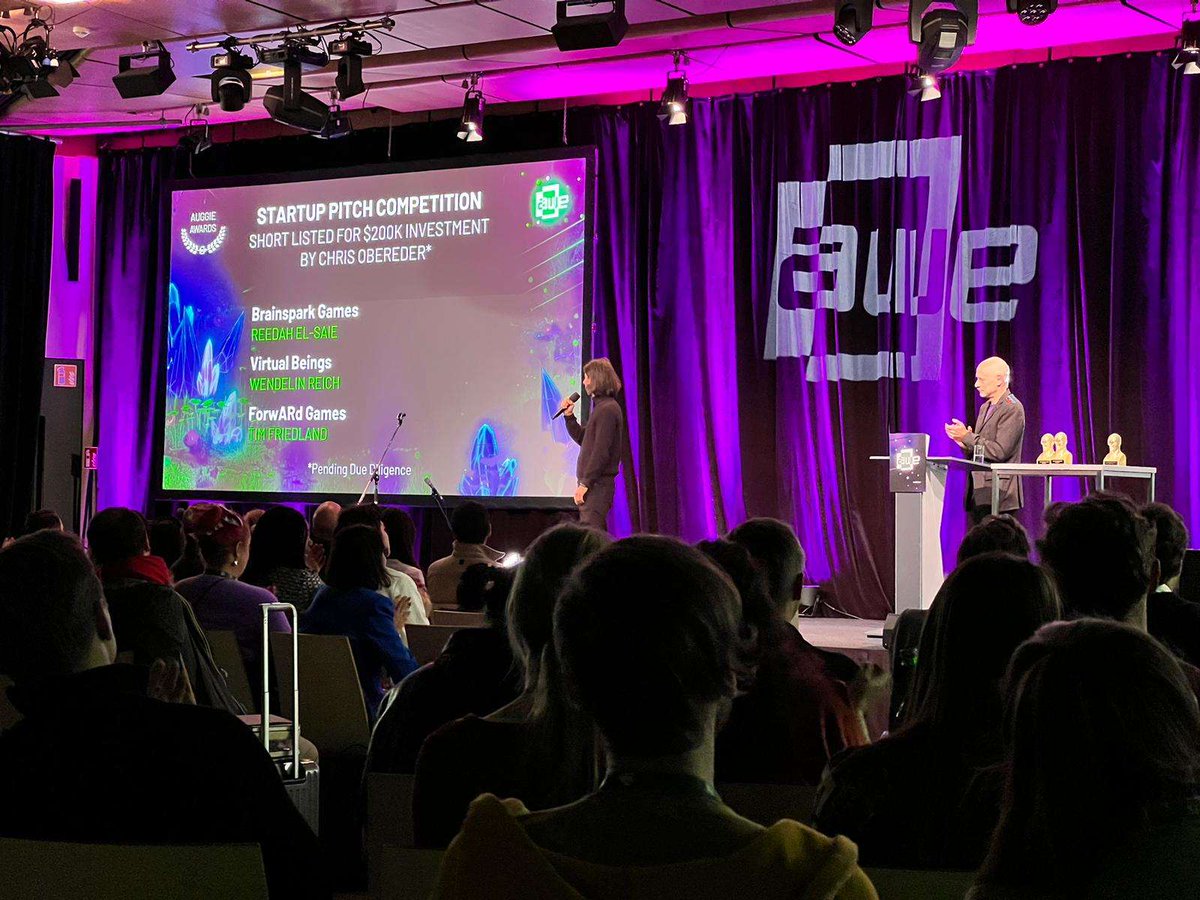
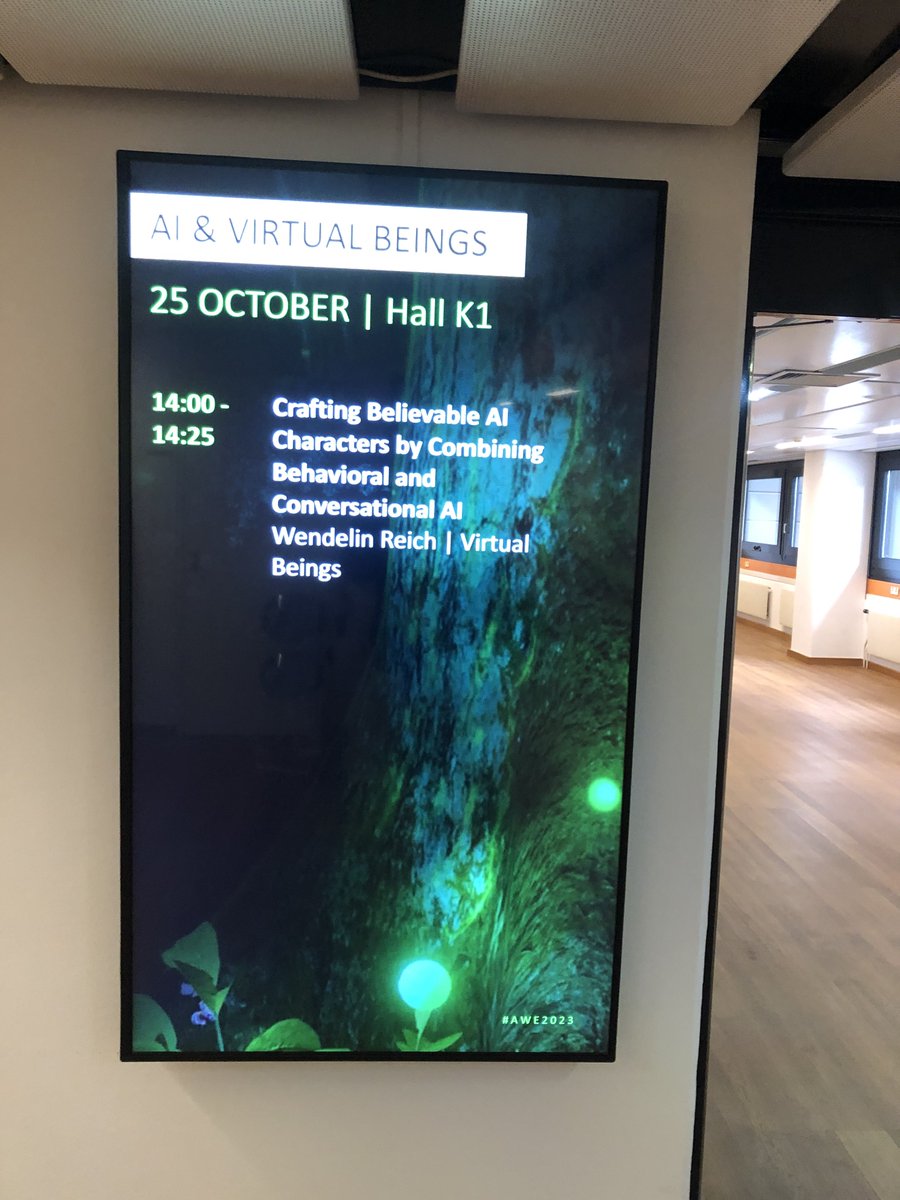
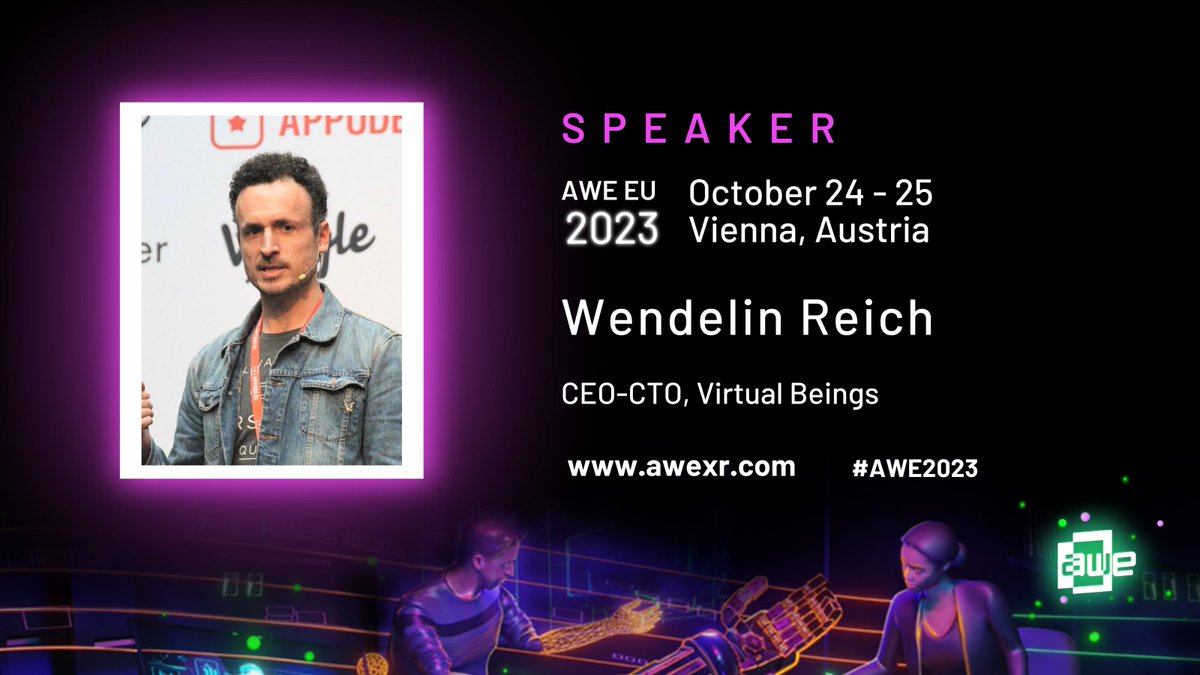
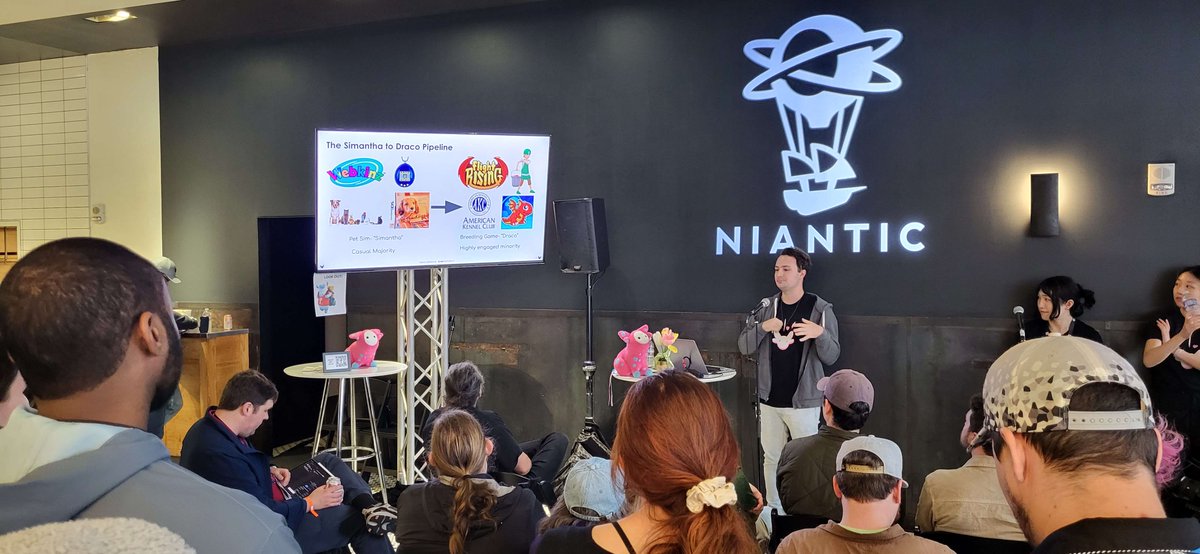
🎬 Missed our CEO-CTO's talk at AWE EU 2023 in Vienna? Dive into the fusion of Behavioral & Conversational AI in XR with @wendelinreich.
📺 Watch now: youtu.be/tqb_YSNN8-Q
#AWE2023 #BehavioralAI #VR
2
4
145
VIRTUAL BEINGS retweeted
27 Oct 2023
Just read this cutting-edge deep-dive on text-based NPCs with GPT-4 by @soi. My thoughts:
1. Reed uses not one but four (!) calls to GPT-4 per turn. It starts by generating dialogue, then filtering it and linking it to game systems.
medium.com/curiouserinstitut…
1
1
4
145