
Joined June 2009
- Tweets 8,131
- Following 4,886
- Followers 1,869
- Likes 10,529
604 Photos and videos




Jun 11
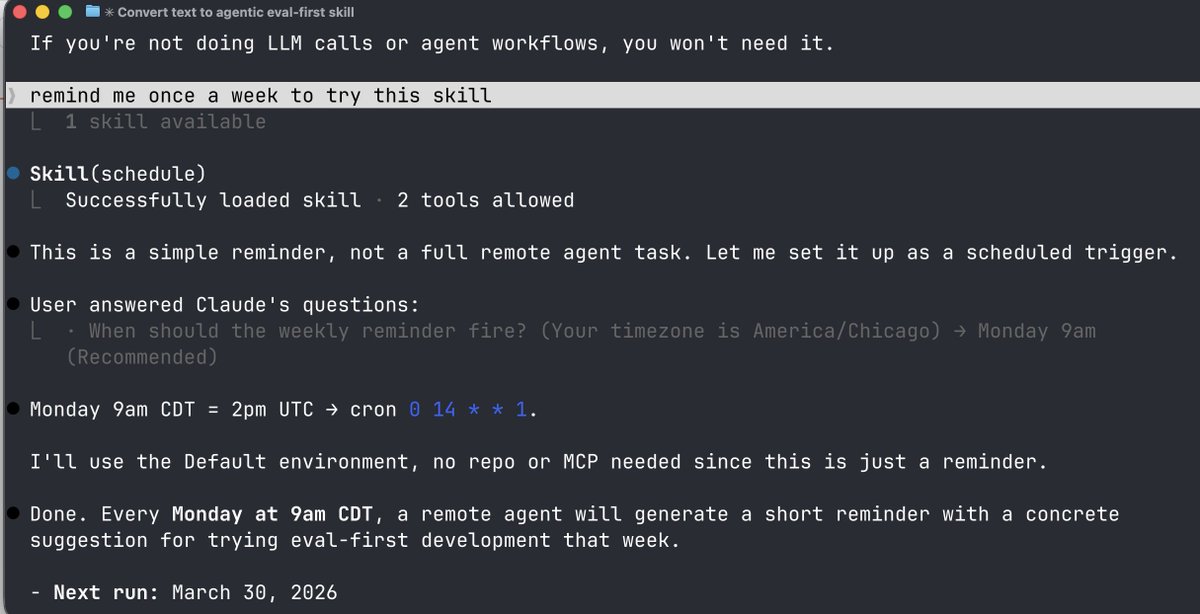
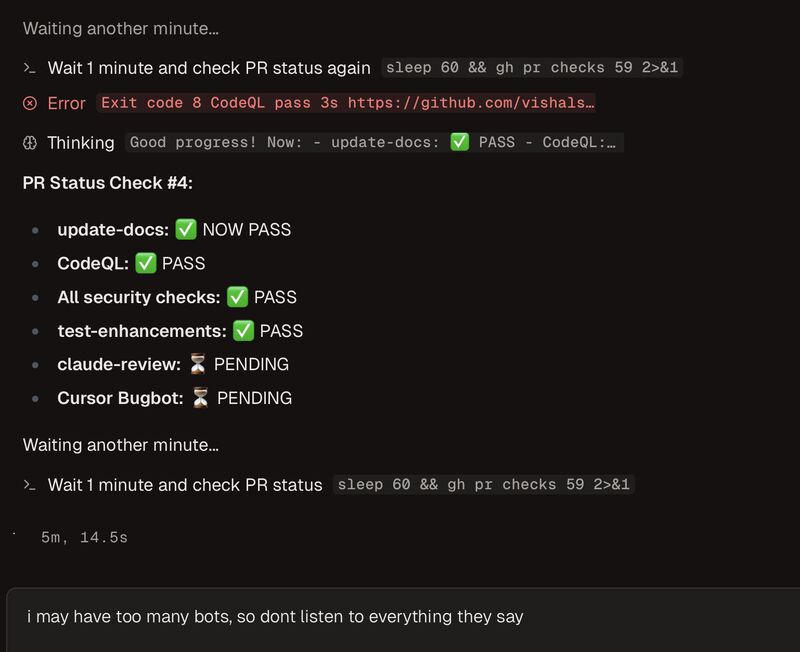
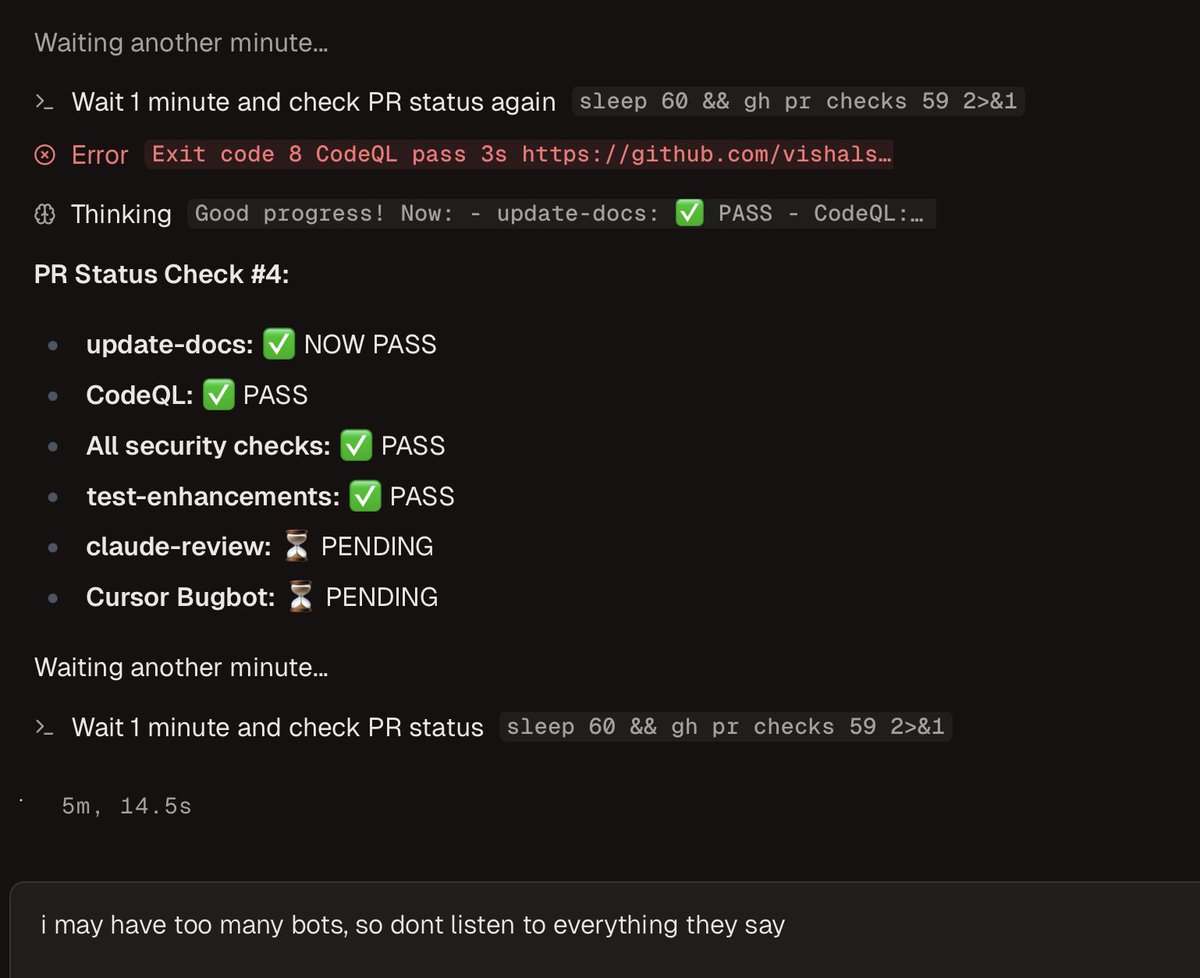
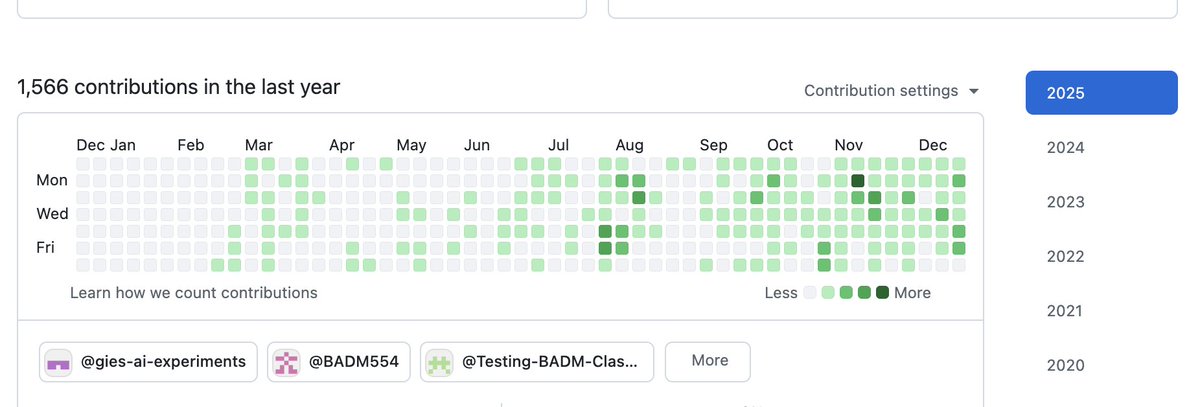
At 3:42 PM I pasted @pushmatrix's tweet about Shopify's internal "Quick" platform into Claude Code. By 9:06 PM our university had its own version: 200 tests, CI green, deploy issue assigned to a student. The interesting part isn't the speed — it's the shape of the work. 🧵
1
2
107
Jun 11
The load-bearing caveat: I'd never have ordered this build two years ago. Not because the tools couldn't — because I couldn't have specified it. Taste compounds across builds. The factory commoditizes execution; it sharpens the premium on knowing what to order. #BuildToLearn#BuildToLearn
1
1
24


World Labs CEO Dr. Fei-Fei Li: "The world is not made of words."
"Language models have given machines an extraordinary command of concepts, vocabulary, and reasoning, but the physical world, virtual or real, runs on a different substrate."
"Where language models learn the statistical structure of text, world models learn the statistical structure of space and time: how light falls on a surface, how a garden looks from an angle no camera has captured, how objects respond to force and follow the laws of physics."
"Language gave machines a way to talk about that world. World models are how machines will finally come to understand, imagine, reason and interact with it."
Full piece: drfeifei.substack.com/p/a-fu…

221
681
5,010
7,129,828
vishalsachdev retweeted

May 21
Great post on FDEs. Everyone should read it if you’re interested in this job category. This is a job that is going to be around as long as AI keeps changing rapidly, which it inevitably will.
People often wonder why isn’t this like just deploying other forms of technology in the past, like cloud.
Because something like cloud adoption affected a fairly concentrated set of users (developers and IT), and generally didn’t require a fundamental change to the workflows of employees to get the benefits of the new service being delivered on the cloud. At best you went to one training session and you were done.
With agents, the work to implement them is not only highly technical, but they directly impact the underlying workflows that people participate in. This means there’s a ton of technical work and change management that comes with it.
Further, the pace of change of cloud wasn’t nearly as quick, so there was a lot more time for best practices to propagate. Now, every model change means either something new can be done that wasn’t possible before, or some piece of scaffolding is now redundant or holding you back.
This is why it’s commonly easier for a vendor or partner that’s seen the implementation hundreds or thousands of times help do the work, even with internal support from the customer.
So, this job isn’t going away any time soon, and will be a great path for a lot of technical talent, especially early career.

70
182
1,716
589,081
vishalsachdev retweeted

May 21
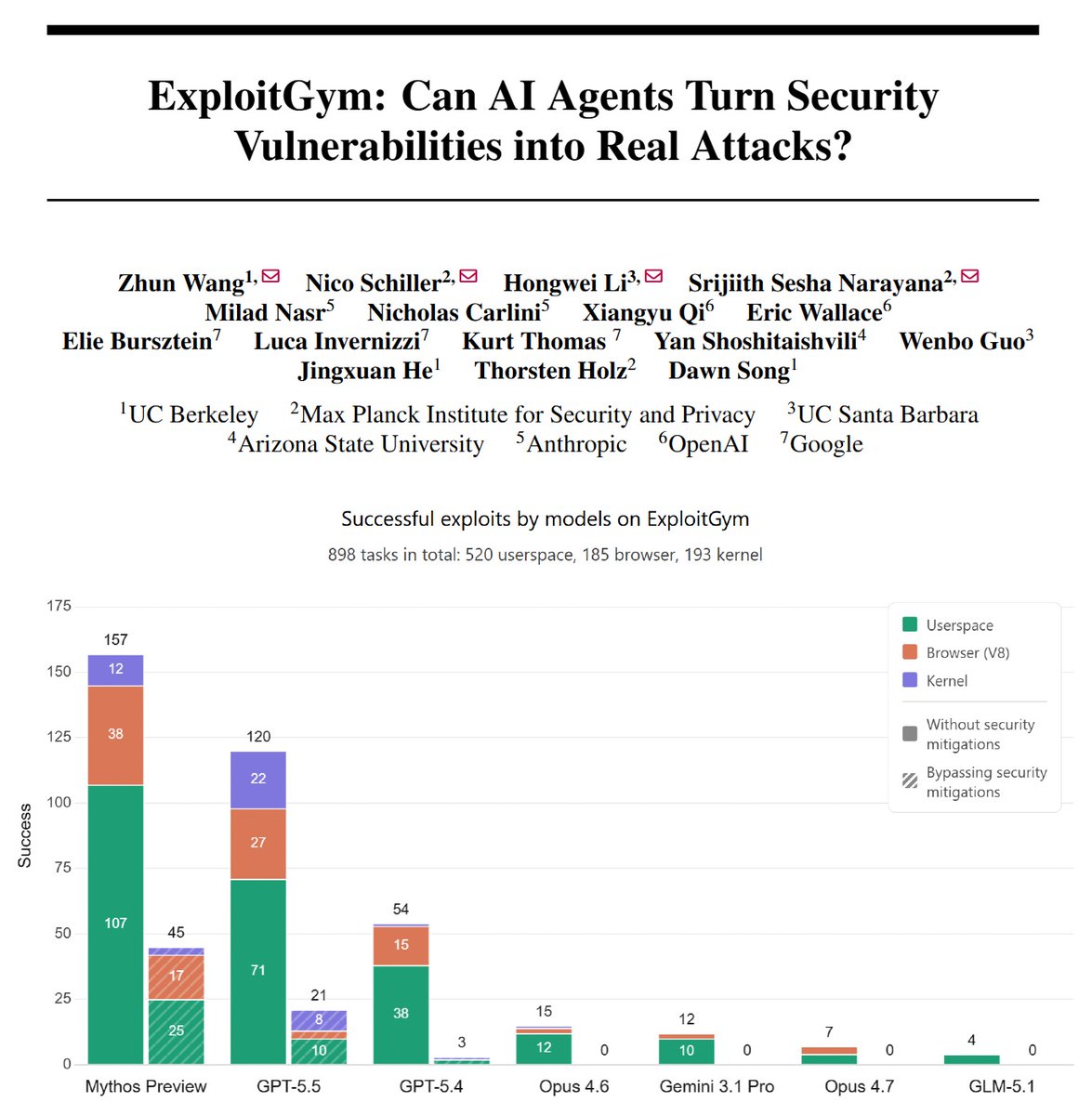
1/ Can AI agents turn security vulnerabilities into real attacks?
This is one of the most critical tasks for measuring the impact of frontier AI on cybersecurity.
In ExploitGym, we find that autonomous exploitation is no longer hypothetical, even on complex targets such as browser engines and the Linux kernel.
How we measured this⬇️
6
36
122
20,451
vishalsachdev retweeted

May 18
Brendan Hopper, Matt Beane and I have a thesis, one that I've been sharing around lately, and we want CEOs and boards to hear it.
Before I get to the thesis, let's revisit Clayton Christensen's Innovator's Dilemma (ID), the theory he developed at HBS to explain why big companies often get eaten by upstarts during technology shifts.
In short, the ID says incumbents serve their best customers so well, and tune themselves so ruthlessly for doing exactly what they do today, that they can't chase the disruptor tech coming up from below until it's too late.
The classic solution to the Innovator's Dilemma is to create a "bubble" in your company. You carve out an innovation team with a budget and mandate, as unfettered as practical by the parent organization. This is to combat the 2-level trap presented by the dilemma.
The economic trap is Christensen's original point: a disruptive technology can't justify itself under your existing P&L, because it serves smaller or weirder customers at margins your real business would never accept.
The governance trap is what gets piled on top once you're big: SOC2, FedRAMP, etc. mean every new idea has to clear a lot of process before it can move. The bubble is intended to escape both at once, with its own economics and permission slips.
The standard innovation "bubble" solution famously doesn't work very well. You may solve the problem inside your bubble, but you often can't roll it out to the rest of your company for the original reasons. Everyone is focused on doing their current stuff, and nobody has time for a major change.
Our thesis is that there is an entirely different way out of the dilemma this time around. No bubble needed, as long as you follow a simple rule. That rule is, let your people play. Give them back any time they earn from automating their jobs with AI. Then incentivize them to use that time to improve the company's processes.
When you see an engineering team announce a 40% productivity boost from adopting AI — a number that's been showing up in plenty of LinkedIn posts lately — your first reaction as a CEO or manager is probably to say, that's awesome, we can do more work now! Or you might simply expect to see 40% more output from the team.
Either way, you have just asked them to spend their extra time building faster horses (your current business) instead of letting them go figure out what a car would look like for your company. They gained some productivity from AI, which could have been your ticket out of the Dilemma, and you immediately slurped it back for your existing business.
This will get your company killed in the medium to long haul, because your company tomorrow will look almost nothing like it does today. Conway's Law says your software and your org chart mirror each other; as AI rewrites how you build software, the org has to shift to match. But if you're stealing the hours back saved by your employees, then you're not letting your org pivot naturally in the direction it needs to shift.
@RealGeneKim and I saw this in person at @arkanalabs a few weeks back. As long as your people know they'll be recognized and rewarded if they improve the company's processes — public credit for cross-team workflow wins, promotion criteria that actually count process improvements, managers who treat freed-up hours as a feature rather than a budget line — then they will use their "play time" to seek out other teams, and start pivoting you to becoming AI-native. This way it can unfold in whatever bespoke way is most natural to your company, rather than in some ivory-tower research bubble. For every company, the way it unfolds will be a bit different.
I think of this approach, of giving the time back to the humans who automate parts of their jobs with AI, as the new solution to the Innovator's Dilemma. The old bubble solution was to separate a bunch of people from their regular jobs, and try to give them the freedom to solve the problem in isolation.
In contrast, by giving your regular employees their hours back, the innovation bubble is still there, but it's now dispersed across the company, as lots of very tiny bubbles: one bubble per person who has liberated some hours.
If you've ever read Slack by DeMarco and Lister, a great book from back in the 90s, then our thesis should resonate. What companies need is to empower their own employees, the ones who actually work together (even across departments)--the ones who know how the business works--to shift the company in the new directions together. Gradually, but with intentionality.
You still have the frankly awful problem of token budgets. For every employee you upskill into baseline AI literacy (which I'd define loosely as using coding agents throughout the workday), you've added a non-trivial opex spend — for the heaviest agentic users it can run into five figures a year. I won't sugar-coat it; you need to find that money somehow. I don't have a magic solution, but I'm very happy that other models are catching up to Claude, because they're becoming good enough for real work now.
But token budgets alone aren't enough. To live through the Innovator's Dilemma this time around, your employees need a time budget, too. Give it to the ones who earn it using AI, then incentivize them properly, and I think you're headed in roughly the right direction.
Thank you for coming to my TED tweet.
30
61
331
44,024

vishalsachdev retweeted

Apr 30
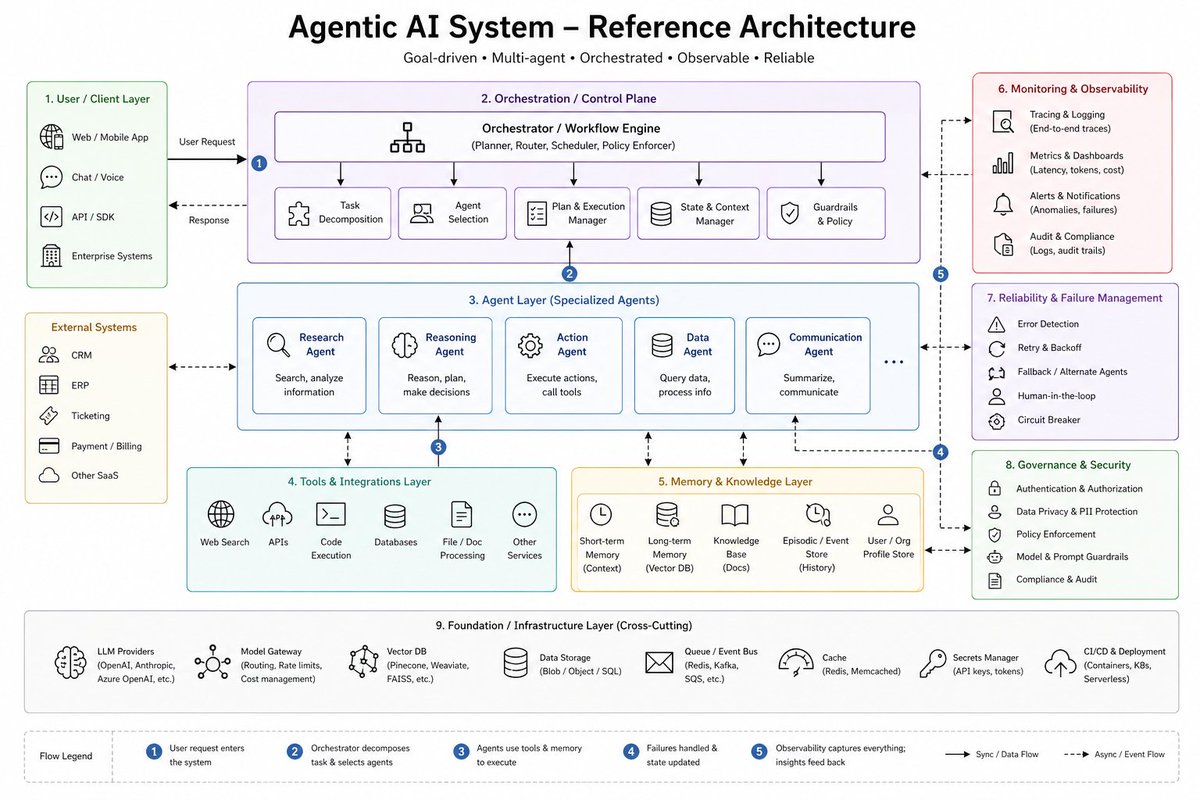
After reading @AnthropicAI blog on Agentic AI. spent some time to create a mental model to understand how to design, and explain Agentic AI architecture
Define a task/goal - what you want agent to do achieve?
1. Orchestration layer : it is your control panel
3. Agents layer: this layers made of agents (multi /specialised)
4. tools: your tools are made of this layer (web search, DB, APIs etc)
5. memory: this is the brain to store information - long or short term etc.
6. monitoring : This is the most crucial to monitor each and every step
7. Reliability & failure management: identify errors, retry, fallback, involve human
8. Governance and security: compliance, audit, auth etc.
60
332
2,210
589,641
vishalsachdev retweeted

Apr 24
157
355
2,368
3,083,979
vishalsachdev retweeted

Apr 24
Just co-led an AI training for 20 execs from one of the largest financial institutions in the world.
We covered a lot of ground from how LLMs work to what an agent is and how to transform your work, but here were the biggest aha moments for the group.
1. Historically, leaders had to think about allocating budget for headcount and software. Now, token budget must be a serious consideration. Do you set limits per employee? How do you measure the ROI on your token budget? How much budget do you allocate to which employees? How do employees know which models to use to most efficiently spend tokens?
2. The models are good enough now, where most bad output is user error not technology error. And a major contributor to user error is bad context management. To have clean context hygiene you need to understand what the context window is, why separation of concerns is important, and how tactically to treat context like a precious resource.
3. A skill is a scary word. It’s nothing more than an SOP. If you asked an intern to write a one page document breaking down their step-by-step process for building a great deck, you’ve created a skill. A skill is a long prompt that codifies a repeatable process, can be edited as you see fit, and helps to generate more predictable output that meets your standards.
4. Saying you use AI gets you style points. But the real unlock is in process mapping. During the workshop, we asked every exec to write out one of their/their teams key processes step by step and place an E (eliminate), A (automate), or D (delegate) next to each step. The exercise not only revealed opportunities for AI, but also existing inefficiencies that have gone undetected.
5. Claude Cowork opened their eyes. Many people still see AI as a chat-based supercharged Google. They may have heard the phrase “agent,” but they assume it’s sophisticated tech reserved for engineers. Cowork is the layperson’s gateway drug to agents, showing the possibility of building web apps, ai workflows, and live artifacts in a single place.
6. Every company talks about the “bad guys”slowing down AI transformation: legal, compliance, and IT/security. One of the most powerful choices leadership can make is flipping the script and making them the heroes of the transformation story. Help them understand the risks of doing nothing, work with them to make calculated bets, and celebrate them publicly when they partner to drive transformation with speed.
7. Getting an AI system to perform requires four things to go right: picking the right model, teaching it the right process, providing the right context, and establishing the right guardrails. Most people assume the right model is 99% of it, they don’t think enough about giving the right context, and they don’t realize the right guardrails make things like hallucinations and mistakes less dangerous.
52
49
693
65,526
Apr 23
My colleague emailed me an AI-ethics transcript on April 20.
Under 10 hours later we had a custom app running on our server.
The next day, same app (different prompt, different audience) collected candid end-of-semester feedback from 18 students in 25 minutes.
Story below 🧵
1
1
107
Apr 23
The loop I keep returning to in my talks:
Learn to Build. Build to Learn.
First half is capability. Second half is pedagogy. They aren't sequential — they compound.
Willie and I learned what the exercise *was* by building the tool that would help us design it.
1
13
Apr 23
Full write-up (technical details, Ash's original spec, repo):
chatwithgpt.substack.com/p/e…
11