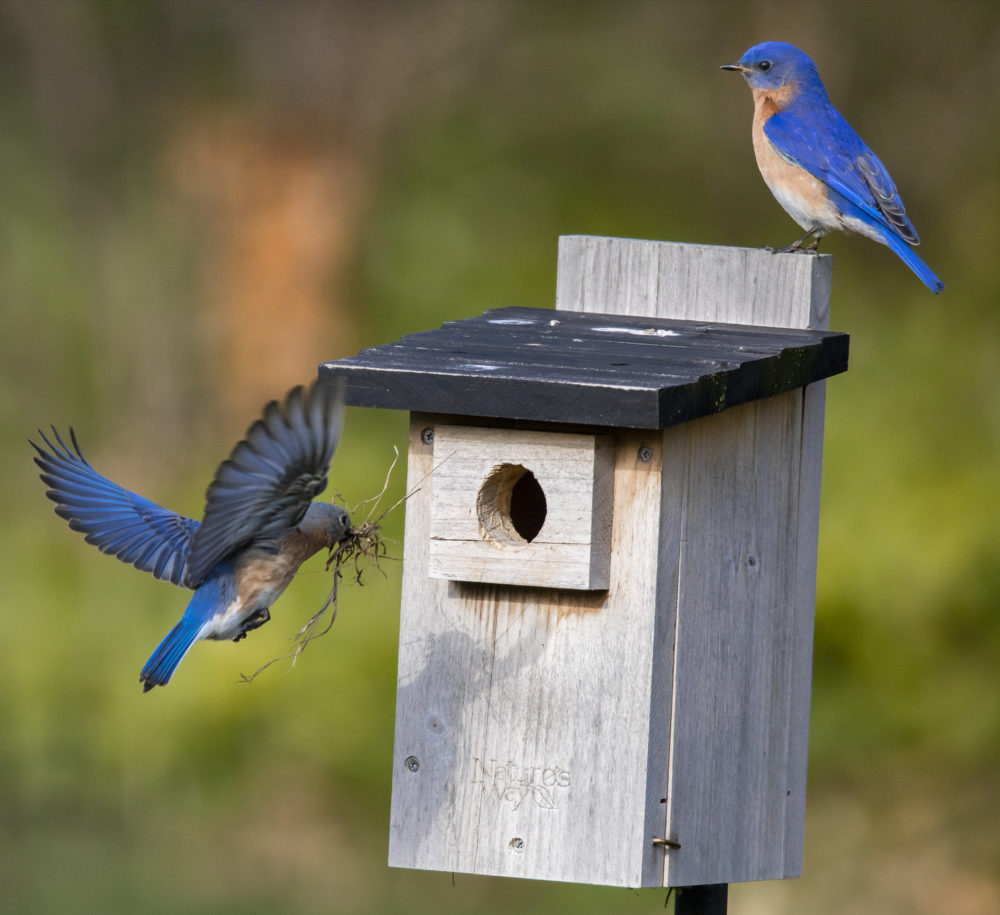
When I was a boy growing up in Missouri in the 80βs where the Eastern Bluebird is the State Bird, you NEVER saw one. They were extremely rare and as this post says had practically disappeared.
In my childhood I can literally recall seeing a single one once driving on a back road with my Dad past a field a few miles outside of the Mark Twain National Forest where he pointed out one perched on a barbed wire fence. That was the only one I ever saw in my 18 years growing up there.
Itβs great to know theyβve made such a comeback & now kids growing up in Missouri can see their State Bird more frequently & help be part of their comeback & reestablishment by helping build & put up these bluebird houses as part of school, camp & Scouting projects.
Now when I go home & am driving with family from St. Louis down to the Ozarks or Mark Twain National Forest am staying around those areas, I have seen them multiple times & they always make me happy. π
A hundred years ago, the eastern bluebird was one of the most common birds in the country. Then it nearly disappeared.
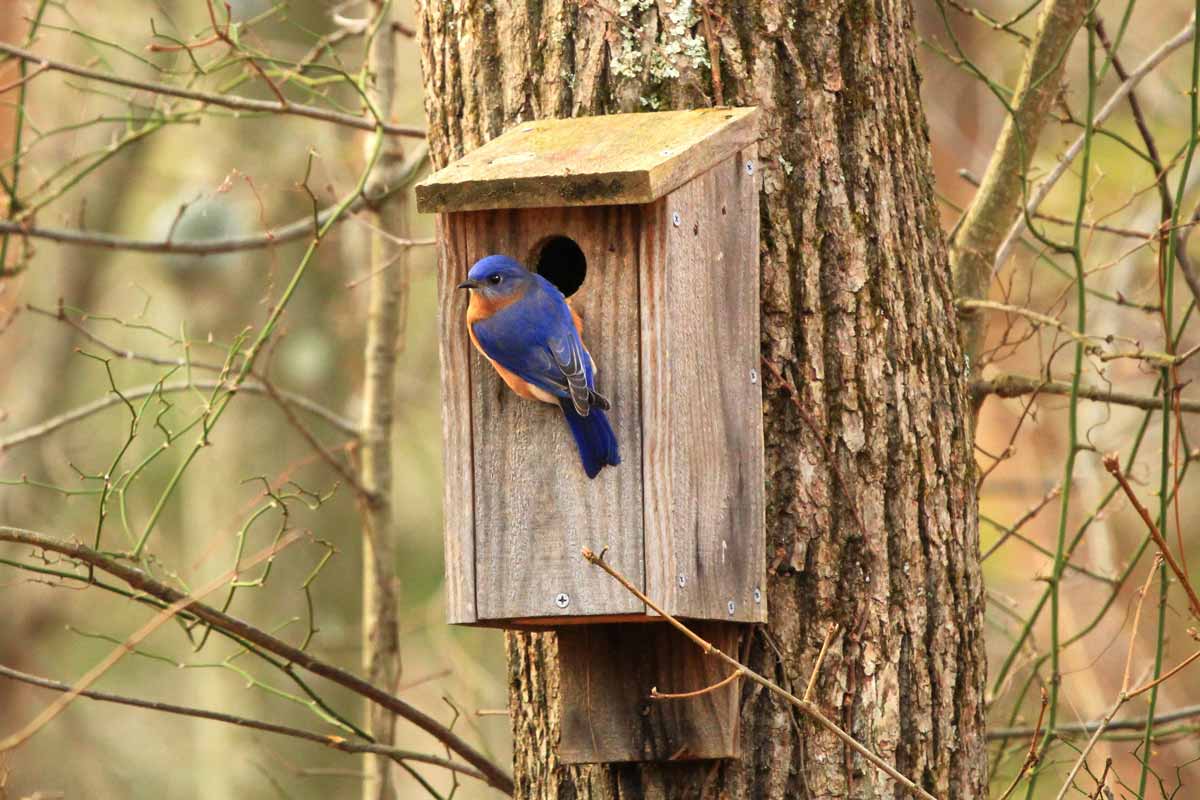
Here's the problem: a bluebird can't build its own home. Neither can a chickadee or a wren. They're cavity nesters with no tools to dig a hole, so they move into ones that already exist: an old woodpecker hole, a rotted knot in a tree, a hollow in a dead limb, a soft spot in a wooden fence post.
Then we launched a relentless effort to tidy the world and put everything in its right place.
We cut down the dead trees, the "ugly" snags, and hauled them off. We swapped the old wooden fence posts for metal. We cleaned up every hollow stump and dying branch. And just like that, the nesting spots were gone.
Worse, two birds we'd imported from Europe, house sparrows and starlings, muscled into the few cavities left and threw the bluebirds out. By the 1970s, bluebird numbers had fallen by nearly 90%.
Here's where things began to turn. Ordinary people started nailing wooden boxes to posts. Just boxes, with a hole the right size. And the bluebirds came back, all the way back, one of the greatest comebacks in American conservation, built almost entirely by regular folks in their own yards with a little lumber.
So here's where you come in. A nest box isn't a cute decoration. It's a replacement for the dead tree we took down, a hole in the world for a bird that can't make its own.
Put one up, with the correct hole size for the bird you want, on a smooth pole a predator can't climb, and you stop being a bystander to that story.