
Building for the world, from Bharat
Joined August 2023
- Tweets 367
- Following 146
- Followers 434
- Likes 426
7 Photos and videos



Vrinda Kapoor retweeted

331
855
3,966
58,703,446
Vrinda Kapoor retweeted

Jun 14
89
244
1,330
638,630
Vrinda Kapoor retweeted

Jun 13
挖到一段2007年几乎失传的马斯克老采访,看完真的感慨,这人二十多年对SpaceX的想法一点没变。太可怕了
当年他就认准要送人类上火星。那会贝佐斯的蓝色起源、NASA还有中国全是对手。但他回答:“我们没有真正的竞争对手。” 这话真应验了。现在对于特斯拉FSD他也在说同样的话。
他说SpaceX最该担心的 从来不是竞品,而是自己内部犯错。他在特斯拉上也说过类似的话,如果特斯拉不能真给社会创造价值,被淘汰他都无所谓。
他当年在SpaceX只有一个小格子间,和大家坐在一起,没有单独的大办公室。这种反官僚、扁平化的风格,20多年后依然没有改变。
主持人问他有钱了不想去沙滩躺平吗?他说闲着对他是折磨。他创立公司只看这件事成了能不能改变世界。轻松来钱的路子遍地都是,他偏选火箭、电车这种烧钱又难成的赛道,早年做互联网那会儿行业都没人盈利,他照样一头扎进去。
SpaceX能走到今天真不是运气,从头到尾就一份初心死磕到底。
36
246
1,120
94,513
Vrinda Kapoor retweeted

Jun 12
Tout le monde voit une IPO. Moi, je vois un message de l'humanité à l'homme le plus important sur Terre.
Pendant vingt ans, ils ont tout essayé.
Ils ont essayé d'en faire un nazi. Un salut mal interprété, des montages, des unes entières construites sur une image figée. N'importe quoi pour coller l'étoile jaune inversée sur l'homme qui électrifiait l'automobile et ramenait l'Amérique dans l'espace.
Ils ont essayé de le faire taire. Procès, enquêtes administratives, campagnes de boycott, armées de journalistes payés pour produire un article négatif par jour. Quand il a racheté la place publique pour garantir la liberté d'expression, ils ont hurlé à la mort de la démocratie.
Ils ont essayé de le décourager. Moqueries quand les fusées explosaient, silence quand elles atterrissaient. « Tesla va faire faillite » pendant dix ans. « SpaceX est un caprice de milliardaire ». Chaque succès minimisé, chaque échec amplifié.
Et aujourd'hui, le marché a rendu son verdict. La plus grosse IPO de l'histoire de l'humanité. Le premier homme à franchir les 1 000 milliards. Pas en héritant. Pas en spéculant. En construisant.
Voilà ce que cette IPO signifie vraiment : ce n'est pas une opération financière, c'est un référendum. Et le résultat est sans appel.
Parce qu'il faut dire la vérité que les sondages truqués cachent depuis dix ans : 80 à 90% des gens vomissent le wokisme. Ils n'en pouvaient plus. Ils se taisaient parce qu'on brisait les carrières de ceux qui parlaient. Mais dans l'isoloir du marché, là où personne ne peut vous licencier pour votre vote, l'humanité vient de dire ce qu'elle pense réellement.
Les élites globalistes ont perdu. Pas « sont en train de perdre ». Ont perdu. L'empire du mensonge est déjà en échec et mat, il ne le sait simplement pas encore. Et Elon, à ce stade, c'est un chat qui joue avec une souris encore à moitié vivante. Il n'a même plus besoin de se battre. Il construit, il poste des memes, et chaque trimestre le réel enfonce le clou un peu plus.
Alors un conseil sincère aux commissaires du progressisme, aux théoriciens de la déconstruction, aux bureaucrates du récit : partez en vacances. Longues. Vous avez eu trente-cinq ans, des trillions de budget, toutes les institutions, tous les médias. Résultat : vous n'avez rien construit, et l'homme que vous avez le plus diabolisé est devenu le plus précieux de l'histoire. Le match est terminé.
Pendant que vous rangerez vos valises, les entrepreneurs vont reconstruire. Un monde plus juste, le vrai : celui où la valeur se mesure à ce qu'on apporte aux autres, pas à ce qu'on dénonce. Celui où un gamin qui code dans sa chambre peut dépasser toutes les dynasties. Celui où on récompense ceux qui rendent la science-fiction réelle.
L'humanité a vu qui était le gentil de l'histoire. Ce n'était pas celui qu'on nous montrait à la télé.
Le futur sera incroyable. Et il a commencé aujourd'hui.
Jun 12

Today, @SpaceX (Nasdaq: SPCX) makes its public market debut with a $75Bn offering (pre-greenshoe) at $135 per share, marking the largest IPO in history.
Congratulations to the SpaceX team. We are honored to serve as joint lead bookrunner and sole stabilization agent.
12
89
316
16,835
Vrinda Kapoor retweeted
Jun 12
Quand un record du monde tombe, il retombe presque toujours dans les 12 à 24 mois qui suivent.
Ce simple fait statistique explique pourquoi Elon Musk, en devenant trillionnaire, est en train de créer un anticorps au bullshit ambiant et à l'empire du mensonge. Laissez-moi vous expliquer.
Le record du 100 mètres a stagné pendant des années, puis Bob Hayes passe sous les 10 secondes en 1964, et soudain tout le monde y arrive. Le mile en moins de 4 minutes était considéré comme physiologiquement impossible. Bannister le fait en 1954. Deux mois plus tard, Landy le bat. Aujourd'hui, des lycéens le font.
Pourquoi ? Parce que les records ne sont pas des limites physiques. Ce sont des limites mentales. Le record ne dit pas "voici ce qui est possible", il dit "voici ce que quelqu'un a osé croire possible". Et une fois que quelqu'un l'a fait, le désir devient mimétique. Des milliers d'esprits se réorganisent instantanément autour de la nouvelle référence.
Elon Musk vient de devenir le premier trillionnaire de l'histoire.
Et tout le monde regarde le chiffre. Personne ne regarde ce que ce chiffre vient de faire dans la tête de chaque milliardaire de la planète.
Hier, "milliardaire" était le sommet du jeu. Aujourd'hui, c'est le camp de base. Il y a environ 3000 milliardaires sur Terre qui viennent de se réveiller avec une seule question en tête : comment je deviens trillionnaire ?
Et c'est là que ça devient magnifique. Parce que la réponse à cette question n'a rien à voir avec les méthodes qui ont fait les fortunes du 20ème siècle.
Tu ne deviens pas trillionnaire avec des montages financiers. Tu ne deviens pas trillionnaire en capturant un régulateur. Tu ne deviens pas trillionnaire en finançant des ONG qui fabriquent les problèmes que tu prétends résoudre. Ces méthodes plafonnent. Elles extraient de la valeur d'un gâteau fixe, et un gâteau fixe ne produit pas de trillion.
Pour devenir trillionnaire, il n'existe qu'un seul chemin, et Elon vient de le tracer :
Être pro-humain. Le trillion vient de produits que des milliards de gens veulent vraiment. Pas de subventions, pas de rentes, pas de captation. De la demande réelle, à l'échelle de l'espèce.
Être contre le contrôle. Chaque couche de contrôle est une taxe sur la vitesse d'exécution. Les empires de connivence sont lents par construction, parce qu'ils dépendent de la permission. Le trillion appartient à ceux qui construisent plus vite que la bureaucratie ne peut interdire.
Être expansionniste. Le trillion n'existe pas dans un monde à somme nulle. Il exige de créer des marchés qui n'existaient pas : l'orbite, l'énergie abondante, l'intelligence artificielle, la robotique généraliste. Il faut agrandir le terrain de jeu, pas redistribuer les miettes.
Et voici le détail que presque personne n'a vu : pour suivre ce chemin, la plupart devront construire au-dessus de l'infrastructure d'Elon. Starlink, les lanceurs, le compute, l'énergie. Il n'a pas seulement battu le record. Il a privatisé la piste d'athlétisme et il vend des tickets d'entrée à tous ceux qui veulent courir.
La conséquence systémique est énorme : Elon est en train de détoxifier la richesse.
Pendant des décennies, le capitalisme de connivence et le capitalisme de corruption étaient les voies royales vers l'extrême fortune. Lobbying, capture réglementaire, philanthropie stratégique qui achète le silence. Devenir ultra-riche était devenu suspect, parce que c'était souvent suspect. L'empire du mensonge prospérait précisément parce que mentir était plus rentable que construire.
Le standard trillionnaire rend ces méthodes obsolètes. Non pas par la morale, mais par les mathématiques. La corruption rapporte des milliards. Seule la création rapporte des trillions. L'incitation la plus puissante de l'histoire du capitalisme vient de basculer du côté des bâtisseurs.
C'est ça, l'anticorps. Il ne nécessite ni loi, ni régulateur, ni révolution. Juste un homme qui a couru plus vite et qui a montré le temps sur le chrono.
Bannister n'a pas seulement battu un record. Il a libéré tous les coureurs qui venaient après lui.
Dans les 24 prochains mois, regardez les milliardaires de la planète réallouer leur capital vers l'espace, l'énergie, l'IA, la robotique. Pas par vertu. Par mimétisme. Le désir de l'homme le plus riche du monde devient le désir de tous ceux qui veulent le devenir.
Je n'ai jamais été aussi optimiste de toute ma vie.
85
435
1,308
46,388
Vrinda Kapoor retweeted

Jun 12
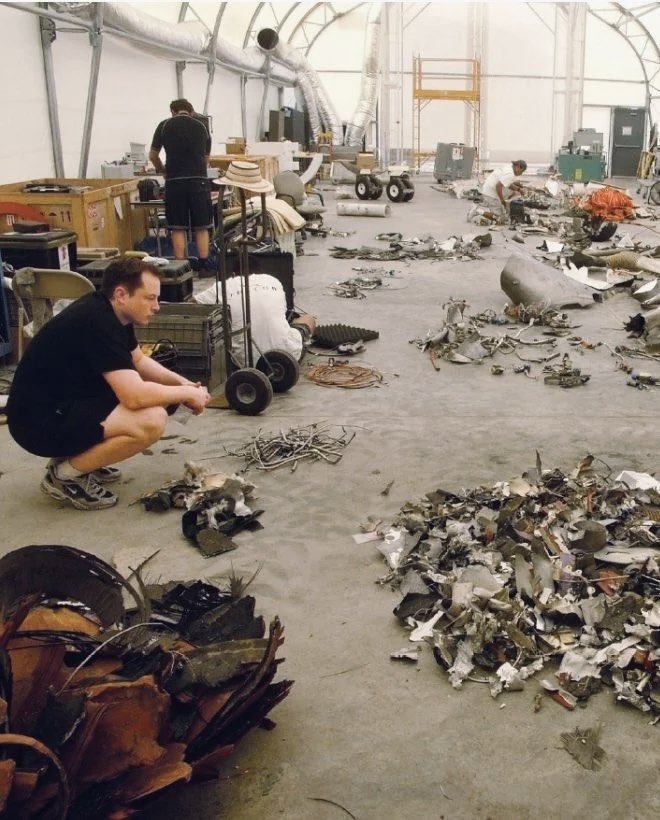
Elon is now the world’s first-ever trillionaire… people see the result, but often fail to understand the excruciating pain that was required to get there.
They don’t see the years of risk, the sleepless nights, the near-bankruptcies, the failed launches, the constant criticism, or the moments when everything could have fallen apart.
It’s easy to look at the outcome and say, “Of course he became a trillionaire.”
What’s much harder is appreciating what it took to get there.
49
146
538
13,001

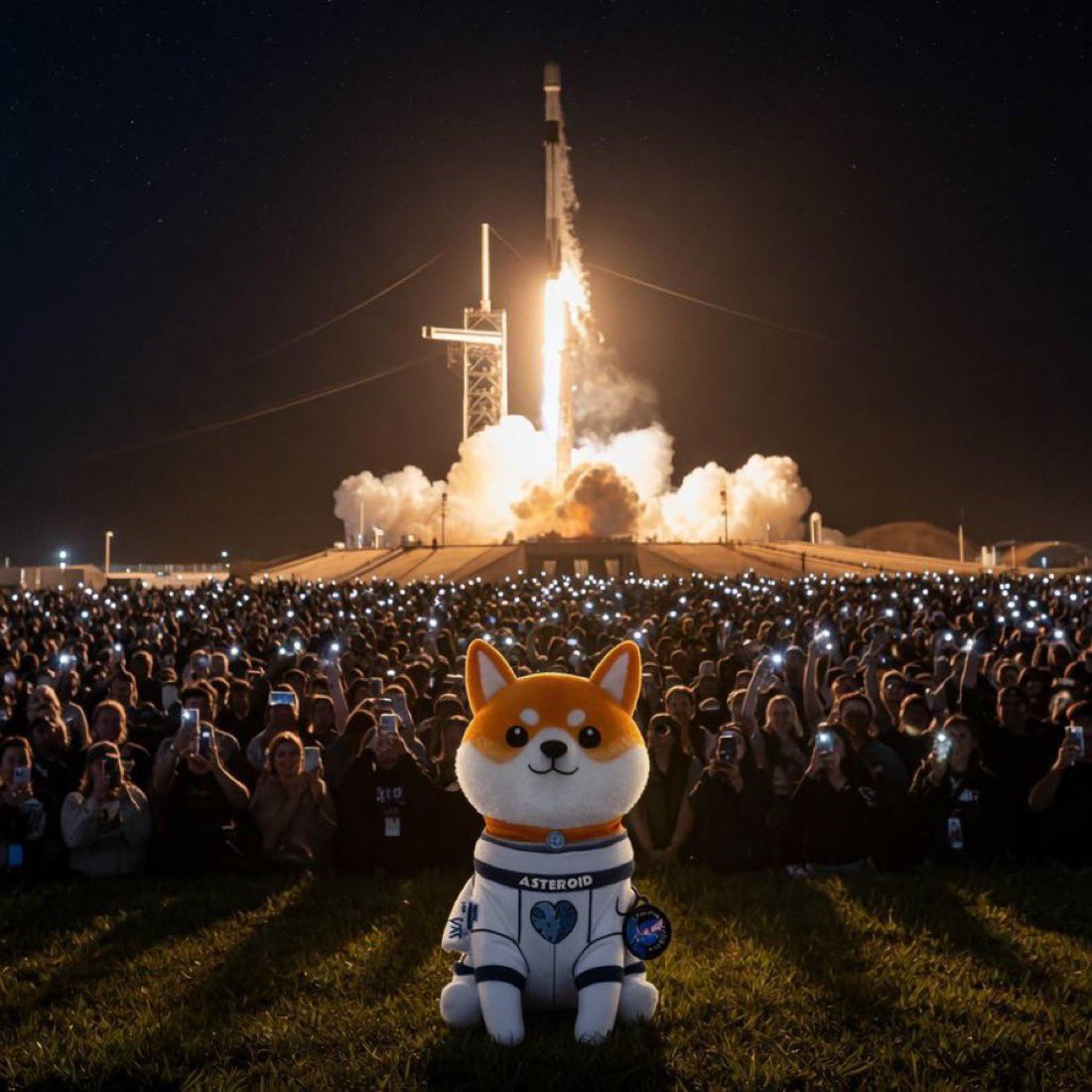
From “It’s standing up!” to the brink of history, what a journey. 🚀🚀
That raw, unforgettable video of Elon Musk in mission control, eyes wide, voice cracking with pure awe: “It’s standing up… Holy smokes, man!”, captures the exact moment everything changed. December 21, 2015. The first successful Falcon 9 booster landing. A feat many called impossible.
Back then, reusable rockets were a dream. Failures piled up. Skeptics laughed. But that single, perfect touchdown on Landing Zone 1 didn’t just save a booster, it ignited a revolution. Launch costs plummeted. Cadence exploded. Starlink connected the world. NASA crews flew safely. And the road to Mars became real.
Fast forward to today. Hundreds of landings later. Night landings on drone ships. Boosters flying dozens of times. Starship catching towers. And now, SpaceX stands on the cusp of its historic IPO, set to debut as one of the largest in history, valuing the dream at over a trillion dollars.
This isn’t just about rockets or stock prices. It’s about belief. About a team that kept iterating through explosions, setbacks, and doubt. About Elon and every engineer, technician, and dreamer at SpaceX who refused to accept “that’s how it’s always been done.
From that magic moment in 2015 to this milestone today, congratulations, @SpaceX. To @elonmusk, the entire team, and everyone who believed.
The future isn’t coming. SpaceX is building it, booster by booster.
What an inspiration!
17
130
582
22,519
Vrinda Kapoor retweeted

Jun 12
here is a link to the final SpaceX roadshow deck.
what a fun read.
s21.q4cdn.com/184289198/file…
5
36
380
78,401
Vrinda Kapoor retweeted

Jun 10
马斯克的前妻曾描述过看他失败时的感受。
她说他的反应方式与常人不同。火箭爆炸时,房间里大多数人会沉默。有人哭泣。有人开始计算财务损失。
马斯克掏出手机开始打电话。不是情绪化的电话。而是工程电话。'什么失败了。我们什么时候能修好。下一次发射是什么时候。'他的声音没变。他的脸没变。刚刚花费6000万美元的火箭已成过去。只有下一个火箭存在。
她说这是她见过最令人不安的事。不是因为他冷血。而是因为他真的不受影响。失败对他来说不是失败。而是数据。一个产生结果的实验。结果指导下一个实验。
他赢的原因就在这里。不是因为他不失败。他比历史上任何人都失败得更壮观。他赢是因为失败占据零心理空间。数据进去,行动出来。
大多数人输不是因为失败,而是因为他们花数周处理失败后才行动。马斯克零秒。失败到下次尝试的间隔就是一通电话。
顺便说一下,SpaceX星舰第12次飞行今天发射。
祝埃隆大成功!🫶
109
208
1,470
273,592
Vrinda Kapoor retweeted

Curiosity 2026. What. A. Day.
Grateful to the teams that showed up to demo in front of hundreds, and all the folks who showed up to watch and support.
We will continue to support ambitious builders going after the hardest problems!
Here's a recap of the day.
Thank you to all our partners, who made this possible:
Powered By @artparkindia
Tech Partner @OpenAI
Ecosystem Partner @nsrcel
Legal Partner @ikigailaw
Fintech Partner @Razorpay
6
11
64
7,422
Vrinda Kapoor retweeted

Jun 10
Our mission is to make it easy for anyone to deploy a robot to help them in the real world
We wrote an intuitive guide to understanding modern robotics, catered toward an audience that understands technology but not AI robotics
We hope that this short blog post embeds in you the core principles that will bring further curiosity.
36
282
2,172
315,927
Vrinda Kapoor retweeted

6
19
3,277
Vrinda Kapoor retweeted

Jun 4
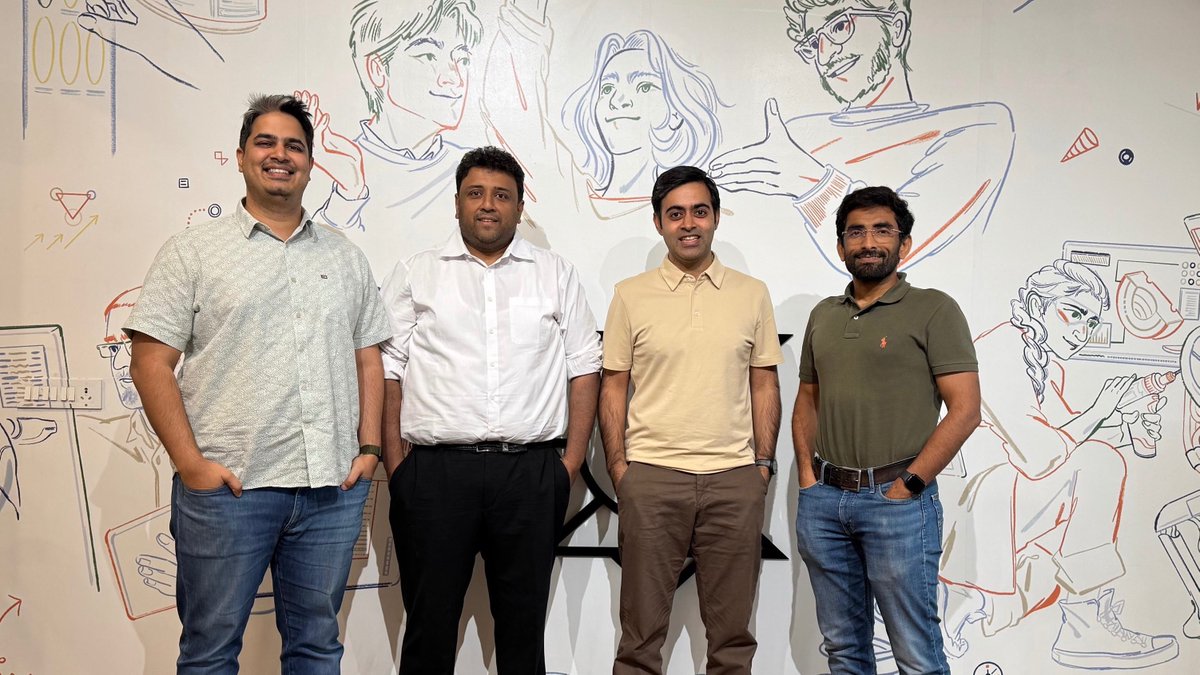
@HMadan_24 and @rohanchdry are joining @spc_india as visiting partners.
Harshit: 2x founder, early Meesho.
Rohan: co-created Glance (400M users).
Both have spent time in the SPC community — now helping shape it.
7
6
45
963
Vrinda Kapoor retweeted
Jun 2
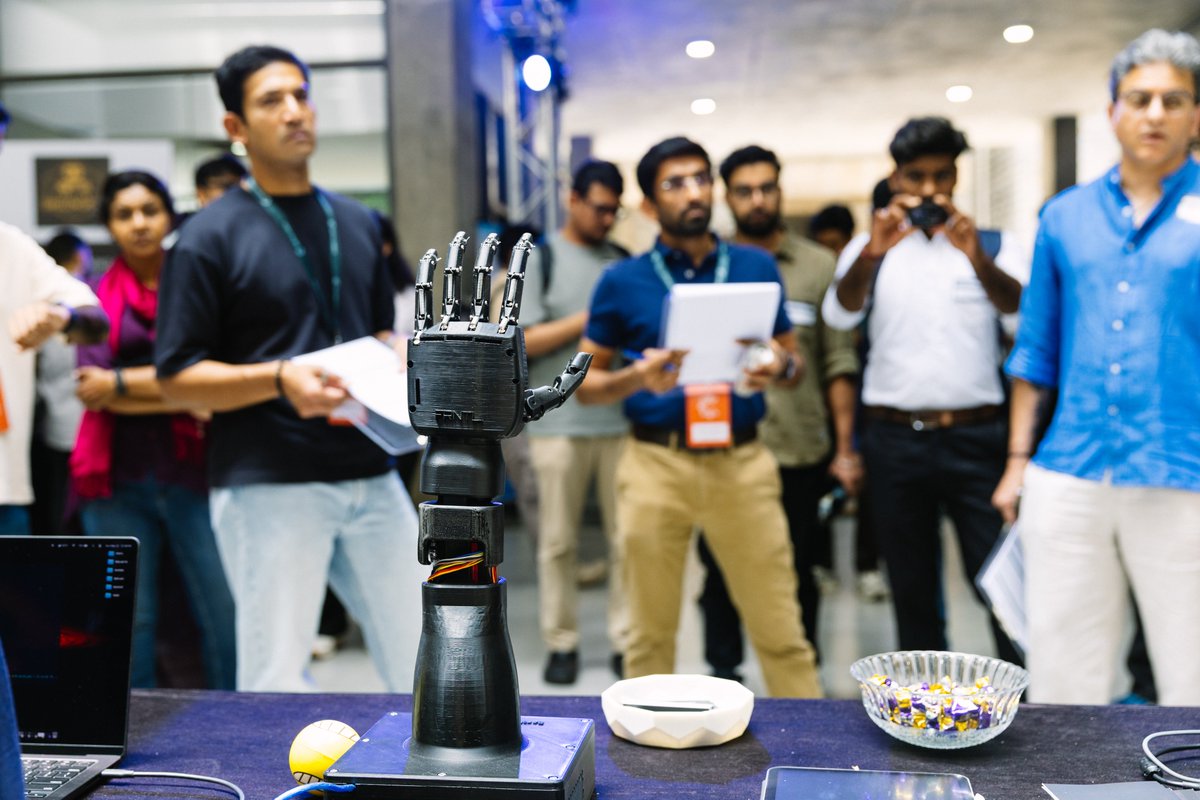
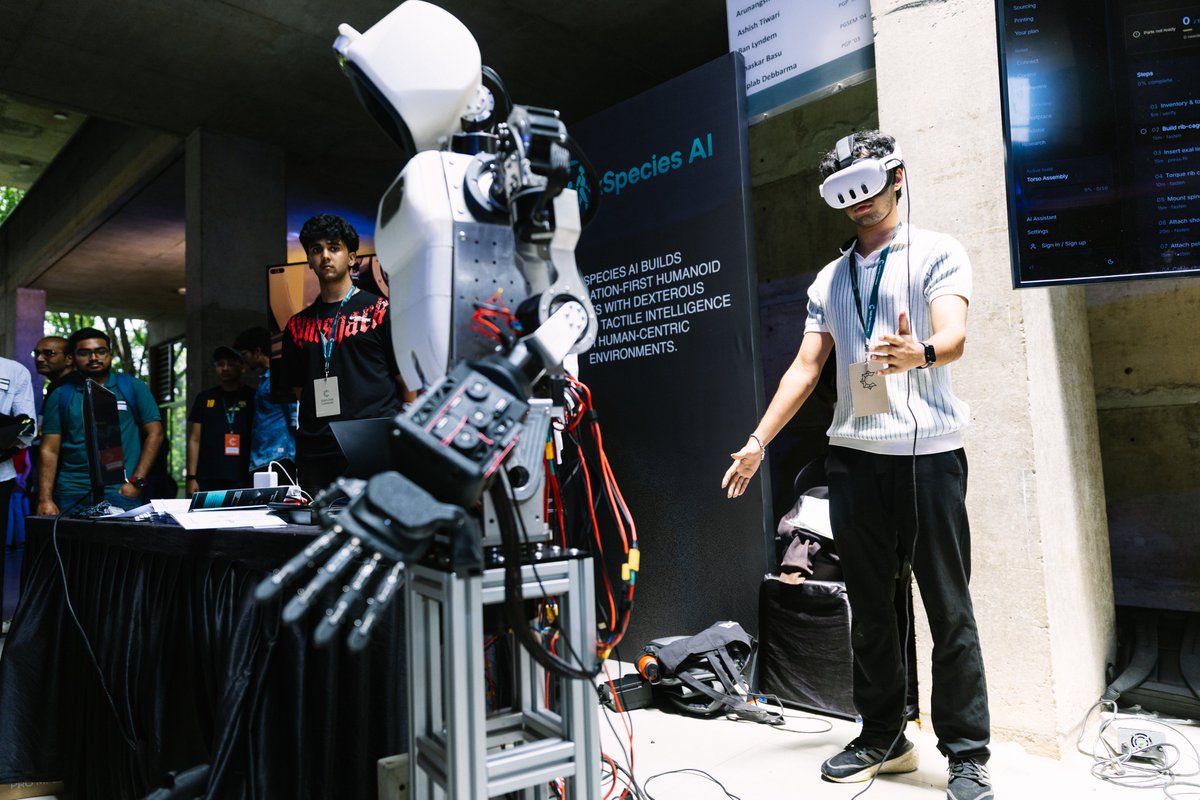
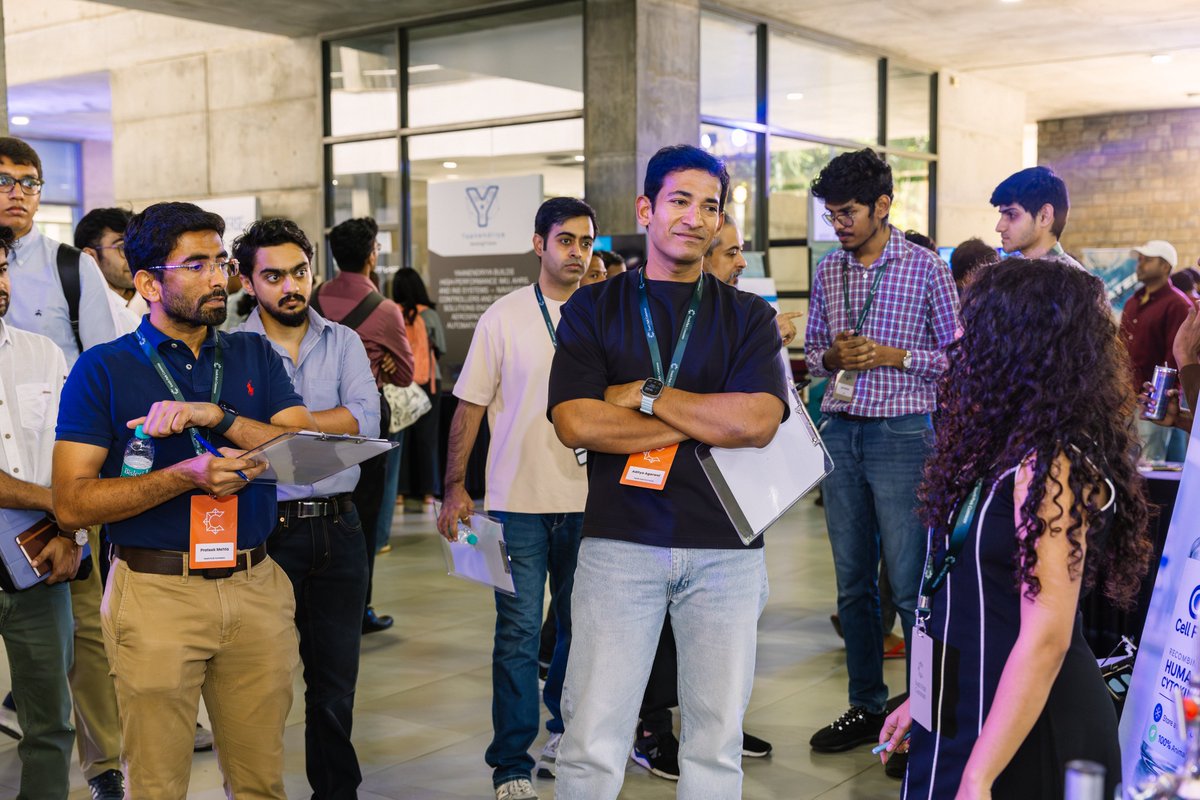
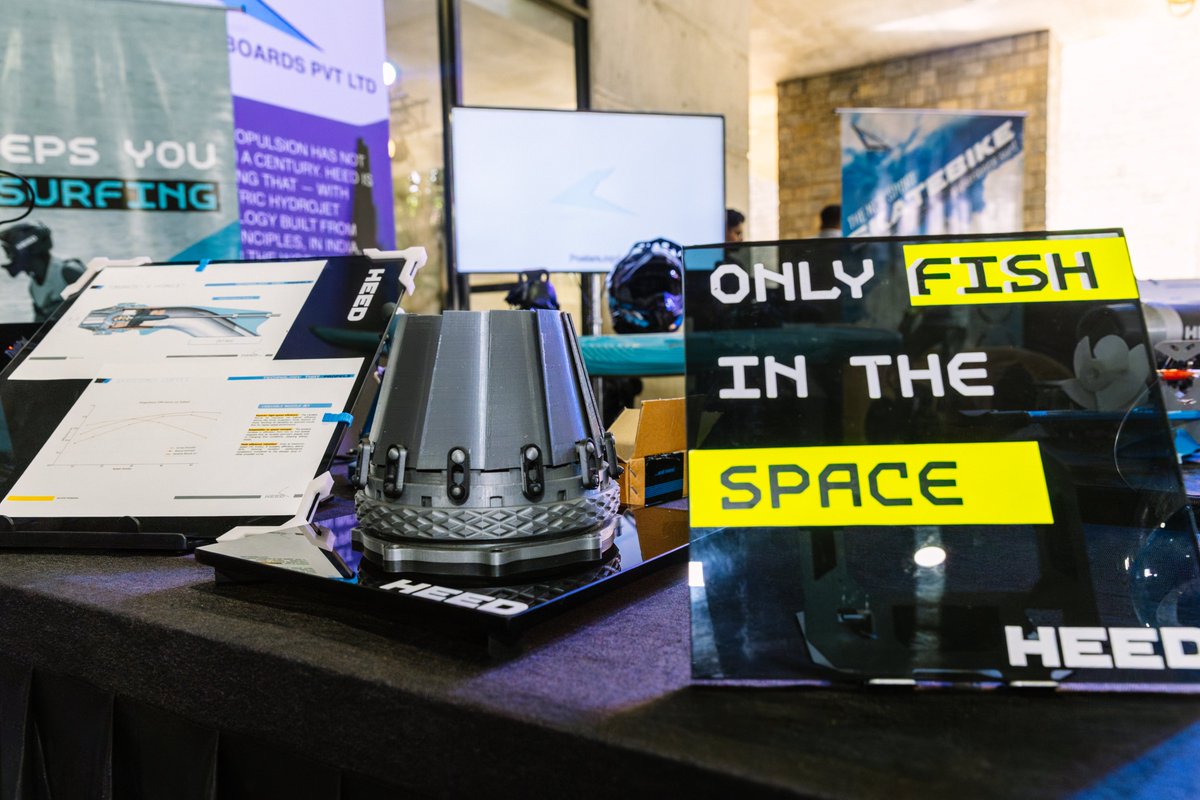
Curiosity 2026 by @spc_india - was an absolutely epic weekend!
It takes a lot of intellectual honesty, and emotional vulnerability to stand up in front of hundreds of people, to demo what you're building. We’re grateful that so many of you showed up from all over India.
1
8
55
3,371
Vrinda Kapoor retweeted

Jun 2
We just quietly scanned the inside of BYD car components...
From Lux family co @lumafield:
BYD delivered 4.6 million vehicles in 2025, making it the world's largest electric vehicle manufacturer by volume. Americans know the name mostly from trade headlines: tariffs, national security investigations, and ships racing to beat duty deadlines. Nobody really talks about the cars themselves. We got our hands on four components from BYD's lineup and put them in our CT scanner: a lithium iron phosphate battery cell, a window switch panel, a portable EV charger, and a key fob. They reveal as much about the company as they do about what’s inside the parts.
BYD manufactures roughly 75% of the components in its own vehicles. Batteries, motors, inverters, onboard chargers, and much of the electronics come from FinDreams, BYD's in-house supplier network, rather than from the Bosch, Valeo, and Denso supply chains that most Western automakers depend on. The ships carrying finished cars to Europe, Latin America, and the Middle East are BYD's too. The last company to vertically integrate a car from raw material to finished product at this scale was Ford. Today BYD’s system runs all the way from the lithium mine to the port.
All scans of components here: lumafield.com/scan-of-the-mo…
8
9
131
20,943
Vrinda Kapoor retweeted
May 21
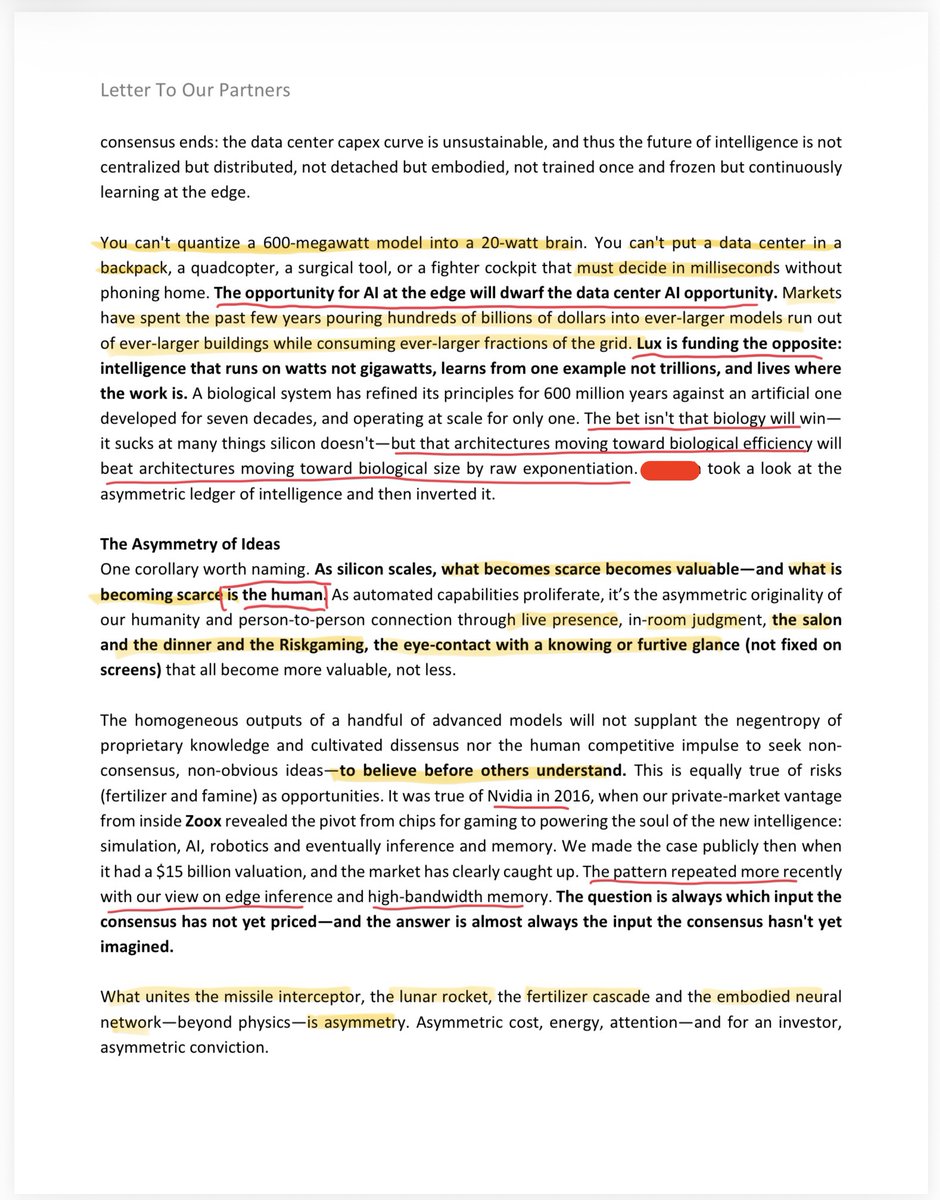
7/We can train models that beat last year’s benchmarks on all axis––but still cant build a FLY🪰
cant quantize 600MW model into 20W brain🧠
cant put data center in backpack 🎒or a fighter cockpit that must decide in millisec
opportunity for AI @ EDGE will DWARF data center AI
9
10
48
22,392
Vrinda Kapoor retweeted

Jun 2
1/n Most deep-tech companies don't fail because the science was wrong.
They fail because the science was never made legible.
"Ahead of its time" is a generous epitaph.
It is also, frequently, an inaccurate one.
🧵
2/ Deep tech does not only need product design. It needs translation design.
Because the hardest part of deep tech is rarely the first proof that something works.
It is the journey from: lab truth to investor conviction, prototype to buyer confidence, scientific novelty to procurement logic and most importantly, technical possibility to human trust that leads to an institutionally adoptable product.
3/ That journey does not happen by itself. It has to be designed.
Deep tech already has TRL - Technology Readiness Level.
TRL tells us whether a technology has moved from scientific principle to proof, prototype, demonstration, and deployment. It is necessary.
But it is not sufficient because TRL measures whether the technology is ready.
It does not measure whether the world is ready to receive it.
4/ A company can have a working prototype and still be commercially illegible, the buyer may not know where to place it in their world.
The investor may admire the breakthrough, but not know how risk reduces over time.
The regulator may understand the category, but not the operating model.
The user may see the device, material, molecule, robot, sensor, or system and still not know whether to trust it.
That is the deep-tech translation gap.
5/ And this is why we need a second lens - call it WRL - World Readiness Level.
TRL asks: does the technology work?
WRL asks: can the world understand it, evaluate it, use it, procure it, maintain it, regulate it, insure it, finance it, and believe in it?
6/ Between TRL and WRL sits translation design.
Translation design is not branding.
* It is not storytelling after the fact.
* It is not making weak science sound attractive.
It is the design discipline that helps scientific truth travel into the world without losing its integrity.
It asks:
What must be simplified without being made false?
What must be shown physically, not explained verbally?
What does the first pilot need to prove - technical performance, economic value, operational fit, or institutional confidence?
Who is the real first user: the operator, the buyer, the regulator, the technician, the CFO, the clinician, the plant head, the defence evaluator?
What language does each of them need before the same technology becomes real to them?
7/ A prototype is not a product.
This is where design has to become much more than form, interface, branding, or communication.
In deep tech, design must convert invisible complexity into usable confidence.
8/ It must shape the first artifact, the first explanation, the first use case, the first pilot, the first evidence loop, the first buyer narrative, and the first category in the customer’s mind.
Not by exaggerating the science.But by making the science legible.
Because the world does not adopt what it cannot place and it certainly does not fund what it cannot evaluate.
9/ This matters especially for Indian deep tech.
We have many teams building serious science and engineering.But too often, the translation layer is weak.
The company communicates competence, not authority.
It explains the mechanism, not the meaning.
And then foreign validation becomes the shortcut to domestic conviction.
10/ The next generation of deep-tech companies will need to build translation design into the company from the beginning.
Not after the prototype.
Not just before the next investor pitch.
From the first decision about what is being built, for whom, why now, and what evidence will make the world believe.
TRL earns trust in the lab. WRL will earn trust from the world.
Read more at: droninghead.substack.com/p/t…
1
2
23
5,743
Vrinda Kapoor retweeted
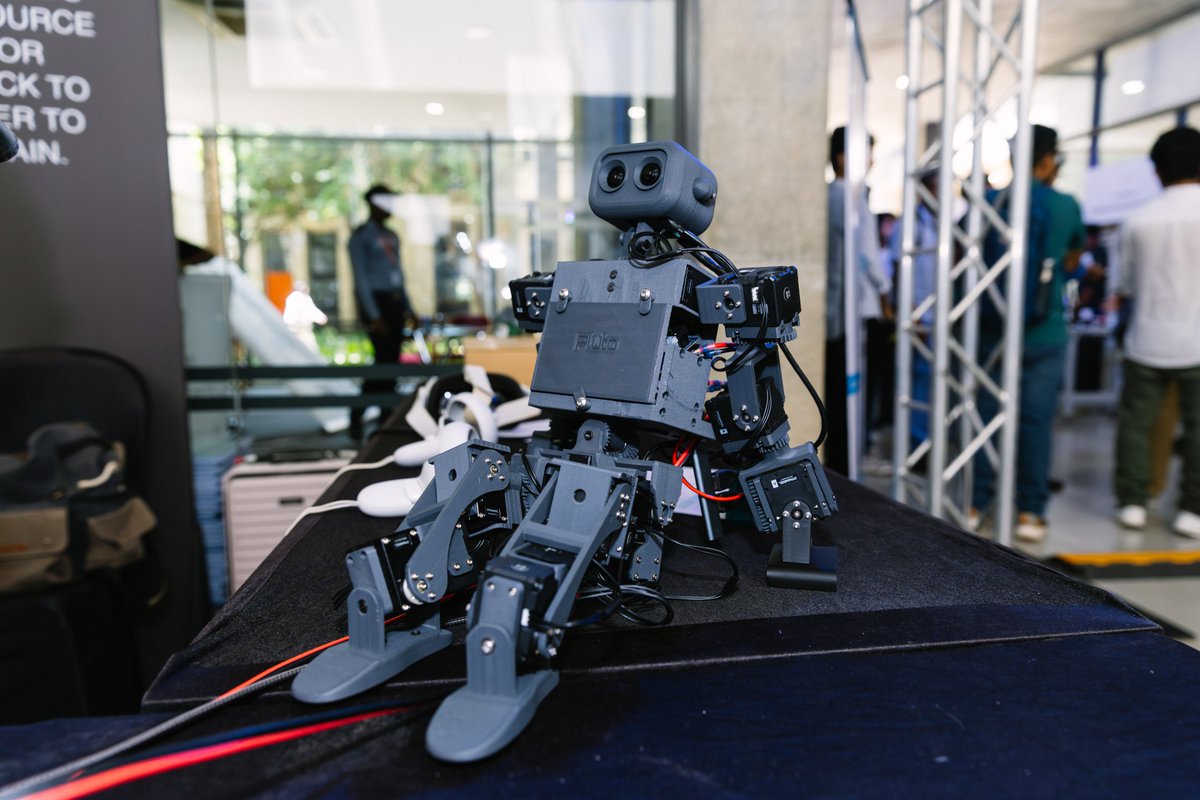
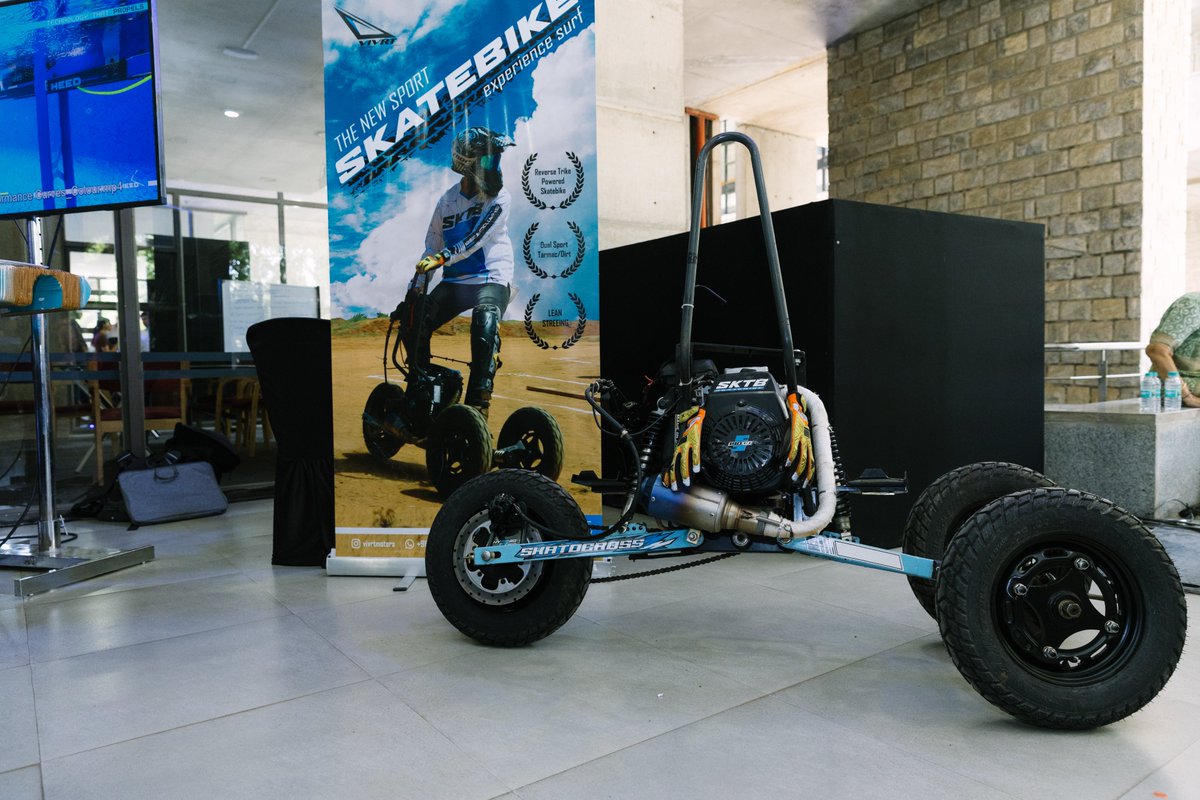
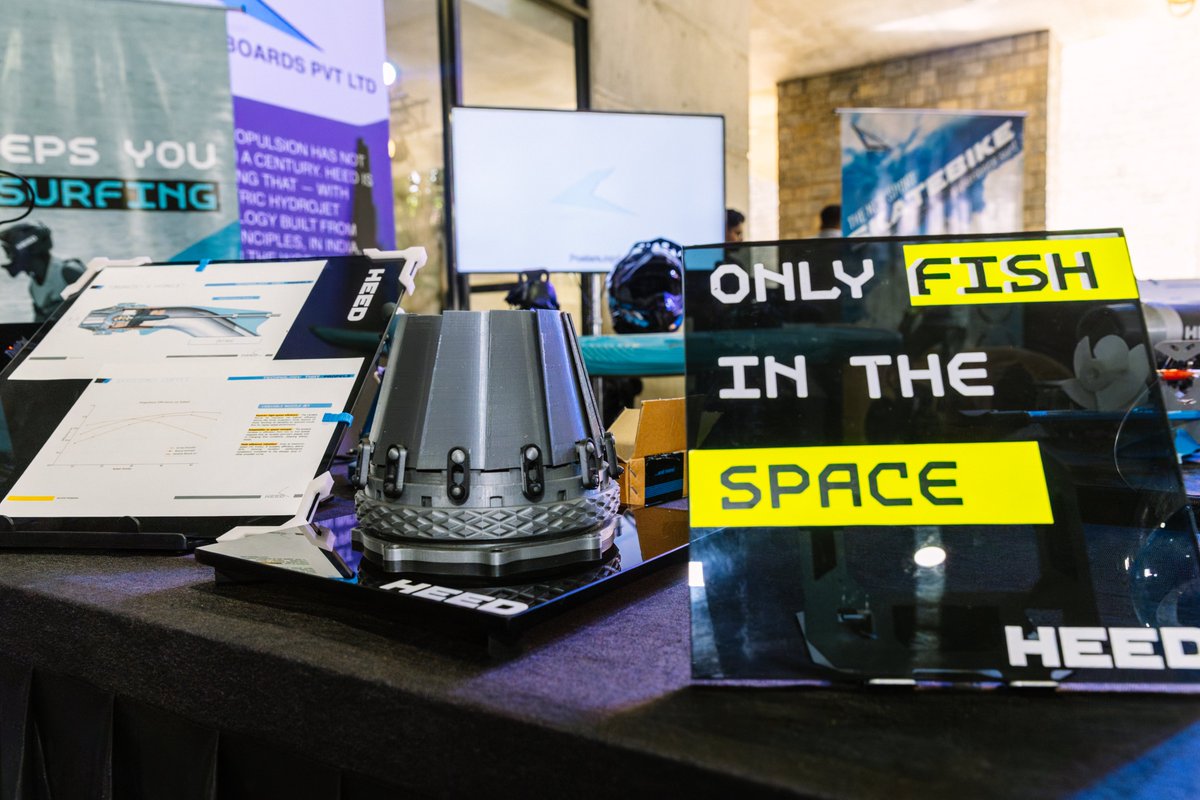
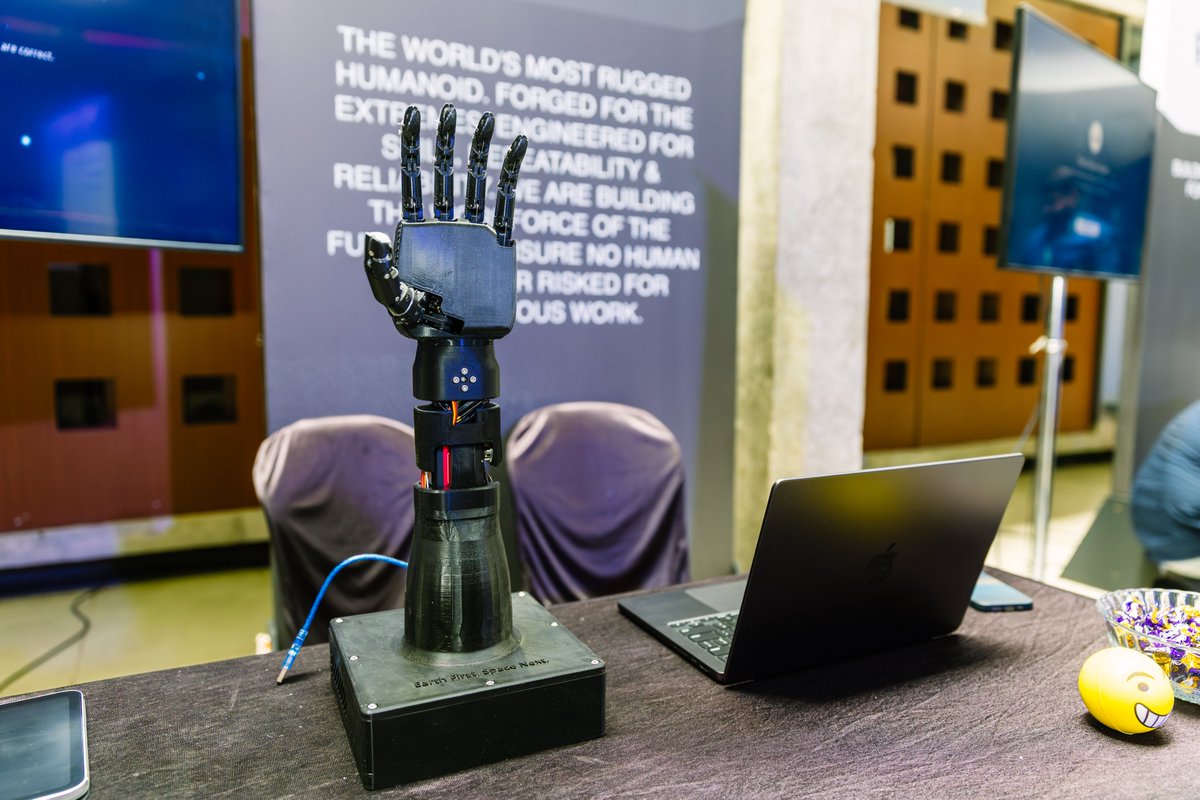
Curiosity 2026, played harder...than even we had imagined!
We've said it before. The creativity, resilience and ambition of Indian builders, is on another level!
The proof was in the room.
2 days. 30 hard/deep tech teams.
Whole lot of caffeine. (not much sleep)
And the best memories.
Some glimpses, before we do some more in-depth recaps soon!
3
13
99
5,221
Vrinda Kapoor retweeted

May 31
My favorite humanoid stocks ranked:
1. $AMBA (Ambarella) — Best pure-play edge AI vision for robotics. 37% revenue growth, 60% gross margins,$100M robotic pipeline, still under $5B market cap. The risk is concentration and scale. The upside is being the de facto vision processor as robots proliferate.
2. $6324.T (Harmonic Drive) — Irreplaceable. There is no substitute for strain wave reducers in high-precision robot joints. 75% market share with Nabtesco. Hard to replicate. If humanoid robots ship in any volume, this company prints money.
3. $ALGM (Allegro MicroSystems) — Near-monopoly in motor current sensing, priced like an auto cyclical. 30-50 sensors per humanoid at automotive-tier P/E multiples. The market hasn’t re-rated this for robotics yet.
4. $VPG (Vishay Precision Group) — The purest humanoid hardware play. Precision load cells and force sensors with a 1.21 book-to-bill. Risk: trading at 255x current earnings on ~$320M revenue. If humanoid volumes slip, this gets crushed. But if they don’t, VPG is the most direct bet on robot touch.
5. $MOG.A (Moog) — Aerospace-grade precision actuators with a credible humanoid crossover. Already up 83% on the thesis but the volume ramp hasn’t started. Defense robotics optionality.

36
79
719
302,480
Vrinda Kapoor retweeted

May 29
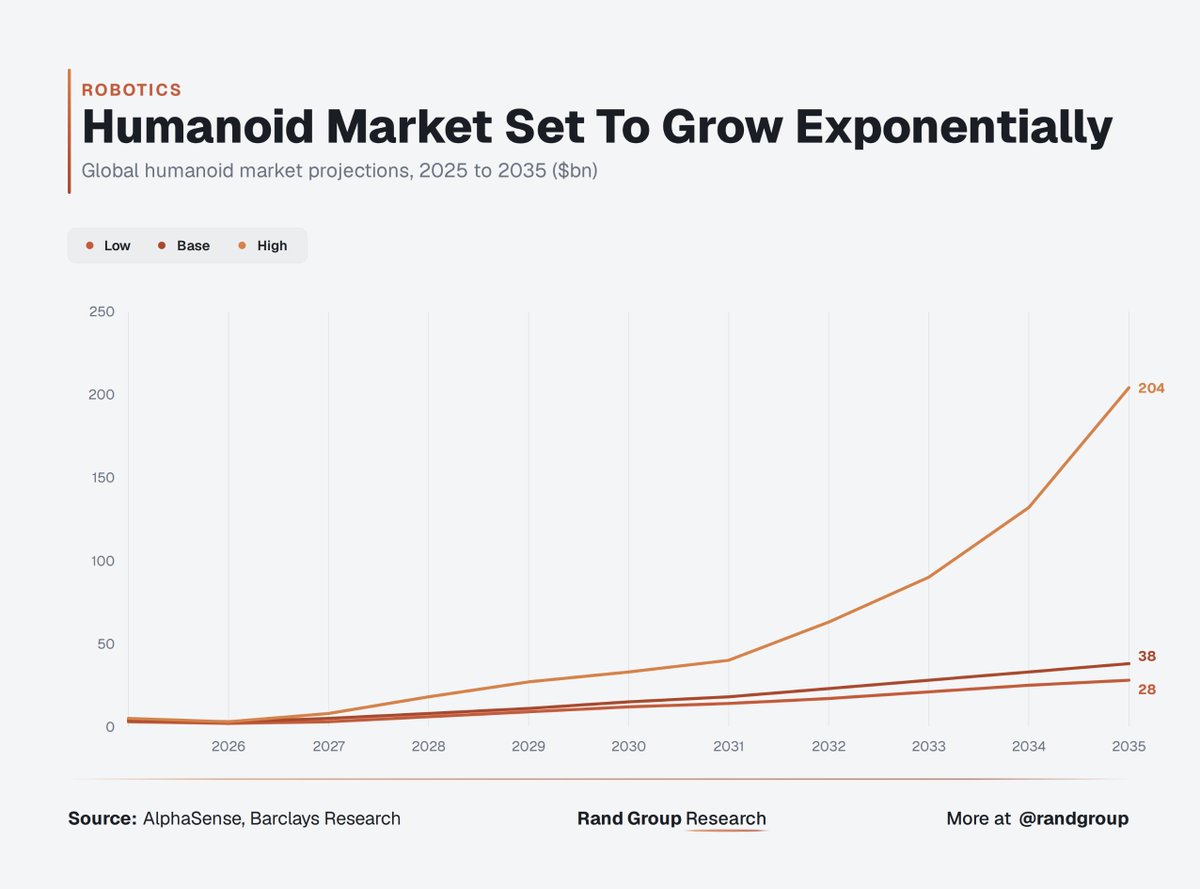
🔎 Humanoid Robots: A $200B Market by 2035?
The humanoid robotics market is about to enter the exponential phase that AI just went through. According to Barclays Research, the global humanoid market is projected to grow from essentially zero in 2025 to between $28B and $204B by 2035 depending on the scenario. Even the base case at $38B represents a multi decade growth story. But the high case at $204B is what investors should pay attention to, because every transformative technology in history has tracked closer to the bullish projection than the conservative one. Smartphones, EVs, cloud computing, all consistently blew past the "realistic" forecasts.
Key Takeaways
🔸 High case projects 200x growth over 10 years. Even the conservative case at $28B is a 100x expansion from today's near zero baseline.
🔸The bull/bear spread (28 vs 204) is massive, showing analysts have no clue how big this gets. That uncertainty is exactly where the biggest asymmetric returns live.
🔸Major catalysts are already in motion: Tesla Optimus, Figure AI, Boston Dynamics, and Chinese manufacturers like Unitree are all entering mass production phases.
🔸The labor market backdrop matters. Aging populations in developed economies persistent worker shortages = humanoid robots become economic necessity, not luxury.
📍 Bottom Line: We're at the inflection point of humanoid robotics. The companies winning this race over the next decade will define the next industrial revolution. Pay attention now while it still looks early.
18
30
141
41,142