
Exited Founder | CTO @ VONQ | Chair @ NotaBlackBox.AI | Board Advisor | Dad. Lapsed classical musician.
Joined February 2008
- Tweets 4,865
- Following 2,064
- Followers 2,212
- Likes 208
157 Photos and videos



New paper dropped this week on "code as agent harness" and it points to some of the conclusions that we've reached about how to work with Agents.
Allowing agents to work in "code land" is at the core of how we're building notablackbox.ai.
Link to the paper in comments.
2
1
68
Not sure if we're right, but everyone else is certainly wrong.
How the future System of Record will be built.
youtu.be/Sq0ALMw3mT0?si=L4yi… via @YouTube
52

May 29
Thinking in Public | We cooked!
From recent doom scrolling:
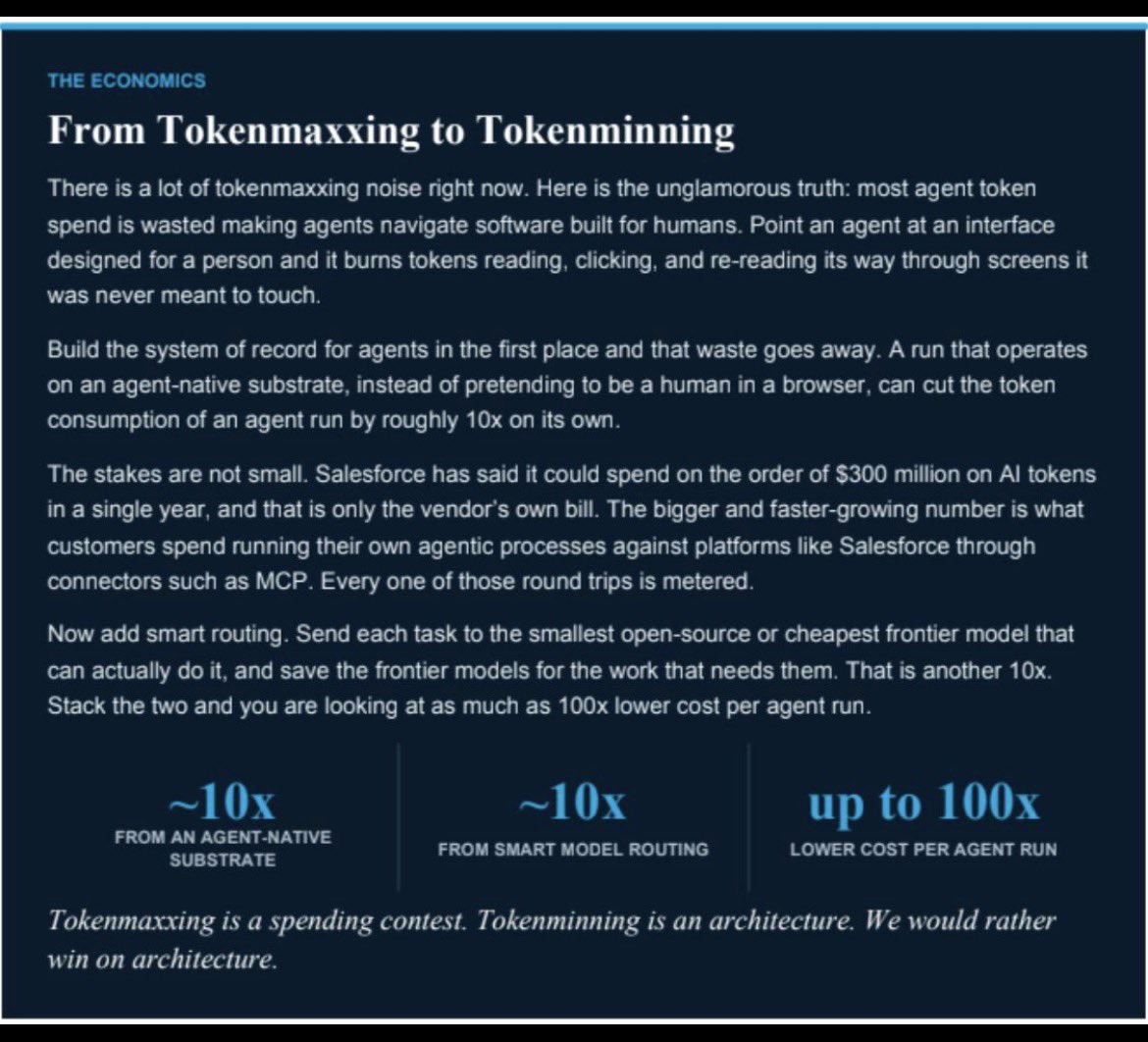
Token costs spiralling out of control, one company dropped $500m in a quarter, SalesForce dropped $300m last year.
Dependency on agent workflows will put companies in a doom spiral of ever rising token costs and vendor lock.
Enterprise AI pilots failing left and right.
Companies will have to pay for token bills, plus FDEs, plus seat licenses to use their enterprise software.
McKinsey shouts No ROI, costs escalating.
Then I heard some public market investor say, they were bullish on CPUs.
Then I saw, Intel CEO, possibly just talking their book, say that
“infrastructure ratios could move to "4 CPU to 1 GPU" for agentic workloads.
Wait, wut.
I thought we were GPU maxxing.
Wut meanz if we be CPU maxxing.
If it meanz Open Source models running on local devices on enterprise software via MCP, then everything is going to be just fine.
(at least from the perspective of being in the agentic workflow business, we’re all toast otherwise)
When agents are doing real work (not generating haiku), but orchestrating workflows across CRMs and productivity tools they move from GPU land to CPU land.
Instead of just predicting tokens, they're calling tools, retrieving context, and coordinating actions across systems.
Ain't no need for frontier models to do that stuff.
I’ve always encourage my team to burn tokens and save time. But for repetitive tasks,
do you really need the world's most powerful model to update a CRM record, schedule an interview, approve a PTO request, or route a support ticket?
Agent workflows can consume 1000x the tokens of simpler AI tasks, but if they are performing non-complex tasks, they could just use small open source model running on a laptop.
Layer in smarter routing of tasks to value engineer token consumption, more efficient models, more powerful CPUs, and it’s all going to be OK.
65
May 15
smart take by @steph_zhang and others from @a16z on how the SoR proposition will evolve.
Worthwhile read.
Our thought is the this is that this is directionally correct but that incumbents will struggle with this shift.
If they are to be headless "Systems of Intelligence" to support point solutions building "systems of action"
then the "systems of intelligence" that win will be those that have the most best infra to support complex, permissioned, agent runs.
The infra behind the incumbent SoRs is not that.
So, does one build point solutions to help prop of SoRs, or does one focus on discovering a pattern for writing enterprise software that is machine friendly?
a point solution that needs to be permissioned by the SoR can be unpermissioned and
will always be "nerfed" by coordination limits within the SoR.
a16z.news/p/from-system-of-r…
32
May 14
Building in Public | Headless Person(a)
Smart framing by A16z partner, @seema_amble of where the field of play moves when the system of record (CRM, ATS, ERP, HCM, ETC) goes headless.
If one isn't building for humans, then how should a product owner think about a UX for Agents?
What exactly is the USP for a bot arriving via MCP?
My hunch is that job seeking will follow an agentic path, via lightweight "claws."
How should a job board think about making their platform appealing to these autonomous agents.
Greenhouse opened their front door to Claude with the MCP move.
Do they want to be in the ATS-as-a-Service, business?
Link to A16z post a16z.com/is-software-losing-….
1
2
111
13 Dec 2024
Building in Public | Impact of AI Agents on Global Staffing Firms
At @VONQ we're lucky to work with the world's best Global Staffing firms and count most of them as customers.
But, we're worried about them.
They are amazing businesses (billions of USD revenue, global footprints, deep local market knowledge, excellent teams) but their OPEX is out of control.
If they fix this -- their business will be smoking hot.
If they don't -- their businesses will just be left smoking.
If there was a business category riper for automation, I'm not sure what it is.
Massive opportunity for them to streamline.
But......
There are real blockers to fixing their own OPEX.
Inertia.
Plus.....
Their core strategic partners have put Global-Staffing-Revenue on their own Roadmaps.
Global Staffing is reliant on technology (think Applicant Tracking Systems) to upgrade their business operations, and
Global Staffing is reliant on publishers (think Indeed) for delivering candidates.
Smart tech and publishing companies have roadmaps with Global Staffing revenues becoming part of their own Total Addressable Market.
AI enables this.
The kicker is that Global Staffing is funding this process.
The markets seem to have caught on, and Global Staffing is trading at quite low revenue multiples.
The problem/solution is well known.
But, will they fix it?
We hope so, and we have some ideas.
1
171
4 Jun 2024
Building in Public - Solving for #Inclusivity and "more natural"#ConversationalAI
Head's Up: #SkillsBasedHiring is part of the solution.
At @VONQ - we build #hrtech tools that give every candidate a chance.
In this example, our VP of engineering, applies to be the next UK Prime Minister.
Our #AIAgent has "written" a job description for the role and reviewed his CV to build both an interview and assessment plan.
Our system builds unique assessment plans for every candidate specific to every role.
Clearly, his work history doesn't make him an obvious choice for the role and VONQ AI has identified some gaps....
but also sees some skills overlap that it wants to understand better.
It's been prompted to give the candidate a chance.
This update to the vonq.com/kopilot Interviewing platform, includes more refinements to solve for "latency" in the conversation and adjustments to the post-interview scoring.
At the end of the interview, the system builds a transcript, scores the answers, updates his application and can provide structured data back to the ATS.
Is he a great candidate for this role, maybe not. Would it be easier to get your driver's license renewed if he was selected? Probably.
But for many roles and many candidates, there could be a skills overlap that isn't obvious from their career path. The smart application of #llm tech into #hrtech could help facilitate skills based hiring solutions and ultimately yield more qualified applicants.
Skip to the last 2 minutes to see how VONQ.com/Kopilot scored the interview.
1
265
27 Mar 2024
Building in Public: @VONQ First to Introduce Role-Based-Agents to #hrtech
In an #HRtech Industry First -- VONQ Kopilot Introduces #GPT Role-Based Agents [RBAs]
After a preview at House of HRs e-recruitment congress on 19 March 2024 during a GPT masterclass...
VONQ is introducing RBAs to its Kopilot "hashtag#AI for Talent Operations suite."
These Agents make use of Direct Acyclic Graphs [DAGs] for agent planning and are adept at handling a multiple tasks, streamlining operations, and ensuring that the right candidates are engaged and nurtured from the very beginning of the talent acquisition process.
These RBAs include:
- #Sourcing Agents: Leveraging Semantic Search with Multi Vector Retrievers and a Generative Parser, these agents are capable of converting recruitment requests into structured queries, optimizing the sourcing process and campaign creation.
- #Assessment Agents: Utilizing advanced Chain of Thought methodologies, these agents provide deep insights, enhancing candidate evaluations.
- #Prompting Agents: With capabilities in one-shot training and fine-tuning, including specific enhancements to the Generative Parser, these agents facilitate tailored interactions and communication strategies.
- #ConversationalAI Agents: Engineered for seamless interaction, these agents feature low latency (~800ms), effective interruption handling, and accurate end-of-turn detection, ensuring smooth and natural dialogues.
The VONQ Kopilot stack makes use of #Langchain Integration: Built on a foundation of LLM agnostic infrastructure, to support a broad spectrum of language models, offering adaptability to various organizational needs.
It also makes use of Advanced Memory and #Parsing: Equipped with conversation summary memory and input/output parsing using Pydantic dataclasses, Kopilot agents ensure each interaction is contextually relevant and accurate.
"By integrating GPT role-based agents into the talent acquisition process, we're not only streamlining operations but also enriching the quality of interactions and decision making," says VONQ CTO, Bill Fischer. "Kopilot is set to become an indispensable ally for HR professionals and recruiters worldwide."
According to the Forbes Business Council, AI can reduce the time to hire by 40% by automating tasks.
lnkd.in/eZzHeD5N
More info here: vonq.com/kopilot/
1
2
281
19 Jan 2024
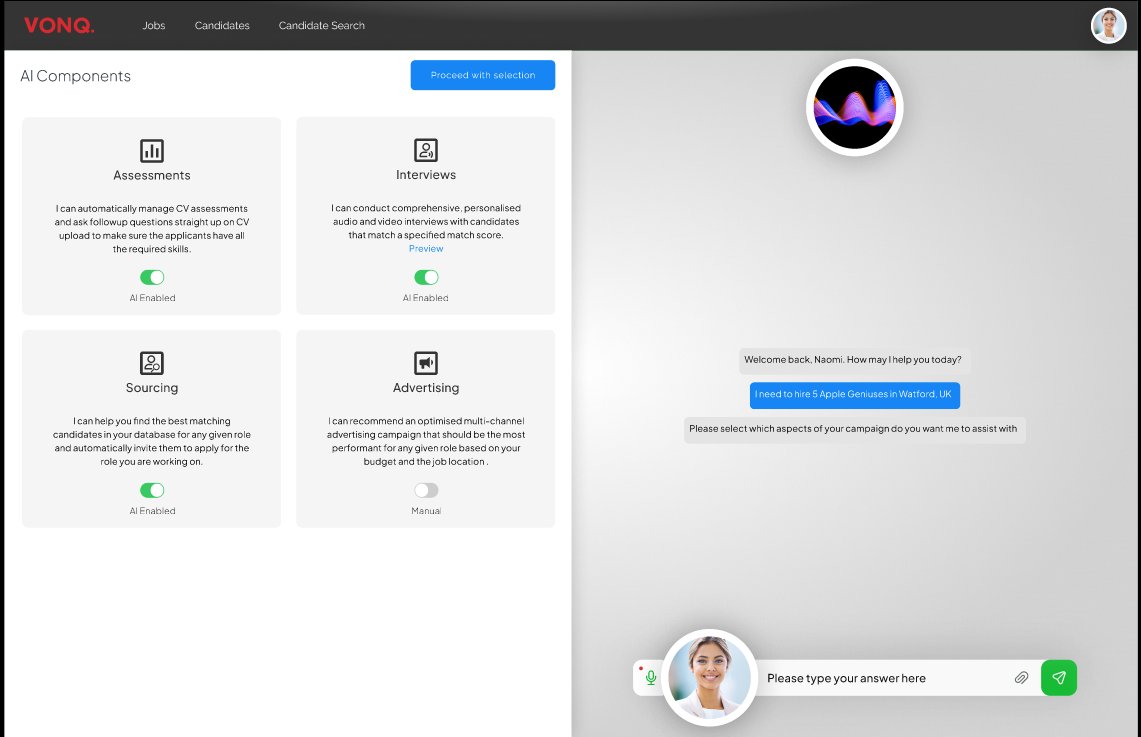
"Copilot, Build a shortlist of candidates for an opening at our Genius Bar in Portland."
Everybody loves the promise of an AI agent.
But,
An AI Agent would then need to:
- Break the simple task into multiple steps
- Have an understanding of what success looked like at each stage
- Review millions of documents to build job taxonomies, skills ontologies, O*net connectors
- Open up browsers, productivity apps
- Write job descriptions
- Search internal candidate DBs
- Identity the top prospects
- Communicate with them
- Build and manage advertising campaigns
- Review applications
- Qualify candidates via email or SMS
- Schedule Interviews
- Conduct the interviews
- Score the interviews.
- Update the ATS
- Review the complete applications, build a shortlist, then send it to the hiring manager
Easy, right?
We couldn't do it with a single Agent.
And so, we built 100s of them and a platform to support them.
APIs, RAG, Hybrid search tools, integrations (LLMs, Job Boards, ATSs, CRMs, email, calendars, SMS) etc.
And then chain them together, build dashboards, allow humans to track/edit each step.
Allow this process to be completed in 20 languages, and then output everything to structured JSON to be read by an ATS.
Then, we took it to Global Staffing Firms and some VONQ enterprise customers to get their feedback for refinements.
Here's what it looks like.
DM me for a demo.
VONQ Kopilot - GPT Powered Talent Acquisitioin youtu.be/FAE6r-icyus?si=6cK_… via @YouTube
109
27 Oct 2023
#hrtech Challenge:
Quick, What skills does this candidate have?
At VONQ we built a general #llm document parser.
It utilizes different #foundationmodels and provides structured output depending upon the document type and intended usage.
We built this to tackle dozens of challenges throughout the #talentacquisition process.
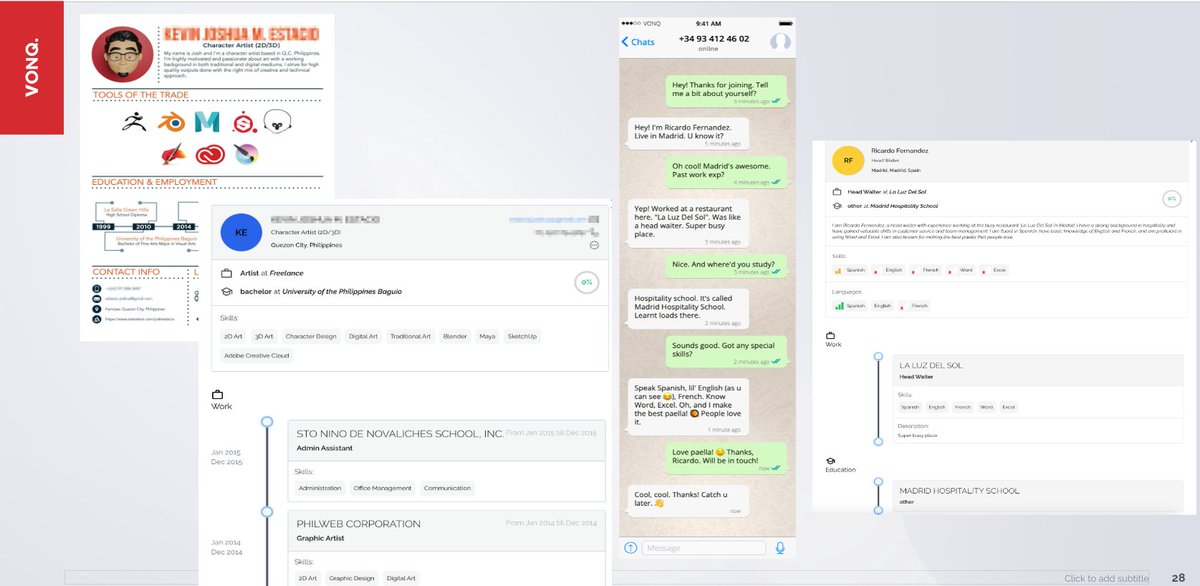
1. Met with a Global Staffing firm.
They wanted to do more Skills Based Hiring and were also struggling with "Graphical CVs." From using logos or unicode characters, job candidates use lots of images to convey data and these were not picked up by their parser.
Images 1 & 2: Example of a Graphical CV and how we turned it into structured JSON and built a new text CV for their ATS.
2. Met with a high volume hiring company
that has many candidates without CVs. Needed an efficient way to capture candidate data and add to their ATS.
Images 3 & 4: We took an SMS chat and converted it into structured JSON, built a text CV, and formatted the data to the specification of their ATS.
We can do the same with Audio recordings from calls/interviews making use of the capabilities of LLMs to build transcripts to be inputted into our document engine.
More to come....
122
25 Oct 2023
Nearly a year ago, VONQ decided to throw away about 10 years of code and go all in on #GenerativeAI. This was not a universally popular decision at our company.
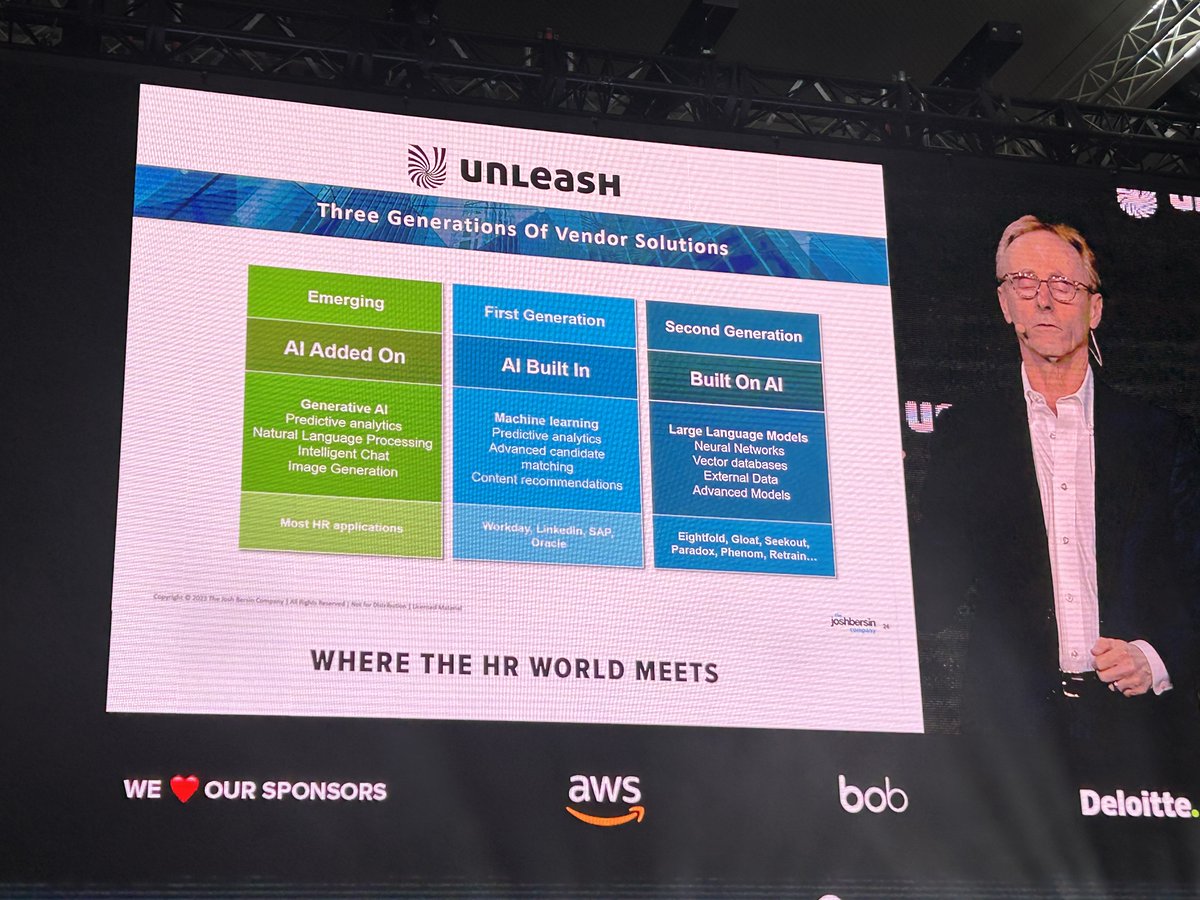
This effort was probably saved by a white paper written by @Josh_Bersin - that defined the concept of a "Second Generation" company that had AI at its core.
It was great seeing #HRTech analyst J. Bersin live at the #unleashworld conference in Paris last week (photo below), as we were demoing our just announced VONQ.com Copilot product.
For us, this isn't just the incorporating some #GenerativeAI into our existing products - but building a new enterprise candidate delivery platform on #transformers from the ground up with:
LLM Parsing Capability - to build and update Candidate profiles from unstructured documents and casual conversations
LLM Reasoning Capability - to classify/lead-score candidates and to manage the qualifying process
LLM Agent Capability - built from chaining LLMs to automate workflows from media buying to scheduling
More videos and announcements soon.
1
138
11 Oct 2023
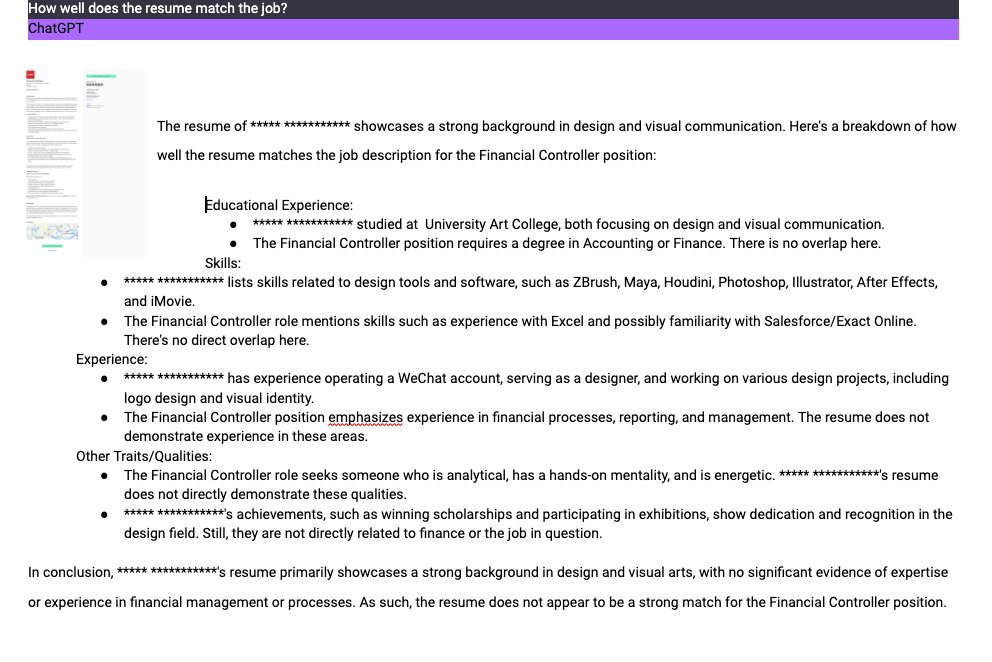
Just playing with ChatGPT Vision - probably not the best use case but......
- Uploaded a picture of a job description (attached)
- Uploaded a picture of a CV (hidden for privacy)
Asked ChatGPT: How well does the resume match the job?
#HRTech #GenerativeAI #chatgpt4
1
210
9 Oct 2023
My team rocks.
VONQ introduces a #GenerativeAI #HRTech Co-Pilot product.
With more than two-thirds of hiring teams looking to use Gen AI for recruitment, we're bringing a full-suite of #enterprise tools to be embedded in their workflows via their ATS.
Info here: vonq.com/press-releases/vonq…
I've added this video because if was free, took about 2 mins, and since the new twitter Algo likes video.
Check out this video I made with Synthesia! share.synthesia.io/f7ee31d0-… #productivity #video
2
131
9 Oct 2023
We were keeping this under our hats but, sadly, the excellent engineering team at LinkedIn has just released a paper on Embedding Based Retrieval [EBR]
We at @VONQ believe that #EBR is a game changer for #HRTech.
Embeddings Based Retrieval.
It's vector based search and if you remember Soh Cah Toa, it's the Cah that's at play.
In hiring, there are millions of applicants, millions of jobs, and millions of companies. When one wants to look at jobs or applicants, they only want to see about 20.
Getting to the right 20 options from millions of options with current tools is really hard.
Even @braingain's best #boolean query with the best structured data set would struggle. LinkedIn, to their credit, acknowledges the challenge and calls poor search results "facepalms" - see image.
Our engineers reached the same conclusion and we're building in EBR in all of our new products (from media recommenders, to candidate sourcing tools).
engineering.linkedin.com/blo…
1
144
6 Oct 2023
In our R&D lab @VONQ we built a multi-purpose document parser on top of an #LLM because we thought
1 - it would work
2 - the output from parsers built with pre-transformer technology were not good enough to build interesting #HRTech tools
Using an #LLM worked so well, we then thought if #GenerativeAI solved parsing what #enterprise tools could we build to take advantage of it.
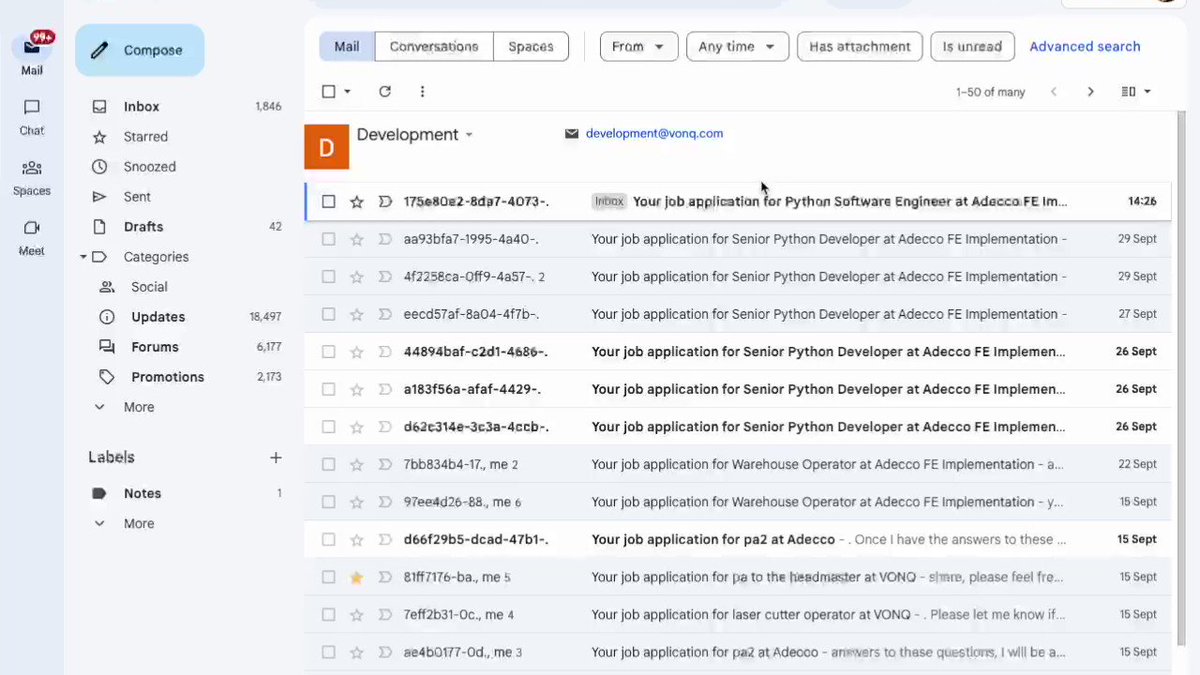
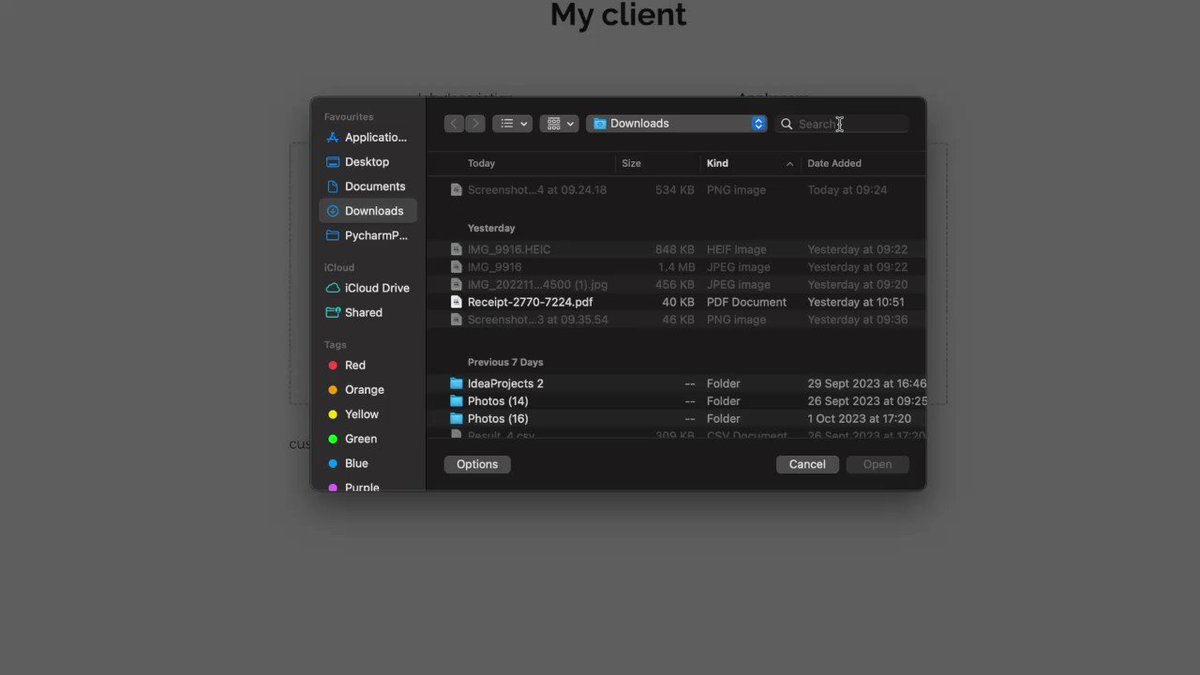
From our labs, here's a POC of a system that
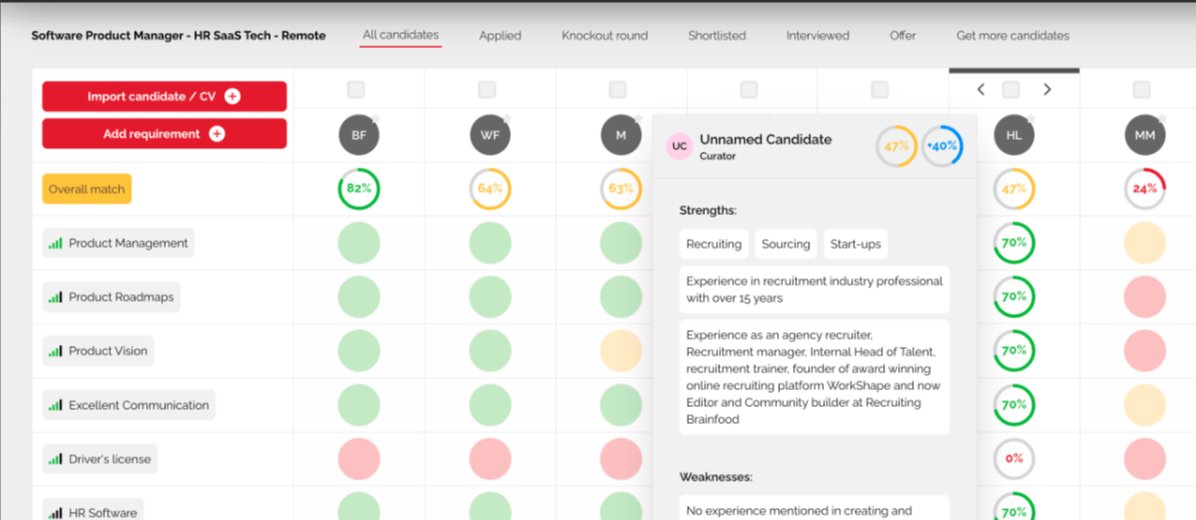
Evaluates job application CVs in real time against a specific job description,
Communicates with potential candidates to get more info,
Updates their candidate records in an ATS
then updates the shortlist of candidates to interview
3
172