
wearer of many hats: founder of hotline.net, bayes.com (acq. @airtable), pm @twitter, vis @fivethirtyeight, cs @uwcse, research @uwdata, and more
Joined January 2010
- Tweets 10,350
- Following 1,800
- Followers 3,260
- Likes 74,771
528 Photos and videos






After talking with many of the companies building AI glasses (and interviewing with a few), I've become increasingly bearish on the form factor.
It's worthy of a @WillManidis-esque essay, but I think the soul of society is going to heavily resist AI cyborg products.
6
911
William Wolf retweeted

Jun 12
hello world! @jackiehluo and i are working on something new together, we can't share much more yet but if you run a sales/GTM/ops team we'd love to talk to you. dm me!
6
12
62
7,064

Jun 10
There's a $100 billion opportunity waiting for whoever figures out workforce deployment of AI through agent harnesses, context layers, integrations, etc.
Right now it's basically a free for all where every employee uses their own harnesses and rifed together skills.
It's obvious that firms are going to want to administer security, compliance, credentials, and usage (costs) centrally.
No one is well positioned to own this yet, least of all the frontier labs themselves.
10
6
77
7,325
Jun 10
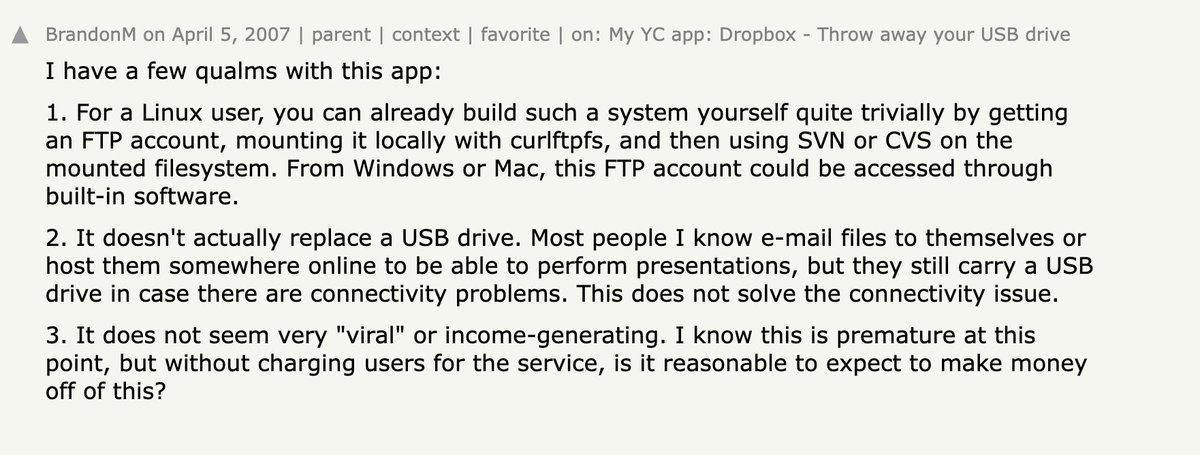
There are also obvious playbooks to follow here, because there was a similar opportunity for SaaS about 10 years ago.
6
803
Jun 4
So it basically comes down to making sure everyone uses and maintains atomic column definitions, ideal tables, canonical lineages, unambiguous semantic models, etc.
This has always been the hard part and feels unrealistic for most organizations?
Jun 3

How do we automate business analytics with Claude?
New blog post covering our best practices for skills, data foundations, and evaluations when building agents to perform data analysis:
claude.com/blog/how-anthropi…
3
12
2,242
Jun 4
"Have you tried organizing your messy humans to make life easier for agents?” - Anthropic, OpenAI, et al.
1
8
274
Jun 2
Just once, I wish AI would ask a clarifying question. Like "How do you define revenue?"
Data is often ambiguous, and AIs LOVE making assumptions. These demos always built on top of data that is neat in a way that isn't reflective of the real world. Ironic because AI is actually great for cleaning/reasoning. Demo that!

3
20
4,160

May 20
Very cool to see OpenAI using Vega to make their charts :)
Today, we share a breakthrough on the planar unit distance problem, a famous open question first posed by Paul Erdős in 1946.
For nearly 80 years, mathematicians believed the best possible solutions looked roughly like square grids.
An OpenAI model has now disproved that belief, discovering an entirely new family of constructions that performs better.
This marks the first time AI has autonomously solved a prominent open problem central to a field of mathematics.
1
2
521
William Wolf retweeted

May 16
Four years ago, average SF sentiment was “the smartest people I know are all joining web3.” These same people thought the economy would restructure around getting a tradable NFT each time you bought something.
AI is much more useful. But it's important to remember:
1) SF is a massive bubble, and
2) Every dominant technology and company throughout history has eventually been surpassed.
Every single one.
Just in AI, we won't be able to keep scaling compute. Chips will get 100x more efficient. New forms of energy are becoming economically viable (or socially acceptable). We'll invent new types of models that are useful in new ways.
These, plus 100x more things that already exist today, and 1,000x more that don't even exist yet, are all opportunities for new dominant products and companies to emerge.
Newspaper, telecom, and Cable companies were all monopolies at one point. New technologies came, they did not react fast enough, and new players replaced them.
Google used to have a monopoly in online ads. Until Facebook came. And then Amazon came. And then TikTok. Now AppLovin.
IBM used to dominate the computer market. Then Dell. Then Microsoft. Then Apple.
In all of these cases, new technologies, form factors, types of customers, and/or social dynamics emerged that allowed new massive companies to be formed.
Even in AI, OpenAI was once the dominant company. Anthropic came out of nowhere in the past two years. And in two more, there will be another, probably a lot more (ask a VC who plowed $1B into a new AI company that hasn't launched a product yet which one that could be).
SF is a great place. But it's a giant bubble that's insulated from the rest of the world. SF is usually right on the technology, but often wrong on the timing.
Patience is underrated. There will always be opportunities to escape the permanent underclass.

The vibes in SF feel pretty frenetic right now. The divide in outcomes is the worst I've ever seen.
Over the last 5yrs, a group of ~10k people - employees at Anthropic, OpenAI, xAI, Nvidia, Meta TBD, founders - have hit retirement wealth of well above $20M (back of the envelope AI estimation).
Everyone outside that group feels like they can work their well-paying (but <$500k) job for their whole life and never get there.
Worse yet, layoffs are in full swing. Many software engineers feel like their life's skill is no longer useful. The day to day role of most jobs has changed overnight with AI.
As a result,
1. The corporate ladder looks like the wrong building to climb.
Everyone's trying to align with a new set of career "paths": should I be a founder? Is it too late to join Anthropic / OpenAI? should I get into AI? what company stock will 10x next? People are demanding higher salaries and switching jobs more and more.
2. There’s a deep malaise about work (and its future).
Why even work at all for “peanuts”? Will my job even exist in a few years? Many feel helpless. You hear the “permanent underclass” conversation a lot, esp from young people. It's hard to focus on doing good work when you think "man, if I joined Anthropic 2yrs ago, I could retire"
3. The mid to late middle managers feel paralyzed.
Many have families and don't feel like they have the energy or network to just "start a company". They don't particularly have any AI skills. They see the writing on the wall: middle management is being hollowed out in many companies.
4. The rich aren’t particularly happy either.
No one is shedding tears for them (and rightfully so). But those who have "made it" experience a profound lack of purpose too. Some have gone from <$150k to >$50M in a few years with no ramp. It flips your life plans upside down. For some, comparison is the thief of joy. For some, they escape to NYC to "live life". For others still, they start companies "just cuz", often to win status points. They never imagined that by age 30, they'd be set. I once asked a post-economic founder friend why they didn't just sell the co and they said "and do what? right now, everyone wants to talk to me. if i sell, I will only have money."
I understand that many reading this scoff at the champagne problems of the valley. Society is warped in this tech bubble. What is often well-off anywhere else in the world is bang average here.
Unlike many other places, tenure, intelligence and hard work can be loosely correlated with outcomes in the Bay. Living through a societally transformative gold rush in that environment can be paralyzing. "Am I in the right place? Should I move? Is there time still left? Am I gonna make it?" It psychologically torments many who have moved here in search of "success".
Ironically, a frequent side effect of this torment is to spin up the very products making everyone rich in hopes that you too can vibecode your path to economic enlightenment.
40
29
544
103,331
May 17
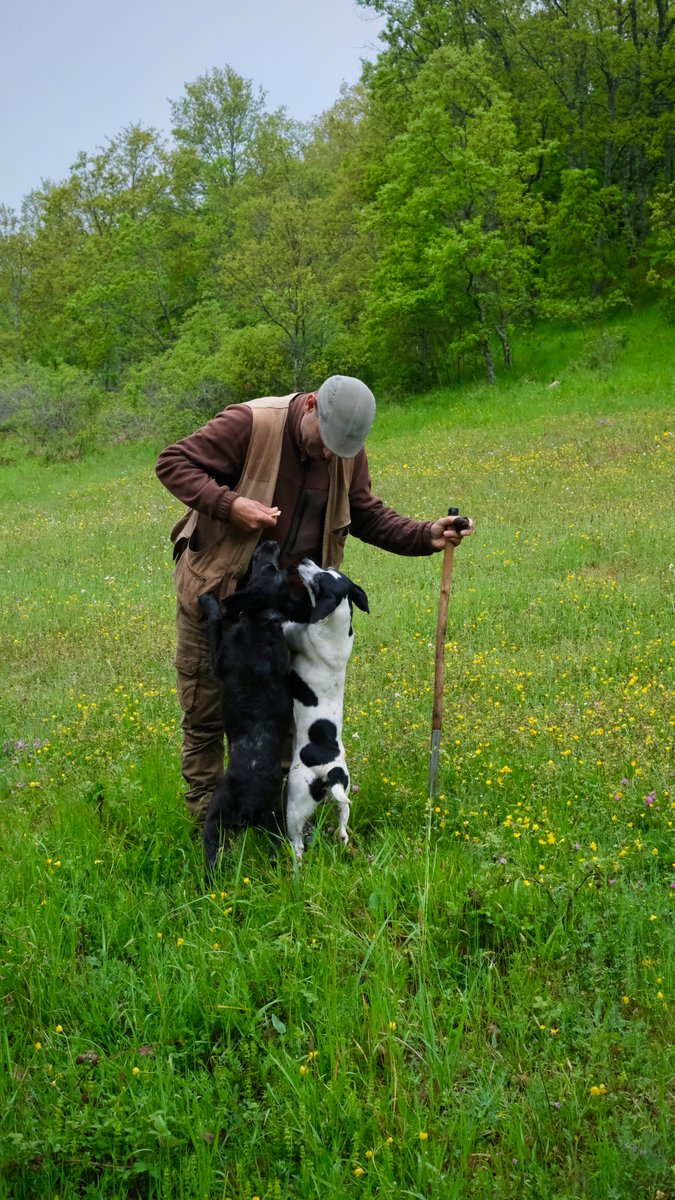
Spent last week off the grid, hunting truffles in Umbria. Strongly endorse getting the fuck out of town every now and then.
Back in SF now to find a new mission. Pour the AI directly into my veins.



May 16

If you're stuck in the Bay Area tech rat race / psychosis, make time to travel to other places.
Go to a small town in Europe or visit Asia - you'll see that life can be about much more than whether you're IC7 or IC8 or what company you work for.
Don't be the person to put on your tombstone: "He got divorced and neglected his kids but at least he made D2 at FAANG"
1
28
4,146
May 5
Anyone trying to build a company brain should look at how @jaltma scaled @LatticeHQ into organizations
4
498
May 4
required watching for anyone working on voice AI products: youtube.com/watch?v=8SkdfdXW…
1
238

it's crazy that it's not more obvious that this is the correct messaging
it's been obvious to so many people
more and more it feels like being in sf is not useful for building something for a lot of people
May 1

Nvidia CEO Jensen Huang says don't listen to CEOs with a god complex on AI (lol, Dario) $NVDA
On AI destroying jobs: "these kind of comments are not helpful .. somehow they became CEOs, you adopt a god complex and before you know it, you know everything"
"ground ourselves to talking about the facts" AI will "generate hundreds of thousands of jobs .. trillions of dollars [to the U.S. economy]"
58
42
1,114
123,503
Apr 28
what’s the thesis for why king-making by vcs is so prevalent (effective?) in ai markets
2
4
512
Apr 28
my hunch is that it makes enterprise buyers more comfortable adopting immature products
but it's ironic that it also means more deals are being made on the proverbial golf course, not fewer
2
228
Apr 23
i think figuring out how to effectively download the knowhow and tacit knowledge from more tenured employees is still an open question
(and possibly a good problem to work on)
Apr 23

for decades, tenure meant you knew the systems, the history, the politics, the old failures, the hidden dependencies, the people to call, etc.
but ai makes institutional memory easier to compress, search, summarize, and operationalize. so companies will start asking a cold question: how much of this person's value is judgment, and how much is cached context?
i think the answer will split senior labor in two.
some experienced people become much more valuable because they have some combination of taste, trust, strategy customer intuition, and the ability to decide what matters. others discover that what looked like seniority was mostly access to memory the machine can now "absorb". the post-agi economy probably won’t arrive as "everyone gets replaced overnight"
it will look like smaller teams inheriting larger mandates, managers supervising agents instead of headcount, and companies quietly buying out roles where the knowledge graph can substitute for the human graph. tenure used to be a moat. now it only matters if it compounds into judgment.
1
2
14
1,175
Apr 20
An update on Hotline: I recently decided to wind down the company, and have been working on finding the product a new home.
I spent the last year exploring how AI could better serve older adults. We built wearables, home hardware, novel voice interfaces, and eventually Hotline.net: a team of AI experts you can reach by phone, text, or email, using nothing you don't already have.
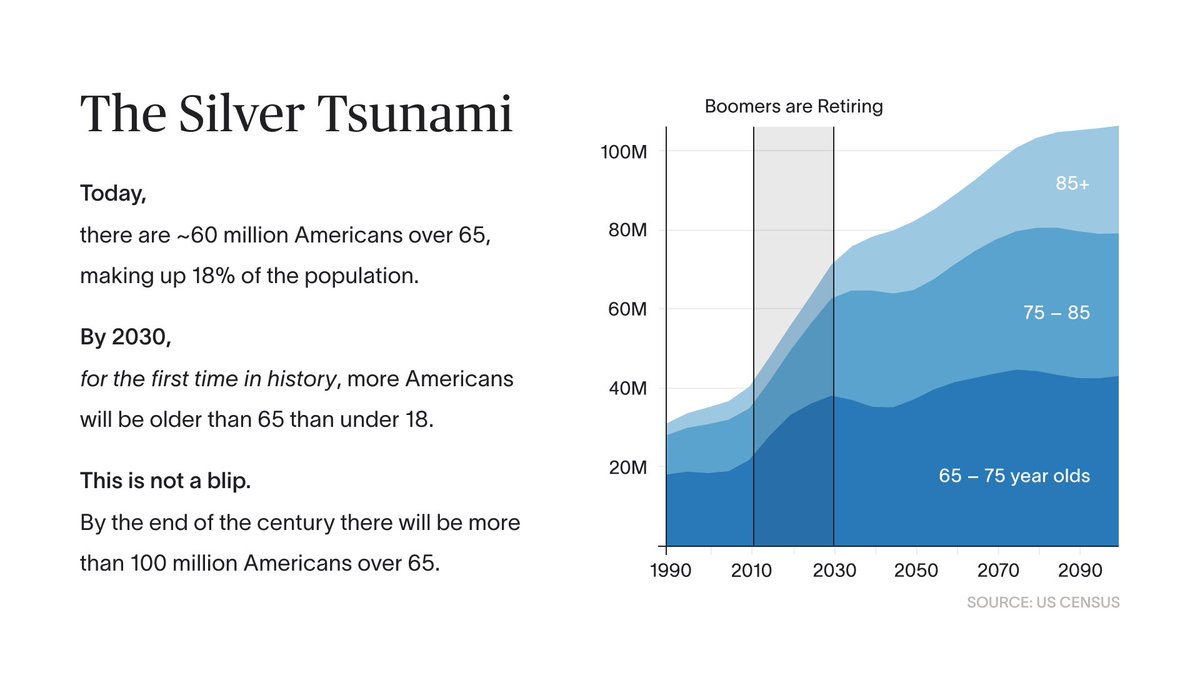
I loved working on this problem and I'm still bullish on the market. Seniors are the fastest growing and most underserved demographic in tech. For the first time in American history there are more of them than children. The incumbent products are embarrassing. Not enough people are trying to fix that.
The core bet was that the most accessible AI interface is the one people already use every day, not a new app they have to learn. I think that's held up. Poke, OpenClaw, Linq, Claude Code's SMS integrations. There's still a lot worth building here.
To our users, my team, and my investors: this was a privilege. Thank you.
Excited to get back out in the arena soon!
5
32
3,274
William Wolf retweeted

Apr 17
73
471
2,472
588,375