
Joined February 2022
- Tweets 1,450
- Following 1,565
- Followers 369
- Likes 2,888
13 Photos and videos
Pinned Tweet

Apr 11
In collaboration with @__fallen_icarus
I am writing content to change hearts and minds within the Cardano community.
Our goal is to make P2P Defi/Defi Kernel a priority to all Cardano wallets in the ecosystem.
We have people advocating for P2P Defi/Defi Kernel within Lace, IO, Cardano Foundation and others to help make it a reality...
But so far efforts have stalled, because they are still awaiting approval from leadership.
We are just two random Cardano holders with no influence...
That's why we have chosen to build leverage through content.
We hope to change minds and gather your support. And hopefully, we can make enough noise to get P2P defi through the finish line.
So if the ideas we share and the future we paint speak to you, please petition:
* Your favorite wallet
* IO
* Cardano Foundation
* Emurgo
To make P2P Defi/Defi Kernel a priority.
I believe in the Cardano community.
With your help...
Let's make P2P Defi/Defi Kernel an idea whose time has come.
You can read some of the blog posts my ideas are based on below: github.com/fallen-icarus/med…
4
11
45
1,322
Remember the last few times CF had a plan?
Take the 2021 for example:
youtube.com/watch?v=K4i-rTNy…
No one of it was accomplished.
So to me, this all sounds like media talk.
I need to see more from CF from trust to even reach 0%.
Jun 12

Great to talk with @CamiRusso at @DefiantNews about what real decentralised governance looks like and the important work happening on Cardano. An in-depth read on the @Cardano_CF roadmap, the Cardano 2030 Vision and multiple community initiatives.
The work continues.
thedefiant.io/news/blockchai…
1
5
460
cardano_wolf retweeted

9h
a lot of people mistake cardano governance discussions on X as “fud”
when in reality, it’s change, debate, and community governance happening in real time
having a dedicated place in discord where people can discuss cardano governance without the rage bait, engagement farming, and ego stroking
might be one of the best things for cardano
i’m bullish
Jun 13

Discord, Governance, and Community Management x.com/i/broadcasts/1AxRnnXBp…
37
16
207
5,517
Everyone wagreed goverance is toxic just a week ago.
We have governace by organized mob.
We need a new process to hash out our differences constructively to enable compromise.
So what is your proposal?
Jun 13

Going to hide behind Charles moderation skirts is not the answer. This is crypto. Be your own bank. Not your keys, not your crypto. When did we shift responsibility from self-moderation and control to asking Daddy to take care of it for us? Don't like the troll accounts? Block them and move on with your day.
Every discord/forum/controlled point of conversation is littered with people who got banned/silenced/booted or otherwise moderated as soon as they said something that the moderation team found unacceptable.
Shouldn't it be on us to decide which voices and channels we listen to or silence/mute?
If moving to discord is the right place for Charles to interact because he needs that safe space for himself. Great. It's disingenuous to suggest that will be/is the "home" of the Cardano community and is the only place that "governance" and other discussions are allowed to happen under the threat of moderation.
The Cardano community exists across the spectrum; there are already hundreds of Discords, Telegram, WhatsApp, Forums, YouTube, local and regional channels where people choose where to go to find and discuss information relative to Cardano.
1
9
1,098
Jun 13
This is Charles' best video in a while.
This strategy is very feasible.
Jun 13
Discord, Governance, and Community Management x.com/i/broadcasts/1AxRnnXBp…
5
25
250
7,414
cardano_wolf retweeted

Jun 11
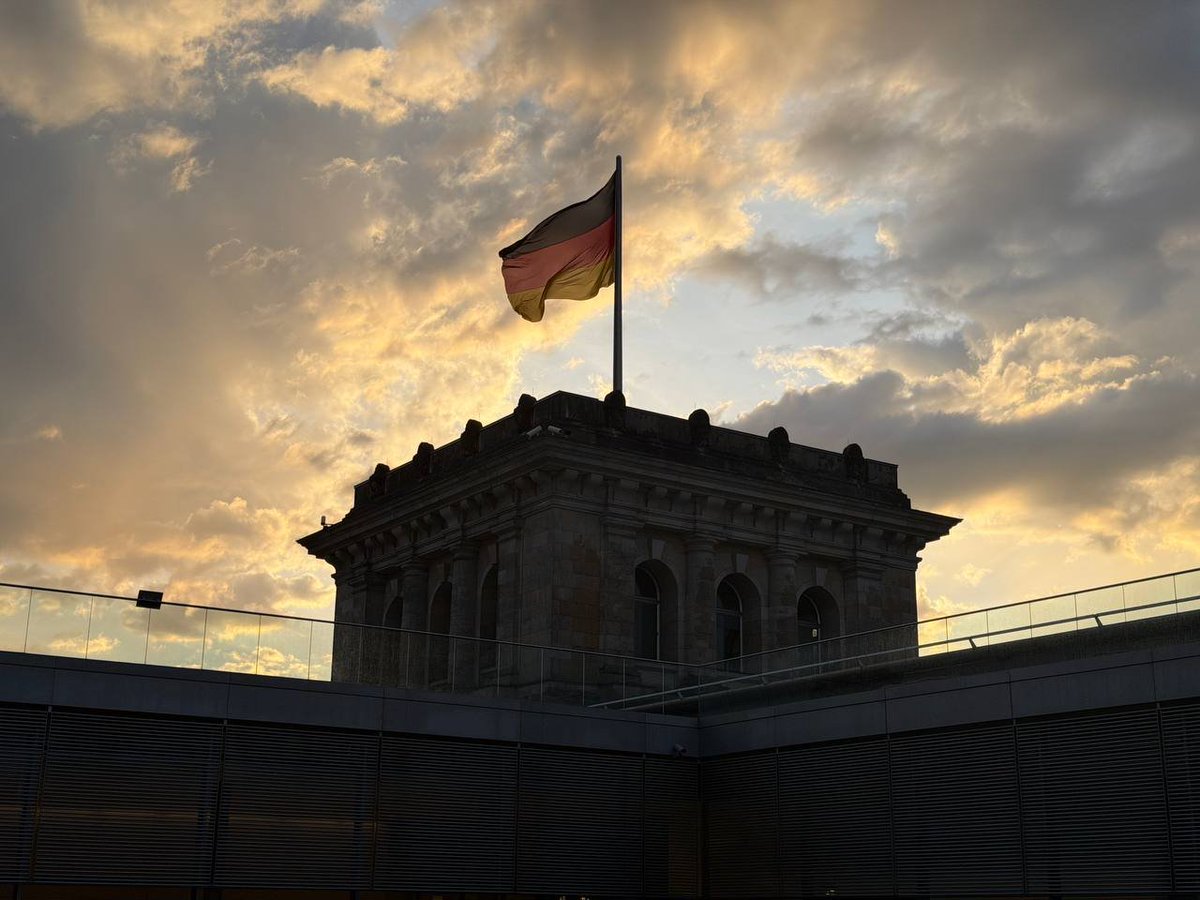
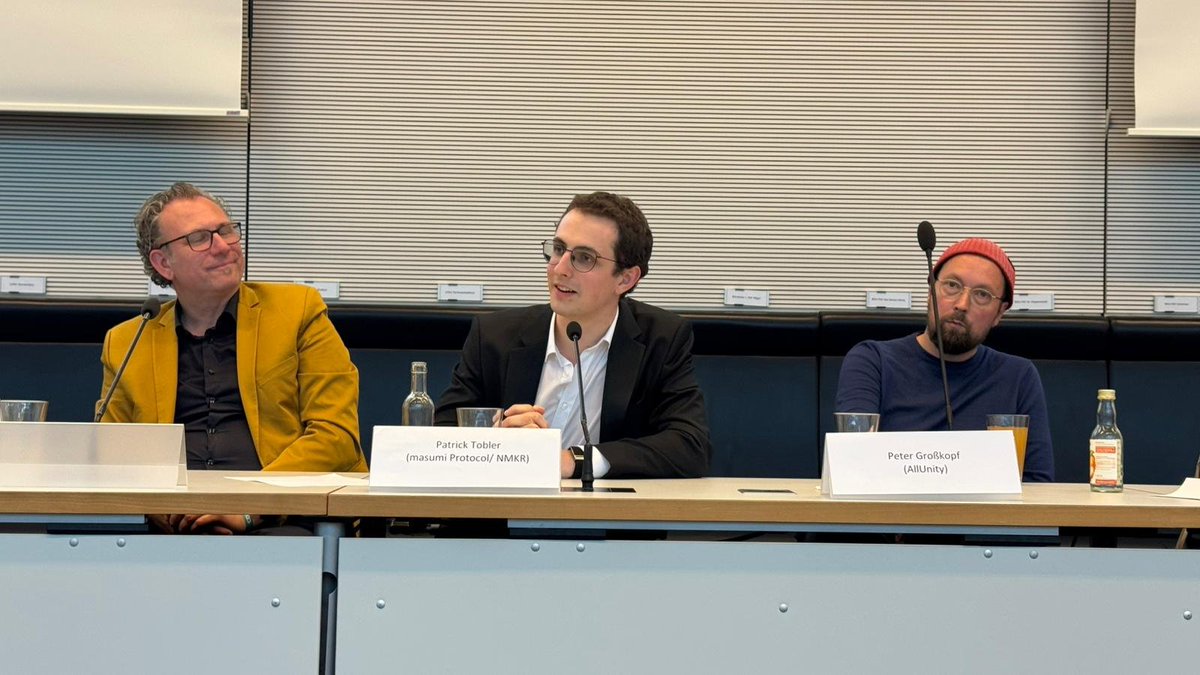
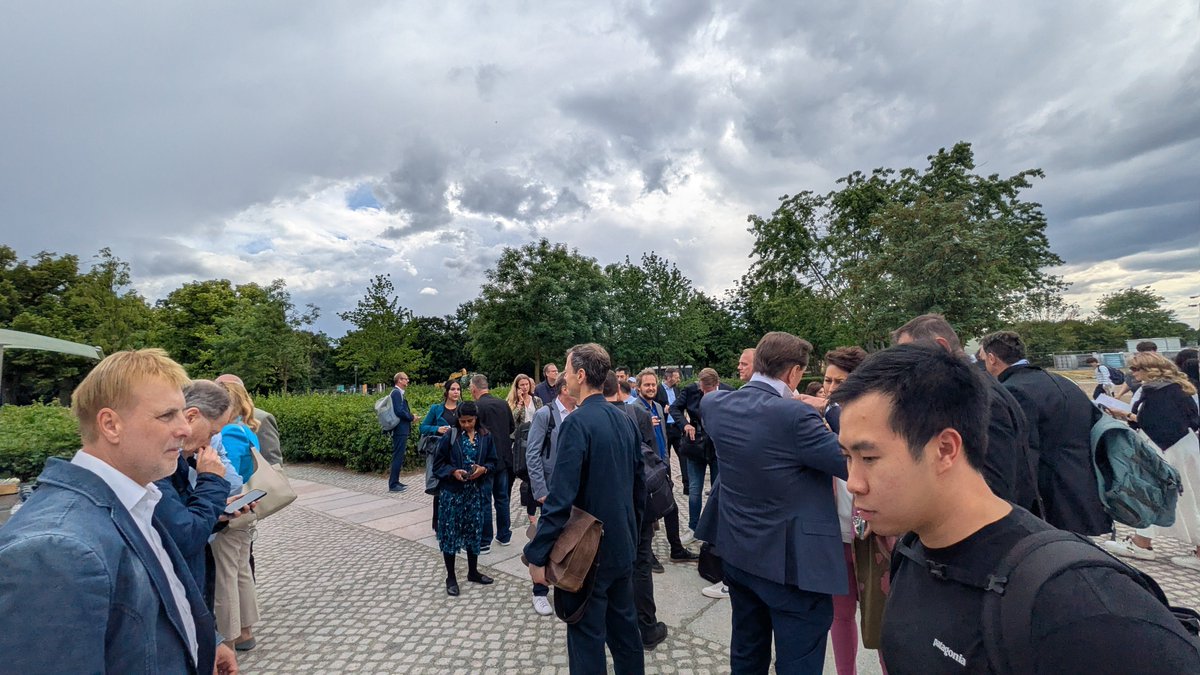
Yesterday the maybe most unexpected moment of my professional career so far happened.
I was invited to the German Parliament to speak at a panel about Agent-To-Agent Payments using Blockchain.
An absolutely unreal moment.
The room was packed with politician & businesses. I spoke about our work with Masumi, the work with Serviceplan, how companies are hiring & selling agents on our agent marketplace today already and why we chose to build on Cardano.
Big shout-out and thanks to Bundesblock and Member of Parliament Marvin Schulz.

88
152
761
29,161
cardano_wolf retweeted

It’s too bad Morpho is using margin loans… That money won’t move the needle of DeFi adoption.
Such a waste of money 🫤

One of the largest raises in DeFi history just went to lending protocol @Morpho ($175M).
Credit infrastructure is the most important category in crypto right now. The capital knows it.
Pogun is building the version Bitcoin holders actually need with bilateral terms, fixed rates, and no price-triggered liquidations.
Built around terms, not price.
1
1
9
697

One of the largest raises in DeFi history just went to lending protocol @Morpho ($175M).
Credit infrastructure is the most important category in crypto right now. The capital knows it.
Pogun is building the version Bitcoin holders actually need with bilateral terms, fixed rates, and no price-triggered liquidations.
Built around terms, not price.

Morpho Association has raised $175M to build the open credit network for the world.
Co-led by @paradigm, @a16zcrypto, @RibbitCapital with strategic participation from @apolloglobal, @vaneck_us, @circle_ventures, and @Ledger @Cathayinnov.
The round also included participation from @variantfund, @wmt_ventures, @preludexyz, @IOSGVC, @HashKey_Capital, @sbigroup, @Bpifrance, @mirana, @bamazizimesh, NJJ Capital and 10 other strategic partners.
The funding will help accelerate Morpho's position as the foundation for onchain credit.
3
11
62
2,865
cardano_wolf retweeted
I’m really late posting this… 😬
It’s an Intersect proposal to help Dano Finance build out more of the DeFi Kernel’s order book side!
Even if you would vote NO, please tell us why so we can improve the proposal for next time. 🙏
Jun 6

DReps, we need your support!
Please support our proposal to continue building Global Order Book on Cardano!
This proposal connect TVL from all Cardano Dapps together and make it more accessible for new products to come on Cardano and hence WILL INCREASE transaction on Cardano!
Our proposal is one of the FEW that are NOT just idea, but already live work in progress which demonstrate our capability and commitment to Cardano future!
hydra-voting.intersectmbo.or…
2
9
47
1,789
Jun 10
The Cardano community may seem divided. But the fact that the Fireblocks integration is being celebrated means the community can still unify behind good work.
That's why governance needs to evolve. We need a process that facilitates this.


1
7
80
1,678
cardano_wolf retweeted

Jun 9
NEWS:
FIREBLOCKS IS COMING TO CARDANO 😱😱
Cardano $ADA is set to integrate with @FireblocksHQ , a leading enterprise platform used by thousands of institutions to securely custody and transfer digital assets.
@emurgo_io confirmed the news, stating the deal is signed.


7
70
507
7,381
cardano_wolf retweeted

Privacy works best with UTXOs.
Intents work best with UTXOs.
Formal verification works best with UTXOs.
There has quite literally never been a better time to be a UTXO chain
33
146
712
25,529
cardano_wolf retweeted

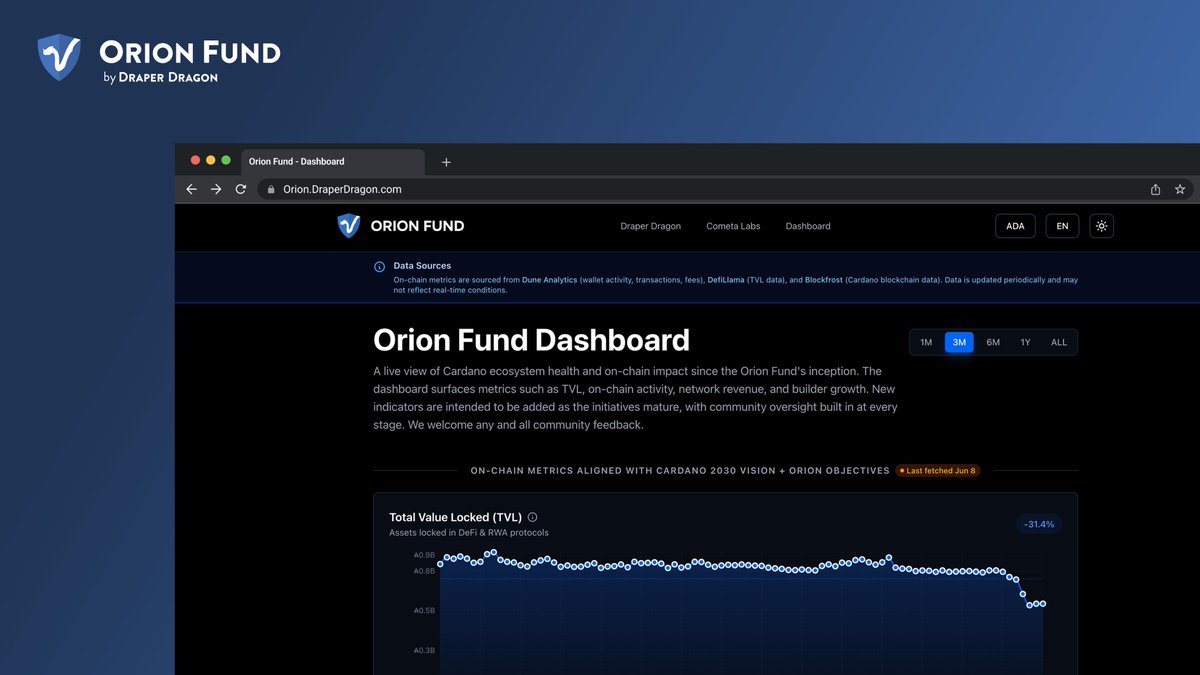
We've built the first iteration of the Orion Fund dashboard to track key performance metrics, including TVL, on-chain activity, and portfolio distribution.
These metrics will be available for the entire community to monitor as the Fund progresses, and we'll keep improving the dashboard based on your feedback.
View the dashboard here: Orion.DraperDragon.com
15
37
165
9,300
cardano_wolf retweeted
🧵Why aren't we pricing #crypto in gold yet? 🤔
It tells a very different story. One that may be hard for people to accept... 👇
1
7
27
1,200
cardano_wolf retweeted

Jun 7
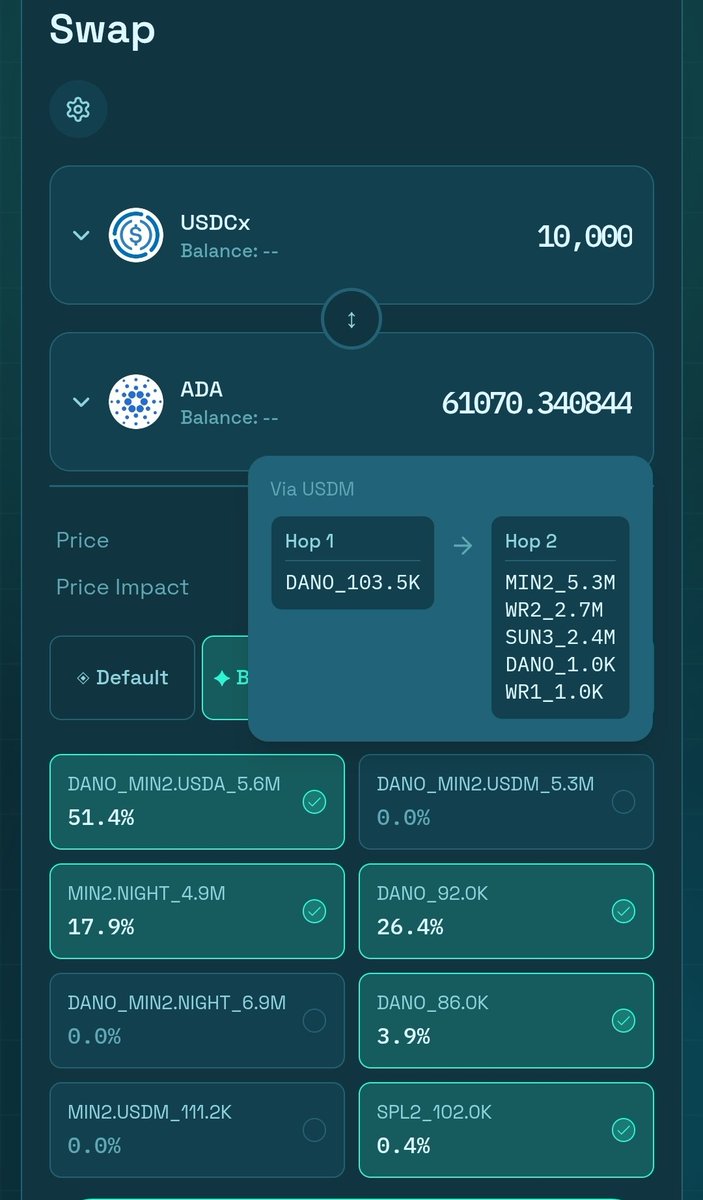
Did you notice Minswap, WingRiders and Sundae are already part of the Global Order Book on Dano Finance.
We are adding more every week, which one should we add next?
1. CSwap
2. Cardano Swap
3. VyFi
4. Liqwid
5. Fluid
6. Surf
A connect Cardano Ecosystem is a stronger than silo dapps!!!
24
22
118
2,081
Spitballing Cardano marketing for 2027.
Ethereum was able to claim DeFi 2.0 because of the innovation it brought to DeFi.
It's a hard-earned label through architectural distinction.
If Cardano can execute on "non-margin loans/Defi Kernel Bitcoin Defi Leos", we will have the strongest architectural distinction of all...
No one does non-margin loans in crypto. That's TradFi territory!
This is a strong foundation to claim, market, and earn DeFi 3.0. (Just like Ethereum once did for DeFi 2.0.)
So our narrative becomes...
The rest of crypto is stuck doing margin loans, when TradFi actually built its trillion-dollar infrastructure on non-margin loans.
And now, for the first time in history, Cardano has brought non-margin loans to crypto.
If Tradfi can do it. So can we. (Although in a decentralized way.)
Come to Cardano. Let us build DeFi 3.0.
3
80
Cardano protocols need to consider economic risks, not just security risks
In today’s DeFi, getting a loan means being exposed to 2 built-in economic risks:
❌ Margin call risk: You can pay back your loan on time every time, yet still have your assets liquidated because of a sudden price dip.
❌ Idle collateral trap: Your collateral gets locked away. It can’t be staked, lent, or used for governance votes. It becomes idle capital.
(There’s also oracle risks, but that’s a discussion for another time.)
Neither of these is a hack or a smart contract bug. Neither are they security risks.
The current iteration of DeFi has been designed to shift price volatility onto the borrower. (That’s not how Tradfi does loans.)
The risks have been pushed so far onto one side that a responsible borrower can still get punished, even if they do everything right.
The DeFi Kernel addresses these economic design flaws by restructuring the loan itself.
Instead of open-ended margin positions, loans become fixed-term agreements.
Both sides know exactly when and how the loan will be repaid. And the protocol only acts when a scheduled payment is missed. Not based on random market price dips.
And instead of idle collateral, the pledged assets can still earn yield or participate in governance. This removes a major friction for participation in Cardano Defi.
By reducing risk on borrowers, we can make borrowing more attractive.
Security risks will always be important. Now we need to learn how to address economic risks.
1
2
7
229
For so long, crypto has looked at risk through a developer’s lens:
❌ Custody risks
❌ Smart contract exploits
❌ Bridge vulnerabilities
❌ Oracle manipulation
❌ Etc.
This work is essential, and will continue to be. But that was only phase 1.
Crypto is a financial infrastructure, after all.
Security keeps us alive.
But sound economics is what will allow us to scale, because de-risking attracts capital. (Just ask Tradfi.)
That’s why, with phase 2, we must confront economic risk.
This entails addressing design choices that transfer volatility, uncertainty, or systemic fragility to the end user.
Real-world examples:
❌ Margin call risks: A borrower with a perfect repayment history gets liquidated because of a random market dip.
❌ Oracle fragility: A yield strategy collapsed due to an Oracle price feed delay or error.
❌ Liquidity illusion: The protocol’s 50M TVL seems high, until slippage eats 15% of your withdrawal.
❌ Tax friction: clunky routing that forces unnecessary taxable events.
❌ Etc.
The ecosystem that best neutralizes these economic risks will have the strongest arguments for attracting institutional capital.
That's why 4 products keep me bullish on Cardano despite these dark times:
✅ @pogun_io (Defi Kernel's Credit Market)
✅ @DanoFinance (Defi Kernel's Global Order Book)
Both of these projections address some of the economic risks I mentioned. If they succeed, Cardano DeFi will look completely different from the rest of the industry.
And the other two are:
✅ @realfi_co (ties DeFi lending to a microfinance)
✅ Bitcoin Defi (all Cardano projects working on this @SundialProtocol, @FluidTokens, etc.)
Both of these are liquidity plays.
1
11
358
cardano_wolf retweeted
Jun 5
DeFi Kernel Rising
We launched v2.dano.finance/ beta — a concrete step toward Cardano’s Global Order Book.
We’re connecting DEXs, Lend & Borrow, Rusty DeFi Kernel, and every dapps so users can build any combination of actions in a single atomic transaction.
This is eUTxO as it was meant to be: true composability.
Our transaction building service SDK makes it simple — publish your datum structures and we integrate.
Great UX ideas no longer need to fight the UTxO layer.
More connectivity = combined TVL dramatically higher on-chain transaction volume.
That volume flows directly to the settlement layer and increases demand for ADA.
The Global Order Book is taking shape on Cardano.
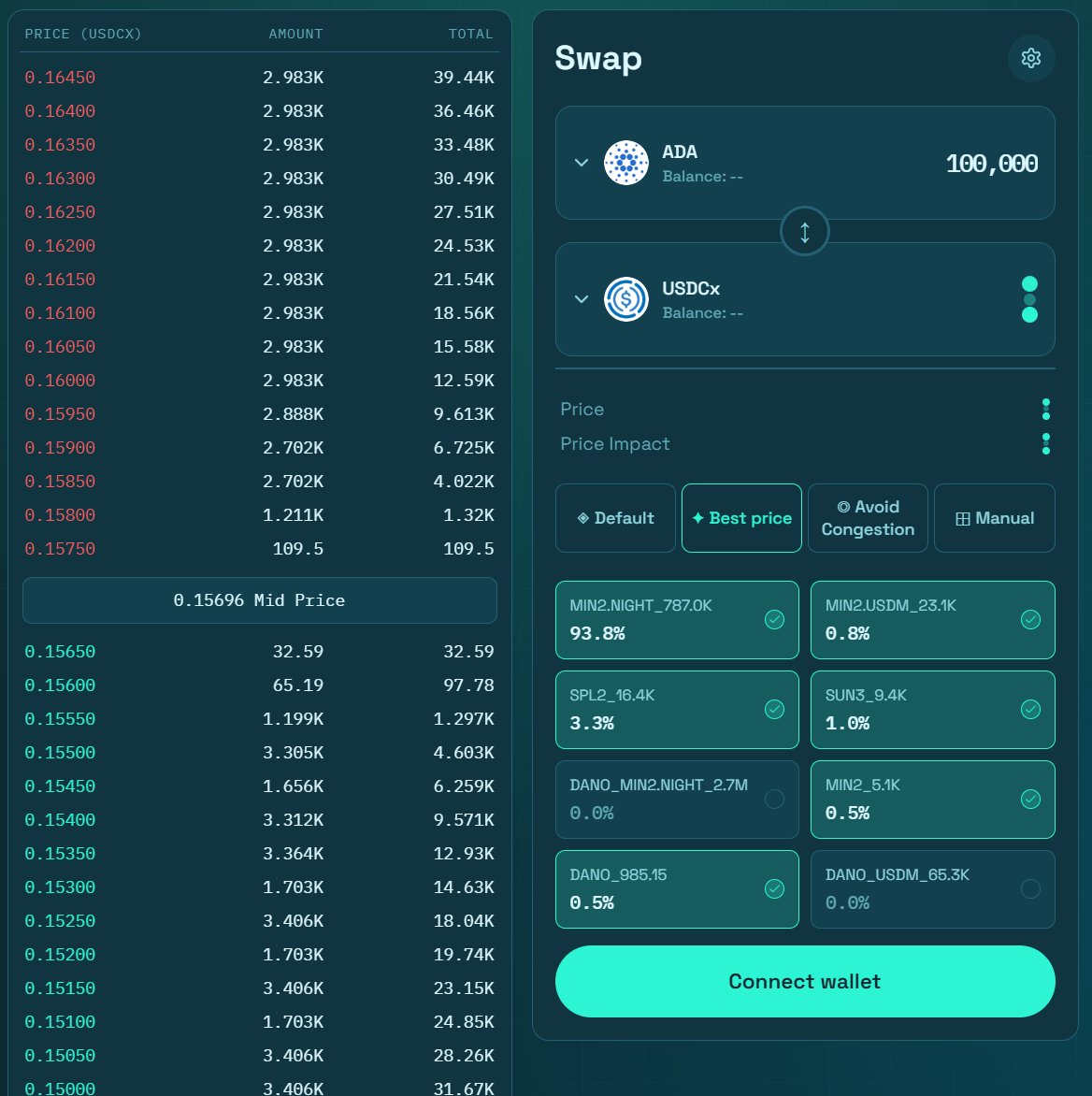
13
68
174
4,570