Author: Once Upon a Reunion, Legal Bond, Four Blocks Wide
Joined May 2012
- Tweets 5,444
- Following 819
- Followers 664
- Likes 12,031
448 Photos and videos









Nithya Sashi retweeted

Jun 12
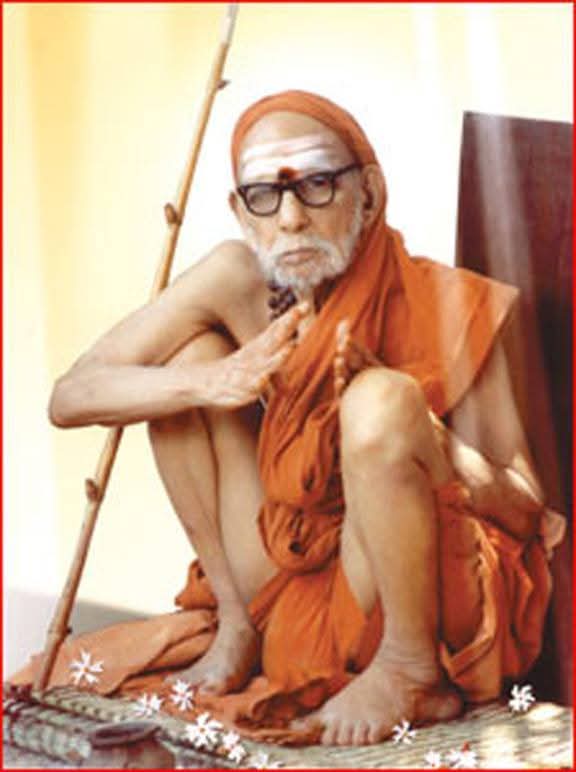
Experiences with Maha Periyava: An Exemplary Role Model
Periyava was an incarnation of God Himself and He followed all the daily rituals and observed all the vrathams to make sure He set an example for all us.
Aippasi pooram is the Janma Nakshatram of Kamakshi Amman. On this day, Periyava does milk Abhishekam for Devi Kamakshi. As usual on this day, as soon as Periyava woke up, He bathed and completed His daily rituals and Pooja. He did not drink a single drop of water until then.
Without further delay He started walking towards Kamakshi Amman temple. Periyava’s disciples carried milk and Periyava carried milk in His wooden pot.
It was 4 o’clock in the evening.
Periyava without drinking even a drop of water was walking to Kamakshi Amman temple. He could take Bhiksha only after returning to SriMatham after having darshan and seeing the abhishekam at the temple.
When He was walking towards the temple, a devotee fell at the feet of Periyava and touched His feet inadvertently.
Periyava’s disciples were worried that Periyava would have to bathe again. One of the disciples of Periyava named Kannan was very disappointed. He did not want Periyava to bathe again and do all the rituals again and stress His body.
He wanted to tell Periyava that it was alright since anybody who was visiting the temple was already clean and pure. He asked Periyava not to bathe again, since it is said that just witnessing the people who have come to temple during any festival in itself is a blessing. Also after having darshan, it was not necessary to bathe.
Kannan was telling this loudly so that Periyava would listen to this. Periyava understood the disciple’s intention, but as soon as He reached Kamakshi temple, He went directly to the temple pond.
Periyava looked at Kannan and said,”It is very auspicious to bathe in the Kamakshi Amman temple tank on Thula month pooram. All of you bathe now”.
Why this snanam now? Was it because of the devotee touching Periyava’s feet or was it because that was already ordained before. No one else other than Periyava could think of something like this tactfully.
Periyava would have already known about the devotee about to touch His feet and how Kannan will feel agitated about it.
Only after bathing at the temple pond did Periyava have darshan and did abhishekam for Kamakshi Amman.
After all this, He walked backed to SriMatham, did His daily evening rituals and then took bhiksha. The bhiksha for that day was only milk.
Maha Periyava never missed an opportunity to show us how to live an exemplary life by following rituals (Aacharam).
11
33
231
2,831
Nithya Sashi retweeted

Así es la esclavitud en las minas en el este del Congo, de donde sale más del 70% del cobalto del mundo, miles de esclavos diariamente extraen el mineral por apenas 2$ al dia para llenar los bolsillos a las multinacionales capitalistas.
El capitalismo que no te enseñan, así es como se sostiene el nivel de vida y de consumo en Occidente, en estas minas al menos hay 40.000 niños esclavizados que pican piedra para que Apple saque 4 modelos de Iphone cada año.
978
21,013
30,105
752,089
Nithya Sashi retweeted

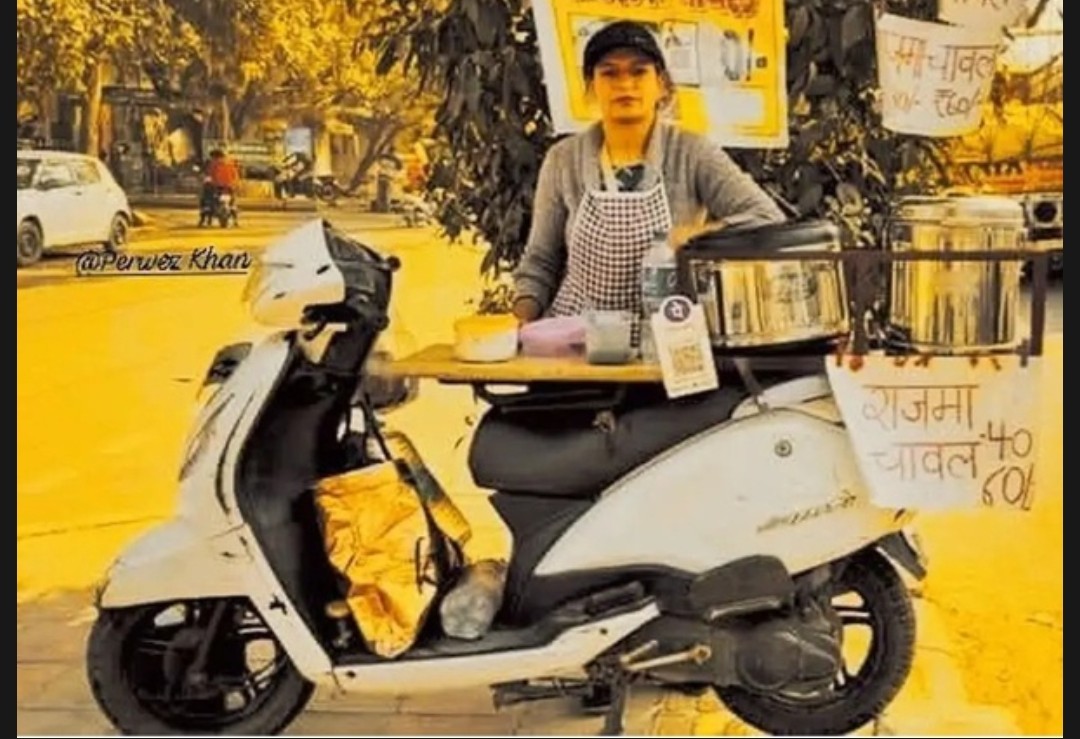
Her name is Sarita Kashyap, single mother for the past 20 years.
She has a daughter who is studying in college. To support her family, she runs a Rajma Chawal (kidney beans and rice) stall on her scooter near a CNG pump in Peeragarhi, Delhi. The prices are:
Half plate: 40 rupees
Full plate: 60 rupees
But...
Even if you don't have money, she won't let you go hungry. She'll feed you, saying, "Eat, pay when you can, or don't pay at all," regardless of your caste, religion, or community.
She feeds poor children in her neighborhood for free, and buys them school supplies, books, uniforms, shoes – anything they need.
And yes...she also tutors the children in her free time.
Has any channel highlighted this woman?
No...
Because there's no glamour in this woman's story.
Anyway, I salute this woman from the bottom of my heart.
May she earn a lot and achieve great success in her life...
183
2,202
6,980
106,526
Nithya Sashi retweeted

Learn geography terms visually

175
7,633
36,511
2,060,538
Nithya Sashi retweeted

Jun 3
Terrible tragedy. 21 ppl dead in a fire at South Delhi hotel. It broke out at 8.40 am at Flourish B & B in Malviya Nagar, said police. Many are injured. Most are foreign nationals. Fire extinguished now. (Disturbing visuals). Video: Delhi Fire dept @NewIndianXpress @xpresstn
5
21
30
18,213
Nithya Sashi retweeted

May 17
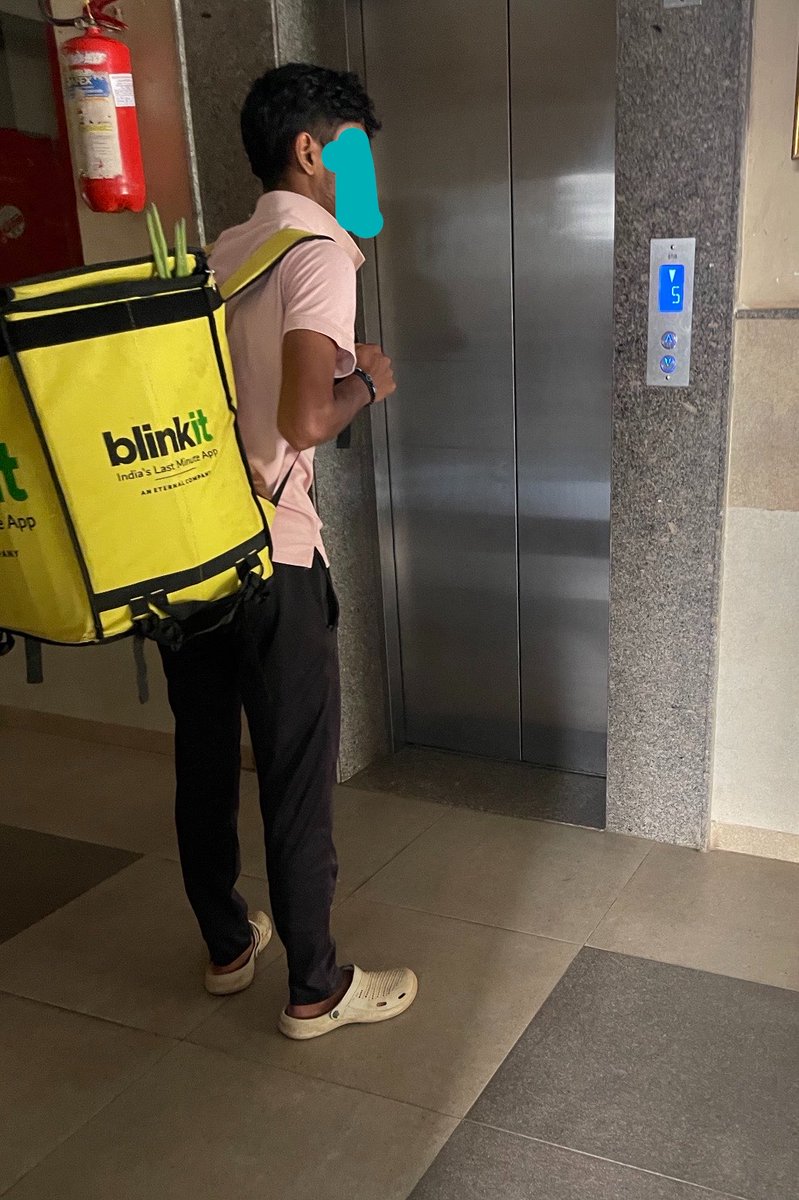
Saw this young delivery boy in our society this morning, carrying quick commerce deliveries.
Had a brief chat with him. He is a college student in Bhubaneswar, working part-time on a delivery platform. Sundays are full work days for him since college remains off.
He lost his father a year ago, who worked in a small private company. No pension for the mother, no savings left for the family. But, this young boy chose responsibility over excuses.
Today, he is managing his studies and expenses in Bhubaneswar through hard work and dignity, while also sending some money back to his mother, who lives in a village about 150 km away.
Stories like these remind you how many silent fighters walk among us every day.

213
1,833
14,067
548,550
Nithya Sashi retweeted

May 13
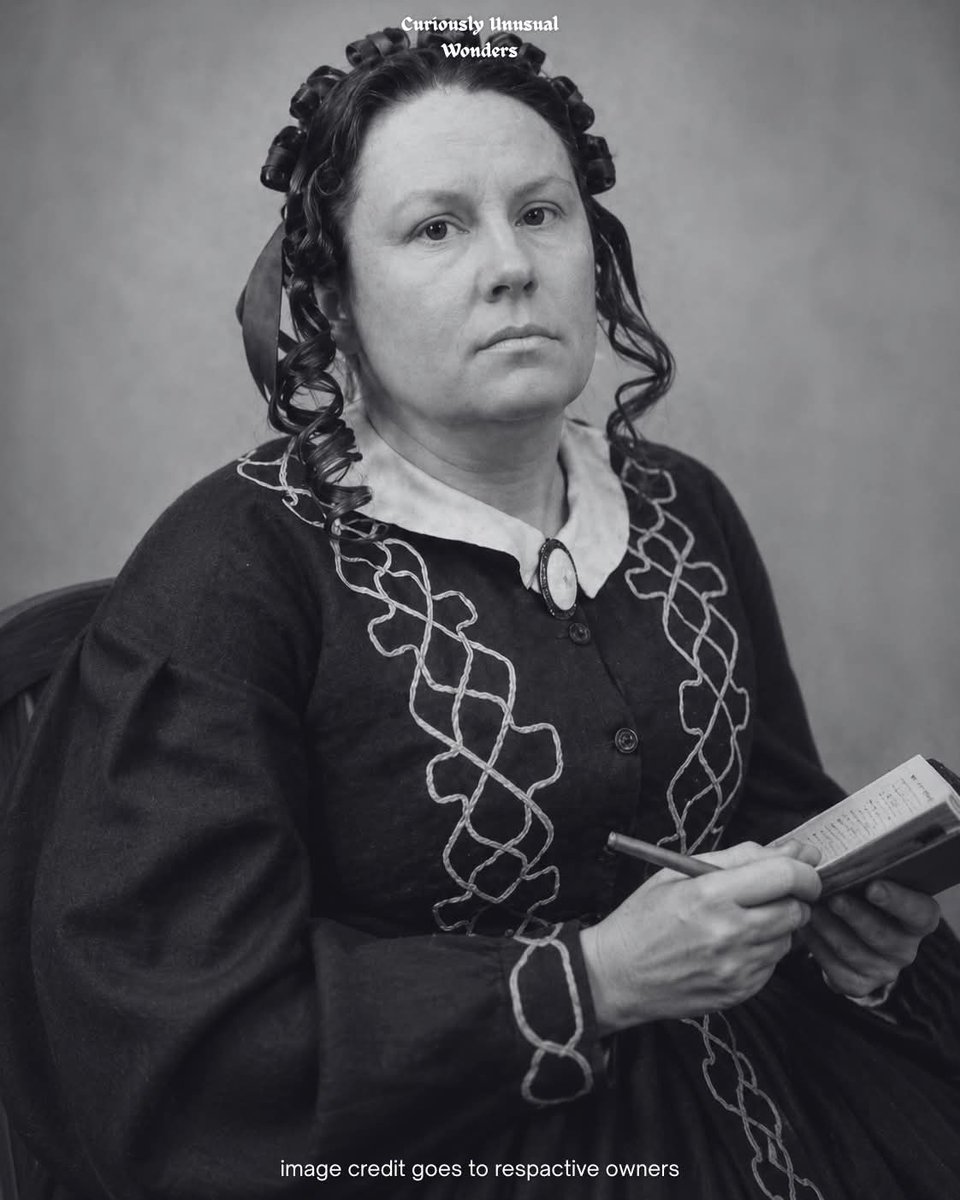
In May 1860, she kissed her six children goodbye. She thought about the dinner she would cook later. She thought about the laundry. She thought about the quiet life of a mother in Illinois.
She had no idea that when the front door clicked shut, it would stay locked for three long years.
Her husband, Theophilus Packard, was a respected minister. To the neighbors, he was a man of God. But inside their home, he was a man who could not stand a wife who thought for herself. Elizabeth Packard liked to read.
She liked to debate religion. She had her own opinions about life and faith. In the 19th century, for a woman to have a brain was considered a danger.
Theophilus decided to end the argument once and for all. He didn’t need a crime. He didn't need a witness. In those days, the law in Illinois said a man could commit his wife to an insane asylum without any evidence or a public hearing. He simply had to say she was "disturbed."
One morning, a group of men arrived at her home. They didn't listen to her logic. They didn't care about her tears. They dragged her away to the Jacksonville Insane Asylum. Elizabeth was 43 years old, perfectly sane, and suddenly a prisoner.
When she entered the asylum, she expected to see people who needed medical help. Instead, she found a warehouse of "inconvenient" women. There were wives who had argued with their husbands about money. There were daughters who refused to marry men they didn't love. There were women who were simply too loud or too independent.
"This is not a hospital," Elizabeth realized. "It is a cage for the unwanted."
The doctors tried to break her spirit. They told her that if she just admitted her husband was right and she was wrong, she could go home. They wanted her to say she was crazy for wanting her own thoughts. Elizabeth looked them in the eye and said, "I cannot buy my liberty by a lie."
She didn’t give up. Instead, she started to write. She hid scraps of paper in the linings of her clothes. She tucked notes under floorboards. She recorded every abuse, every scream in the night, and every story of the women around her. She became a secret journalist inside a living nightmare.
After three years, she was finally released, but her husband locked her in a room at home. He planned to move her to another asylum in a different state. This time, Elizabeth’s friends helped her get a message to a judge.
A trial was finally ordered to determine if she was actually insane.
The courtroom was packed. Theophilus was confident. He brought "experts" to say that her religious doubts proved her mind was broken. But then, Elizabeth stood up.
She didn't shout.
She spoke with the calm power of the truth. She explained her beliefs. She showed the jury that having a different opinion is not a disease.
The jury only needed seven minutes. They came back with a single word: Sane.
Elizabeth walked out as a free woman, but she found that her husband had taken everything. He had sold their furniture, taken her money, and disappeared with their children. She was alone and penniless.
Most people would have disappeared into the shadows. Elizabeth did the opposite. She spent the next forty years traveling the country. She stood before the legislature and demanded new laws.
She said, "A woman's mind is her own, and the law must protect it."
Because of her, states changed their laws. They made it illegal to lock a person away without a fair trial and a medical exam. She turned her private pain into a public shield for thousands of other women.
She proved that even if you take away a woman’s home, her money, and her children, you can never truly take away her voice.
228
4,732
22,459
1,000,329

His name is Venkat.
He left Vijayawada at 24 with an engineering degree and a job offer in Toronto.
His parents stayed behind in the house where he grew up. A two bedroom flat his father had bought in 1987 on a government salary saved over fifteen years.
For twelve years Venkat sent money home every month. He visited when he could. His parents grew older. His father’s health declined.
Then one morning his mother called. His father was gone.
Venkat booked the first flight back. He handled the funeral. He stayed for a month.
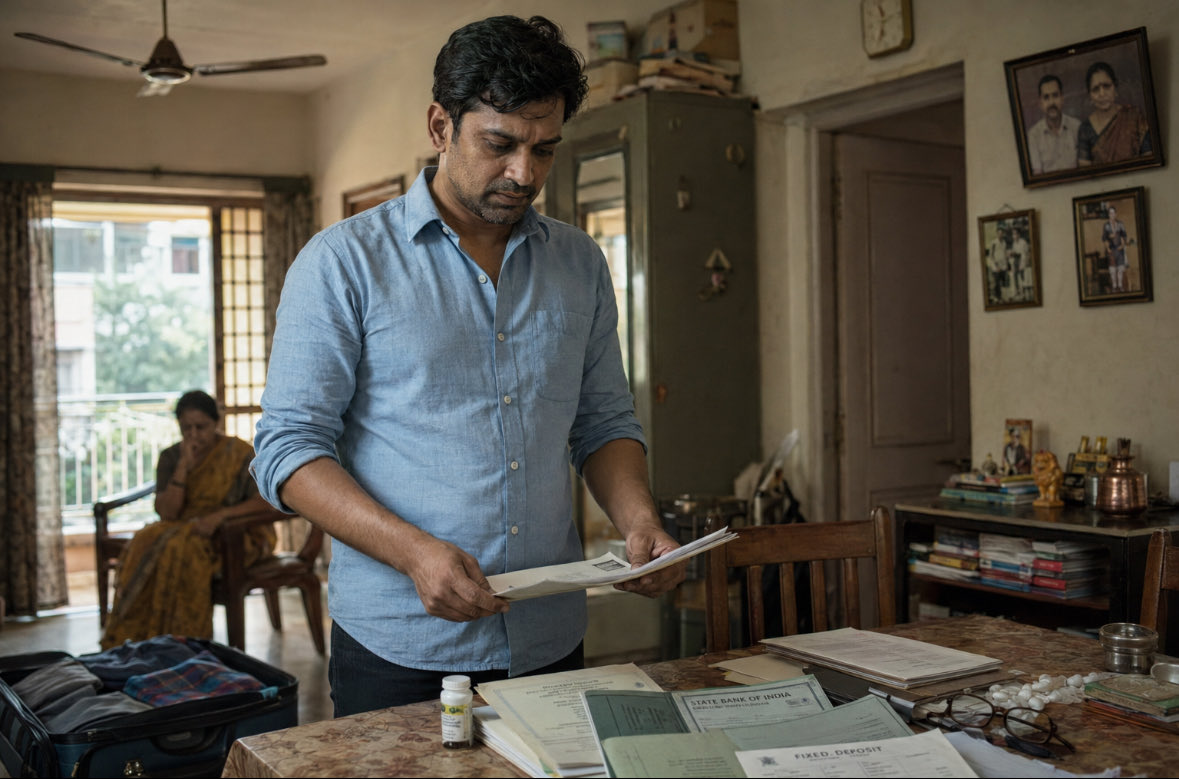
Before he left he went to the bank to transfer his father’s fixed deposit into his mother’s name.
The bank asked for a Succession Certificate.
He did not know what that was.
A Succession Certificate is a court issued document that authorises a legal heir to claim the deceased’s financial assets.
Without it no Indian bank will release funds, transfer accounts or allow access to deposits.
The court process includes a mandatory 45 day public notice period. It can take 6 to 18 months.
Legal fees can run into several lakhs depending on the value of the assets.
Venkat had to fly back to Canada. His mother was alone.
His father’s savings sat frozen in a bank account she could not touch.
This happens to thousands of NRI families every year.
Here is what Venkat wished his father had done.
One. Created a registered Will naming his wife and son as heirs. A registered Will avoids the Succession Certificate process entirely for most assets.
Two. Updated nominations on every bank account, fixed deposit, insurance policy and mutual fund. A valid nomination allows the nominee to claim assets directly without any court process.
Three. Kept scanned copies of all property documents. The sale deed, encumbrance certificate and property tax receipts. Courts and registrars ask for all of them.
There is no inheritance tax in India. What you inherit is not taxed. Tax only applies if you later sell the inherited property and capital gains arise.
As an NRI you have the full legal right to inherit property in India. The law is not the problem. The paperwork is.
One conversation with your parents today can save months of grief later.
Save this. Share it with every Indian you know who is living abroad.
20
162
509
58,247
Nithya Sashi retweeted

May 9
Vijay Joseph promised to give ₹2500 per month to women in Tamil Nadu in his manifesto.
This Vijay Joseph's fan girl is very happy and explaining that Vijay Joseph's TVK will pay this money to women from their own pocket and not from taxpayers money like DMK or AIADMK.
GOD SAVE TAMIL NADU.
941
3,778
13,600
708,086
Never buy
May 8

Believe me, the first thought that comes to every Indian’s mind is how to cheat another Indian.
16
Nithya Sashi retweeted

May 2
Himachal govt installs a charging point in Manali for tourists to charge phones and gadgets, and within hours people turn it into a dustbin. No Swachh Bharat or any scheme can fix this nation, only an iron fist policy can bring change.
1,452
6,609
24,735
1,283,432
Nithya Sashi retweeted

May 2
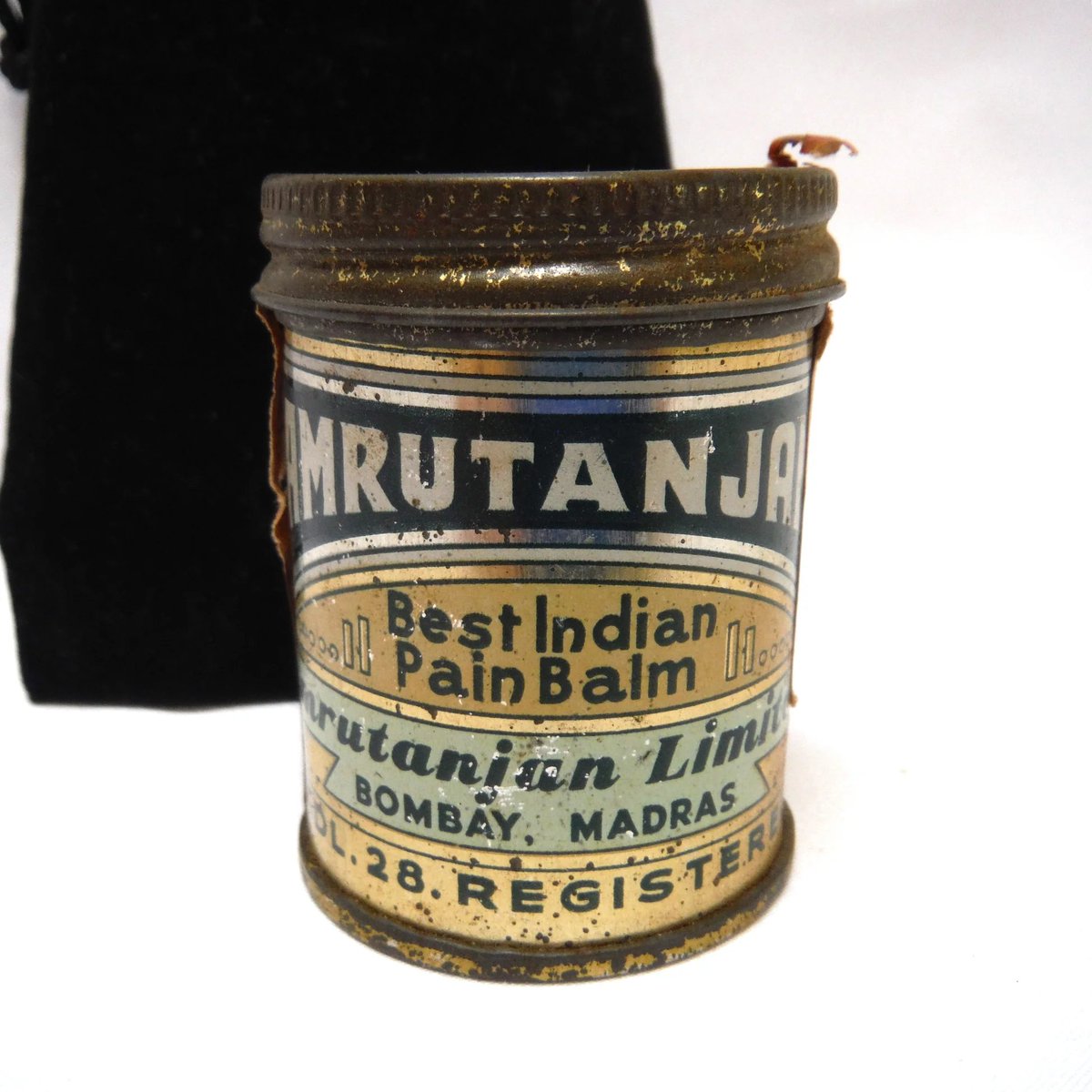
Before the world knew the power of Big Pharma, a journalist in a tiny lab in Bombay created a substance so potent it triggered a trade war with London. It was a yellow grease that did not just soothe headaches but funded a movement, bypassed British blockades, & became 1 of the few Indian products to make the Empire's own medicine look like scented water.
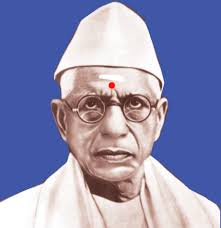
Unlike other brands started by chemists, Amrutanjan was founded by Kasinadhuni/Kasinathuni Nageswara Rao, a man who was primarily a journalist & a freedom fighter. In the late 1800s, the pain balm market in India was a British monopoly. If your head throbbed, you bought imported ointments. Rao saw this as a tax on pain. He retreated into a lab & perfected a formula that was significantly more potent than anything coming out of London.
The British tried to push their own balms like Vicks/early menthol rubs as sophisticated & odorless. They attempted to smear Amrutanjan as primitive because of its overpowering scent. Rao leaned into the scent. He realized that in a country where literacy was low, a brand could not just be a name, it had to be an experience.
He distributed free samples at music concerts (Sabhas) & religious festivals. By the time the British tried to patent the market for pain relief, the entire Indian public had already associated the smell of camphor & menthol with trust. The British balms felt alien & weak compared to the sensory explosion of the yellow tin.
The smell of Amrutanjan... that piercing, camphor-heavy aroma became the literal scent of the freedom struggle. If you walked into a room & it smelled of Amrutanjan, it was a silent signal: A patriot is present. It was a scent the British police could not arrest, yet it was everywhere.
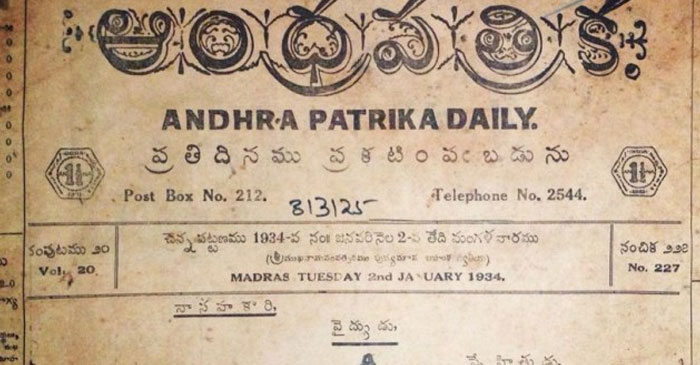
The British had a Patent Medicine Tax that made imported drugs expensive. However, by classifying Amrutanjan as an Ayurvedic Proprietary Medicine, Rao managed to navigate a complex legal gray area. He essentially used the British legal system against itself. By proving his ingredients were ancient yet his manufacturing was modern, he avoided the crippling taxes that applied to purely Western drugs, while maintaining a price point (initially 10 annas) that made British imports look like daylight robbery Rao fought back not just in the market, but in the press. He used the profits from the balm to fund Andhra Patrika, 1 of the most influential anti-British newspapers.
The British were literally paying for their own downfall. Every time a British officer’s wife bought a jar of Amrutanjan for a migraine (because it worked better than the London balms), she was inadvertently funding the printing of revolutionary literature that called for the end of the Raj.
By the 1930s, this Indian yellow grease was being exported to Indian diaspora & locals in South Africa & Ceylon. It became a global symbol of Eastern Wisdom defeating Western Chemistry. It was 1 of those few occasions, an Indian OTC (Over the Counter) product achieved cult status internationally w/o a single pound of British investment.
In fact, the yellow tin became so iconic that it did not need a label in the villages. The color & the smell were the brand. It was a biological Swadeshi. While others were fighting with words, Rao was fighting with molecular relief.

118
2,194
6,803
852,101

Apr 25
#Euphoria
A different take on a ghastly sexual attack, which attracts Pocso on the 5 perps. Sara Arjun's performance is subtle and powerful. Last scene is amazing.
64
Nithya Sashi retweeted
Apr 25
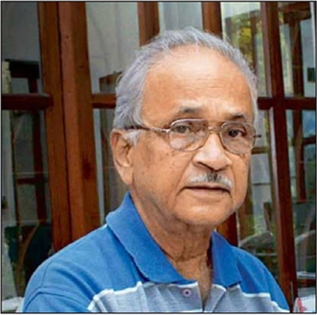
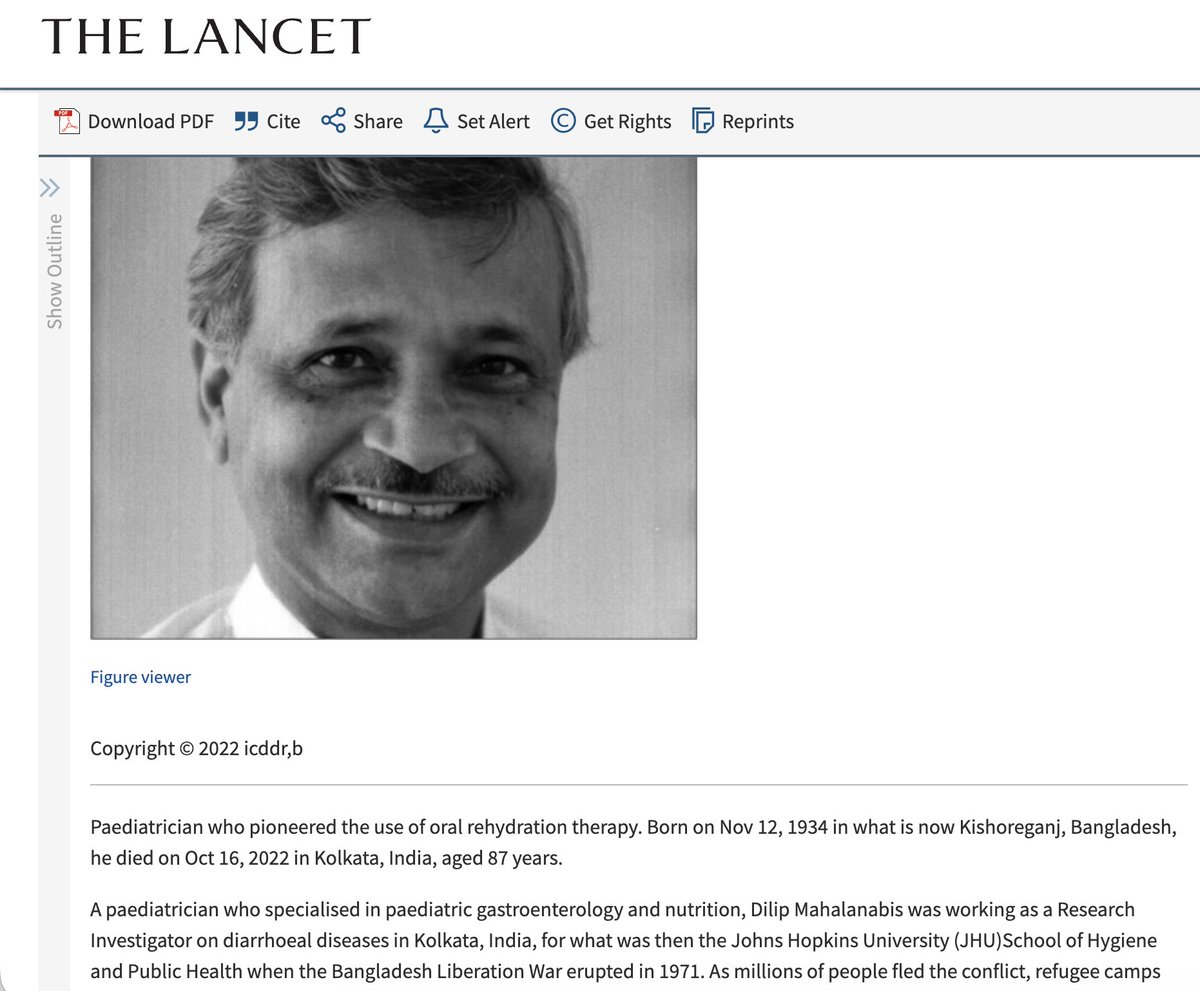
In 1971, amidst the mud & blood of refugee camps, 1 man defied the entire medical world. While doctors begged for IV drips that did not exist, Dilip Mahalanabis mixed salt & sugar in plastic drums & told the dying to drink. He was a ghost who used the physics of the human gut to defeat Cholera. He never patented his formula, choosing to save millions instead of making millions. He died in 2022, an unrecognized giant who gave the world its most successful medicine for the price of a pinch of salt.
Born in 1934 in West Bengal, Dilip Mahalanabis was a pediatrician by training. He was a researcher at the Johns Hopkins University International Centre for Medical Research & Training in Calcutta. He spent his early career in the Silo of elite academic research, studying how fluids move through the human body. Despite his elite training, he was a man of the people. He did not want to stay in a comfortable air-conditioned hospital while a crisis was brewing.
During the 1971 Bangladesh Liberation War, millions of refugees poured into West Bengal. A cholera epidemic broke out in the camps. People were dying in heaps. There were not enough IV fluids/needles/trained doctors. The conventional medical wisdom said: "Only IV drips can save a cholera patient."
Dr. Mahalanabis knew the physics of S.N. De’s discovery. He knew that if he could get the concentration of salt & sugar exactly right, the gut would pump the water back into the body. He prepared the Oral Rehydration Solution (ORS) in massive drums, using untrained volunteers to distribute it to dying refugees.
The mortality rate dropped from 30% to 3%. He proved that a 5 paise solution was more effective than a 50 rupees IV bag. He never patented ORS. He believed that something so fundamental to human survival should belong to the world. Because there was no money/corporate patent attached to his name, the world used his work but forgot his face.
For decades, he lived quietly in Calcutta. He was a global consultant for the WHO, helping eliminate cholera in dozens of countries, yet in his own neighborhood, he was just the retired doctor from down the street.
He died in 2022. It was only after his death that many of his relatives & neighbors realized he was the man The Lancet described as the creator of the most important medical advance in the 20th century.
We finally awarded him our 2nd highest civilian honor, Padma Vibhushan, but it came after he passed away. He lived & died a Ghost.
33
682
1,730
41,048
Nithya Sashi retweeted

Apr 20
A lovely clip of Daphne Du Maurier aged 64. I miss this generation of women who looked as they were and felt no shame.
Refusing to be crushed by ageist, sexist expectations & not being modified to look 35 forever.
#actingYourAgeCampaign #DontCastHerOut
84
240
2,103
123,797
Nithya Sashi retweeted

Apr 21
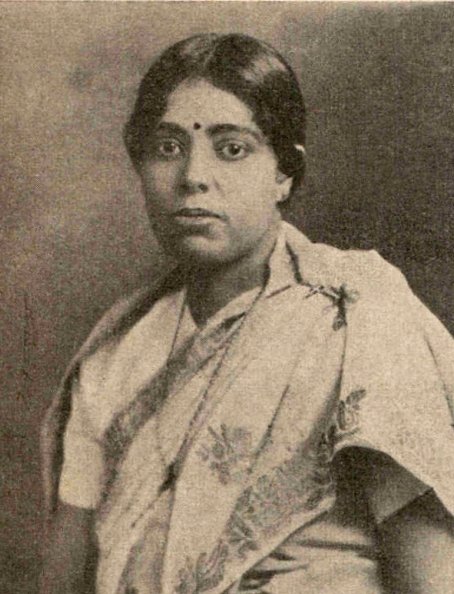
Why is Indian sugarcane so sweet? If you’ve ever enjoyed a glass of fresh cane juice, you have Janaki Ammal to thank!
🔹️ In the 1930s, India had to import sweeter cane from Java. Janaki Ammal, a brilliant scientist at a time, used her knowledge of plant cells to create a made-in-India hybrid that was both sweet and hardy enough to grow in our climate.
🔹️The Cytogenetic Pioneer: She was the first Indian woman to earn a PhD in Botany (University of Michigan, 1931). She literally mapped the genetic DNA of thousands of Indian plants.
🔹️Economic Independence: Her work at the Sugarcane Breeding Institute in Coimbatore helped India become self-sufficient in sugar production, a massive boost for the post-independence economy.
🔹️The Guardian of the Rainforest: Later in life, she turned to conservation. Her scientific authority was the backbone of the Save Silent Valley movement, protecting one of India’s most ancient rainforests from being submerged by a dam.
🔹️Janaki Ammal lived a life of pure scientific devotion. There is a beautiful white flower bred in London named after her: the Magnolia kobus Janaki Ammal.
This summer, when you drink a cold, sweet, satisfying glass of sugarcane juice, remember the name: Edavalath Kakkat Janaki Ammal.
19
459
1,282
32,133
Nithya Sashi retweeted

Apr 21
🤗 Have you ever wondered why we celebrate the birth of certain Tamil months exactly three weeks after the actual astronomical events?
We celebrate Chithirai 1, Aadi 1, Aippasi 1, and Thai 1 as rituals, but our ancestors were actually tracking the Sun's precise movement.
While we teach children that "the Sun rises in the East," the reality is that the sunrise point shifts from Northeast to Southeast in a year-long cycle.
Our festivals mark these four pillars:
🌻 Chithirai 1: The Sun is at "True East" (Equinox).
🌬️ Aadi 1: The Sun reaches the Northeast limit (Solstice).
🌨️ Aippasi 1: The Sun returns to the center, heading South.
🌞 Thai 1: The Sun reaches the Southeast limit (Solstice).
But here is the catch:👉 the actual astronomical Solstices and Equinoxes happen about 20 to 24 days before our festival dates. This isn’t a calculation error. It’s a deliberate observation of Nature’s Response Time.
Our ancestors knew this. When the Sun "turns" in the sky, it takes time for the winds to shift, the soil to warm, and the crops to ripen. They didn’t just celebrate a coordinate in the sky; they waited until that cosmic shift actually manifested as a tangible change on Earth.
Don't you think this as a truly high-level science behind our traditions?
😊👍
19
365
1,238
39,219
Nithya Sashi retweeted

Apr 20
While everyone is busy with the IPL
R Vaishali became the first Indian to win the FIDE Women's Candidates Tournament 🇮🇳
79
2,707
18,732
164,173
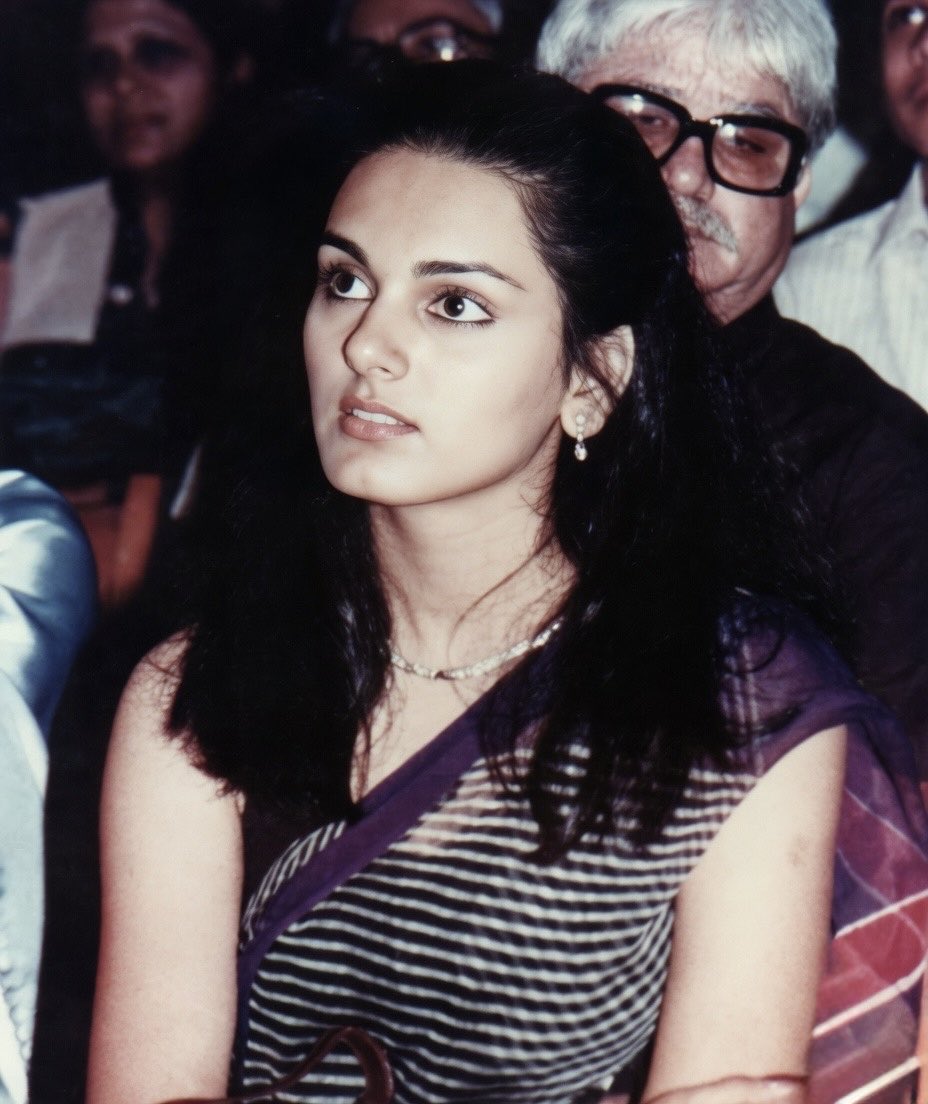
Her name was Neerja Bhanot.
Born in Chandigarh in 1963. She grew up in Mumbai, modelled for advertisements, and in 1985 joined Pan Am as a flight attendant. She was 23 years old.
Once her mother told her that if there was ever a hijack she should run and save herself.
Neerja replied. Mummy, mar jayungi lekin bhagungi nahin. I would rather die than run away.
On September 5 1986 she was the Senior Purser on Pan Am Flight 73 flying from Mumbai to New York via Karachi. The plane was carrying 380 passengers and 13 crew members.
At 6am during the Karachi stopover four armed terrorists boarded the plane dressed as airport security.
Neerja spotted them immediately and whispered the hijack code into the intercom. The three pilots escaped through an overhead hatch and fled. The plane was grounded. The terrorists could not fly it anywhere.
The enraged hijackers put Neerja in charge of communicating with the airline. All other flight attendants were tied up with ropes. She was alone.
For 17 hours she kept 380 people calm. She served them sandwiches and water. She spoke to them. She managed the terrorists.
When the hijackers ordered her to collect all passports she sensed they were targeting Americans. She and her crew quietly hid the American passports under seats and threw the rest down a rubbish chute. 42 of the 44 Americans on board survived.
After 17 hours the terrorists opened fire and threw grenades into the cabin.
Neerja opened an emergency exit door. She could have been the first one out. She stepped aside and began pushing passengers through.
The terrorists saw her helping three unaccompanied children escape. They caught her by her hair and shot her at point blank range.
She died on the tarmac in Karachi. Two days before her 24th birthday.
She was posthumously awarded the Ashoka Chakra. The first woman and youngest person ever to receive it. India’s highest peacetime gallantry award.
Pakistan awarded her the Tamgha-e-Pakistan. The United States Department of Justice gave her the Special Courage Award.
Her name was Neerja Bhanot.
She had every chance to save herself.
She chose not to.
Follow for real stories about people India must never forget.
309
2,724
10,986
552,128
Nithya Sashi retweeted

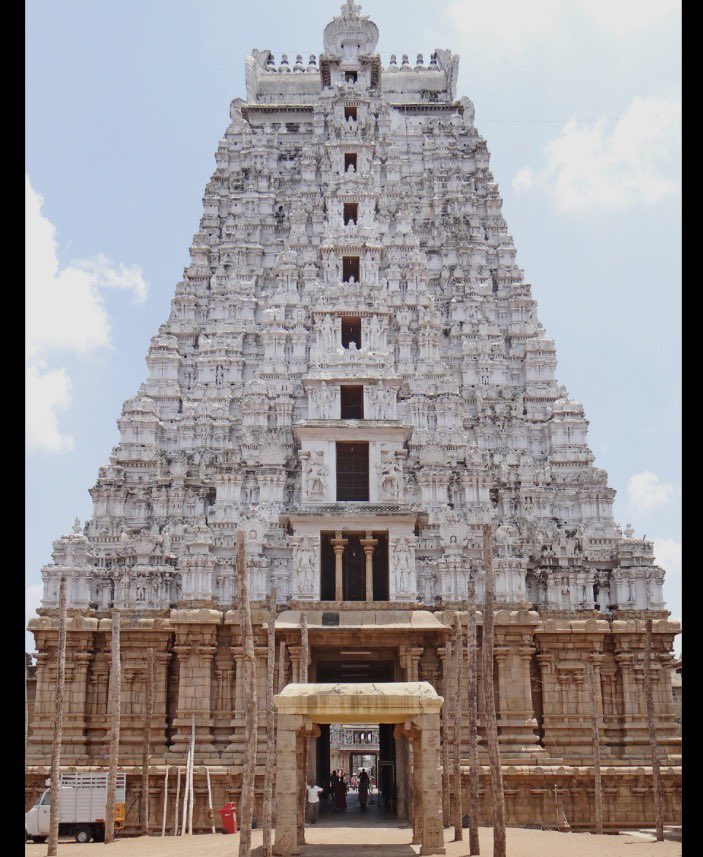
For me, the political turning point was when I asked my mom “Why is this particular gopura (gate tower) of Śrīraṅga temple painted all white, in contrast with the vibrant colors of the other gopuras?”.
Srirangam was attacked by the Sultanate forces in the year 1323 during the Tamil month of Vaikasi. Nearly, 12,000 residents of Srirangam island had laid down their lives fighting to protect the temple. The forces attacked the temple and Lord Ranganatha's jewels and the temple gold were taken away.
The forces also wanted to seize the idol of Namperumal, which they believed was made of pure ‘Abaranji' gold. They searched for the idol but the Vaishnavite Acharya, Pillailokacharya had taken the idol away and fled to Madurai. (The idol of Namperumal that left Srirangam in 1323 returned back only in 1371).
Unable to locate the idol, the Sultanate forces killed the temple authorities and later launched a massive hunt for Pillailokacharya and Namperumal.
Fearing that the forces would capture the Acharya and the idol, Vellayi, a devadasi of the temple, performed a dance before the commander of the forces to distract them and thus gaining time for Pillailokacharya to escape with the idol.
Her dance lasted for hours together and finally she is said to have taken the commander to the eastern gopuram and pushed him down. After killing him, Vellayi committed suicide by jumping to her death from the tower chanting the name of Ranganathar.
Hailing Vellayi's sacrifice, the chief of Vijayanagara forces, Kempanna, who drove away the Sultanate forces, named the tower after her. The gopuram continues to be painted white in her memory, as in Tamil, Vellai means white.
Apr 20

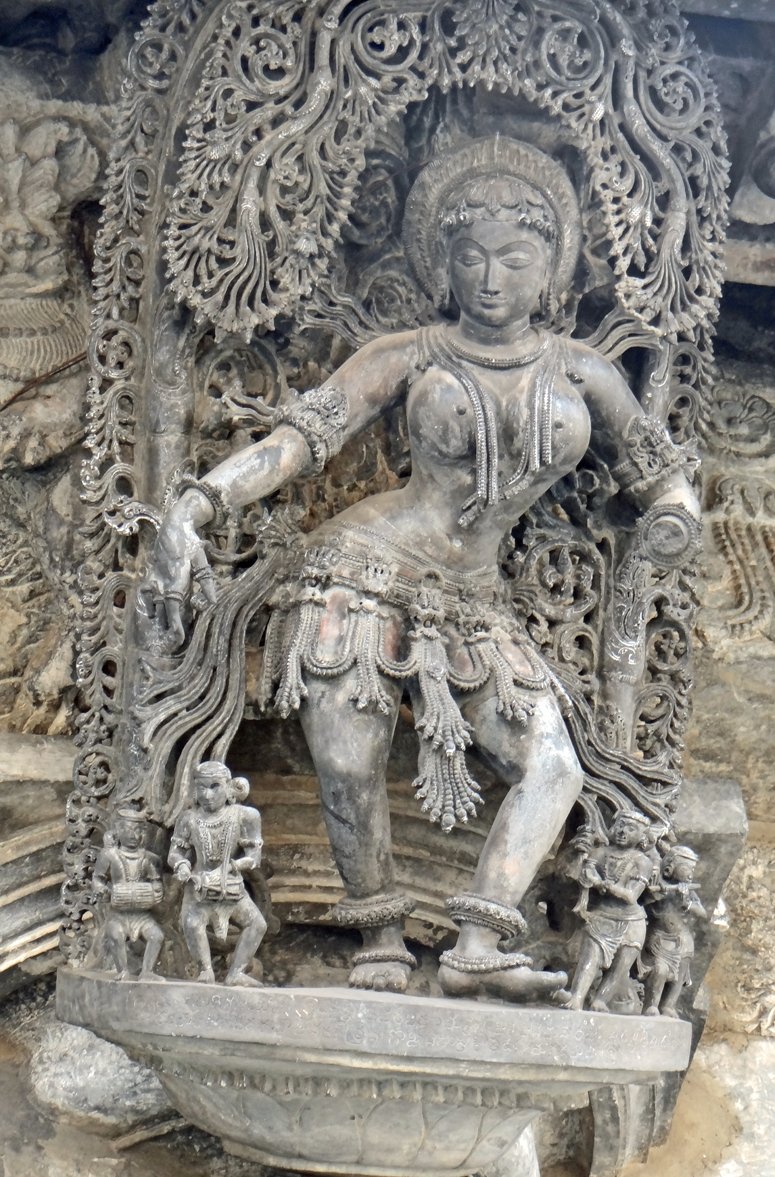
I had tears in my eyes when I visited Chennakeshava temple in Belur.
Seeing that these idols had their arms cut off, was a turning point in my political journey.
45
935
3,393
108,837