
Beeing a Panda is not easy
Joined August 2019
- Tweets 3,893
- Following 155
- Followers 220
- Likes 34,911
195 Photos and videos














Pinned Tweet

31 Dec 2025
2025 was just the beginning of @vsntoken taking over Europe!

2025 was the year we laid the groundwork for $VSN.
Despite the markets, we kept building what matters:
the compliant infrastructure that will help institutions and banks join Web3 safely.
Vision Chain progress continues, and our community keeps growing.
Onward to 2026! 🎆
1
16
1,024
x_file retweeted

Jun 9
If only there was a way to get in on the action early… #whenissoon?
19
8
59
2,368
x_file retweeted

There is this guy on youtube name GAKHED who films his cats with a 1999 camcorder and in this time of brainrot and toxic internet it's the most calming and soothing thing i've seen.
This is what spring felt like as a kid. ❤️
161
7,002
54,228
640,880

Yes, I need to make sure SpaceX stays focused on making life multiplanetary and extending consciousness to the stars, not pandering to someone’s bullshit quarterly earnings bonus!
Obviously, IF SpaceX succeeds in this absurdly difficult goal, it will be worth many orders of magnitude more than the economy of Earth, but don’t expect entirely smooth sailing along the way.
1,166
1,952
23,686
857,588
x_file retweeted

Mar 5
This movie would do $100M in the box office
161
548
4,569
250,464
x_file retweeted

Feb 27
Evening, CT 🤝 Vision fam - I’m Max.
Juicy ecosystem update to start the weekend on the right note… SIUUUUU 🐐⚡️
Pumped to have joined @Bitpanda x @vsntoken commercial Web3 team 2.5 months ago. My focus: real integrations, real counterparties, real usage. Excited for what we’re building.
LFG🚀🐼✳️🇪🇺
Ecosystem Blog #4 – Team growth, chain progress, Launchpad reality, and what comes next.
blog.vision.now/ecosystem-bl…
9
7
55
1,545
x_file retweeted

Feb 27
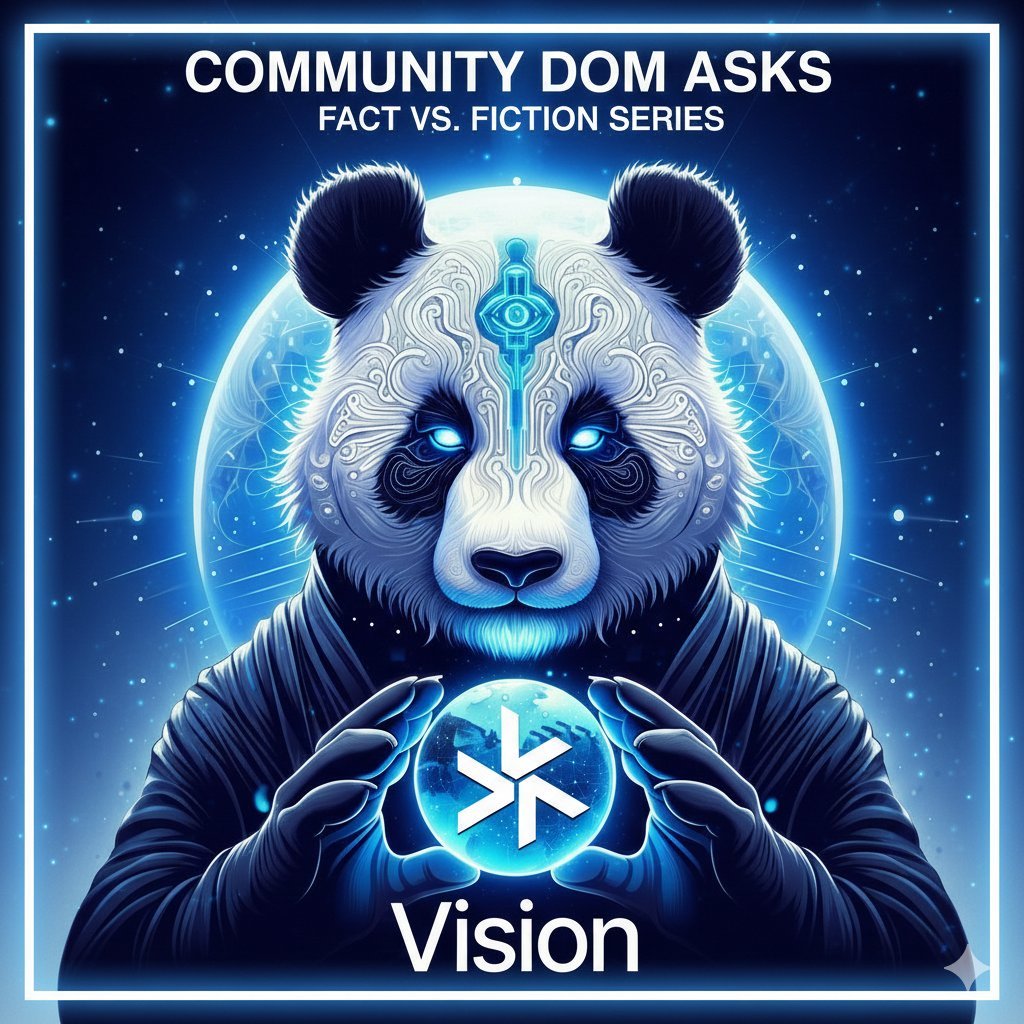
Community Dom Asks – Focus on Strategy & Commitment
Today, we take it a step further. We are moving past the surface to ask about the fundamental integration between the Vision Foundation and Bitpanda.
Here are the three core questions for @FkleinwieGross
1️⃣ The Essential Role of $VSN for Bitpanda:
Flo, while Vision as a project is highly present, the community is asking a fundamental question regarding the overall strategy:
Why is the $VSN token anything but interchangeable for Bitpanda as the parent company in the long run? Could you explain why this token mechanism is an essential building block for Bitpanda’s own future?
Furthermore, regarding public perception: Many holders would welcome a stronger, more visible commitment from Bitpanda’s top leadership. Are there plans to bridge the gap between the parent company and Vision more clearly in future communications—perhaps through a joint launch event?
2️⃣ Strategic Leverage & Asset Focus:
Looking beyond technical metrics: When you survey the pipeline, which asset classes on the chain do you believe will have the most sustainable impact on ecosystem volume? Is the focus primarily on tokenizing traditional financial products (RWA), or do you see other areas with greater short-term potential to validate the fee model and the subsequent buyback scenario for the token?
3️⃣ Technological Architecture & Compliance Integration:
Regarding the ongoing discussion about the "Chain Stack": To what extent is this infrastructure already optimized to utilize the specific regulatory requirements of MiCA as a genuine competitive advantage? How is the balance maintained between necessary institutional compliance and openness for independent DeFi developers to ensure a vibrant on-chain economy?
We look forward to insightful answers that solidify the economic vision of this project.
#VisionFoundation #VSN #RWA #Bitpanda #InstitutionalCrypto #Web3 #MiCA #StrategicVision
@vsntoken @BitpandaWallet @Bitpanda_global @eric_demuth
2
5
42
1,813
x_file retweeted

Thanks for the questions, here come my answers ;)
The Essential Role of $VSN for Bitpanda
This is a fair and important question.
The short answer is: VSN is not a marketing layer or a side experiment. It’s the mechanism that connects usage across products into one shared system.
Bitpanda operates multiple business lines: brokerage, custody, B2B solutions, wallet infrastructure. What VSN does is create a native layer that can align incentives across those verticals, especially as more activity moves onchain.
Could Bitpanda operate without a token? Yes, technically. But the moment you build open infrastructure, serve external builders, and create programmable value flows, a token becomes more than optional. It becomes the coordination layer. It enables fee capture, governance logic, incentive design, and ecosystem alignment in a way that centralised reward systems simply cannot.
In that sense, VSN is not interchangeable. It’s the economic glue for an open Web3 stack that sits alongside a regulated fintech company.
On leadership visibility: I understand the desire for stronger, more visible signals. Bridging the perception gap between Vision and the broader Bitpanda brand is something we’re aware of. You’ll likely see more integration in communication over time. Whether that takes the form of a joint launch event or another format is secondary. What matters more is that alignment is visible through action, not just announcements.
Strategic Leverage & Asset Focus
If you zoom out, the most sustainable volume will come from assets that generate recurring activity, not one-off hype cycles.
Tokenised traditional financial products and RWAs are strategically important because they bring structured volume, institutional participation, and regulatory clarity. That type of flow is far more stable than purely speculative assets.
That said, early validation of the fee model does not need to wait for full-scale RWA adoption. There are shorter-term use cases that can drive meaningful activity: structured yield products, onchain settlement flows, integrations with Bitpanda’s existing user base and tools for builders who want regulation-ready infrastructure.
The real objective is not to pick one asset class, but to create an environment where different asset types generate complementary activity. The stronger the overlap between user, institutional, and builder activity, the healthier the fee model becomes.
Buybacks, if and when they are driven by ecosystem profits, are the byproduct of that activity. The focus is therefore volume with substance, not volume with volatility.
Technological Architecture & Compliance Integration
MiCA is not something we work around. It’s something we design for.
The chain infrastructure is being built with regulatory requirements in mind from the start. That includes identity layers, compliance tooling, and the ability to separate permissioned from open environments where necessary.
The challenge is balance. If you over-optimise for compliance, you lose developer interest. If you ignore compliance, you lose institutional adoption. The goal is to create a layered architecture where institutions can operate in a compliance-ready environment while independent builders still have space to innovate.
That’s not easy, but it’s also the opportunity. Europe is unlikely to win by copying unregulated DeFi models. It can win by building infrastructure where compliance and openness coexist.
If we get that balance right, Vision does not just become another chain. It becomes a bridge between regulated finance and open Web3.
At the core of all three questions is the same theme: long-term alignment.
The strategy is not to create short-term excitement. It’s to build infrastructure where usage, compliance, and token economics reinforce each other. If that works, the rest follows.
8
25
96
3,357
x_file retweeted
Feb 25
Why Bitpanda nailed it: Launching Launchpad Vision Chain together is genius.
Vision Chain (regulated ETH L2, euro gas, MiCA-compliant) gives Launchpad the perfect compliant backbone for secure RWA/project launches.
No fragmentation. Instant synergy. Unified flywheel with $VSN powering it all.
Europe's onchain future just got turbocharged. 🚀🐼
$VSN to the moon. @vsntoken @Bitpanda_global #VisionChain #RWA
2
4
21
513
x_file retweeted

Feb 26
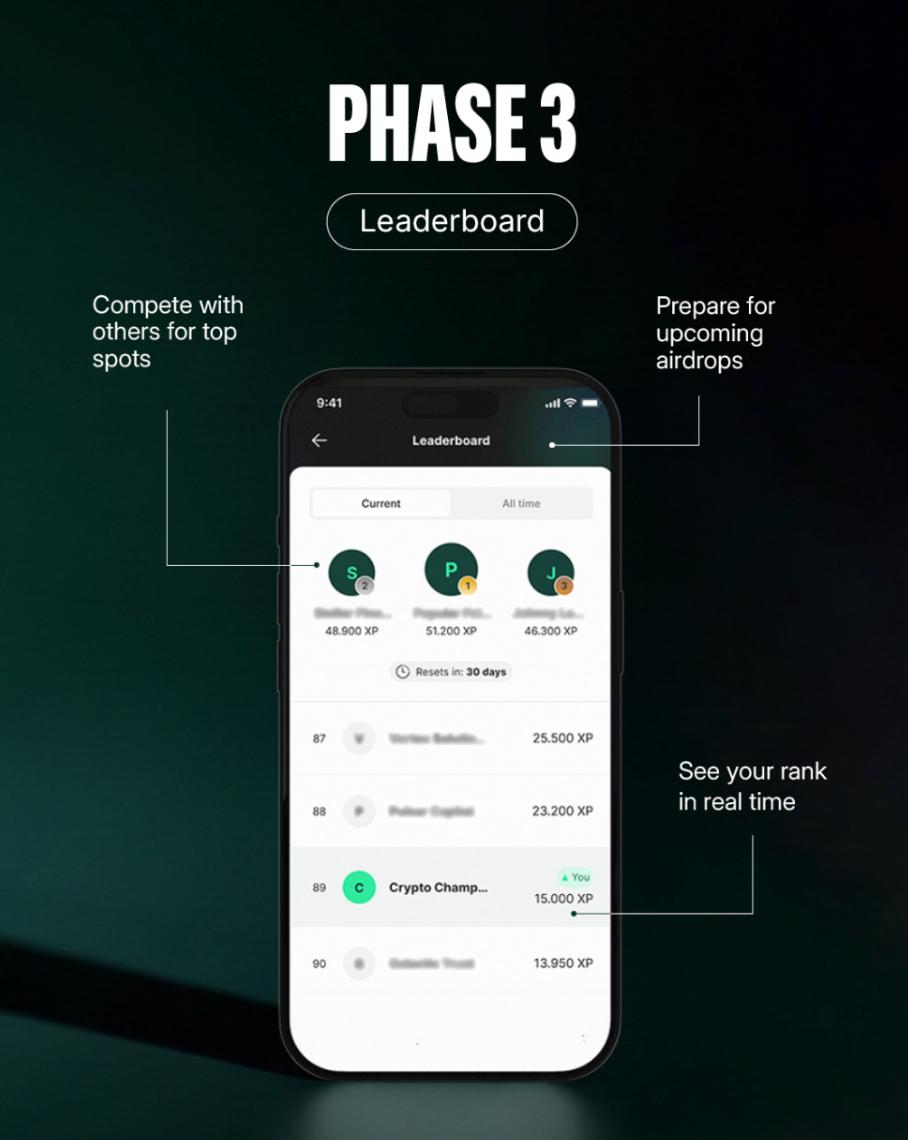
Silent Farming is over – @Bitpanda_global DeFi Wallet just went live with Phase 3 and it’s time to talk about $VSN
If you’ve been using the wallet, you might’ve been accumulating XP without even knowing it (we love a stealth snapshot/accrual period).
Now Engage Phase 3 is live.
What is Engage?
Think of it as the ultimate "prove you aren't a bot" system. You do on-chain stuff, you earn XP. Simple. But the kicker here is the $VSN staking multiplier.
The Flywheel:
1. Use the wallet -> Get base XP.
2. Stake $VSN -> Toggle the "Turbo" button on that XP.
3. Higher XP -> Fat allocation of $VSN and partner airdrops.
We like systems that reward people for actually putting skin in the game (staking) rather than just mindless sybil clicking.
Why this matters for the Euro-bros:
Bitpanda already has millions of retail users across Europe. Vision is basically the bridge for those millions to actually touch Web3 without getting rugged.
The Roadmap:
After Engage, they’re looking at a Launchpad/Launchpool model. Y
ou know the drill, high-quality token launches and structured airdrops.
If they hit the timing right, this could be a giga-cooker for the ecosystem.
Bottom Line:
The leaderboard is live, the missions are active, and the transparency is finally here. If you want to maximize your $VSN bag, the play is usually to stack that XP early before the masses realize what’s happening.
I’m keeping an eye on the multiplier stats, locking in for the long haul on this one.
Who else is climbing the $VSN leaderboard? Drop your rank below.
54
12
153
12,276

x_file retweeted

Feb 26
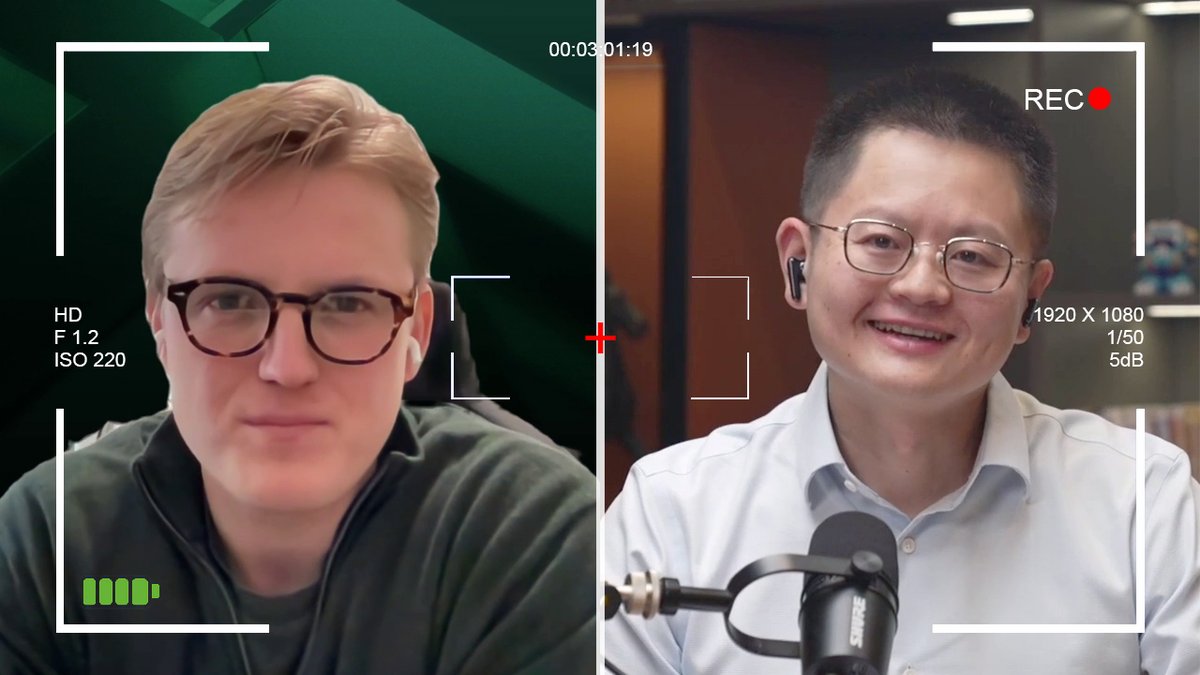
I sat down with @FkleinwieGross from @Bitpanda for a deep conversation about bringing Europe onchain - the right way. From compliance-native infrastructure to the future of euro stablecoins, this one was packed.
Here are some key highlights I think everyone should hear. 👇
1. What Vision Chain is really about:
“The big goal is to bring traditional finance in Europe, onchain. It's very much about achieving what Base is doing in the US, but for the European context - regulation, compliance, all of those things, not as an afterthought but built directly into the infrastructure from the ground up."
2. Making Web3 feel like Web2:
"The whole idea is you want to create a wallet that feels like an app and not like a developer tool. No addresses, no copy pasting, no QR codes - you just click click click."
3. Why institutions will finally trust DeFi:
"Bitpanda has partnered with major banks like Raiffeisen and Deutsche Bank. We're already talking to all of them about tokenization projects. You want institutional players to provide liquidity, and then you have millions of retail customers who can interact with those assets."
4. The VSN token & why utility alone isn't enough: "
The whole point of the token is that it's a ticket to the success of the entire ecosystem. A share of the profits generated through Vision Chain - sequencer profits, deal flow profits, it all goes directly into buybacks and burns. It's crypto growing up."
5. The euro stablecoin opportunity:
"We want to create a euro-denominated DeFi ecosystem. If you're a European user over the past 18 months, you've been earning yield on US dollars and you still pretty much lost money because of currency fluctuations. That's the opportunity."
6. Advice for the next generation:
"You're not gonna be replaced by AI. You're gonna be replaced by somebody using AI better than you. Pick one lane and stick with it - chasing the hype, you'll end up as exit liquidity."
@Bitpanda_global | @vsntoken | @BitpandaWallet
2
11
47
1,117
x_file retweeted

Feb 25
An L2 chain designed to comply with the EU regulations? With @FkleinwieGross from @vsntoken chain x.com/i/broadcasts/1RKZzjzkR…
6
14
56
12,544
x_file retweeted

Feb 25
The most valuable assets in Europe were never designed for retail investors.
Private credit, real estate, and institutional funds have been locked behind high entry barriers for decades.
Pretty impressed by observing how Vision Chain is trying to change that.
ICYMI, Vision is an Ethereum L2 by @Bitpanda that provides banks with a compliance-ready framework to tokenize RWA assets onchain seamlessly.
Unlike most L2s, gas fees are paid in Euro stablecoins, no need to hold volatile native tokens. Yields are also denominated in Euro, which completely removes the currency exchange friction for European users.
Good to see that yields that were exclusive to institutions for decades are finally available to European retail.
You can check the entire @vsntoken breakdown below (the video is 5 minutes for everyone with ADHD)
The first "Vision Chain Deep Dive" is now LIVE! 🎬
This is our first upload on our new YT channel and just the beginning.
Expect more content soon!
Watch here: youtube.com/watch?v=4f_bQ9z7…
15
19
107
8,837
x_file retweeted

Feb 21
Awesome time in HongKong for our dinner with Vision!
The momentum is real.
54
9
99
13,371
x_file retweeted

Feb 22
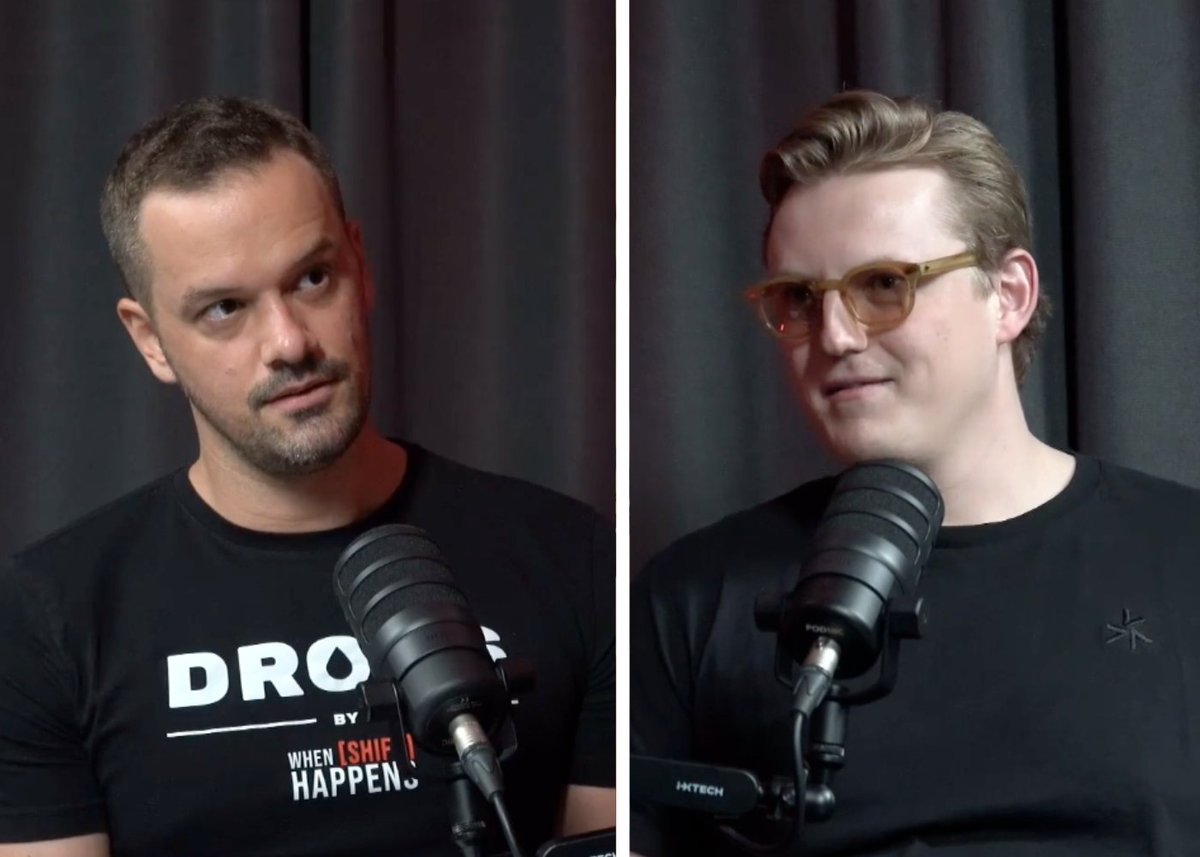
DROPS E30: @FkleinwieGross from @BitpandaWallet: Europe Finally Gets Its Own Blockchain!
Bitpanda has 7.5 million users and 11 years of regulatory track record. Now they're building the blockchain specifically designed for European finance. Flo is the commercial lead for the whole thing - Web3, Vision Chain and the token.
We talk about:
- Why Vision Chain uses a Euro stablecoin for gas instead of ETH or its own token
- Why Bitpanda built a blockchain specifically for European regulation
- Why the best crypto products will eventually hide the crypto entirely
- Why Bitpanda's wallet deliberately blocks Wallet Connect to protect Web2 users from getting rugged
- The flywheel model targeting three audiences at once
And much much more....
@vsntoken
Timestamps:
0:00 - Introduction
1:58 - First time in Studio
3:42 - Who is Flo and what is Bitpanda Web3?
5:08 - Difference between CeX and Broker
8:02 - Web2 investors vs Crypto natives
10:18 - Partnerships with various football clubs
15:05 - Bitpanda Web3
18:06 - Solving DeFi’s issues
20:22 - User behaviour
22:42 - What is a Vision Chain?
25:53 - Do we need a Layer-2?
26:58 - Europe’s own blockchain
29:29 - Bitpanda & Europe’ blockchain
31:30 - Working of Vision Chain
33:37 - DeFi Mullet philosophy
37:51 - Euro Stablecoin
41:25 - Crypto maxis vs Collaborative finance
44:10 - Vision - “Base of Europe"
45:39 - Favourite football club (except sponsors)
21
34
102
29,407
The first "Vision Chain Deep Dive" is now LIVE! 🎬
This is our first upload on our new YT channel and just the beginning.
Expect more content soon!
Watch here: youtube.com/watch?v=4f_bQ9z7…
52
99
260
124,377
x_file retweeted
Feb 20
This Sunday, I’m releasing a new DROPS episode with @FkleinwieGross from @BitpandaWallet: Europe Finally Gets Its Own Blockchain!
Flo is the commercial lead at Bitpanda - Europe's largest crypto platform with 7.5 million users - and he's building what might be the most important infrastructure play in European crypto right now: Vision Chain - an Ethereum L2 designed from the ground up for the European regulatory landscape.
We talk about:
- Why Bitpanda built a blockchain specifically for European regulation
- Why the best crypto products will eventually hide the crypto entirely
- Why Vision Chain uses a Euro stablecoin for gas instead of ETH or its own token
- Why Bitpanda's wallet deliberately blocks Wallet Connect to protect Web2 users from getting rugged
- Why crypto maxis are wrong: "Regulation is not the enemy of innovation. Uncertainty is."
- The flywheel model targeting three audiences at once
And much much more....
DROPS out on Sunday!
14
20
103
9,764