
Psychologist PhD - Professor Université Paris Nanterre / Associate researcher Inserm CESP - Clinical FSEF & St-Anne Hospital - SHU - C3RP
Joined June 2014
- Tweets 7,895
- Following 1,346
- Followers 932
- Likes 18,780
327 Photos and videos













Yannick Morvan @ymorvan@bsky.social retweeted

Jun 15
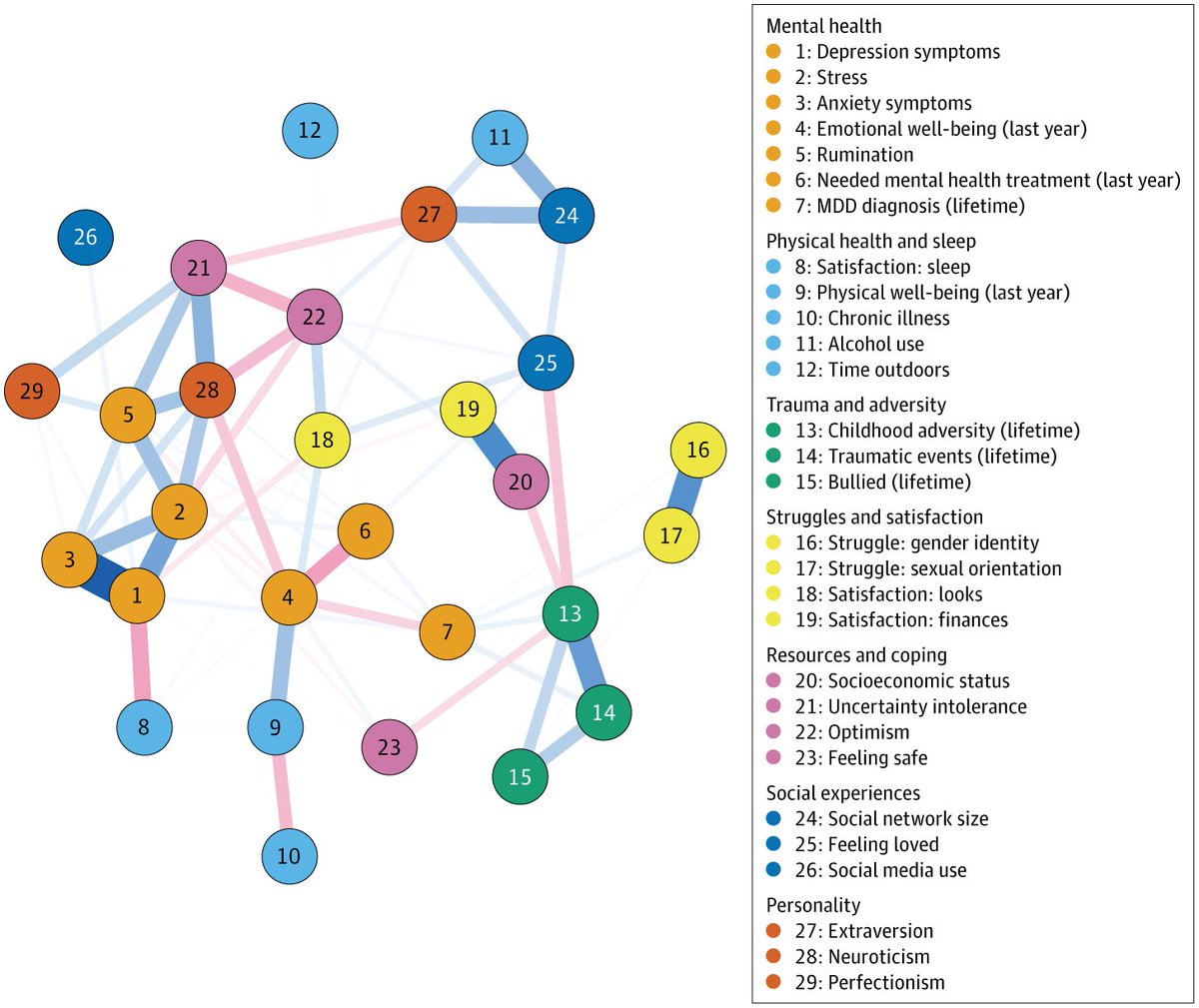
This narrative review suggests mental disorders are statistical clusters of biopsychosocial properties, not sharply defined categories, mirroring concepts in species classification and supporting dimensional #MentalHealth frameworks. ja.ma/3Sn3TTs
5
65
206
10,686
Yannick Morvan @ymorvan@bsky.social retweeted

Jun 15
𝗪𝗵𝗮𝘁 𝗮𝗿𝗲 𝗯𝗿𝗮𝗶𝗻𝘀, 𝗮𝗴𝗮𝗶𝗻??
Biological systems unlike computers, but what does that mean?
Join us in Neuroscience & Philosophy Salon discussion with Romain Brette of his great book.
July 9, noon (USA-EST)
umd.zoom.us/meeting/register…
Open to all; registration required.

2
28
170
6,269
Yannick Morvan @ymorvan@bsky.social retweeted

Mixed methods in ESM? Still very uncommon. 💥 That should change, we think: we should go beyond numbers, and know what people mean with their numbers. nature.com/articles/s44271-0…
1
3
11
207
Yannick Morvan @ymorvan@bsky.social retweeted

Jun 4
😉 Ce que vous ne verrez pas dans la presse :
➡️ Stabilité des jeunes en bonne/excellente santé (80%) et de satisfaits de leur vie actuelle (70%)
↘️ Baisse du sentiment de solitude et pensées suicidaires
↗️ Forte hausse du bien-être mental ( 12 pts !)
santepubliquefrance.fr/press…
4
7
23
795
Yannick Morvan @ymorvan@bsky.social retweeted

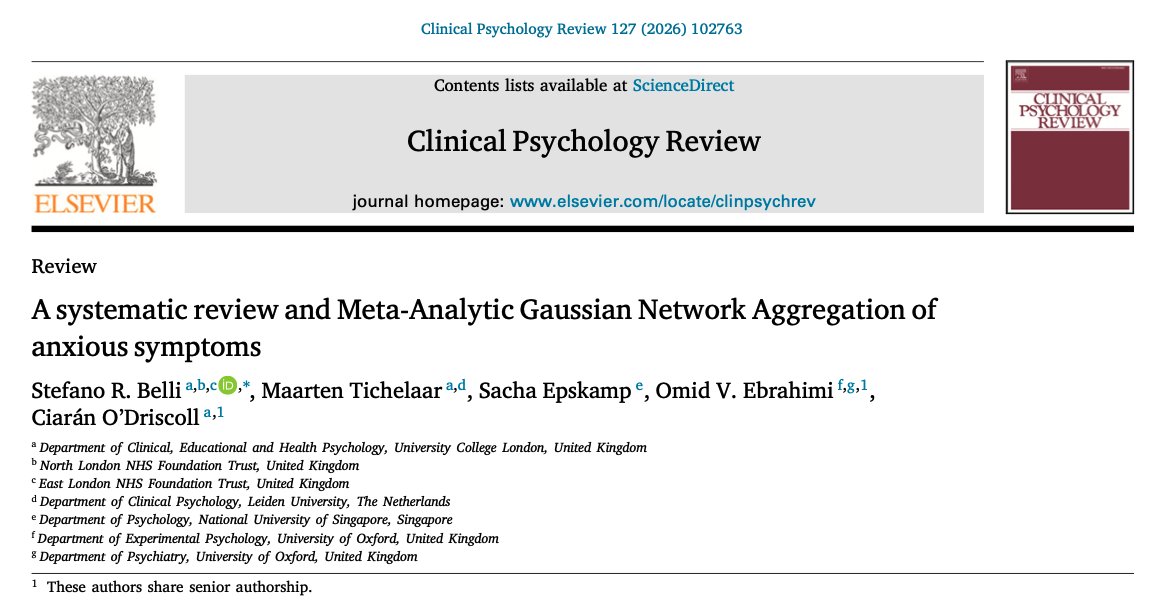
🌟 Out in Clinical Psychology Review after years in the making:
Pleased to share the 1st meta-analytic network analysis (MAGNA) investigating core maintaining features of anxiety symptoms pooling 156 networks (N = 303,151).
W/Belli, Tichelaar, @SachaEpskamp, & O'Driscoll.
🧵:
1
10
32
1,229

A beautiful day to start with Bayesian estimators in intensive longitudinal models this morning and network models for risk and resilience this afternoon @PsychScience #APS26BCN
30
Yannick Morvan @ymorvan@bsky.social retweeted

May 26
New pre-print! Estimating Network Temperature Through Multi-Group Ising Modeling - bridging measurement invariance and Ising modeling.
pre-print: osf.io/preprints/psyarxiv/de…
Galvoro explainer: galvoro.app/capsules/network…
2
3
14
517
Yannick Morvan @ymorvan@bsky.social retweeted

May 23
“It is not enough for there to be iatrogenic harm, psychopathology itself must be illusory.”
May 23

A Pluralist’s Quarrels with “Critical Psychiatry”
Where do I stand?
psychiatrymargins.com/p/a-pl…
6
7
29
4,883
Yannick Morvan @ymorvan@bsky.social retweeted
May 23
A Pluralist’s Quarrels with “Critical Psychiatry”
Where do I stand?
psychiatrymargins.com/p/a-pl…
12
16
53
12,763
Yannick Morvan @ymorvan@bsky.social retweeted

May 22
Get updated on the frontier of knowledge on Generative Psychometrics, by subscribing to our website:
generativepsychometrics.com
4
13
739
Yannick Morvan @ymorvan@bsky.social retweeted
May 21
🗣️ Il faudrait « éduquer » les gens sur la santé mentale pour qu’ils changent d’avis, d’attitude, de comportement et ne stigmatisent plus. On dit aussi « augmenter la littératie ». C’est peu plus compliqué ça…
communication-santementale.f…
2
10
18
855
Yannick Morvan @ymorvan@bsky.social retweeted

May 20
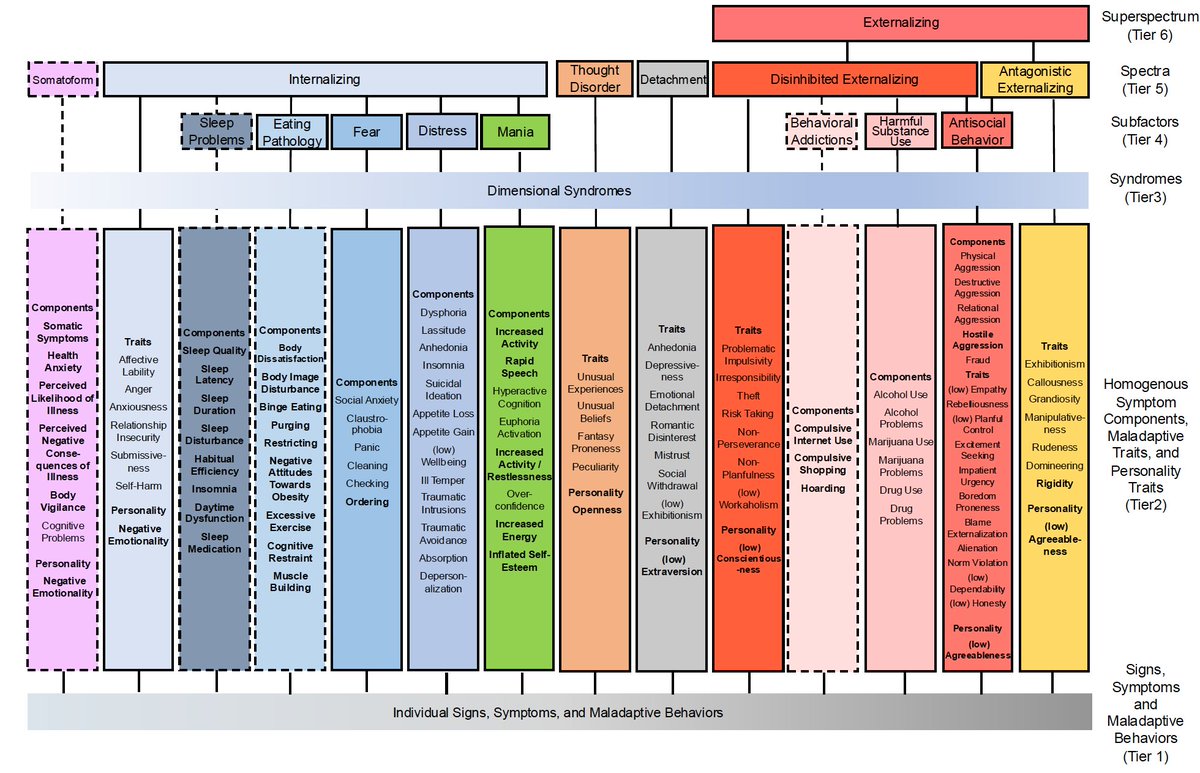
Frustrated with DSM?
Interested in @HiTOP_system as a potential alternative?
Check our latest, led by J Tiego, using a bottom-up approach in a transdiagnostic twin sample evaluating the validity & heritability of the HiTOP model:
osf.io/preprints/psyarxiv/m9…
1
12
59
4,736
Yannick Morvan @ymorvan@bsky.social retweeted
May 21
BIG NEWS: Our paper "Generative Psychometrics via AI-GENIE: Automatic Item Generation and Validation with Network-Integrated Evaluation" is now ACCEPTED AT Behavior Research Methods!! Link to the updated pre-print below! #psynomBRM #GenerativePsychometrics
4
4
23
2,688
Yannick Morvan @ymorvan@bsky.social retweeted
May 19
The AI-GENIE package for automatic item generation and structural validation using LLMs and Exploratory Graph Analysis methods is now updated on GitHub!
Link below!

1
6
14
962
Yannick Morvan @ymorvan@bsky.social retweeted
May 14
I'm a bit annoyed that NYT has settled on the title “Here’s What Psychiatrists Mean When They Say You Have A.D.H.D.” (presumably because it got more engagement) rather than the prior title “We’re Thinking About Mental Health Diagnoses All Wrong,” because the piece isn't really about ADHD. It's just an example I used in one passage.
May 11
When patients ask, “What disorder do I really ‘have’?” the honest answer is usually more interesting and messier than a single label. I wrote for the @nytimes on what I wish people understood about diagnoses and the nature of mental health problems.
nytimes.com/2026/05/11/opini…
14
30
237
17,103
Yannick Morvan @ymorvan@bsky.social retweeted
May 11
Working with ABCD data? Using the CBCL? Check our latest led by @kane_pavlovich w. @constable_toby & J Tiego.
Diving deep into the psychometric properties of the CBCL, we find that widely assumed latent structures are not valid in the ABCD sample.
onlinelibrary.wiley.com/doi/…
16
43
3,675
Yannick Morvan @ymorvan@bsky.social retweeted
May 11
When patients ask, “What disorder do I really ‘have’?” the honest answer is usually more interesting and messier than a single label. I wrote for the @nytimes on what I wish people understood about diagnoses and the nature of mental health problems.
nytimes.com/2026/05/11/opini…
32
159
550
142,221
Yannick Morvan @ymorvan@bsky.social retweeted

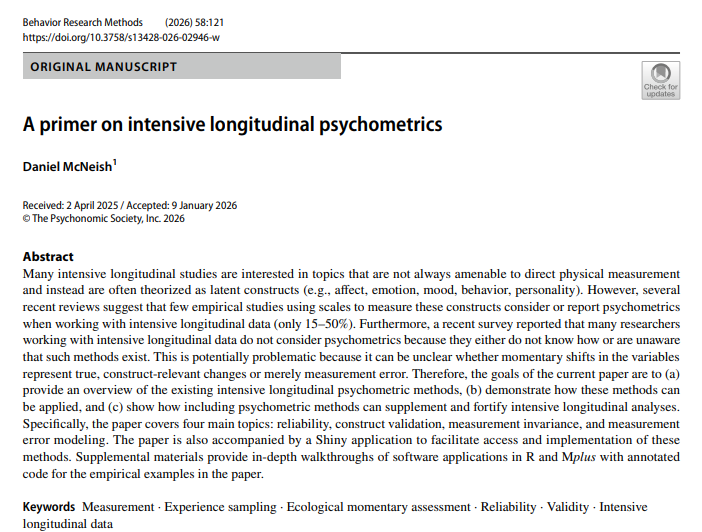
Awesome new primer on psychometrics for high frequency data by @dmcneish18. Includes a fun Shiny app!
link.springer.com/article/10…
21
59
4,806
Yannick Morvan @ymorvan@bsky.social retweeted
May 3
My new @UVA course "The Psychology and Practice of Combat Sports" now has a Channel on YouTube. Check it out! youtube.com/@PsychCombatSpor…
1
1
9
396