
Media ecology, semiotics (not the French kind), intellectual history, other various nonsense. zermatist.substack.com
Joined September 2017
- Tweets 31,225
- Following 441
- Followers 4,777
- Likes 45,563
1,899 Photos and videos






I remember back on AlternativeRight, he (as Richard Hoste) made the same talking point against Srđa Trifković when the latter said, "As God withdraws from the west, Allah draws near" or something like this.
Even then, I thought to myself, "Wow that was pedantic and tone-deaf."

Fun fact: Allah is the Arabic word for God, also used by Arabic speaking Christians to refer to their deity.
1
4
645
Anyways, the moral of the story is: people don't change at all. They say they do, but they don't.
3
374

Jun 13
If Musk were this clever, I would probably never criticize him again
Jun 12

2/ Conspiracy theory I only believe 5% but refuse to entirely discount: Elon Musk is funding BlueSky. It makes too much sense to reject out of hand!
3
323
Jun 12
Maybe I'm misremembering things, but I'm pretty sure the only other time he's recently written a long effort-post like this, it was also about Taylor Swift. That can't be right, though, can it?

Bandwagon jumping is no crime. And, in fairness to Taylor, she has rooted for the Knicks for years. Indeed, bandwagoning is, perhaps, the essence of healthy, evolved "normie" behavior: recognizing a winner and/or conforming to what is most popular.
And it is this "normie behavior" that makes Taylor Swift a rock star at the End of History—the final Sabbath of this era, which is reaching its exhaustion and closing.
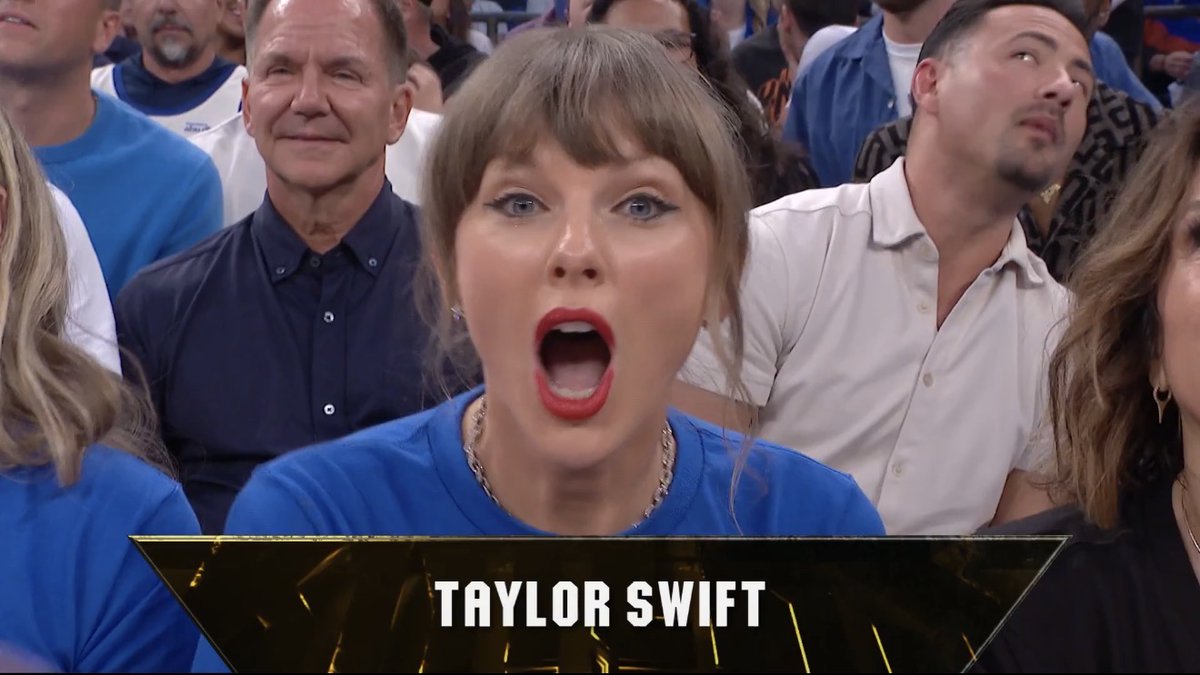
Taylor can be elegant, to be sure, but her most characteristic poses are like this one. She is communicating, "I can't believe I'm here, and I can't believe I'm on the jumbo screen right now!"
I, in fact, can easily believe that Taylor could acquire and afford court-side tickets, and I'm not surprised she's being photographed. This pose allows Taylor to perfectly reflect or even merge with her audience of millennial basic-bitches. She is not above or beyond them—as the classic movie stars or rockers were. She is them.
I still don't fully believe that anyone actually loves Taylor's music, which is unobjectionable if forgettable. My sense is that the multibillion-dollar fandom she has created is a gigantic "what if?" experiment participated in by legions of women: “What if we all pretended to like this music, and pretended to adore this icon, who's so much like us!" It is a collective narcissism of "relatability."
For at least 60 years, parents have fretted over the music listened to by their children. Rock was too sexual ... too dark ... too edgy ... maybe demonic!
Taylor Swift is the first salient rock musician whose music is heard by Gen-X and Boomer parents as cringe ... wholesome (in a bad way) ... vapid ... conservative! If our daughters get into Taylor, we worry that they might not rebel! And rebellion (at least in moderation) is part of growing up.
Rock-and-roll is the spirit of Dionysus. Parents were shocked by Elvis's gyrating hips—something we now view as inoffensive. The "love" of the Beatles was, at bottom, the indiscriminate love of Bacchus' orgia. And the aptly named Nirvana gave us a glimpse of the nihilism and death brought by the wine-god in the end. Dionysus can be criticized or even rejected—but his power cannot be denied!
Taylor comes at the end of rock, when it no longer even attempts to be subversive or anti-social, but instead stands only as an entertaining soundtrack for 30-somethings in middle management. Dionysus has been banished, and yet her music is not Apollonian either. She, at most, reflects the spirit of Persephone, at least Persephone before it all went wrong. If Taylor is the world's biggest star, then rock has lost all its potency for social change, for better and for worse.
1
21
984
Jun 12
Wait, yeah, this is it. Richard Spencer is a man with a lot to say about Taylor Swift.
x.com/RichardBSpencer/status…
27 Aug 2025
Needless to say, I’m not a fan of Taylor Swift’s music. That being said, the common refrain from the online Right that she’s training young girls to be whores, etc. has always been wrong and is now doubly so.
Taylor is the Millennial Basic Bitch is her idealized, almost Platonic form. Yes, she will have a series of boyfriends and heartbreaks, but she will eventually find herself as part of a “perfect couple” and, no doubt, she and Travis will soon have “adorable children.”
Even if most of us will fall short of Taylor’s vapid perfection, she will inspire Normie women everywhere to “just go for it” and marry the high-school gym teacher or manager at Firestone Tire and Break or Sun Trust Bank. Taylor is a fertility goddess of a sort, who stands as a countervailing force to the modern age’s infecundity.
Taylor has won me over, to a degree, in her recent interviews: She’s thoughtful and intelligent … though the natural comparison to Travis presents her with a low bar to clear. Taylor offers a breeding model beyond hypergamy, as her man is closer to a bimbo-like “trophy husband” than a beta-provider.
One should hate Taylor’s uninspired, vacuous music. But we can only admire her game.
1
15
639
Kerwin Fjøl retweeted

Jun 11
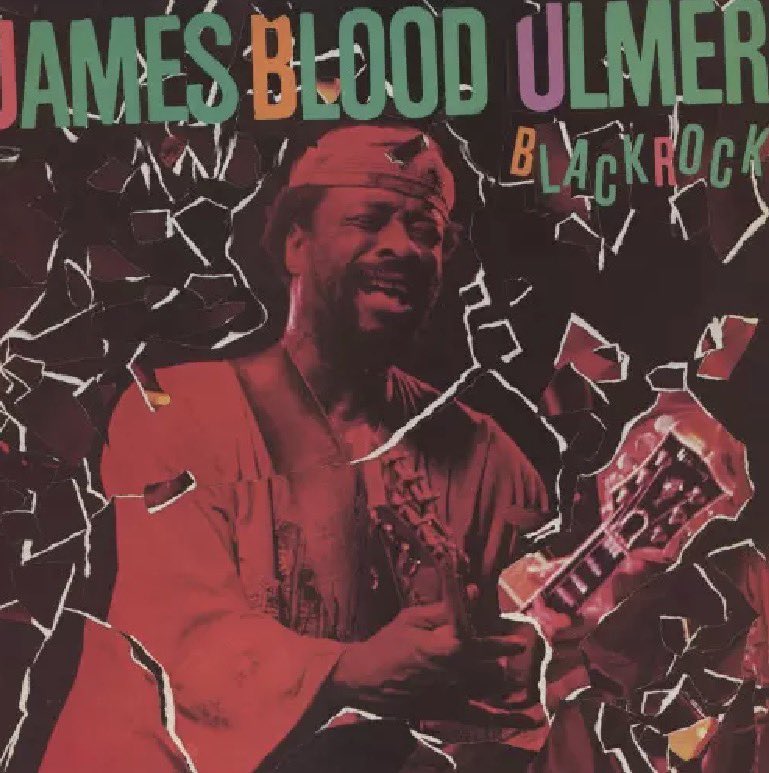
#世界辺境音楽研究、孤高の黒い魔神ギタリスト/ヴォーカリストJames Blood Ulmer 86歳で死す😭amass.jp/189965/ 、リズム、メロディ、ハーモニーを平等化する”ハーモロディック奏法“、フリージャズ、ファンク、ロックが混然一体化💕メジャー・リリースされた『Black Rock』(82) は何故未配信⁉️
1
2
1
268

James "Blood" Ulmer (RIP) was at the center of a guitar revolution in the '70s & beyond. His crucial roles with Ornette Coleman & Arthur Blythe brought blues, free jazz, No Wave into free-flowing conversation. Saw him do it real time at Tut's in 1982. His boldness will be missed.

1
5
21
707
Jun 12
When an art form is hot, time takes on a heavy weight, and every second of every day of every year is precious. When it cools down, time gets both lighter and cheaper. The date at which something is released stops mattering.
1
7
423
Jun 12
It's honestly because Licorice Pizza sucked. The people are collectively realizing that they don't have to pretend to enjoy Licorice Pizza anymore, and it's a moment of cathartic liberation, totally life-affirming. It's like when the Berlin Wall fell.
Jun 11

Let's be real here, there's a sinister reason why Alana Haim is getting so much abuse on this site.
1
15
2,038
Jun 11
Regarding Covid-19, the libertarians were completely right on almost every level, yet they're still basically not in the conversation politically. So it seems that being right about the current thing doesn't seem to matter nearly as much as being a prominent voice during it.
10
254
Jun 11
Ever since "One Battle After Another" came out, which I probably won't see for another couple years (on an airplane, no doubt), everyone has been highly receptive to my once-unpopular opinion that Licorice Pizza is utterly godawful.
Jun 11

Every time I see that chick from Haim, I think to myself, "Ah, there's that chick from the terrible P.T. Anderson movie, Licorice Pizza, which I made the mistake of watching in its entirety"
4
11
1,404
Jun 11
All of a sudden, the truth is coming to light.
x.com/FoolOfD/status/2065175…

Licorice Pizza (2021) was one of the worst films I've ever seen and 50% of that was due to this actress.
3
697
Jun 11
The word "process," naked and unmodified by a prepositional phrase, is one of those words you should rarely ever trust.
Jun 11

Housed within the American Association of University Professors (AAUP), the group's conception of academic freedom seems to have little to do with free speech.
Here's a meeting where one fellow says that UPenn punishing Amy Wax for her speech was academic freedom in practice.
3
337
Jun 11
Alright, you can definitely see the quality start to dip in Season 5. The episode where there's a middle school football tradition in which Arlen's team mascot (Bobby) has to get beat up by the opposing team's marching band (?) during halftime just doesn't make any sense.
May 5
In the throes of sciatica, I've been rewatching King of the Hill from the beginning. It's a very good example of a psycho-realistic adult comedy show that doesn't rely on the characters spewing forth a torrent of predigested therapy-chatter to communicate things about themselves
1
304
Jun 11

16
778
Jun 11
America's mental health crisis is iatrogenic. The more America obsesses over mental health and seeks treatment for it, the more mentally broken it becomes.
Jun 10

so how again are men supposed to cope with mental health issues if they don't talk to therapists or friends about it
2
3
51
1,329
Kerwin Fjøl retweeted

Jun 10
The Will Stancil Show! [FULL EPISODE]
Episode 8: Karpface
When Alex Karp, the CEO of Palantir, starts building data centers across Miami, Florida, Will Stancil and his band of anti-AI activists take matters into their own hands.
By Emily Youcis 2026
240
382
2,348
189,416
Jun 10
The shape of it kinda reminds me of when the twin towers were attacked by terrorists on September 11th

2
1
34
2,115