
Co-Founder @zanaVentures, Writer, Automator and Dev
Joined January 2020
- Tweets 962
- Following 844
- Followers 425
- Likes 1,238
47 Photos and videos












Jun 14
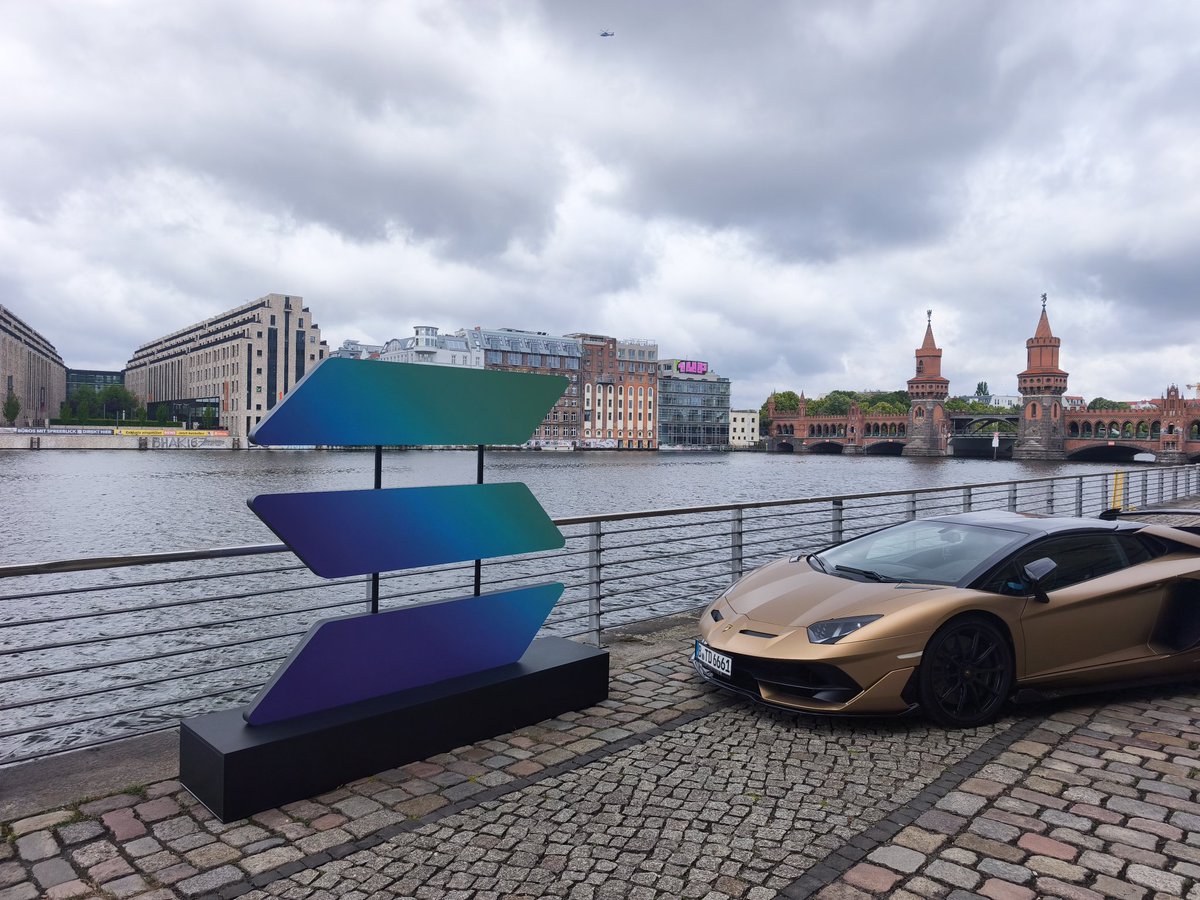
Why flex a lambo tho as a symbol of the event? Doesn’t the sol cabal have a lil more taste ?
Jun 14

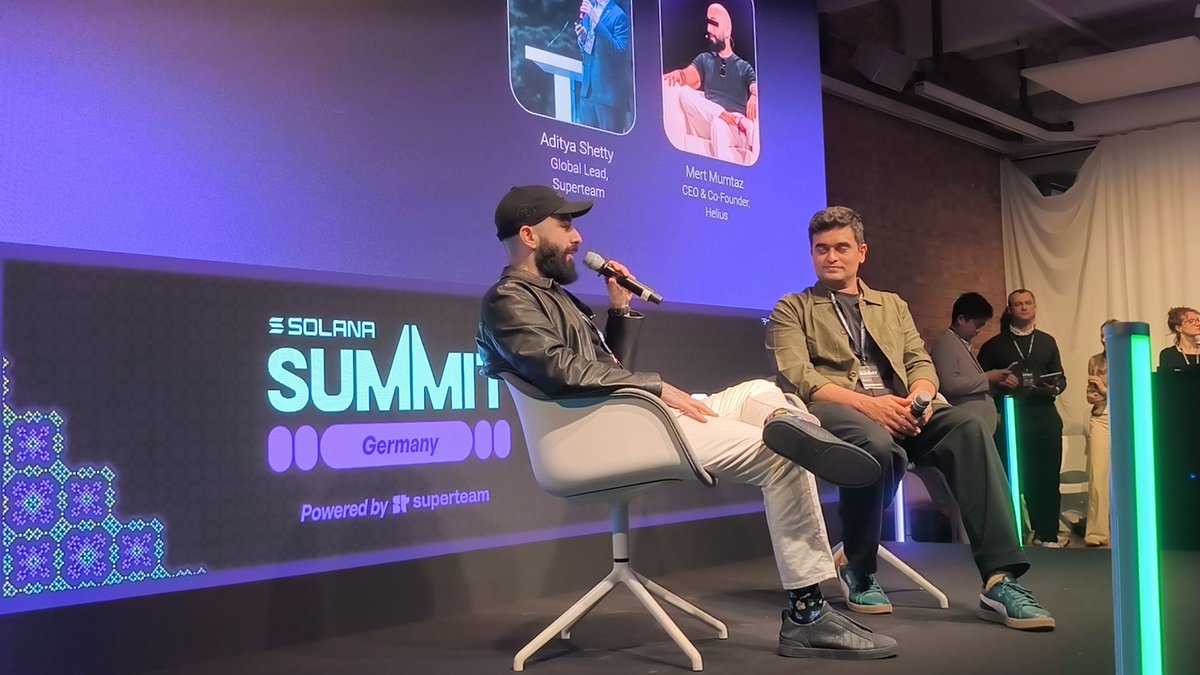
The Solana summit by @SuperteamDE was probably the best Crypto Event Germany has ever seen
Insane venue, good drinks, a LOT of people (good people), amazing vibes
I can't wait to come back for another round, because this was a BLAST
Having such cool events in Germany is so cool, because you'll finally get to meet Like minded people
Thanks SuperTeam Germany! It was insane 🤝


2
186

Jun 11
Intelligence subsidies.
Jun 10

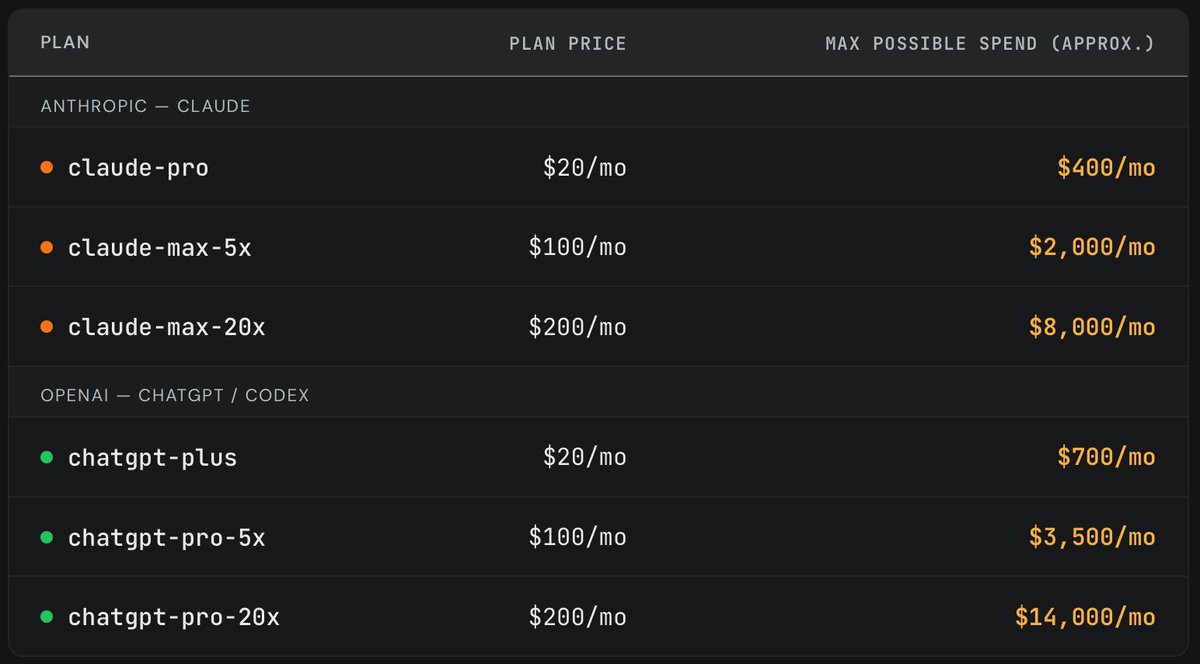
Recently, we purchased one of each Anthropic/OpenAI subscription plan and randomly ran long horizon coding tasks until we exhausted the weekly limit. It's widely believed that a $200/month plan maxes out at ~$2000/month worth of tokens (assuming API pricing). However, we found that the subscriptions are actually far more generous. (2/4)
2
315
Jun 10
The momo reckoning
Jun 10

SpaceX going to steal all the momentum trades
1
244
Jun 10
"Look you can now mine our network that produces nothing while also mining on the other bad network that produces nothing" - Zero
Jun 10

6
20
2,193
Jun 10
Nock nock?
Jun 10
11
473
Jun 10
Yes but few people realize that both $BTC and $ETH have become more centralized than ever. Ponzi Saylor, Bitmine, the etfs all absorbed huge amounts of supply.
Controlled AI, gated payment rails there is future forming that is against everything that has to do with cypherpunk.
Jun 9

crypto and cypherpunk are more needed than ever to pushback against centralized AI superpower corporates
"not your GPU, not your AI" is as important as "not your keys, not your coins" . . . I will be looking to rapidly get sophisticated on local AI setups . .
2
271
Jun 10
America is in a shadow war against china. Iran was only the beginning.
Jun 10

But why does this pop up now? Wasn’t this clear from the very beginning. Anthropic is pursuing a business and no philanthropy. They are trying to win and this means fighting off their competitors.
4
316
Jun 10
But why does this pop up now? Wasn’t this clear from the very beginning. Anthropic is pursuing a business and no philanthropy. They are trying to win and this means fighting off their competitors.
3
613
Jun 10
What are the best alternatives? Besides hardware wallets ofc?
Jun 10

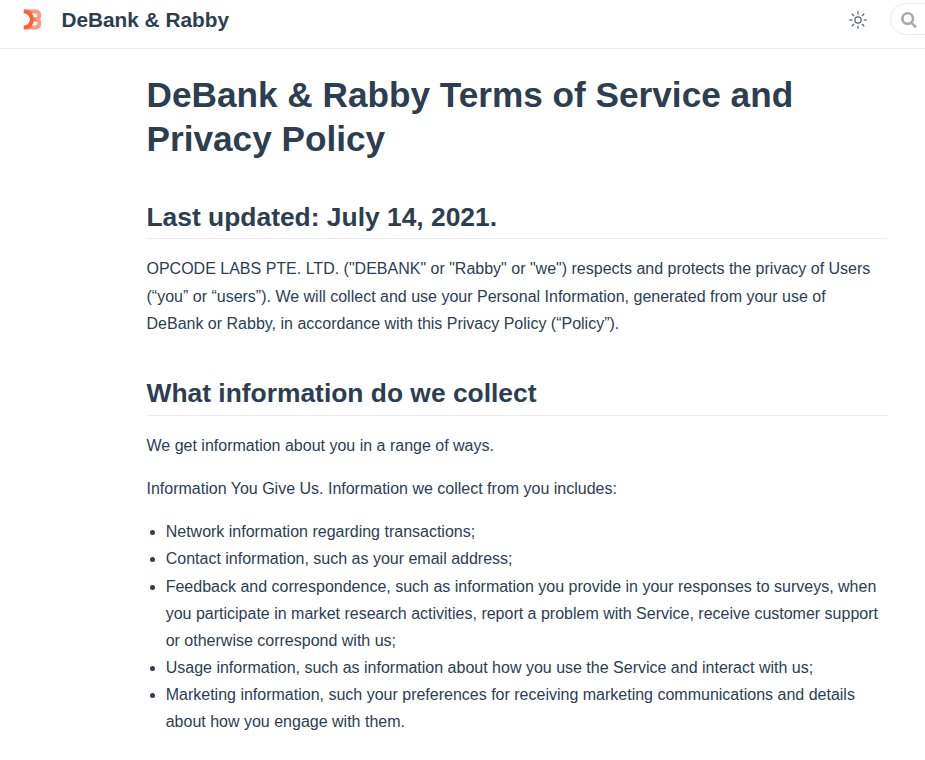
Honestly @Rabby_io, this is disgusting
Before I even set up my wallet, you are sending my data to
- your matomo instance
- and just in case track me on Google Analytics
- and to be really sure dump my data into Sentry
I hereby kindly inform you that this is a breach of your Privacy Policy (yes, the one that you last looked at 5 years ago) and a gross violation of GDPR Articles 13 and 46.
Please stop tracking me at your earliest convenience. Thank you.

4
438
Jun 10
Few

Gm.
Funny how quickly narratives change.
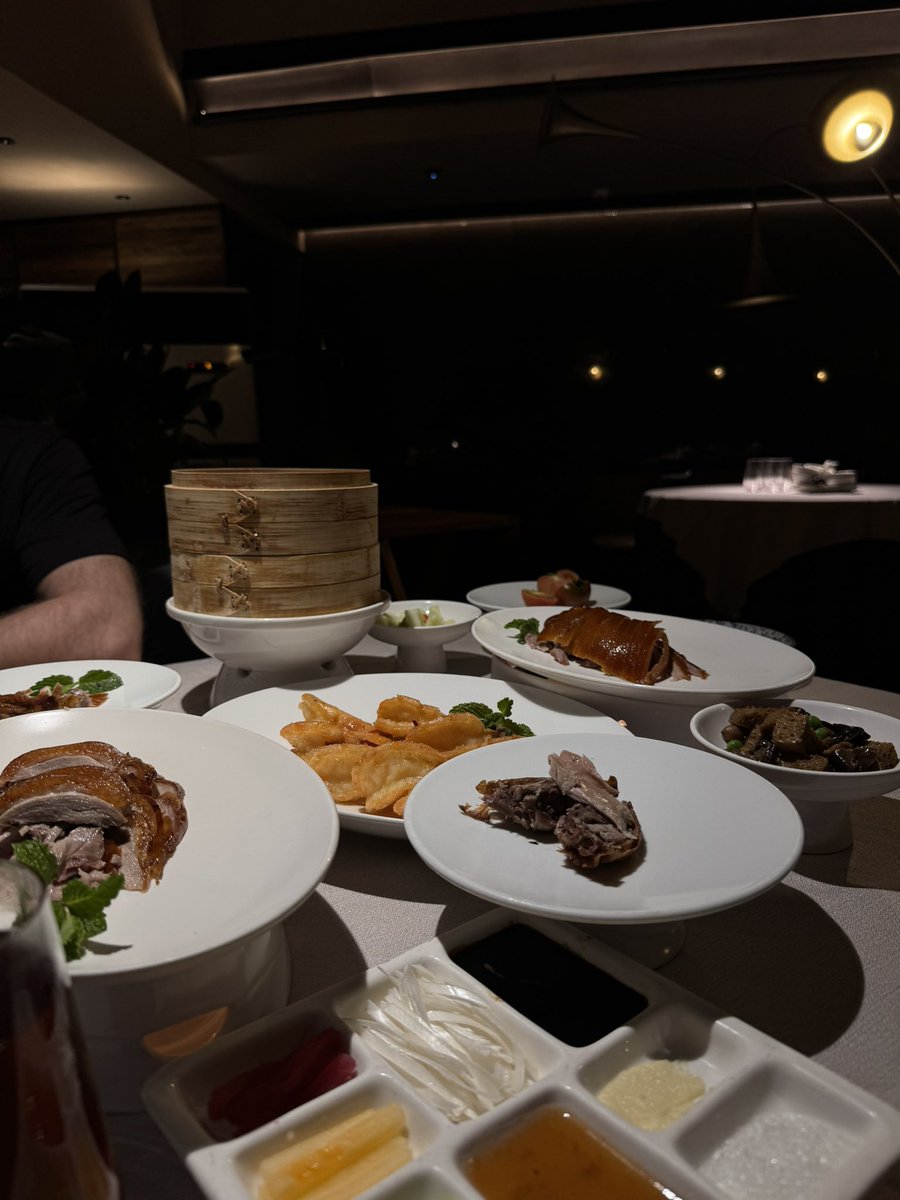
Two years ago, @ZanaVentures got endless criticism for calling the crypto top, rotating into gold at ~$2.6k, silver at ~$35, and building positions in stocks like $GOOG.
Today everyone is suddenly a macro investor, anti-BTC, and all while we started accumulating $BTC again.
The trade didn’t change. The price did.
6
421
Jun 9
Well well well
Jun 1
Hopium in the stock market ongoing while oil prices are bouncing on Iran news.
This is going on for weeks. Imo only a matter of time until something breaks.
bitcoin:native already showing signs of weakness.
2
170
Jun 9
Second article in the works. In the mean time check this out:
Jun 9
$BOT up 100% since our post. Still seeing many question marks around Robostrategy's valuation, NAV or what it is. Go check it out:
7
882
Jun 8
Many such cases.
Jun 8

Something I've always been really vocal about is the fact that a lot of you are losers, and will always be losers.
Making money won't change that.
A big part of being a man is having wealth, having the means to take care of your family, your wife, your children.
But that's not all there's to it.
Issue is, most of you are rotten inside, little boys that never turn into men, no intellect, no soul behind those eyes, no will, no lust, nothing, just a cloud of something something but you have an income or net worth above the modal range in your country.
It shows in the women you date, the friends you befriend, the cars you drive, the pictures and videos you post on social media and the way you frame yourself on the internet.
Money can't buy taste, and it always shows.
Moral of the story, don't be a fucking loser. (I know a lot of you can't really help yourself and won't be able to ever change, just give up, I just wanted to cuss you out)
4
211
Jun 8
It’s crazy how xiaomi is leading the Chinese tech market for smartphones and gadgets, Evs and now even OSS models. The Chinese engineers truly never sleep.
Jun 8

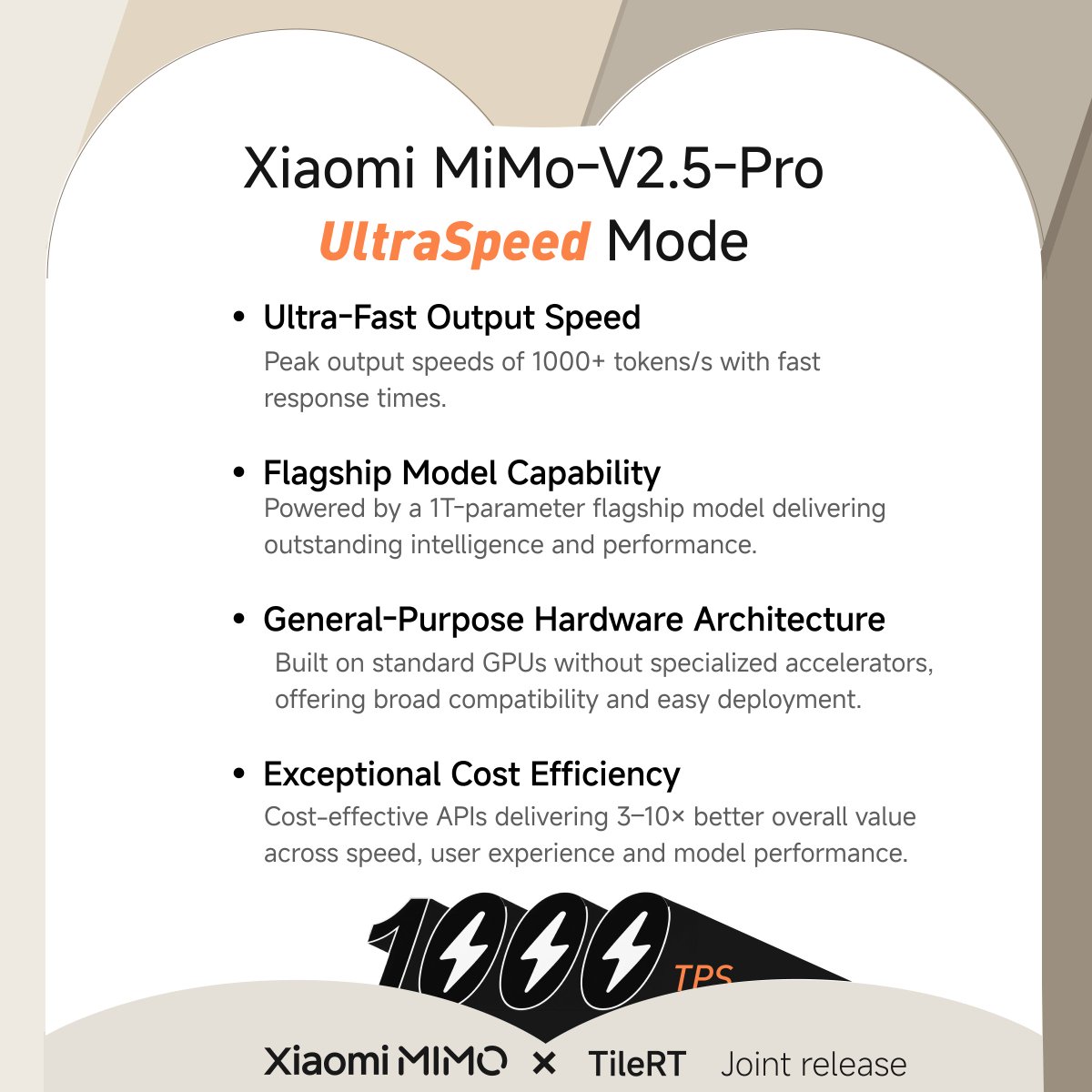
🚀 1,000 TOKENS/S ON A 1T MODEL! 🚀
We are thrilled to release Xiaomi MiMo-V2.5-Pro-UltraSpeed in collaboration with @TileRT_AI , breaking the 1,000 tokens/s output speed on a 1 Trillion parameter model for the FIRST TIME!
Not wafer-scale integration like Cerebras. Not pure on-chip SRAM chips like Groq. We achieve 1,000 tps on a 1T MoE model using just a SINGLE, STANDARD 8-GPGPU NODE.
Read the full technical deep dive:mimo.xiaomi.com/blog/mimo-ti…
Want to experience the future of real-time AI?
👉 Apply for UltraSpeed now: platform.xiaomimimo.com/ultr…
⏳ Limited-Time Access: Application-based · Jun 8 – Jun 23 (PDT)
💬 Chat Experience: Completely FREE for a limited time — try the blazing-fast web chat now.
⚡ UltraSpeed API: Just 3x the price for a ~10x boost in output experience.
🤝 Enterprise & Large-Scale Needs: business-mimo@xiaomi.com
5
230
Jun 7
👀
Jun 7

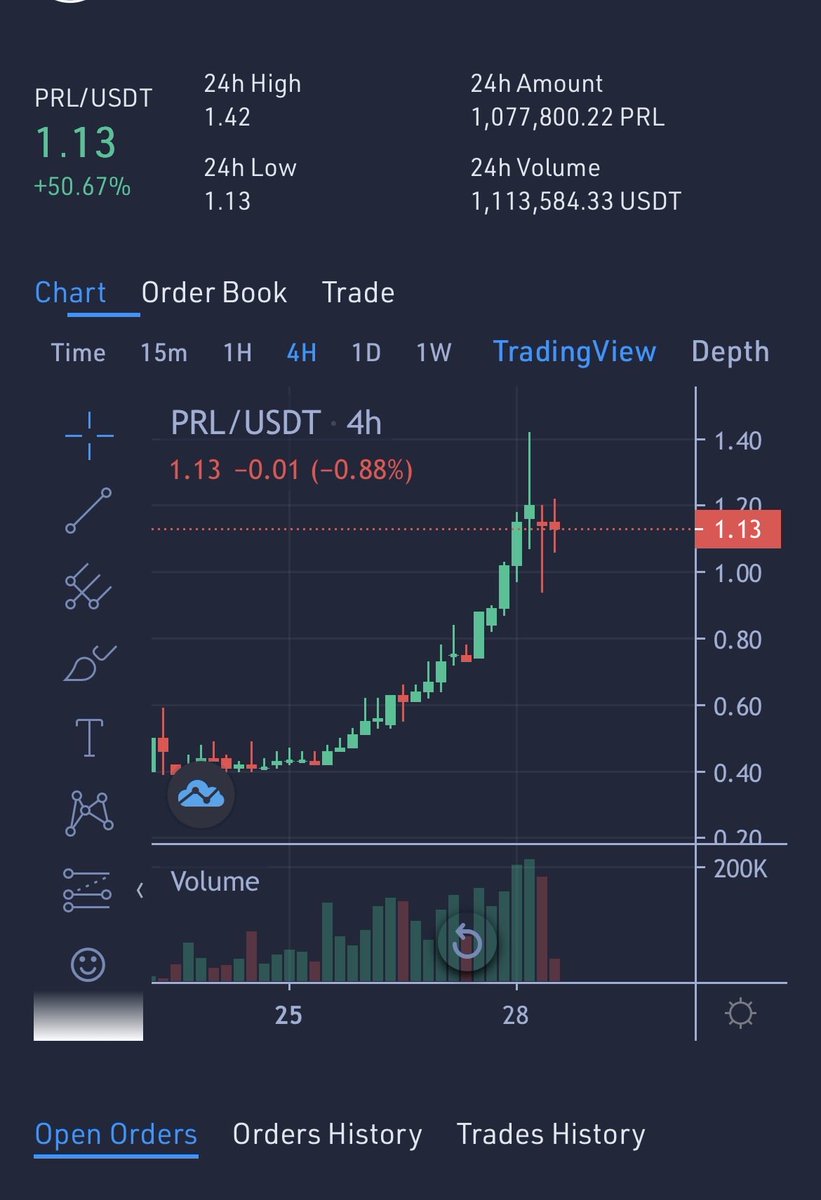
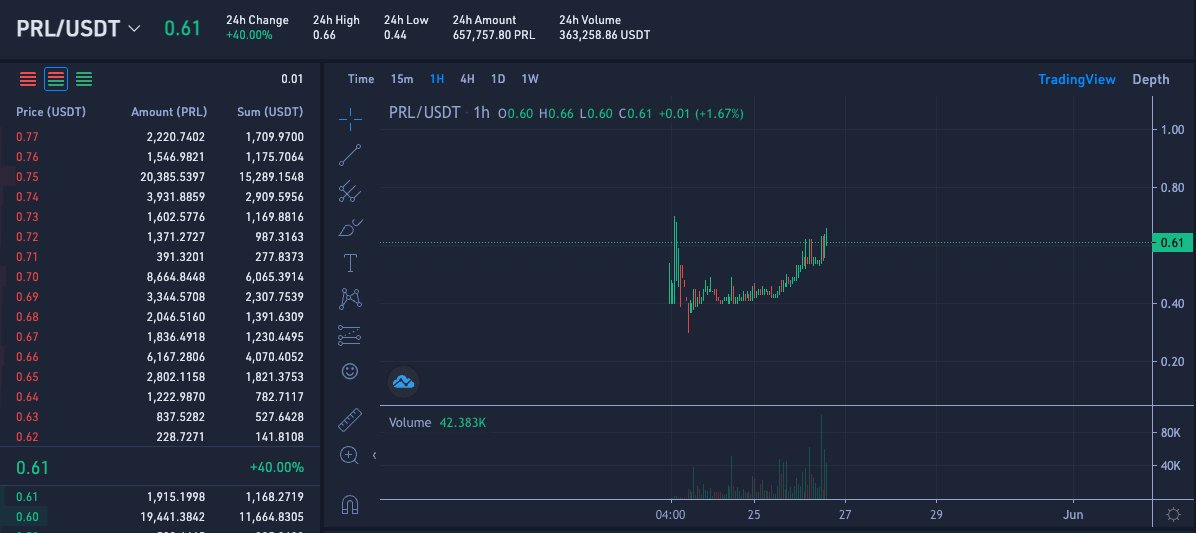
Mining costs crossing OTC prices proves real, large-scale inference workloads are running on Pearl. For miners running useful work on Pearl’s 2-for-1 kernels, the marginal cost of producing ¶PRL is ~0.
This partly explains why hashrate keeps climbing --
The only long-term path to profitability on @prlnet is doing useful MatMuls!
2
473
cryptic retweeted

Jun 7
Our take on the current $PRL mining landscape and the network hashrate.
Jun 7
$PRL mining costs are approaching the point where even with cheap consumer GPU access (way lower than neocloud providers) you are close to break even.
Many have been asking me how this is feasible or if the team is running their own modified kernels and gaming the network.
Here is my take:
Currently there are three scenarios.
1) Miners are either speculating on higher prices, therefore mining at a loss, 2) already have useful work and are running Pearl as a byproduct, or 3) have access to amortized GPUs and subsidized electricity (shout out CCP).
Safe to say that currently most of the miners in the network fall into either category 3) or 1).
There is a flaw in the protocol and it has something to do with the high hash rates.
Currently the network is at around 30 EH/s, where an H100 SXM does a maximum of 700–800 TH/s and a 3090 around 110 TH/s on the most optimized kernels.
If the entire network were mining with H100s, that would equal ~43,000 cards or around $2.3 million in daily costs ($2.25 per hour at neocloud prices).
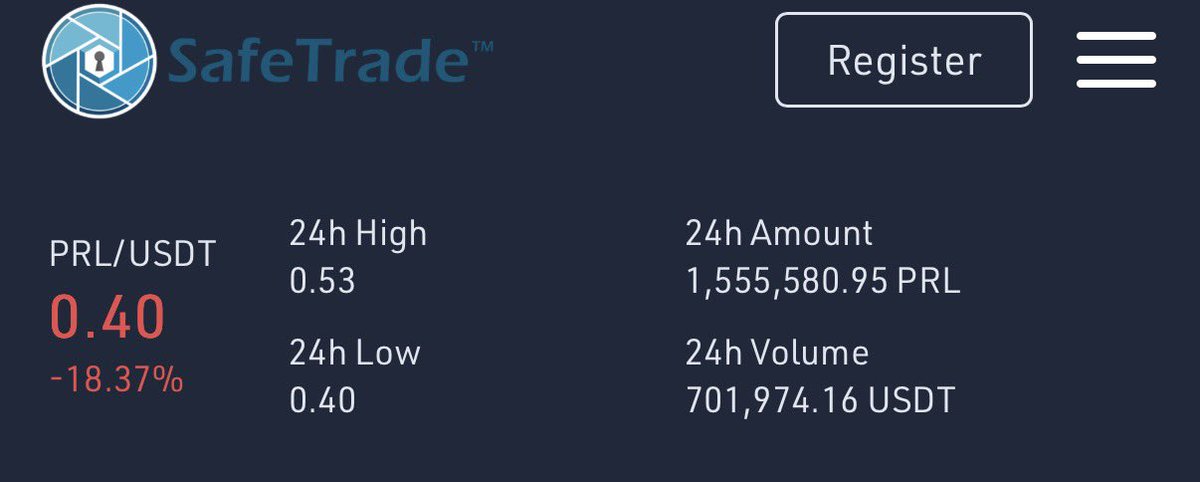
With a network issuance of $750k per day, and looking at sell pressure through SafeTrade or OTC, it's safe to say that this is not the case.
So where does the mining hashrate come from?
My guess is that large mining farms - likely ex-ETH mining era - are using their already amortized hardware (RTX 30/40 series) from 2020/2021.
If you calculate the hashrate in 3090 equivalents, you get ~285,000 cards.
This is a far more plausible figure which, combined with cheap electricity, would explain both the hashrate and the relatively low sell pressure.
Running consumer cards is far cheaper than ASICs for BTC mining and much cheaper than datacenter cards that are in high demand from AI operators.
With rising competition and hashrate, $PRL will ultimately converge to a point where most miners have to shut down their operations.
The network is in a very early stage - around one month old - and has acquired a lot of capital for the team to build, not through dumping tokens but rather through the mining packages.
It is in a transition to a new phase of $PRL that drives broader distribution.
Really interested in how this will play out, especially with the support of Blackwell kernels in the coming months, the upcoming partnerships and how the team reacts.
Tagging some chads: @0xRugova @ZanaVentures @0xkioto @evan_van_ness
5
3
30
7,864