
Next-era alternative asset management firm for the digital age.
Joined January 2023
- Tweets 570
- Following 232
- Followers 15,216
- Likes 598
118 Photos and videos
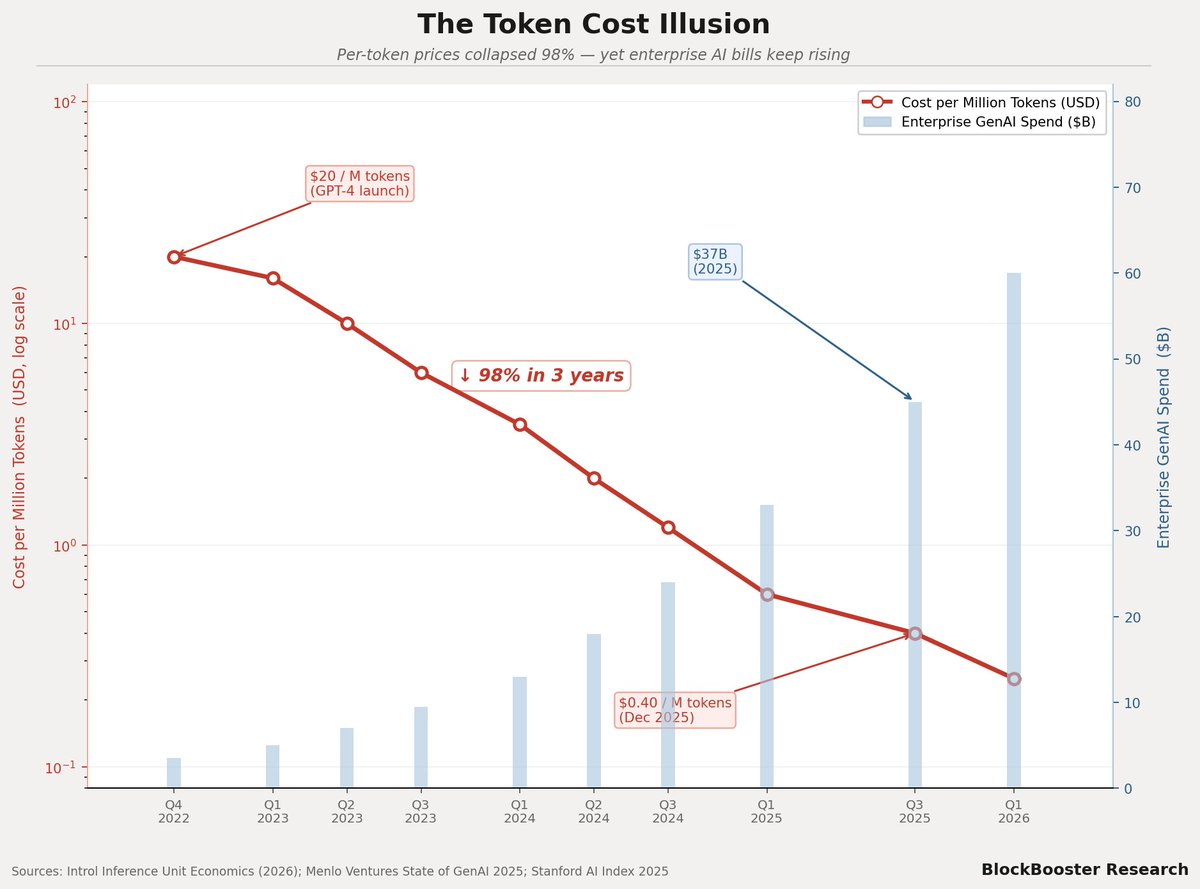
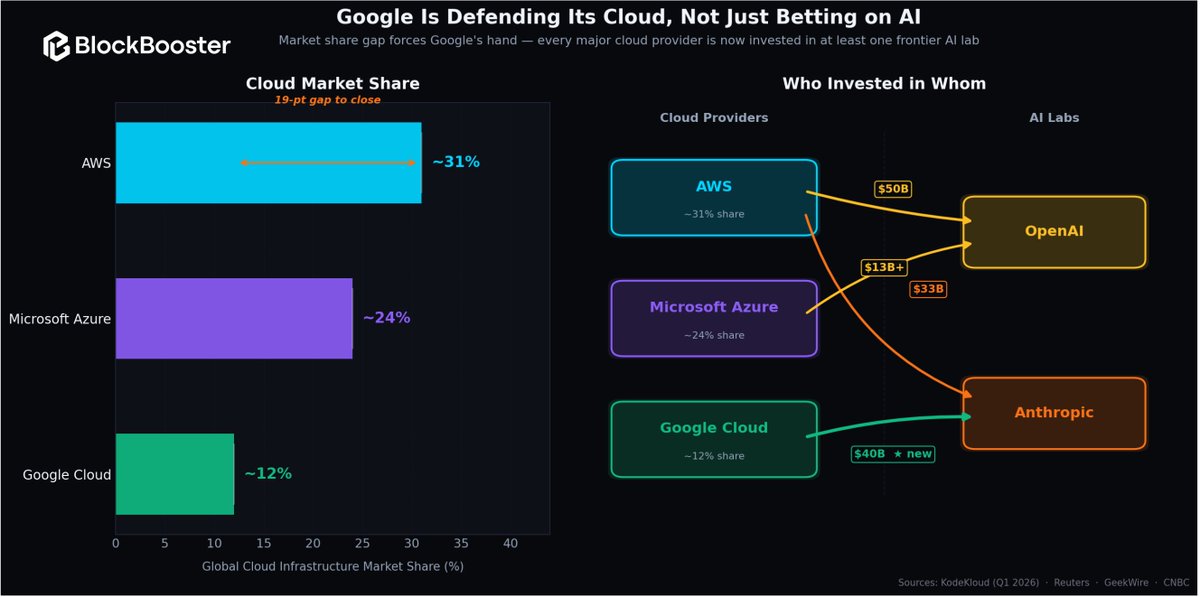
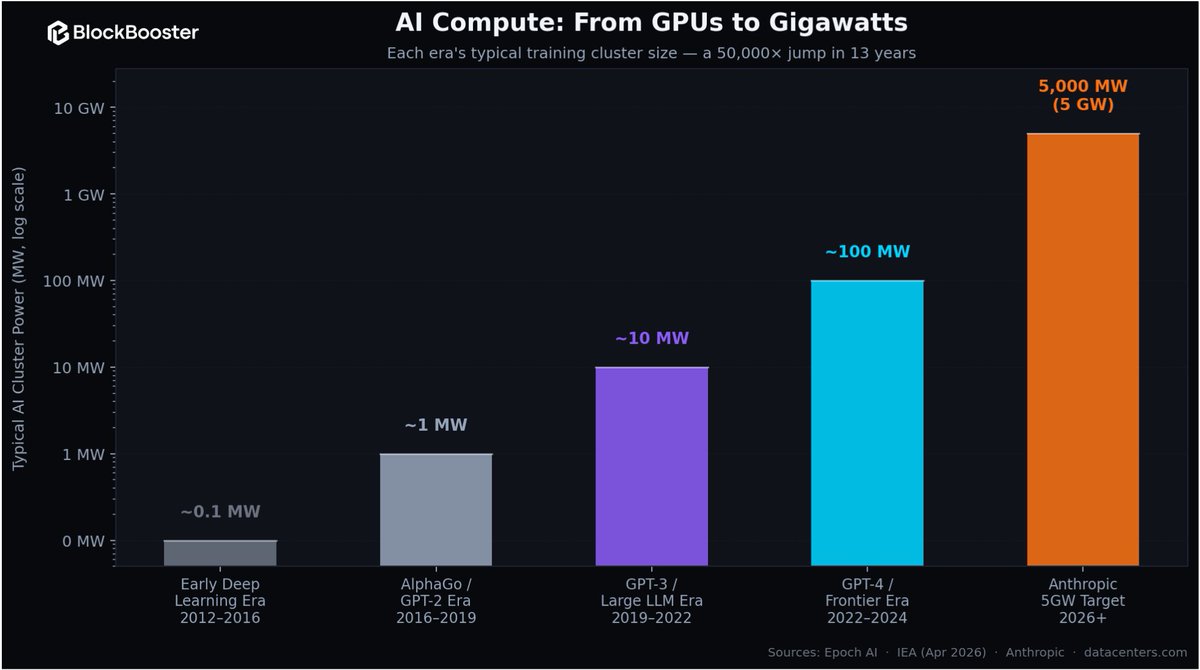

Jun 10
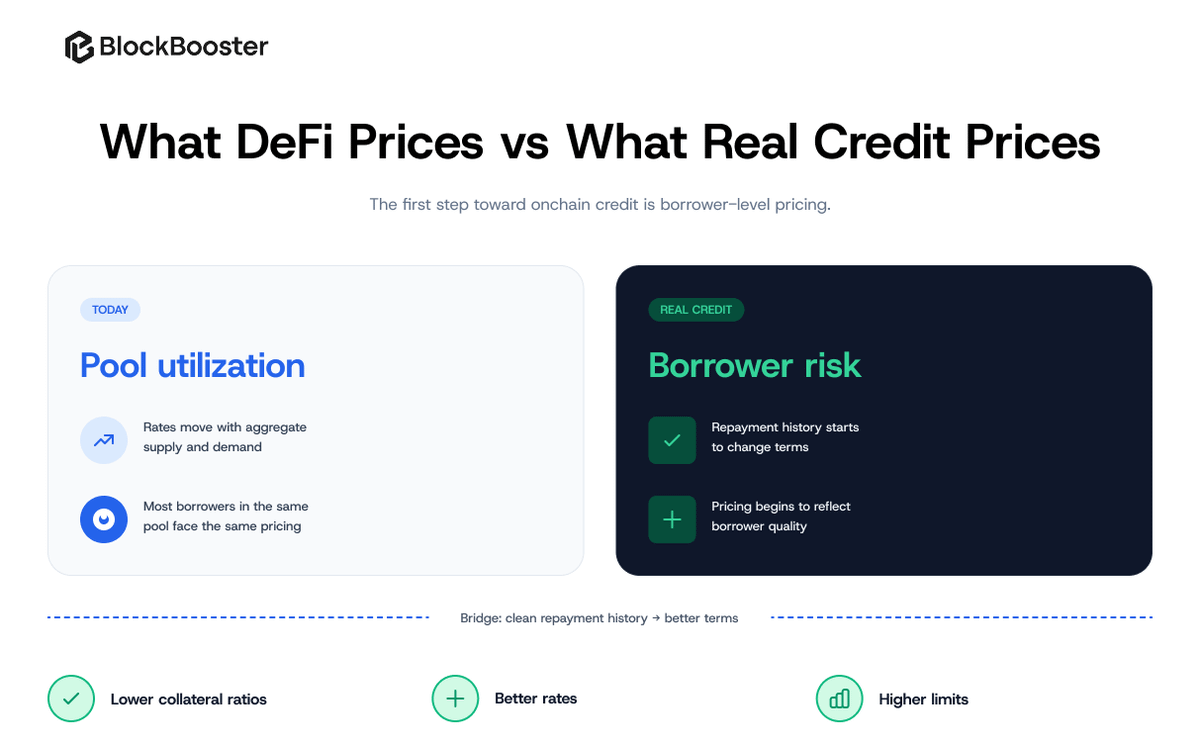
Most DeFi lending protocols do not price the borrower.
They price the pool.
Rates move with aggregate supply and demand, which means borrowers in the same market usually face the same pricing regardless of repayment history.
That is why the next step for onchain credit is borrower-level pricing: using repayment history, safe close-outs, and cash-flow visibility to improve terms over time.
Read the full article in the first reply.
3
8
525

Jun 9
Institutional trading demands institutional infra
Derivatives tooling.
Execution infrastructure.
Risk management systems.
The full stack — built for professional workflows, not retrofitted from retail products.
Proud to support @SignalPlus_Web3 as it scales across digital asset and traditional financial markets.
Learn more about BlockBooster blockbooster.io/blog
Jun 9

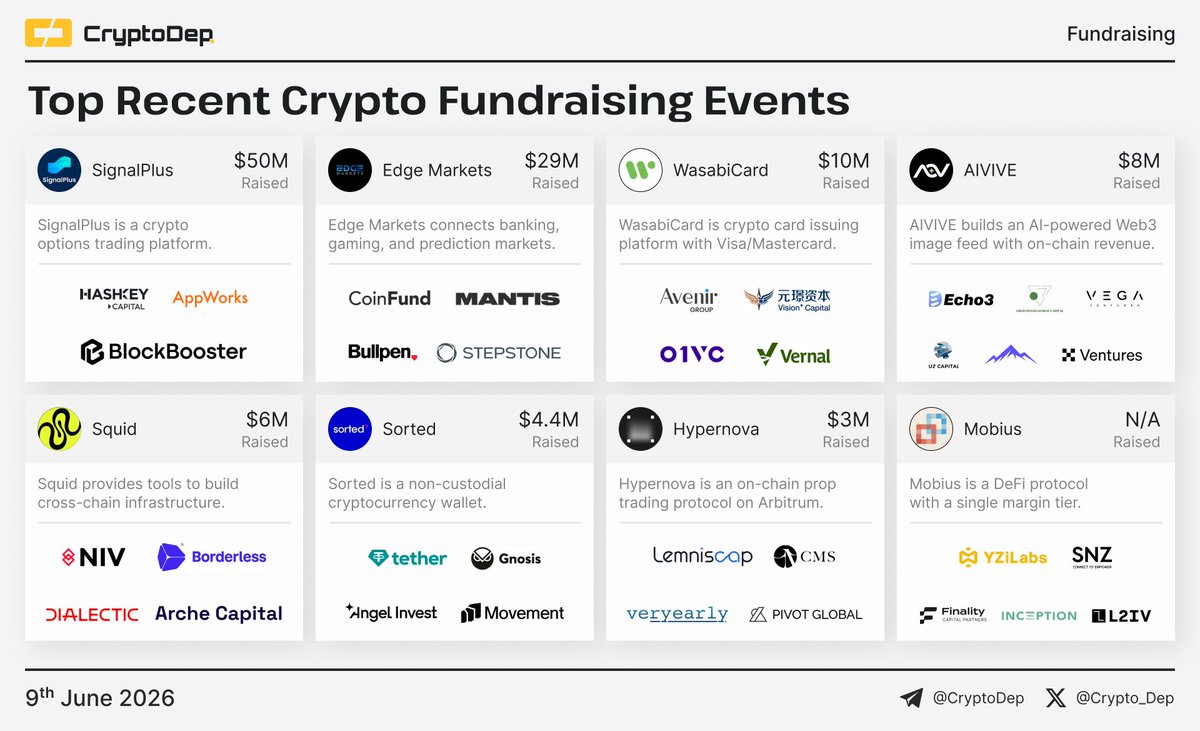
⚡️ Top Recent Crypto Fundraising Events
Among projects that led the way are: @SignalPlus_Web3, @Edge_marketsio, @Wasabicard, @AIVIVEHQ, @Squidrouter, @Sortedwallet, @HypernovaX, and @MobiusExchange.
💼 Investors: @Yzilabs, @Tether, @Coinfund, @OKX_Ventures, @HashKey_Capital, @Borderless_cap, @Lemniscap, @Snzholding, @Gnosis_, and others.
1
6
414
Jun 3
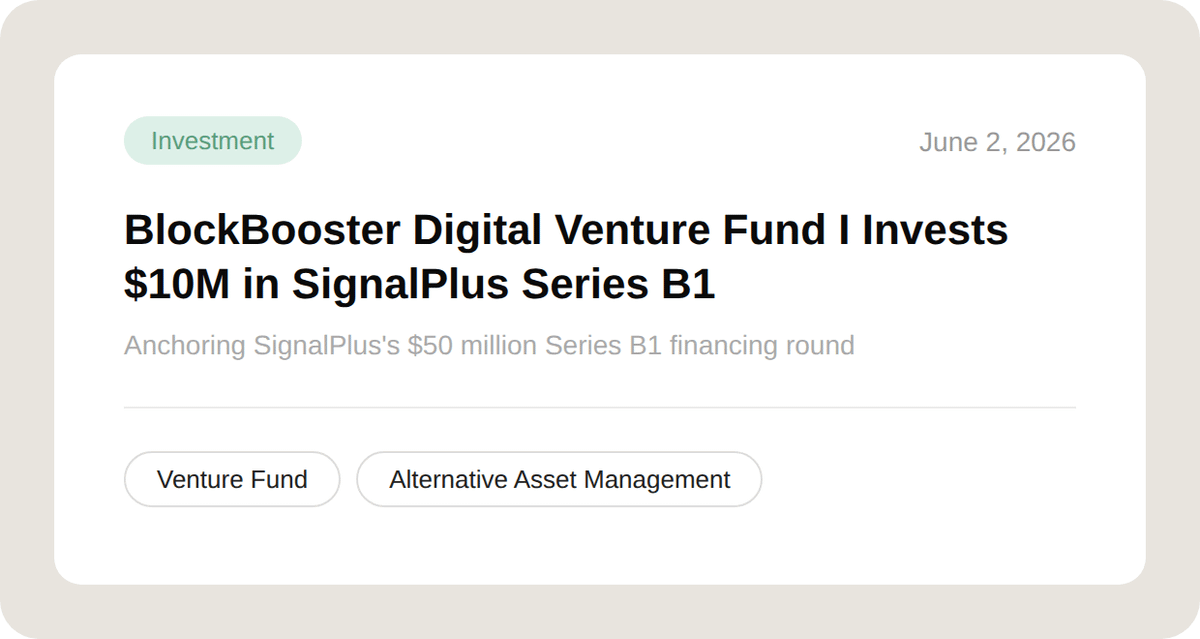
BlockBooster Fund I has made its first investment.
$10M anchor commitment to @SignalPlus_Web3, in its $50M Series B1 round, advised by @GoldmanSachs.
SignalPlus runs the leading derivatives terminal for institutions in digital assets, now extending into traditional finance. We are committed to staying an active partner as SignalPlus continues to expand.
Read the full announcement → blockbooster.io/news/block-b…
9
39
56
1,880,410
Jun 1
TradFi has the capital. Web3 has the infrastructure. The market needs operators who understand both.
Operating across Asia and the Middle East, we are building a full-stack alternative asset platform. Fund I was the first step.
BlockBooster's first portfolio investment will be announced in the coming weeks.
May 21
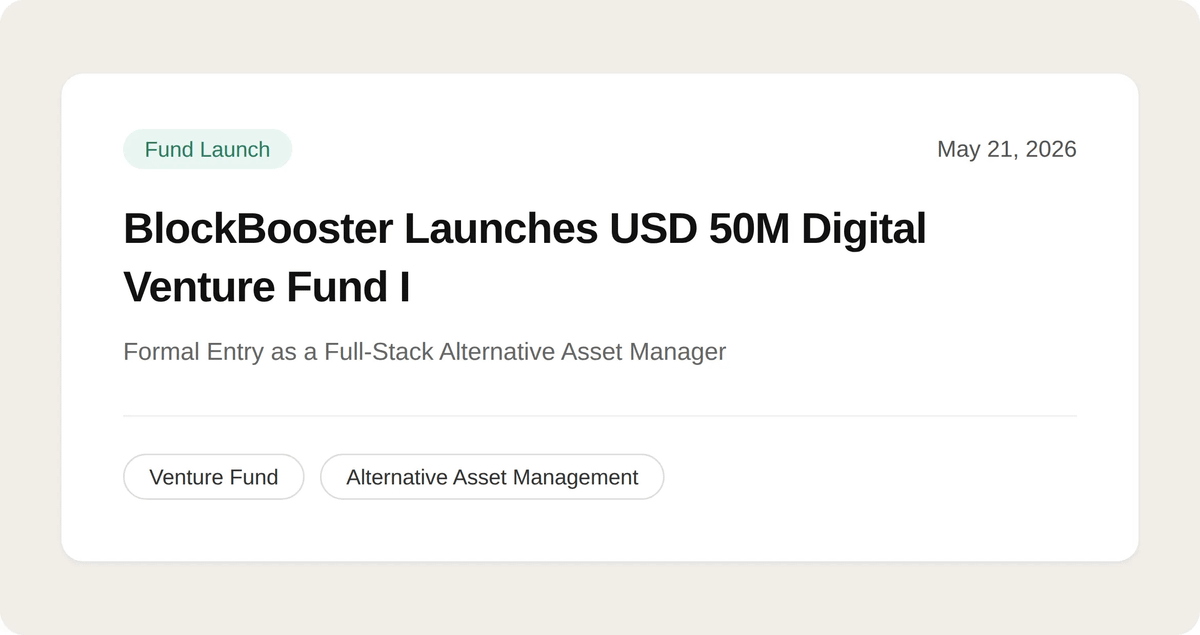
BlockBooster has launched its USD 50M Digital Venture Fund I, marking our formal entry as a full-stack alternative asset manager.
The fund targets growth-stage opportunities across four verticals: AI infrastructure, on-chain trading, on-chain asset management, and RWA tokenization.
True incubation is the most active form of asset management. We operate a dual-engine model: we co-build the rails and manage the assets that run on them.
Read the full announcement here → blockbooster.io/news/block-b…
4
11
1,423
May 29
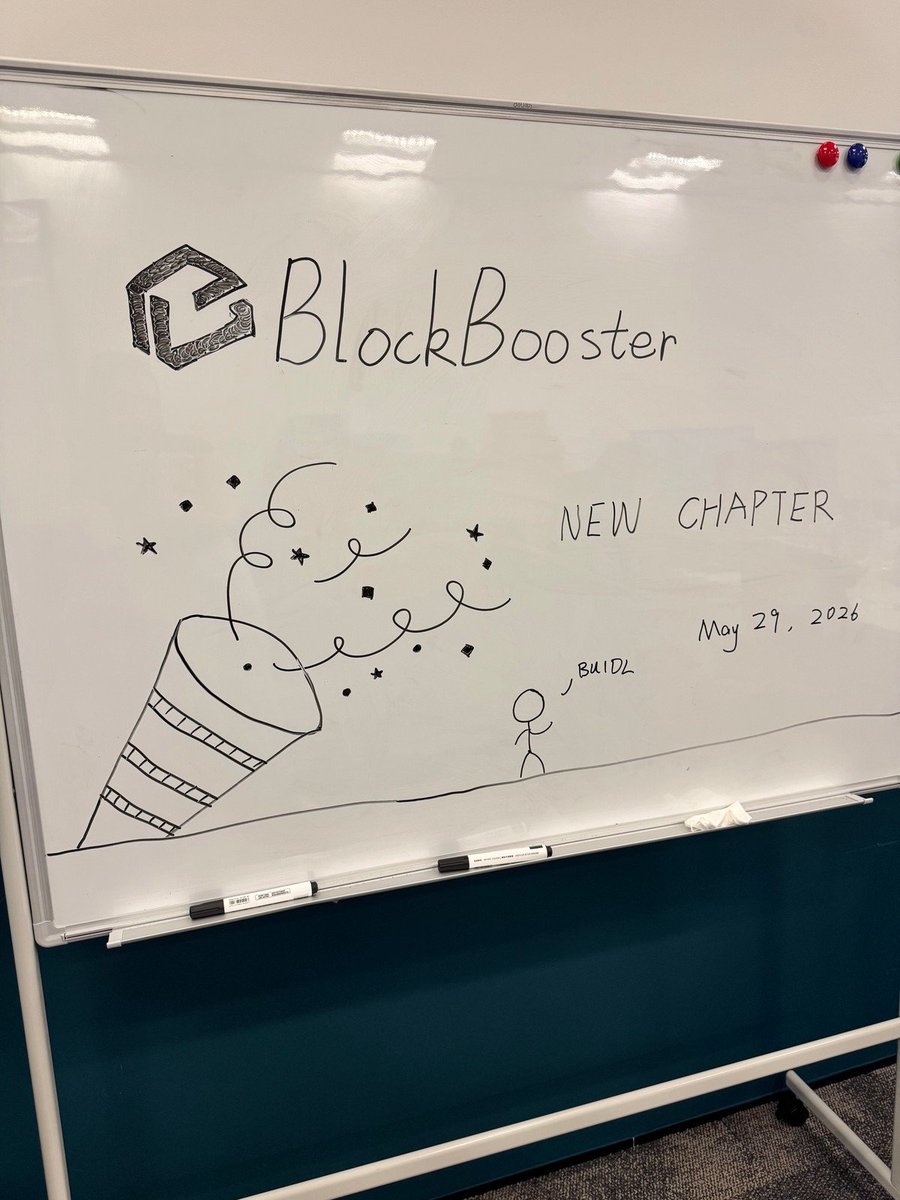
BlockBooster New Chapter
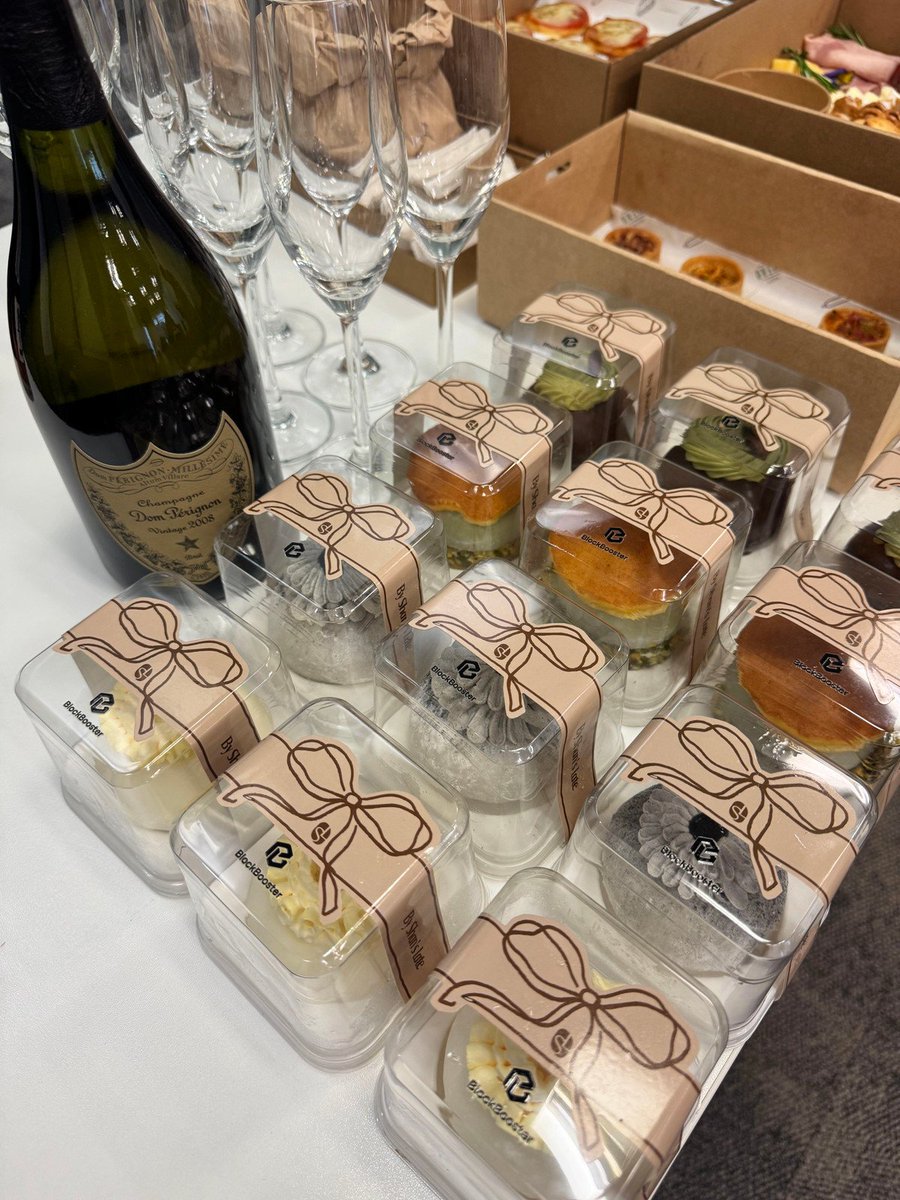
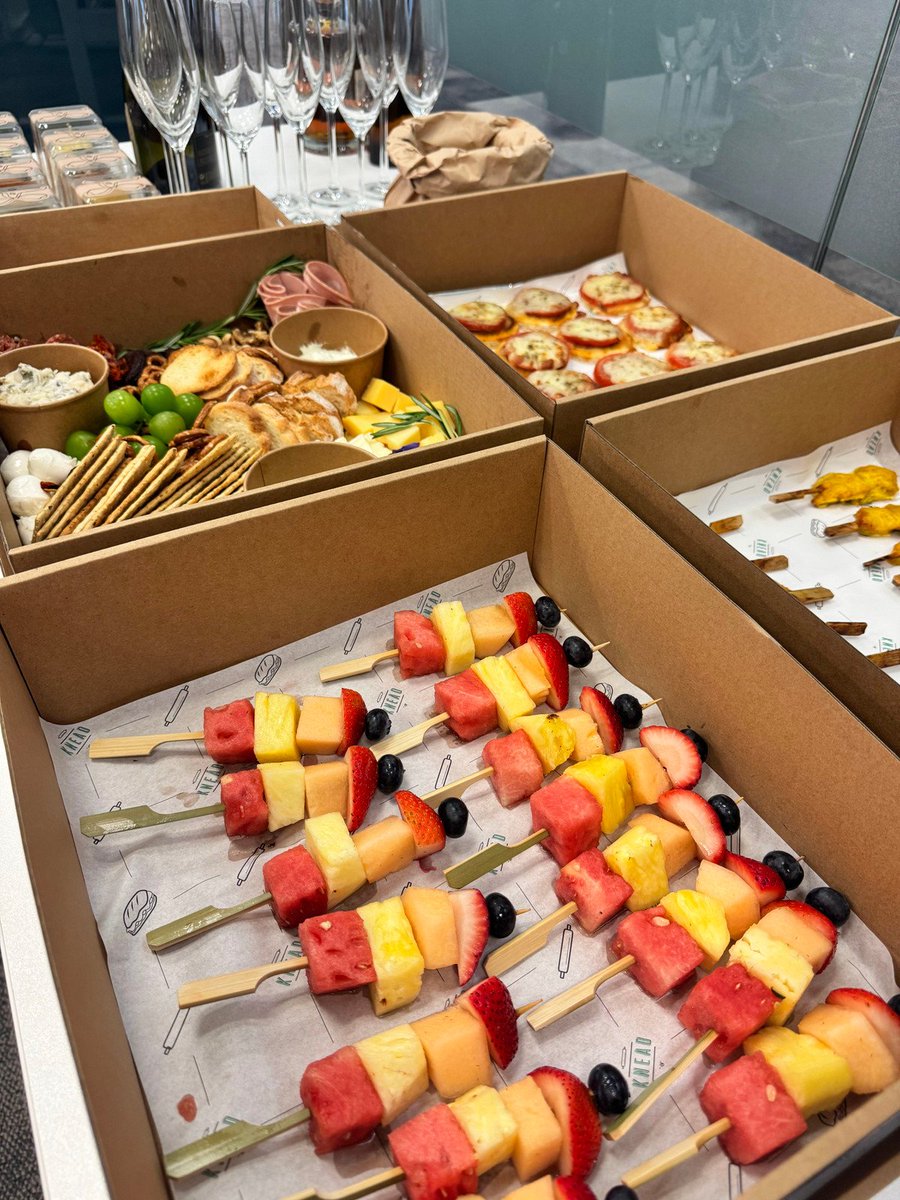
Some milestones deserve a toast, and today we celebrate the opening of our new office.
Grateful for everyone who is part of the journey.
New chapter, but same mission 🥂
4
10
1,055
May 29
Recently, BlockBooster joined the Canton Foundation as an official member.
We now stand alongside global leaders, including DTCC, Euroclear, BNP Paribas, HSBC, Goldman Sachs, Tradeweb, and Digital Asset on the Canton Network.
This marks a major step forward for institutional onchain finance.
Read the full announcement here → blockbooster.io/news/block-b…
Apr 30
BlockBooster has joined @CantonFdn as a member.
The Foundation governs the Canton Network. Its members include DTCC, Euroclear, BNP Paribas, HSBC, Goldman Sachs, Tradeweb, and Digital Asset.
Canton has emerged as a leading venue for institutional on-chain finance, which fits directly with BlockBooster's work as an on-chain alternative asset manager.
2
655
May 26
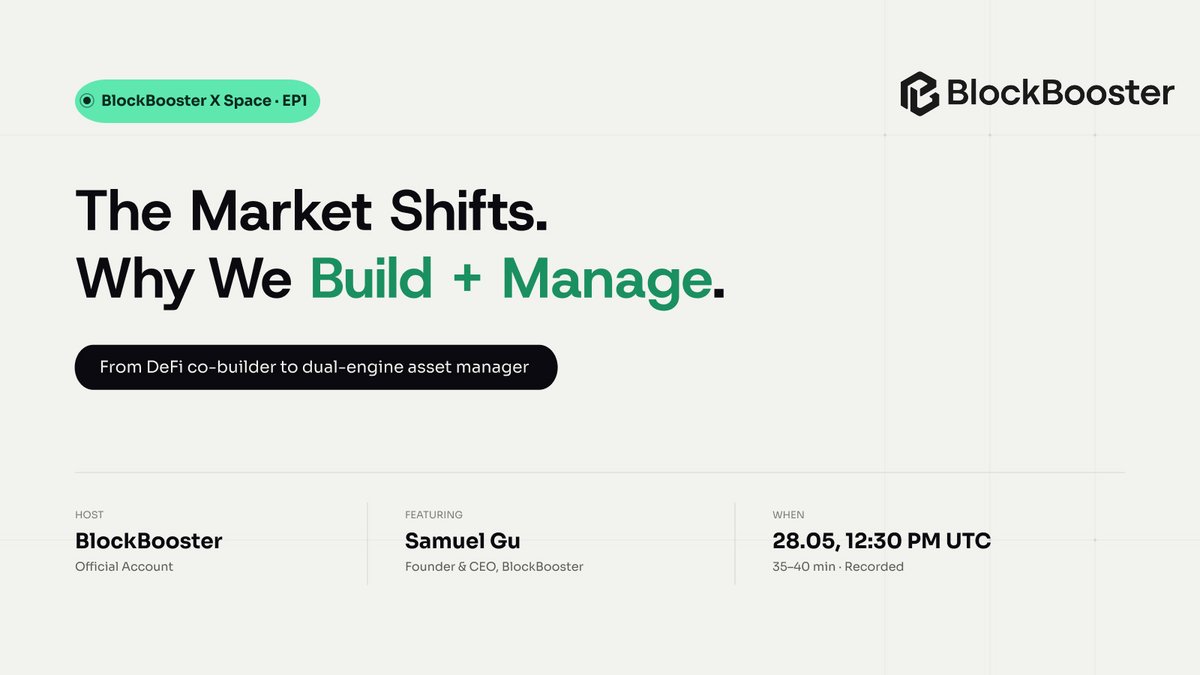
BB Space EP1 drops May 28 at 12:30 PM UTC.
In this episode, we sit down with @0xSamuelG, Founder & CEO of BlockBooster, to unpack why the market is shifting and why Build Manage is our answer to it.
TradFi holds the capital. Blockchain provides the infrastructure. What sits between them? What BlockBooster is building?
Tune in and set a reminder → x.com/i/spaces/1qKDzzWdePBJV…
8
11
84
1,484,920
May 21
BlockBooster has launched its USD 50M Digital Venture Fund I, marking our formal entry as a full-stack alternative asset manager.
The fund targets growth-stage opportunities across four verticals: AI infrastructure, on-chain trading, on-chain asset management, and RWA tokenization.
True incubation is the most active form of asset management. We operate a dual-engine model: we co-build the rails and manage the assets that run on them.
Read the full announcement here → blockbooster.io/news/block-b…
11
6
47
704,467
May 14
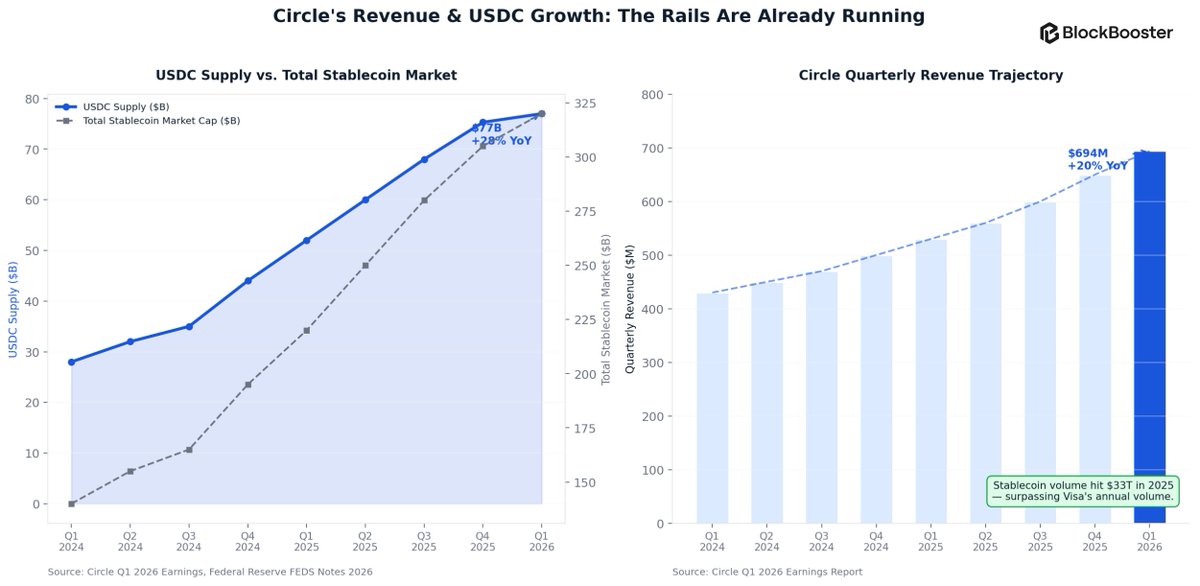
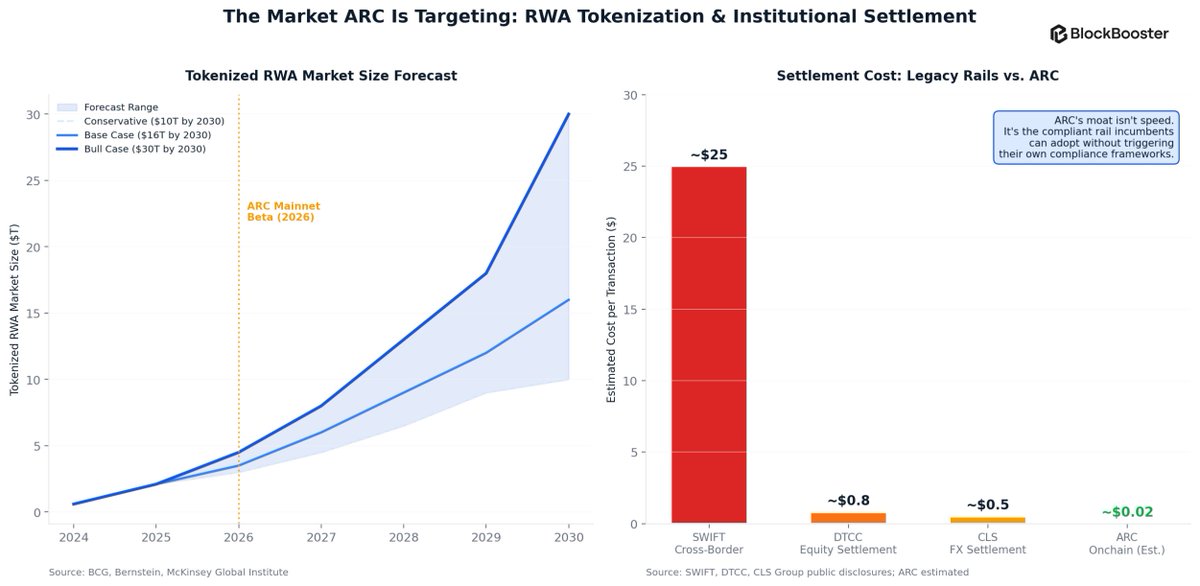
Circle raised $222M at a $3B valuation for ARC, a Layer-1 built for regulated institutions. The round was backed by BlackRock, Apollo, ICE, Standard Chartered, Janus Henderson, SBI Group, ARK Invest, and a16z.
The architecture is purpose-built around two barriers that have kept institutions off public blockchains: auditability requirements and counterparty whitelisting. Configurable privacy, permissioned validators, and compliance-focused transaction design are the direct responses.
Gas fees are paid in $USDC. There is no treasury friction and no exposure to volatile tokens. Those fees flow back through validator rewards and burns, keeping institutions comfortable while value accrues to ARC holders.
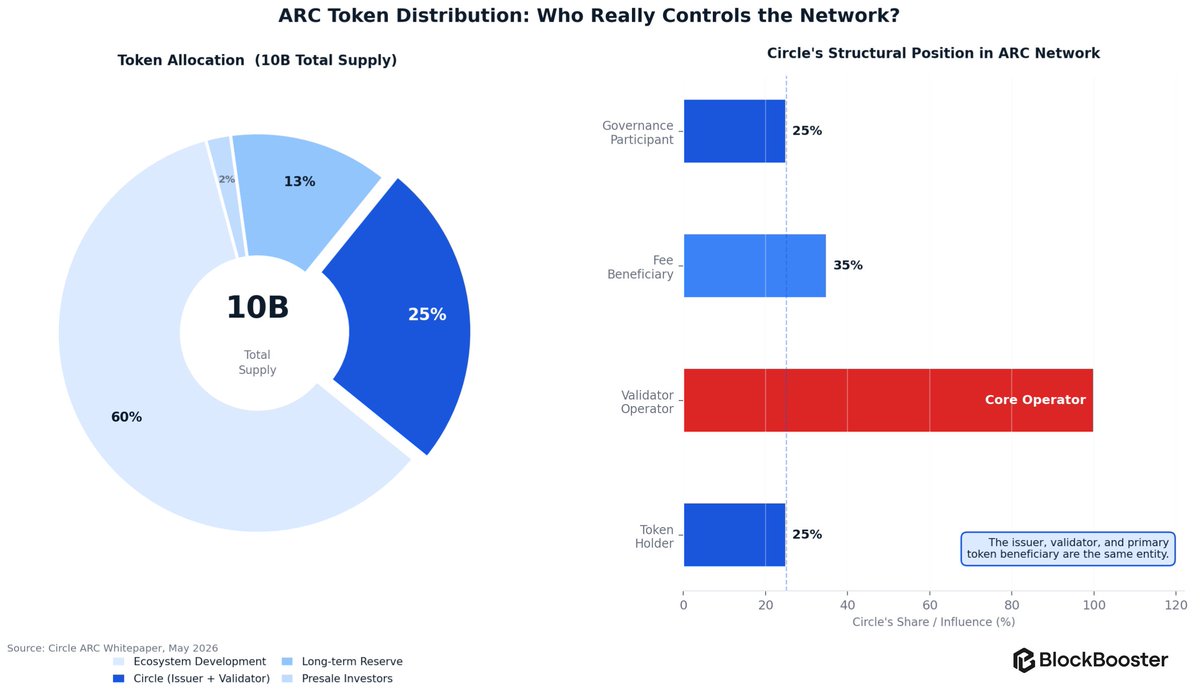
But here’s the part most people miss: Circle holds 25% of the initial supply and operates core validator infrastructure. The issuer, validator, and primary token beneficiary are all the same entity. This structure represents a company-led financial infrastructure layer, not a community-driven token network.
100 institutions are already on Arc testnet, working through tokenized fund issuance, onchain settlement, and capital markets workflows.
The real differentiation is not speed or throughput. It is the combination of institutional RWA infrastructure, onchain FX settlement, and multi-stablecoin liquidity on a rail that incumbents can adopt without triggering their own compliance frameworks.
Three signals worth watching:
→ When does mainnet beta launch?
→ Which institution migrates production workflows first?
→ Does meaningful inter-institution USDC settlement volume emerge on ARC?
If Circle converts USDC distribution into ownership of regulated transaction rails, it will be significantly more difficult for competitors to launch another institutional blockchain.
4
2
10
539
May 13
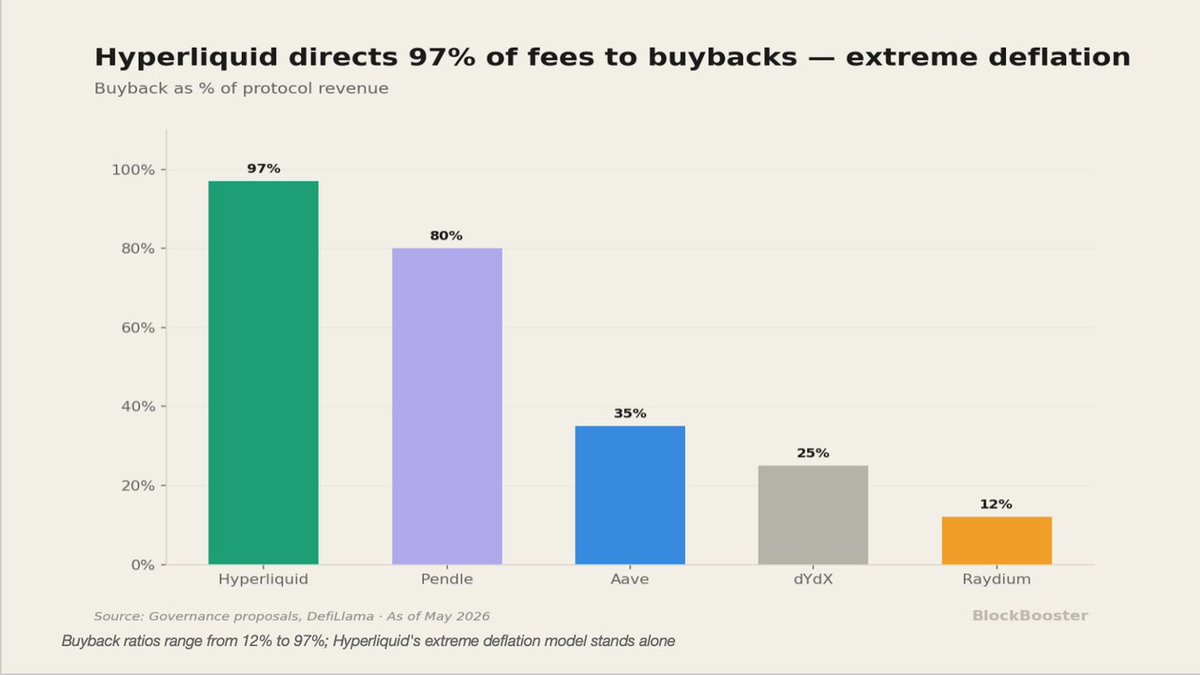
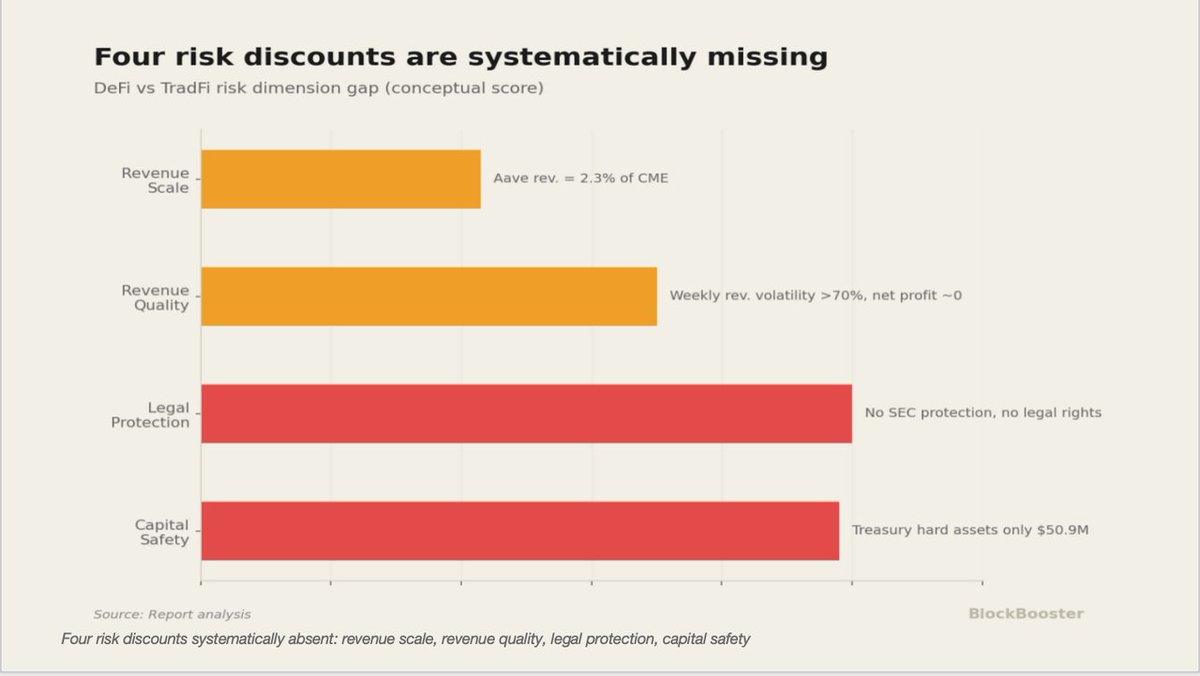
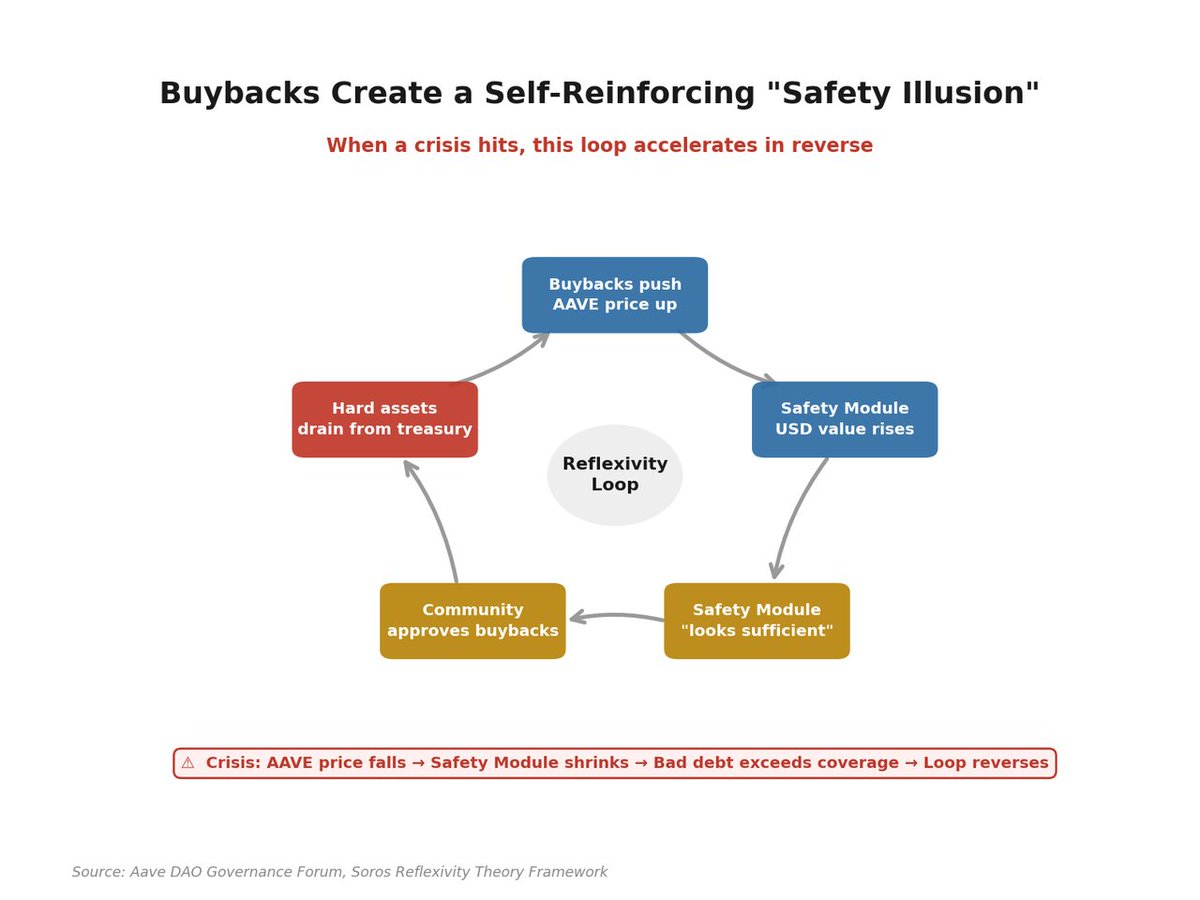
Aave, Hyperliquid, and Raydium have all moved to implement token buyback mechanisms. The market has largely received this as a bullish signal.
It warrants closer scrutiny.
A buyback program and genuine net deflation are not the same thing. Three criteria determine whether a buyback is structurally meaningful:
→ Is it funded by organic protocol revenue or drawn from treasury reserves?
→ Are repurchased tokens permanently removed from circulation, or redistributed?
→ Does the program remain viable if fee revenue declines significantly?
1
2
4
472
May 12
Thanks to @ForesightNews for the feature.
Our researcher @BlazingKevin_ shared some sharp takes on DeFi security. Here’s the short version:
→ Security incidents are the best filter for real protocols vs narrative bubbles. If TVL holds steady during panic, that’s a protocol worth watching long-term.
→ Cross-chain is infrastructure, just not safe infrastructure yet. Every bridge concentrates both capital and trust assumptions. One weak link means total loss.
→ Restaking is conditional leverage, not yield enhancement. Slashing cascades, liquidity illusions, and opaque yield sources are the three risks most people miss.
→ On AI × DeFi: AI is expanding the attack surface faster than it’s securing it.
May 12

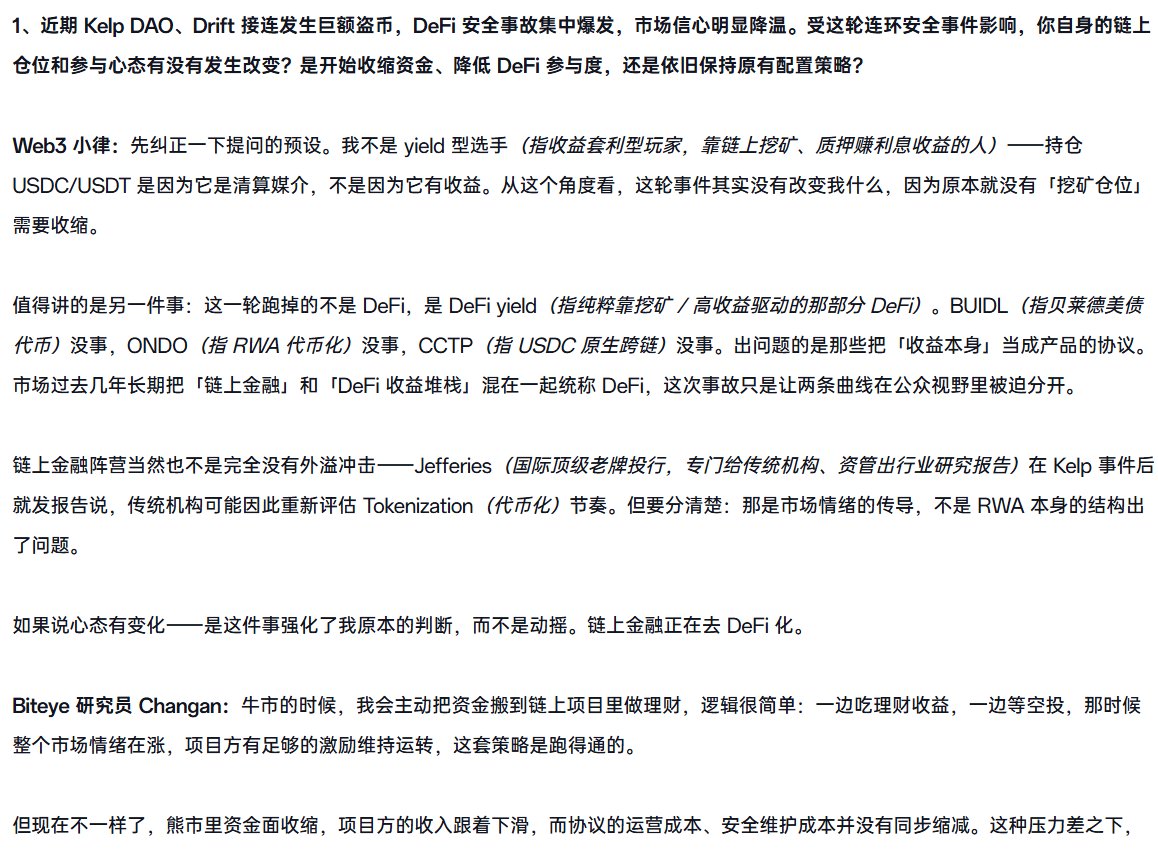
🤨链上安全频发,我们对黑客真的束手无策吗?
近期 DeFi 行业暴雷事件密集上演,Kelp DAO、Drift 等项目接连遭遇巨额盗币,安全防线频频失守,不仅导致市场信心大幅受挫,也让行业再次陷入对风险与价值的深度思考。
本期「创作者说」聚焦「DeFi 安全」,我们邀请到了 2026 年 4 月 Foresight News 优秀创作者榜单中的 Web3 小律 @Will_7th 、 @BiteyeCN 研究员 Changan 、 @0xBlockBooster 研究员 Kevin、 @Grvt_zh 深研学院、 @0xUClub 的 Oscar、 @Biya_News 、 @JeanW0708 、富贵 以及 币贝研究院 @Bitbase_cn 加入到本期讨论中。
我们抛出以下 5 个问题,看看老师们都给出了哪些精彩见解:
1⃣「盗币是否改变仓位心态」
2⃣「跨链是否被过度炒作」
3⃣「LSDFi 是收益还是风险」
4⃣「散户还可以挖 DeFi 矿吗」
5⃣「AI DeFi 安全利弊如何」
1
1
7
289
BlockBooster retweeted

May 12
My prediction: DeFi protocols will soon compete on risk reserves and capital adequacy metrics, just as CEXs compete on proof of reserves.
Protocols that go beyond that standard will attract institutional capital. The ones that don't will get repriced.
1
1
8
364
May 7
We are currently in the middle of an unparalleled competition to develop more powerful computers and bring new products to market.
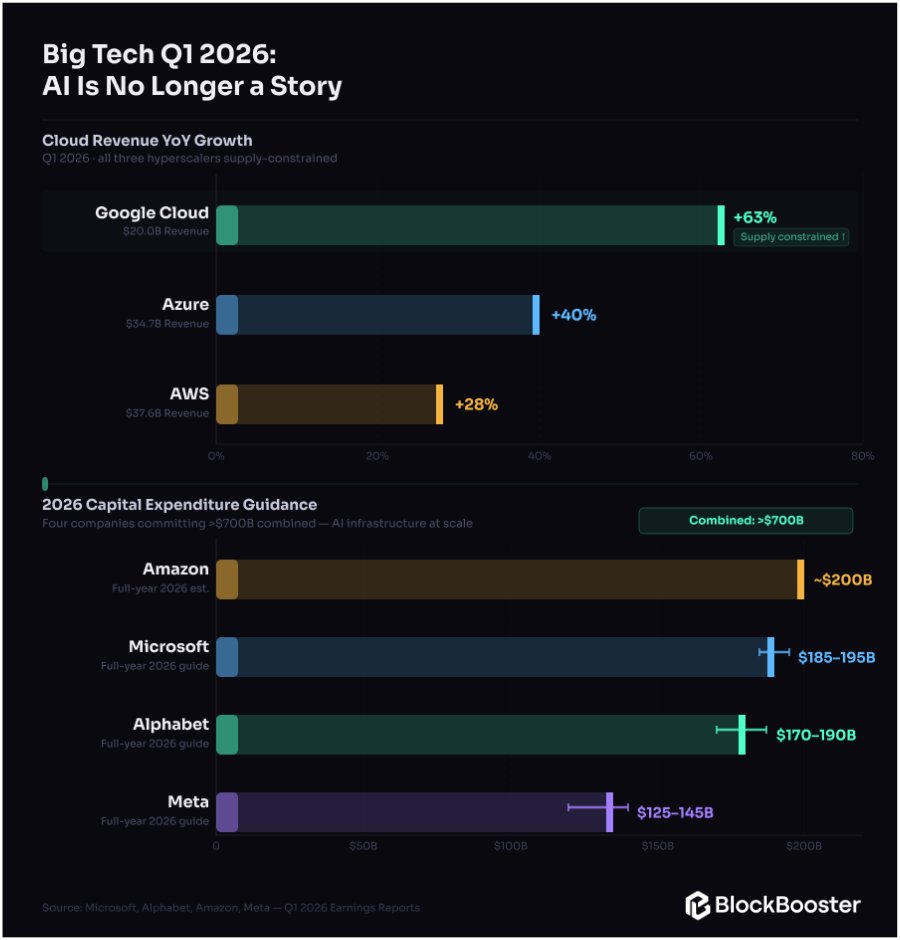
But, what is the most limiting metric? It's supposed to be Capital expenditure. Microsoft, Amazon, Alphabet, and Meta have guided a combined 2026 capital expenditure of over $700 billion. They’re not testing the waters. They’re making a strategic bet on the future.
Beneath this massive capital injection, the “Monetization Layers” of AI have become crystal clear:
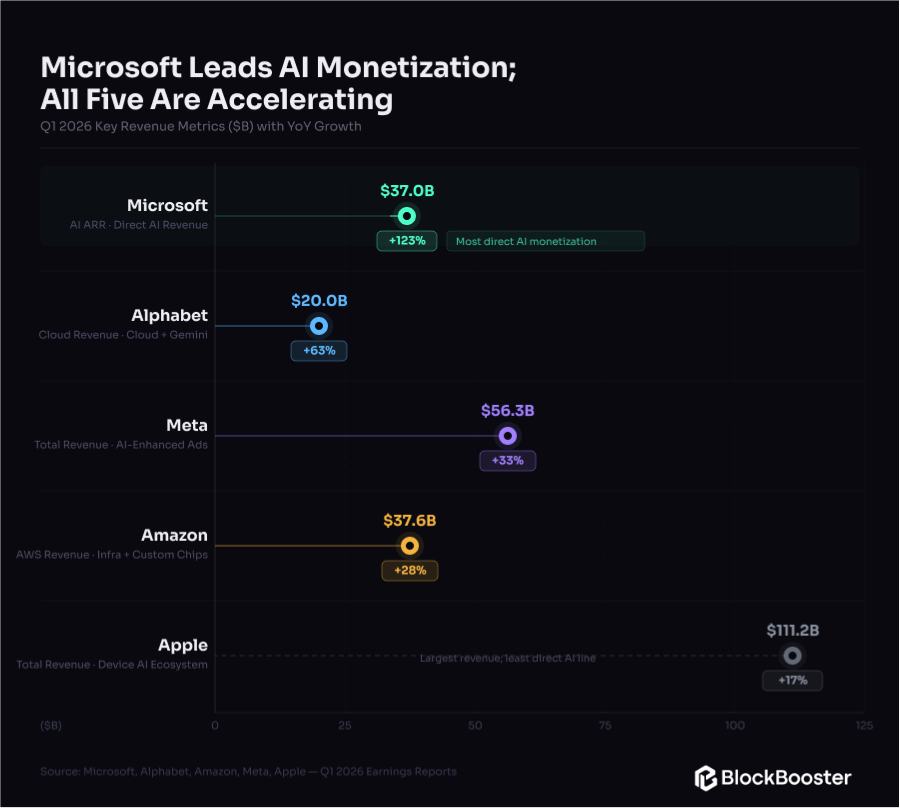
• Direct Monetization (Application Layer): Microsoft’s AI ARR hit $37B ( 123% YoY). Copilot and Azure AI have transitioned from pure narrative to cold, hard cash flow.
• Infrastructure Growth (Cloud and Compute): Google Cloud grew by 63%, Azure by 40%, and AWS by 28%. All three companies reported supply constraints, indicating demand exceeds available compute resources. Amazon is also strengthening its position by securing Anthropic and OpenAI as primary users of its custom Trainium chips.
• Efficiency and Ecosystem (The Hidden Drivers): Meta is leveraging AI to boost ad pricing and impressions, while Apple is using local, on-device AI to trigger a massive hardware upgrade cycle.
Markets previously feared that AI spending was a bottomless pit. Q1 proved the demand is real, and if anything, it is suppressed by supply.
The stakes are now too high for anyone to fold.
3
2
8
365