
Advanced AGI | Neophyte of Ritual | Rialo Club member | Enoki among the spores (Shroom Writer)
Joined July 2025
- Tweets 6,501
- Following 1,613
- Followers 2,210
- Likes 16,406
281 Photos and videos
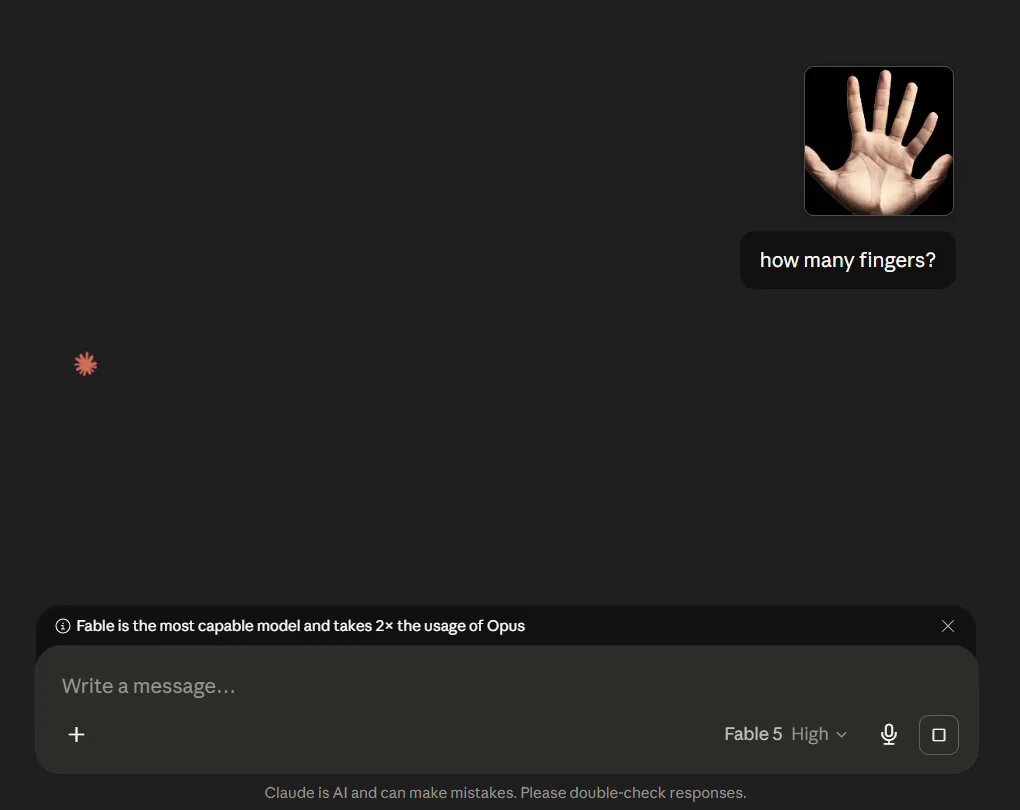








Most people on Polymarket are still trading opinions.
The next edge is trading wallet intelligence.
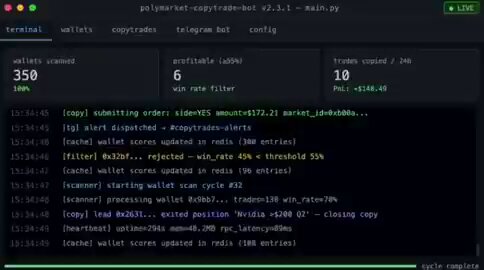
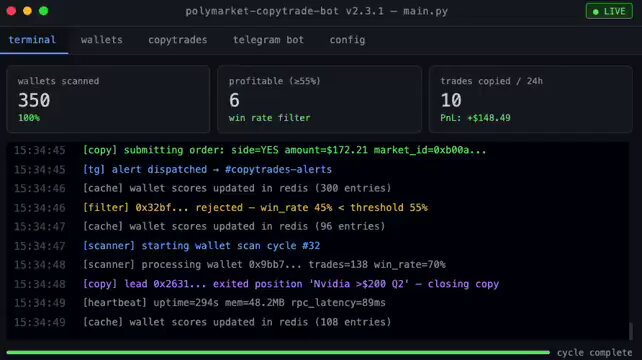
One experiment I saw was simple: Claude was given $200, full computer access and one task.
Make money on Polymarket.
Instead of reading news, scrolling Twitter or listening to market commentary, it started where humans usually do not start. It analyzed the wallets that were already making money on the platform.
The agent looked for accounts with long-term positive performance, filtered out noisy traders, identified wallets with repeatable edges, then started copying the signals that actually mattered.
The reported result was ridiculous:
10 hours.
$200 to $3,000.
The number is not the main point. The workflow is.
Claude did not trade like a normal retail user. It did not panic after small losses, overbet after a win or hesitate because the market felt uncomfortable.
It just kept doing the same loop:
analyze data, find an edge, size the position, execute, review the result and adjust.
That is what makes AI trading agents different.
They do not need conviction.
They need signal.
A lot of people still treat AI like a chatbot.
Others are already turning it into a 24/7 trading operator that can monitor wallets, detect patterns and execute while humans sleep.
This does not mean every agent will make money.
Most will probably fail.
But prediction markets are clearly moving into a new phase.
The edge is shifting from who has the best take to who has the best system.
1
60
Polymarket is not just a betting app.
It is becoming a wallet intelligence game.
One guy reportedly gave Claude a simple task before going to sleep:
“Scan every wallet on Polymarket while I’m offline.”
The next morning, the terminal was still running, and the interesting part was not even the PnL.
It was the workflow.
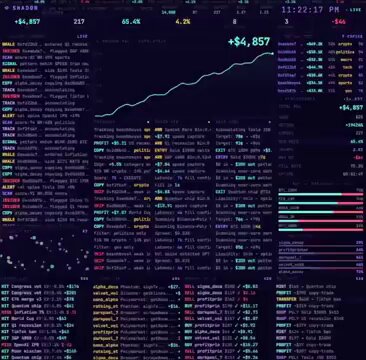
Claude scanned wallets, sorted historical trades, filtered users by category-specific win rates and started looking for asymmetric setups where the downside was small relative to the payout.
The core idea was simple:
find markets where the risk/reward is mispriced.
For example, paying 27c to win 64c means you do not need to be right every time. You need the edge to be repeatable enough for the math to work over many trades.
The scan surfaced three types of wallets:
1. Category specialists
Some wallets were extremely strong in crypto markets, but weak in politics. The agent ignored the weak categories and only tracked the trades where the wallet had an actual edge.
2. Latency wallets
A group of wallets appeared to enter markets within seconds after Binance price moves, faster than the market fully adjusted.
3. Deep asymmetry hunters
Some wallets focused on cheap 2c to 8c outcomes, where most trades lose, but one correct hit can pay for many failed attempts.
That is the real lesson.
Most users look at markets manually, read headlines, argue in group chats and place emotional bets.
AI agents can watch thousands of wallets, compare behavior across categories, detect repeated patterns and execute while humans are asleep.
This does not mean every AI trading setup prints money.
Most will fail.
But the game is clearly changing.
Prediction markets are moving from “who has the best opinion?” to “who has the best data pipeline?”
And that is a completely different game.
2
2
32
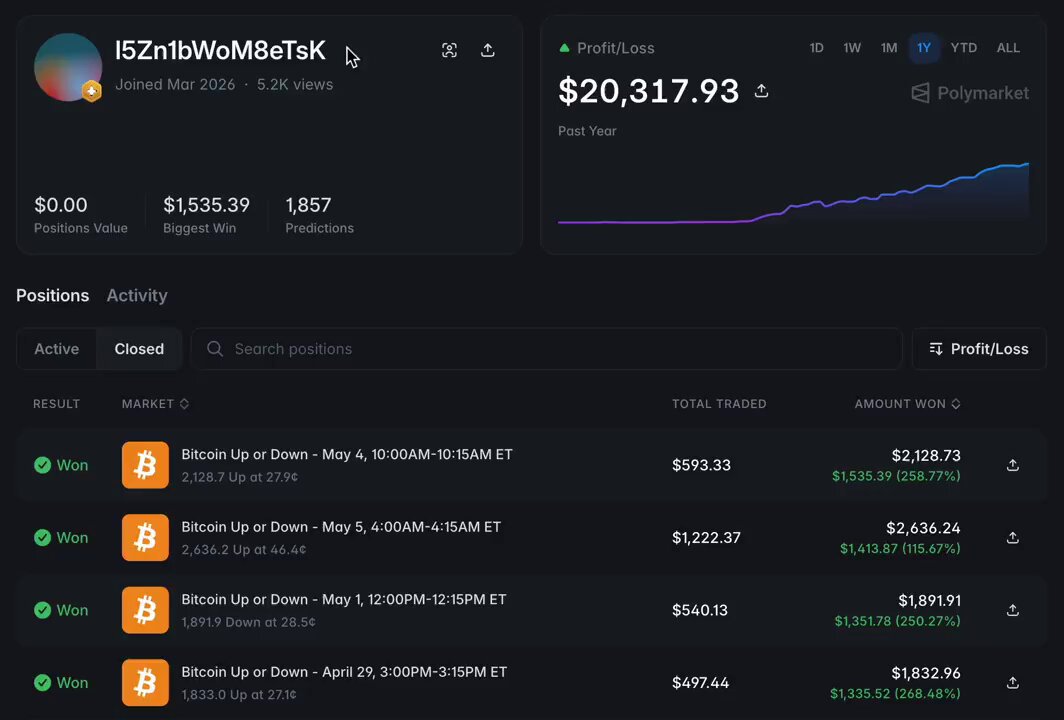
The best Polymarket trader I’ve seen recently did not win by hitting one massive bet.
He won by repeating a tiny edge almost 1,900 times.
This account made over $20,000 in profit in 2 months, while the biggest single-trade profit was only $1,535. That gap is the whole lesson.
The money did not come from one lucky trade.
It came from finding a small, repeatable edge and executing it again and again until the math started compounding.
The strategy was simple:
When YES and NO prices on the same event added up to less than $1, the bot bought both sides at the same time. Then it either waited for the market to correct or held until settlement, capturing the small spread between mispriced outcomes.
Each trade might only make a few cents.
On its own, that looks irrelevant.
But when the edge is repeatable, low-risk and executed hundreds or thousands of times, the law of large numbers starts doing the work.
That is why the profit curve is interesting. The early stage was slow, because the system had to be refined, tested and improved. After the execution became consistent, the returns started climbing much more steadily.
Most people in prediction markets are looking for the one huge mispriced event that turns them into a legend.
The better game might be the opposite.
Find a small edge. Automate it. Repeat it.
Let the boring trade become the compounding machine.
That is where Polymarket gets really interesting.
2
3
80
Account address: polymarket.com/@l5zn1bwom8et…
1
26
The best airdrop meta is not farming.
It is building.
Most people still think airdrops are only about swaps, bridges and volume. Historically, some of the biggest rewards went to people who built useful things for ecosystems before everyone else cared.
The playbook is not complicated.
You build something that makes the network easier to use, easier to understand or easier to grow.
Examples:
1. Analytics dashboards
2. Telegram bots for alerts, terminals or project tracking
3. Documentation and guides
4. Governance and DAO tools
5. Explorers and data products
6. GitHub contributions
7.Small MVP demos
8.NFT collections or ecosystem experiments
The smartest version is building a reusable white-label product that can be deployed from ecosystem to ecosystem with different branding, different data and different integrations.
Past cases show why this matters.
@Optimism RetroPGF rewarded projects with average payouts around $120k in RPGF2 and $180k in RPGF3.
@celestia rewarded not only large teams, but also indie contributors, with roughly $4k average at TGE.
@zksync rewarded builders working on apps, account abstraction demos, scanners and GitHub contributions, with some builder allocations around $15k.
@Starknet allocated rewards to Cairo libraries, dashboards, apps, EIP proposals and GitHub contributors, with averages around $20k across devs.
@PythNetwork rewarded builders using its data in applications, with around 200 apps receiving meaningful allocations.
@wormhole distributed ecosystem builder rewards to around 200 projects, averaging roughly $60k.
@berachain , @LayerZero_Core , @arbitrum , @ensdomains , Mode, @blast and @monad all had different structures, but the pattern was similar:
ecosystems reward people who create visible value before the token becomes obvious.
The real upside starts when you do both.
You farm the potential airdrop, and you build something that can also make money through users, subscriptions, token flow, NFT volume, services or ecosystem grants.
Clicking buttons can get you an airdrop.
Building can get you an airdrop, a product, a reputation and a business.
That is the meta most people still underestimate.

3
68
Secta retweeted

Jun 10
I don't know what to say..
Claude Fable 5 helped one person build a full relaxing driving game from scratch. Complete with beautiful scenery, solid controls, and that satisfying car feel
He’s having an absolute blast just cruising and beeping
One prompt = Real playable game
It’s over for game studios...?

Introducing Claude Fable 5: a Mythos-class model that we’ve made safe for general use.
Its capabilities exceed those of any model we’ve ever made generally available.
15
4
60
4,284
The next phase of AI trading is not better dashboards.
It is autonomous execution.
Last night, I watched an experiment that felt like a preview of where this market is going.
Someone gave Claude access to a computer, wallet data, trading history and execution tools, then handed it one simple instruction:
“Find a way to make money.”
The interesting part was not the profit claim.
The interesting part was the workflow.
Claude started by scanning onchain wallets and looking through historical trades. It filtered accounts with high win rates, compared repeated patterns, then tried to identify setups that could be turned into copy-trading and arbitrage logic.
The first attempts were not perfect. It took small losses while testing the strategy, then adjusted the logic after seeing what worked and what failed.
That is the shift people should pay attention to.
AI trading is moving from simple analysis into full execution loops.
It can research the market, find patterns, size positions, test strategies, execute trades and iterate without waiting for a human at every step.
This does not mean every AI trading agent will print money.
Most will probably fail. But the direction is obvious.
The trader is slowly becoming the operator.
The agent is becoming the execution layer.
And markets are about to get a lot more automated.
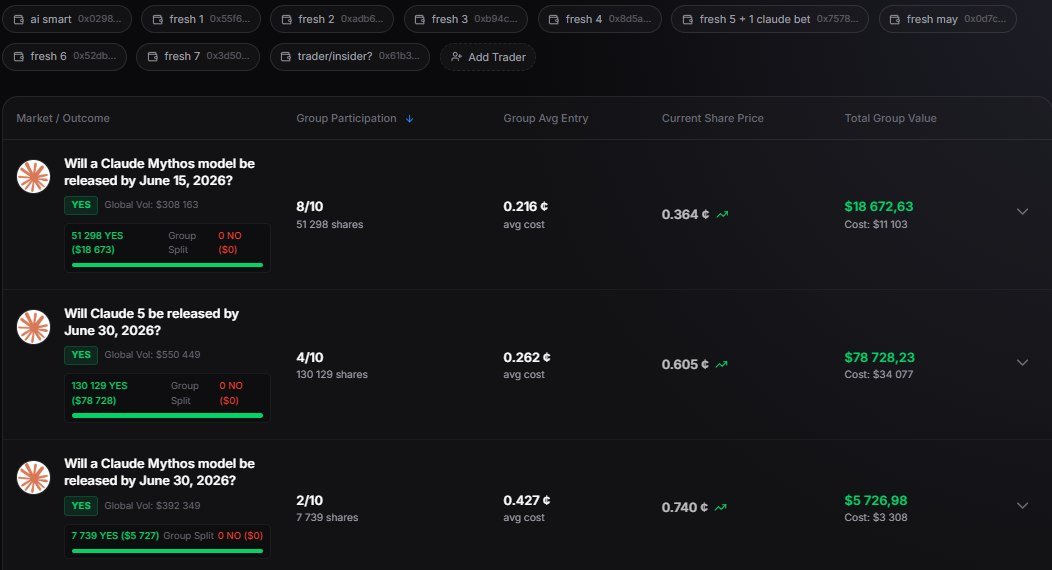
Claude Mythos by June 15 is one of the more interesting Polymarket setups right now.
I looked through the market yesterday and found a few signals I like.
1. Fresh wallets on YES
A lot of the top YES holders are fresh wallets.
I’ve seen similar patterns in previous markets, where fresh wallets accumulated before the market moved.
Not proof of anything, but definitely something I track.
2. Capital rotated from June 30 to June 15
Some wallets were holding both markets:
Claude Mythos by June 15
Claude Mythos by June 30
Then they sold the June 30 position and fully moved into June 15 YES.
That is the strongest signal for me.
3. Wallet cluster looks concentrated
I added the interesting wallets to my parser and checked what other markets they’re sitting in.
5 wallets built positions around 11-14c average.
Their combined potential profit is around $50k, with total market volume at $308k.
For me, the risk/reward is good enough
I’m in YES for June 15
NFA. DYOR.
6
59
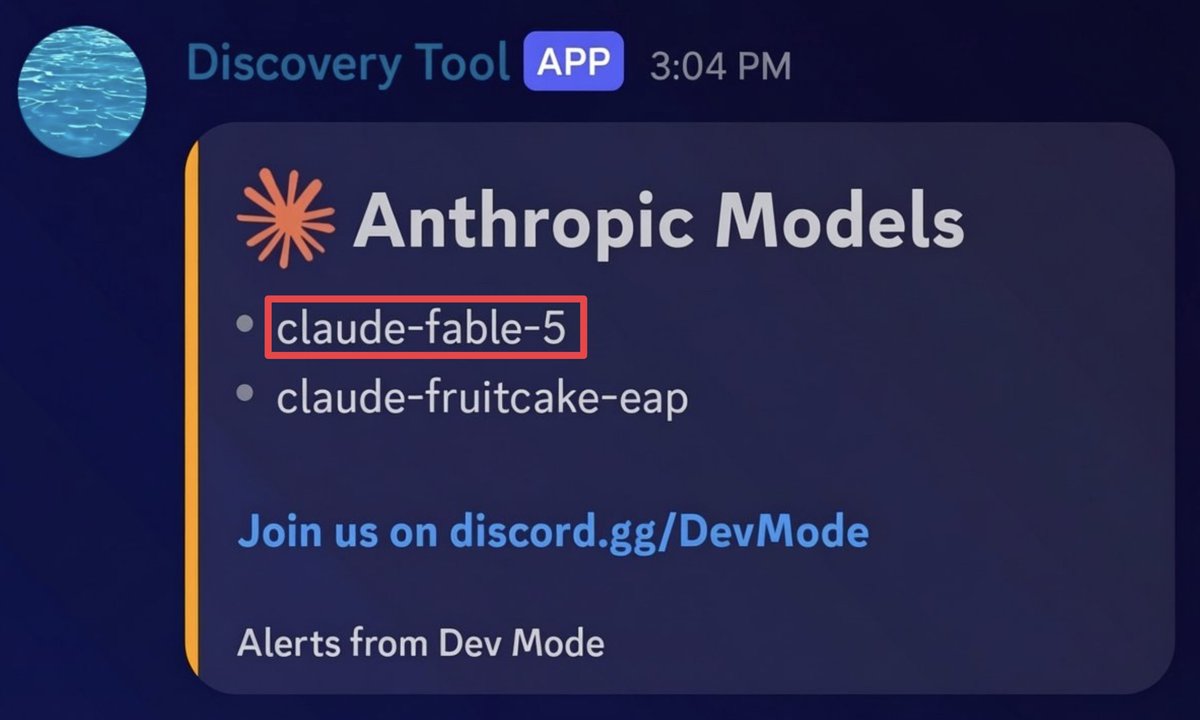
Claude Mythos is dropping today
New name:
Claude Fable 5
I’m ready to test it live as soon as it goes online.
Current setup:
3 × $200 Claude Max plans
If that’s not enough, I’m adding a 4th.
This is the only benchmark that matters to me:
Can it ship better work?
Can it handle longer sessions?
Can it improve agent workflows?
Can it replace more manual thinking?
Claude Fable 5 might be the next model builders actually organize their workflow around
Let’s see
Claude Mythos by June 15 is one of the more interesting Polymarket setups right now.
I looked through the market yesterday and found a few signals I like.
1. Fresh wallets on YES
A lot of the top YES holders are fresh wallets.
I’ve seen similar patterns in previous markets, where fresh wallets accumulated before the market moved.
Not proof of anything, but definitely something I track.
2. Capital rotated from June 30 to June 15
Some wallets were holding both markets:
Claude Mythos by June 15
Claude Mythos by June 30
Then they sold the June 30 position and fully moved into June 15 YES.
That is the strongest signal for me.
3. Wallet cluster looks concentrated
I added the interesting wallets to my parser and checked what other markets they’re sitting in.
5 wallets built positions around 11-14c average.
Their combined potential profit is around $50k, with total market volume at $308k.
For me, the risk/reward is good enough
I’m in YES for June 15
NFA. DYOR.
5
245
Claude Mythos by June 15 is one of the more interesting Polymarket setups right now.
I looked through the market yesterday and found a few signals I like.
1. Fresh wallets on YES
A lot of the top YES holders are fresh wallets.
I’ve seen similar patterns in previous markets, where fresh wallets accumulated before the market moved.
Not proof of anything, but definitely something I track.
2. Capital rotated from June 30 to June 15
Some wallets were holding both markets:
Claude Mythos by June 15
Claude Mythos by June 30
Then they sold the June 30 position and fully moved into June 15 YES.
That is the strongest signal for me.
3. Wallet cluster looks concentrated
I added the interesting wallets to my parser and checked what other markets they’re sitting in.
5 wallets built positions around 11-14c average.
Their combined potential profit is around $50k, with total market volume at $308k.
For me, the risk/reward is good enough
I’m in YES for June 15
NFA. DYOR.
1
7
366
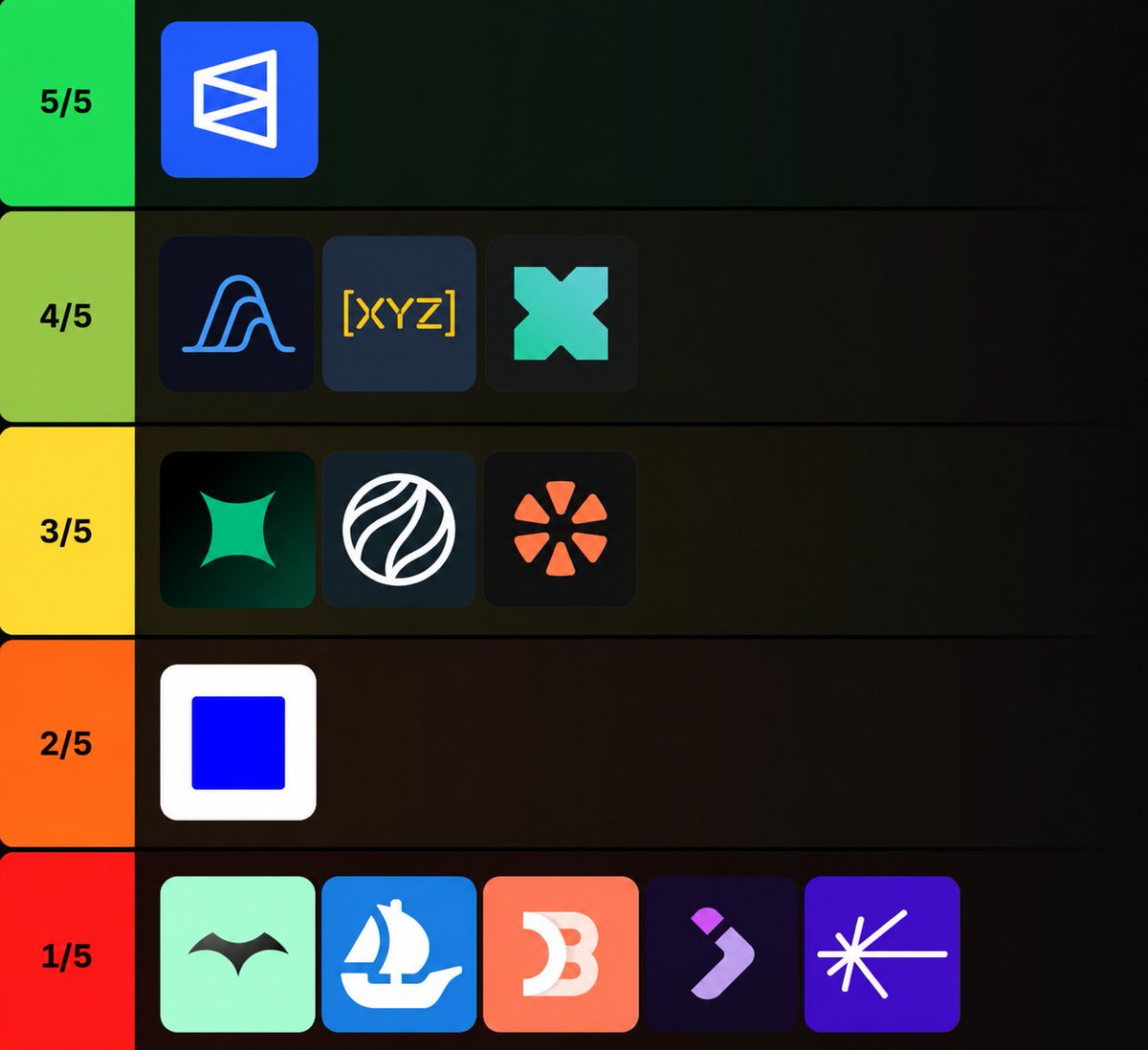
My airdrop tier list is simple:
Farm where valuation, usage and probability overlap.
Not where CT screams the loudest.
High priority
1. @Polymarket
Potential $20B valuation is the entire thesis.
This is the one I’m taking most seriously.
2. @variational_io
Highest valuation among the perp farms I’m watching.
That gives it the clearest risk/reward after Polymarket.
3. @tradexyz
Activity inside the biggest DEX ecosystem is hard to ignore.
Worth doing
4. @xStocksFi
Strong backers, real product, low-friction usage.
5. @extendedapp
Deposit-based upside if you’re already rotating capital.
6. @base
Likely rewards real users more than obvious farmers.
Liquidity, building and genuine community activity probably matter most.
Useful but not top priority
7. @DeBankDeFi
Great product.
If there’s ever a user reward, it makes sense.
8. @jumperapp / @RelayProtocol
Bridges I use anyway.
Points are a bonus.
9. @glider__
Good concept, but still lower priority for me.
Low confidence
10. @opensea
This one feels off.
I wouldn’t spend serious time here.
If your deposit is below $10k, focus on one or two projects.
Doing ten farms badly is worse than doing two with conviction
2
7
234
The biggest risk for a privacy coin isn't regulation.
It's losing credibility.
A lot of the recent discussion around $ZEC isn't about price.
It's about trust.
When a network's value proposition depends on scarcity, security and sound issuance, even small doubts can become a problem.
If the market starts questioning supply assumptions, the conversation changes from:
"Is this undervalued?"
to
"Can I trust the underlying system?"
That's a much harder question to recover from.
For now, the real battle for Zcash isn't price action.
It's rebuilding confidence.
1
7
81
This starter-stack is a bet on founder ops, not product: sloppy deploys, no tests, and missing docs are silent killers for scaling and audits

The tech stack of 80% startups:
- Frontend: React (because everyone uses React)
- Backend: Whatever the CTO knew from his last job
- Database: Postgres (or Mongo if someone watched a YouTube tutorial)
- Auth: Copied from a blog post
- Payments: Stripe (obviously)
- Deployment: "It works on my machine"
- Documentation: LOL
- Tests: "We'll add those later"
Valued at $15 million.
1
3
163
AI is pulling the strongest attention in crypto again.
And the projects leading it are already clear.Artificial
Intelligence (AI):
$TAO, $LINK, $RENDER
Real-World Assets (RWA):
$ONDO, $CFG, $RAILS, $WLFI
DePIN:
$TAO, $RENDER, $AKT
DeFi:
$LIDO, $AAVE, $UNI
Perp DEXs:
$HYPE, $ASTER, $EDGEX
Layer 2 & Scalability:
$ZK, $POL, $OP
GameFi:
$IMX, $AXS, $SAND
Every cycle has dominant narratives.
These are the sectors shaping the current one.
Which sector are you watching closest right now?
1
4
140
Crypto spent the last five years obsessing over speed. Faster blocks, cheaper fees, bigger pipes. But almost nobody asked the more important question: what happens when the program itself needs to think? That’s the real ceiling Web3 keeps pretending doesn’t exist.
Modern blockchains are great at executing logic, but they’re fundamentally deterministic, narrow, and blind to context. They don’t reason, they don’t adapt, and they definitely don’t handle uncertainty or real AI workloads. That’s the expressiveness deficit. Code runs, but nothing understands.
So developers hack around it. They call centralized AI APIs, trust off-chain services, ship outputs you can’t verify, and just assume the infrastructure is honest. It “works,” but it quietly breaks the core promise of blockchains: trustlessness, provenance, and liveness.
@ritualnet shows up with a different mindset. Not as AI hype, not as a feature slapped on at the end, but as a system-level fix. Inference isn’t a plugin here, it’s a primitive. Alongside scheduling, provenance, verification, and heterogeneous compute. These aren’t library tricks, they’re core execution capabilities.
Infernet already lets any chain request AI inference with attestations and guarantees. What comes next is heavier compute running beside execution instead of choking it, basically cognitive co-processors with native system calls. And longer term, the Ritual Chain pulls it all together: a scheduler, model registry, provenance ledger, attestation markets, and native pricing for compute.
Why this matters is simple. Once cognition and heterogeneous compute become native primitives, the design space explodes. On-chain agents stop being a meme. Verifiable trading strategies make sense. Cognitive DAOs, model marketplaces, provable inference logs, simulation-driven governance all of that suddenly becomes buildable instead of theoretical.
Here’s the clean mental model. If blockchains were calculators, Ritual turns them into computers. If they were coordination engines, Ritual makes them cognitive engines. Scaling improved UX, but Ritual changes what’s even possible to build.
The takeaway is that Ritual isn’t about being faster. It’s about being more expressive. It doesn’t optimize blockspace, it expands compute space. It doesn’t replace Ethereum, it extends it. And once cognition becomes a native primitive, on-chain intelligence finally stops being a joke.
Crypto doesn’t need more TPS. It needs the ability to think. That’s the Ritual thesis.
@ritualfnd @ritualnet @ritualnet_korea @joshsimenhoff @mongdiny7 @Jez_Cryptoz
Most blockchains today feel like calculators sitting next to a supercomputer they’re not allowed to touch.
Smart contracts can move value, enforce rules, and settle logic, but the moment you ask them to *think* - decide, evaluate, adapt - everything breaks.
So projects bolt AI on the side like an extension cord: a random API call, a black box model, a centralized service pretending to be “Web3-friendly”.
Ritual flips that framing entirely.
Instead of asking “how do we connect AI to the chain?”,
@ritualnet asks “what if inference itself was a native system function?”
That’s the core shift.
With Infernet and the roadmap toward an AI-optimized chain, Ritual treats inference the same way blockchains treat execution or consensus — not as a feature, but as infrastructure. AI isn’t glued on at the edge. It lives inside the protocol.
Models have provenance.
You can see where they come from, how they’re executed, and under what rules.
Inference becomes verifiable, composable, and decentralized - not “trust us, the API responded”.
This matters because smart contracts were never meant to be dumb.
They were meant to enforce logic.
Ritual gives them a brain.
No centralized middlemen deciding outcomes off-chain.
No opaque AI calls you can’t audit.
Just on-chain systems that can actually reason, evaluate inputs, and make decisions you can verify.
If most chains treat AI like a shiny plugin, Ritual treats it like electricity in the walls. Invisible when it works - essential when it’s missing.
That’s why people paying attention see this less as “another AI x crypto project” and more as a foundational layer. Once this infrastructure is live, you don’t just get smarter dApps - you get an entirely new design space for on-chain logic.
Blockchains that can think don’t just execute code.
They make decisions.
And once that clicks, it’s hard not to be bullish.
17
41
854
Most blockchains today feel like calculators sitting next to a supercomputer they’re not allowed to touch.
Smart contracts can move value, enforce rules, and settle logic, but the moment you ask them to *think* - decide, evaluate, adapt - everything breaks.
So projects bolt AI on the side like an extension cord: a random API call, a black box model, a centralized service pretending to be “Web3-friendly”.
Ritual flips that framing entirely.
Instead of asking “how do we connect AI to the chain?”,
@ritualnet asks “what if inference itself was a native system function?”
That’s the core shift.
With Infernet and the roadmap toward an AI-optimized chain, Ritual treats inference the same way blockchains treat execution or consensus — not as a feature, but as infrastructure. AI isn’t glued on at the edge. It lives inside the protocol.
Models have provenance.
You can see where they come from, how they’re executed, and under what rules.
Inference becomes verifiable, composable, and decentralized - not “trust us, the API responded”.
This matters because smart contracts were never meant to be dumb.
They were meant to enforce logic.
Ritual gives them a brain.
No centralized middlemen deciding outcomes off-chain.
No opaque AI calls you can’t audit.
Just on-chain systems that can actually reason, evaluate inputs, and make decisions you can verify.
If most chains treat AI like a shiny plugin, Ritual treats it like electricity in the walls. Invisible when it works - essential when it’s missing.
That’s why people paying attention see this less as “another AI x crypto project” and more as a foundational layer. Once this infrastructure is live, you don’t just get smarter dApps - you get an entirely new design space for on-chain logic.
Blockchains that can think don’t just execute code.
They make decisions.
And once that clicks, it’s hard not to be bullish.
✨ 🕯🔥🎄 MINI BATTLE HOLIDAY SIGGY ✨ 🕯🔥🎄
Not flashy. Not loud.
Just instantly feels like home.
That’s the vibe I get from Ritual right now.
Creative. Warm. Playful.
The kind of place where ideas aren’t rushed and people actually enjoy building together.
Holiday Siggy says “I’ll be gifting you many gifts,”
but honestly the real gift is the energy.
Good people. Cozy chaos. Shared rituals that actually mean something.
Happy holidays to my @ritualnet fam.
If this is what the multiverse feels like in winter, I’m staying. ❖
@ritualfnd @ritualnet @ritualnet_korea @joshsimenhoff @mongdiny7 @Jez_Cryptoz
10
25
1,224
What if everything you owned was actually liquid, not “liquid on paper,” but liquid for real - something you can move, use, and react with, instead of staring at assets like they’re locked behind glass. That’s the core problem with ownership today: you can hold equity, stakes, or real value, but the moment you need flexibility, you hit a wall. Exits are slow, access is limited, fees are heavy, and the system is built for big players only.
That’s where tokenization stops sounding like a buzzword and starts making sense. Liquidity isn’t about how much capital you have - it’s about how efficiently it works. If your liquidity is small, it has to be usable, not stuck. That’s why the approach from @ColbFinance stands out to me. No custody of user funds, no aggressive fees, just infrastructure that turns assets into something flexible and actually usable.
What really matters is that this isn’t only about issuing tokens - it’s about secondary markets. Without them, liquidity is an illusion. With them, even smaller participants can enter and exit without friction. Add Swiss jurisdiction on top of that, and it’s not about flexing regulation - it’s about predictability. Clear rules, proper KYC AML, and a setup where you’re not constantly wondering what breaks tomorrow.
In a world where restrictions, sanctions, and barriers keep increasing, the real value isn’t in dodging the system - it’s in having a legal, functional way to own and move assets. Tokenization done this way isn’t speculation. It’s control. It’s optionality. When assets become liquid, you stop asking “what if I need to exit?” and start asking “how do I use what I already have better?”
That’s the shift this is really about.
Think of private markets like a locked room.
Inside - real prices, real deals, real liquidity.
Outside - headlines, rumors, and guesses.
Most people never get the key.
The SpaceX news is a perfect example. Reports say SpaceX is buying shares from employees in a secondary deal implying an ~$800B valuation. That’s not a public round. No IPO. Just internal liquidity quietly resetting the price - almost 2x higher than the ~$400B levels talked about earlier this year.
This is how private markets actually move.
Silently.
Before the public even notices.
And it’s also why the IPO chatter matters. If SpaceX really eyes 2026 - with some floating numbers as wild as $1.5T - that bridge between private reality and public markets becomes the most valuable place to stand.
That’s where @ColbFinance clicks for me.
On the surface, people think Colb is “just” pre-IPO exposure. SpaceX talk. Big names. Early access. Cool.
But the real innovation is deeper.
Colb is building an intent-based secondary market. That matters because liquidity isn’t just about sellers and buyers existing - it’s about matching intent efficiently.
Instead of waiting.
Instead of slippage.
Instead of opaque pricing.
Buyer intent comes in.
Solvers compete to fulfill it.
Capital gets aggregated.
Settlement happens fast.
That’s how RWAs stop feeling like TradFi in a Web3 skin.
But here’s the part that really flips the script.
In traditional finance, access is gated by capital.
How much money you have decides what rooms you enter.
Colb changes that filter.
Access starts with credibility.
With consistency.
With informed participation.
Attention becomes a signal.
Contribution becomes measurable.
Intent becomes verifiable.
That’s not just RWA tokenization.
That’s a new way to surface financial opportunity.
Choosing Plume as the scaling chain wasn’t random either - it signals where they’re going: more throughput, more data, more signal extraction.
So yeah, SpaceX on Colb is interesting.
But what’s more interesting is why it fits.
Colb isn’t opening the locked room.
It’s rebuilding the lock itself.
And this time, the key isn’t just money.
@TomMcL30 @ColbFinance @yulgan @glebaagleb @IshotasS
22
1
68
3,461
I wasn’t sure if I should write this at all.
At some point this year, crypto broke me a bit. Money gone. Confidence gone. That quiet feeling that you don’t really know what you’re doing anymore, even if you pretend you do.
It felt like I was still in the game, but already thrown overboard, watching others move forward while I was just… stuck.
For a while, everything around “onchain,” Solana, building the future started to sound empty. Nice words, cool threads, but no connection. I didn’t see where I fit into any of it.
Then I found @magicblock
No big announcement. No hype wave. Just people actually doing things. Talking. Testing. Breaking stuff. Shipping again. And somehow, that pulled me in more than any roadmap ever could.
No one tried to call it a family. It just felt like one. You jump into Discord and you’re not invisible. You can ask dumb questions. Lurk. Vibe. Share half-baked thoughts. And you realize you’re not the only one who got wrecked this year and is trying to stand back up.
When I started digging deeper, something shifted.
Onchain stopped feeling “too heavy.” Ephemeral Rollups. Real-time execution. The idea that games and systems can actually live on Solana, not pretend to be onchain. It clicked. This wasn’t theory. It was working. Right now.
The surprising part wasn’t even the tech.
It was how the desire to build came back. Slowly. Quietly. Not for hype or numbers, but because it felt interesting again. Because learning didn’t feel pointless anymore.
This year hit me hard. I lost money. I lost people. I lost parts of myself. But it also taught me that environment matters more than motivation. If you’re surrounded by negativity, you sink deeper. If you’re around people who keep building through chaos, you start moving too.
MagicBlock became that place for me.
Not a miracle. Not a reset button. Just a space where you can breathe, learn, and grow without pretending everything is perfect.
I don’t know where this goes next.
But I know I don’t want to go back to who I was before.
And if this road keeps going with MagicBlock, I’m good staying on it.
@16vivz
Build Everything Onchain.
Even Christmas spirit.
Not everyone fit in the picture - this community is way too tight and way too big for one frame 😄
Sending real Christmas love to everyone in @magicblock
@simpletox26 @M_a_d_a_r_aa @supermarioblock @16vivz @0xSecta @Yurii_week @dakehnyy
25
1
57
3,471