1Ness ~ Nam-Sabad ~ Political-Spiritual ~ 1984.org ~ Justice-Love ~ @TGGSProject ~ @PanjabDigiLib ~ @SikhRI ~ @FreeAkalTakht ~ Padawan-Jedi ~ Javaphile
- Tweets 16,560
- Following 84
- Followers 6,639
- Likes 11,646












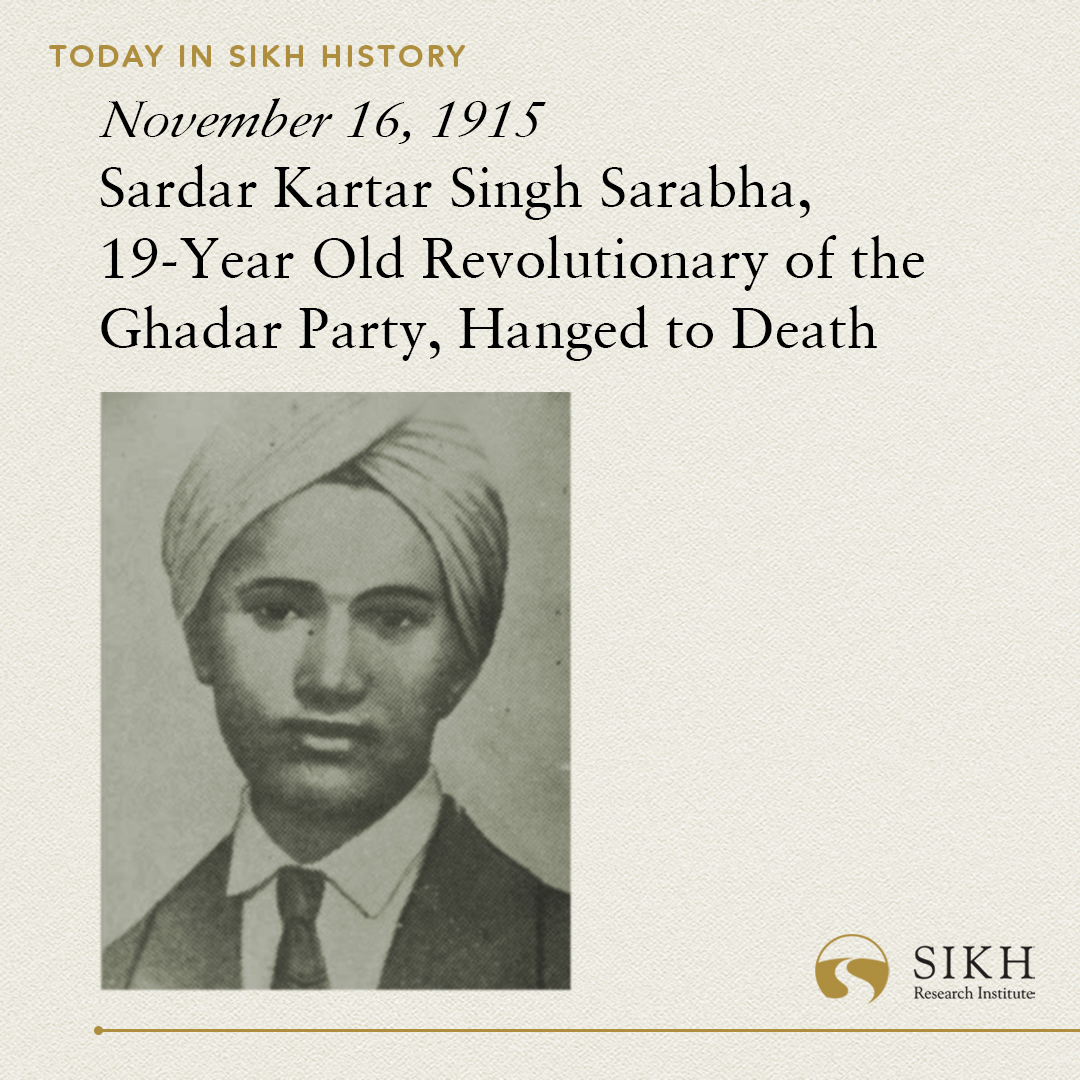
ALT TODAY IN SIKH HISTORY November 16, 1915 Sardar Kartar Singh Sarabha, 19-Year Old Revolutionary of the Ghadar Party, Hanged to Death
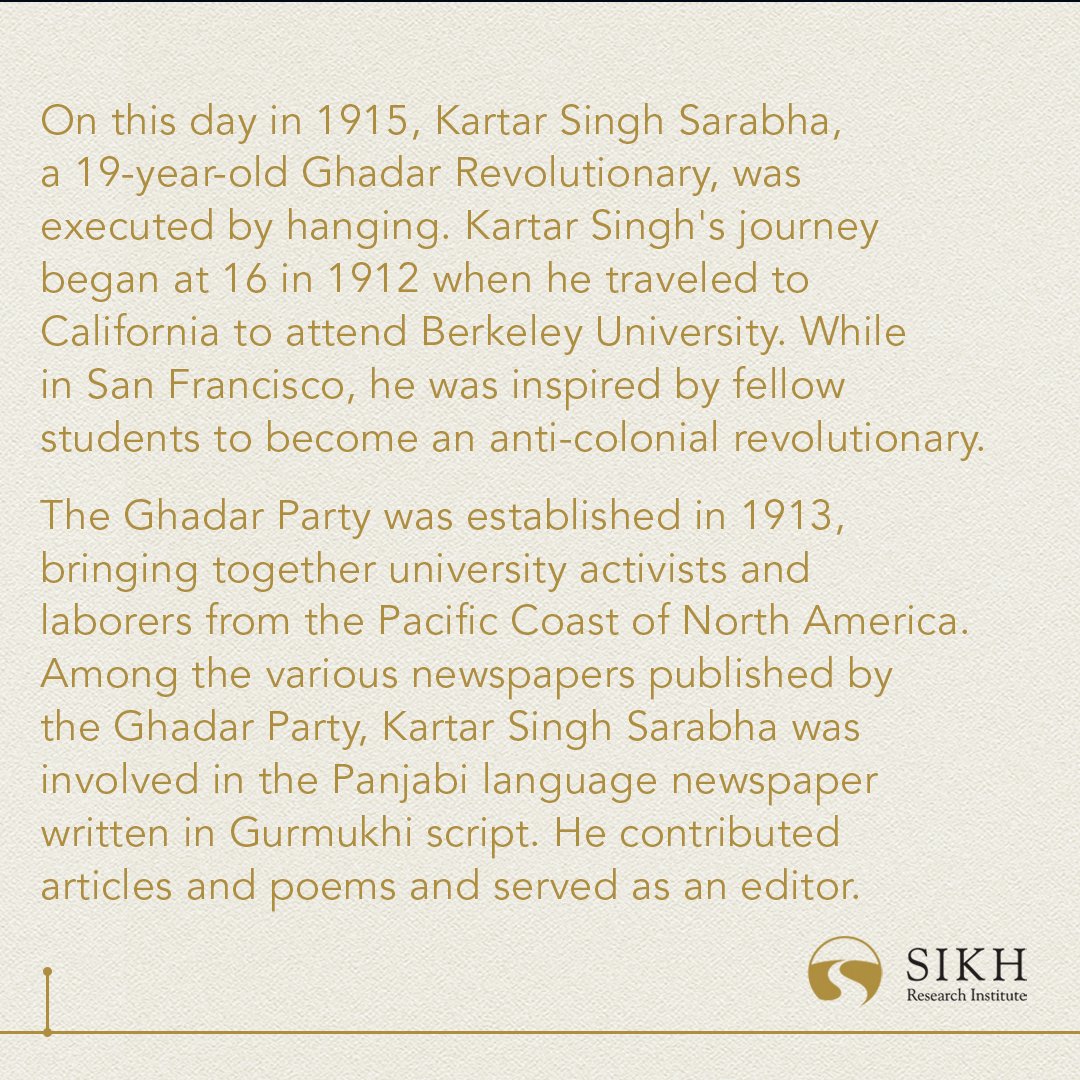
ALT On this day in 1915, Kartar Singh Sarabha, a 19-year-old Ghadar Revolutionary, was executed by hanging. Kartar Singh's journey began at 16 in 1912 when he traveled to California to attend Berkeley University. While in San Francisco, he was inspired by fellow students to become an anti-colonial revolutionary. The Ghadar Party was established in 1913, bringing together university activists and laborers from the Pacific Coast of North America. Among the various newspapers published by the Ghadar Party, Kartar Singh Sarabha was involved in the Panjabi language newspaper written in Gurmukhi script. He contributed articles and poems and served as an editor.

ALT Although the Ghadar Party was founded in the diaspora, its ultimate goal was to incite a rebellion within the British army in India. Ghadar activists viewed the outbreak of World War I as an opportunity to initiate their grand revolt. They planned to commence their uprising on February 12, 1915 but were betrayed, resulting in the arrest of several senior Ghadar Party members, including Kartar Singh Sarabha. These Ghadar leaders faced charges in a series of trials known as the Lahore Conspiracy Cases. Kartar Singh Sarabha refused to label his actions as a conspiracy. Instead, he asserted that what he had attempted was not a conspiracy but an open call to revolt against the colonizers.
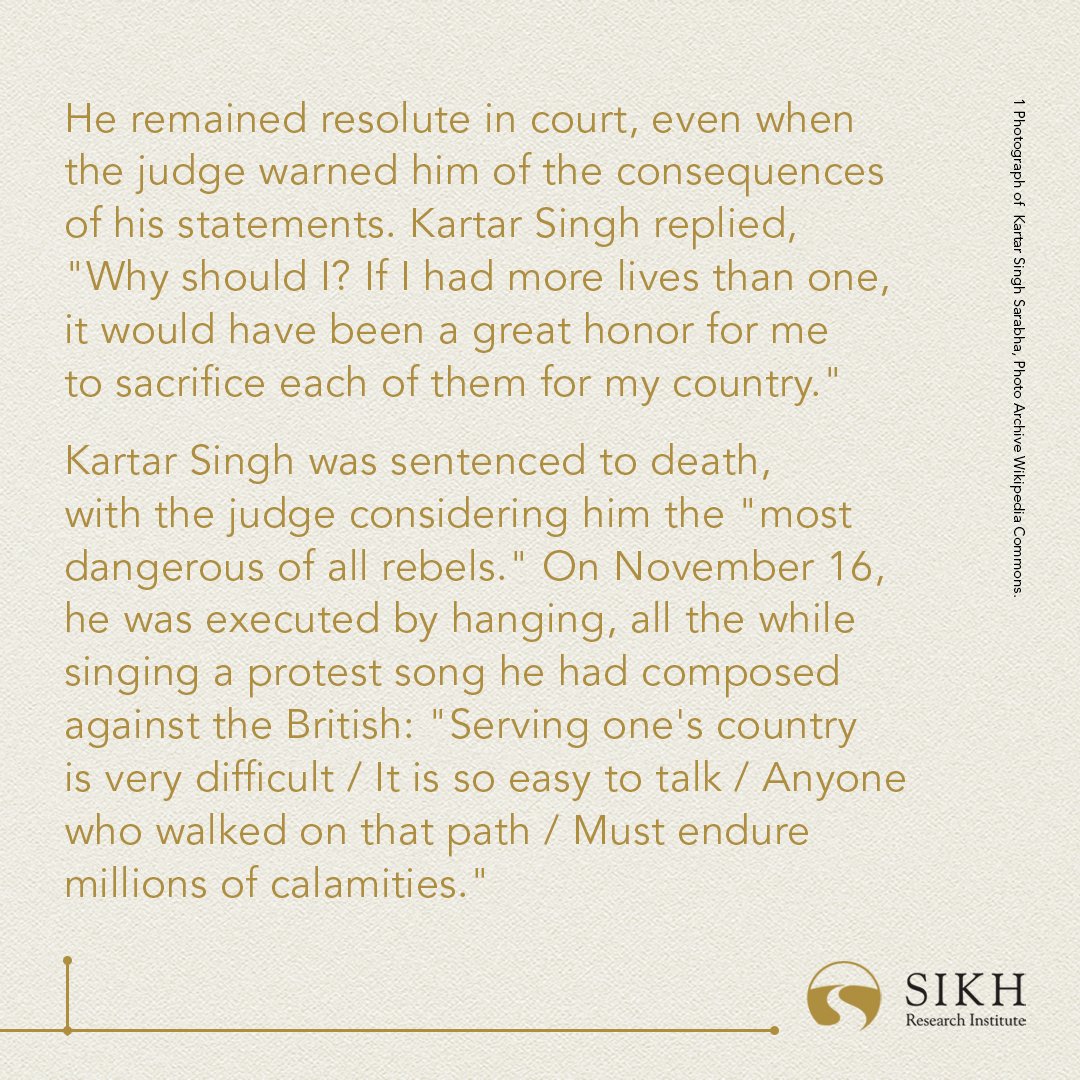
ALT He remained resolute in court, even when the judge warned him of the consequences of his statements. Kartar Singh replied, "Why should I? If I had more lives than one, it would have been a great honor for me to sacrifice each of them for my country." Kartar Singh was sentenced to death, with the judge considering him the "most dangerous of all rebels." On November 16, he was executed by hanging, all the while singing a protest song he had composed against the British: "Serving one's country is very difficult / It is so easy to talk / Anyone who walked on that path / Must endure millions of calamities."
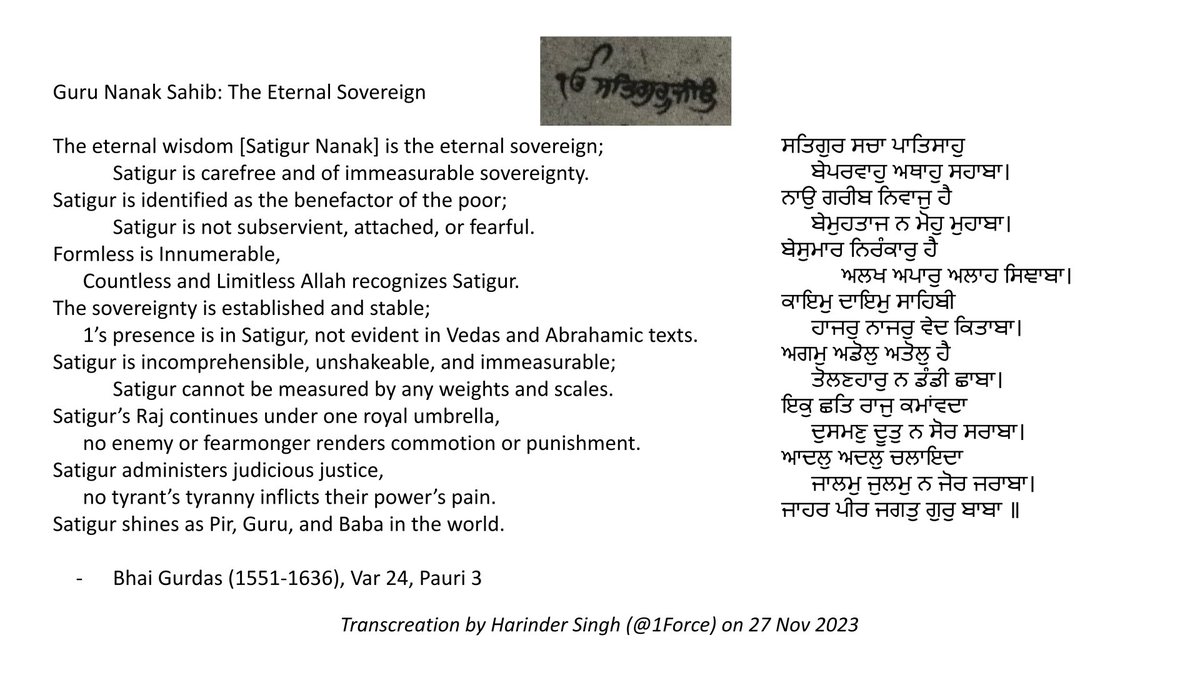
ALT Gur Purab: Celebrating the 1's Greatness of Guru Nanak Sahib By Harinder Singh This essay attempts to answer a few questions related to Guru Nanak Sahib's birth anniversary from primary and secondary sources, as well as the early traditions and the evolving culture to date. Read more: SikhRl.org/Articles