
Lawyer in the 21st state ■ Bearded man illus. ©1996 Edw. Gorey edwardgoreyhouse.org ■ Any follow / like / retweet by me ≠♥
Joined January 2011
- Tweets 215,362
- Following 5,313
- Followers 1,767
- Likes 27,666
5,562 Photos and videos

Pinned Tweet

May 19
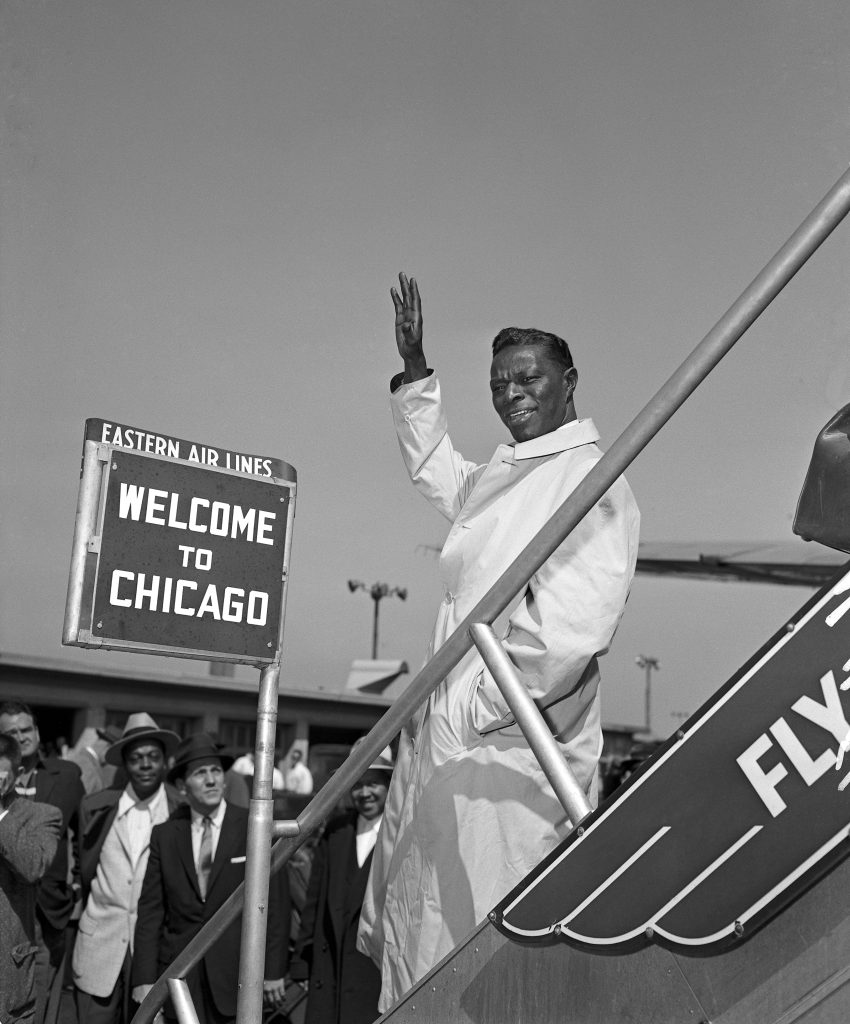
An Unforgettable Discovery: The Story Behind the Nat King Cole Live at the Blue Note Chicago Tapes
by Dave Hoekstra | May 29, 2024 music.newcity.com/2024/05/29…
Nat King Cole arriving at the Chicago airport onto the tarmac, April 11, 1956.
Original camera negative/Alamy Stock Photo
1
146
a fool
JD Vance says Iran deal is 'already bearing real fruits' for Americans youtu.be/SuQlvVID-j8?si=jLkq…
24
part of long thread about the wacko, PT

Not suggesting here that Hereticon is more secret than Dialog. But really none of it was especially secret; it is just networked influence with multiple interlocking groups, some low down in the funnel, others higher up. It’s basic sales and marketing.
1
10
((( IL Steve ))) retweeted

Bruce Springsteen and the E Street Band bring a heartbeat cadence to "Trapped" from Uncasville April 12, 2024, here in full length. The Boss heard it on a Jimmy Cliff cassette and first performed it at Wembley in 1981, and released a 1984 version at the Meadowlands. Play it loud!
1
6
35
1,538
✋

Has anyone else lost all respect for JD Vance?
3
((( IL Steve ))) retweeted

To keep celebrating Clarence today, what better than letting Reverend Bruce take us down the road of rock’n’roll and soul?
I’m talking, of course, about “Tenth Avenue Freeze-Out” — the moment when everything changes, and the Big Man joins the band.
Today, you just can’t hear it without thinking of him. 🎷
Clarence forever. x.com/BobTharin/status/18325…
4
18
73
1,243

bye

I’m on my last straw with Chicago - none of this ends well long term
It’s genuinely the best US city in the summer, but no high level/ambitious guys are staying around if all the $$$ is leaving
It’s telling when the Chicago Bears, Boeing, Citadel, Caterpillar & now crypto are all fleeing the state
FL TX & AZ are miles ahead at this point
1
17
((( IL Steve ))) retweeted

11
46
161
6,332
((( IL Steve ))) retweeted

16h
Shall we compare? (Adjusted for inflation)
Germany WW1 Reparations: $115 Billion
Marshall Plan: $137 Billion
Obama JCPOA: $1.7 Billion.
Trump Iran Deal: $300 Billion
45
305
1,425
39,812
archive.ph/tXCPT Republican opponents of the Iran deal come off looking like they want war.
July 23, 2015 By Fred Kaplan
9
((( IL Steve ))) retweeted

Welp, I think we're done here.
Trump himself is now saying he buckled under the pressure of Hormuz.
It's as bad as it could possibly be. He's saying aloud that Iran can have anything it wants because America can't afford the staring contest.
If this is his own explanation in his own words, then the fact that the sanctions relief is front-loaded...suddenly becomes important. The fact that the inspections regime that will verify compliance will be negotiated by an American side that has already admitted defeat, that needs this more than the opponent needs it...is now significant. And the fact that the proxy system is now recognized as legitimate by the United States -- is suddenly exactly the disaster you feared it might be.
And the fact that America has declared aloud that it's not actually capable of imposing its will even in the world's most vital energy chokepoints, causing its allies in the Gulf to already begin to seek a new accommodation with Iran -- makes all of this worse than Obama and worse than the JCPOA.
Remember: the great unfixable flaw of the JCPOA that none of its boosters ever had a good answer for was that it merely kicked the can down the road. It solved nothing.
Trump's deal, as of this moment, is not even close to accomplishing so much.
"Iran never won a war and never lost a negotiation," Trump famously said of Obama's deal (as a reporter reminded him at today's press conference). Ironic that the Iranians would win a negotiation most spectacularly against a man who styles himself the greatest negotiator to ever grace the White House.
So what does it all mean?
It means that in the coming years, nuclear programs will sprout like mushrooms after the rain throughout the Middle East. It means that many nations will now build out new and larger ballistic missile arsenals.
It means that the state system will give way before the march of the region's transnational ideological axes. Minorities will again be trampled, new wars will be fought by stronger states to dominate the power vacuums within weaker ones.
You're thinking of Israel in Lebanon -- but that's just a specific campaign against a specific enemy. Think Turkey, which right now occupies a region of Syria vastly larger than Israel's presence in Lebanon. Think heightened Iranian support for the Houthis in Yemen and a new influx of money and guns to the different sides in Libya.
It means, in other words, that we will have a few more wars to fight, a few more technologies to invent to deal with this new age of cheap missiles and drones -- and also of supersonic Chinese missiles bearing nuclear warheads that Iran will eventually, inevitably, be capable of deploying against us.
And it didn't have to be this bad. (And maybe, when he's heard all the criticism, it won't be.) He could have left something, anything, to concede later. He could have kept the Iranians a little bit in the dark, just a smidgen, as to just how defeated America feels.
Israel's position in all this is simple, and more or less unchanged from last week. America gave us more than we had a right to ask for. But we may be going it alone from here out.
Dust off the nukes. Maybe test one somewhere far away from anywhere. Quadruple the interceptor production lines, double the size of the Mossad and the Air Force. And no, don't let Hezbollah breathe, not for a second.
It's the 1960s again. And Israel will have to defeat a couple more enemies before it can once again eke out a few decades of peace.
Jun 17

🚨WATCH: Trump repeats his admission that he had “no choice” but to cave to the Iranian blackmail
830
1,347
5,075
1,052,678
((( IL Steve ))) retweeted

Jun 17
*Here's that report, about Peter Thiel and protege JD Vance (the sitting vice president) convening a group of right-wing businesspeople to plot out the creation of a supposedly benevolent aristocracy to rule the country. Is this what Dialog is a part of?
washingtonpost.com/technolog…
2
48
195
10,699

A trove of internal records from a secret society for figures in US politics, finance, and tech was left exposed online, WIRED has confirmed, naming participants in its events and revealing sensitive personal details they were assured would stay private. wired.com/story/leak-exposes…
119
2,046
4,957
282,589
LOL
Jun 8

I hate askin’ for money more than a root canal, but here it is straight from me: I need your help.
((( IL Steve ))) retweeted

This is a jaw-dropping, horrific surrender document complete with hundreds of billions in reparations. It is the predictable result of incompetent negotiation and the foolhardy strategic catastrophe of starting and pursuing this disastrous war. The U.S. will not soon recover from this, the biggest national security blunder in decades.
Jun 17

A senior administration official briefing reporters outlined the text of the MOU between The U.S. and Iran, which has not been made public:
1. The United States of America and the Islamic Republic of Iran and their allies in the current war by signing this MoU, declare the immediate and permanent termination of military operations on all fronts, including in Lebanon, and undertake from now on not to initiate any war or any military operation against each other, and to refrain from the threat or use of force against each other, and ensuring the territorial integrity and sovereignty of Lebanon. Final deal will confirm the permanent termination of the war on all fronts, including in Lebanon, and other provisions of this paragraph.
2. The United States of America and the Islamic Republic of Iran undertake to respect each other's sovereignty and territorial integrity and to refrain from interfering in each other's internal affairs.
3. The United States of America and the Islamic Republic of Iran commit to negotiating and achieving the final deal in maximum 60 days, extendable with mutual consent.
4. Immediately upon the signing of this MoU, the United States of America will begin the removal of its naval blockade and any disturbances or impediments against the Islamic Republic of Iran, and will fully end the naval blockade within 30 days. During this period, the traffic of vessels will be in proportion to the numbers of pre-war traffic being restored by the Islamic Republic of Iran. The United States of America further undertakes to remove its forces from the proximity of the Islamic Republic of Iran within 30 days after the final deal.
5. Upon the signing of this MoU, Islamic Republic of Iran will make arrangements using its best efforts for the safe passage of commercial vessels with no charge for 60 days only from the Persian Gulf to the Sea of Oman and vice versa. The traffic of commercial vessels will immediately start, and considering the need for removing the technical and military obstacles and demining by the Islamic Republic of Iran, will be instated within 30 days. The Islamic Republic of Iran will conduct dialogue with the Sultanate of Oman to define the future administration and maritime services in the Strait of Hormuz in discussion with other Persian Gulf littoral states in line with the applicable international law and the sovereign rights of coastal states of the Strait of Hormuz.
6. The United States of America undertakes with regional partners to develop a definitive, mutually agreed plan with at least $300 billion for the reconstruction and economic development of the Islamic Republic of Iran. The mechanism for the implementation of this plan will be finalized as part of a final deal within 60 days.
All required licenses, waivers and permissions needed for the relevant financial transactions will be granted by the United States of America in Paragraph Six.
7. The United States of America undertakes to terminate all types of sanctions against the Islamic Republic of Iran, including the United Nations Security Council resolutions, i.e. IAEA Board of Governors resolutions and all unilateral US sanctions, primary and secondary, in an agreed-upon schedule as part of the final deal. The Islamic Republic of Iran and the United States of America acknowledge the critical importance of the sanctions-termination issue abovementioned, and expressed their intentions to immediately address these issues in the negotiations, in order to achieve mutual agreement on them.
8. Islamic Republic of Iran reaffirms that it shall not procure or develop nuclear weapons. United States of America and the Islamic Republic of Iran have agreed to resolve the disposition of stockpile enriched material, pursuant to a mechanism that will be mutually agreed upon in accordance with the schedule mentioned in Paragraph Seven, with the minimum methodology to be downblending on site under the supervision of the IAEA.
[The] two parties also agreed to discuss the issue of enrichment and other mutually agreed matters related to the Islamic Republic of Iran's nuclear needs based on a satisfactory framework being agreed upon in the final deal. The final deal will confirm the provisions of this paragraph. The United States of America and the Islamic Republic of Iran acknowledge the critical importance of the nuclear issues abovementioned and express their intention to immediately address these issues in the negotiations in order to achieve mutual agreement on them.
9. Pending the final deal, the United States of America and the Islamic Republic of Iran agree to maintain the status quo. The Islamic Republic of Iran will maintain the current status quo of its nuclear program, and the United States of America will not impose any new sanctions and will not deploy additional forces in the region.
10. United States of America undertakes that immediately upon the signing of this MoU until the termination of sanctions, US Department of Treasury will issue waivers for the export of Iranian crude oil, petroleum products and derivatives, and all associated services, including banking transactions, insurances, transportation, etc.
11. The United States of America undertakes to make fully available for use the frozen or restricted funds and assets of the Islamic Republic of Iran. Upon the implementation of this MoU, the United States of America and the Islamic Republic of Iran will mutually agree on the procedures related to the release of these funds during the negotiations.
12. The United States of America and the Islamic Republic of Iran agree that an executive mechanism will be established to monitor the successful implementation of this MoU and the future compliance of the final deal.
13. After signing this MoU and subject to the beginning of the implementation of Paragraphs 145, 10, and 11 of this MoU and the continuing implementation of these measures, the United States of America and the Islamic Republic of Iran will start negotiations regarding the final deal exclusively on the other paragraphs.
14. The final deal will be endorsed by a binding [UN Security Council] resolution.
3,446
5,326
16,535
1,485,271
((( IL Steve ))) retweeted

Jun 17
The reported MOU to reopen Hormuz, highly favorable to Iran, is the least bad outcome for the US after Trump's disastrous decision for war -- and it illustrates how big a mistake the war was.
On net, the war hurt the U.S. in two major ways.
1.) The U.S. bargaining position with Iran is now worse off, because militarily, the U.S. underperformed and Iran overperformed compared to Trump's prewar expectations (which in my view were always mistaken).
That itself is tied to two factors:
A. Massive U.S. airpower did not succeed in quickly toppling the Iranian regime, which spoiled the president's theory of victory circa day 3 of the war. Once the conflict bogged down into a war of attrition, Iran had the upper hand, because of its superior resolve.
For Iran, the war is about survival, while for the U.S., it's an "excursion." This is the essence of asymmetric conflict and why militarily powerful countries often lose wars against weaker nations more willing to absorb the costs of fighting.
The fact that the balance of resolve favored Iran was knowable in advance -- and *many* analysts argued this prewar.
B. Iran tangibly demonstrated its leverage over the Strait of Hormuz by suppressing nearly all traffic simply through the threat of its missiles and drones. Before the war, its leverage was theoretical and latent. Now, it has been fully realized and cannot be undone, because it rests on geography and prevailing military technology -- i.e. cheap and plentiful missiles and drones.
Before, the U.S. thought it could threaten and ultimately fight a quick regime change war to reset Iran's negotiating position or perhaps induce Iran's full capitulation, without costs to the oil market. The conduct of the war proves that was a fantasy.
Iran's superior bargaining position is concretely reflected in the MOU. Iran gets immediate oil sanctions waivers and unfrozen assets ($3 billion of which might have already been transferred by the UAE according to reports) -- just to reopen the Strait of Hormuz and resume nuclear negotiations. Those are big chits the U.S. has handed in, already, to get roughly back to the prewar status quo.
2.) The war also hurt the U.S. because it was costly in U.S. lives, treasure and materiel.
- 13 U.S. soldiers died and at least 400 have been wounded (likely the injury count is higher but the Pentagon has been cagey about providing updated numbers).
- High-end U.S. munitions have been dangerously depleted, hurting U.S. readiness across all theaters, perhaps for years
- Budgetary costs of the war could exceed $1 trillion accounting for veteran's health claims and borrowing costs, according to Linda Bilmes at Harvard
- Even if oil resumes prewar flows immediately (it won't), the baked in economic damage is substantial. U.S. inflation in May, for example, reached 4.2% thanks to elevated oil prices.
- Global oil inventories have been dangerously depleted, making the whole system more vulnerable to any disruptions going forward.
And even still ... it's not clear if the MOU will go through, as Israel continues to occupy and attack Lebanon. So even this level of progress is quite fragile.
Trump never should have launched this reckless war -- and it's incumbent on all of us to learn the right lessons from it, namely that what's achievable through U.S. military power is inherently limited, and U.S. meddling in the Middle East tends to worsen outcomes, not improve them.
11
60
152
11,340
only Q is whether this is a Putin-orchestrated phenom
Jun 17

Israel is likely feeling what Ukraine & many NATO countries have felt during the second Trump administration: that the United States is becoming an increasingly unreliable partner.
Allies that spent decades anchoring their security & foreign policy in Washington are now being forced to ask whether America's alliances are based on shared commitments vs. whatever happens to be politically convenient at the moment.
America spent decades building the most powerful alliance network in human history. We're dismantling it in real time by treating our allies as transactional relationships.
We are not weakening our allies — we are weakening ourselves.
8
((( IL Steve ))) retweeted

Jun 17
#Jazz #ジャズ #ArtBlakey
Art Blakey & The Jazz Messengers - Moanin'
(Live at Mt. Fuji Jazz Festival with Blue Note, 1988)
It’s a dream of mine as a jazz artist to perform on that stage.
Art Blakey - Drums
Philip Harper - Trumpet
Robin Eubanks - Trombone
Javon Jackson - Tenor Sax
Benny Green - Piano
Peter Washington - Bass
1
37
121
1,822