
120 Photos and videos












great post well written

Now is a good time to explain certain things about the mechanics of the IPO process that most people don't know. I will explain various dynamics around IPOs that you've probably wondered about (or just felt were odd but ignored).
To the financially sophisticated: this post elides certain details and attempts to be simple enough for a lay audience. There's no novel reveal at the end so if you already know how IPOs work, you can skip this post.
When a company wants to IPO (sell shares, then have the shares float for public trading - two separate things - hence this explainer), they don't actually just sell them to the public.
Rather, they hire bankers to round up a bunch of institutional buyers or wealth investors. We'll call these "big buyers." The company does presentations to these buyers, and then the buyers indicate their willingness to buy - like how much, and at what price - and the bankers mediate this whole process and arrange the transaction.
The reason this happens is because when most companies come to the market, no one really knows what price it should start trading at, and it's largely an unknown entity (to the public investors), so you need experienced bankers who understand business and equity markets to figure it out and get it approximately correct. This is the actual function of the bankers who "take companies public" and they are called underwriters.
The way it works is this:
The bankers go to the big buyers (often investors who already have a lot of business with the bank) and ask them to participate in this process - the one I described above. Buying the shares is risky, so the big buyers need an incentive. This is where the "first day pop" comes from.
Because the bankers have the most information of any party at this stage, they are the most likely to be able to guess at the likely "real" market trading price of the stock. So they price the stock a little bit under so that when the actual offering to the public happens on opening day, the stock "pops" by about 10% - 20%. This allows the big buyers to make an instant profit flipping the stock, compensating them for taking the risk of buying an "unknown" stock with no trading history.
Let me summarize:
- The company sells its shares in a negotiated sale to big buyers.
- The company receives cash for those shares.
- Now the company is done.
- The next day, the big buyers sell their shares on the open market at whatever price public buyers are willing to pay.
There are, typically, rules around flipping the shares but obviously not for everyone, not for all the shares, and some big buyers just break the rule (and may not be invited to future IPOs). But obviously the shares that the public actually buys comes from somewhere, and it's these big buyers who bought them from the company in the banker-negotiated sale. They do not come directly from the company.
At no point does any member of the "retail" investor public actually give money to the company itself in return for any shares. It all goes through the banker-mediated sale process (called a "road show") where big buyers get a discount for taking the risk, and make their profits on the first-day flip to the buying public.
(The bankers also make a huge fee for doing this)
That seems kind of like "rich people enriching other rich people" but it's only partially that.
Only a small percentage of IPOs do really well. Many of them stink, or fail on the first day with no pop. So if you're a big buyer who participates in a lot of IPOs, you are taking on a real risk. If all goes well, there is a modest 10-20% pop on the first day, and the IPO is deemed a success from the standpoint of the financial industry, and in particular, the bankers who arranged it.
Here are two major ways it can go wrong:
If the bankers misjudge where the public price will end up and price it too low, the pop will be HUGE. The common reaction to this is "Wow, what a great IPO!" because most people just get excited when Money-Number-Go-Up. But if the pop settles to something roughly close to its peak - the first-day close is taken as a proxy for what the market considers a fair valuation of the company - it means the company left money on the table: it sold to the big buyers at far too low of a price. All the big buyers and opening-bell first-day retail buyers captured a huge part of that value. Remember that the purpose of an IPO is to raise money for the company's operations and if they just sold a bunch of stock for less than the market was willing to pay, well, that's bad for the company.
Another way it can go "wrong" is if it's "priced to perfection" where the negotiated sale is arranged at exactly what the public ends up being willing to pay, and there is no pop. Even "worse," if it's priced above that, and the bankers completely misjudge the price in the wrong direction, the stock will fall on the first day and close below the IPO price.
But "wrong" is a matter of perspective: this is bad for the big buyers (who didn't make money on flipping the IPO), bad for the first-day retail buyers who now own a plunging stock, and bad for the bankers, who lose credibility. But it is the best financial outcome for the company itself. The company was able to sell its shares at the maximum price the market would bear, and it walks away with the cash.
When an IPO like this happens, the financial headline that dominates is "it's a failed IPO." But in terms of raising money for the company, it's the best-case outcome! This is an instance where the incentives of all the parties involved are not the same.
When the bankers price the IPO for a modest pop, that's the default compromise between these interests: the company makes a little bit less than it would get from the public, the big buyers take a risk and get a profitable flip sometimes, and the bankers lend their market expertise and get paid their fees. When it skews in either direction, one or more of those parties takes a hit - but the others benefit.
The reason that the "priced to perfection" scenario is often excoriated in the press is because the financial press is largely controlled by the financial industry. It's not a conspiracy, it's just that financial news will mostly ask their network (i.e. finance folks) to give their opinion, and because the finance folks (bankers or big buyers) didn't come out ahead, they think of it as a failure. But it's a Great Success for the company itself!
Outlier IPOs:
In my life, I've had a front-row seat to two outlier IPOs (Google and Facebook), and two "standard default" IPOs (PayPal and Reddit). I'll talk a bit about the interesting effects in the outliers, and how they compare to the defaults, and then a bit about what could happen with SpaceX.
One of the ways the default IPO process can vary is when a company is already very well-known to the public. Most IPO-ing companies are unknown to the public, and that's a big reason why the bankers have to be involved: they form a bridge of trust to the big buyers and bring value in their specialized expertise about market sentiment.
But a company that's already very well-known doesn't get as much value from that. Especially if there's already demand for the company's shares, the company can often find enough buyers for its offering. The contract terms (services, fees) for underwriting an IPO are always negotiable, and so certain companies can negotiate lower fees and do things differently.
Google did this in 2004.
Now, one funny thing that's typically true in a default IPO is that the stock will open between $15 and $25. The reason for this is that most people are not financially sophisticated and if a stock opens at $100, they will think it's too expensive.
The real value of the stock is what percentage of the company it represents the company's financial performance. So the numbers $15 and $25 are chosen because most people will think that's a reasonable price to buy - they compare it to buying something at the store. No joke.
Now, because companies and their existing stock can have a large range of values, what they do prior to the offering is simply do a stock split (or reverse stock split) so that the effective per-share price falls into that range. It's entirely just optics because most people don't understand math and finance.
In 2004, Google IPO'd at $85/share.
If you are thinking "omg, that's a lot!" then you are one of the people I just described. It doesn't matter that it was $85/share.
Google, because it was well-known and there was a lot of demand for its stock, did not have the underwriting bankers negotiate their sales to the big buyers! Because they had a lot of internal expertise (and preference for) fancy auction mechanics as a price discovery mechanism, they set up a "Dutch auction" for their shares.
Briefly, the Dutch auction is an auction format that is considered better at reaching the real market value of whatever's being sold (compared to a regular auction, which seeks to maximize the buying price).
They ran this Dutch auction and asked everyone who wanted to invest to submit their bids and amounts, and then assigned a price and (modulo some regulatory details) opened at $85/share.
This was the first time in tech for an "unusual" IPO. It was met with positive regard because Google didn't have to pay the bankers as much money, probably got a fairer price for its shares, and the buying public got in at a reasonable price, cutting out a lot of middlemen (e.g. big buyers, though they sold to the big buyers too). And Google was known for innovation and being quirky, so this fit their brand.
Today, by the way, the split-adjusted price for that offering is about $2/share.
Facebook also had an unusual IPO process.
Facebook engaged the underwriters from a position of absurd negotiating superiority. They were already globally known, and was probably the company most well-known at IPO (in terms of name recognition) in history.
Typical banker fees for underwriting can be ~4%. Facebook reportedly negotiated an underwriting fee of 1%.
Why? Because there was massive demand for its shares, and everyone already knew what Facebook was about. So who cares about the bankers?
Not only that, but Facebook priced itself to perfection.
It opened at $38/share, and closed at $38.23/share, implying that Facebook had exactly hit the market price and gotten the maximum amount of money, with nearly no spread between what Facebook sold for and what the public ended up paying for it.
Further, over the next few months, its stock trended downwards. This caused no end of hand-wringing from people who bought on first-offering, but it implies even more strongly that Facebook got top dollar for selling its shares.
(Anyone who held on for longer 16 months after that saw huge gains - today the price is at ~$590)
The financial press absolutely excoriated the Facebook IPO, calling it a huge failure. This drove the mainstream conversation about it, which also depicted it as a failure, highlighting stories of investors like an old lady who'd put her life savings into the IPO (.... which you are never supposed to do). The bad press went on for months.
At the same time, Facebook execs and informed insiders quietly understood that it had been a perfectly-executed IPO, in terms of raising money for the company.
And, if people like the old lady held on to her stock for a couple years, she still made mad bank.
Those were the outliers. Now the regular ones:
One of the features of an IPO is that typically most shareholders are subject to what is called a "lockup."
The default lockup is often for 6 months, but the terms can be negotiated. During the lockup, shareholders cannot sell their shares.
To understand this, first realize that "shareholders in the company" are different from the company itself.
In an IPO, the company (the corporate entity) issues stock and sells it to investors, taking in cash to fund the company's operations.
This is different from shareholders of the company - existing investors, employees, and executives - selling stock. These parties personally own stock (i.e. ownership) in the company and if they sell it the cash goes to them, not the company.
The lockup typically applies to some or all of these parties, and the reason is because when the company floats shares in its offering, if on the next day (or month) many large shareholders were to also sell their shares - some of which could be a block of comparable size to the IPO offering itself - it would tank the market. This would reflect very poorly on the company because it would mean that all the investors who bought in the IPO (big buyers, but also people who believed in the company and bought on the first day/week) would see steep declines while "insiders" made off with profits.
But the exact configuration of lockups varies, because it's all negotiable.
The common default is that most private company shares are locked up for 180 days.
Sometimes, the shares floated (sold to the big buyers) for the IPO aren't newly issued shares by the company. Sometimes the major shareholders negotiate to sell some percentage of their holdings - say 10% - and those shares are the ones sold to the big buyers and then later into the regular market. The rest of the shares held by the shareholders may remain subject to the lockup. The negotiation ends up balancing the desire of shareholders (prior investors, executives, employees) for liquidity vs the signaling effect it has on the market - no one wants an IPO to look like insiders dumping on the market.
When Reddit went public, the underwriting situation was pretty vanilla (road show, sell to big buyers, modest pop on first day).
The shares offered for sale at the Reddit IPO weren't all issued by the company, a significant component were employee shares. Many employees had been at the company for a long time, so a program was set up whereby the employees could elect to sell some percentage of their vested holdings, and these were some of the shares offered to the big buyers. All of the large existing shareholders - the venture capitalists and mutual funds that had already bought into Reddit at far below the IPO price - didn't sell a single share in the IPO.
(Subsequent market performance seems to have borne out the financial wisdom of that decision)
One thing to understand here then is the divergent effects on the company vs existing shareholders. If the company is "priced to perfection" and subsequently the stock price falls, and existing shareholders did not participate in the IPO sale itself, they are in the same boat as retail investors: the stock value is dropping. Further, if they're subject to a lockup, they have no way to exit the stock for a long time.
====
Now that we have all that background, we can talk about the SpaceX IPO:
SpaceX is an outlier, if for no other reason than the fact that size of the offering is the largest in history. When outliers happen, rules often get broken. Not because of corruption (though sometimes it's that), but because an outlier will often create conditions that are outside the anticipated range of what the existing rules were set up to handle.
The first thing is that SpaceX is one of those "already really well-known" companies and one with a lot of pent-up demand for its stock. In the last few years, SpaceX funding rounds have been massively oversubscribed.
This means that SpaceX is in a position to not only negotiate the sorts of terms that Facebook got with its underwriters (very low fees), but it has negotiating power on key terms like pricing, sizing, and lockup periods.
Remember that in terms of "cash raised" in the IPO, the amount the company raises is simply the amount they sell to the big buyers for, NOT how much the stock trades up (or down) once the markets open.
Elon's stated intention is that the IPO is necessary to raise the huge amount of funds needed to complete Starship and fund a mission to Mars.
People can quibble about whether that's his main motivation or if he's just grifter unloading on the retail market, but it's a very telling point that his actual compensation package involves actual Mars-based metrics like establishing a colony with a million people on it. If he's a grifter, and he basically controls his board, he there'd be no need for a comp package like that.
So if the goal of the IPO is not to cash out for insiders, but actually "raise a huge amount of money for the company to carry out its insanely ambitious goals," there would be a strong incentive to "price to perfection," i.e. push the bankers to price the stock at what they think the market really will bear, and reduce the profit the big buyers would make on the first-day pop.
And if any hiccup occurs, the stock could tumble, much like what happened with the Facebook IPO - but SpaceX itself would have the cash it needs.
Based on what I've explained much earlier, you can now also see that if the stock being floated in the IPO is newly-issued by the company and none of the existing shareholders are allowed to sell into the IPO, and the IPO is "priced to perfection," it's less likely that it's a dump on retail investors, because the stock will tumble before any of the major shareholders can sell. The company as an entity makes cash, but its shareholders share the fate of the market (actually slightly worse because of the lockup's effects on their liquidity).
On the other hand, having learned from that, SpaceX might not want a year of bad press, with the entire financial press discussing how bad an investment SpaceX is. Elon and SpaceX already have to fight a culture war and lots of people demonize them. So there's a chance the pricing has been set up to be something like the default - a modest pop on the first day. The question is basically whether the company wants to optimize for cash or public perception - compelling arguments for both could be made.
Having said all that, people are probably underestimating the degree of retail investor interest. The allure and romance of space flight, the exploration of space - all of those are long-held dreams that are older than Google or Facebook or even the internet itself. Mankind has dreamt of walking among the stars for decades.
Although the smart money makes decisions on the basis of P/E ratios and the like, a regular Joe with a Robinhood account who has dreamed of space and remembers the magnificence of seeing twin rocket boosters landing side-by-side will probably want to grab a few shares if he can. A LOT of people probably feel this way, and not many of them will be able to get IPO allocation.
Thus, it's possible that no matter where the offering price is set, there will be an absolutely insane, possibly record-setting pop on the first day. SpaceX is not just a selling Starlink, or compute or whatever you think - SpaceX is selling dreams. And it has been steadily making them real.
Incidentally, if this happens, after the euphoria wears off, the stock will probably tumble, providing lots of fodder for negative news coverage.
SpaceX's lockup policy is also unusual. Instead of either allowing some shareholders to sell immediately, or locking everyone up for 180 days, there is a staged and gradual unlock over the span of the 180 days, with a fraction of one's holdings allowed to be sold. One of the stages even requires that the stock price be over some threshold, presumably to hold the stock price in a certain range of values. It's unclear how this staged unlocking will affect price dynamics; it feels like an engineer's solution to trying to manage market volatility. (My suspicion is that the magnitude of public sentiment - both positive and negative - will drive more of the volatility than any pricing or lockup schedule)
Well, now you know everything I know about IPOs.
If I were to guess at outcomes, my probability distribution is:
70% likely to see a huge first-day pop (sustained for at least a week), and 30% likely that it's priced to perfection and closes below its IPO price.
This situation is such an outlier and all of the conditions necessary for any of those things to happen are in play, and it's not clear which forces will dominate.
Either way, good luck!
🚀
1
4
480
> The team's next step is a new turnstile and a fresh shielded pool in the coming upgrade, which will confirm the shielded pool was not inflated
zec catalyst coming soon that’s likely positive news
Jun 5

There's a lot of confusion about the recently patched Zcash bug. Here's how to actually understand it.
If the bug had been exploited before the patch (very unlikely it was), it would have looked like the shielded pool getting drained. Whoever minted the counterfeit shielded ZEC would want to sell fast, before anyone else found the same bug. And remember, the market for ZEC is almost entirely transparent ZEC, not shielded. You can't dump freshly minted shielded ZEC on Binance or Coinbase without unshielding it first.
The losers in that scenario are shielded holders who sit still. The transparent portion of Zcash is fully visible, so it's trivial to enforce that transparent ZEC never exceeds max supply. If you try to unshield more than the cap, you'll get stopped at the door.
So if you hold transparent ZEC (anyone trading, on an exchange, or doing price discovery on ZEC) there's no marginal effect on you. The loss falls entirely on shielded holders.
The team's next step is a new turnstile and a fresh shielded pool in the coming upgrade, which will confirm the shielded pool was not inflated. Think of it as taking headcount at the end of the field trip--that will make sure no extra kids snuck onto the bus.
But while AI found this bug, AI will also deliver the fix for the whole category: formal verification. I'm very bullish on this as the path to harden all software across the industry. Formally verified cryptography can't have implementation bugs by construction.
Right now AI is surfacing vulnerabilities across all our software--browsers, OSes, and blockchains are no exception. We're in the awkward adolescence where every wart is getting magnified and put on full display. But formally verified software is the only path forward for mission-critical software, and Zcash has put it front and center on their roadmap to deliver.
Privacy is too important not to.
(Dragonfly holds $ZEC and continues to. I'm personally an investor in ZODL.)
2
4
339

this is sick and i wish i could do this on the iphone. makes me wonder whether increasingly capable ai agents will push more people toward android because the customization gap feels more meaningful now

I built OpenClaw for your phone. Beanie AI can use your phone like a human.
Unlike Gemini's Agent that's restricted to Pixel 10/S26 and 5 select apps, Beanie AI works on any phone with any app.
Log in with ChatGPT/Codex or use your own API Provider.
2
7
587

2pmflow retweeted

Call me Benjamin, cause I be nettin’ Yahoooooo!
96
3,132
39,756
3,125,381
if this isn't staged this is incredible synergy

I hope this couple is still together bc this video really cracks me up every time I see it 😂😂😂 this is my type of carrying on
2
13
2,070
naruto part 1 had so many iconic moments that i don’t see any modern shonen anime topping. rock lee weights, bell test, akatsuki intro, sannin intro, chuunin exam test, rasengan vs sharingan water tank, itachi vs sasuke at hotel, creative powers for fleshed out side characters like shikamaru shadow technique, the ninja ranks and worldbuilding. so good looking back
7
43
1,253
2pmflow retweeted

Mar 17
Introducing Azuki TCG: Gates Awakened
122
208
1,469
2,039,784
we now have a postmortem for the premortem
Feb 24

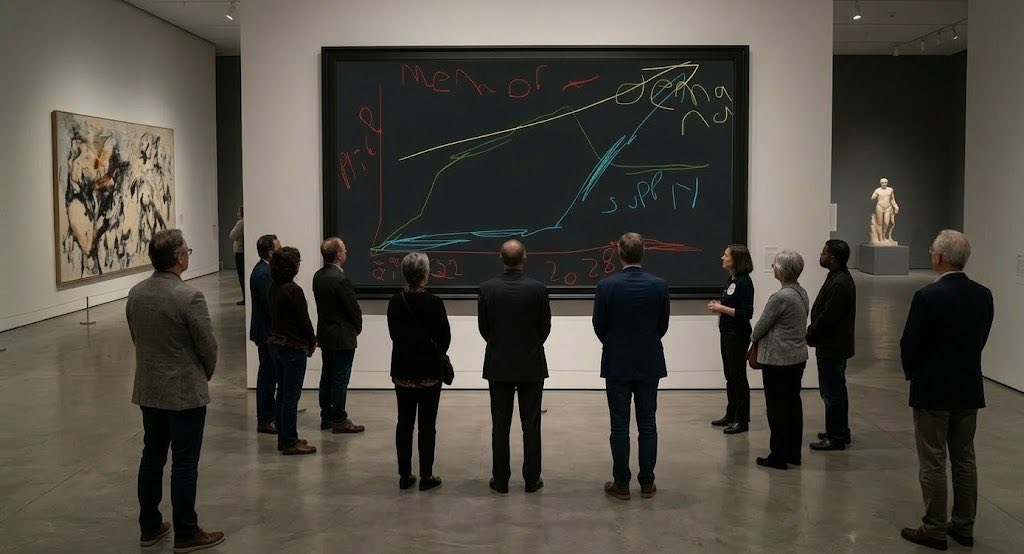
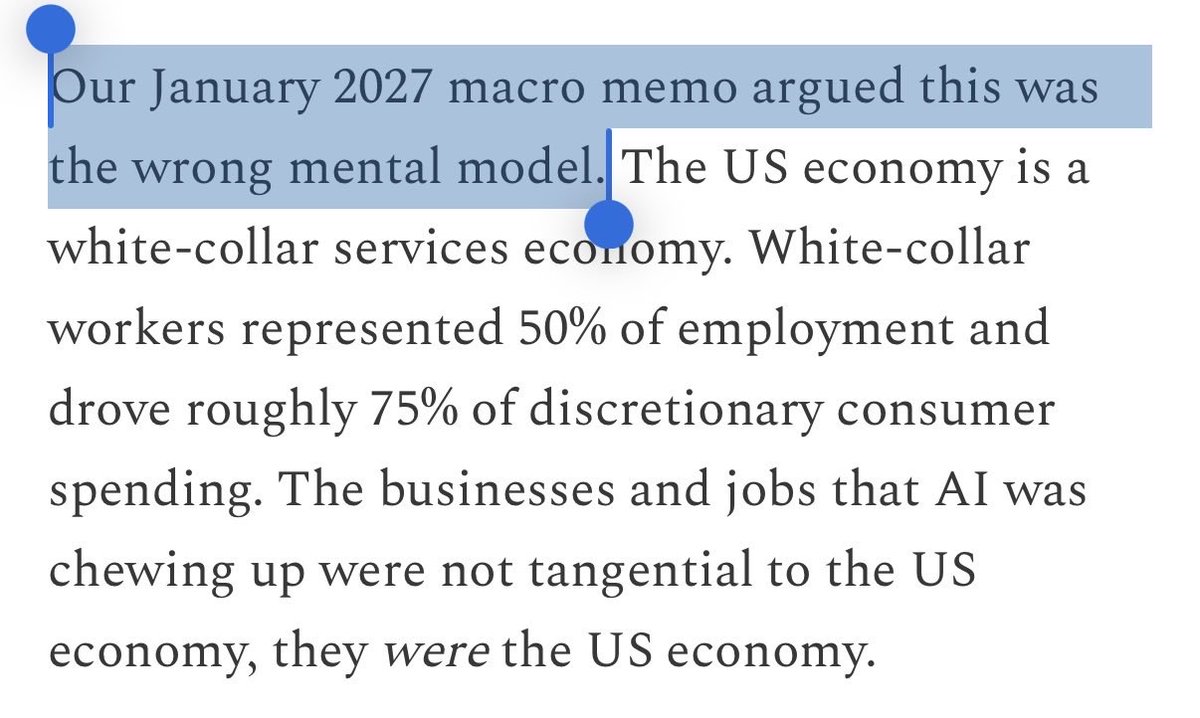
The 2028 Global Intelligence Crisis That Wasn't
A Macro Memo from the Actual June 2028, Not the Fanfic Version
The unemployment rate printed 3.8% this morning, roughly where it's been all year. The market yawned. The S&P 500 is at 7,400, which is somehow both a record high and a disappointment to people who were promised 10,000 by every DCF model with a "AI Upside Case" tab.
We are writing this memo because in February 2026, a widely circulated Substack piece predicted that by this exact date, the S&P would be down 38%, unemployment would be 10.2%, and the mortgage market would be in free fall. It was beautifully written, rigorously structured, and wrong about nearly everything. We feel it is our duty — nay, our privilege— to conduct the post-mortem.
In the authors' defense, it was explicitly labeled a "scenario, not a prediction." In our defense, 2,321 people liked it and several macro Twitter accounts made it their entire personality for six months.
How It Actually Started
In late 2025, agentic coding tools did indeed take a step function jump in capability. The Citrini memo predicted that a competent developer could now "replicate the core functionality of a mid-market SaaS product in weeks."
This was true! What the memo failed to mention was that a competent developer could also replicate the core functionality of a mid-market SaaS product in weeks in 2019. The difference was that back then, nobody did it because maintaining software is horrible, and in 2026, nobody did it because maintaining software is still horrible.
The procurement manager at the Fortune 500 who told the vendor he'd been "in conversations with OpenAI about replacing them entirely"? He got his 30% discount, then spent the next eighteen months trying to get his internal AI prototype to handle SSO correctly. It could write a Shakespearean sonnet about SAML authentication but could not, for the life of it, actually implement SAML authentication without hallucinating an endpoint that didn't exist. He renewed the vendor contract at full price the following year.
The memo predicted ServiceNow's $NOW net new ACV growth would decelerate to 14% as customers cut seats. In reality, ServiceNow reported accelerating growth in 2027 because — and this is the part the doom thesis always misses — the AI agents that companies deployed generated more workflow tickets, not fewer. Every autonomous agent needed monitoring, logging, exception handling, and escalation paths. ServiceNow didn't sell fewer seats. They sold seats to robots.
SERVICENOW Q3 2027: "AI AGENT MANAGEMENT" BECOMES FASTEST-GROWING MODULE; CEO JOKES "OUR BEST CUSTOMERS ARE NOW NON-HUMAN" | Bloomberg, October 2027
The Friction That Refused to Die
The Citrini memo's most elegant argument was that AI agents would eliminate friction, and that trillions in enterprise value depended on friction persisting. Subscriptions that passively renewed, insurance policies nobody re-shopped, delivery apps that exploited laziness — all would be ruthlessly optimized away.
Here's what actually happened with subscriptions: AI agents did start cancelling unused subscriptions on behalf of users. Subscription companies responded by making cancellation flows so Byzantine that the AI agents needed other AI agents to navigate them. An arms race ensued. By Q2 2027, the average subscription cancellation flow involved a 47-step conversational gauntlet with an AI retention specialist. The median consumer's agent spent more tokens trying to cancel a $9.99/month meditation app than the consumer had spent meditating in the entire previous year.
Net result on subscription revenue: approximately zero.
The memo predicted agents would disintermediate travel booking platforms. In practice, when agents assembled "optimal" itineraries, they produced trips that were technically cheaper but involved three layovers, a 4am bus transfer in Ljubljana, and a hotel 45 minutes from the city center with a 4.1-star rating that turned out to be an Airbnb above a nightclub. Consumers used the agent, looked at its itinerary, said "absolutely not," and went back to $BKNG.
It turns out that what humans call "preferences" and what a cost-optimization function calls "irrational friction" are the same thing. People don't want the cheapest flight. They want the one that doesn't leave at 5am. We knew this. We have always known this. We briefly forgot because a Substack told us machines would make us rational.
The DoorDash $DASH Thesis, or "You Underestimate How Lazy People Are"
The memo called DoorDash the "poster child" of habitual intermediation destruction. Agents would compare twenty delivery apps and pick the cheapest. Vibe-coded competitors would flood the market. DoorDash's moat of "you're hungry, you're lazy, this is the app on your home screen" would evaporate.
Counterpoint: have you met people?
The vibe-coded delivery competitors did indeed launch. Dozens of them. They had names like Fetchr, GrubAgent, NomNom AI, and — we are not making this up — "Deliver.sol." They offered lower fees by passing 90-95% through to drivers.
They also had no customer service, no restaurant onboarding team, no logistics optimization, no insurance, and no way to handle the moment when a driver ate half your order and marked it "delivered." The apps worked flawlessly in demo videos and catastrophically in the rain on a Friday night in Brooklyn. By Q3 2027, the subreddit r/VibecodeDeliveryHorror had 400,000 subscribers and a pinned post titled "My agent ordered me sushi from a restaurant that closed in 2019."
DoorDash stock is up 35% from the date of the Citrini memo.
The Payments Armageddon That Wasn't
Perhaps the most creative prediction was that AI agents would route around card interchange using stablecoins, destroying Visa / $V, Mastercard / $MA, and American Express $AXP.
What actually happened: agents tried to pay with stablecoins. Merchants said no. Not because they couldn't accept them, but because the fraud liability framework for stablecoin payments did not exist, and no CFO in America was going to accept payment in magic internet money to save 2% on interchange when the chargeback protections that interchange funded were the only thing standing between them and an army of AI agents submitting fraudulent refund claims.
That's the thing nobody modeled. AI didn't just empower consumers. It empowered fraud. The same agents that could price-optimize your protein bars could also generate synthetic identities, file fake chargebacks, and exploit return policies at scale. Visa and Mastercard's moat turned out not to be friction — it was trust infrastructure. When fraud exploded in early 2027, merchants practically begged to keep paying interchange.
MASTERCARD Q1 2028: NET REVENUES 11% Y/Y; CEO CITES "UNPRECEDENTED DEMAND FOR AI-POWERED FRAUD DETECTION SUITE" AND "RETURN TO CARD RAILS FROM ALTERNATIVE PAYMENT EXPERIMENTS" | Bloomberg, April 2028
Mastercard didn't die. It sold the antidote.
The Mortgage Crisis That Was Actually Just San Francisco Being San Francisco
The memo's most alarming prediction was that the $13 trillion mortgage market would crack because white-collar workers would lose their income and default on their loans.
What actually happened in housing: San Francisco home prices did decline, approximately 8% peak-to-trough. This was treated as a national emergency by San Francisco homeowners and as "Tuesday" by everyone who'd watched San Francisco home prices fall 8% roughly every four years since the city was founded.
The national housing market was fine, because the national housing market has a problem that is far more powerful than AI displacement: there aren't enough houses. The US has been underbuilding for fifteen years. A structural housing shortage does not resolve because some product managers in SOMA lost their jobs. If anything, the modest cooling in tech-heavy metros made housing more affordable for the nurses, teachers, and tradespeople who'd been priced out — people whose jobs, it should be noted, AI has not disrupted in any meaningful way.
The 780-FICO borrowers the memo flagged? Most of them had two-income households, 30-year fixed mortgages locked at 3-4% in 2020-2021, and six months of savings. The ones who lost their jobs found new ones — not always at the same pay, but enough to make a mortgage payment that was locked in at 2021 rates. Turns out a $2,400/month mortgage is pretty easy to service even at $120k instead of $180k, especially when your rate is 3.25% and the alternative is paying $3,500/month in rent.
FANNIE MAE: SERIOUS DELINQUENCY RATE REMAINS AT 0.6%, NEAR ALL-TIME LOWS; "AI DISPLACEMENT CONCERNS HAVE NOT MATERIALIZED IN CREDIT PERFORMANCE" | Fannie Mae Q2 2028 Credit Supplement
The Job Market: Disrupted, Not Destroyed
We are not going to pretend that AI has had zero impact on employment. It has. The labor market is different. Some categories of work have genuinely contracted — particularly rote analytical work, first-draft content generation, and basic code production.
But the Citrini memo made the classic futurist error: it modeled job destruction in high resolution and job creationin zero resolution. It said AI "created new jobs" but "for every new role AI created, it rendered dozens obsolete." This sounded profound and was completely made up.
Here's what they missed:
1. AI made existing jobs bigger, not extinct. The product manager at Salesforce didn't get replaced by Claude. She used Claude to do the work of three product managers, got promoted, and now manages a portfolio twice the size. Companies didn't fire 60% of their PMs. They gave the surviving PMs AI tools and expanded their scope. Headcount was flat. Output tripled.
2. The "build it yourself" thesis created more jobs than it destroyed. All those companies that tried to replace their SaaS vendors with internal AI-built tools? They needed people to manage those tools. A new class of "AI operations" roles emerged — not the fake "prompt engineer" jobs from 2023, but genuine systems integration, agent orchestration, and reliability engineering roles. The BLS hasn't even finished categorizing them yet.
3. Humans got weird. The fastest-growing job categories of 2027-2028 were things nobody predicted: AI output auditors, "authenticity consultants" for brands that wanted to prove their content was human-made, in-person experience designers (turns out when everything digital gets commoditized, people pay more for analog), and — our personal favorite — professional "vibe curators" for corporate events, which is just party planning with a $300/hour rate and a LinkedIn title.
The unemployment rate is 3.8%. It was 3.7% when the memo was written. The composition has shifted, but the apocalypse has not arrived.
The Real Feedback Loop They Missed
The Citrini memo described a "negative feedback loop with no natural brake." AI gets better → companies cut workers → workers spend less → economy weakens → companies buy more AI → repeat until civilization collapses.
The natural brake they missed was called "shareholders."
When companies cut too aggressively, quality collapsed. The first wave of AI-driven layoffs in 2026 did boost margins. The second wave, in early 2027, started producing disasters. AI-generated customer communications that were subtly unhinged. Product launches with no human gut-check that flopped spectacularly. Legal filings with hallucinated case citations (again). A major airline's AI-managed pricing engine that accidentally sold 40,000 business class tickets from New York to London for $12 each before a human noticed.
UNITED AIRLINES Q2 2027: $380M CHARGE RELATED TO "AUTONOMOUS PRICING SYSTEM ERROR"; CEO ANNOUNCES "HUMAN-IN-THE-LOOP" MANDATE FOR ALL REVENUE MANAGEMENT SYSTEMS | Bloomberg, July 2027
Companies re-hired. Not to the same levels, and not the same roles. But the "fire everyone, let the robots handle it" thesis ran directly into the wall of "the robots are confidently wrong 3% of the time and that 3% is extremely expensive."
The negative feedback loop had a natural brake, and its name was liability.
India, Actually
The memo predicted India's IT services sector would collapse, the rupee would crash 18%, and the IMF would come knocking.
What actually happened: TCS, Infosys, and Wipro did see growth slow in traditional staff augmentation. They responded by — and stop us if you've heard this before — selling AI services. It turns out that the same cost arbitrage that made Indian developers attractive for manual coding also makes Indian firms attractive for AI implementation, training, and management. They pivoted from "we'll give you 500 developers" to "we'll give you 50 developers and 450 AI agents managed by our platform."
The rupee is roughly where it was in February 2026. The IMF has not called.
What We Actually Got Right and Wrong
The bears got right: AI is transforming the economy. Wage growth for certain white-collar categories has stagnated. Inequality has widened. The political tensions around AI are real and growing. Some business models — particularly those built purely on information asymmetry — are under genuine pressure.
The bears got wrong: The speed, the severity, and the linearity. The Citrini memo extrapolated every trend at its maximum velocity for 28 months and assumed no adaptation, no friction, no regulatory response, no human irrationality, no corporate incompetence, and no second-order effects that cut the other way.
In short, they modeled the economy as a physics problem and forgot it's a biological one. Systems adapt. Humans are stubborn. Institutions are slow but not dead. And the most powerful force in the American economy is not artificial intelligence.
It's inertia.
Closing
We say this with genuine respect for the original authors: it was a good piece. Thoughtful, well-structured, and asking the right questions. The scenario was worth gaming out. But the scenario assumed a frictionless spherical economy in a vacuum, and we live in a world where a Fortune 500 company once took nine months to change its font.
The canary is still alive. It just learned to use ChatGPT and is now posting on LinkedIn about its "AI-augmented singing journey."
The S&P is at 7,400. The mortgage market is fine. DoorDash still has a 28% take rate. And somewhere, a procurement manager is telling a SaaS vendor he could replace them with AI, while secretly praying they don't call his bluff.
Disclaimer: This is a rebuttal, not a prediction. If the 2028 Global Intelligence Crisis actually happens, please don't forward this back to us.
4
818
how we’ll find meaning post-agi
Jan 24

Shoji Yamasakı is a pertormance artist behind the ongoing project Littered Mvmnts. He studies trash caught in the wind, and translates their erratic movement into precise, choreographed performances.
3
11
726
awesome project and also a great read on what engineering pragmatically looks like right now
fav parts:
- unlearning unconscious limits “What’s possible now that was impossible before?” how AI scale unlocks net new projects beyond just efficiency gains
- still a ton of challenges, just moved up one abstraction layer
- thinking about the value of code quality from first principles “for throwaway tools […] code quality doesn’t really matter”
- right now you sometimes still need to roll up your sleeves and fill in gaps for the models. here andy had to manually fix water and trees and he also still relied on expertise from a former gigapixel viewer project. who knows if this will still be a requirement in a year
- love and thoughtfulness become the main differentiator as execution gets cheaper. not just for product quality, but for the grit to patch the final 5% that AI can’t do well. lot of implications for hiring
Jan 22

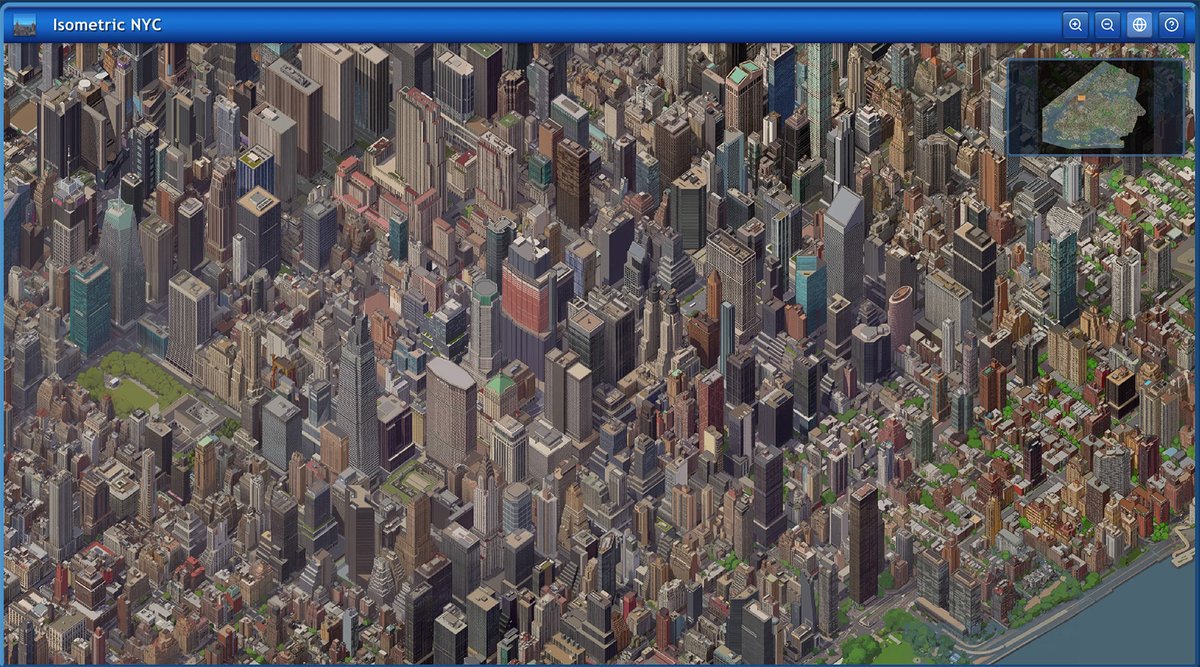
I wanted to share something I built over the last few weeks: isometric.nyc is a massive isometric pixel art map of NYC, built with nano banana and coding agents.
I didn't write a single line of code.
6
14
1,201

Today marks the 4 year anniversary of Azuki!
From launching an anime inspired PFP collection in a small apartment in LA, to growing that seedling into something much bigger, it’s been an incredible journey. This year, I’m excited for the Azuki IP to continue expanding through story, games, and experiences.
What matters most now is leaning into the foundation we’ve built and compounding our momentum: shipping products people love and steadily growing the reach of the Azuki world that we’ve brought to life alongside the community.
Seeing Azuki experienced by new audiences even just yesterday at the TCG Invitational was incredibly meaningful to me.
Four years in. Still building. Still evolving. Still here.
Proud of how far we’ve come and grateful to everyone who’s been part of the journey. IKZ! ⛩️
207
89
747
50,849