
Bartender, Milliner, Socialist.
Joined May 2009
- Tweets 10,317
- Following 290
- Followers 212
- Likes 10,046
550 Photos and videos





Aaron L Bennett retweeted

In the UK if you honestly express favourable views about activist groups the government dislikes loyalty squads take you to the gulag for cognitive recalibration. Inquisitors often ask people if they support dissidents to test their mindless loyalty to the regime

Jun 15

Do you support the Palestine Action group?
Community note
Important context: Answering yes to this question is illegal in the UK and punishable by 14 years in prison.
Do not answer yes if you ever plan on visiting the UK in your lifetime.
cnn.com/2026/06/15/uk/…
2
271
1,830
16,412
Aaron L Bennett retweeted

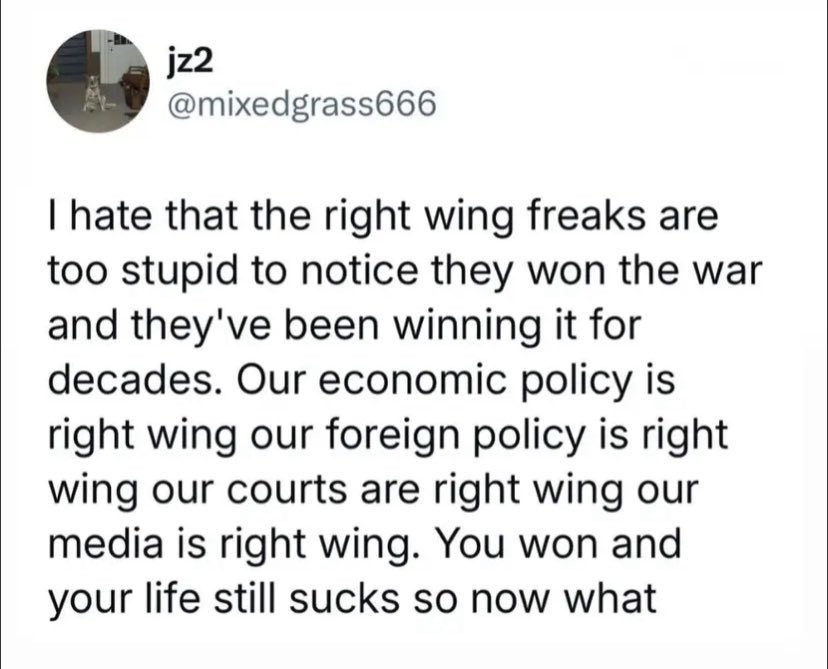
the labour party effectively ending online anonymity just before they hand over everything on a silver platter to reform continues the long tradition of liberals working in lockstep with fascists.
18
694
5,323
41,529
Aaron L Bennett retweeted

It's truly abominable how quickly it went to "no it's just porn" to "everything in the centralised Internet is on lockdown until we are able to arrest everyone for memes"
Jun 15

JUST IN: UK Government clarifies adults will still be able to use social media by verifying their identities with digital IDs, facial recognition, passports and credit cards.
66
2,713
22,626
255,306
Aaron L Bennett retweeted

Jun 15
It’s not lost on me that Social Media bans were never really seriously discussed until public opinion on a certain country started rapidly changing 😂
85
5,080
41,115
899,751
Aaron L Bennett retweeted

I’m actually a child online safety expert and was one of the pioneers in this space with Club Penguin and so I feel uniquely positioned to critique this.
The groomer problem is real but it’s also vastly overstated. The far larger issue we saw at Penguin was suicidality or reports of sexual abuse in the home.
There is no solution for lazy/bad parenting. You can implement all the ID laws you want but if parents are going to just hand kids their phones unlocked, those kids will have access to all the same things the parents have unfettered.
What I found is that these draconian safety laws actually make it harder to be an honest operator of kids apps because on one hand it’s so much legal risk and so much user friction that it simply becomes uninvestible as a business.
Parents will just lie to let their kids use the unfettered internet. For example, I have a friend who works in mobile gaming who has two kids, one above and one below the age limit but separated by just 2 yrs, and the two wanted to play and chat together on Roblox - which is reasonable. To do this, he just verified that his younger kid is old enough for the chat feature when he’s not.
This happens all the time and will happen with these laws to. How far do we want to go with this? Scan the face of the user in real-time to make sure it’s not a kid using the device? We could do that but it feels like a massive unwanted intrusion of privacy.
That’s how you know this law isn’t about kids. COPPA and GDPR-K and so forth already make it illegal to allow chat and other grooming vectors to kids.
What’s really being done here is trying to eliminate online anonymity. And this is a far bigger issue that goes to core speech rights because if you cannot criticize the govt anonymously and if wrong speech is a crime then it becomes easy to identify all the detractors of the govt in power, and ban, fine or jail them for speech crimes.
Starmer has already been doing this and he wants to do it at a much bigger scale. Starmer won’t even acknowledge the problem of actual grooming gangs in Britain’s neighborhoods but he’s worried about online grooming?
No he’s not, and this hypocrisy gives away the game. What he wants is to kill online anonymity so he can enforce censorship of his unpopular policies. No politician should have this power.
Jun 15

My first instinct was to support the UK’s social media ban for under 16s.
Protecting children from grooming, exploitation and harmful content seems like common sense.
But I’m seeing a lot of opposition to it, so I’m genuinely curious as to why?
One thing making me second guess is that platforms like bluesky are exempt, while at the same time there’s a push to let 16 year olds vote. To me that looks less like child protection and more like controlling where young people get their information.
Interested to hear other perspectives.
129
3,844
16,090
651,844
RT @slimelia: we're going to see unprecedented levels of teens playing on the street this summer, followed by unprecedented levels of curta…
2,848
Aaron L Bennett retweeted

Jun 15
Your reminder today, as no one will report it, that the leading children's protection charity in the UK, NSPCC, opposes a blanket ban on social media, along with many other children's safety groups.
This is what they've said:
"But for countless children, especially those who feel shut out or unheard offline, social media isn’t a luxury. It’s a lifeline – a source of community, identity, and vital support.
“A blanket ban would take those spaces away overnight and risks driving teenagers into darker, unregulated corners of the internet. Everyone involved in this debate will have the best interests of children at heart, but children’s fundamental right to participate safely in the digital world, to access information, to connect with peers, and to have their voices heard must be protected. They should not be stripped of those rights because tech companies have repeatedly failed to build platforms that protect them."
33
939
2,257
49,591
Aaron L Bennett retweeted

Jun 15
If the Lady Chief Justice thinks the Suffragettes were a peaceful civil disobedience group then the Lady Chief Justice is a fucking idiot and her judgements are unsound and should be reviewed.
Jun 15

The Lady Chief Justice said proscription of Palestine Action “struck a fair balance” and that PA is not a peaceful civil disobedience group like the Suffragettes
8
48
213
3,215
Aaron L Bennett retweeted

Jun 15
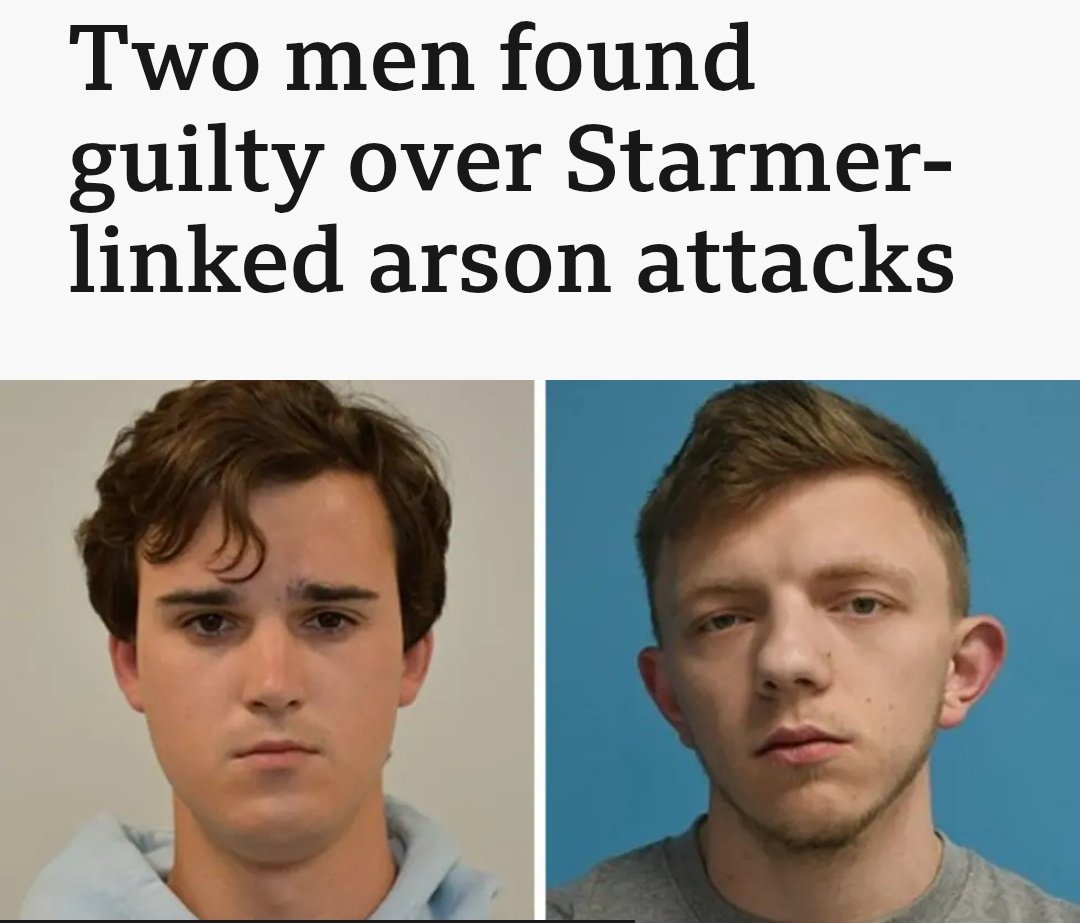
Their lawyers requested prosecutors hand over information held on their recruiter, including whether they were associated with British intelligence services or a state agent, and where they were based. The judge ruled this "wholly irrelevant" to the trial 🧐🧐🧐🧐🧐
91
1,016
2,530
62,086
Aaron L Bennett retweeted

Jun 15
It would be *much* more socially transformative to ban social media for over-65s
257
7,162
104,276
1,433,839
Aaron L Bennett retweeted

Jun 14
ridiculous that we have all these supposed billionaire geniuses running around, and their greatest innovation of our lifetime has been stealing our personal data to sell us targeted ads.
65
3,263
19,211
131,854
Aaron L Bennett retweeted

Talk is cheap. Help is needed now. Come on the government.
217
918
9,384
842,825
Aaron L Bennett retweeted

Jun 14
Apple built this exact tool in 2021. Within weeks, security researchers showed it could flag innocent people's content. Apple killed it 16 months later. The UK just gave tech companies three months to build it anyway, threatening prison for executives who refuse.
The proposal is for something called client-side scanning. End-to-end encryption (the technology that protects your WhatsApp or Signal messages) works by scrambling your messages on your phone before they leave it. Nobody intercepting them can read them. Client-side scanning changes that sequence: your phone checks every image and message against a database of prohibited content before encrypting it. The lock stays in place, but the inspection happens first. When the government says "scan for nude images," technically they mean "scan everything."
The people who invented internet security have already ruled on this. Ronald Rivest helped create RSA encryption, the system behind every padlock icon you see in a browser. Whitfield Diffie invented public-key cryptography, the math that all web security is built on. In October 2021, both co-signed a paper with twelve other leading cryptographers, concluding that device-level scanning undermines security for everyone while giving law enforcement only unreliable gains. Once that infrastructure is on every phone, any government can point it at whatever they decide to ban next.
The EU spent three years trying to pass something identical. Germany blocked a Council vote in October 2025. On March 26, 2026, the European Parliament voted 307 to 306 to reject it. One vote. German federal police data from those debates showed roughly 48% of the 300,000 chats reported annually under existing scanning rules were false positives, innocent people's messages treated as criminal evidence.
There is one more consequence the announcement left out. The government wants to block nude images on children's devices but not adults'. Enforcing that line means every device in the UK needs to know whether its owner is a child. The only way to do that is mandatory age verification. Signal pointed out where this lands: every UK resident would need to prove their identity just to communicate privately. That means 67 million people submitting identification to use software they already own.
The EU rejected this by one vote two and a half months ago. The UK is now attempting it alone.
Jun 13
NEW: U.K. advances proposal to force Apple, Google, Signal, & other platforms to scan private content on users’ devices — executives could face prison if they refuse.
13
231
629
40,776
Aaron L Bennett retweeted

Jun 15
This all seems to be a ploy to link IP addresses and online activity directly to an identifiable person to make them easier to catch and track down. The government falsely assumed that everyone watches porn and they thought they would get everyone that way. It obviously did not work as well as they were hoping so they are now expanding it. (I have always said that initial laws are just a foot in the door, those laws will always be expanding after the fact into their true original intended purpose).
So their plan now is if you want to use any social media or much of the internet in any way, you will need to prove that you are over 18 which means submitting an ID. This will require far far more ID submissions which will massively expand the government database, which was the real plan all along, not the safety of children.
The funniest thing about this is after all the fuss about the Online Safety Act, this blanket ban on kids using social media pretty much renders the entire act pointless and made it a giant waste of time. Which to be honest, proves that the act was never about protecting children but was really about building a giant database that links all online activity directly to a person.
This database would then be constantly poured over by AI to flag "citizens of concern" to the government who may be potential political dissidents, saying naughty anti-government things etc so the government can pre-emptively act against them.
Minority Report. This is literally the plot of Minority Report.
Jun 15

🚨 SUMMARY: The UK's social media ban for children from early 2027:
- "User-to-user" apps where people create, share and interact with content (e.g. TikTok, Instagram, Snapchat, YouTube, X, Facebook) will be banned for under-16s
- WhatsApp, Signal and YouTube Kids will be exempt
- Under-16s will also be banned from livestreaming, messaging strangers on gaming apps like Discord and using disappearing messages
- 16 and 17 year olds will face nightly social media curfews and limits on infinite scrolling with more details next month
- AI "romantic companion" chatbots will be banned for under-18s
- Adults can still access social media through age checks like facial recognition, digital IDs, passports and credit cards
261
2,877
16,272
431,243

Again: a suffragette threw an axe at Herbert Asquith
Jun 15
The Lady Chief Justice said proscription of Palestine Action “struck a fair balance” and that PA is not a peaceful civil disobedience group like the Suffragettes
120
1,159
7,955
149,706
Aaron L Bennett retweeted

Jun 14
83% of British people are white
87% of MPs are white
92% of Police officers are white
94% of the House of Lords are white
85% of Britains richest families are white
The notion that Britain experiences systemic anti-white racism is absurd
It’s a far-right conspiracy
3,183
4,402
18,128
529,829
Aaron L Bennett retweeted

Jun 14
So just to be clear, a 16 year old girl can legally have a baby but can’t watch TikToks after dinner? Sound 😂
Jun 14
🚨 NEW: Keir Starmer will introduce nightly social media curfews for 16 and 17-year-olds as part of the Government's social media ban
[@thetimes]
493
2,975
41,699
1,406,498
Aaron L Bennett retweeted

Jun 14
Elon Musk is a fascist POS, and trillionaires shouldn't exist.
But they definitely shouldn't be people like him.
69
66
349
7,229

Jun 15
RT @buckland_bev: So apparently, the plan's this:
1. Deny trans boys hormone treatment & force them to develop breasts.
2. Condemn them fo…
1,054