
ARightConnection-Discover Career Service Providers (Recruiters, Coaches, Resume Services, etc). Helping everyone achieve highest potential -
Joined April 2020
- Tweets 6,090
- Following 4,594
- Followers 937
- Likes 4,218
43 Photos and videos

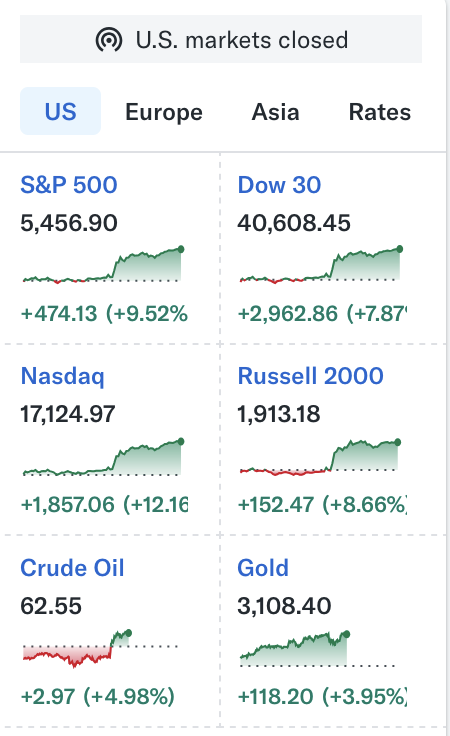










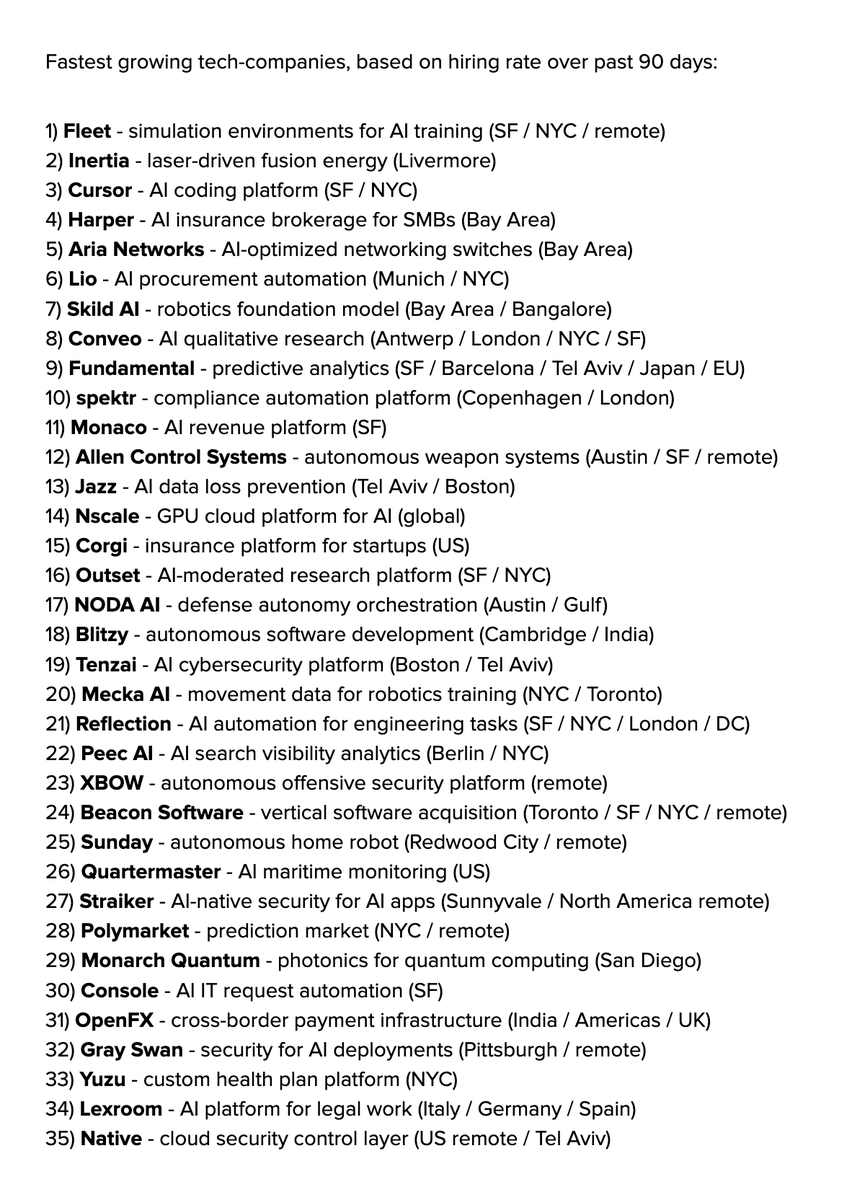
We're hiring: cursor.com/careers

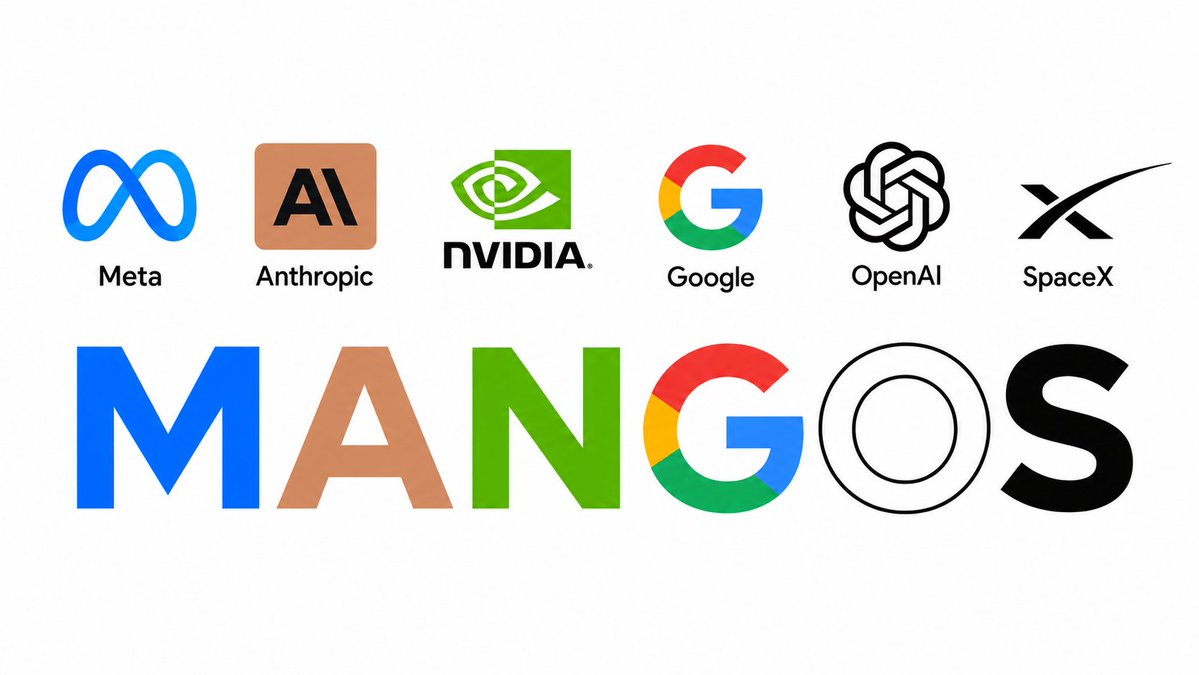
Source: Cursor, which is prepping for an expected acquisition by SpaceX, passed $4B in annualized revenue in the last week, up from $3B in April and $2B in Feb. (@richardjnieva / Forbes)
(Visit Techmeme dot com for the link and full context!)
39
25
707
147,711

ARightConnection retweeted

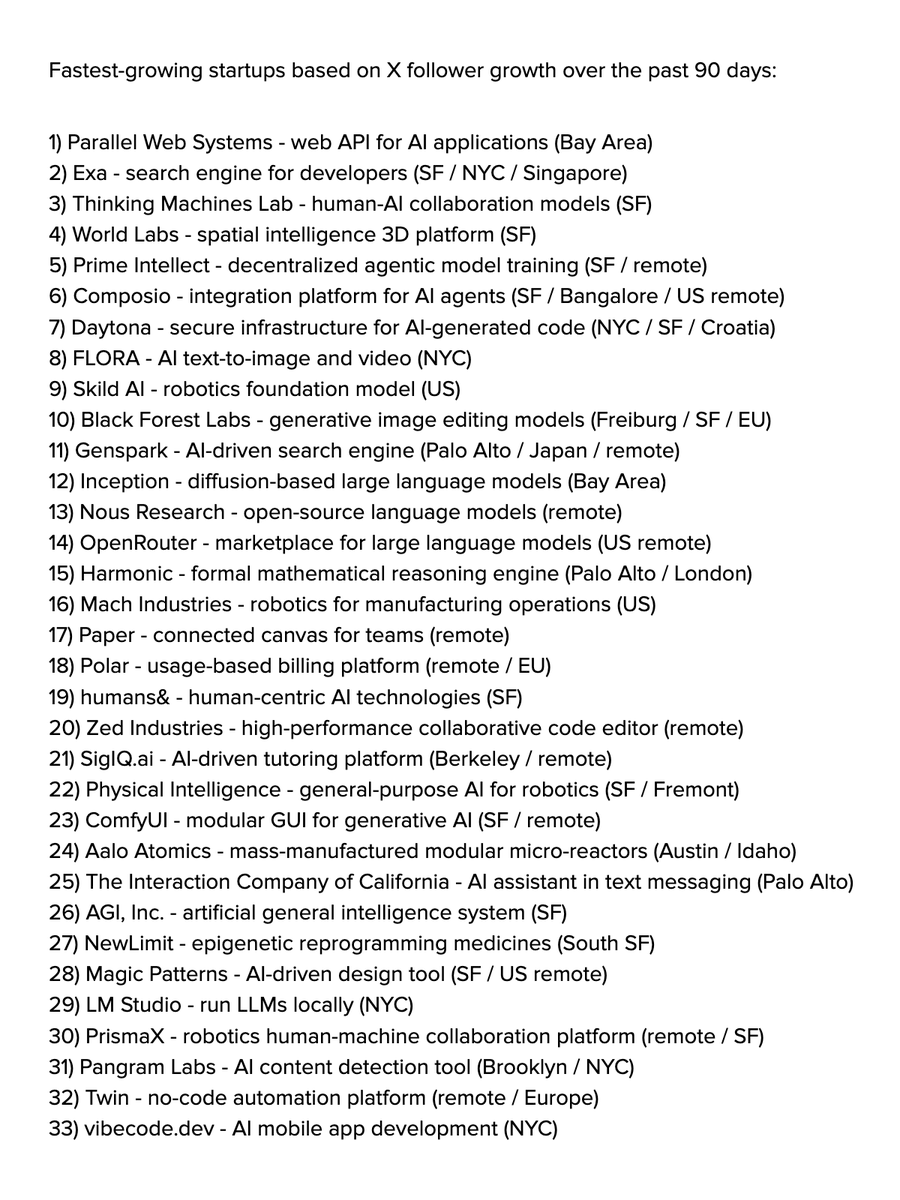
👇 8 Venture Capital firms HIRING this week:
1
1
7
4,419
Jun 1

Microsoft Bans Claude Code After AI Costs More Than The Humans It Replaced
319
ARightConnection retweeted

May 28
Here's a quick 3 minute video with 80 companies building what once sounded impossible - AI, brain interfaces, gene therapy, fusion, robotics, self-driving and more.
What makes the Forbes Midas List meaningful isn’t the rankings. It’s the founders making the impossible possible.

Venture capital is on the cusp of what could be its greatest returns ever.
This year’s Forbes Midas List—the 25th anniversary edition—reflects the staggering rise of SpaceX, OpenAI and Anthropic, three private companies whose valuations are reshaping the venture landscape and driving a record 25 newcomers onto the ranking.
Read more: forbes.com/lists/midas/?utm_… (Photos: Guerin Blask for Forbes) #ForbesMidas
12
48
283
61,609
ARightConnection retweeted

May 28
Pitch me your company in one sentence.
876
6
425
100,068

If you work in the software industry and have time to read only one long-form post today, read this one.
If you have time to read two, read this one twice.
Highly #recommend
tl;dr: Stay off the yellow brick road that the frontier model companies are racing down. There is plenty of opportunity to solve hard problems elsewhere. Focus on areas where you can build the system of work (workflows), capture compounding, non-public data and deliver deterministic outcomes that customers need.

28
154
1,768
460,353
ARightConnection retweeted

May 24
Anthropic onboarding day: Michael Scott introducing Karpathy like he just signed Wemby in free agency.
396
1,490
17,626
2,349,568
ARightConnection retweeted

May 24
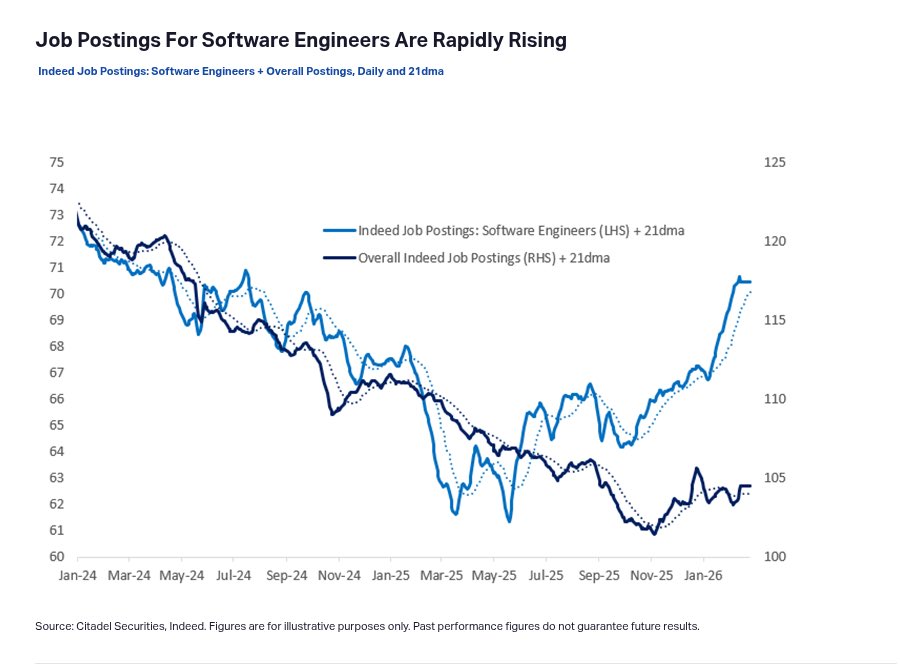
Q: How are job postings for software engineers rising rapidly despite AI agents automating coding?
A: Because there’s far more code to manage than ever before. We’re already seeing a 14x YoY increase in GitHub commits, and it’s accelerating.
AI has dramatically lowered the cost of writing code, so it’s now being used across far more businesses, applications, and use cases.
We’re at the beginning of a massive productivity boom driven by the proliferation of bespoke software throughout the entire economy.
Coding has been AI’s breakout use case this year. The fact that it’s increased demand for software engineers — rather than decreased it — should call into question the entire “AI will cause mass job loss” narrative.
827
1,466
9,114
1,630,233

May 21
The changing economy and workforce due to AI
May 21

Cloudflare CEO Prince on how AI changes who gets laid off first:
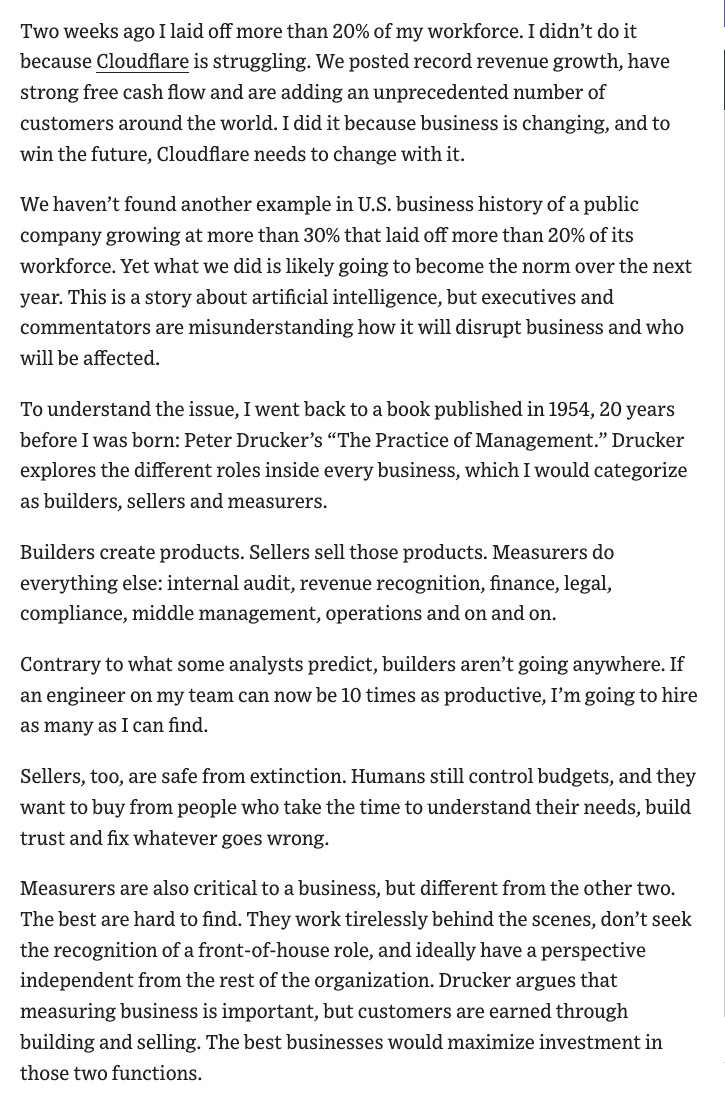
Two weeks ago I laid off more than 20% of my workforce. I didn’t do it because Cloudflare is struggling. We posted record revenue growth, have strong free cash flow and are adding an unprecedented number of customers around the world. I did it because business is changing, and to win the future, Cloudflare needs to change with it.
We haven’t found another example in U.S. business history of a public company growing at more than 30% that laid off more than 20% of its workforce. Yet what we did is likely going to become the norm over the next year. This is a story about artificial intelligence, but executives and commentators are misunderstanding how it will disrupt business and who will be affected.
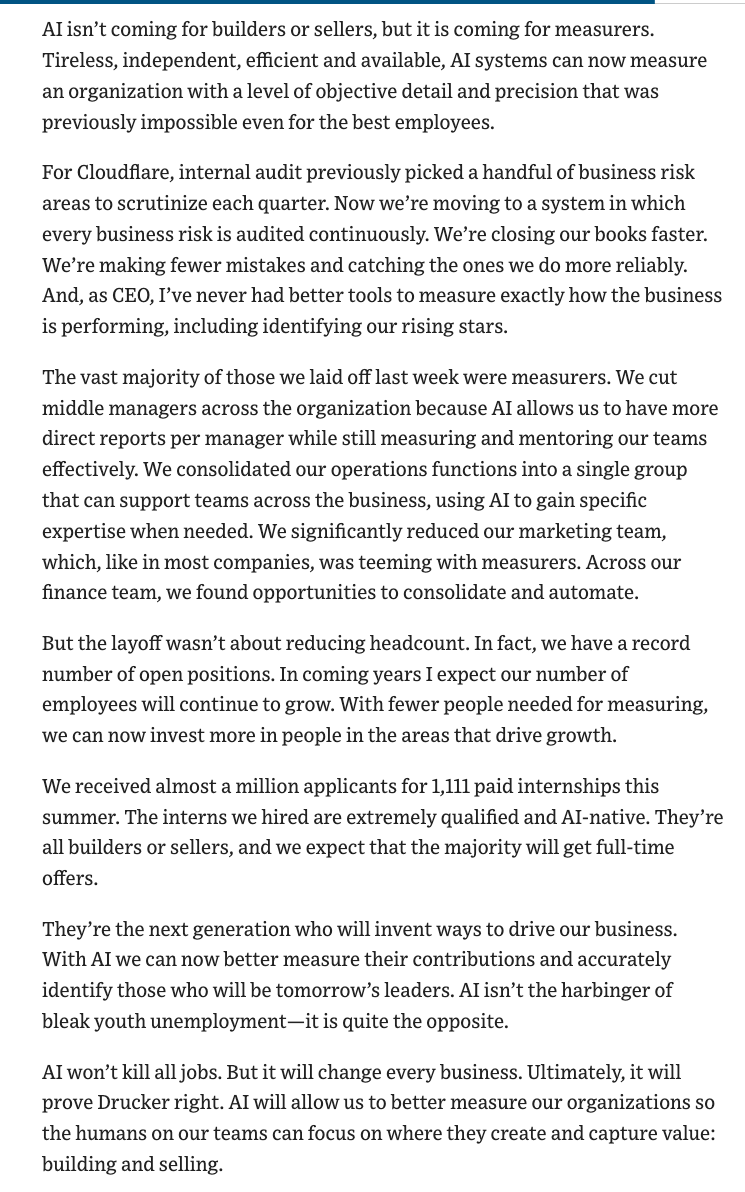
AI isn’t coming for builders or sellers, but it is coming for measurers. Tireless, independent, efficient and available, AI systems can now measure an organization with a level of objective detail and precision that was previously impossible even for the best employees.
For Cloudflare, internal audit previously picked a handful of business risk areas to scrutinize each quarter. Now we’re moving to a system in which every business risk is audited continuously. We’re closing our books faster. We’re making fewer mistakes and catching the ones we do more reliably. And, as CEO, I’ve never had better tools to measure exactly how the business is performing, including identifying our rising stars.
The vast majority of those we laid off last week were measurers. We cut middle managers across the organization because AI allows us to have more direct reports per manager while still measuring and mentoring our teams effectively.
We consolidated our operations functions into a single group that can support teams across the business, using AI to gain specific expertise when needed. We significantly reduced our marketing team, which, like in most companies, was teeming with measurers. Across our finance team, we found opportunities to consolidate and automate.
We received almost a million applicants for 1,111 paid internships this summer. The interns we hired are extremely qualified and AI-native. They’re all builders or sellers, and we expect that the majority will get full-time offers.
28


ARightConnection retweeted

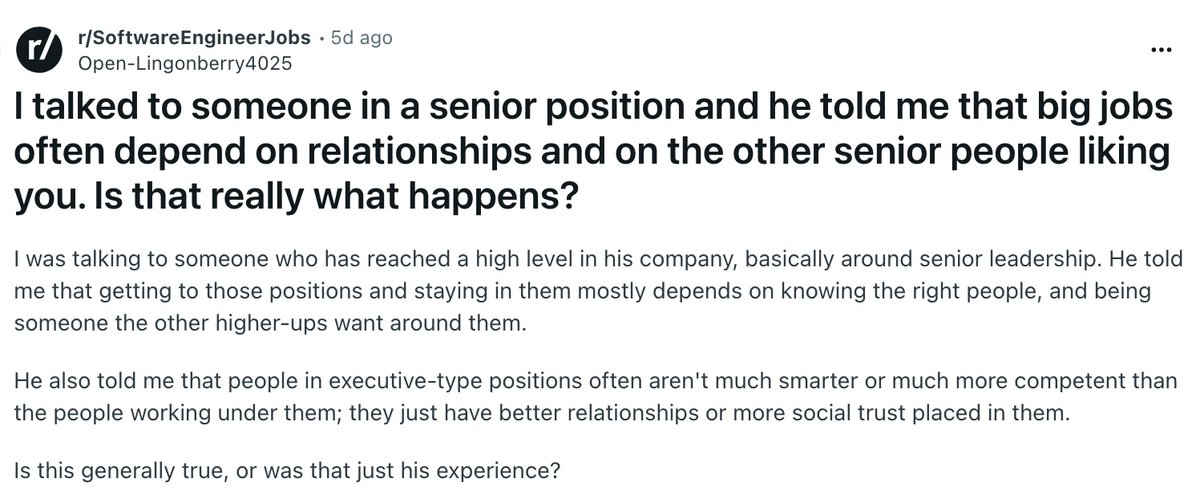
The higher you climb the corporate ladder, the more relationships matter.
At entry level, your output is visible. You do the work, it shows up. It gets seen and you get a raise and promotion.
At director and above, almost none of your work is visible. You're not doing the hands on dirty work, or at least in large amounts. You're making decisions in a room with a few people and the results show up 6 months later. Nobody can trace them back to you.
So how do they decide who belongs in those rooms?
They pick people they already know.
Not "know of." Know.
People they worked with and have seen operate under pressure. That person gets the call more times than not over the stranger with the better resume.
The stakes are higher, so the trust threshold is higher. A bad hire at $70K is annoying. A bad hire at $300K who controls a $50M budget is catastrophic.
And yeah, it's political. Not in the "office politics is a game" way. In the "if you make a mistake at this level, it doesn't just hit you, it hits your boss, your boss's boss, and so forth.
So people protect themselves by surrounding themselves with people whose body of work they've seen firsthand.
This is why "networking" advice misses the point. The goal isn't to collect contacts.
The goal is to do good work with good people so that when a seat opens at their next company, your name is the first one they think of.
34
213
2,305
182,879
ARightConnection retweeted

May 11
A list of 20 humanoid robot startups that raised $10M in the past 12 months.
All likely hiring:

5
4
24
2,269
ARightConnection retweeted

May 11
5 stocks/ETFs to buy if you’re starting with $500 🚀🤖 (by Claude AI)
7
6
74
63,656

☎️Calling all startups, innovators, & entrepreneurs!
This week, @SBAgov is hosting a free virtual event to connect you with America’s Seed Fund, the largest source of early-stage R&D funding in the U.S.
May 12-14
Register Here: americasseedfund.us/america-…
10
46
227
19,136