
Building at the intersection of science finance. Co-founder, Parker Institute for Cancer Immunotherapy. Co-founder, Related Sciences. Dog lover.
Joined July 2011
- Tweets 746
- Following 4,076
- Followers 848
- Likes 9,796
17 Photos and videos






Pinned Tweet

31 Dec 2023
for most diseases, the best medicines are soon to come. why?
better disease targets x 10 new/better modalities x better discovery x better clinical precision = golden decade for new drug creation, addressing 2 big opportunities:
1. treat the ~75% of 13,000 disease segments w no approved medicines
2. replace last generation medicines w more effective and safer meds
nytimes.com/2023/06/23/magaz…
1
2
16
3,172
May 18
May 17

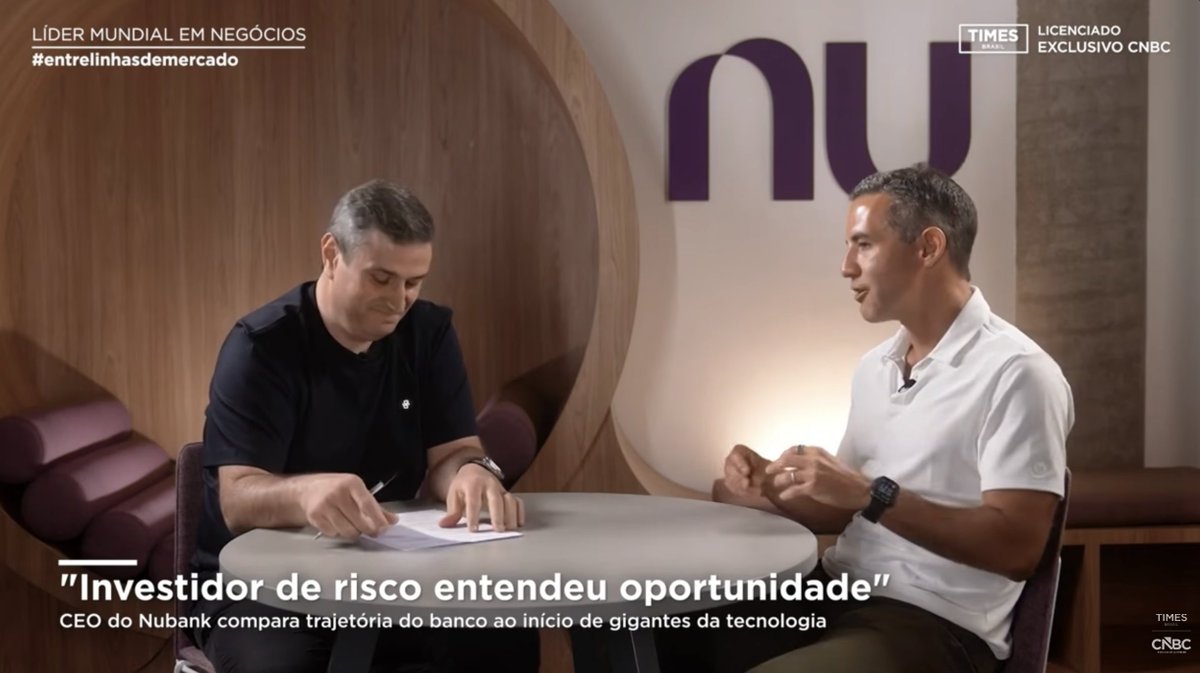
Another great recent interview with $NU's CEO. Nubank started because the traditional banking experience was terrible. David Vélez faced huge delays, revolving doors, and extreme frustration just to open a simple bank account in Brazil. He realized that major banks were failing the consumer. To solve this, Nu focused on fighting complexity and empowering people.
Today, this mission has turned Nu into a massive financial giant. They now have 135M customers across Brazil, Mexico, and Colombia. In the first quarter of 2026 alone, Nu reached a record $5B in revenue and $871M in net income.
From the beginning, tech gave Nu a massive edge. In 2012, the rise of smartphones and cloud computing allowed Nu to build a bank without spending billions on physical branches and old computer systems. This digital-first model makes Nu 20 to 30 times more efficient than traditional banks. This incredible efficiency resulted in a record-low operating efficiency ratio.
Now, Nu is pushing this advantage even further through AI. They are completely rebuilding the bank around it. AI now handles real-time credit pricing in under one second and has sped up engineering testing cycles by 90%.
Because Nu operates with such low costs and deep data insights, they can safely lend money in ways that others cannot. They are aggressively growing their credit card and unsecured lending businesses. These products made up 98% of their new exposure in the quarter.
Nu does not worry about minimizing late payments. Instead, they use AI to price risk extremely well. This ensures their loans remain highly profitable over the long term. They keep loan durations short so they can react to market changes much faster than incumbent banks. They are also using these advantages to capture the massive small business market at nearly zero acquisition cost.
They are quickly growing credit limits to win over high-income customers. Nu does not view itself purely as a bank. Their true goal is to make customers love them. Because 100% of their customers are digital, Nu can easily sell non-banking products. They are now expanding into marketplaces, travel, and telecom services like NuCel to make daily life simpler.
Nu is also taking its winning formula to new countries. Their operations in Mexico and Colombia are growing very fast. They believe their Latin American culture helps them build strong emotional connections with customers. This gives them a major edge over traditional banks.
They are also testing an expansion into the US. This move is a low-cost bet that risks less than 100 basis points of their efficiency ratio but offers massive upside. Despite their massive success, Nu is still at the very beginning of its journey. The global financial market produces around $7T in profits, and traditional banks still control 97% of it.
By combining a pro-consumer culture with top-tier AI and an unbeatable cost structure, Nu plans to keep taking market share from legacy banks. They aim to eventually serve hundreds of millions of people across many countries. It is pretty wild to see that despite their growth over the last decade that a large part of their future growth will involve winning over even more customers from legacy banks.
1
119
Adam Kolom retweeted

May 8
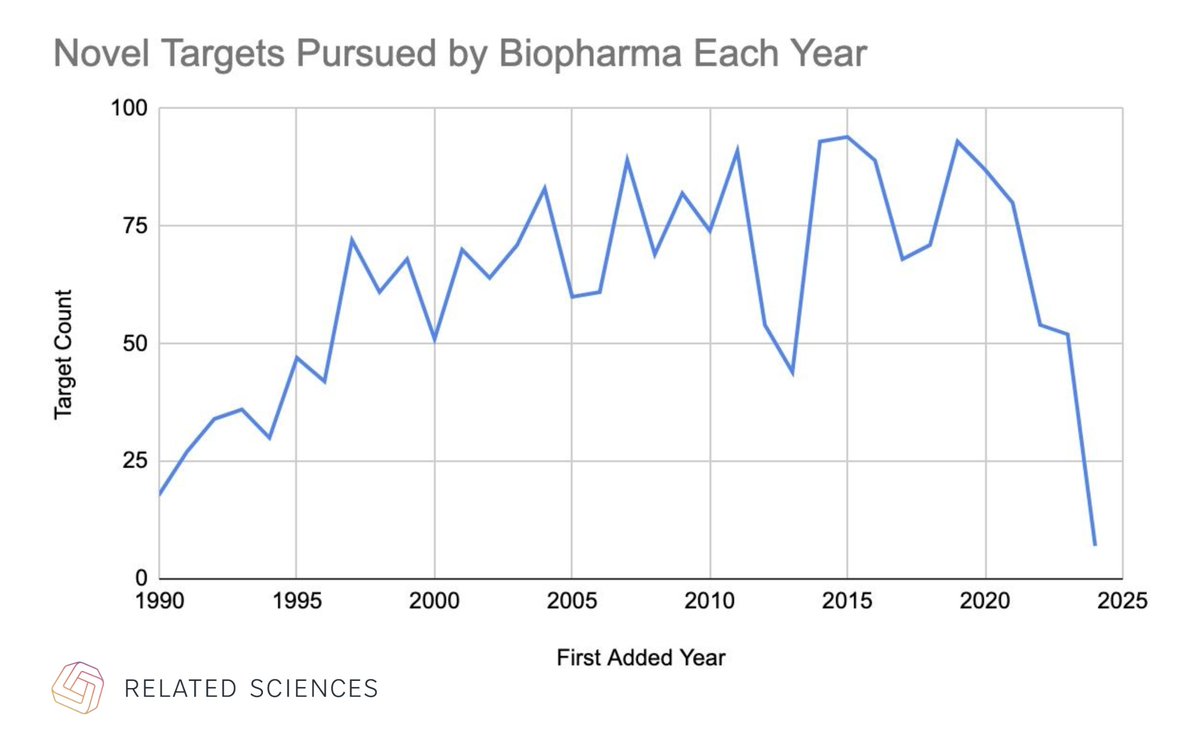
turning out that the biotech winter is not temporary, not thawing when rates drop. We are in a structural consolidation where sub $300M funds doing early stage discovery seem to be hollowing out. I doubt the science has gotten worse. The funding architecture around it has become increasingly inhospitable to anyone who isn’t already at scale. That is a long term problem for therapeutics discovery even if mega fund IRRs look fine in the near term
May 8

Just got back from a Life Science investor conference.
The mood of sub-$300m VC funds is not good.
They are having a very hard time raising money. Many people got laid off just in the past 6 months. Apparently it is the same in EU and US.
But Mega funds have no problem raising.
9
11
124
25,267
May 7
At its most extreme concentration, capitalism conceptually morphs into a technocratic form of communism.
40
Adam Kolom retweeted

May 6
We are back. After one year of quiet building.
Introducing GENE-26.5, our first robotic brain that takes a major step toward human-level capability.
For years, robotics has struggled to learn from the world’s largest and valuable data source: Humans.
Solving it means rethinking the whole stack from the ground up:
- A robotics-native foundation model.
- A 1:1 human-like robotic hand.
- A noninvasive data collection glove for motion, force, and touch.
- A simulator that turns weeks of experiments into minutes.
GENE-26.5 is trained across language, vision, proprioception, tactile, and action. We designed a set of tasks to test how far we can go with this new paradigm.
Fully autonomous, 1x speed, one model, same weights. (Enjoy with sound on)
We are approaching the endgame for robotics.
And this is just a beginning.
280
1,134
5,815
2,690,556
Apr 25
futuristic AF. hope time rules of inception don't apply
Apr 24

Today we are launching two revolutionary products: Dual and Phase.
These devices will enhance how humans dream.
Prophetic Dual retails for $449 and starts shipping at the end of this year.
Prophetic Phase retails for $1299 and starting shipping middle of next year.

83
Apr 23
AI seems to be all about thresholds.
Right now, appearance of infinite exponential demand for intelligence/tokens as API at anthropic etc
but above a certain capability level, why wouldn't apple just ship a mac with an opus 4.7 level model fully harnessed?
open model intelligence will eventually be *enough* for 99% of even hard tasks.
if china and google distill powerful models into local ones, this should really hurt the AI growth story in a year or two above some key intelligence threshold we are already approaching
Apr 23

sorry but this is seriously fucking impressive
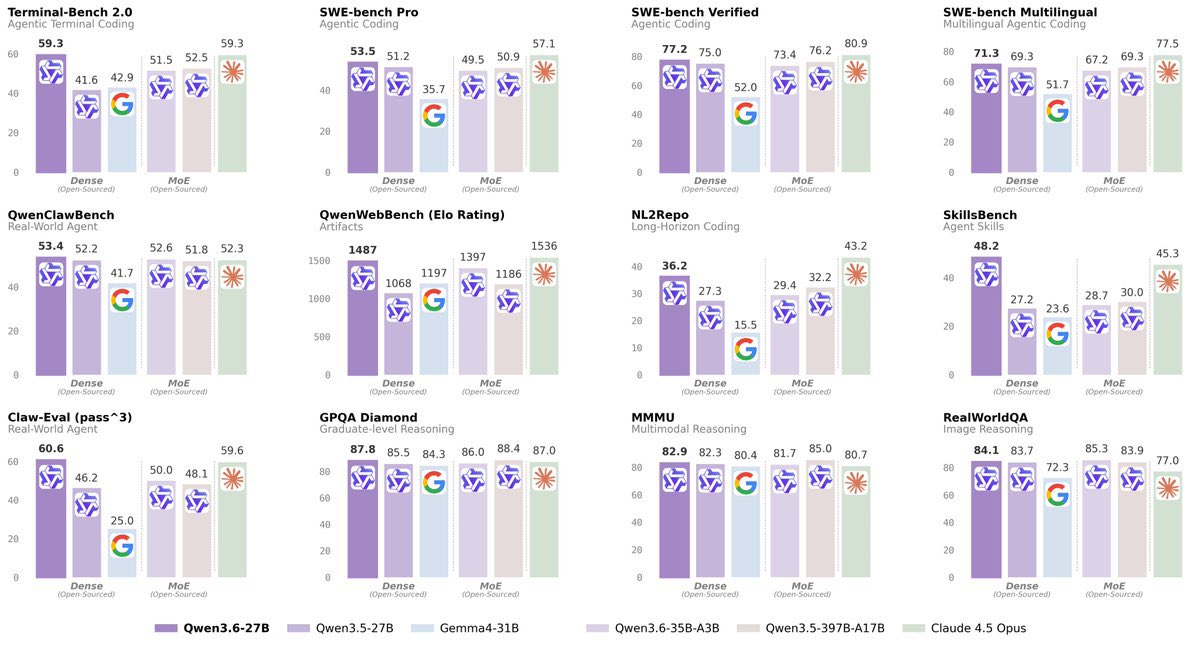
china just shipped a claude code-level ai model small enough to run on your laptop.
it codes better than opus 4.5 and its tiny. 27B beating models 15X LARGER than it.
best part? shit is fully open source.
no cloud, no rate limits, no api keys
this model plus kimi k2.6 tells me open source has caught up to the frontier models
how the fuck did china pull this off?
81
Apr 20
amazingly cool sentence / finding
Apr 20

What's especially cool is that the flagellar motor exploits the indivisibility of 5 by 2 to run on a fuel of rising entropy as protons diffuse into cells. For me as a physics and math person, this is biology at its best. quantamagazine.org/what-phys…
96
Adam Kolom retweeted

Apr 19
Only one chance in this lifetime…
Like watching sunset at the beach from the most foreign seat in the cosmos, I couldn’t resist a cell phone video of Earthset. You can hear the shutter on the Nikon as @Astro_Christina is hammering away on 3-shot brackets and capturing those exceptional Earthset photos through the 400mm lens. @AstroVicGlover was in window 3 watching with @Astro_Jeremy next to him.
I could barely see the Moon through the docking hatch window but the iPhone was the perfect size to catch the view…this is uncropped, uncut with 8x zoom which is quite comparable to the view of the human eye. Enjoy.
4,089
45,024
263,215
19,111,987
Apr 12
!!! 💜 @ChrisJBakke
Apr 10

Running a company:
2020: can you survive a pandemic?
2021: still here? we’re going to give all of your competitors $100m series A rounds.
2022: wow, you made it? okay, all engineers cost $600,000/year now.
2023: nice job! okay, SVB failed and we’re going to take away your bank account.
2024: a survivor I see. but can you pivot from ai to crypto to defense tech back to ai-enabled defense tech in a 12 month period to stay relevant?
2025: unfortunately all of your competitors have raised $2b series B rounds. oh and only 500 engineers are relevant and they cost $100m/yr each.
2026: well, well, well. you’re still in business? let’s deploy the thunderclap of godlike LLMs from the heavens so all of your customers can rebuild your app in 2 hours. can you survive?
96
Adam Kolom retweeted

So, basically, if Anthropic was not a US company, we’d be facing zero days with multiple unknown points of attack on virtually all of our systems to an adversary who developed this capacity before us.
Apr 7

Introducing Project Glasswing: an urgent initiative to help secure the world’s most critical software.
It’s powered by our newest frontier model, Claude Mythos Preview, which can find software vulnerabilities better than all but the most skilled humans.
anthropic.com/glasswing
308
830
14,882
1,106,877
Apr 1
Impressive result
Apr 1

Sequence is all you need. Protein language models set a new state of the art for predicting the clinical effect of genetic variations.
x.com/vntranos/status/203901…
172
Mar 23
"The tragedy of this moment is that the right war is being waged by the wrong people, for the wrong reasons. And the opponents of the war, rather than making this case, have mostly opted for blinkered pacifism and conspiracy theories, while refusing to grapple with the manifest evil of the Iranian regime. Of course, the Iranian people, caught between their own tyrants, a reckless American president, and his feckless critics, will pay the heaviest price." 👏🎯 samharris.substack.com/p/mor…
48
Mar 22
awesome entrepreneurial story that starts with a mutated enzyme found in pancreatic cancer
Mar 20

We spent $15,000 on billboards targeting one person: the guy controlling all the chemical spend at a saltwater disposal company in Texas. We mapped his commute and bought every billboard between his house and the oil field. When we finally called, he said "I see your billboards everywhere." That landed us our first oil field contract. At the time our entire operation was a $10,000 reactor built from PVC pipes from Home Depot, turning corn sugar into industrial chemicals. People keep trying to throw it away. It still works. That leaking reactor started a multibillion-dollar company. @ycombinator visited our plant in Houston. The original PVC reactor is still on the floor next to the Bioforge.
1
141
Adam Kolom retweeted

Mar 17
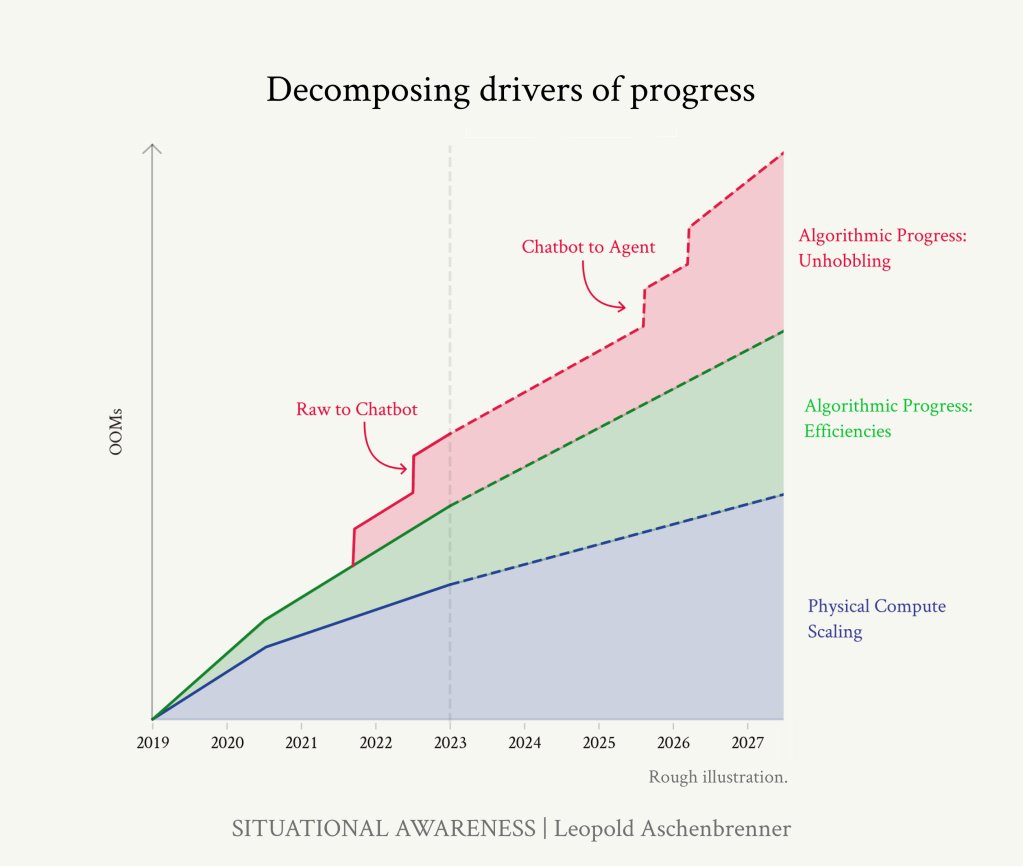
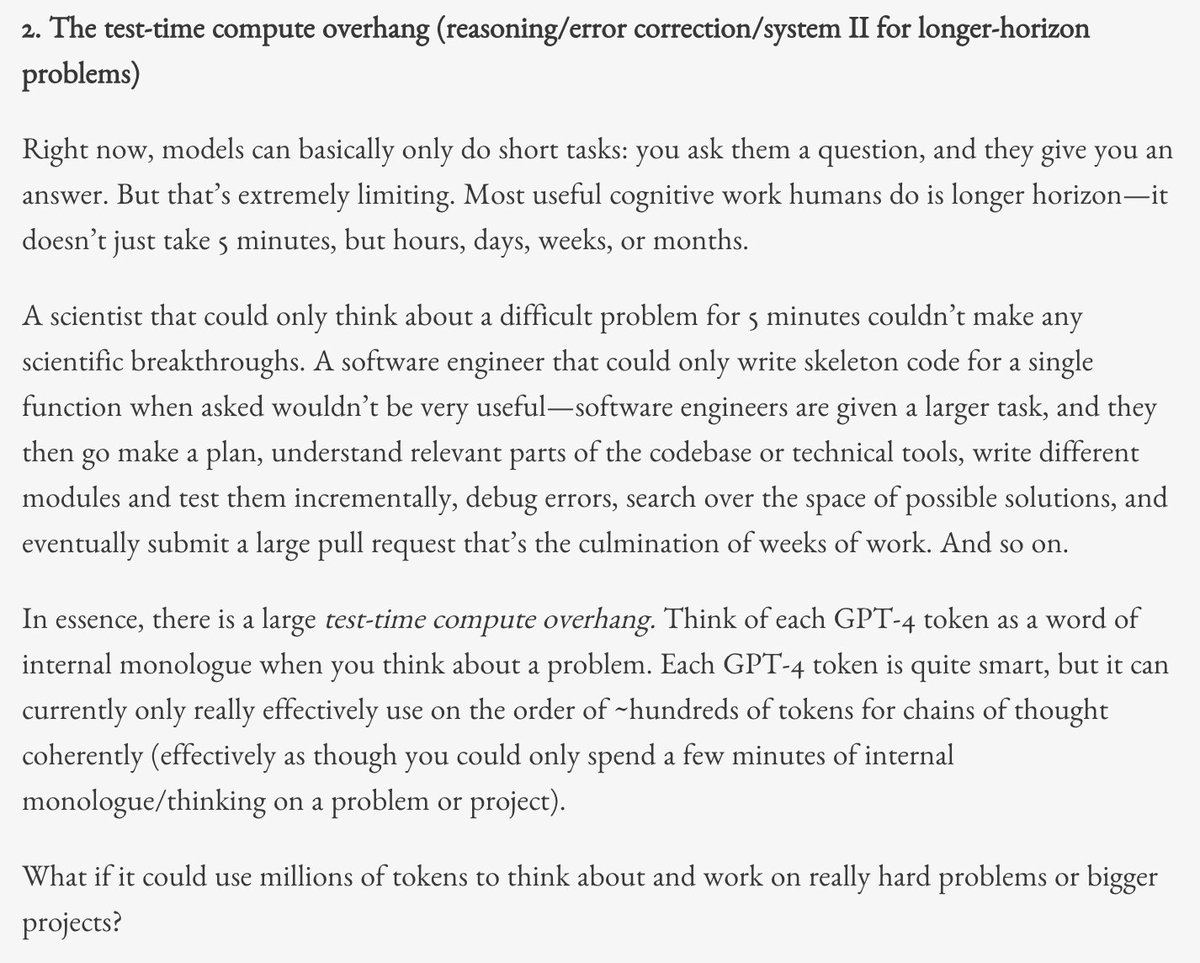
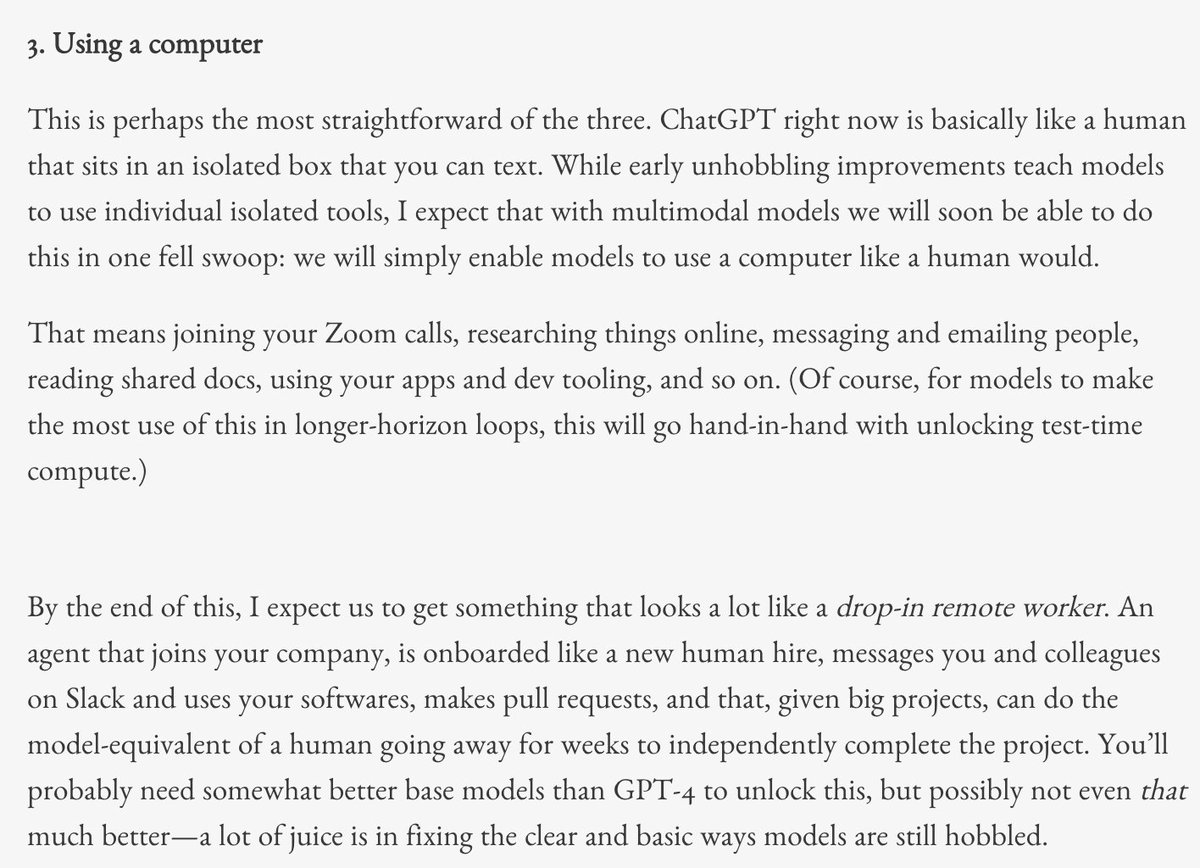
Leopold Aschenbrenner predicted in June 2024 that we would get a dramatic improvement in AI capabilities around the turn of 2026 due to the switch from chatbots to agents, which he thought would unlock a new set of AI capabilities
Which is basically exactly what happened?
49
147
1,746
145,110
Mar 18
really great (and aesthetic) integrated open resource for those investing or building in robotics
Mar 16

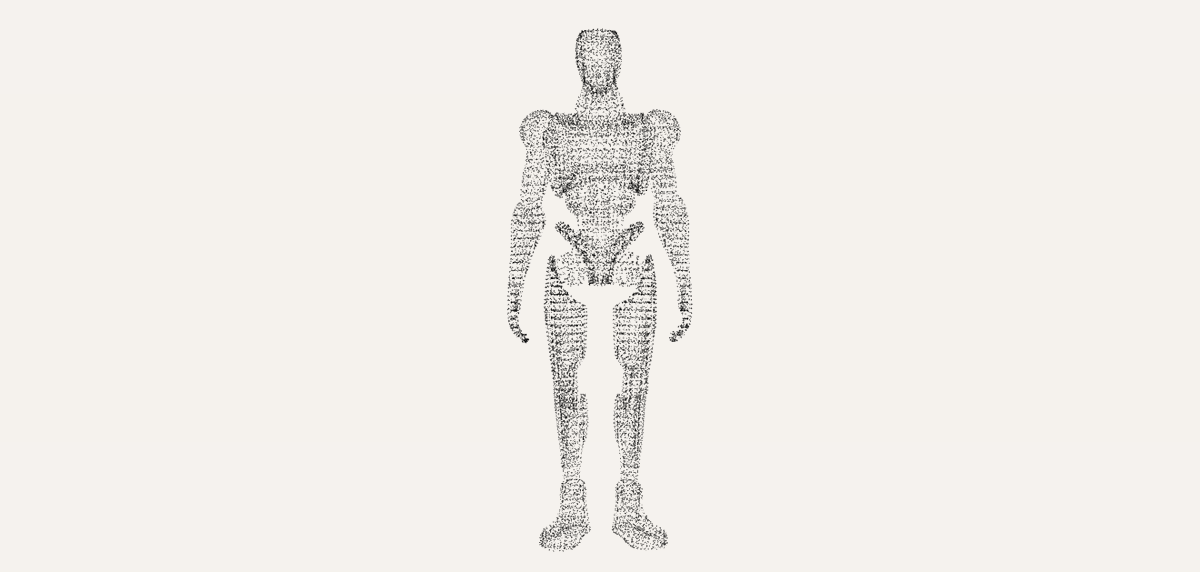
Introducing Humanoid Atlas, the Bloomberg Terminal for humanoids. Every OEM, every supplier, every dependency
humanoids.fyi
1
190
Mar 16
👏
"In that sense, therefore, the real novelty here is not the biology but the combination of three things: a non-specialist orchestrating a complex biomedical pipeline, AI acting as a navigational layer across multiple technical domains, and the resulting decentralization of capabilities that were once confined to institutional research environments. But I think the story also points to something deeper, which is a challenge to modern regulatory environments. "
Mar 16

My take on the whole "AI cures cancer in dog in Australia". It's a very interesting story, but perhaps not for the reasons that are being noted.
In 2007, Freeman Dyson published an essay in The New York Review of Books called “Our Biotech Future.” It contains one of the most memorable predictions about the future of biology I’ve ever read.
“I predict that the domestication of biotechnology will dominate our lives during the next fifty years at least as much as the domestication of computers has dominated our lives during the previous fifty years.”
Dyson believed biology would eventually follow the trajectory of computing. At first, powerful tools live inside large institutions - universities, government labs, major companies. Over time those tools get cheaper, easier to use, and more widely distributed.
Eventually individuals start doing things that once required entire organizations.
“Biotechnology will become small and domesticated rather than big and centralized.”
He even imagined genome design becoming something almost artistic:
“Designing genomes will be a personal thing, a new art form as creative as painting or sculpture.”
Dyson's words rang in my mind as I read the "AI cures dog cancer" story. Much of the coverage framed this as an example of AI discovering new science. But that’s not really the interesting part of the story.
The scientific pipeline involved here is actually well known. It closely mirrors the workflow used in personalized neoantigen vaccine research that has been under active development for years. The steps are fairly standard: sequence the tumor, identify somatic mutations, predict which mutated peptides might be recognized by the immune system, encode those sequences in an mRNA construct, and deliver them to stimulate an immune response.
The biological targets themselves were almost certainly not new discoveries (I have been unable to find out what they are, but mutations in targets like KIT which are common might be involved). Partly therein lies the rub, since the hardest part of drug discovery, whether in humans or dogs, is target validation, the lack of which leads to lack of efficacy - the #1 reason for drug failure. In neoantigen vaccines, the proteins involved are usually ordinary cellular proteins that happen to contain tumor-specific mutations. AlphaFold which was used to map the mutations on to specific protein structures is now a standard part of drug discovery pipelines. The challenge is identifying which mutated peptides might plausibly trigger immunity. What is interesting though is how the pipeline was assembled.
Normally, this type of workflow spans multiple domains - genomics, bioinformatics, immunology, and translational medicine - and in institutional settings those pieces are distributed across specialized teams, document sources and legal and technical barriers. Navigating the literature, selecting computational tools, interpreting sequencing results, and designing a candidate mRNA construct is typically a collaborative process. In this case, AI appears to have helped compress that process, pulling together data and tools from different sources. Instead of requiring multiple experts, a motivated individual was able to assemble the workflow with AI acting as a kind of guide through the technical landscape.
I’ve seen something similar in my own work while building lead-optimization pipelines in drug discovery. The underlying science hasn’t changed, but the friction involved in assembling the workflow can drop dramatically. Tasks that once required stitching together multiple tools, papers, and areas of expertise can now often be executed much faster with AI helping navigate the terrain; and by faster I mean roughly 100x. That kind of workflow compression is powerful, to say the least. When the cost of navigating technical knowledge drops, more people can realistically assemble sophisticated research pipelines. This story is a great example of what naively seems like a boring quantitative acceleration of the research process.
In that sense, therefore, the real novelty here is not the biology but the combination of three things: a non-specialist orchestrating a complex biomedical pipeline, AI acting as a navigational layer across multiple technical domains, and the resulting decentralization of capabilities that were once confined to institutional research environments. But I think the story also points to something deeper, which is a challenge to modern regulatory environments. Modern biomedical innovation does not operate solely according to what is scientifically possible. It is structured by regulatory frameworks - clinical trials, safety oversight, institutional review boards, and regulatory agencies. Those systems exist for important reasons, but they also assume that the development of therapies occurs primarily within large, regulated organizations.
When individuals begin assembling pieces of these pipelines outside those institutions, the relationship between technological capability and regulatory oversight starts to shift. The dog in this story sits outside the human regulatory framework. That fact alone made the experiment possible. In other words, the story is not just about technological capability; it is also about how certain forms of experimentation can occur when they bypass the regulatory pathways that normally govern biomedical innovation. One is reminded of another Australian, Barry Marshall, who received a Nobel for demonstrating through self-experimentation that ulcers are caused by bacteria.
This raises an interesting question: what happens when the tools for assembling sophisticated biological workflows become widely accessible while the regulatory structures governing them remain institution-centric? That tension may ultimately be the most important implication of this moment. Regulatory frameworks will need to adapt to this kind of citizen science. Seen in this light, the story about the AI-assisted vaccine is less about a breakthrough in cancer therapy and more about a glimpse of the early stages of something Dyson anticipated nearly two decades ago: the domestication of biotechnology.
If AI continues to reduce the cognitive overhead required to navigate biological knowledge and assemble complex pipelines, the boundary between professional research and motivated individuals may begin to blur. That shift will require careful thinking about safety, governance, and responsibility. But it also carries an exciting possibility. Dyson imagined a world in which biological design might eventually become something like a creative craft practiced not only by institutions but also by curious individuals experimenting at smaller scales. For a long time that vision felt distant. Now, it feels like we may be seeing the first hints of it.
1
181
Feb 25
fascinating perspective on token output
Feb 24

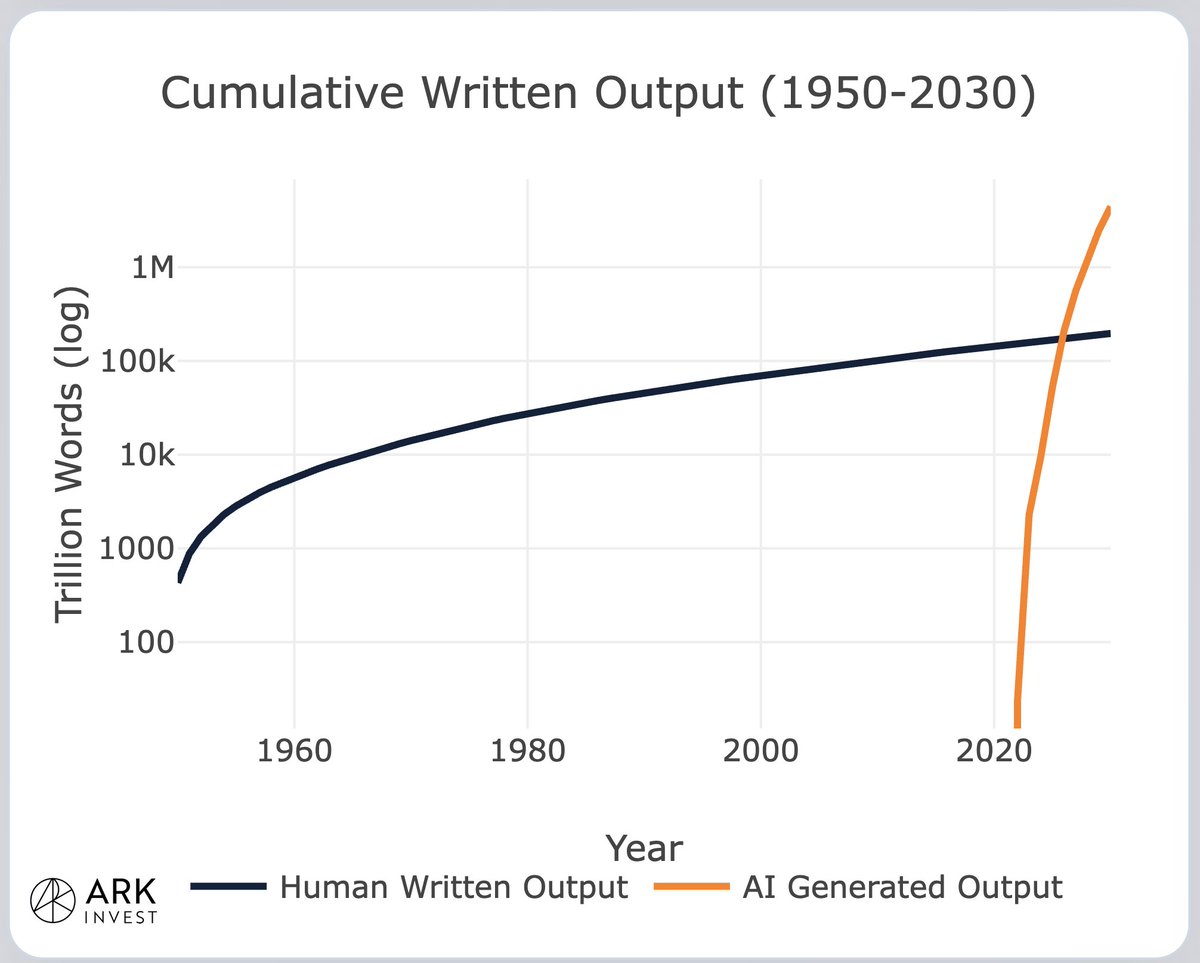
Over the course of history--scribbling, scratching, typing and clattering--we, humanity, have managed to jot down, memorialize and commit to paper (or disk) 270 quadrillion written words.
In 2026, AI will surpass that output.
The singularity is here.
1
132

Feb 19
truly incredible the thrive track record
Feb 18

Thrive X raised $10 billion today and the announcement reads like a monastery brochure. “We do not view this as a milestone.” “We are not the main character.” “We do not hedge.”
Meanwhile, the math behind Thrive tells the story of the most aggressive concentration strategy in venture capital history.
Josh Kushner started with $5 million from Joel Cutler at General Catalyst in 2010. He was 24. His AUM was $2 billion in 2020. Today it’s north of $25 billion.
The fund progression tells the story of compound conviction: Fund I ($5M, 2010), Fund II ($40M, 2011), Fund III ($150M, 2012), Fund IV ($400M, 2014), Fund V ($700M, 2016), Fund VI ($1B, 2018), Fund VII ($2B, 2021), Fund VIII ($3.3B, 2022), Fund IX ($5B, 2024), Fund X ($10B, 2026). Every single fund roughly doubled. For 16 years straight. Princeton’s endowment calls Thrive one of their top 10 best-performing relationships. UTIMCO data shows a 34.5% net IRR and 2.8x TVPI on the growth fund.
Now look at the bets. In April 2012, Kushner invested in Instagram’s $50 million Series B at a $500 million valuation alongside Benchmark, Sequoia, and Greylock. Facebook announced the $1 billion acquisition 72 hours later. Thrive doubled its money before most VCs finished their diligence calls. The offered allocation was roughly 30% of his $40 million fund. At 26, he was willing to put a third of his entire vehicle into a photo app with zero revenue.
That willingness to concentrate became the playbook. In 2022, when OpenAI needed money, Sam Altman didn’t call Andreessen. Didn’t call Thiel. He called Kushner. Thrive put in $130 million at a $29 billion valuation. It was the only term sheet OpenAI received. OpenAI’s current valuation target is $830 billion. That $130 million position has appreciated roughly 28x in three years.
Then Thrive did it again. Led the $86 billion tender offer. Then led the $6.6 billion round at $157 billion, committing $1 billion with an option for $4 billion more at the same price. Total OpenAI exposure: approximately $1.3 billion across three rounds. If OpenAI hits its IPO target, that position alone could be worth north of $15 billion.
The Stripe bet is equally aggressive. Thrive committed $1.8 billion at a $50 billion valuation in early 2023, more than half of Fund VIII’s $3.3 billion pool. Traditional portfolio theory says cap single positions at 10 to 15% of fund size. Kushner put over 50% into one company. Stripe’s valuation hit $107 billion by late 2024. In 18 months, that single investment roughly doubled.
GitHub: nearly 10% stake, $150 million invested, sold to Microsoft at $7.5 billion. Robinhood, Affirm, Nubank, Databricks ($43 billion), Anduril, Cursor, SpaceX. A public market Carvana trade that returned $522 million over three years. Thirty-nine unicorns. Twelve IPOs. Fifty-two acquisitions. From a firm that makes a handful of deals per year.
Most VCs spray capital across 30 to 50 companies per fund, hoping for 2 or 3 outliers. Thrive runs a small team managing $25 billion. When they commit, they go so deep that any individual position can make or break the fund.
A 24-year-old with $5 million turned concentrated bets on Instagram, OpenAI, Stripe, and GitHub into one of the highest-performing track records in the history of the asset class. And the gap between Thrive’s approach and conventional venture is only getting wider.
3
143