
Founding Partner @inflectionxyz. Ex @IndexVentures @EarlybirdVC @Google. Sovereign computation.
Joined June 2015
- Tweets 4,080
- Following 5,791
- Followers 6,055
- Likes 4,210
184 Photos and videos






Alexander Lange retweeted

Jun 14
Make no mistake: post-Mythos, the United States has a licensing regime for AI. It’s just informal, with no consistent rules or firm boundaries on state power or public transparency. Cobalt mining in the Congo is vastly more institutionalized than frontier AI licensing in the US.
39
117
1,188
74,583
Alexander Lange retweeted

May 26
I’m super excited to share that we have signed a contract with @SpaceX @Starlink to integrate its mini laser terminals onto our satellites for high bandwidth, low latency connectivity!
May 26

Starcloud is excited to announce that we will integrate 50 @SpaceX @Starlink Mini Laser terminals across 25 satellites. Each of the @Starcloud_ satellites will carry two Starlink Mini Laser terminals, and the first hardware is expected on orbit within one year.
Starlink Mini Laser terminals, the same laser crosslink technology that SpaceX developed for its Starlink constellation, provide up to 25 Gbps of continuous intersatellite connectivity at distances up to 4,000 km and are capable of higher link speeds at shorter distances. The terminals enable direct optical links between Starcloud satellites and the Starlink constellation using laser light, eliminating the need for Starcloud to send data directly through bandwidth-constrained ground stations.

103
241
2,696
274,427
Alexander Lange retweeted

Apr 15
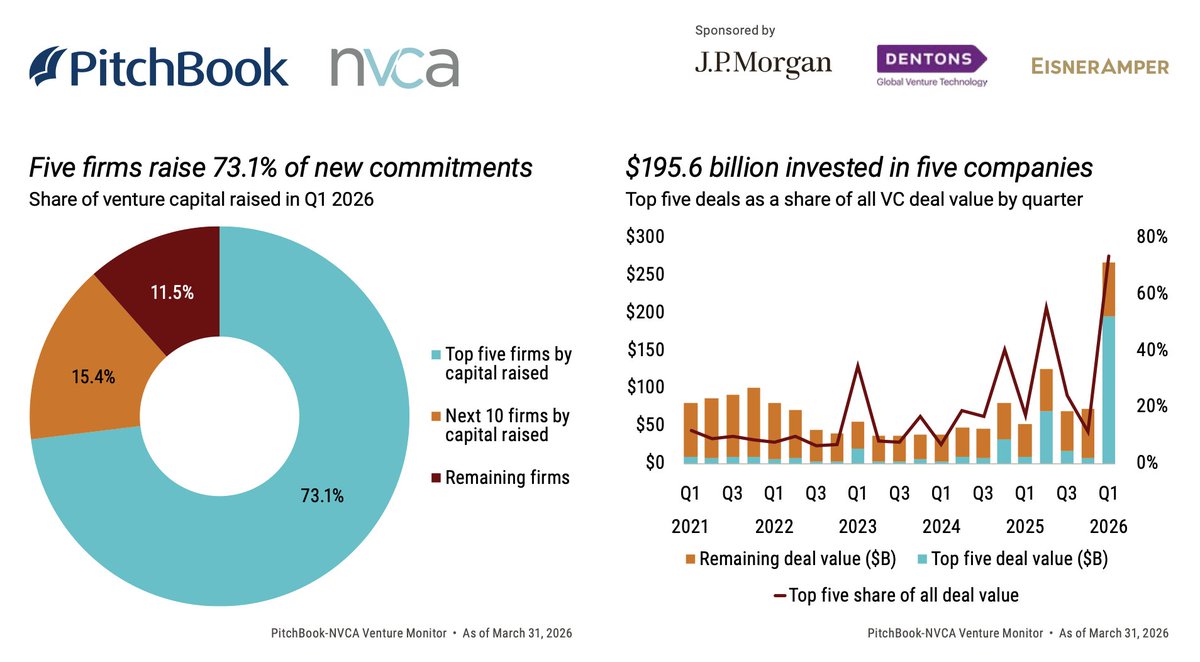
We are in the age of consensus capital:
1- Almost 75% of all LP $ raised by 5 funds
2- Almost 75% of all VC $ invested in 5 companies
30
90
482
116,314
Alexander Lange retweeted

17 Nov 2025
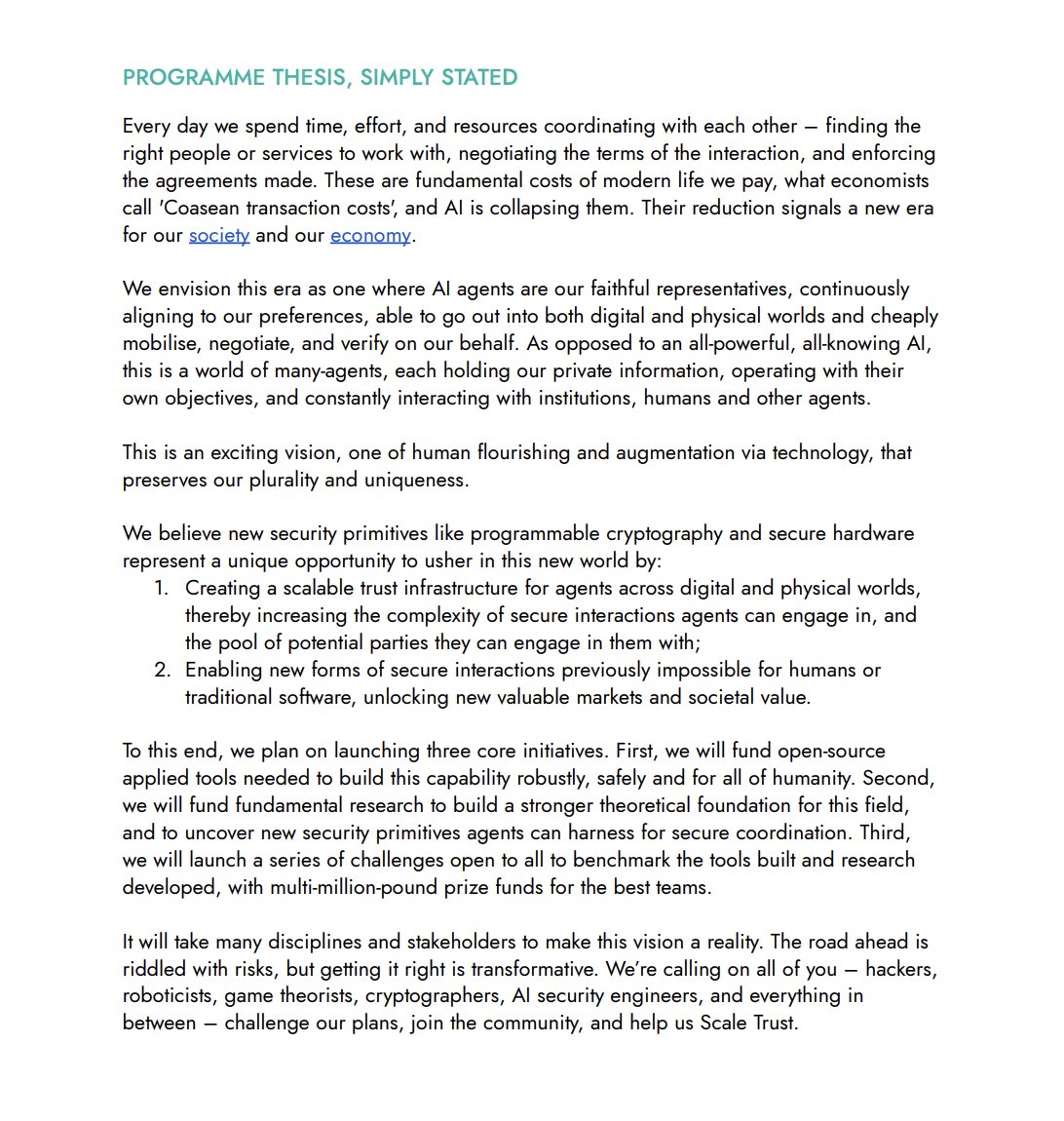
we just released v1 of our thesis 'Scaling Trust', our plans for a ~£50m r&d @ARIA_research programme. let us know what you think, we want your feedback!
aria.org.uk/trust-everything…
18
13
97
27,983
Alexander Lange retweeted

4 Nov 2025
If you feel like you're bad at your job and it's making you depressed, just consider that, as the investigation of the recent heist revealed, the password to access the Louvre's videosurveillance system was "Louvre".
667
13,742
160,299
4,056,110
Alexander Lange retweeted

11 Oct 2025
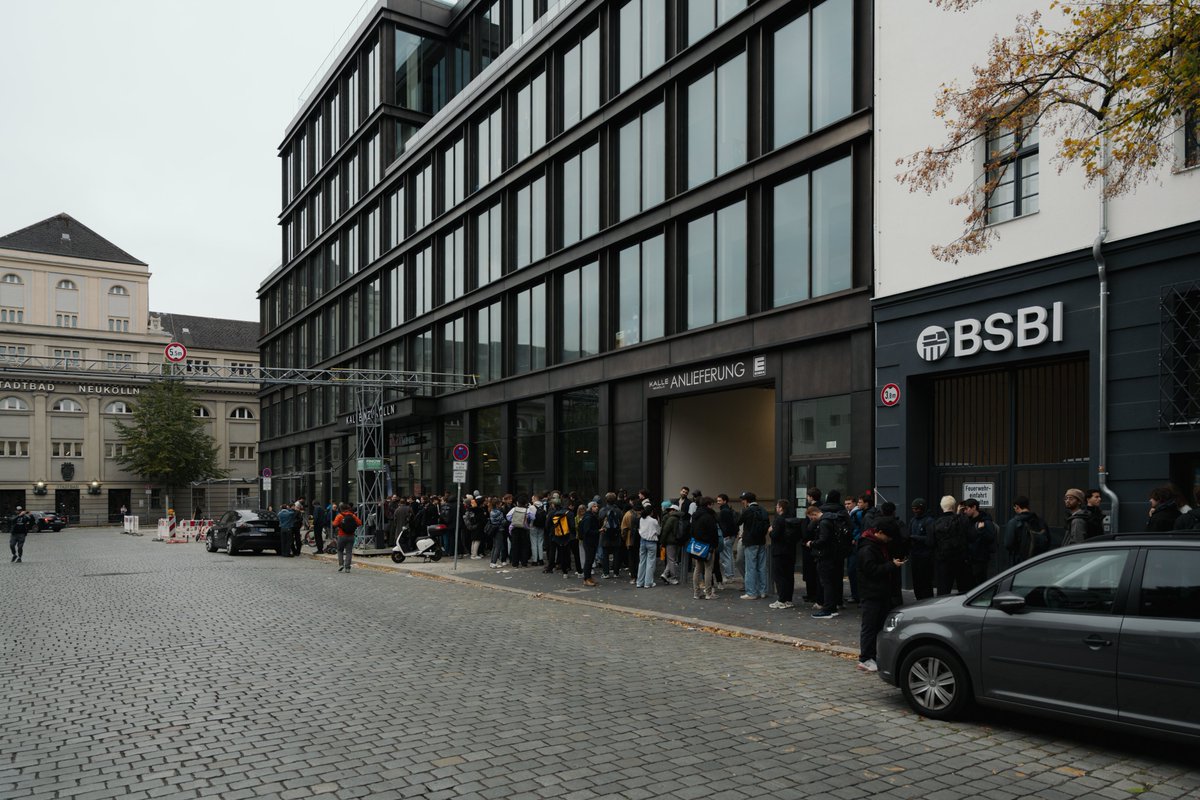
8am on a Saturday morning in Berlin!
Berghain or @techeurope_ Hackathon?
Can not tell...

17
12
158
20,253

10 Oct 2025
Reminder that Mr. Market can always have other plans.
8
8
300
18 Sep 2025
If comedians cannot critique a government in any given country without fear of repression said country cannot be free.
2
9
246
11 Sep 2025
The case of Charlie Kirk reveals the erosion of common sense and a rule based society in the US. 1 might disagree with or dislike him for his actions but neither of those sentiments justify any violence. Disputes over the legality of his actions can be challenged in court.
2
3
298
11 Sep 2025
The US has a 10x higher homicide rate than Germany. People lost their ability to discuss opposing view points and develop empathy for conflicting view points and to live with them. Once violence dominates public discourse a country falls.
1
161
11 Sep 2025
Unless the violence and frustration can be channeled against a foreign enemy. Very likely China.
147
Alexander Lange retweeted

13 Aug 2025
What happened to "Don't be evil" ?
Wholesale financial surveillance of innocent individuals (not even accused of a crime!) is evil.
It violates the presumption of innocence.
It violates the ethical principle of respecting your neighbor.
It violates the 4th Amendment of the US Constitution, easily.
To all the wallet devs now confronted with this: do not comply. If you do, your business will be utterly gutted and you will spend the next year being absolutely miserable while your company dies and all your customers tell you how much you suck.
Abandon the Google Play Store, move to a mobile web PWA solution, or find some other creative solution. Maybe smash your Android phone, throw it into a ravine, and post a video encouraging others to do the same.
Have respect for yourself and your customers. Do not comply. Do not be "pragmatic." Google has decided to be evil, so now it is your turn.
This is where you take a stand, if you ever do.
13 Aug 2025

New Google Play Store policy forces AML/KYC on non-custodial wallets in the US, effectively bans non-custodial wallet developers from Play Store in EU
Full Story👇
therage.co/google-play-store…
114
224
1,550
96,626
Alexander Lange retweeted

27 Nov 2024
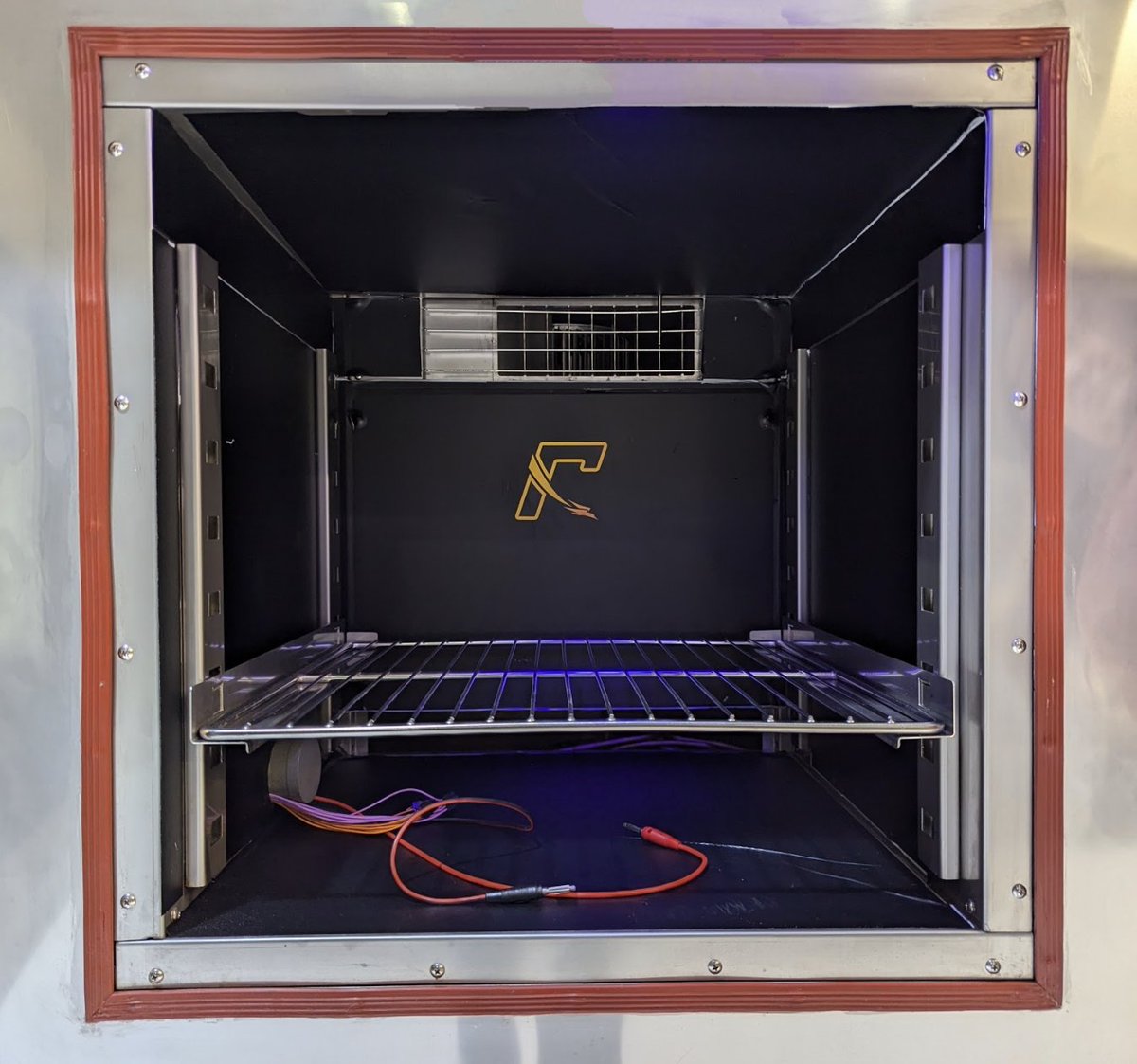
The stratosphere is a challenging environment. Air pressure is less than 10% of sea level, and temperatures can drop below -55°C.
We completed thermal and altitude testing of our Radical-developed battery packs in our atmospheric chamber, proving they're ready for flight.
1
4
344
Alexander Lange retweeted

30 Jul 2025

We're now indexing @baseapp and @zora!
🔰 Discover trending creators or posts
🔰 Get a real-time feed of launches
🔰 Full support for pricing, charts, holders data, and more
Start building: codex.io.
See it in action on @definedfi: defined.fi/tokens/launchpads….
63
21
242
28,084

The latest Senate draft bill will destroy millions of jobs in America and cause immense strategic harm to our country!
Utterly insane and destructive. It gives handouts to industries of the past while severely damaging industries of the future.
28 Jun 2025

The new Senate draft raises taxes on all wind and solar projects that haven't begun construction today unless they are placed service by end of 2027 and navigate complex, likely unworkable requirements to prove they don't use a drop of Chinese materials. After that, this bill ADDS A NEW tax on wind and solar projects that can't prove the same.
17,014
14,694
78,996
41,168,349

1/ @Nudgexyz launches the Reallocation Network - where moving your crypto (not adding more) pays you. It’s the “only free lunch in finance.”
We are backed by some of the biggest names in crypto - Coinbase, Brevan Howard & Wintermute. Let's dive in 🧵👇
nudge.xyz/
64
107
169
53,088
Alexander Lange retweeted
15 May 2025
Now imagine instead of just your ID, it's years of private conversations, medical records, legal records, financial records, business secrets, proprietary code, deep and dark thoughts you've struggled with, controversial questions you've asked, a hundred thoughts you'd be cancelled for, relationship or familial discussions that should never be seen by anyone...
Years of every corner of your mind. All of it leaked out, attached to your name.
And then not only used by human hackers, but adversarial AI systems themselves that can attack millions of people in seconds simultaneous in hideously advanced ways.
This is coming for every AI company. OpenAI. Anthropic. Grok. Perplexity. They store everything. They will leak everything.
Get ready to be exposed like you never thought possible. You'll wish it was just a driver's license.
@AskVenice is the antidote. We store nothing.
15 May 2025

Unbelievable.
When I was a director of an exchange in 2013, one of the first security policies I set up was:
-Once KYC/AML was approved it was printed out.
-One copy went to a fireproof filing cabinet at main office with the compliance lead.
-One copy went to secure offsite records storage with Iron Mountain.
-Digital copies were batched weekly to an airgapped offline server.
-All access went through senior compliance team members.
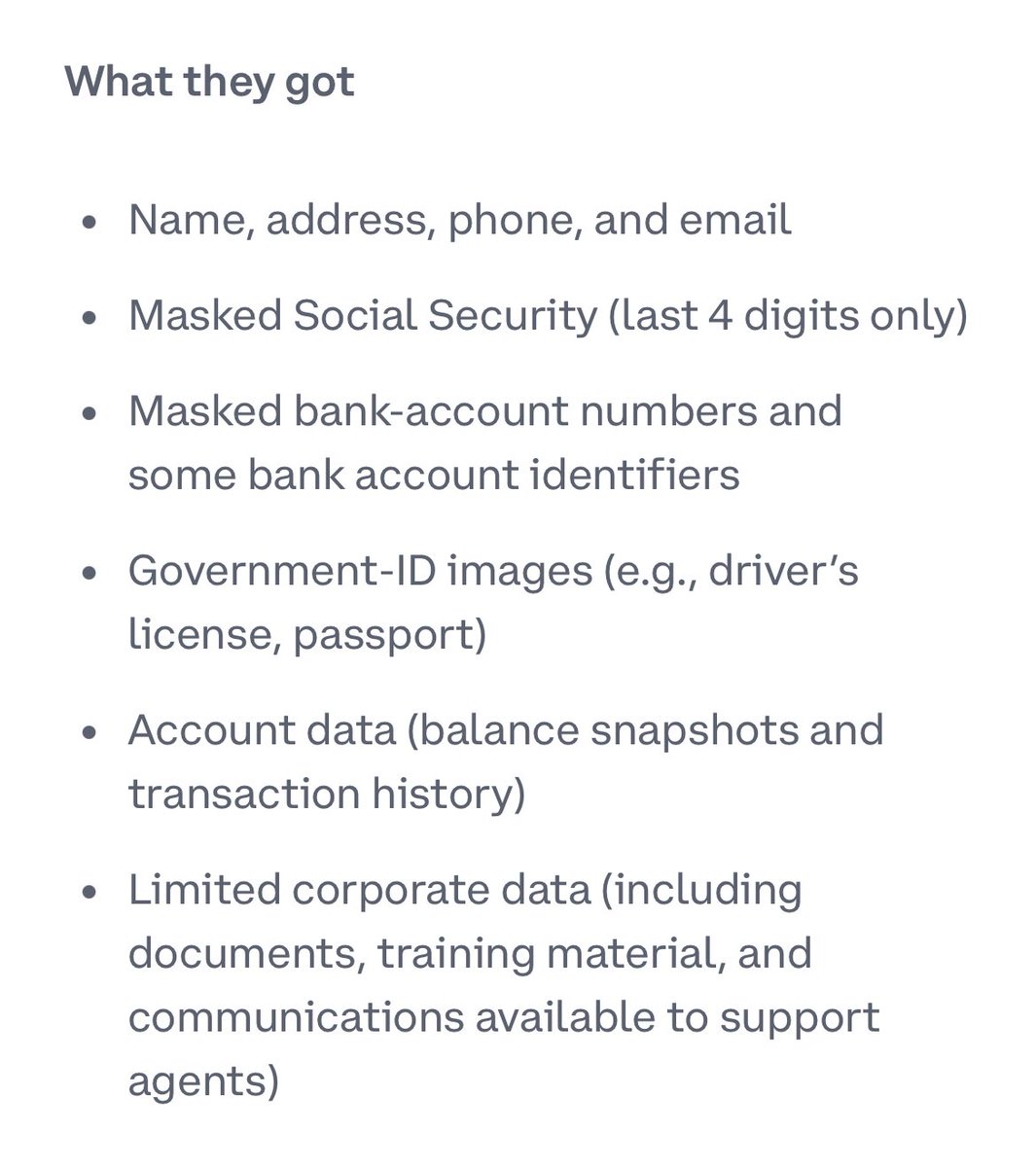
Coinbase’s disclosure here focuses on the stolen funds.
But that’s irrelevant.
They got physical addresses, and government IDs.
Things you can’t change, and things that put customers at physical risk.
No element of KYC/AML policy requires this kind of stuff to be accessible to your customer support agents.
I don’t want to hear about what Coinbase is doing to recover funds - I want to hear what they are doing to better deal with private data.
And why a $60B company, had such rubbish data policies when they can easily afford to hire top class talent?
92
221
1,318
138,070
Alexander Lange retweeted

15 Apr 2025
I’m hiring a Product Designer based in Berlin to work with me on building the future of the internet!
This is a sick opportunity to build something exceptionally ambitious and culturally important.
Visa sponsorship and relocation possible.
Details👇
careers.entropy.xyz/o/produc…
6
7
42
3,149
9 Apr 2025
Vibe shift - check.
9 Apr 2025

The EU is about to kill GDPR as we know it.
After 7 years of:
• Crushing European innovation & startups
• Making American tech giants even stronger
Brussels finally admits it: GDPR was an economic disaster.
Here's why this rollback could save Europe's dying tech scene 🧵:

5
6
351
19 Mar 2025
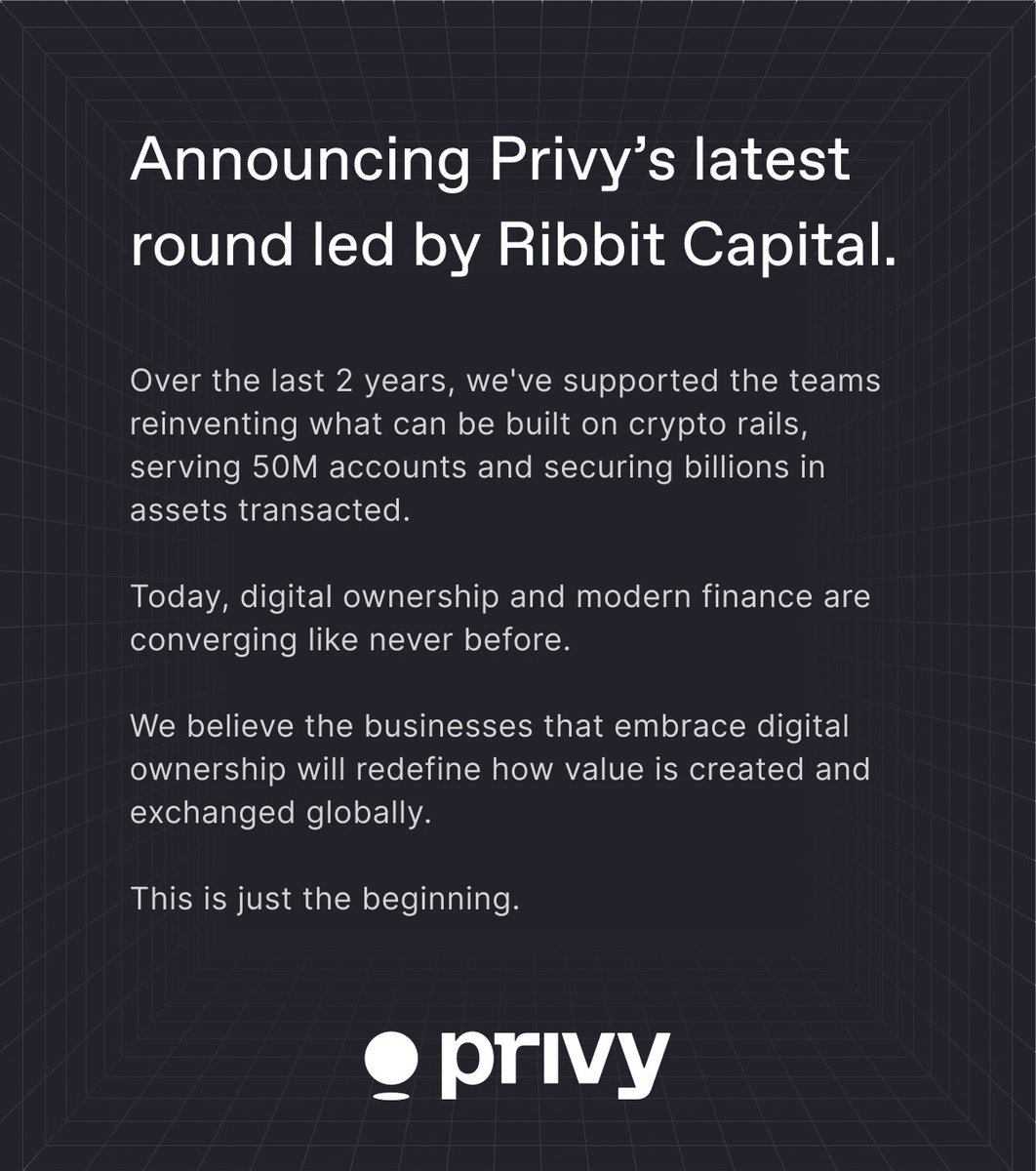
Congrats @sternhenri , @asta_li and the incredible @privy_io crew. Amazed by this company's velocity and dedication to bringing simplicity and buttery UX to crypto infra.

1/ Announcing our latest round of funding led by Ribbit Capital.
Thank you to our users and our customers for enabling us to bring crypto rails to everyone, everywhere.
We’re excited to keep building with you.
3
12
385