
Managing Director at Forms Academy & Forms Madrid. LSE graduate. Dedicated to redefining youth football development worldwide.
Joined November 2024
- Tweets 54
- Following 26
- Followers 179
- Likes 40
8 Photos and videos
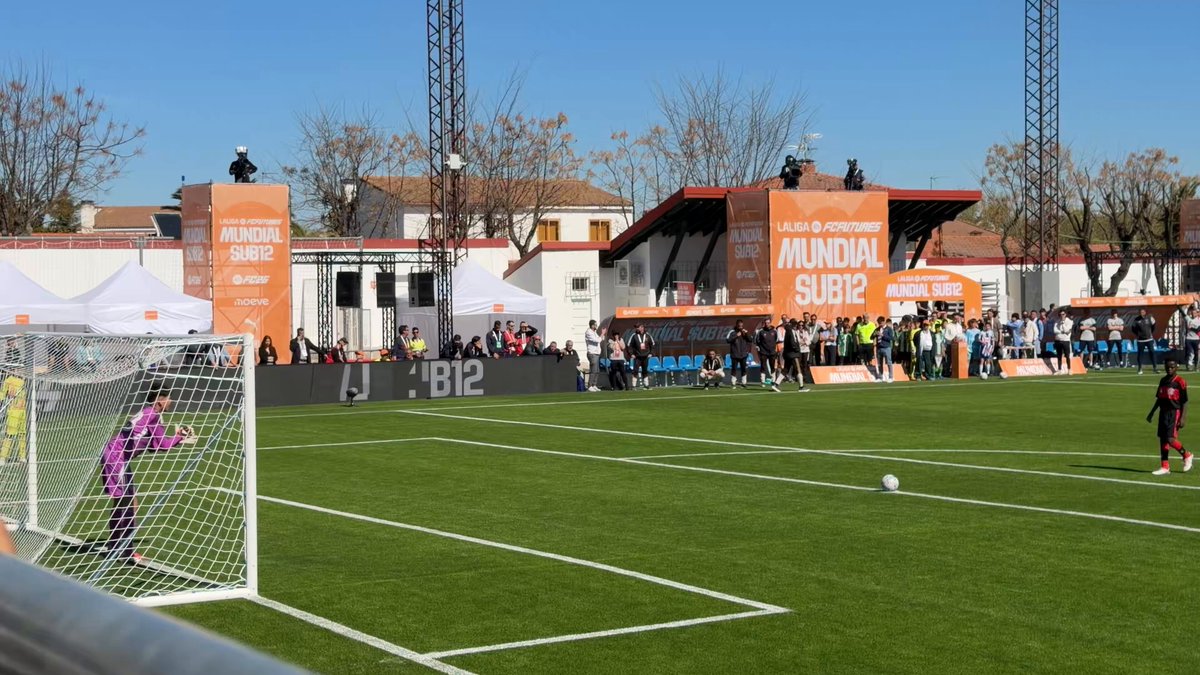
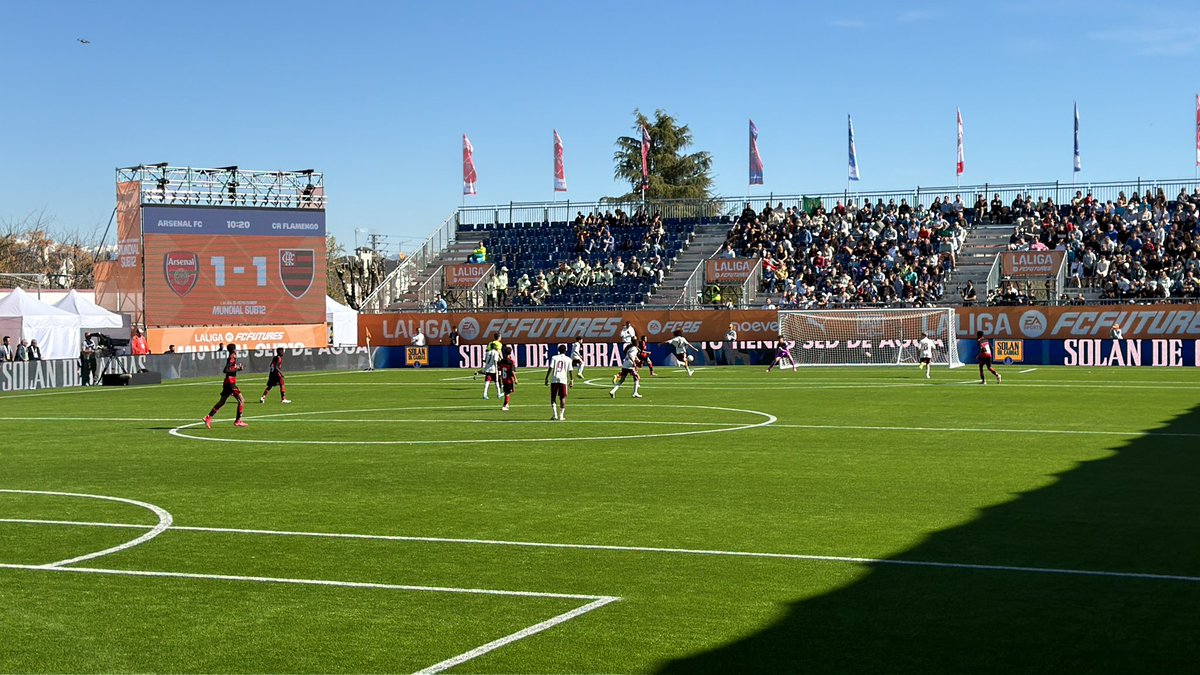
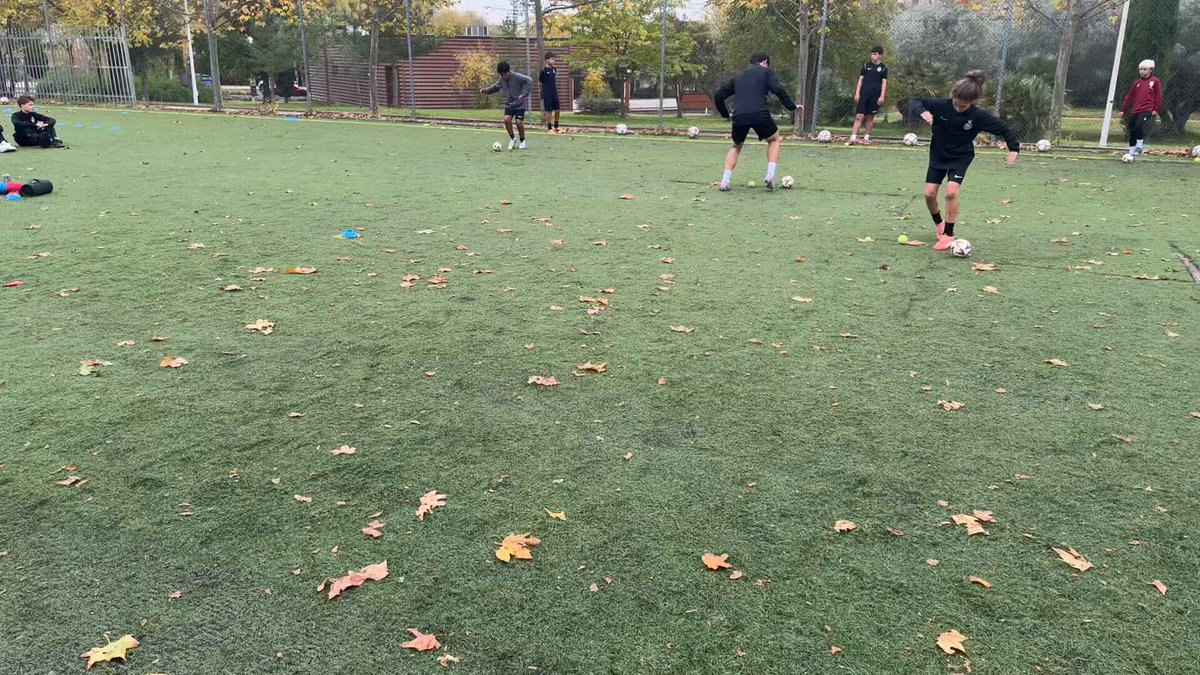


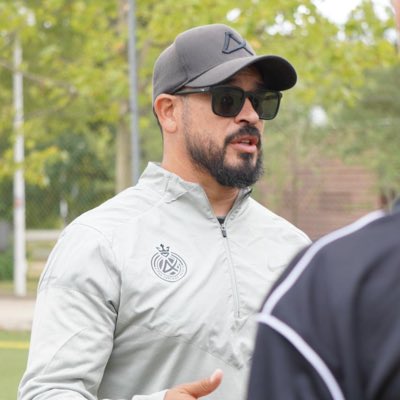
Athleticism is the capacity to generate force. Skill is the neurological ability to organize that force to solve a specific problem in time and space. American talent identification consistently confuses the former for the latter. #TalentID #FootballDevelopment
2
8
923

Mar 31
Small-sided games are not just about more touches. They increase the density of perception-action couplings. The brain is forced to process spatial constraints and execute motor responses at a higher frequency. 11v11 for young players is cognitive starvation. #YouthSoccer
1
14
1,263
Ron Hogsett retweeted

Mar 29
"The future of coaching is teaching players to read the game’s chaos and make decisions in real-time, not memorizing patterns."
Matias Manna

8
51
305
52,325
Mar 30
Error-based learning is the engine of motor adaptation. When we punish mistakes in youth football, we suppress the nervous system's primary mechanism for refining movement. Failure is not a character flaw; it is neurological feedback. #MotorLearning #FormsAcademy
2
106
Mar 29
The greatest disservice to young players is removing the ball to teach "the game." For a 7-year-old, the game IS the relationship between brain, foot, and ball. Everything else is adult interference in neurodevelopment.
#YouthDevelopment #FootballCoaching
1
6
289
Mar 28
Random practice produces better long-term retention than blocked practice, yet most youth sessions rely on predictable drills. To solve complex problems on the pitch, players need contextual interference in training.
#CoachingScience #MotorLearning
2
149
Mar 28
1
2
125
Mar 27
Our FORMAX 5x5 model is built on the reality that development is non-linear. We can't assess players on physical output alone—we must evaluate perceptual awareness, cognitive processing speed, and motor schema robustness.
#FootballScience #TalentID
119
Mar 26
US youth soccer fails to produce elite technicians by prioritizing tactics over ball mastery. Myelination science tells us the motor skill window closes rapidly after age 11. We're wasting critical developmental years on team shape.
#USMNT #YouthSoccer
3
4
1,167
Mar 25
Cognitive-motor integration defines the elite player. You can't teach anticipation to a player still thinking about ball control. Automatize technique first—perceptual awareness follows.
#FormsAcademy #SkillAcquisition
144
Mar 24
We mistake early physical maturation for technical potential in youth soccer. True development requires repetition density during neuroplastic windows. Without thousands of varied touches weekly, elite neural pathways simply won't form.
#PlayerDevelopment #Neuroscience
1
1
9
1,061
Mar 23
The foundation of elite football is not tactical understanding—it is motor schema formation. Prioritizing dribbling mastery ages 4–11 literally wires the brain for technical acquisition. Technique must precede tactics.
#YouthFootball #MotorLearning
11
512
Ron Hogsett retweeted

So even arguably nonfunctional moves like around the worlds actively improving your technical ability because it's sending the same signals to your brain to increase coordination in your legs and feet. This benefits you specific skills in game indirectly.
1
1
134
Feb 23
A little context on why I’m obsessed with crafting and developing functionally technical, adaptable, and portable players.
When I say portable, I mean players who can walk into any environment and function for any coach, in any country, within any system. They don’t need to be re-taught how to play. They don’t shrink or panic when the structure changes. They don’t depend on a specific role to survive.
Most coaches I’ve met over the years have moments that force them to confront their own thinking. I wanted to share one that reframed mine.
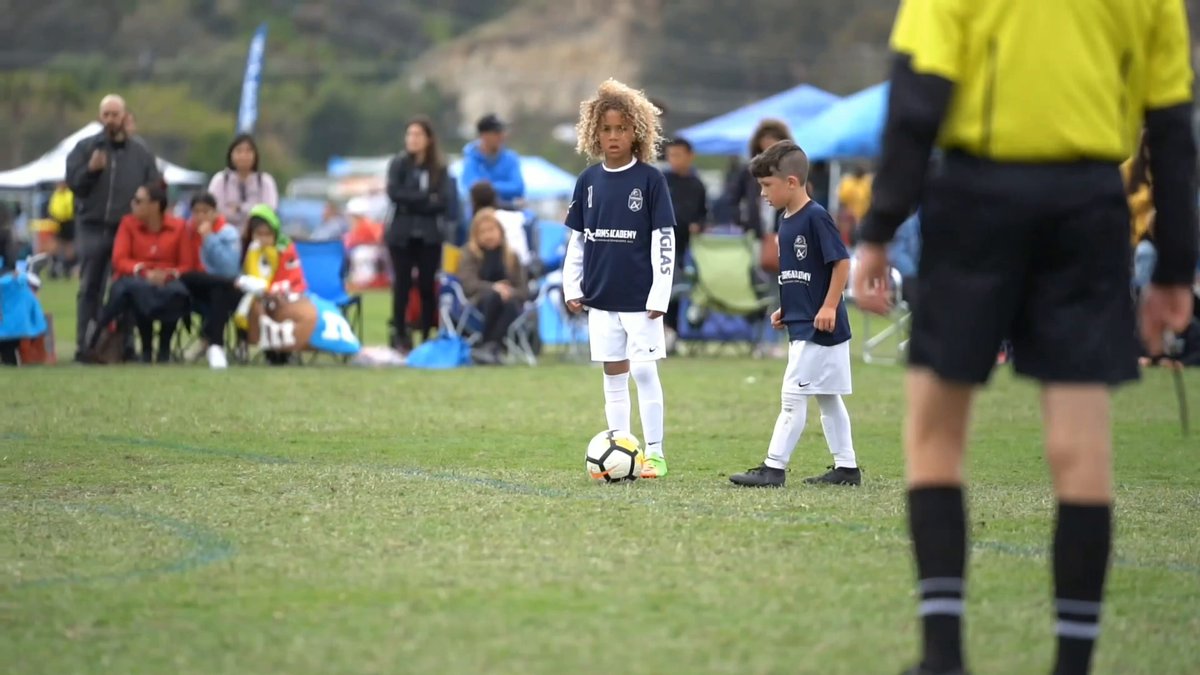
The video is my oldest son at 7 years old. About a year before that he asked me to teach him the rainbow flick. I told him no as I didn’t think it had any real application. I thought I was being practical.
Fast forward to the Manchester City Cup in San Diego, his first 7v7 tournament. I’m coaching on the sideline and from kick-off he does this.
That moment bothered me in the best way. He exposed a blind spot in my framework. What fascinated me wasn’t whether the rainbow solved some immediate problem. It was the thought process: why that skill, why then? He thought he could, so he did. Thought through to execution in real time. How do we improve that connection?
If I could be that wrong about something so simple (7 year old curiosity), what else was I filtering out without realizing it? What parts of his growth was I suppressing because they didn’t fit my definition of “useful?”
Once you understand how neural networks form, how repetition and exploration physically wire the brain, you realize every constraint you impose has real consequences. Every “no” shapes the architecture. That rainbow wasn’t about a trick. It was about whether I was limiting the expansion of his technical vocabulary before it even had a chance to form.
This changed how I evaluated everything. And I’m thankful it didn’t stop there. There were other moments, with Hudson, with Hollis, and with the other players I’ve been lucky enough to train. Those moments matter because they’re not about my kids. They’re proof of concept.
They are the closest thing I have to a controlled environment. I control the inputs, the repetition density, the progression, the constraints. So when something translates under pressure, in unfamiliar environments, against different opposition, that’s real information.
That’s why, from time to time, I’ll share clips of my boys. Not to showcase them, but to demonstrate the progression from proof of concept to proof of work. To show what happens when coordination depth, bilateral fluency, repetition density, and technical range are prioritized before you layer on structure.
My mission is to craft and develop functionally technical, adaptable, and portable players. I’m obsessed with technical development. A lot of what I discuss and do is testing the theory in real time and doing my best to grow every day.
2
11
2,106
Feb 19
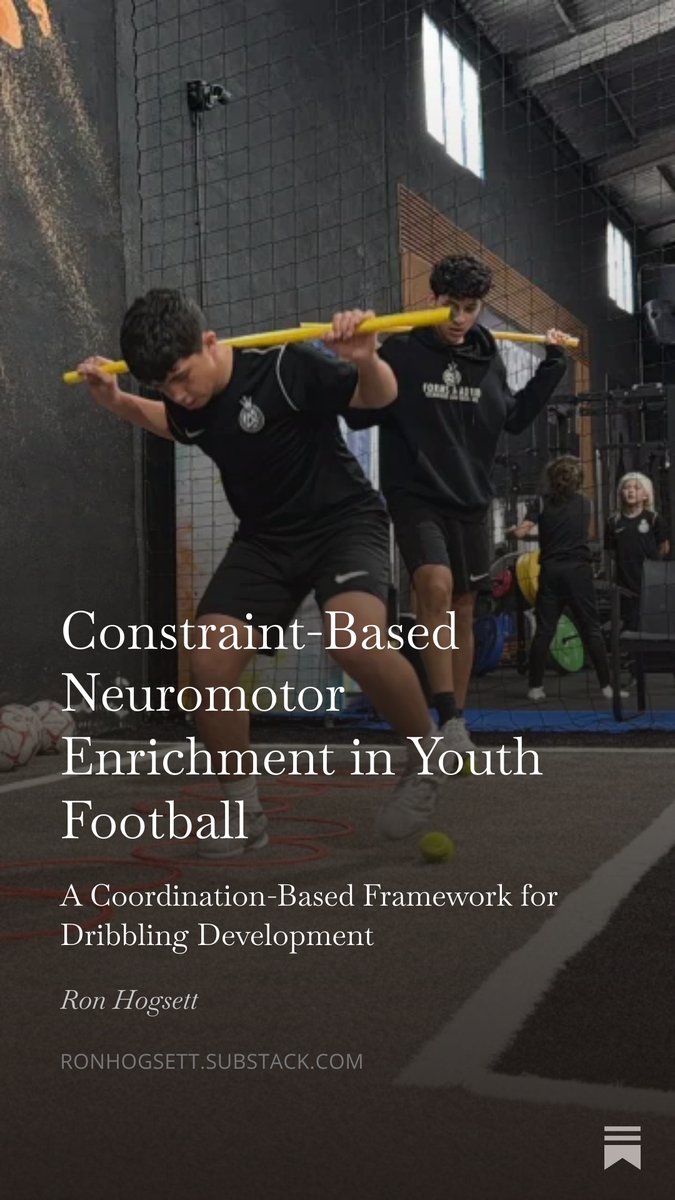
Dribbling mastery emerges not from volume alone, but from the intelligent orchestration of constraints that refine coordination architecture. Constraint-based neuromotor enrichment aligns with a developmental model that prioritizes movement intelligence over mechanical repetition
2
6
1,362
20 Nov 2025
The Developmental Burden: Training That Forces Evolution
As Managing Director of Forms Academy, I am absolutely convinced of one non-negotiable truth: children will never rise above the ceiling they believe exists for themselves. Those beliefs are shaped almost entirely by the environment the adults around them create. When the surrounding system signals low expectations, low demands, or low stress, the child internalizes a ceiling that reflects that environment.
Biologically, human systems self-stabilize around familiar loads unless those loads are progressively and intelligently increased. Real growth only occurs when the level of resistance is repeatedly forced upward.
[more here]
open.substack.com/pub/ronhog…
4
375
11 Nov 2025
I recent had someone recently asked about our methodology and how we teach players to dribble, how we help them to develop their technique and touch. I’ll get that question quite often and I believe the reason is because there are so many ways to see football and the developmental process.
We train dribbling and touch by developing the neural mechanics behind them. Most coaches train dribbling as a foot skill; we train it as a sensory-motor circuit. Every drill is designed to increase proprioceptive sensitivity, the brain’s awareness of where the ball, body, and space are at all times. Once that feedback loop is refined, the player’s control looks effortless.
2
4
1,883