WhoCoaches - This is Coaching - Channel intro
youtu.be/CAHAeK4Kq7A
#WhoCoaches #Coaching #Coaches #CoachingMethods #CoachingTools #CoachTraining #BetterCoaching #CoachingParadigms #CoachingScience #CoachingArt #CoachingPractice #HumanCoaching #EveryoneCoaches #CoachingSk…
2

Jun 12
WhoCoaches - This is Coaching - Channel intro
youtu.be/CAHAeK4Kq7A
#WhoCoaches #Coaching #Coaches #CoachingMethods #CoachingTools #CoachTraining #BetterCoaching #CoachingParadigms #CoachingScience #CoachingArt #CoachingPractice #HumanCoaching #EveryoneCoaches #CoachingSk…
1
Jun 12
Do I need an accreditation as coach? youtu.be/doWK94FusSk
#CoachingAccreditation #CoachingCertification #CoachingObligation #CoachingEffect #CoachingTrust #CoachingIdentity #CoachingParadigms #CoachingScience #CoachingArt #CoachingPractice #CoachingSkills #CoachingAttitude…
Jun 11
WhoCoaches - This is Coaching - Channel intro
youtu.be/CAHAeK4Kq7A
#WhoCoaches #Coaching #Coaches #CoachingMethods #CoachingTools #CoachTraining #BetterCoaching #CoachingParadigms #CoachingScience #CoachingArt #CoachingPractice #HumanCoaching #EveryoneCoaches #CoachingSk…
1
Jun 11
Do I need an accreditation as coach? youtu.be/doWK94FusSk
#CoachingAccreditation #CoachingCertification #CoachingObligation #CoachingEffect #CoachingTrust #CoachingIdentity #CoachingParadigms #CoachingScience #CoachingArt #CoachingPractice #CoachingSkills #CoachingAttitude…
Jun 10
WhoCoaches - This is Coaching - Channel intro
youtu.be/CAHAeK4Kq7A
#WhoCoaches #Coaching #Coaches #CoachingMethods #CoachingTools #CoachTraining #BetterCoaching #CoachingParadigms #CoachingScience #CoachingArt #CoachingPractice #HumanCoaching #EveryoneCoaches #CoachingSk…
1
Jun 10
Do I need an accreditation as coach? youtu.be/doWK94FusSk
#CoachingAccreditation #CoachingCertification #CoachingObligation #CoachingEffect #CoachingTrust #CoachingIdentity #CoachingParadigms #CoachingScience #CoachingArt #CoachingPractice #CoachingSkills #CoachingAttitude…
WhoCoaches - This is Coaching - Channel intro
youtu.be/CAHAeK4Kq7A
#WhoCoaches #Coaching #Coaches #CoachingMethods #CoachingTools #CoachTraining #BetterCoaching #CoachingParadigms #CoachingScience #CoachingArt #CoachingPractice #HumanCoaching #EveryoneCoaches #CoachingSk…
2
WhoCoaches - This is Coaching - Channel intro
youtu.be/CAHAeK4Kq7A
#WhoCoaches #Coaching #Coaches #CoachingMethods #CoachingTools #CoachTraining #BetterCoaching #CoachingParadigms #CoachingScience #CoachingArt #CoachingPractice #HumanCoaching #EveryoneCoaches #CoachingSk…
2
WhoCoaches - This is Coaching - Channel intro
youtu.be/CAHAeK4Kq7A
#WhoCoaches #Coaching #Coaches #CoachingMethods #CoachingTools #CoachTraining #BetterCoaching #CoachingParadigms #CoachingScience #CoachingArt #CoachingPractice #HumanCoaching #EveryoneCoaches #CoachingSk…
2

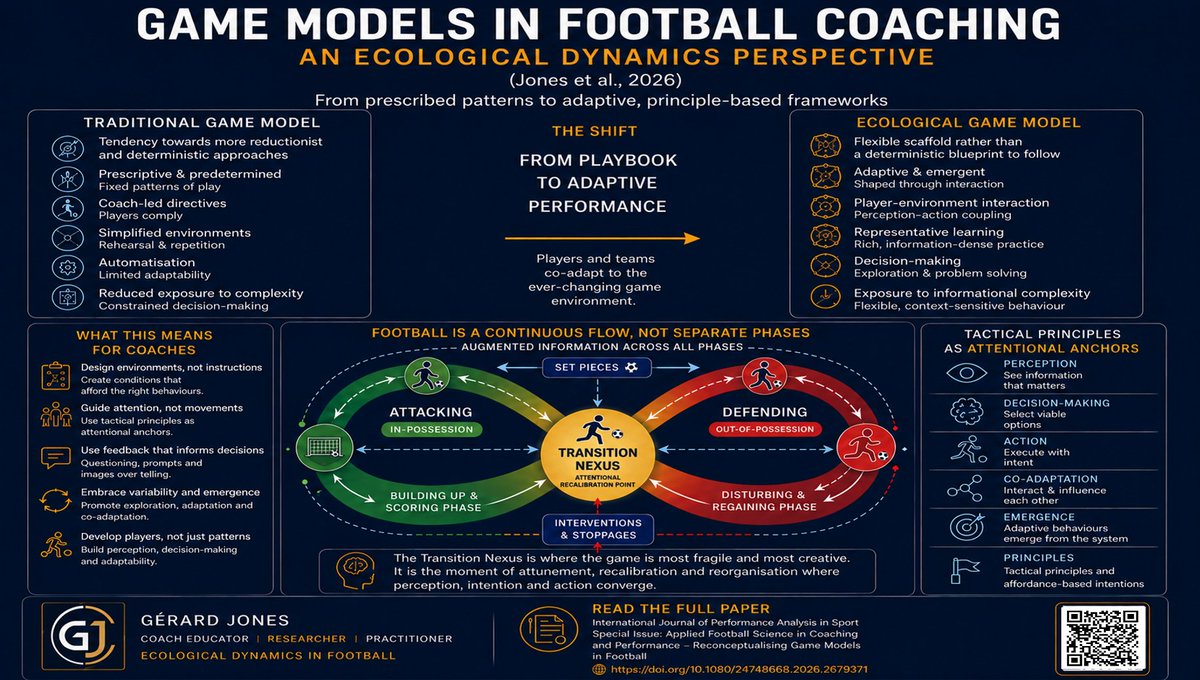
🚨 𝑹𝒆𝒄𝒐𝒏𝒄𝒆𝒑𝒕𝒖𝒂𝒍𝒊𝒔𝒊𝒏𝒈 𝑮𝒂𝒎𝒆 𝑴𝒐𝒅𝒆𝒍𝒔 𝒊𝒏 𝑭𝒐𝒐𝒕𝒃𝒂𝒍𝒍 - new publication
⚽️ 𝑮𝒂𝒎𝒆 𝑴𝒐𝒅𝒆𝒍𝒔 𝒊𝒏 𝑭𝒐𝒐𝒕𝒃𝒂𝒍𝒍 𝑪𝒐𝒂𝒄𝒉𝒊𝒏𝒈: 𝑨𝒏 𝑬𝒄𝒐𝒍𝒐𝒈𝒊𝒄𝒂𝒍 𝑫𝒚𝒏𝒂𝒎𝒊𝒄𝒔 𝑷𝒆𝒓𝒔𝒑𝒆𝒄𝒕𝒊𝒗𝒆
From rigid playbooks and prescribed patterns ➡️ to adaptive, principle-based frameworks shaped through player-environment interactions.
Excited to share our latest paper has now been published in the 𝐈𝐧𝐭𝐞𝐫𝐧𝐚𝐭𝐢𝐨𝐧𝐚𝐥 𝐉𝐨𝐮𝐫𝐧𝐚𝐥 𝐨𝐟 𝐏𝐞𝐫𝐟𝐨𝐫𝐦𝐚𝐧𝐜𝐞 𝐀𝐧𝐚𝐥𝐲𝐬𝐢𝐬 𝐢𝐧 𝐒𝐩𝐨𝐫𝐭 as part of the special issue: Applied Football Science in Coaching and Performance.
The paper explores how Game Models in football can be reconceptualised through an ecological dynamics perspective, moving beyond rigid systems and prescriptive structures toward adaptable frameworks that support perception, decision-making, problem-solving, and player-environment interaction.
A huge thank you to everyone who has contributed to the discussions, challenges, and ideas that have shaped this work, and what this could mean for future research in:
• Coach Education
• Practice Design
• Methodology Departments
• Feedback & Coach Behaviour
• Talent Development
• Performance Analysis
• Game Models
This paper positions its contribution as a conceptual framework intended to guide future research and applied practice.
What may be most original within this paper is the attempt to reconceptualise Game Models in football, not as a deterministic blueprint of pre-planned patterns and prescribed solutions, but as a flexible scaffold that supports adaptive player and team behaviours within the evolving constraints of competition.
The paper also introduces the idea of:
• 𝑻𝒂𝒄𝒕𝒊𝒄𝒂𝒍 𝒑𝒓𝒊𝒏𝒄𝒊𝒑𝒍𝒆𝒔 𝒂𝒔 𝒂𝒕𝒕𝒆𝒏𝒕𝒊𝒐𝒏𝒂𝒍 𝒂𝒏𝒄𝒉𝒐𝒓𝒔 that guide perception and action within game-specific situations.
• The Transition Nexus, where moments of transition become attentional recalibration points requiring adaptation, reorganisation, and co-ordination.
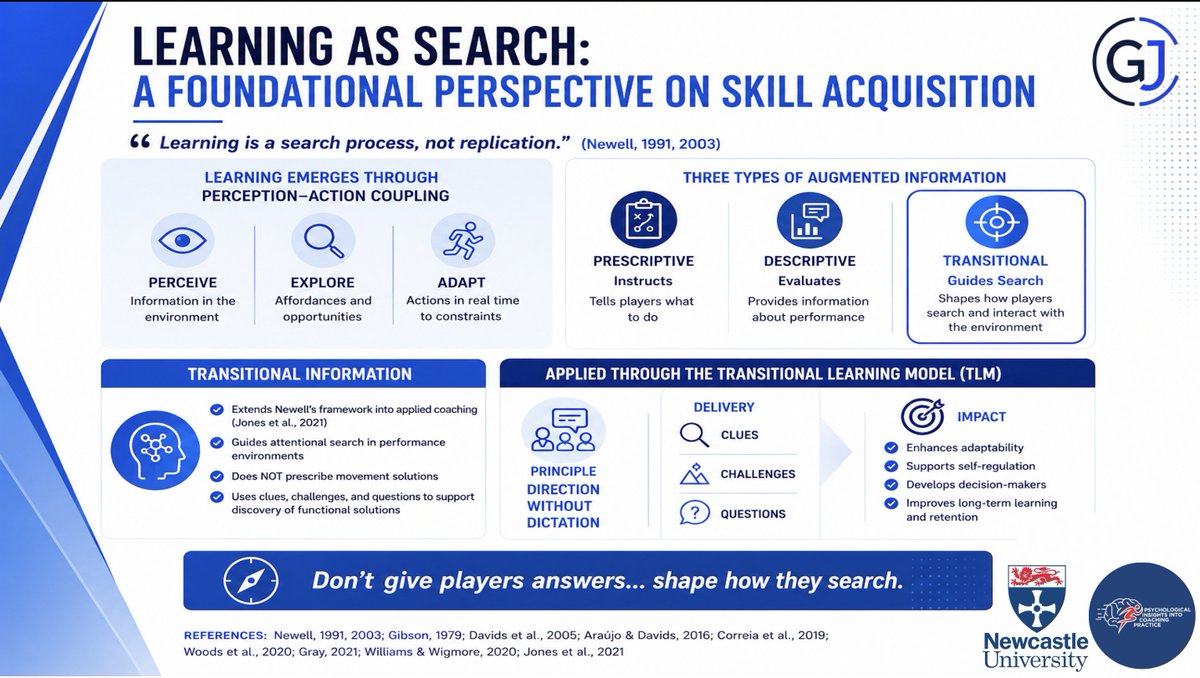
• Coach feedback as player challenges, where questions, prompts, and informational guidance are used to shape players’ visual search and affordance perception without prescribing ready-made answers.
From this perspective, Game Models become tools for designing representative learning environments that support perception-action coupling, player autonomy, adaptability, and co-adaptive team behaviours.
Read here:
tandfonline.com/doi/full/10.…
Jones, G., Kubayi, A., Stone, J. A., & Davids, K. (2026). Game models in football coaching: an ecological dynamics perspective. International Journal of Performance Analysis in Sport, 1–18. doi.org/10.1080/24748668.202…
#FootballCoaching #CoachEducation #SkillAcquisition #EcologicalDynamics #GameModel #FootballResearch #PerformanceAnalysis #TalentDevelopment #CoachingScience #Football #PrincipledGameModels #Affordances #PracticeDesigns #CoachingFeedback
2
27
109
9,471
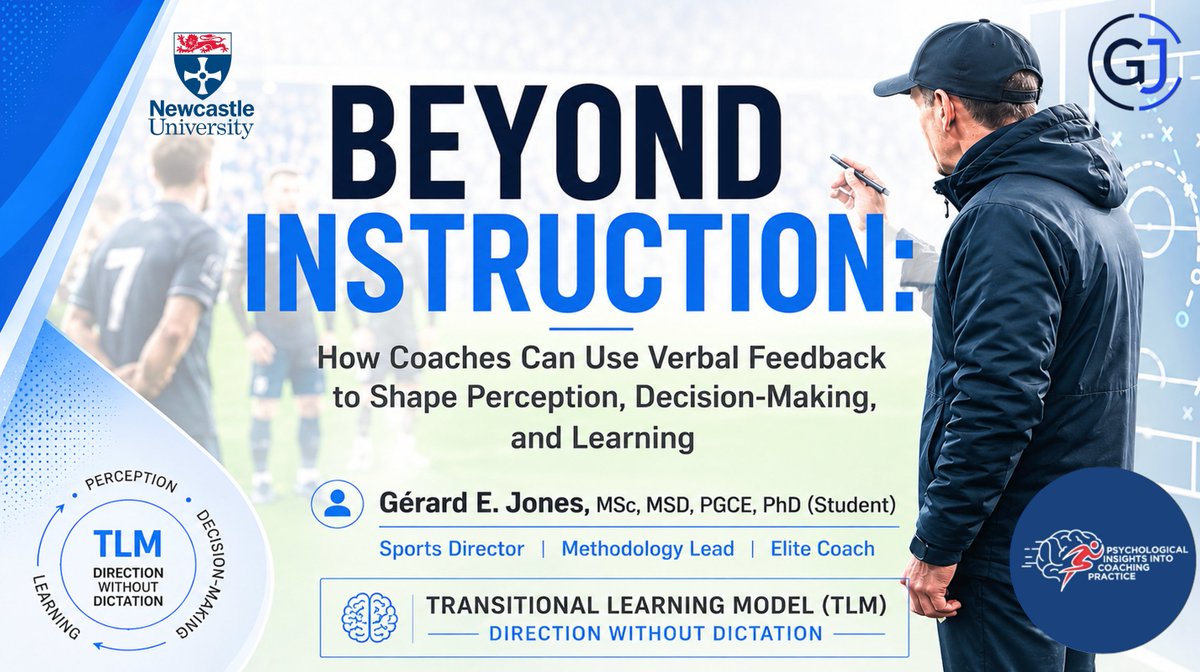
⚡ Excited to be presenting at the 6th Annual Psychological Insights into Coaching Practice Online Conference 2026 hosted by @UniofNewcastle on Thursday 28th May.
Looking forward to speaking alongside a world-class group of researchers, practitioners, and coaches exploring how psychological principles can be applied within real-world sporting and performance environments.
This year’s conference brings together leading voices from sport psychology, coaching science, and elite performance to bridge the gap between research and practice across topics including:
• How perception and attention shape decision making under pressure
• Coaching Behaviour in Competition
• Psychological Skills Training in Sport
• The Coach as a Performer
• Coaching effectiveness through adaptability, creativity, and practice design
• Self-Regulated Learning in Female Football Academies
• Half-Time Team Talks in Elite Sport
• Aligning Methodology to the Athlete’s Profile; and other topics
My presentation (get a sneak peak 👀 ):
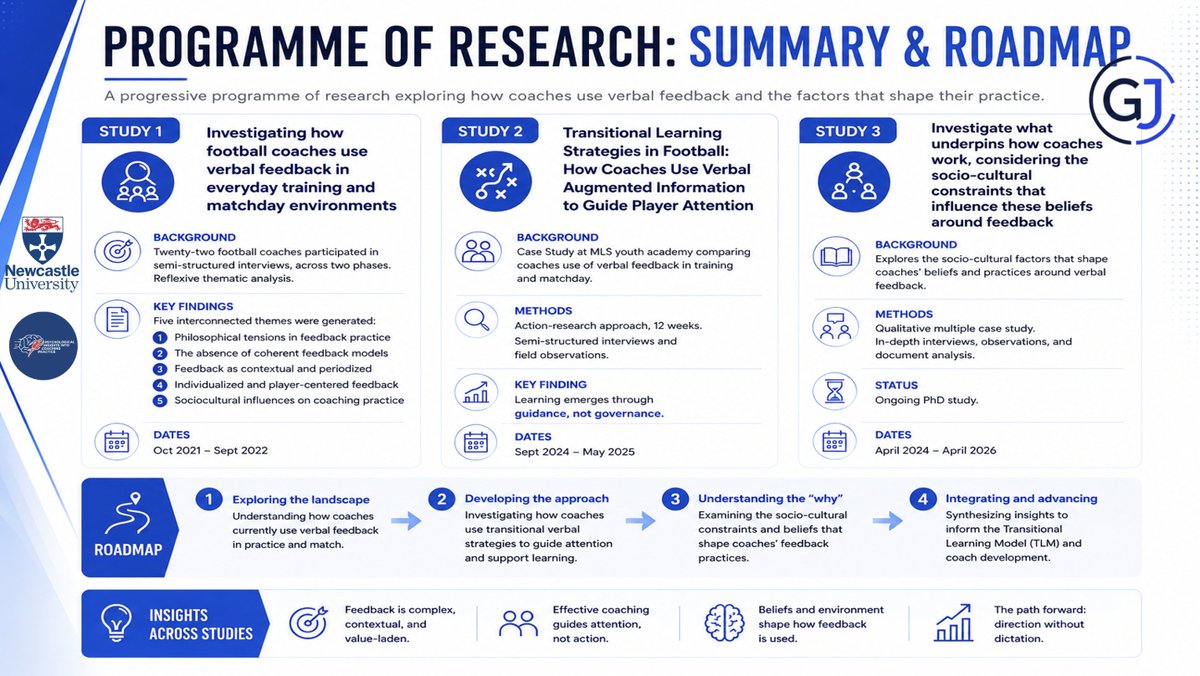
“𝑩𝒆𝒚𝒐𝒏𝒅 𝑰𝒏𝒔𝒕𝒓𝒖𝒄𝒕𝒊𝒐𝒏: 𝑯𝒐𝒘 𝑪𝒐𝒂𝒄𝒉𝒆𝒔 𝑪𝒂𝒏 𝑼𝒔𝒆 𝑽𝒆𝒓𝒃𝒂𝒍 𝑭𝒆𝒆𝒅𝒃𝒂𝒄𝒌 𝒕𝒐 𝑺𝒉𝒂𝒑𝒆 𝑷𝒆𝒓𝒄𝒆𝒑𝒕𝒊𝒐𝒏, 𝑫𝒆𝒄𝒊𝒔𝒊𝒐𝒏-𝑴𝒂𝒌𝒊𝒏𝒈, 𝒂𝒏𝒅 𝑳𝒆𝒂𝒓𝒏𝒊𝒏𝒈”
The session explores how coaches can use verbal feedback more effectively to support athlete learning, perception, and adaptive performance within dynamic sporting environments.
Conference Details:
FREE Online Event (via Microsoft Teams)
Thursday 28th May 2026
09:00 – 16:00
My speaker profile:
conferences.ncl.ac.uk/sportp…
Conference itinerary:
conferences.ncl.ac.uk/sportp…
👉 Register for free:
conferences.ncl.ac.uk/sportp…
Looking forward to an outstanding day of learning, discussion, and sharing ideas with coaches and practitioners from across sport.
Excited to be speaking alongside an outstanding group of speakers including @russellearnshaw, @pocketpsych Prof. Adam Nicholls, and others whose work continues to shape contemporary thinking and applied practice across sport psychology, coaching, and high-performance environments.
#SportPsychology #Coaching #FootballCoaching #CoachEducation #SkillAcquisition #SportsScience #ElitePerformance #DecisionMaking #LearningDesign #EcologicalDynamics #PerformancePsychology #PlayerDevelopment #CoachingScience #HighPerformance #Leadership #Football #SoccerCoaching #NewcastleUniversity #UEFA #CoachingFeedback #ConstraintsLedApproach
2
10
1,400

Apr 20
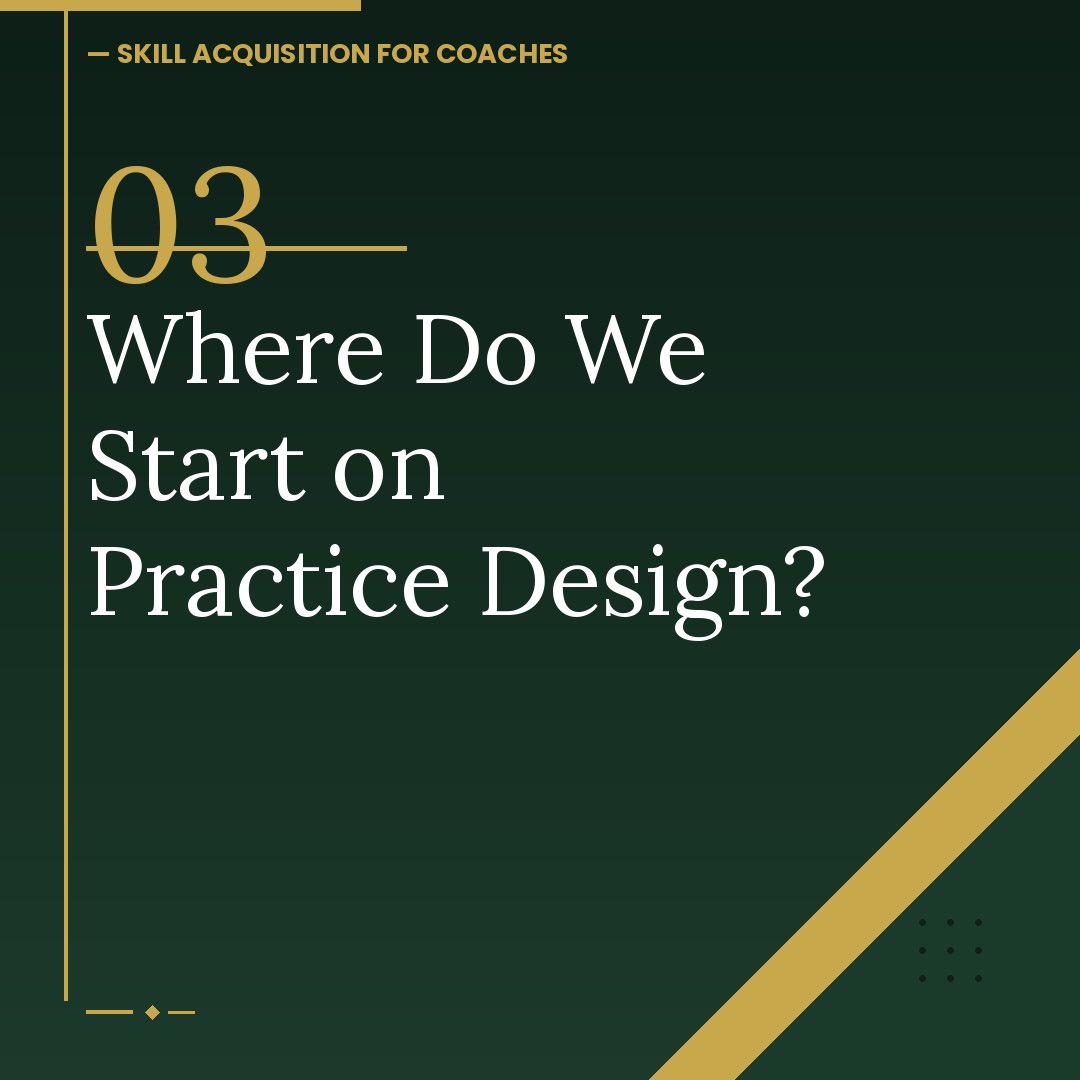
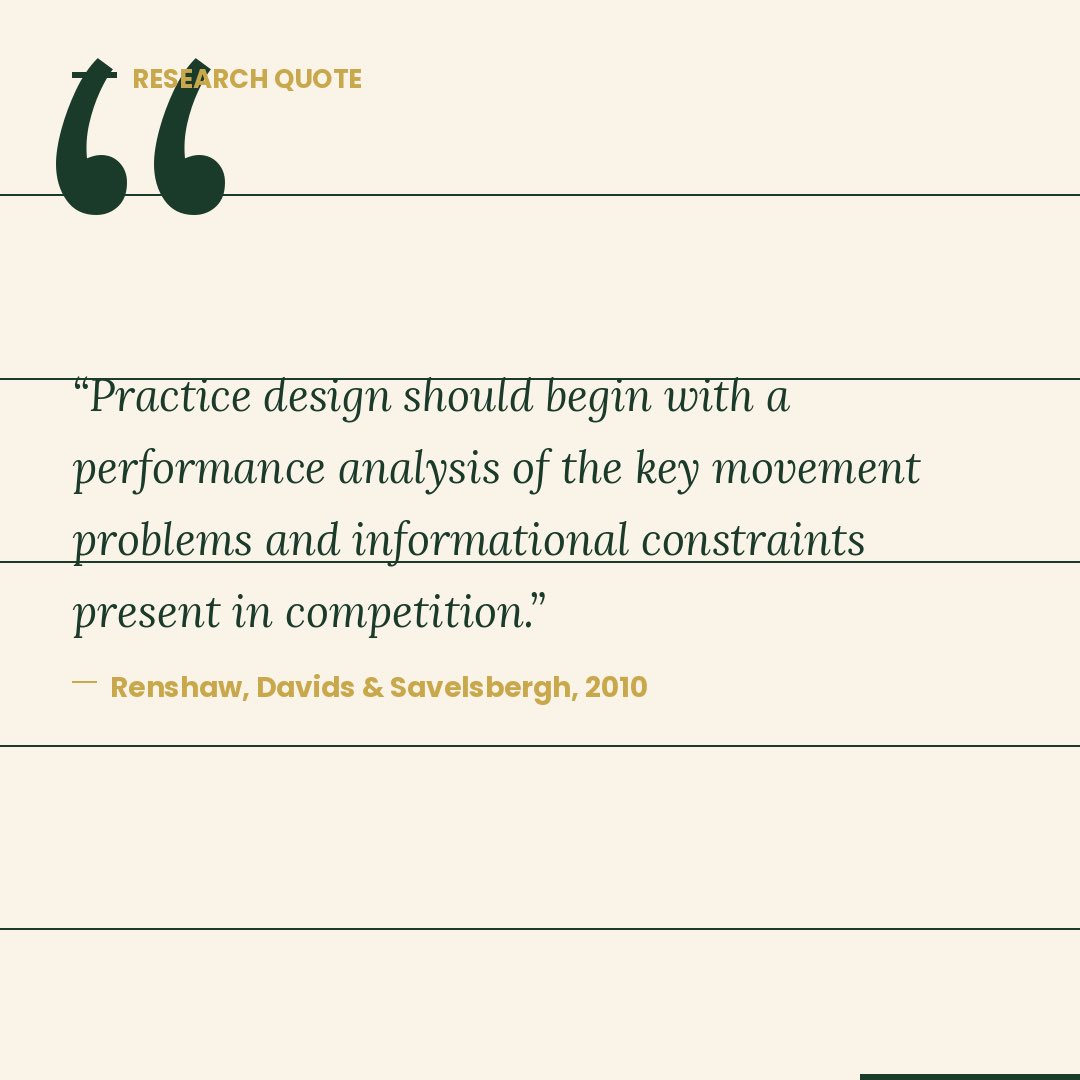
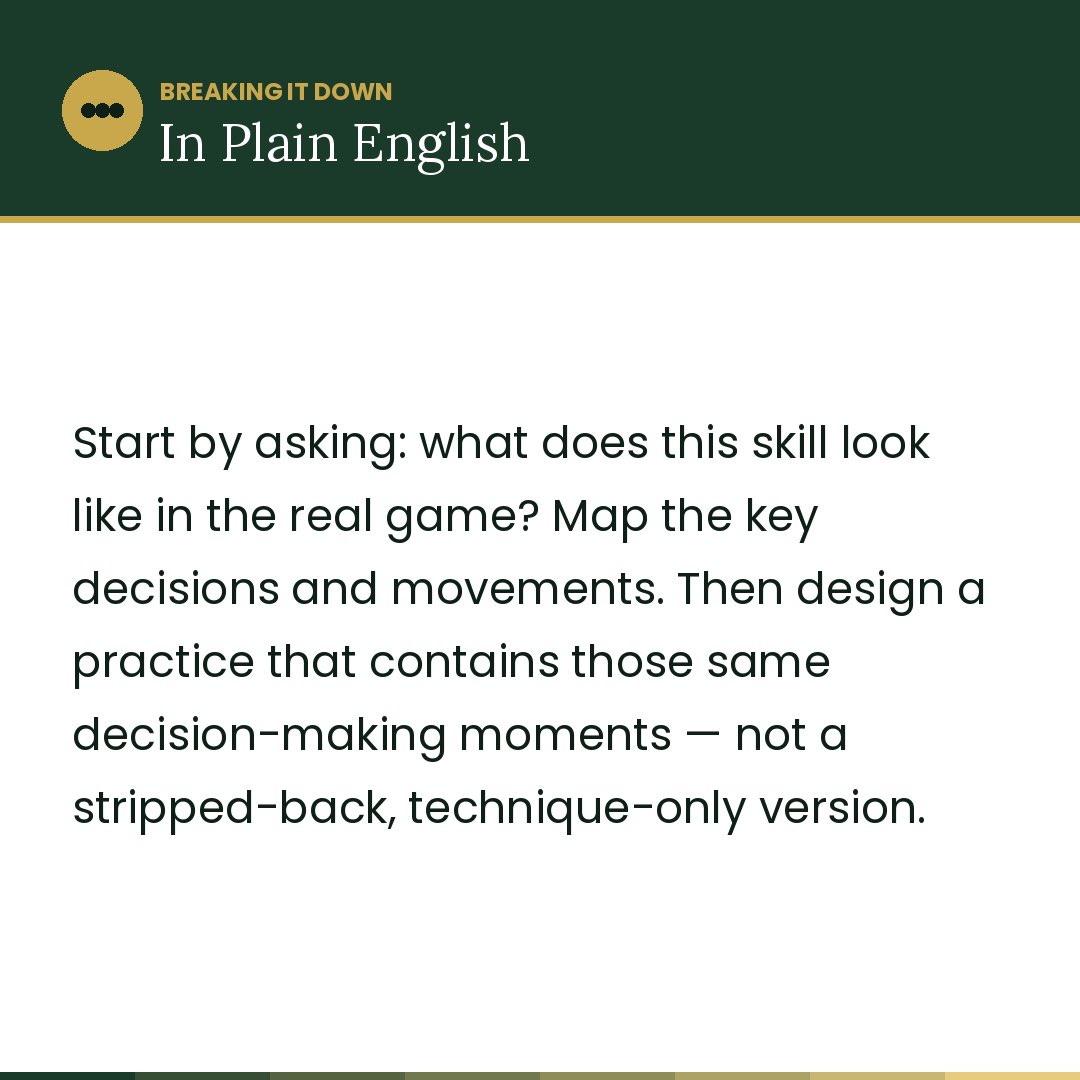
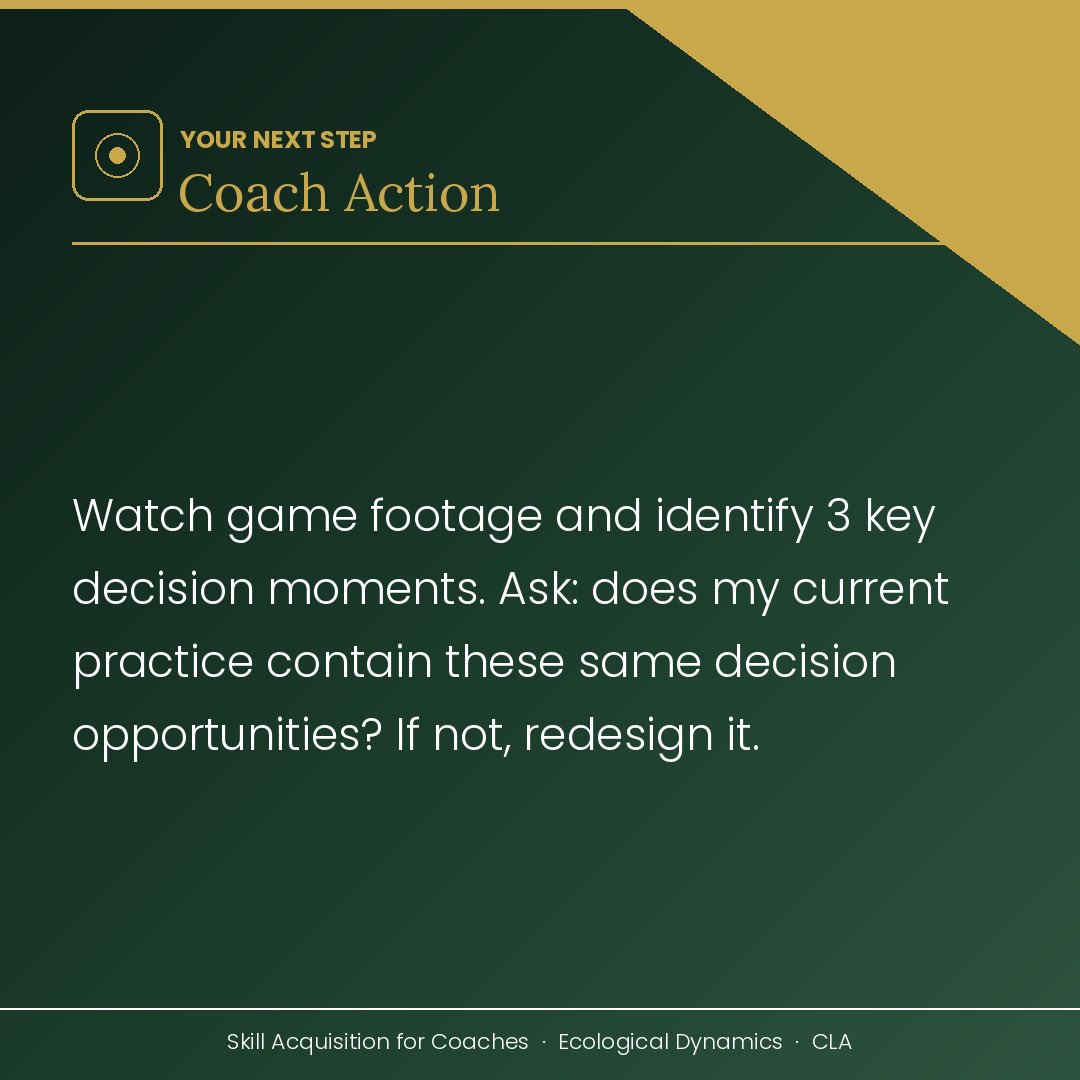
Where Do We Start on Practice Design?
Most coaches design drills from the technique backwards. CLA flips it — you start from the game and work inwards. The question isn’t “how do I teach this skill?” It’s “what does this skill look like under real pressure?” Swipe to see where practice design actually begins. 🔍
#PracticeDesign #CoachingScience #GameBasedLearning #SkillAcquisition #ConstraintsLedApproach
1
1
11
1,888

Mar 28
Random practice produces better long-term retention than blocked practice, yet most youth sessions rely on predictable drills. To solve complex problems on the pitch, players need contextual interference in training.
#CoachingScience #MotorLearning
2
149

@MotorPreference
🧠 Sensation ≠ Reality. In one study, 56% of runners believed they struck with the mid/forefoot.
Reality? ➡️ 89% were actually heel strikers.
Why the disconnect?
Because fitting in feels safe.
Humans mirror the group to belong, even if it means misjudging their own movement.
Be aware of the social pressure to conform.
It can hijack perception and push you toward flawed models.
Coaching starts when we stop copying and start understanding.
ref : Larson, P. et al. (2011). Foot strike patterns of recreational and sub-elite runners in a long-distance road race. Journal of Sports Sciences, 29(15), 1665–1673.
#MotorLearning #Biomechanics #Baseball #Running #CoachingScience
4
840

19 Mar 2025
🔵 BREAKING: International experts reach consensus on defining Functional Training!
"Functional training is a physical interventional approach enhancing performance tailored to individual goals—sports, daily life, rehab, or fitness—with task specificity & individual responsiveness."
Essential reading for all coaches & trainers
👉 doi.org/10.1080/02640414.202…
#FunctionalTraining #CoachingScience #SportsScience @NSCA @NSCAes @JSportsSci

6
18
71
25,535