First Identity. Then Permission. Then?
In Part 1, I left you with a question...
If every problem somehow requires another framework, another regulator, another authority or another layer of oversight, where exactly is the road supposed to lead?
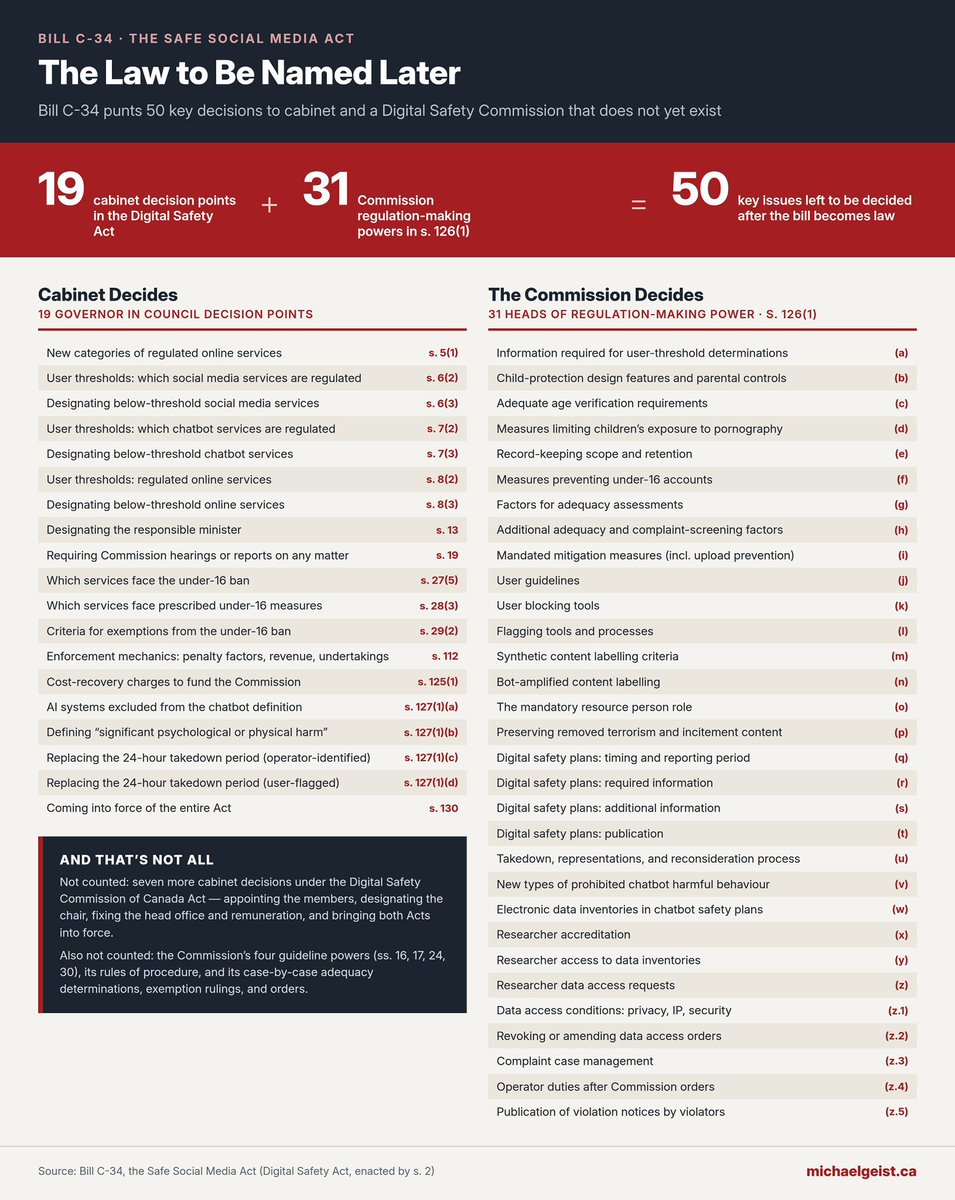
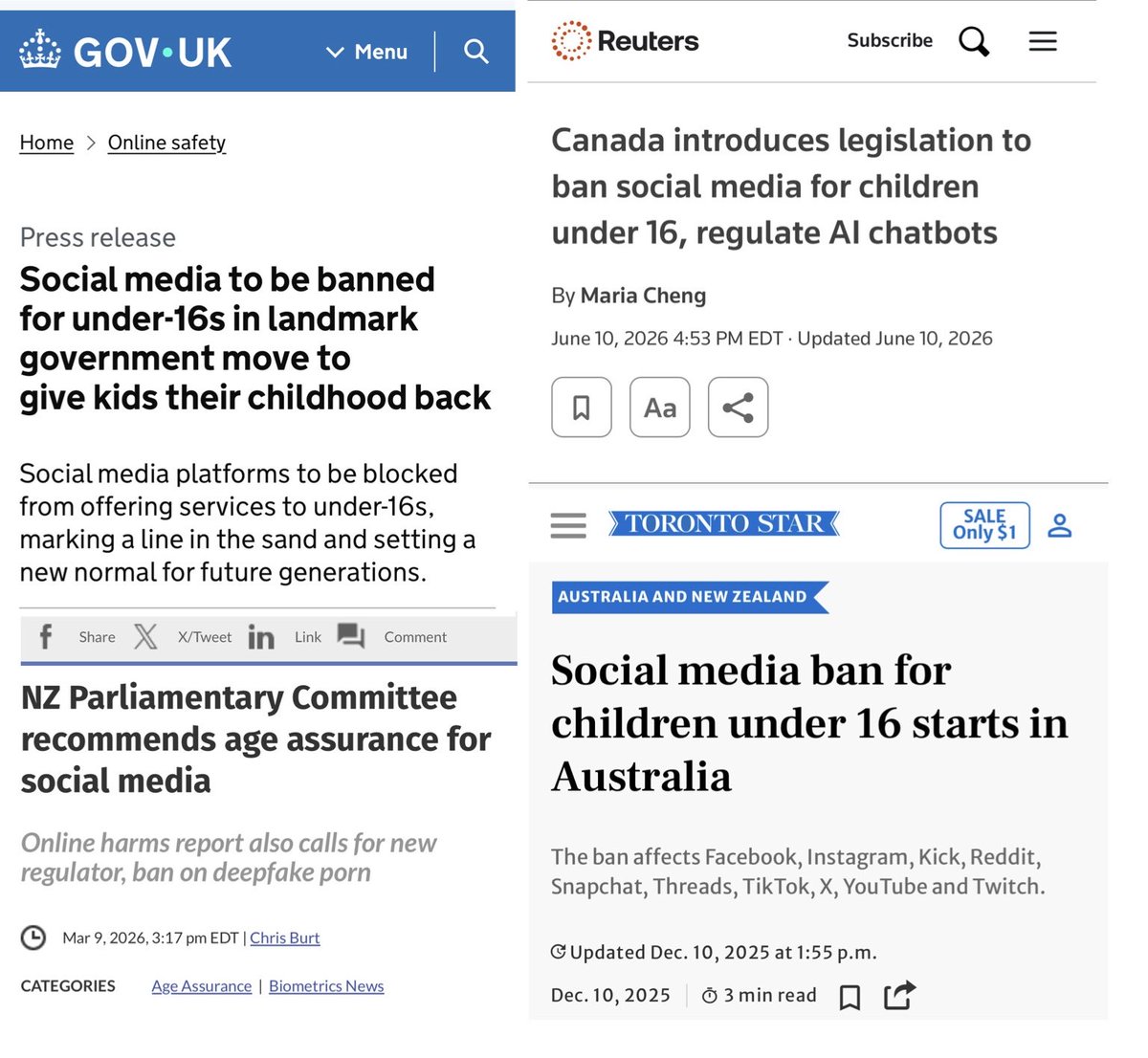
Bill C-34 is where that question starts getting much harder to ignore. Impossible really, for anyone with critical thinking skills.
Not because protecting children is controversial. It isn't. Any parent who has spent more than ten minutes online understands there are things children probably shouldn't be exposed to. Predators. Pornography. Exploitation. Scams. Manipulation. None of those concerns are imaginary.
That's not where the debate begins. The debate begins one step later, the moment somebody asks the obvious question: How? Because that's where the simple answers start running out.
Protecting children sounds straightforward until somebody has to explain how a website is supposed to know whether you're fourteen or forty-four. Everybody seems eager to discuss what the bill is trying to accomplish. Very few people seem interested in discussing what would be required to accomplish it.
Those are not the same conversation. And besides, what exactly counts as social media anymore?
Fifteen years ago that question was easier. Today social media isn't just entertainment. It's communication. It's community. It's family. It's where grandparents watch grandchildren grow up from two provinces away. It's where churches livestream services. It's where rural funeral homes livestream funerals for family members who can't travel. It's where local sports teams coordinate schedules. It's where communities gather.
Which creates an awkward question.
If children are prohibited from participating in these spaces, at what point are we no longer restricting social media and instead restricting access to modern community life?
And then another question appears. One every parent already knows the answer to. What happens when you tell teenagers they can't have something? They find a way to get it.
Teenagers have spent generations treating restrictions less as barriers and more as suggestions. The internet is unlikely to become the exception.
Which raises another possibility nobody seems eager to discuss.
If children are pushed away from visible platforms where parents can at least monitor what they're doing, where do they go instead?
The safest road isn't always the one with the highest fence. Sometimes it's the one where people can actually see what's happening. But the question that kept nagging at me wasn't about children.
It was about adults.
Because every conversation about age verification eventually crashes into exactly the same wall:
How do you verify age?
Not theoretically, but practically.
A checkbox? Nobody believes that. The honour system? That experiment failed before some of today's politicians learned how to use email.
Eventually every age verification system arrives at the same destination. Personal identity verification. And bam, suddenly there it is... the conversation nobody seems particularly eager to have.
Because the moment somebody starts discussing age verification, a little voice in the back of my head starts whispering the same three words: "Show me your papers."
It's an absurd thought until you realize the entire system only works if somebody eventually asks for them. Maybe not literally, but digitally or electronically and credentially. But the principle remains remarkably familiar:
👉🏻Prove who you are.
👉🏻Prove how old you are.
👉🏻Prove you belong here.
And suddenly we're no longer talking about children. We're talking about everybody.
That's the part I find fascinating. A bill introduced to protect children eventually arrives at a place where adults may be required to identify themselves before accessing lawful content online.
Maybe that's necessary, but it most likely isn't. The Canadian Liberal government always reaches for the most restrictive, draconian tools for matters like this, with nary a thought to possible repercussions after implementation.
What interests me the most is how quickly the conversation leaps from Point A to Point Z without spending much time discussing the territory in between.
And sometimes I find myself wondering what the next "reasonable" proposal might look like if this governing philosophy continues. Not because I know what's coming, but because every expansion of authority arrives wrapped in a worthy objective. Nobody proposes control, they propose solutions. Nobody proposes surveillance, they propose safety. Nobody proposes compliance, they propose responsibility.
So let's play a thought experiment...
Suppose climate change becomes the next crisis demanding urgent action.
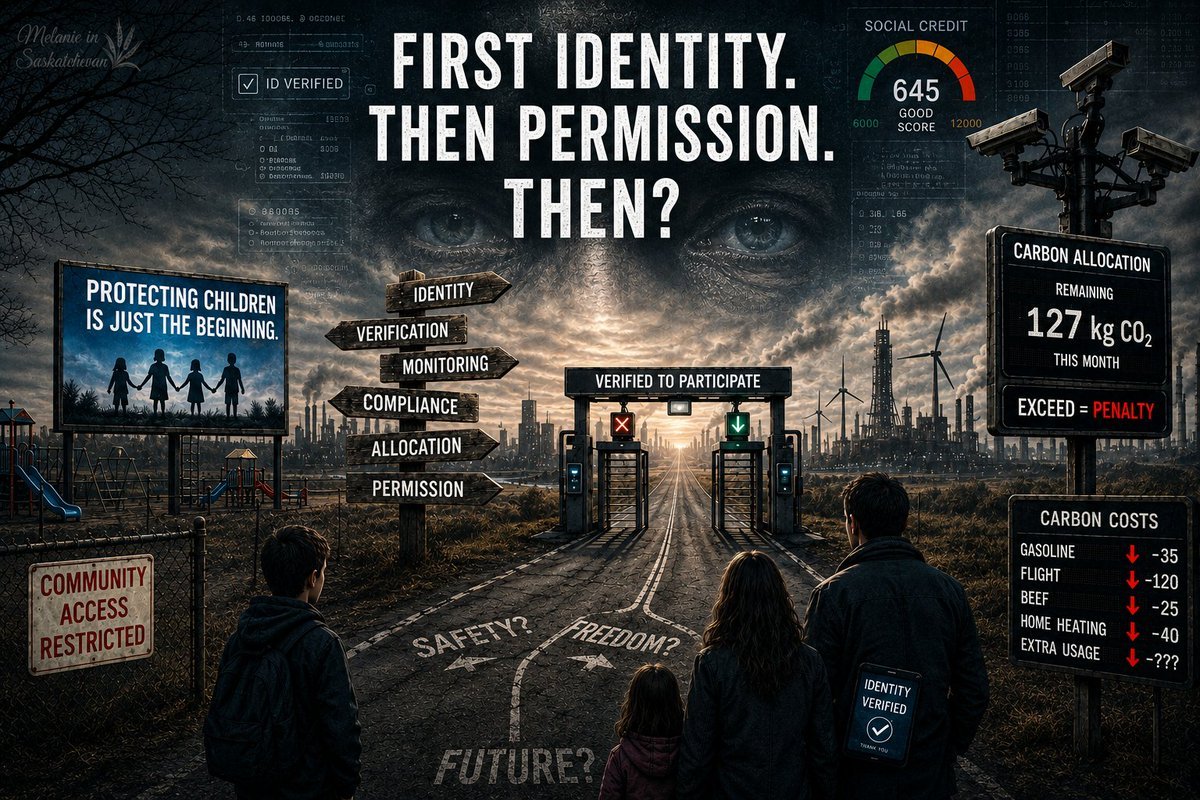
Yeah, I know... not exactly a stretch with the current crop of Liberal leadership. But how long before somebody proposes a personal carbon allowance? Not as a punishment, but as a solution. Framed as a responsible solution, a necessary one, maybe to protect our future children.
Imagine every Canadian receives a monthly carbon allocation. Drive an electric vehicle? Perhaps you earn credits. Take public transit? Perhaps you earn more. Ride a bicycle? Gold star for you. Buy gasoline? Credits deducted. Take an extra flight? Credits deducted. Use more energy than your monthly target? Credits deducted. Purchase products with larger carbon footprints? Credits deducted.
And because every modern system eventually requires incentives, perhaps those who stay within their allocation are rewarded while those who exceed it pay increasingly higher costs. Need additional credits? No problem. They're available. For a price.
Sound ridiculous? Perhaps.
Then again, every major system looks ridiculous before it exists and perfectly normal shortly afterward.
That's how societies change. Not all at once, but rather, incrementally. One framework, one authority, one exception, one emergency.
All presented as one reasonable measure at a time. Every step justified and every step defended. Every step presented as the solution to a real problem, until one day people look around and realize they've spent years debating individual trees without noticing the forest growing around them.
Maybe I'm wrong. I genuinely hope I'm wrong. But if I were determined to build a society where identification, verification, monitoring and compliance became normal parts of everyday life, I certainly wouldn't start by demanding all of it at once.
I'd start with something difficult to oppose.
Something emotionally compelling, perhaps something that sounds unquestionably reasonable. Something like protecting children.
Which brings me back to the same question. Not whether this bill C-34 is good or bad and not whether this government can be trusted or not, but whether we're paying enough attention to where all of these roads eventually meet...
Because if this isn't enough, then what, exactly, is enough? And if this isn't the destination, then what exactly are we building toward?
Perhaps the most dangerous changes in a society are not the ones people are forced to accept, but rather they're the ones people willingly embrace because each individual step appears reasonable on its own.
History rarely arrives wearing a name tag that says "Hello my name is Authoritarianism." It arrives disguised as administration. And as efficiency and safety. They will tell you it's their responsibility to introduce this perfectly sensible solution to a perfectly legitimate problem.
Each new framework seems harmless because it is judged independently. Each new power appears limited because it is viewed in isolation. Each new mechanism is defended because the objective sounds noble.
Only later do people realize they were never evaluating individual decisions at all, they were evaluating the direction of travel one incremental mile at a time.
A free society is not lost in a single dramatic moment. It is surrendered piece by piece, exception by exception, until citizens become so accustomed to asking permission that they forget there was ever a time they simply exercised liberty.
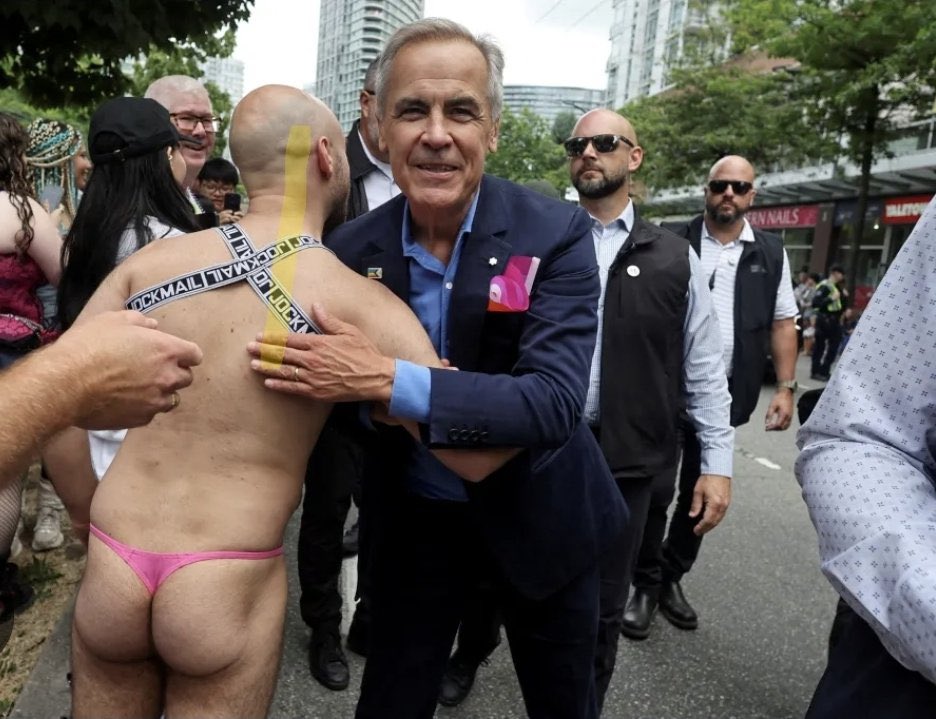
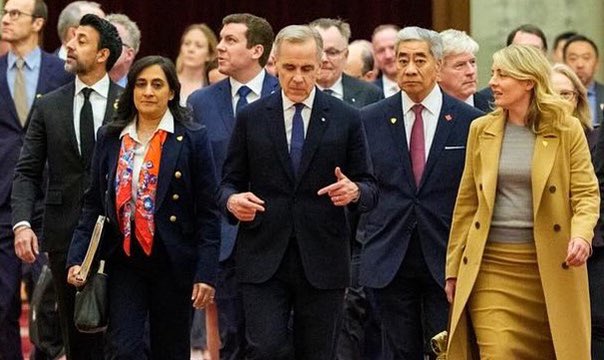
Maybe none of that happens. I sincerely hope it doesn't. But hope is not a substitute for vigilance, and vigilance begins by asking uncomfortable questions before the answers become permanent. And Mark Carney seems not only determined to control Canadians, but he also advocates for systems just like this. Systems like China employs.
Once a society normalizes identification, verification, monitoring and compliance as conditions of participation, it eventually reaches a point where the next restriction no longer feels extraordinary.
It just feels normal. And by then, the destination has already arrived.
Word to the wise... always look ahead to where you might end up, because the road you trod down to get there, rarely brings you back to where you start.
Melanie
🔗Links
melanieinsaskatchewan.substa…
🔗
buymeacoffee.com/melanieinsa…
(Image created with AI)
#BillC34 #cdnpoli