
We provide insight and bring together rigorous research and extensive field experience to influence and promote global peace and security.
Joined February 2017
- Tweets 7,754
- Following 173
- Followers 3,683
- Likes 4,824
2,198 Photos and videos





Jun 11
📃 FCAS and the Hard Limits of European Defence Unity 🇪🇺✈️
Europe’s Future Combat Air System (FCAS) was meant to symbolize European strategic autonomy. Instead, its collapse highlights the political, industrial, and strategic challenges preventing Europe from transforming ambition into military capability.
🎯 Key Takeaways
🔧 National champions, intellectual property disputes, and competition over leadership prevented effective programme governance and exposed the structural weaknesses of European defence cooperation.
⚖️ France’s emphasis on nuclear deterrence and carrier operations contrasted with Germany’s NATO-oriented conventional focus, making a common platform increasingly difficult to sustain.
🧩 A collapse into separate national projects risks repeating the Rafale-Eurofighter-Gripen model, dividing resources and weakening interoperability when Europe requires greater cohesion.
🇺🇸 Continued reliance on the F-35 may address short-term capability gaps, but it also reinforces long-term dependencies in software, sustainment, and operational sovereignty.
🔗 Read more: rfr.bz/t463db7
#FCAS #EuropeanDefence #StrategicAutonomy #AirPower #NATO #France #Germany #Spain #DefenceIndustry #MilitaryTechnology #F35 #Aerospace #SecurityPolicy #Geopolitics #Europe
1
3
2
166
Jun 11
🗺️ What If? Scenarios from W.A.R. on the Horizon
Europe’s security environment is increasingly defined by capability gaps, industrial challenges, and growing pressure to turn political ambitions into real military power. This week underscored the need for Europe to strengthen its strategic autonomy and credibility.
🎯 Key Takeaways
🔹 Reduced American contributions to NATO are forcing European allies to fill critical capability gaps in air, naval, and long-range strike assets.
🔹 The FCAS breakdown and slow procurement processes show that spending more is not enough without faster production and stronger coordination.
🔹 Support for Ukraine and efforts by Berlin, London, and Paris highlight Europe's push to shape future negotiations rather than simply react to them.
🔹 Supply chains, AI, digital infrastructure, and technological dependence are becoming increasingly important parts of Europe's security landscape.
🔗 Read more: rfr.bz/tb3cd7f
#Europe #NATO #Defence #Security #Ukraine #Russia #Geopolitics #Military #EuropeanUnion #StrategicAutonomy #DefenceIndustry #FCAS #Technology #AI #WAROnTheHorizon
4
5
54
Jun 11
The NOTIONES project is coming to an end, and it ends on a high note! 🎉
In collaboration with the Cyber Threats Research Centre, join us on 16th-18th June in Swansea for the Terrorism and Social Media Conference to find out what we achieved.
See you there! 👇
rfr.bz/t2a801c
#NOTIONES #Cybersecurity #Terrorism #SocialMedia #Conference #Swansea #EUProjects #BeyondTheHorizon #Intelligence #HorizonEurope
2
4
62
Jun 10
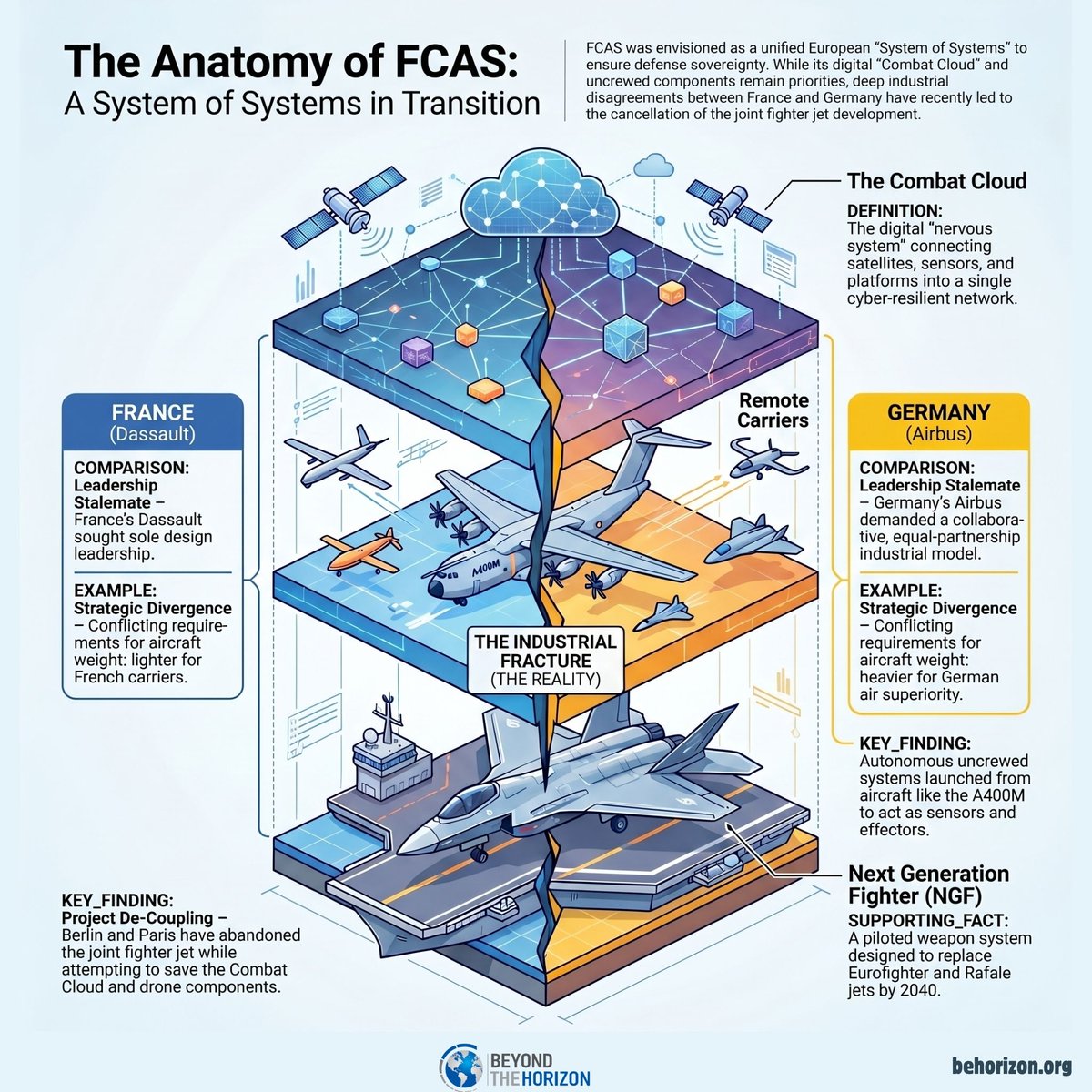
📊 New Infographic: The Collapse of FCAS and Europe’s Defunct 6th-Generation Fighter Alliance ✈️🇪🇺
The Future Combat Air System (FCAS), envisioned as a flagship Franco-German defense project, has officially collapsed after years of industrial disputes, differing strategic priorities, and shifting geopolitical realities.
🎯 Key Takeaways
🔧 Intellectual property disagreements, export restrictions, and workshare conflicts created persistent tensions that ultimately proved irreconcilable.
⚖️ France emphasized strategic autonomy and export freedom, while Germany focused on NATO integration, technology sharing, and immediate operational readiness.
📉 Development timelines slipped significantly and projected lifecycle costs escalated, reducing confidence in the viability of the project.
🚀 France is strengthening the Rafale F5 ecosystem and sovereign capabilities, while Germany is expanding F-35 procurement and exploring cooperation with the UK-Italy-Japan GCAP initiative.
🔗 More information: rfr.bz/t89d83e
#FCAS #EuropeDefense #France #Germany #Dassault #Airbus #SixthGenerationFighter #MilitaryAviation #DefenseIndustry #StrategicAutonomy #NATO #RafaleF5 #F35 #GCAP #Geopolitics
3
2
122
🌏 Asia on the Horizon: Weekly Highlights
This week highlighted a more networked Indo-Pacific, growing competition around Taiwan, and renewed diplomatic engagement among major powers. Cooperation is expanding, but strategic mistrust remains strong.
🎯 Key Takeaways
🔹 Regional states are strengthening defence ties beyond traditional U.S.-led alliances, with Japan playing an increasingly important connecting role.
🔹 Chinese naval activity, carrier operations, and renewed U.S.–China military talks underscore the growing importance of Taiwan and surrounding waters.
🔹 The UK, India, China, Brazil, and South Korea are expanding cooperation despite persistent geopolitical tensions.
🔹 Maritime disputes, espionage concerns, and nuclear cooperation show rivalry is increasingly extending into energy, technology, and security.
🔗 Read more: rfr.bz/te235f0
#AsiaOnTheHorizon #IndoPacific #China #Taiwan #Japan #Philippines #UKChinaRelations #IndiaUK #SouthChinaSea #GlobalSouth #BRICS #Geopolitics #Security #Defense #AsiaPacific
1
37
🚨 BREAKING: Franco-German Fighter Jet Program Grounded 🛩️💥
France and Germany are officially pulling the plug on their joint next-generation fighter jet program, dealing a major blow to European defense integration. German Chancellor Friedrich Merz advised French President Emmanuel Macron to stop pursuing the joint fighter jet after the two leaders acknowledged that the involved companies could not reach a compromise.
The project, part of the Future Combat Air System (FCAS), was launched in 2017 and originally aimed to replace the German Eurofighter and French Rafale jets by 2040. However, the program suffered a slow death due to bitter industrial disagreements between Europe's top defense contractors. Dassault pushed to lead the project and relegate Airbus to a subcontractor role, a move Airbus firmly rejected.
Furthermore, the two nations clashed over the aircraft's core design specs: France wanted a lighter jet suitable for aircraft carriers, while Germany demanded a heavier jet designed for air-superiority.
While the Elysée hinted that the cancellation was a unilateral German decision, the failure underscores the broader challenges of multinational European defense programs.
Is there a silver lining? Despite the failure of the main warplane component, officials noted that Paris and Berlin may still collaborate on the other pillars of the FCAS project, such as unmanned drones and the "combat cloud" digital network.
#FCAS #Germany #France #DefenseNews #Airbus #Dassault #Aviation #EuropeanDefense #MilitaryTech #AviationNews
2
53
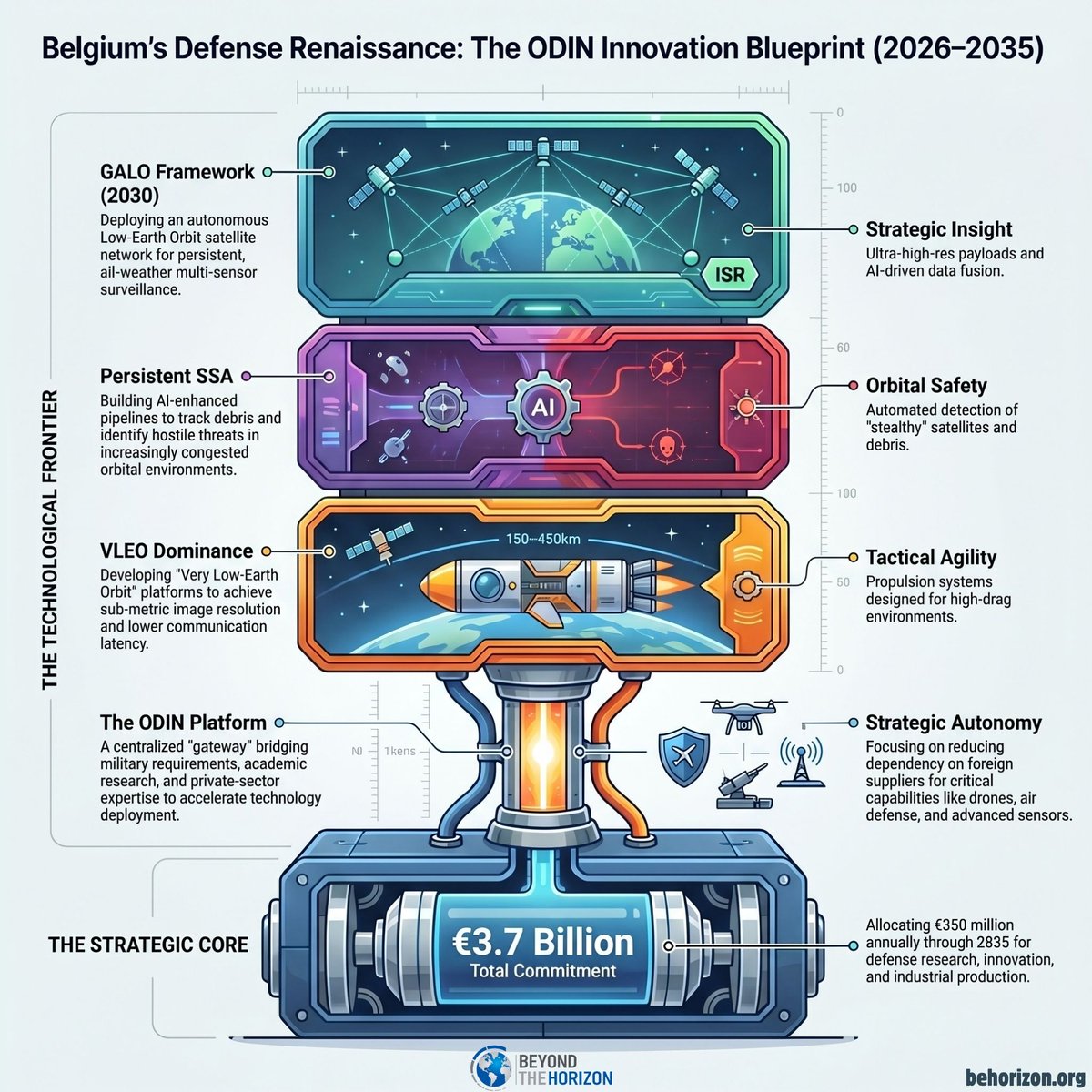
🚀 Belgium’s €3.7 Billion Leap into Next-Generation Defense Innovation! 🇧🇪
Belgium is stepping up its national security and technological capabilities with a massive €3.7 billion investment over the next decade through the newly established ODIN program.
Running from 2026 to 2035, ODIN is a central part of Belgium's broader Defence, Industry and Research Strategy (DIRS). The initiative will allocate €350 million annually to research, innovation, and industrial production, transforming the country into a growing hub for defense technology.
Here is what makes this initiative a game-changer for European security:
Boosting Domestic Industry: Defense Minister Theo Francken aims to double the number of Belgian defense companies from 80 to over 160 in the next five years. The goal is to create a sustainable industrial base, generate economic growth, and ensure strategic autonomy by reducing reliance on foreign suppliers.
Bridging the Gap: A new Office for Innovation will open in 2026 to act as a central gateway, connecting military requirements with academic research and private-sector startups.
Pioneering Space Defense: The DIRS strategy heavily prioritizes Space Defense Applications. This includes investments in cutting-edge Very Low-Earth Orbit (VLEO) technologies, autonomous space situational awareness, and AI-enabled Intelligence, Surveillance, and Reconnaissance (ISR) systems.
Belgium is moving decisively away from viewing defense purely as a budgetary burden—treating it instead as a critical investment in technological leadership and economic competitiveness.
#DefenseInnovation #ODINProgram #Belgium #Defense #StrategicAutonomy #DefenseTech #DIRS #EuropeanDefense #SpaceTech #TheoFrancken #Security #GovTech
1
37
📊 New Infographic: India–UK Strategic Partnership in 2026 🇮🇳🇬🇧
India and the UK are strengthening ties through growing trade, defense cooperation, technology partnerships, and educational exchanges, reinforcing a long-term strategic relationship.
🎯 Key Takeaways
🤝 India and the UK continue advancing cooperation across growth, technology, defense, climate, and education.
🛡️ New defense agreements, instructor exchanges, and maritime collaboration are enhancing security ties.
📈 Bilateral trade has reached £41.2 billion, supported by progress toward a Comprehensive Economic and Trade Agreement (CETA).
💻 Cooperation in AI, critical minerals, and higher education is deepening through the Technology Security Initiative and new UK campuses in India.
🔗 Read more:
#IndiaUKRelations #IndiaUKPartnership #Vision2035 #Geopolitics #InternationalRelations #DefenseCooperation #Trade #Technology #ArtificialIntelligence #IndoPacific #Education #StrategicPartnership rfr.bz/t29bbf7
1
1
24
Beyond the Horizon retweeted

🎥 Watch the video for insights from "Speaking the Nation, Centering the Party: Nationalist Discourse under Xi Jinping" ✍️ by Xinyuan Ren & Shaun Breslin
From how the CCP defines itself to where Xi Jinping's personal authority is heading, this paper unpacks the language driving China's nationalist turn.
📖 eh4s.eu/publication/speaking…
#eh4s #HorizonEurope #ChinaEU #XiJinping #nationalism #nationalrejuvenation #CCPChina
5
5
157
Beyond the Horizon retweeted
📌 EuroHub4Sino Final Conference => Save the date
Will China deliver? China's next decade & the consequences for Europe
🗓️ 22 September 2026
📍 Comet Meetings, 1050 Brussels & online
We close three years of EuroHub4Sino around one big question and four panels: science and the environment, security and defence, the global order, and domestic dynamics.
Our platform too, live on stage.
Register now and lock your seat before summer agendas fill up.
🔗 eh4s.eu/activities/final-con…
#EH4S #HorizonEurope #ContemporaryChina #EUChinaRelations #FinalConference
2
2
62
Beyond the Horizon retweeted
May 19
🌏 Asia on the Horizon: Weekly Highlights
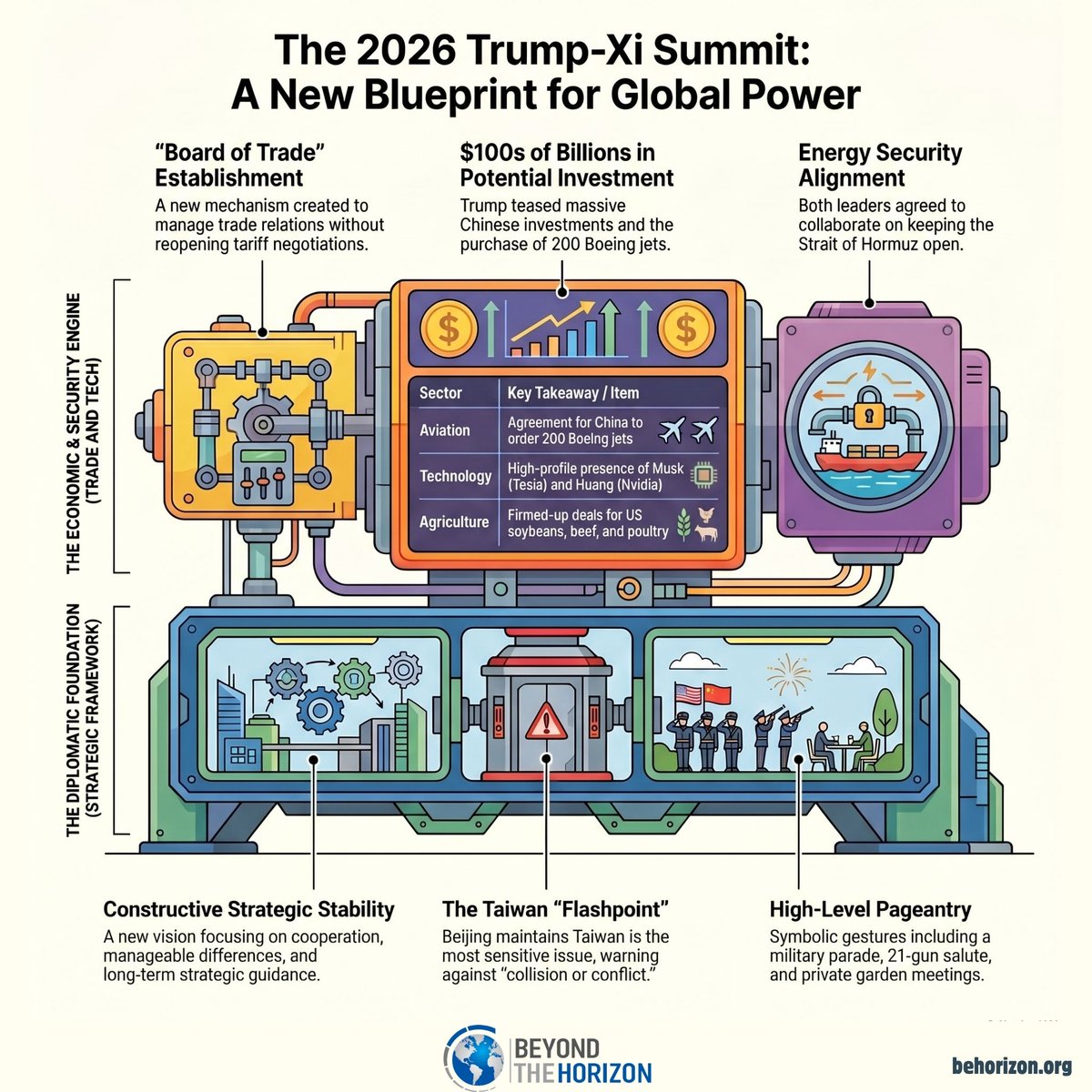
This week across the Indo-Pacific, global powers balanced diplomacy, trade, energy security, and strategic rivalry. From the Trump–Xi summit to India’s critical minerals push, regional competition remains active despite ongoing dialogue.
🎯 Key Takeaways
🔹 The Beijing summit improved communication channels, but Taiwan, semiconductors, and Iran remain unresolved flashpoints.
🔹 Hormuz tensions are shaping Asian diplomacy, pushing countries like India, South Korea, and China to rethink security and energy cooperation.
🔹 India expanded partnerships with the UAE, Europe, and Russia to strengthen resilience in energy, defence, and critical minerals.
🔹 Beijing increased outreach through APEC, ASEAN ties, and Central Asia partnerships focused on connectivity, AI, and trade infrastructure.
🔗 Read More: rfr.bz/t8c8f1a
#Asia #IndoPacific #China #India #Taiwan #Geopolitics #TrumpXi #APEC #EnergySecurity #CriticalMinerals #SouthChinaSea #BRICS #Diplomacy #GlobalTrade #InternationalRelations
4
4
77
Beyond the Horizon retweeted
🎥 Watch the Key Takeaways from "One or many: the decision-making behind China's science and innovation policies" ✍️ by @Yu_JieC
Who really drives China's tech ambitions? Xi Jinping, rival ministries, or the companies pushing policy from below? This paper unpacks the full picture.
📖 eh4s.eu/publication/one-or-m…
@ChathamHouse
@CHAsiaPacific
#eh4s #HorizonEurope #china #innovations #science #bureaucraticpolitics #ChinaEU
4
4
239
📊 New Infographic: China-UK Relations
China and the United Kingdom continue to balance economic cooperation with growing security concerns. While trade, climate initiatives, and investment remain important areas of engagement, technology security, critical infrastructure, and geopolitical competition increasingly shape the bilateral relationship.
🎯 Key Takeaways
💹 Bilateral trade reached approximately £109.2 billion, highlighting the continued importance of economic ties despite political and strategic tensions.
🛡️ The UK is expanding reviews of investments in sectors such as AI, quantum computing, and critical infrastructure under its National Security and Investment framework.
🌱 Climate initiatives, renewable energy technologies, and offshore wind development remain among the strongest areas of China-UK cooperation.
💻 Advanced semiconductors, telecommunications, and strategic technologies are becoming key areas of competition, driving efforts to protect sensitive intellectual property and supply chains.
🔗 Read more here: rfr.bz/t01b12f
#China #UnitedKingdom #ChinaUKRelations #Geopolitics #InternationalRelations #TradePolicy #EconomicSecurity #NationalSecurity #Technology #ArtificialIntelligence #ClimateAction #SupplyChains #IndoPacific #GlobalTrade #StrategicCompetition
1
4
4
166
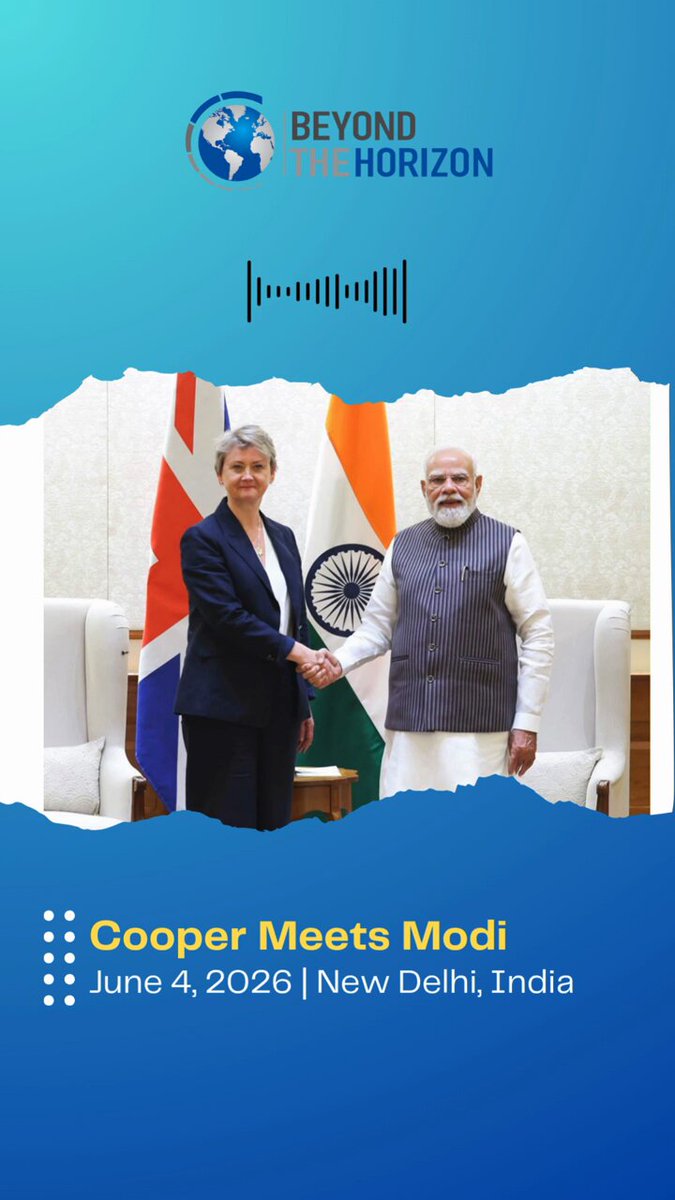
🇬🇧 🤝 🇮🇳 India–UK Ties Move Into Delivery Mode
UK Foreign Secretary Yvette Cooper’s first official visit to India focused on turning the India–UK Vision 2035 roadmap into concrete outcomes.
In New Delhi, Cooper met Prime Minister Narendra Modi and External Affairs Minister S. Jaishankar to review cooperation across trade, technology, defence, maritime security, climate, education and people-to-people ties.
Cooper also invited PM Modi to the Glasgow 2026 Commonwealth Games, noting India’s role as the next host in Ahmedabad in 2030: “I’m delighted that India will carry the baton forward from Glasgow 2026 to host the 2030 Commonwealth Games in Ahmedabad.”
The key message: this was not a symbolic reset, but a consolidation meeting — with both sides seeking to move from agreements to implementation.
#IndiaUK #India #UnitedKingdom #Cooper #Modi #Vision2035 #Diplomacy #ForeignPolicy #GlobalTrade #MaritimeSecurity #CommonwealthGames #Geopolitics #InternationalRelations
1
1
48
📃 New Commentary: Meloni’s SAFE Retreat and Poland’s First Payment
Europe’s rearmament challenge is no longer just about finding money—it is increasingly about securing political support and effectively converting funding into military capability. Italy and Poland highlight two very different obstacles facing Europe’s defence ambitions.
🎯 Key Takeaways
🔹 Italy’s potential reduction in SAFE funding requests highlights how weak public backing for higher defence spending can become a major obstacle to rearmament efforts.
🔹 Poland’s first SAFE payment demonstrates strong commitment, but success will depend on turning financial resources into effective, interoperable military capabilities.
🔹 The initiative should be viewed as a strategic allocation mechanism that rewards countries capable of delivering credible defence outcomes efficiently and responsibly.
🔹 Frontline states may accelerate defence investments while others lag behind, creating capability gaps and increasing reliance on a small group of highly committed allies.
🔗 Read more: rfr.bz/tf5bd26
#Europe #NATO #Defence #Security #SAFE #EuropeanUnion #Italy #Poland #Rearmament #MilitaryStrategy #Geopolitics #DefenseSpending #Ukraine #StrategicAffairs #InternationalRelations
3
3
32
🚨 Mapping the Crisis: W.A.R. on the Horizon
Europe faces mounting pressure from Russian aggression, Chinese influence, and growing defence-industrial demands. This week highlights the challenge of turning defence spending, alliances, and political will into credible deterrence.
🎯 Key Takeaways
🔹 While defence funding is growing, Europe still faces major hurdles in procurement, production capacity, and political support needed to deliver real military capability.
🔹 The Galați drone strike, ongoing attacks on Ukraine, and Kaliningrad tensions underline the need for stronger air and missile defence across Europe.
🔹 From the South China Sea to Japan–NATO cooperation, Europe’s security is increasingly tied to developments in the Indo-Pacific.
🔹 Faster production, counter-drone innovation, and industrial coordination are becoming as important as defence spending itself.
🔗 Read more: rfr.bz/t09c563
#Europe #NATO #Defence #Security #Ukraine #Russia #Geopolitics #Military #DefenceIndustry #StrategicAutonomy #EuropeanUnion #IndoPacific #Deterrence #HybridThreats #WAROnTheHorizon
2
2
52
Beyond the Horizon retweeted
🎥 Watch Key Takeaways from "Governing Relational AI: China's Regulation of Anthropomorphic AI and the European Governance Challenge" ✍️ by @Lukas_Gacek
From interaction design risks to regulatory gaps in the AI Act — this paper maps what Europe needs to do as AI becomes a social and emotional interface.
📖 eh4s.eu/publication/governin…
#eh4s #HorizonEurope #AIGovernance #ChinaEU #AIAct #RelationalIntelligence #euaipolicy
5
8
288
Beyond the Horizon retweeted
🇨🇳🤝🇷🇺 Putin-Xi Meeting Signals a Deeper Strategic Alignment
Russian President Vladimir Putin met Chinese President Xi Jinping in Beijing days after Donald Trump’s visit to China, placing Beijing once again at the center of major-power diplomacy.
The meeting focused on trade, energy cooperation, global governance, the Ukraine war, and wider geopolitical tensions. Xi framed China-Russia relations around “mutual political trust” and a push for a “more just and equitable” global order. Putin, meanwhile, called relations with China “unprecedented” and emphasized Russia’s role as a reliable energy supplier.
The key takeaway: this is not a formal alliance, but it is a relationship with growing strategic weight. Russia’s dependence on China is deepening, while China continues to balance closeness with Moscow against the diplomatic risks of the Ukraine war.
#China #Russia #XiJinping #VladimirPutin #Geopolitics #InternationalRelations #GlobalPolitics #EnergySecurity #UkraineWar #Diplomacy #ChinaRussia #ForeignPolicy #HorizonEU #ResearchImpactEU #EUInnovation
3
2
72
Beyond the Horizon retweeted
🇨🇳🤝🇨🇦 Canada–China Reset: A Cautious Return to High-Level Dialogue
Canada and China appear to be entering a new phase of engagement after Prime Minister Mark Carney met Chinese Foreign Minister Wang Yi in Ottawa on May 29.
The meeting, part of Wang’s first visit to Canada in a decade, focused on rebuilding diplomatic channels, expanding trade, and exploring cooperation in energy, finance, agriculture, and fisheries.
Carney framed the relationship as moving toward a more stable and constructive partnership, while Wang said there are “no clashes of fundamental interests” between the two countries. Canada, however, also kept sensitive issues on the table, including foreign interference, consular matters, forced labour, and human rights.
The key takeaway: this is not a full normalization of Canada–China relations. It is a cautious reset — driven by economic opportunity, geopolitical uncertainty, and the need for structured dialogue.
#CanadaChina #MarkCarney #WangYi #CanadaPolitics #ChinaPolitics #ForeignPolicy #Diplomacy #Geopolitics #TradePolicy #EnergySecurity #AsiaPacific #APEC2026 #InternationalRelations #GlobalAffairs #HorizonEU #ResearchImpactEU #EUInnovation
3
2
114
Beyond the Horizon retweeted
UK-China Relations: A Cautious Thaw, Not a Full Reset
The UK and China are reopening high-level dialogue after years of strained relations.
Foreign Secretary Yvette Cooper’s visit to Beijing signals a pragmatic shift: London wants engagement with the world’s second-largest economy, while Beijing is pushing for deeper cooperation and a fairer business environment for Chinese firms.
But this is not a clean diplomatic breakthrough.
Security concerns, human rights, Ukraine, Chinese investment scrutiny and the Jimmy Lai case remain major sources of tension.
The real takeaway: both sides are choosing controlled engagement — not because trust has returned, but because global instability makes dialogue harder to avoid.
#UKChina #Cooper #Wang #Geopolitics #ForeignPolicy #China #UnitedKingdom #Diplomacy #InternationalRelations #GlobalAffairs #Trade #Security #AI #AsiaPacific #IndoPacific #HorizonEU #ResearchImpactEU #EUInnovation
2
2
116