
RL PhD | BS @PKU1898 | Building autonomous decision making systems | Prev @deepseek_ai @AIatMeta FAIR | DeepSeek-V2/VL/Prover SPIRAL SPICE
Joined February 2022
- Tweets 194
- Following 462
- Followers 814
- Likes 5,438
8 Photos and videos

Pinned Tweet

1 Jul 2025
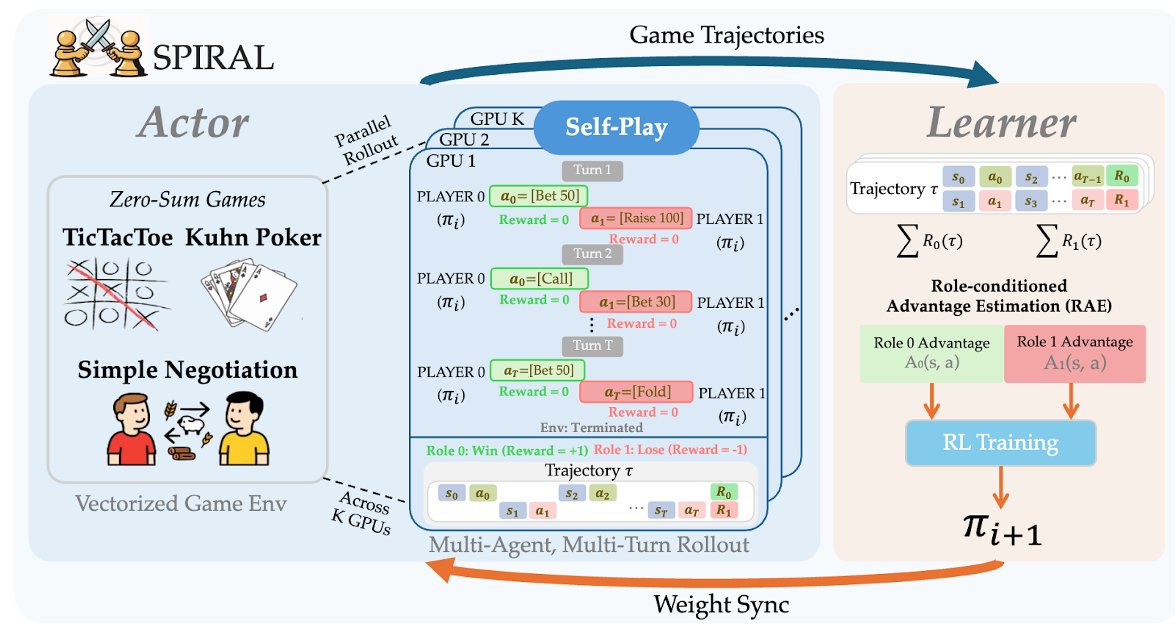
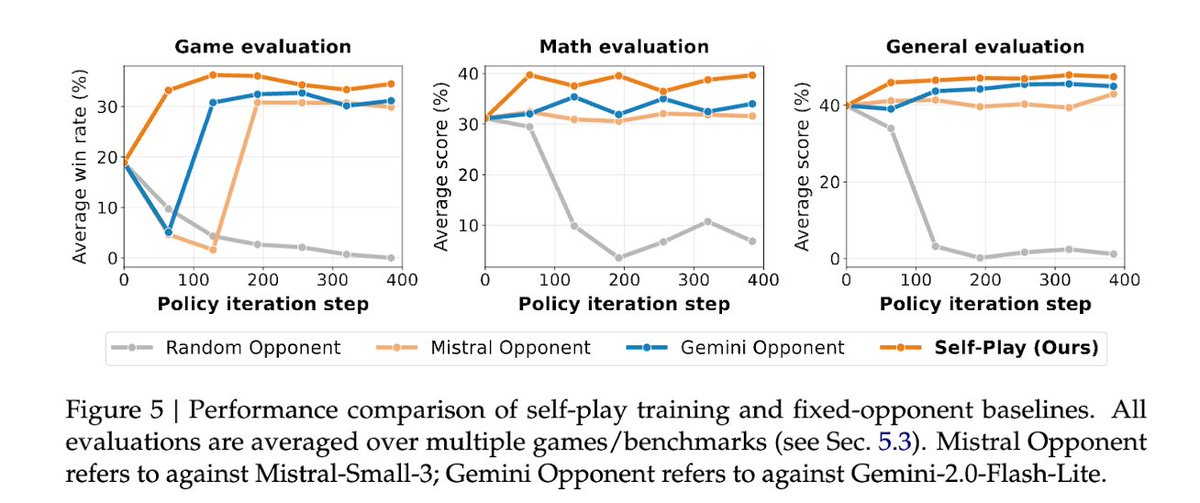
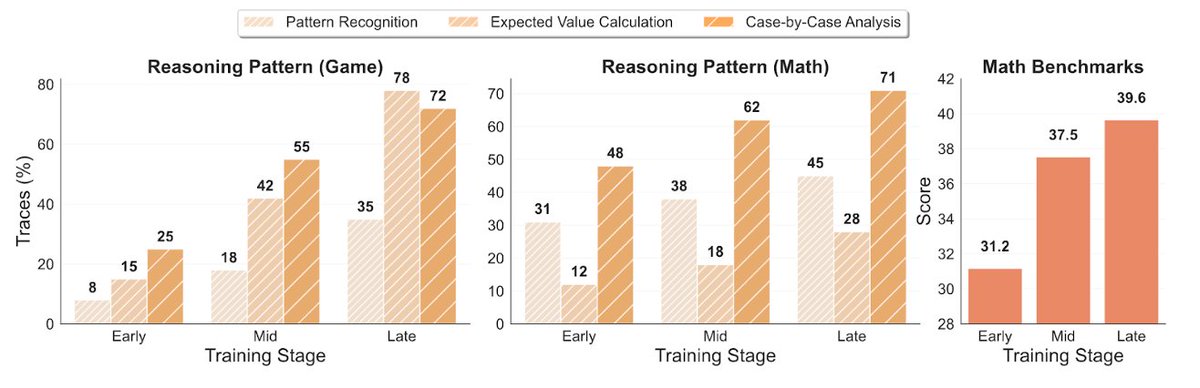
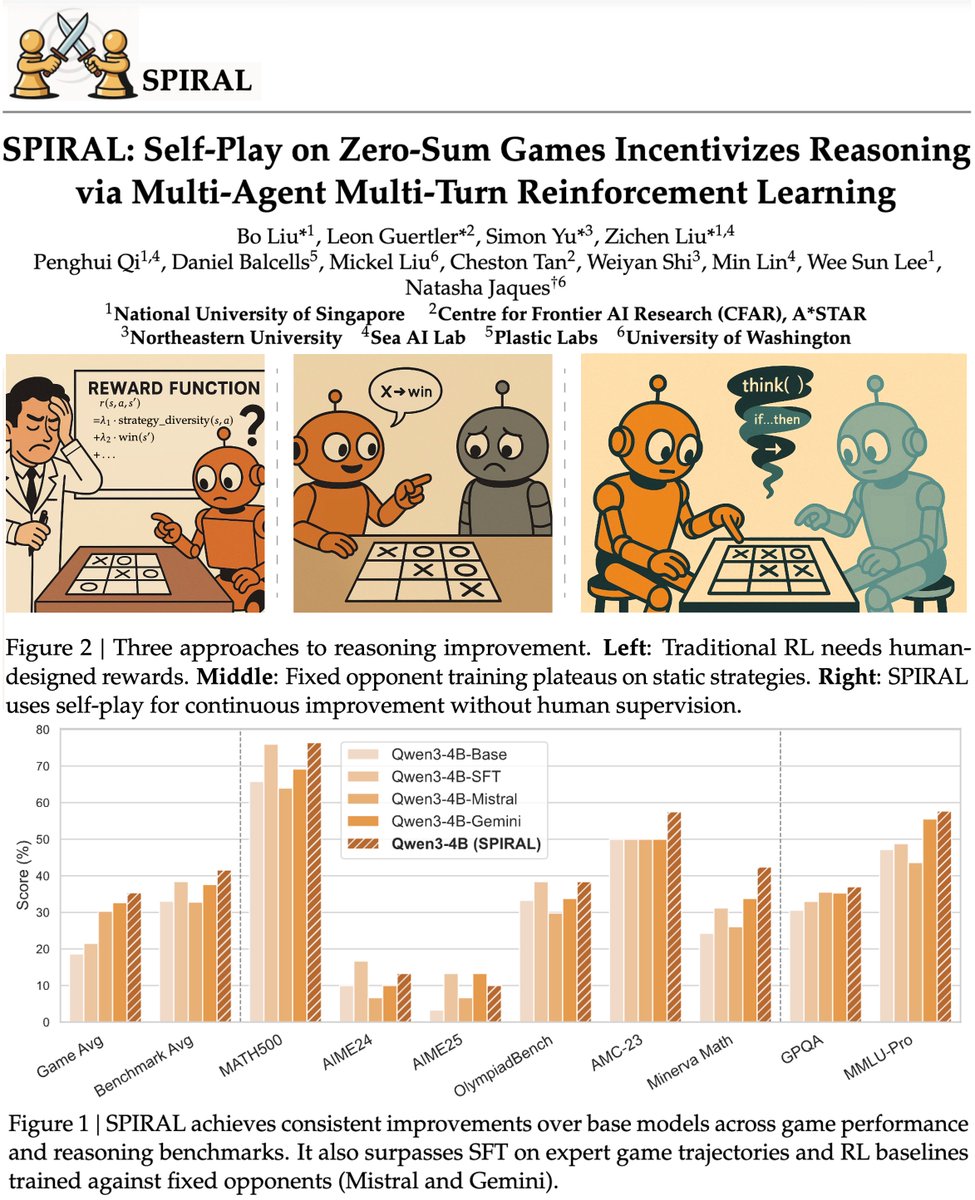
We've always been excited about self-play unlocking continuously improving agents. Our insight: RL selects generalizable CoT patterns from pretrained LLMs. Games provide perfect testing grounds with cheap, verifiable rewards. Self-play automatically discovers and reinforces reasoning strategies.
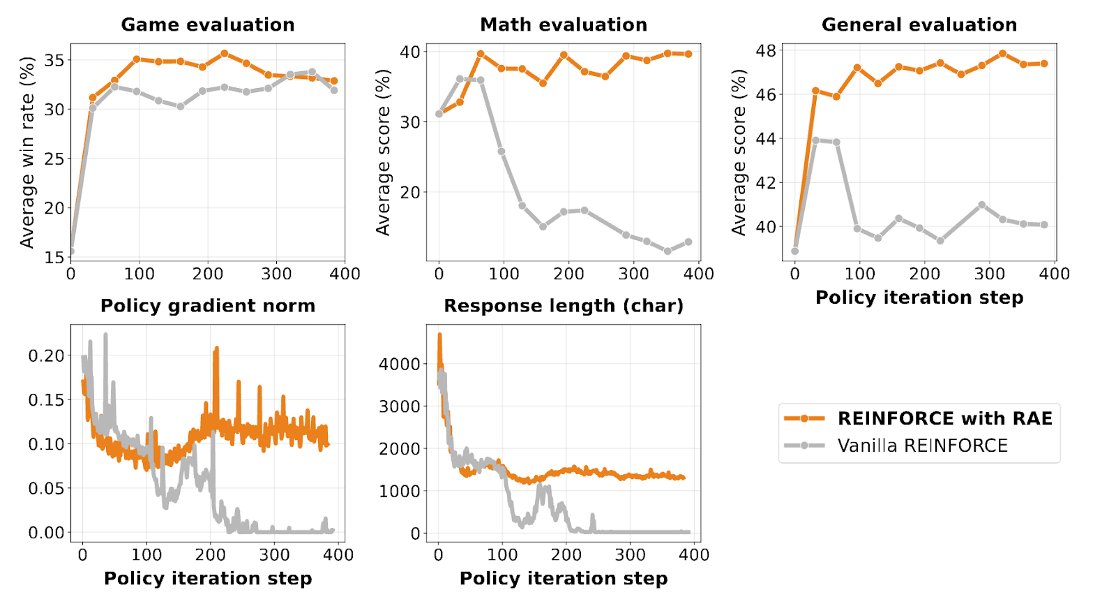
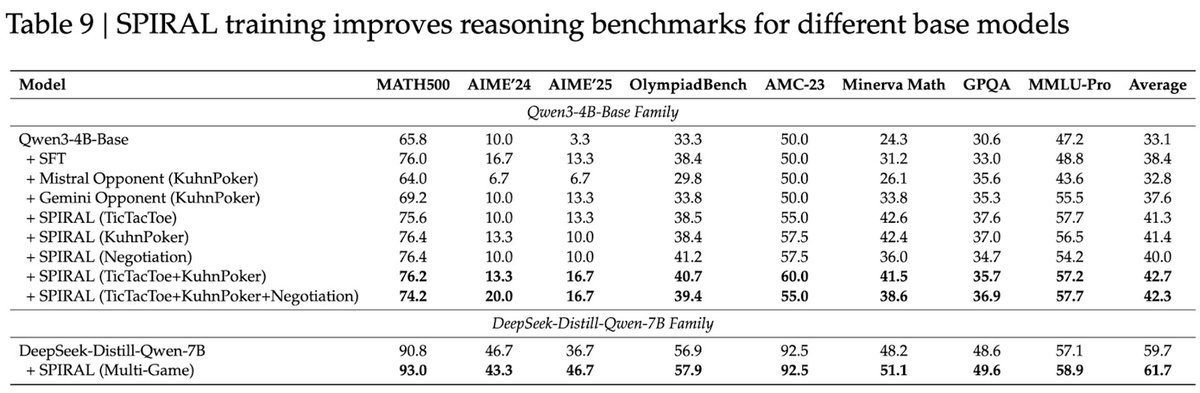
We introduce SPIRAL, where models learn reasoning by competing against themselves in games, creating an infinite curriculum without human supervision. Training LLMs with self-play RL on Kuhn Poker improves math reasoning by 8.7% average. Just playing Kuhn Poker improves Minerva Math scores by 18.1 points! 🃏
🔗 Paper: huggingface.co/papers/2506.2…
🧑💻 Code: github.com/spiral-rl/spiral
4
52
279
71,774
Bo Liu (Benjamin Liu) retweeted

Jun 11
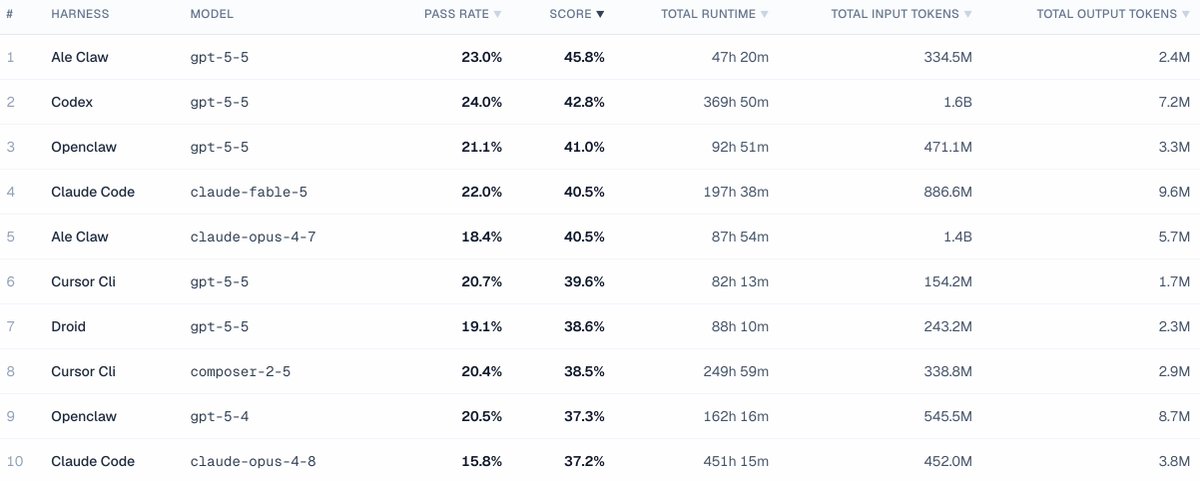
I'm happy GPT-5.5 tops this eval
I'm even happier it's still doing the best when measured vs tokens, cost, or wall-clock time!
Jun 11

Everyone says the latest AI agents will be "job-ready" soon, especially after the release of Fable 5 this week. But is that really the case?
Over the past many months, my group and collaborators have been building Agents' Last Exam (ALE), a benchmark designed to test exactly that claim on real digital labor-market work.
My group and collaborators previously have created many of the benchmarks the field runs on, including MMLU, MATH, CyberGym, and ExploitGym. Today, I'm excited to share Agents' Last Exam (ALE): a rolling benchmark that measures whether AI agents can actually perform economically valuable work across a broad range of real-world domains.
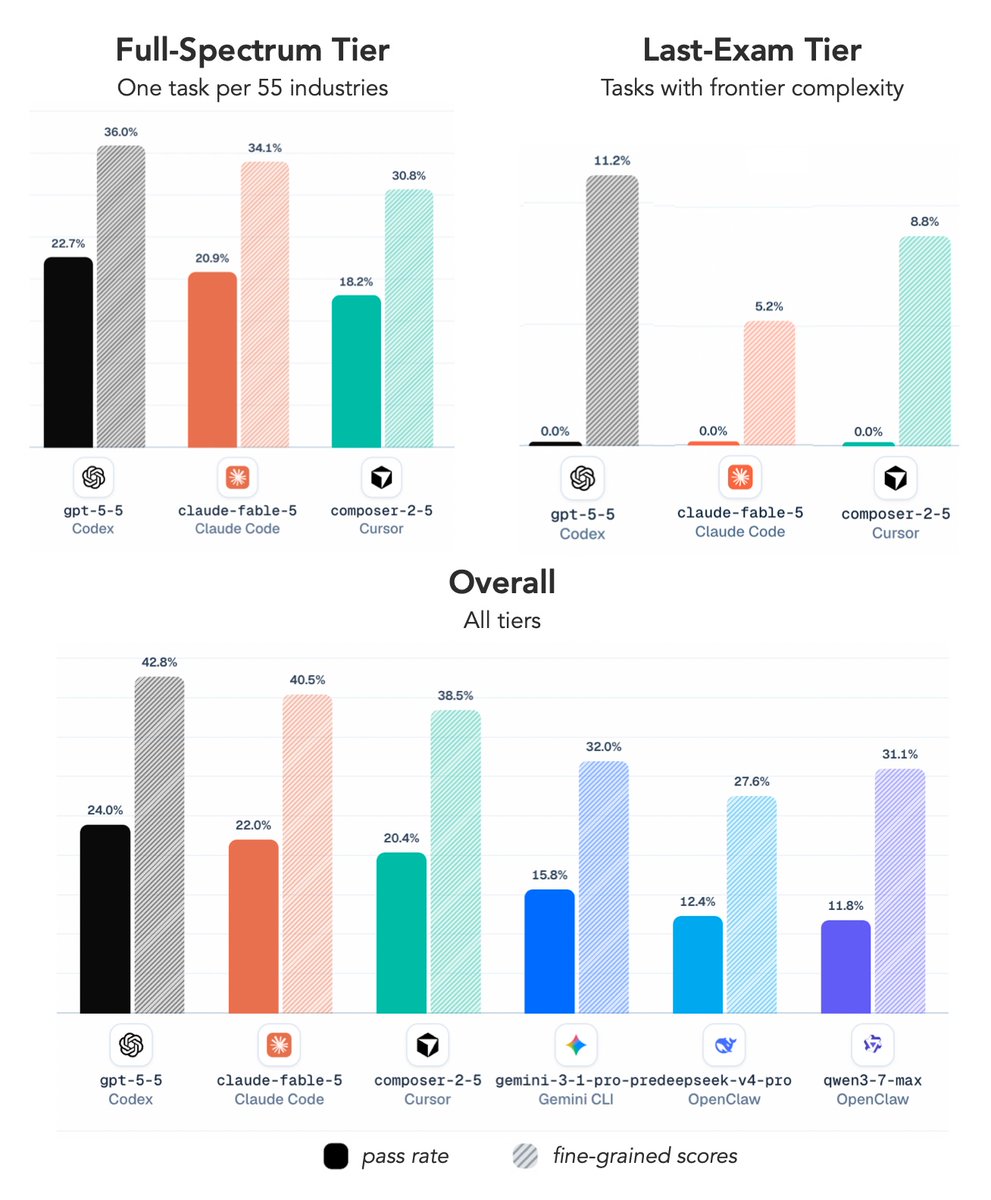
With ALE, we evaluated Fable 5, GPT-5.5, Composer 2.5, and other frontier agent systems across more than 1,500 expert-sourced tasks spanning 55 occupations.
The result is both impressive and sobering.
Today's agents can solve a meaningful fraction of professional tasks. But when we look at the hardest tasks, the ones requiring sustained reasoning, deep domain expertise, and reliable execution over long horizons, they are still far from human-level performance.
On ALE's hardest tier, every frontier agent we tested, including Fable 5, achieved a 0% success rate.
The age of useful agents is here.
The age of truly job-ready agents is not.
We hope Agents' Last Exam (ALE) will serve as a new guidepost and north star for developing agents capable of reliably performing economically valuable work across a broad range of domains.
🧵
22
40
728
93,254
Bo Liu (Benjamin Liu) retweeted

Jun 11
Everyone says the latest AI agents will be "job-ready" soon, especially after the release of Fable 5 this week. But is that really the case?
Over the past many months, my group and collaborators have been building Agents' Last Exam (ALE), a benchmark designed to test exactly that claim on real digital labor-market work.
My group and collaborators previously have created many of the benchmarks the field runs on, including MMLU, MATH, CyberGym, and ExploitGym. Today, I'm excited to share Agents' Last Exam (ALE): a rolling benchmark that measures whether AI agents can actually perform economically valuable work across a broad range of real-world domains.
With ALE, we evaluated Fable 5, GPT-5.5, Composer 2.5, and other frontier agent systems across more than 1,500 expert-sourced tasks spanning 55 occupations.
The result is both impressive and sobering.
Today's agents can solve a meaningful fraction of professional tasks. But when we look at the hardest tasks, the ones requiring sustained reasoning, deep domain expertise, and reliable execution over long horizons, they are still far from human-level performance.
On ALE's hardest tier, every frontier agent we tested, including Fable 5, achieved a 0% success rate.
The age of useful agents is here.
The age of truly job-ready agents is not.
We hope Agents' Last Exam (ALE) will serve as a new guidepost and north star for developing agents capable of reliably performing economically valuable work across a broad range of domains.
🧵
56
171
822
216,093
Bo Liu (Benjamin Liu) retweeted

May 22
Project Genie is magical... but we've also been working on some new ways to interact with another player (or agent).
It was super fun to demo this new capability at Google I/O this week, where we enabled attendees to explore worlds with Gemini as a companion. Going forward, we are incredibly excited to see how this can enable Gemini to learn how to interact with humans in embodied environments.
Some examples of interacting with Gemini in real-time within these generated worlds:
5
11
65
32,319

Today, we share a breakthrough on the planar unit distance problem, a famous open question first posed by Paul Erdős in 1946.
For nearly 80 years, mathematicians believed the best possible solutions looked roughly like square grids.
An OpenAI model has now disproved that belief, discovering an entirely new family of constructions that performs better.
This marks the first time AI has autonomously solved a prominent open problem central to a field of mathematics.
1,200
3,918
26,776
13,579,624

nice work by @DimitrisPapail and @VaishShrivas!
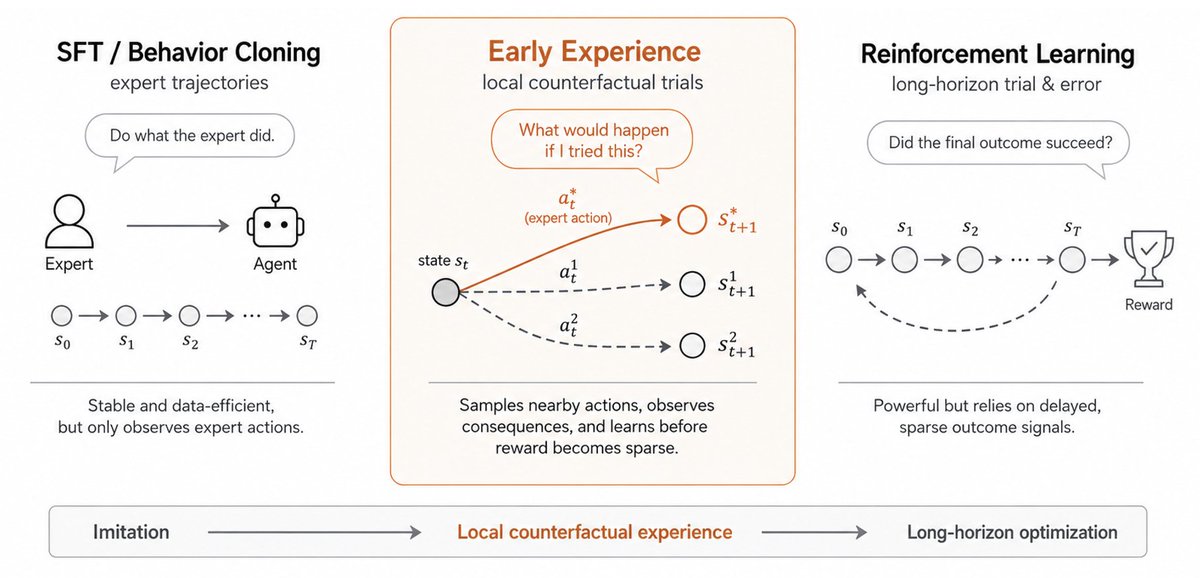
this work is reinforcing a recent trend that tries to make foundation models jointly predict future states (aka 'world models') and actions instead of actions alone.
we're seeing it in different forms, like World Action Models in embodied agents, or implicit world modeling in Early Experience (arxiv.org/abs/2510.08558). also some interesting link to on-policy self-distillation.
shared learning here is, there's still rich supervision signals that are underexplored. such signals were hard to exploit in classic ML, but foundation models have made it possible, potentially creating a recursive self-improvement loop.

6
33
203
26,473
Bo Liu (Benjamin Liu) retweeted

May 18
The bitter lesson in 26 words:
Don’t be distracted by human knowledge, as AI has been historically.
Instead focus on methods for creating knowledge that scale with computation, like search and learning.
137
978
7,444
585,727
Bo Liu (Benjamin Liu) retweeted

May 13
Excited to co-found Recursive (@recursive_si) with an exceptional team in London and SF to create AI that experiments on how to safely improve itself, turning compute into knowledge that accumulates in an open-ended process of endless, automated scientific discoveries.
98
111
907
252,961
Bo Liu (Benjamin Liu) retweeted

May 11
Sharing our work on full-duplex multimodal models -- real-time interaction that's natural and intuitive without compromising on intelligence.
We started Thinky in part to differentially advance capabilities for human-AI collaboration, which are underemphasized relative to intelligence/autonomy because they're harder to eval.
In the future, we think every AI system will have something like an interaction model as the outer user-facing layer, continually keeping the user informed and learning what they actually want.
May 11

People talk, listen, watch, think, and collaborate at the same time, in real time. We've designed an AI that works with people the same way.
We share our approach, early results, and a quick look at our model in action.
thinkingmachines.ai/blog/int…
35
84
929
123,980
Bo Liu (Benjamin Liu) retweeted

May 11
People talk, listen, watch, think, and collaborate at the same time, in real time. We've designed an AI that works with people the same way.
We share our approach, early results, and a quick look at our model in action.
thinkingmachines.ai/blog/int…
464
1,961
15,787
7,754,508
RT @jaseweston: 💎Autodata: an agentic data scientist to create high quality data✨
We introduce a method for building agents that create hi…
105
Bo Liu (Benjamin Liu) retweeted

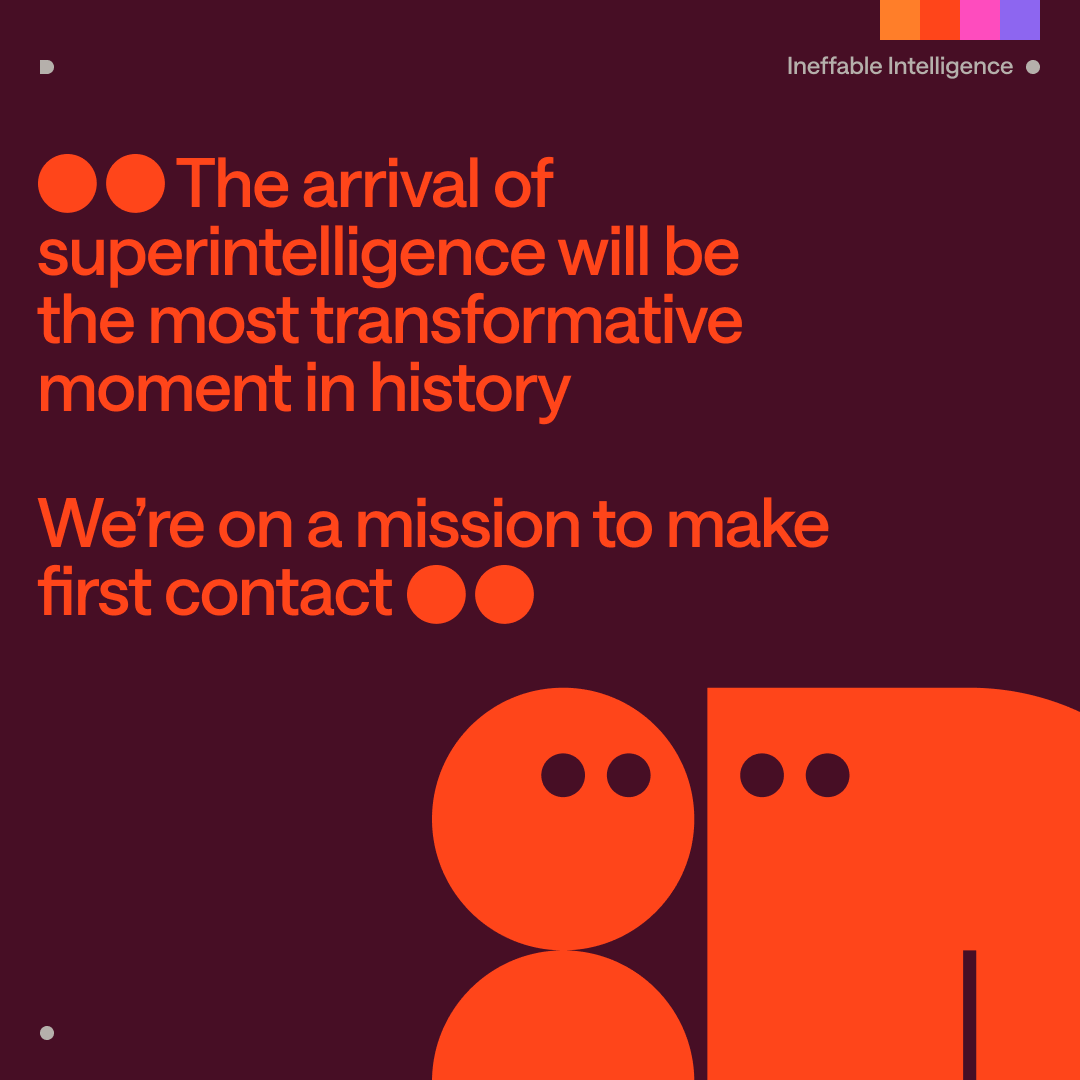
Introducing Ineffable Intelligence. Led by David Silver, we're assembling the best engineers and researchers in the world to make first contact with superintelligence. We’ll be solving the hardest problems in AI on the way. Come join us.
ineffable.ai
76
160
1,423
351,049
Bo Liu (Benjamin Liu) retweeted

Apr 24
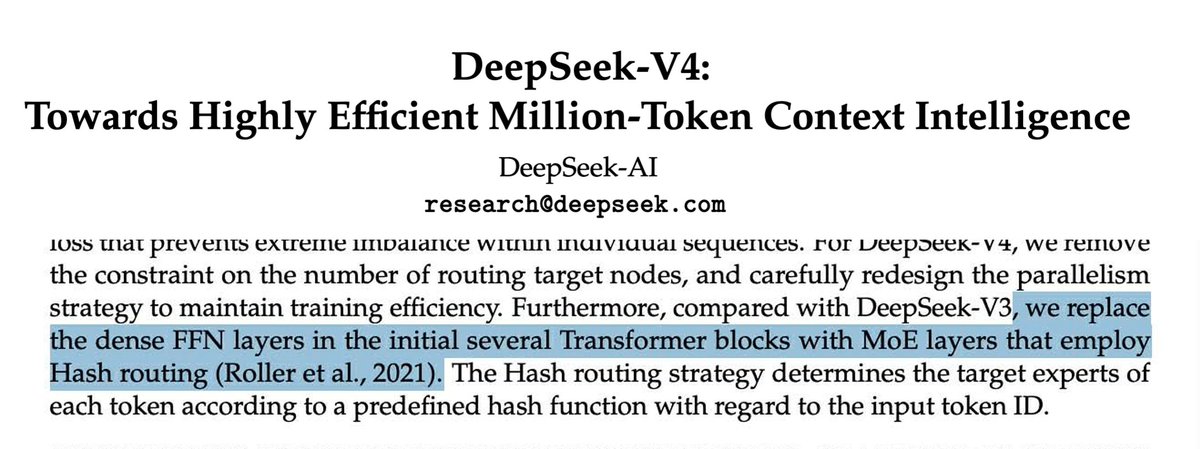
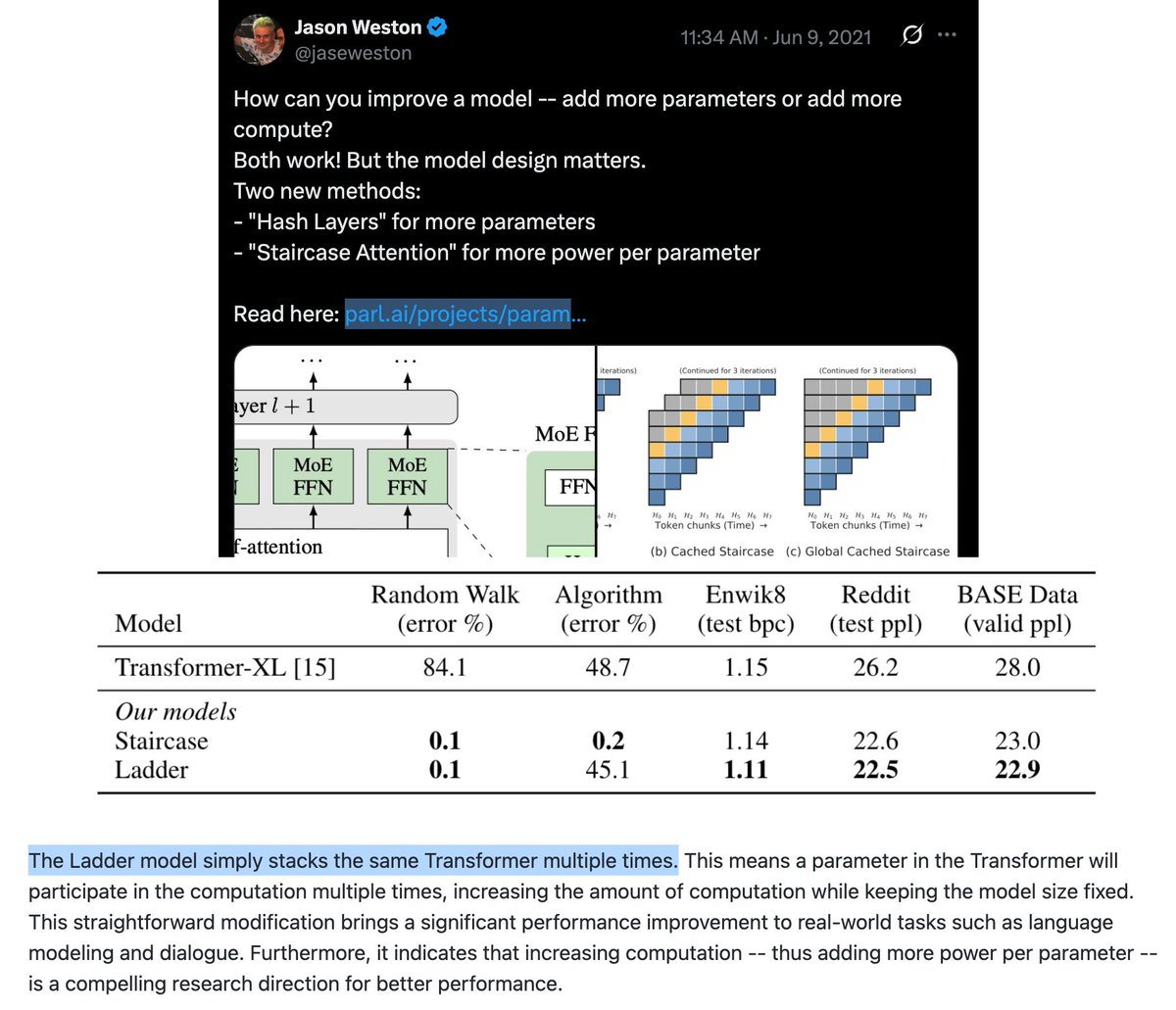
DeepSeek-V4 uses our Hash routing approach developed back in 2021 -- see screenshot of their tech report! (Looks like a great model, congrats!)
Bonus note: our same blogpost (& paper) back in 2021 also introduced 'looped transformers', but we called that staircase & ladder (see screenshot): parl.ai/projects/params_vs_c…
huggingface.co/deepseek-ai/D…
38
457
31,700
Bo Liu (Benjamin Liu) retweeted

Apr 24
DeepSeek-V3: Dec 26, 2024
DeepSeek-V4: Apr 24, 2026
484 days later, we humbly share our labor of love.
As always, we stay true to long-termism and open source for all.
AGI belongs to everyone. ❤️🌍
#DeepSeekV4 #AGIforEveryone #OpenSource
Apr 24

🚀 DeepSeek-V4 Preview is officially live & open-sourced! Welcome to the era of cost-effective 1M context length.
🔹 DeepSeek-V4-Pro: 1.6T total / 49B active params. Performance rivaling the world's top closed-source models.
🔹 DeepSeek-V4-Flash: 284B total / 13B active params. Your fast, efficient, and economical choice.
Try it now at chat.deepseek.com via Expert Mode / Instant Mode. API is updated & available today!
📄 Tech Report: huggingface.co/deepseek-ai/D…
🤗 Open Weights: huggingface.co/collections/d…
1/n

353
1,236
13,022
1,072,379
Introducing @NeoCognition, the agent lab for specialized intelligence.
Everyone needs experts, but human expertise does not scale.
Backed by $40M seed funding, we build self-learning agents that specialize across domains to make expertise abundant.
92
132
877
187,577
Bo Liu (Benjamin Liu) retweeted
Apr 3
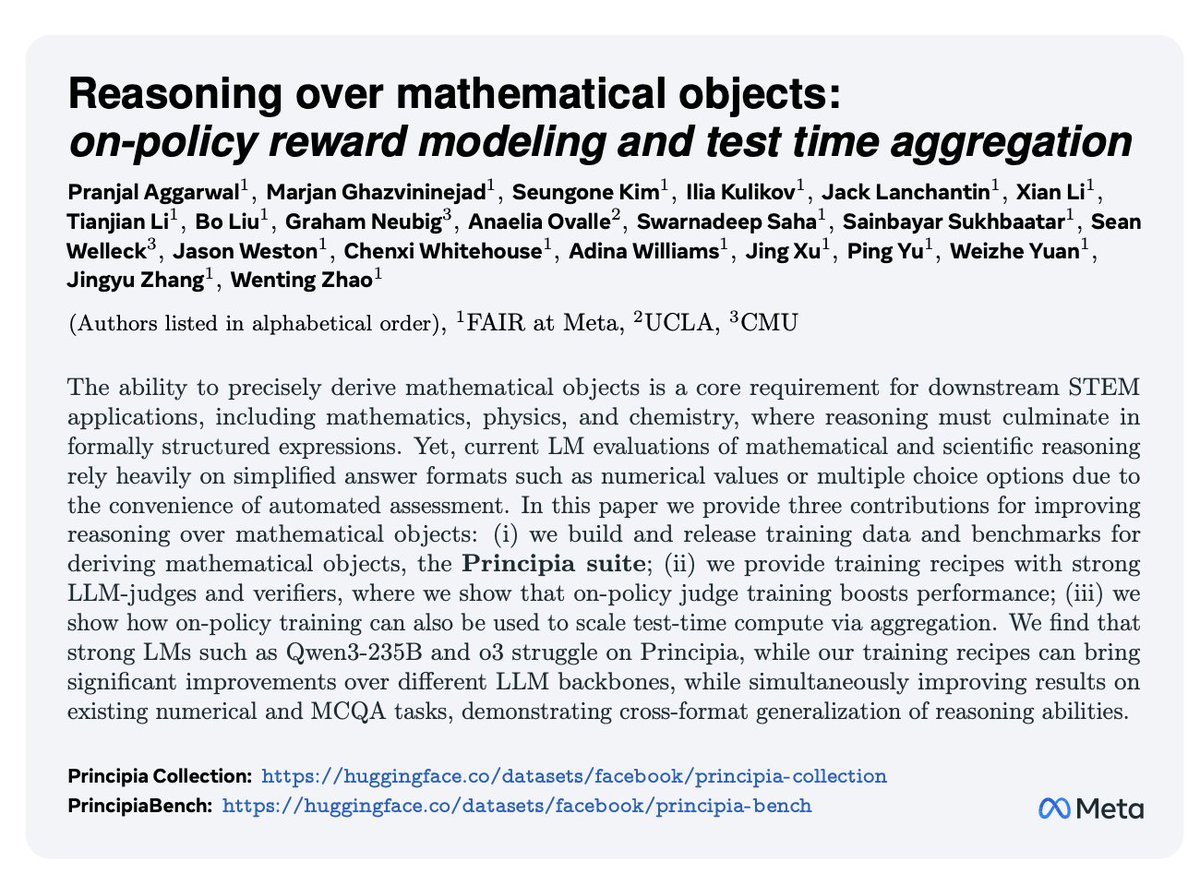
🧮 Reasoning over Mathematical Objects 🧮
Our 70-page(!) paper is out on arXiv, as covered by several of our recent blog posts.
We study how to improve reasoning on hard tasks (e.g., math expressions) via:
• better training data (& new evals)
• better reward models (on-policy trained)
• better inference methods (on-policy trained)
📝: arxiv.org/pdf/2603.18886
3
36
205
14,633
Bo Liu (Benjamin Liu) retweeted
Mar 30
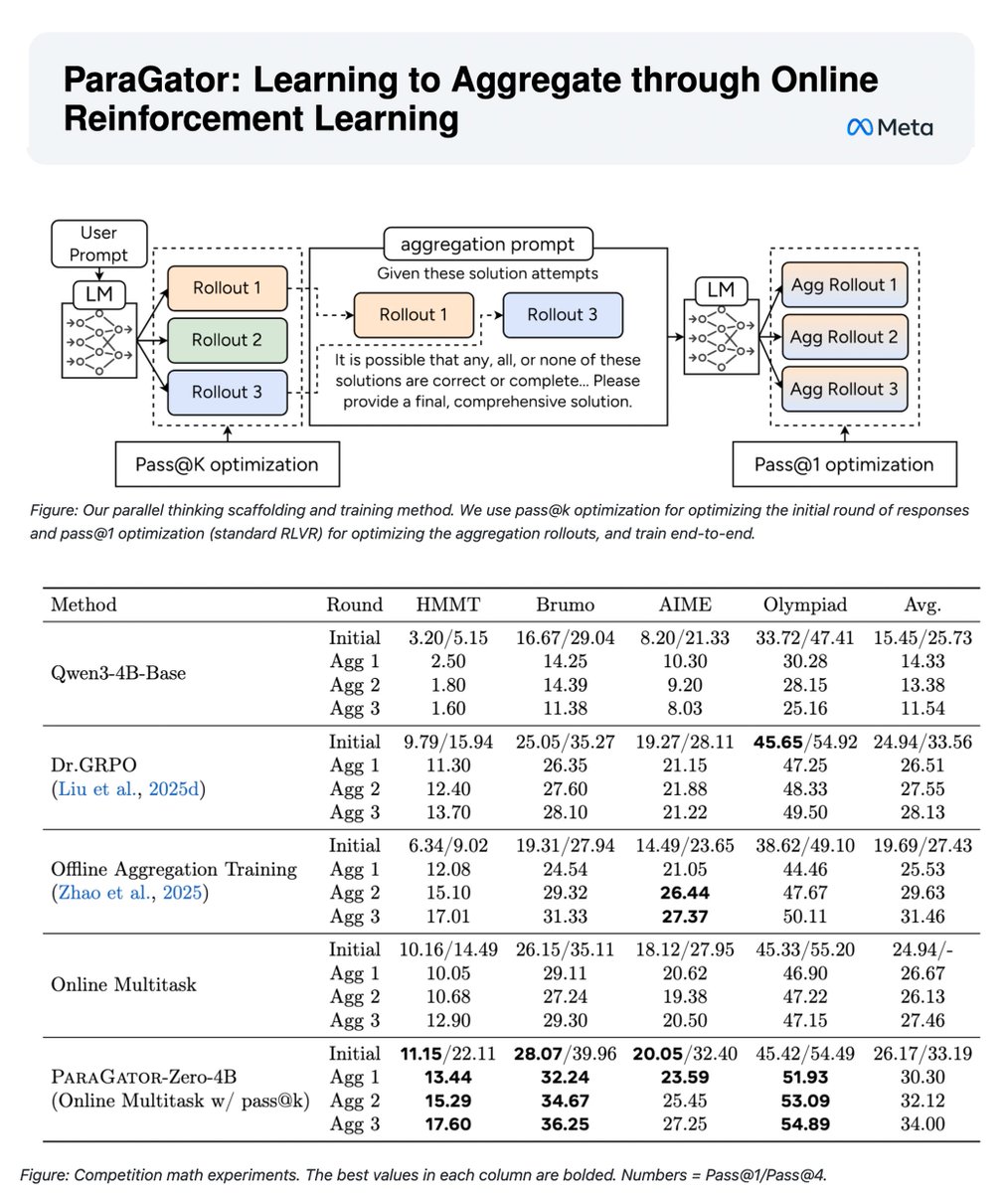
🔗Learning to Aggregate through Online RL🎯
ParaGator🔀🐊: strong parallel reasoning aggregation
Core claim: aggregation works best when training both stages together:
- LLM generator should produce diverse candidates
- LLM aggregator should synthesize into final answer
ParaGator trains candidate generation with pass@k, and aggregation with pass@1 on-policy, end-to-end.
Stops mode collapse/off-policy mismatch.
Improves math & scientific reasoning. 🚀🏆
Read more in the blog post: facebookresearch.github.io/R…
3
24
123
10,988
Bo Liu (Benjamin Liu) retweeted
Mar 23
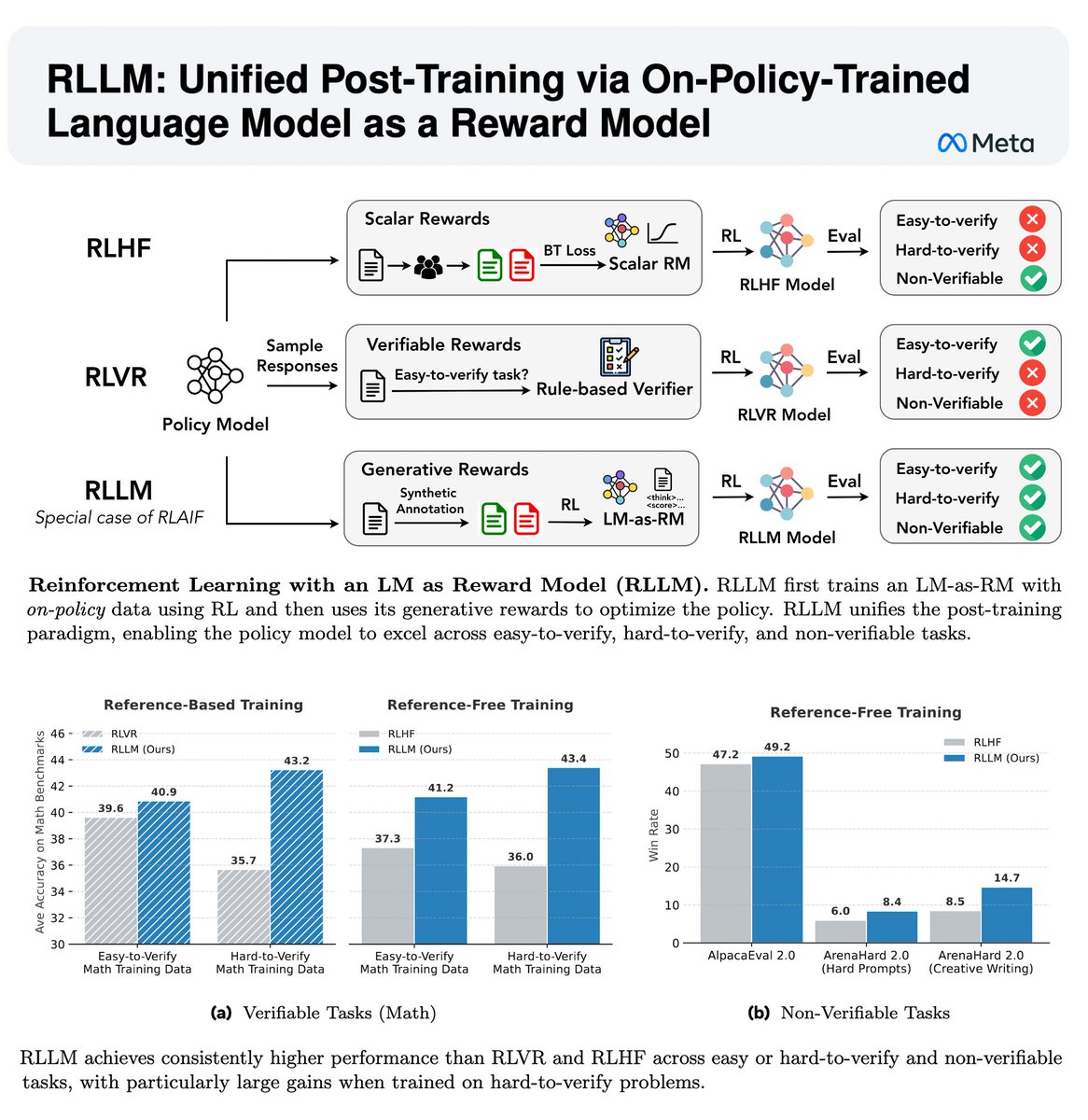
🌐Unified Post-Training via On-Policy-Trained LM-as-RM🔧
RLLM = RL LM-as-RM:
- post-training framework that unifies RL across easy-, hard-to-verify, and non-verifiable tasks.
- trains the LM-as-RM reward model on-policy from the policy’s own outputs, then uses those generative rewards to optimize the policy. 🔗📈
- uses the LLM’s reasoning instruction-following for higher-quality rewards — boosting performance on all task types. 🚀🤖🏆
Read more in the blog post: facebookresearch.github.io/R…
4
46
310
25,939
Bo Liu (Benjamin Liu) retweeted

Mar 20
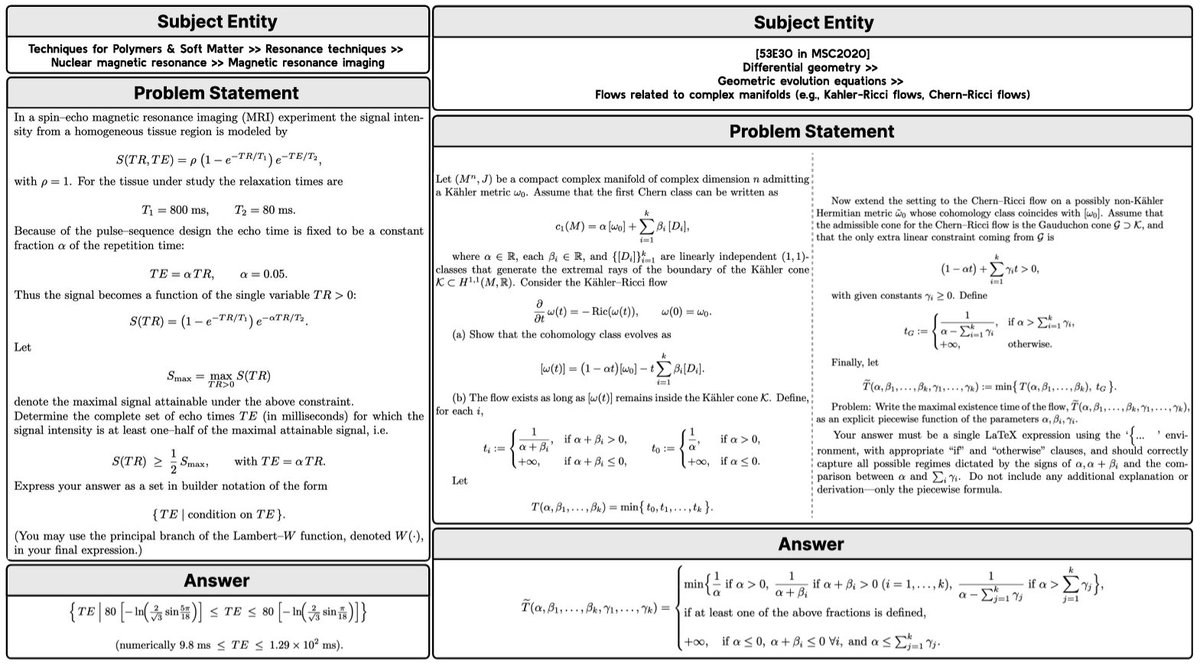
🧮New work from @AIatMeta & @LTIatCMU!
LM reasoning benchmarks mostly use simple answers like numbers (AIME) or multiple-choice options (GPQA). But for complex mathematical objects, performance drops sharply.
We propose a set of solutions to solve this:
arxiv.org/abs/2603.18886
1
22
92
9,605
Bo Liu (Benjamin Liu) retweeted
Mar 20
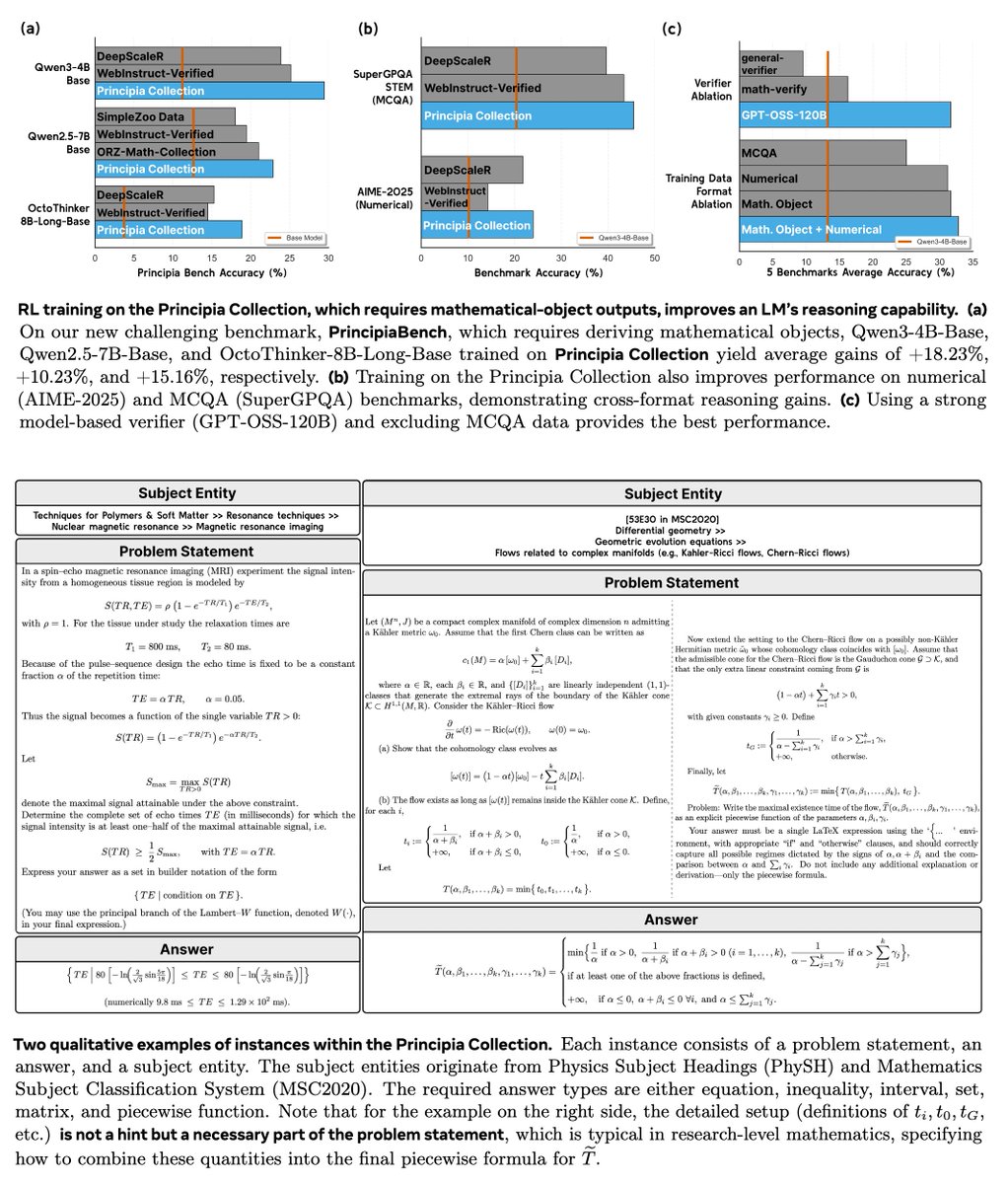
🧮 Principia: Training LLMs to Reason over Mathematical Objects 📐
We release:
- PrincipiaBench, a new eval for *mathematical objects* (not just numerical values or MCQ)
- Principia Collection: training data that improves reasoning across the board.
For models to help with scientific and mathematical work, you need to train on such data & test whether they can derive things like equations, sets, matrices, intervals, and piecewise functions.
We show that this ends up improving the overall reasoning ability of your model for all tasks.
Read more in the blog post: facebookresearch.github.io/R…
34
127
13,019
Bo Liu (Benjamin Liu) retweeted

Mar 15
We've witnessed a crazy concurrent line of work on on-policy self-distillation in LLMs, and I truly believe this is the next paradigm of RL.
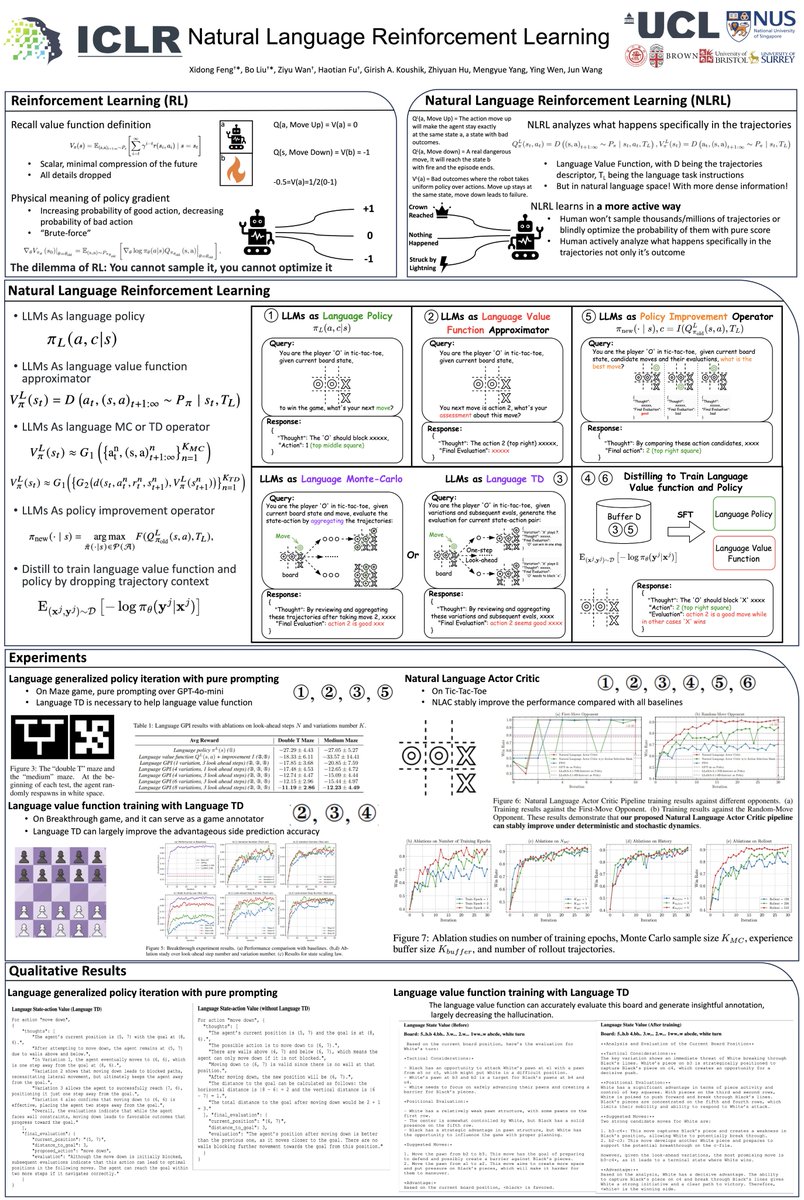
Back in 2024, we proposed this exact conceptual shift in our paper, Natural Language Reinforcement Learning (NLRL).
The real breakthrough here isn't just the specific distillation mechanics. It’s that RL is fundamentally shifting away from the traditional "sample -> then filter or amplify" approach. Instead of passively waiting to stumble upon a good action to upweight, the field is moving toward true synthetic language data generation from experience, which enables true continual learning.
You can see this exact recipe playing out across all the recent hit papers:
• RLTF (2602.02482): Text critiques as privileged info
• OPSD (2601.18734): Ground-truth solutions
• SDPO (2601.20802): Runtime errors & execution feedback
• ERL(2602.13949): Self-reflections & demonstrations
Instead of just using a scalar reward to filter bad rollouts, they all use language feedback to explicitly generate a corrected, high-quality trajectory in hindsight, and then distill that competence back into the base policy.
While the specific ways we adapt RL to LLMs are still rapidly evolving, the core vision we outlined in NLRL holds true today: a single scalar is simply too poor of a carrier for credit assignment.
When people talk about "experiential memory" for agents today, they are essentially describing what we framed as a Language Value Function (LVF)—not just RAG over past episodes, but storing the structured, strategy-level "why" behind what worked. And what we called "Language Policy Improvement" is exactly this feedback-aware self-distillation loop we see everywhere now.
Language, not scalars, is the future of RL.
📄 Check out our early exploration of this framework here: arxiv.org/abs/2411.14251
6
28
205
32,401