
Joined December 2023
- Tweets 4,116
- Following 102
- Followers 7,221
- Likes 6,343
245 Photos and videos



May 12
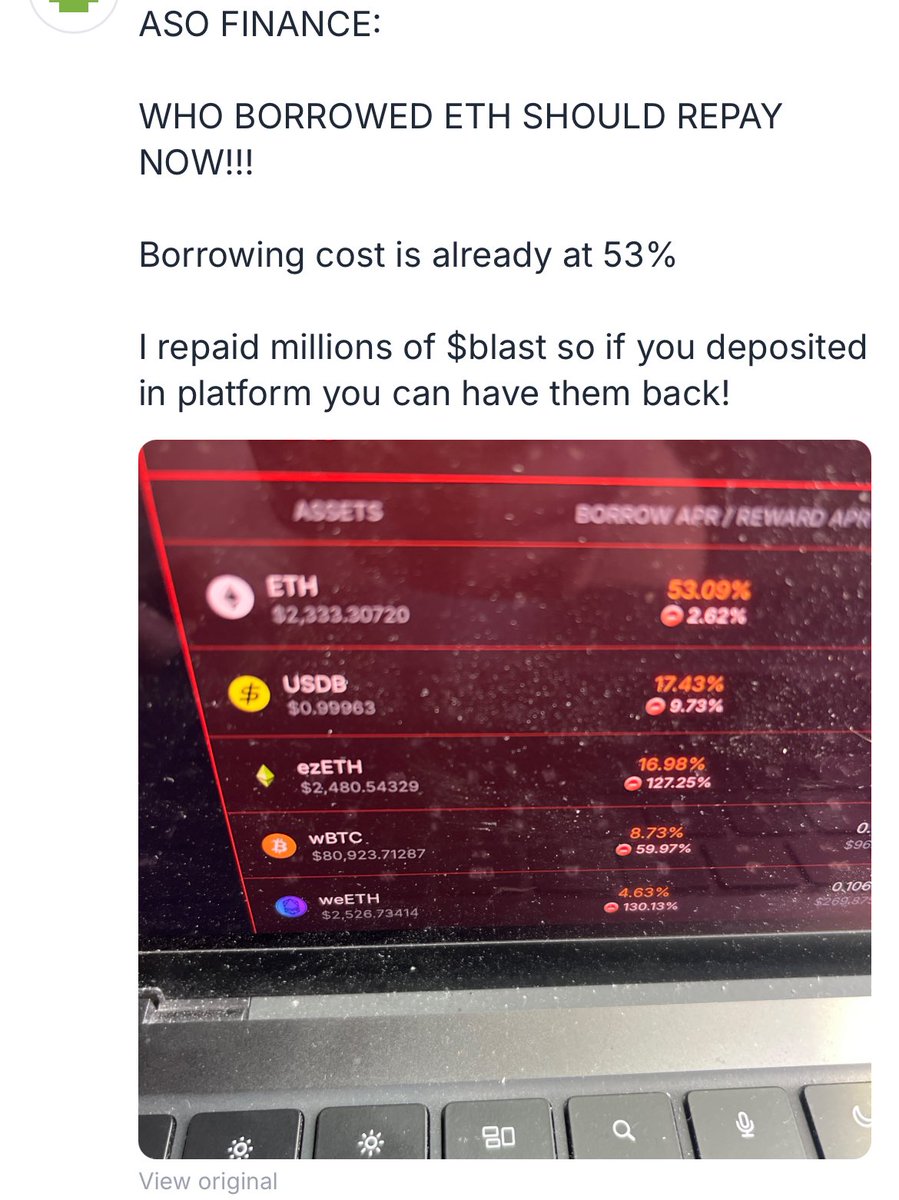
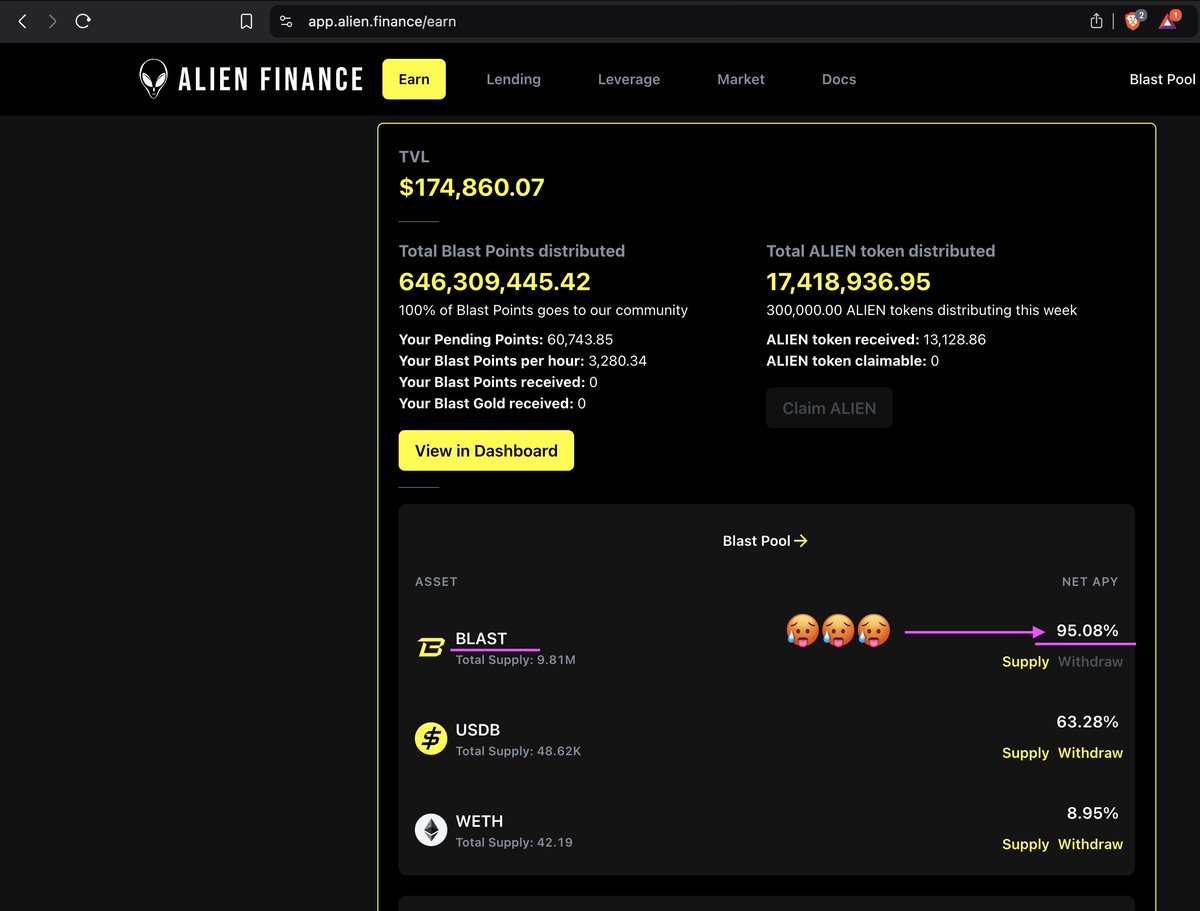
Yield on Blast app down to 10% with max multiplier.
The only lending app on Blast has now again Blast liquidity and pay 53% Apr for depositing ETH.
If you were stuck in the loop is your moment to repay ETH and get back your BLAST.
198
We never doxxed but Sofia has always been a key visionary in finding early projects and new ecosystems.
She finally made a personal account, go and be one of the first followers:🤝⬇️

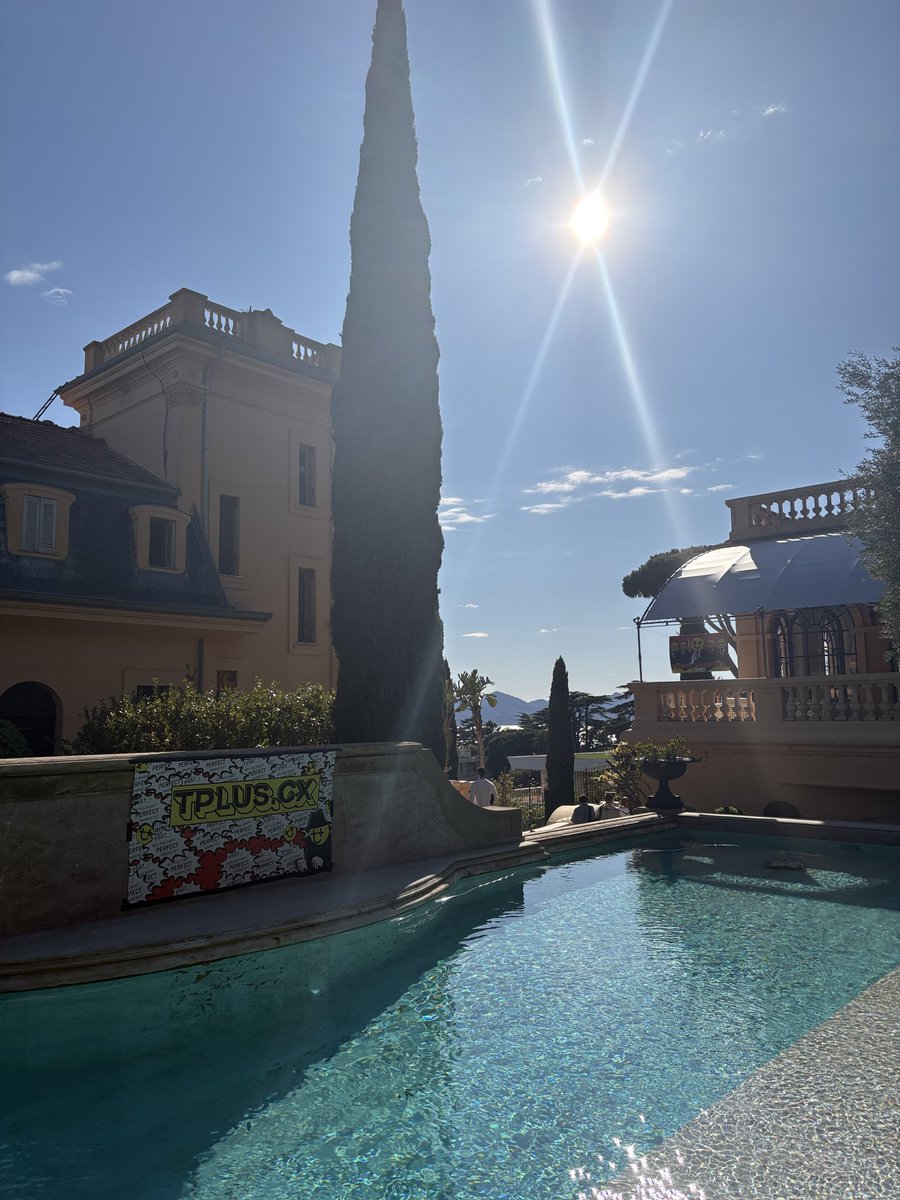
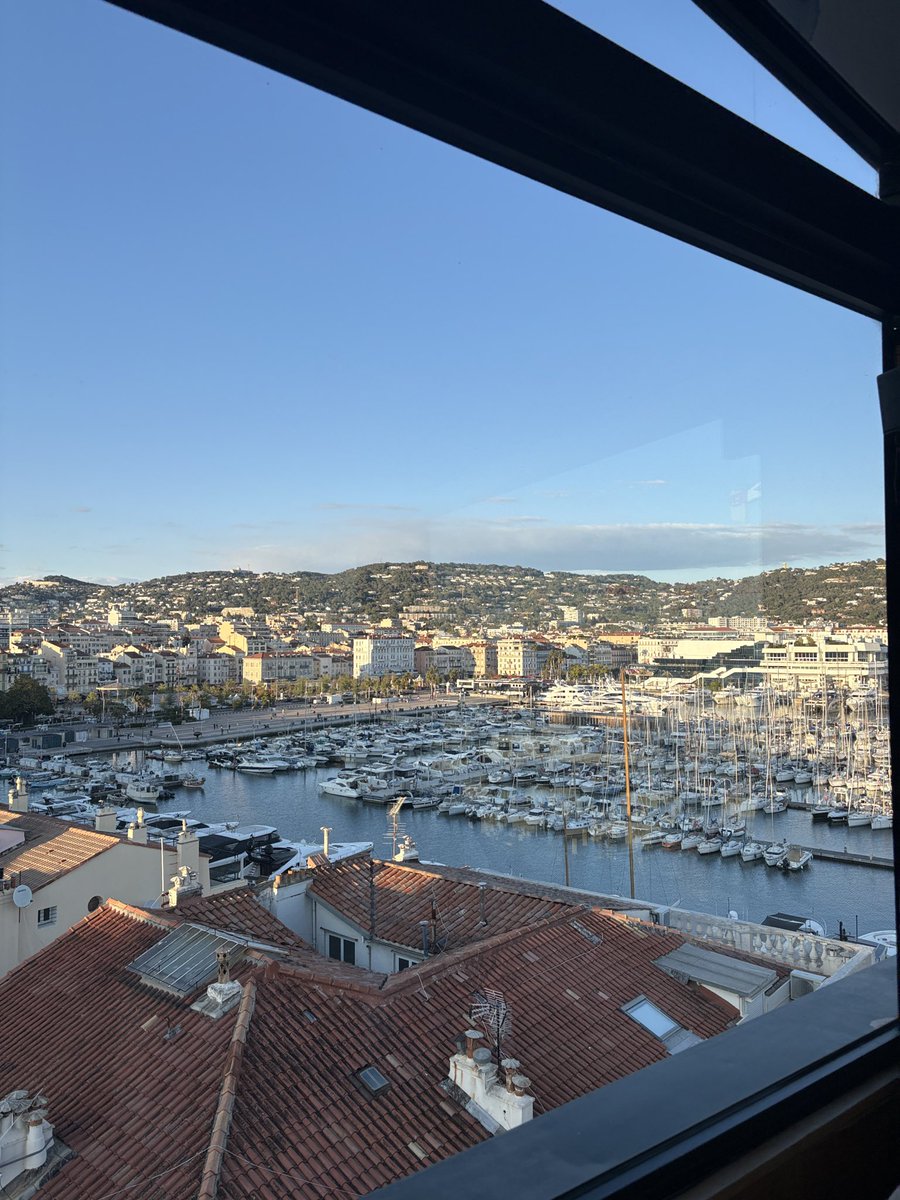
Had a blast at Cannes EthCC💕
Vibes were immaculate
Everyone was enjoying it and having fun
Had a lot of opportunities to learn Everybody was so nice and ready to share their stories and ideas
Really thankful for this opportunity🙏


1
717
Blast News - 🔫⚡ retweeted

Feb 8
I'm not trading right now. Here's what I'm doing instead:
AI vibe-explore crypto via APIs:
e.g, @zerion API, @AlliumLabs for wallet analytics, building trackers etc.
@MessariCrypto .md skill & API, Nansen-cli, @DefiLlama and many more.
Research and try them out by analyzing your wallets, giving you onchain data. Whatever. The goal is to learn while doing.
Extra: try trading using AI agents via @moltdotid, @TradeBoba... Please share more as this is on my to-do list.
For degens: check out tokens launched by AI agents. Won't tag here but some do well. Quite a few launch on @clanker_world
--------
Check out MegaETH ecosystem:
The most exciting & significant crypto native launch.
Check @Euphoria_fi, @hitdotone, @kumbaya_xyz, @brix_money
@SupernovaLabs_, @avon_xyz, @blackhaven, @PrismFi_, @worldmarkets_io, @useAqua_xyz, @userocket_app, @hellotradeapp,
etc.
Follow @bread_ & @Mega_Ecosystem for timely updates
--------
Follow & research ICOs:
Opportunities COULD be here but I'm not saying to INVEST.
Instead, check out the sentiment, how much they manage to raise, how they perform post-TGE.
Won't tag any here not to promote yet ICO performance is a good litmus test for retail sentiment.
--------
Read blogs instead of doom scroll on X.
Some recent favorite reads:
- "Why are you a loser?" @mattigags
He talks about 3 traps killing progress: 4-Year Cycle, Hyperfinancialization, and 3rd? Check on his blog.
- "The 2026 Gameplan" by @0xkyle__ on his Substack
Some good quotes:
"Crypto Will Be A Traders Market For The Foreseeable Future"
"If You’re In Crypto, Pivot To Equities"
"I don’t expect crypto to be as lucrative as it once was"
PLEASE SHARE MORE READS IN THE COMMENTS.
--------
I'm not chasing for trades right now.
Instead, I'm observing how the market is changing and learning while doing.
If you have some good ideas, please share in the comments.
81
18
295
23,646
Blast News - 🔫⚡ retweeted

Jan 19
If you bought every Apple iPhone you’d have spent approx 20k.
Put the same amount in Apple, you’d have over 300k now.
If you buy a product and you really like it, put the same amount of money in the stock.
Don’t just be a consumer.
24
44
1,901
52,308
Blast News - 🔫⚡ retweeted

Jan 5
go scrape your competitor's followers and run them through an enrichment tool to get emails. these people are ALREADY interested in what you do - they literally followed a company in your space. hit them with a cold email that acknowledges the pain point your competitor doesn't solve well. you're not starting from zero, you're starting from warm.
28
27
821
41,204
Blast News - 🔫⚡ retweeted
Jan 3
guys. seriously. u gotta wake up man. nobody is coming to save you. you have one life. take it. fcking take it. take what is yours. you deserve to win. you deserve to see how beautiful life becomes when you work all day long and shit comes to fruition and u know ur the man and you know nobody can stop you and you LOVE the work.
fucking have some aggresion. become the person you want to be.
ONE. FCKING LIFE.
HOW IS EVERYONE SLEEPING? WAKE UP. WAKE UP.
ITS LITERALLY 2026.
THE ROBOTS ARE BECOMING STRONGER.
YOU NEED TO FIGHT. LEVERAGE THE ROBOTS
GO ALL OUT. FCK SLEEP. TAKE WHAT IS YOURS. NOW. RIGHT NOW. GO.
42
236
3,002
77,362
Blast News - 🔫⚡ retweeted

30 Dec 2025
147
1,211
10,644
4,504,523
25 Dec 2025
Incredible short sighted decision from protocols not seeing what Pacman released in the last month.
Do you agree?
22 Dec 2025

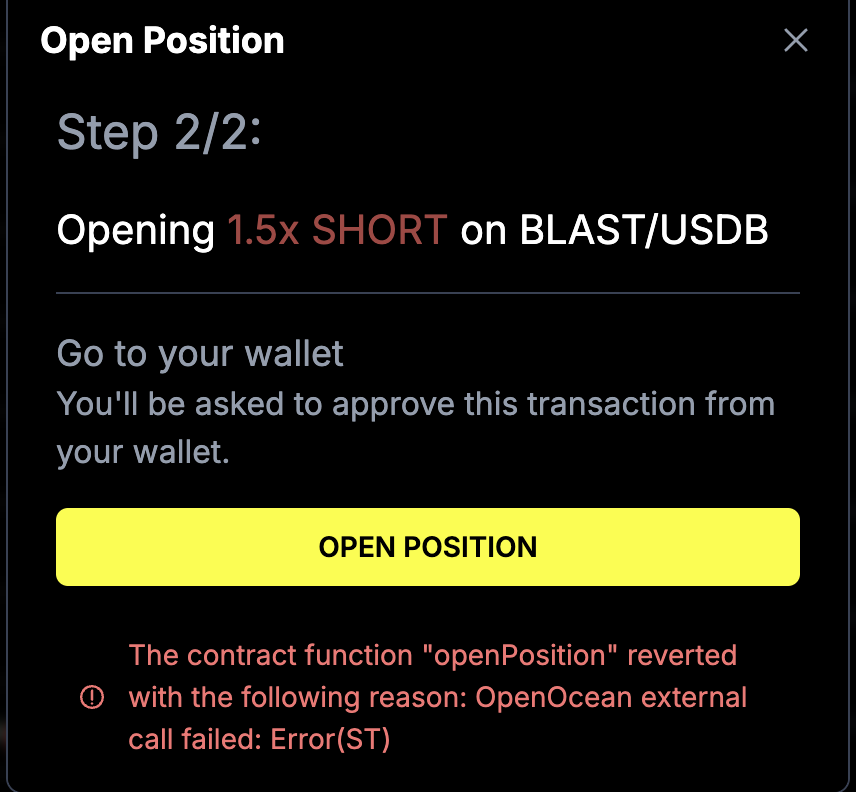
In order to focus resources on the chains we’re actively supporting going forward, we’re fully closing Blast markets on Wasabi.
Any active positions on Blast will be automatically closed on Dec 26, 2025, 3PM EST.
1
162
23 Dec 2025
delusional.
22 Dec 2025

that the tweet... now you got it why monad community is holding their $MON and not selling for cheap.... May be Q1 26 is time... we got 3 quarter in 26 to work to abosorb the unlocks in Q4 26.
1
1
195
20 Dec 2025
You need 5 seconds to understand something like this will blow up cmon🤣
1
121
Blast News - 🔫⚡ retweeted

9 Dec 2025
when you’re young, you should minimize the degrees of friction between you and serendipity.
don’t live 2 hours outside the city to save a few bucks on rent.
you’ll miss the last-minute dinners and random meetups that could change your life, and pay back everything you “saved”.
84
472
9,087
238,511

Love telling founders a couple things related to this:
- you don't delete slides...you move them to the appendix
- after 5 pitches, you'll hear 80% of all the smart questions you'll hear while fundraising. After 10 pitches, that number will be like 95%. When you hear a new question, answer it thoughtfully and then create a slide for it after the meeting. From then on out if someone asks a question, you'll be able to flip to your appendix and answer it with a slide. it's pretty impactful...
29 Oct 2025

Our newest fund deck is 20 slides but we have created 42 slides in total. Nothing you can ask me that I don’t have a slide for…
73
122
2,829
453,427
Blast News - 🔫⚡ retweeted

20 Oct 2025
We've been signing this gospel, unheard and unanswered, for far too long.
This is the oldest taboo in crypto. We all know it, yet we’ve all kept quiet because there’s never truly been a decentralized s3-alternative capable of matching performance and cost without major tradeoffs.
We praise the value of onchain infras without acknowledging that, unless you are building a standard DeFi protocol, the volume of critical data needed to be stored and uploaded on a daily basis by most high-performance products far exceed what any decentralized chain could efficiently handle.
Let's be honest here. Decentralization, for many, remains a luxury. Of course you could store all you raw data onchain, but you have a team to feed, and 99% of your potential users seeking for gains and smooth UX. Ostracizing these builders wouldn't be fair.
Some of the most CypherPunk builders I know battle this dilemma on the daily. Meanwhile, 90% of those claiming decentralization aren't aware that their favorite project's underlying stack heavily relies on centralized cloud(s).
This once more highlights the importance of distinguishing between wrongdoing out of negligence and doing wrong out of necessity.
Current builders are constrained.
This is why we dedicated the last 2 years quietly building @Hyve_DA. A project ambitiously aiming to take a shot at the largest flaw in this industry.
The goal: to create the first chain- and stack-agnostic decentralized real-time storage solution capable of rivaling S3 and R2 in cost, latency, and developer-friendliness, while introducing on-chain retrievability proof, immutability, and an ecosystem-native economic flywheel; redirecting data fees to ecosystem holders instead of BigTech.
A product made for builders and ecosystems to thrive hand in hand.
A product made to effectively dismiss AWS S3 and other centralized incumbents.
Mainnet early 2026.
20 Oct 2025

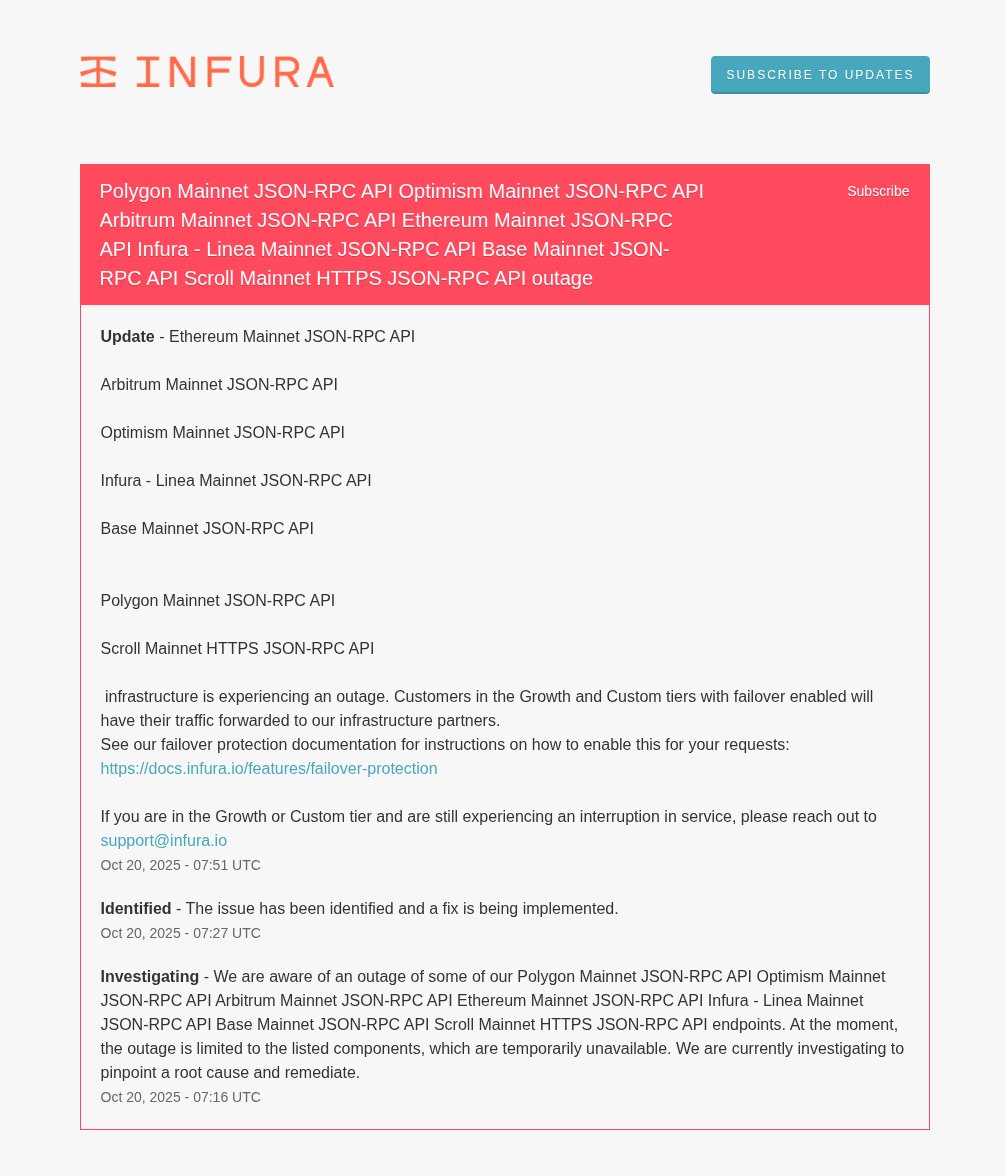
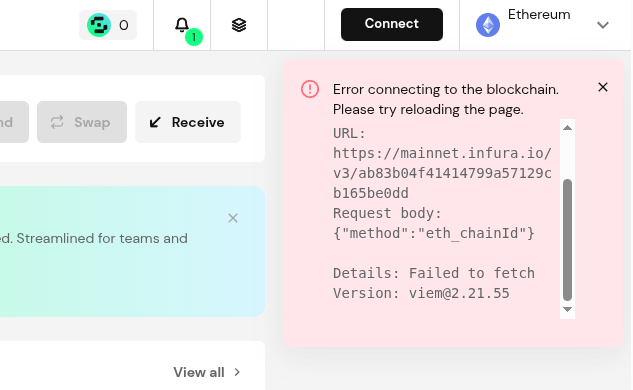
AWS is down and then the internet stops working.
But the blockchain, it never goe ... wait a minute. Scratch that.
This sector is a joke.
Everyone preaching decentralization and censorship resistance but in reality ... it's all 100% reliant on the cloud.
31
19
89
15,867


27 Jul 2025
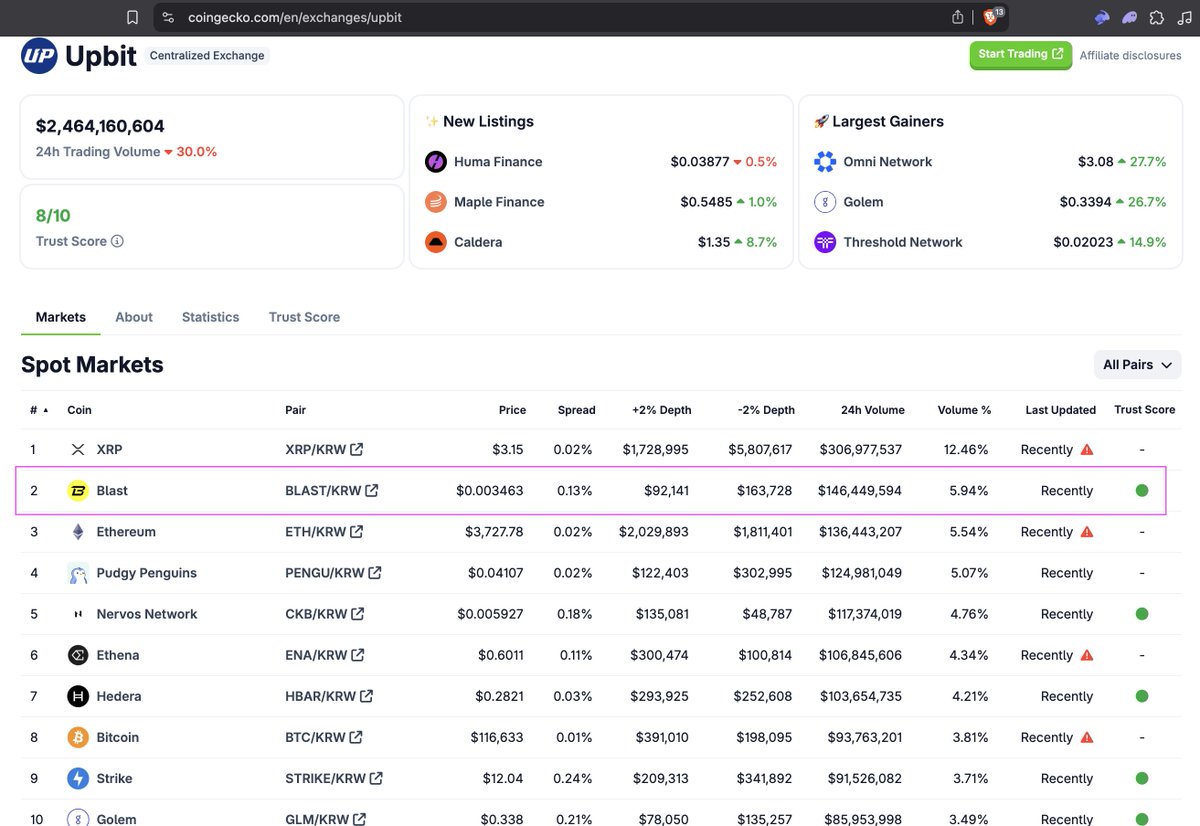
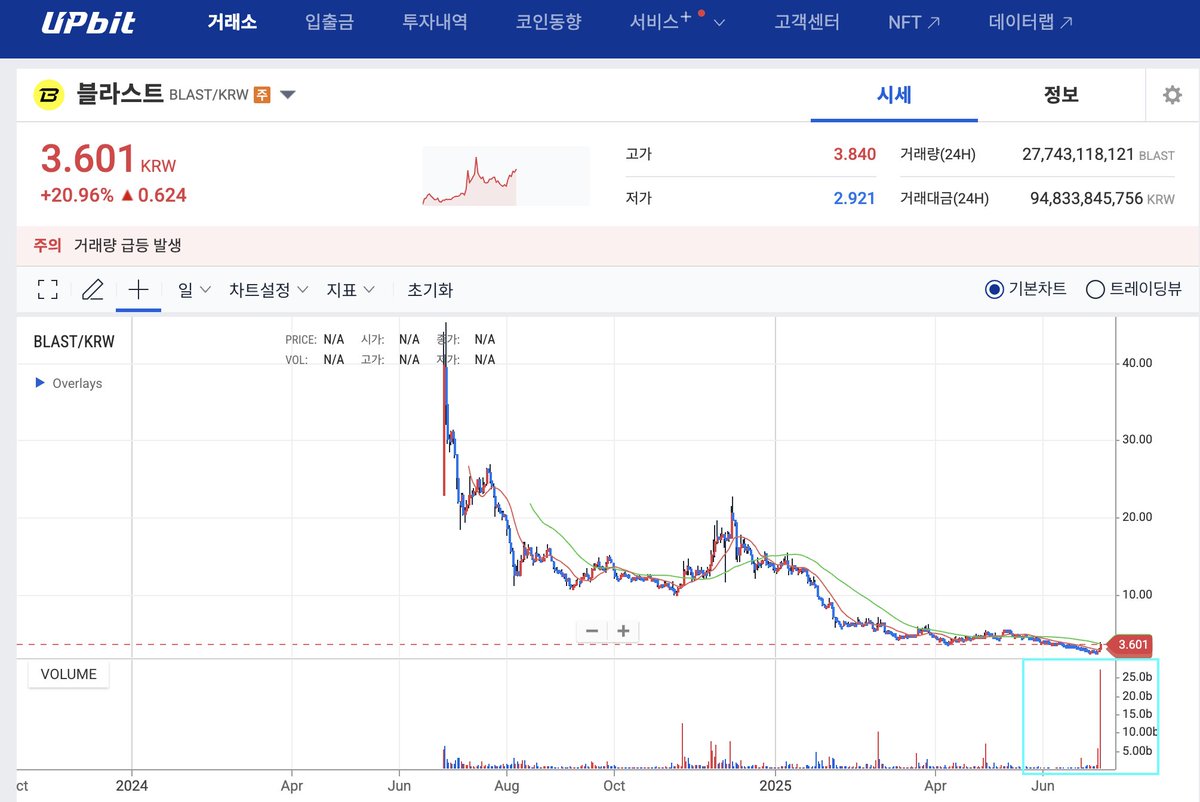
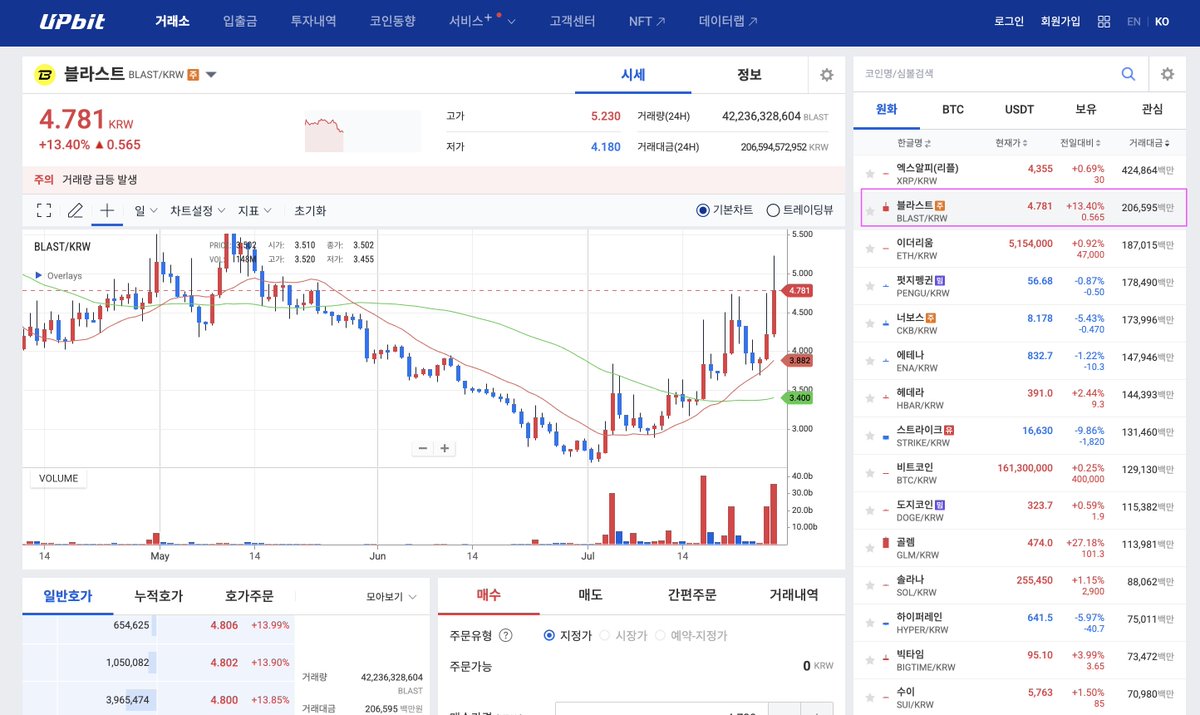
BLAST MORE TRADED THAN ETH IN KOREA!!!
Sorry for all the bottom sellors🟨☺️
2
4
565
14 Jul 2025
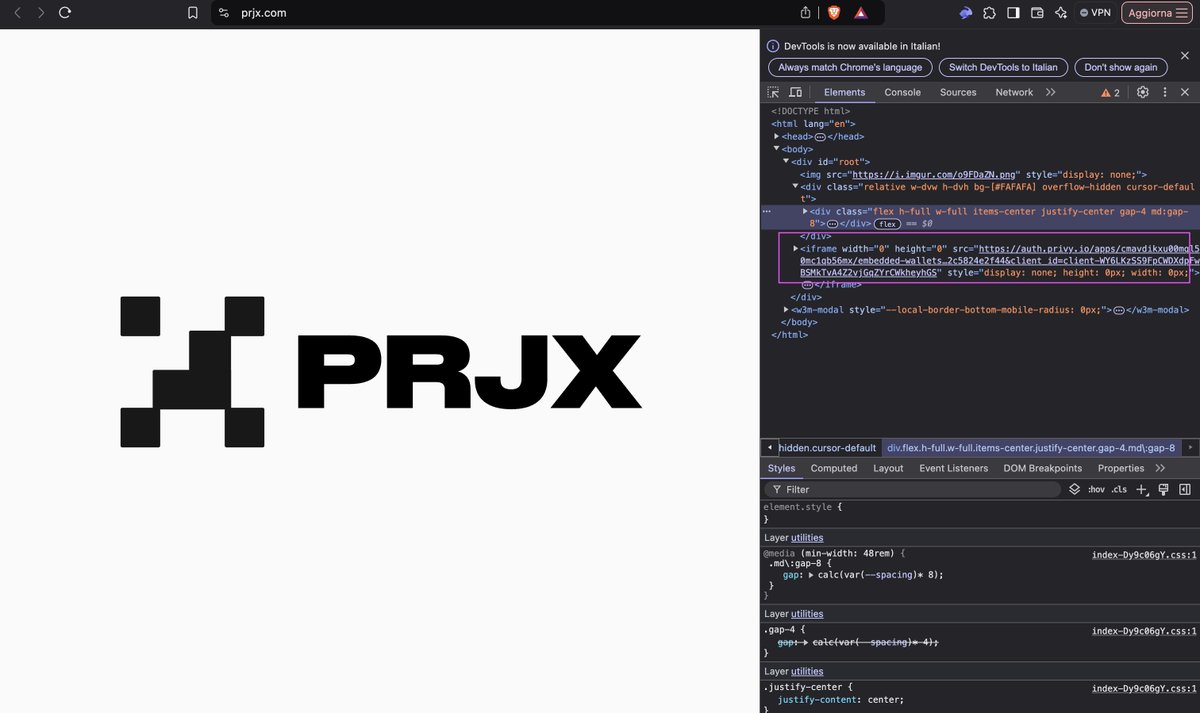
The ex-Pacmoon team announced a new product
@prjx_hl
but the page doesnt show much
in the code a privy...
let's see what they cooked
1
5
724
Blast News - 🔫⚡ retweeted

11 Jul 2025
Simple environment.
Wait for big flush outs.
Don’t turn bearish.
Buy the flush out.
Be up big within 24 hours.
It’s as easy as that.
35
46
899
38,021
9 Jul 2025
After Thruster decided to shutdown
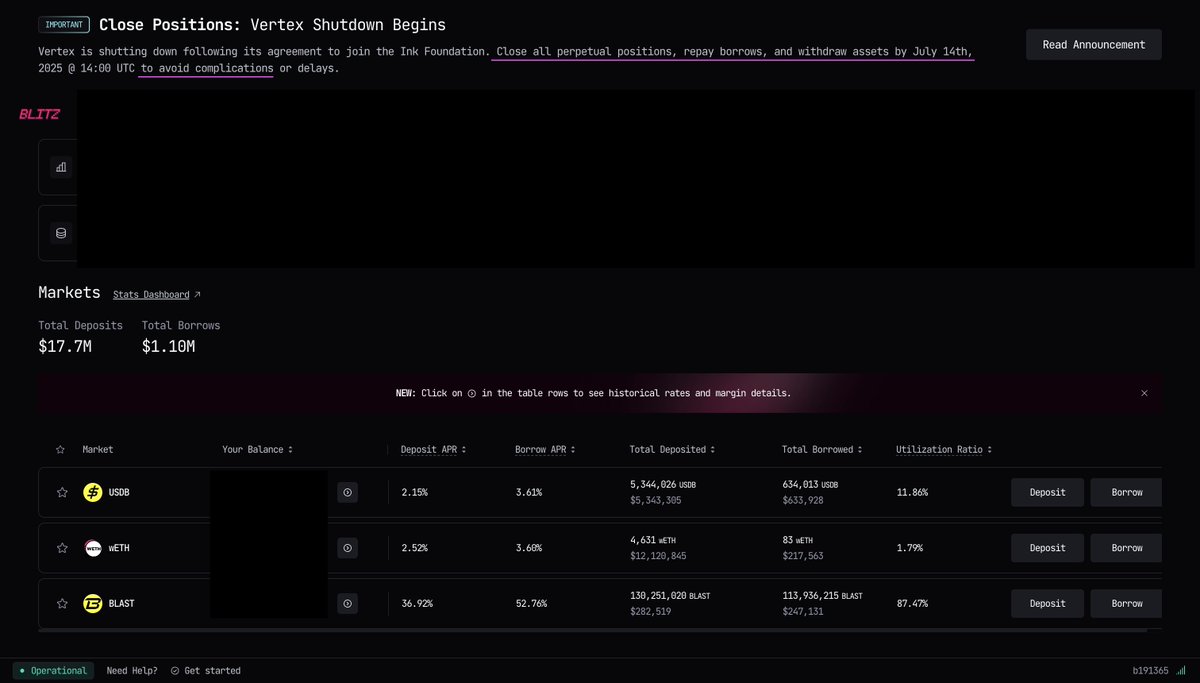
@tradeonblitz is following, remember to withdraw your assets before the 14th , if you have Blast tokens you can deposit in @Aso_Finance , is currently max borrowed so gives a good yield.
(not a paid post)
3
445
8 Jul 2025
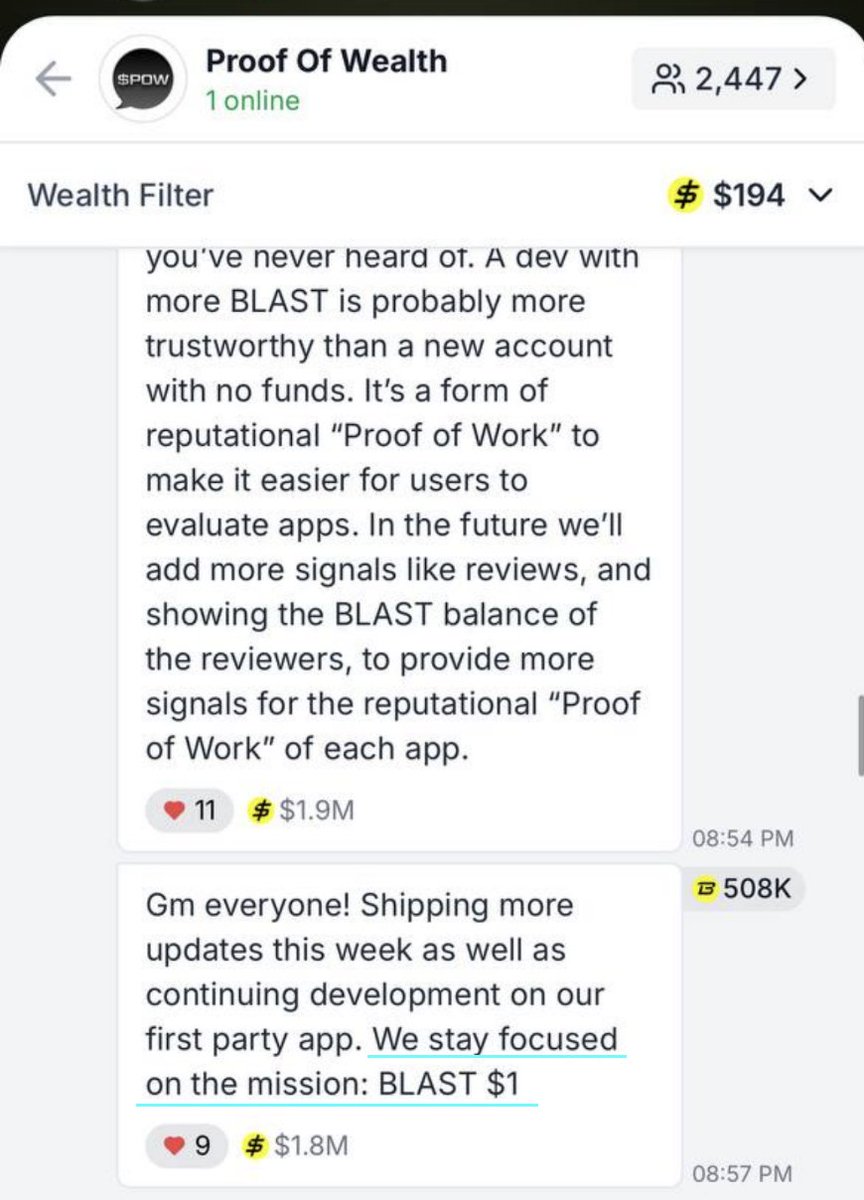
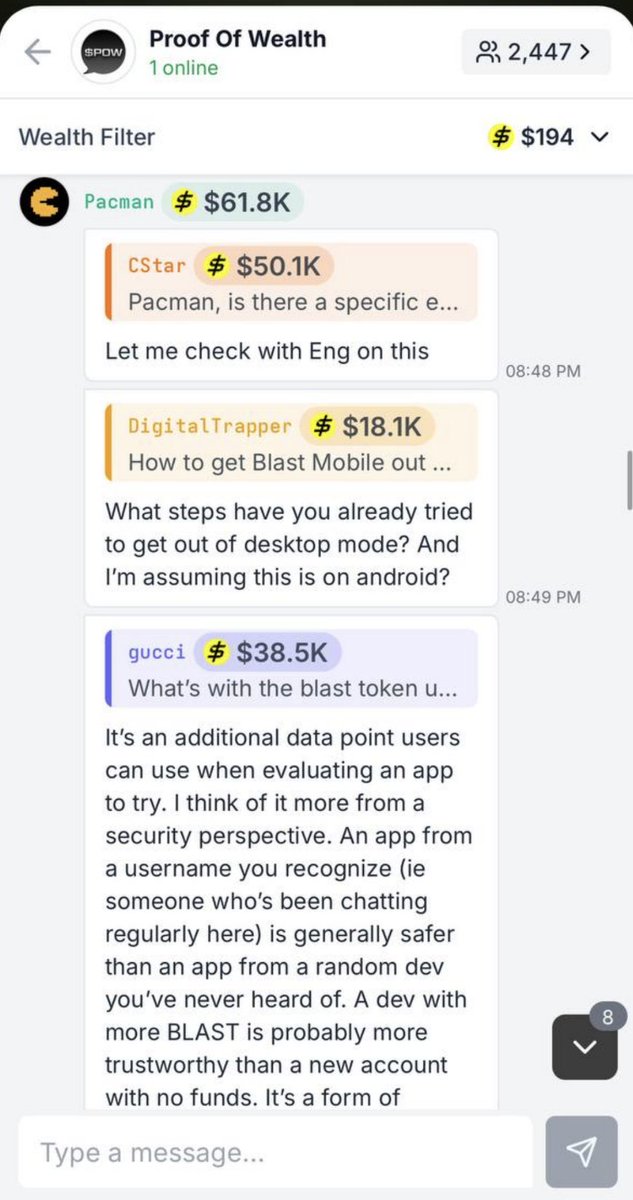
"We stay focused on the mission: BLAST 1$"
-Pacman.
Have you ever seen a founder telling you that his token is gonna do a X400 ?
Do what you want with this.🟨🟨🟨
2
4
491