
Joined August 2022
- Tweets 1,147
- Following 583
- Followers 38
- Likes 8,623
2 Photos and videos
Blob Graphics retweeted

Jun 9
A rule that will lower your anxiety: Don’t replay conversations you can’t change, and don’t pre-live ones that haven’t happened. Focus on the next right action. Most stress comes from living everywhere except the present.
38
493
3,772
64,962
Blob Graphics retweeted

Jun 6
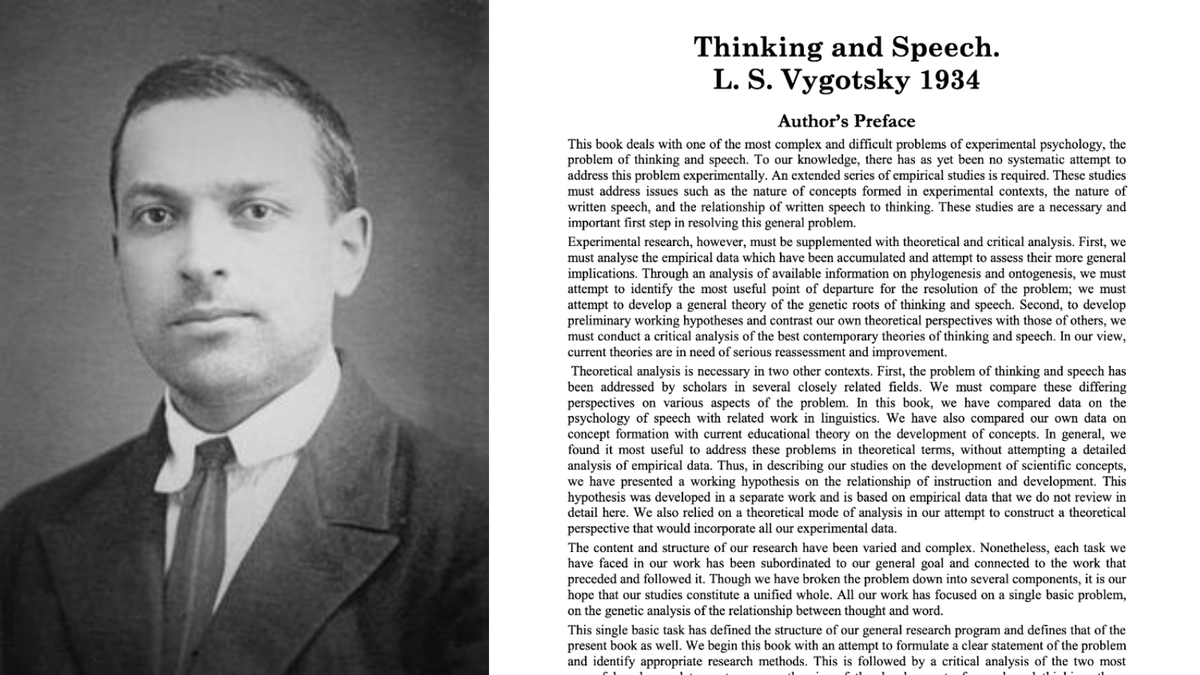
A Russian psychologist spent 10 years proving that the act of talking to yourself out loud is one of the most powerful cognitive tools the human brain has, and almost nobody outside his field has read the work.
His name was Lev Vygotsky.
He worked in Moscow in the 1920s and died of tuberculosis in 1934 at the age of 37. He had no laboratory, no funding, almost no English readers, and a body of work that the Soviet government suppressed for two decades after he died.
He produced the foundational theory of how human cognition actually develops, and the central piece of that theory was a behavior almost every adult is faintly embarrassed about.
Vygotsky noticed that young children talk to themselves constantly. They narrate their own actions, they argue with imaginary opponents, they instruct themselves through tasks out loud.
The dominant theory at the time, from the Swiss psychologist Jean Piaget, said this was a sign of cognitive immaturity that children would eventually grow out of as they learned to think properly.
Vygotsky said the exact opposite.
He argued that this self-directed speech was the most important cognitive event in the entire developmental window, because it was the moment a child first started to use language as a tool to control their own mind. The child was not failing to think. The child was learning how to think by externalizing the process and listening to themselves do it.
He predicted that as children matured, this out-loud self-talk would not disappear. It would go underground. It would become silent inner speech, which is the running monologue every adult has inside their own head for the rest of their life.
The voice you hear when you read this sentence is the direct descendant of a four-year-old narrating their own block tower.
For 50 years almost nobody outside Russia had access to his work, and the few researchers who did pick it up could not get funding to test it. Then in the early 2000s the experiments finally started to pile up, and what they found was that Vygotsky had been right about something even more important than he knew.
The first major study came from Gary Lupyan at the University of Wisconsin and Daniel Swingley at the University of Pennsylvania in 2012. They ran a simple visual search experiment. Participants were shown 20 images at once and asked to find a specific object, like a banana or a chair. In one condition they searched silently. In the other condition they were told to say the name of the object out loud to themselves while looking for it.
The participants who spoke the target name out loud found the object significantly faster, with higher accuracy, than the participants who searched in silence. The effect was strongest when the spoken word matched a familiar object the brain already had a strong category for.
Saying the word out loud literally tuned the visual system to detect that thing better. The researchers called it the label feedback effect, and the implication was that the act of vocalizing a goal physically changes how the brain processes the world while pursuing it.
The second major study came out of the University of Michigan and Michigan State in 2017. The lead researchers were Ethan Kross and Jason Moser, and they used both EEG and fMRI to record what happens inside the brain when people talk to themselves while emotionally upset.
They asked participants to recall painful autobiographical memories and reflect on them in two different ways. Some used the first person, saying things like "why am I feeling this way." Others used the third person, referring to themselves by their own name, saying things like "why is John feeling this way."
The brain scans showed that the simple act of switching from first person to third person, even silently, decreased activity in the medial prefrontal cortex, the region responsible for rumination and self-referential pain. Within a single second of using their own name instead of the word I, participants showed measurably lower emotional reactivity. The shift required no extra cognitive effort. It cost the brain nothing. And it worked.
Kross described the mechanism in his interviews. Talking to yourself by name creates a small amount of psychological distance from your own experience. Your brain processes the situation more like a problem belonging to someone else, which means it can analyze it instead of drowning in it.
What Vygotsky had intuited in 1934 turned out to be even more powerful than the developmental theory he built it into. The voice you use to talk to yourself is not background noise. It is one of the most precise cognitive tools the brain has, and you can change how it works just by changing the pronoun you use.
People who talk through problems out loud are not anxious or unstable. They are running an externalized version of a process the rest of us are running silently and worse. The kindergartener narrating their block tower, the surgeon muttering through a procedure, the engineer pacing a hallway describing a bug to nobody, the athlete repeating a cue to themselves before a free throw, they are all using the same ancient mechanism that builds and steers human thought.
You can run the experiment yourself the next time you are stuck on something hard. Stop trying to solve it silently in your head. Say it out loud. Describe what you are seeing. Walk yourself through the steps as if you were explaining it to a colleague who is not in the room.
And when something genuinely upsets you, switch to your own name. Ask why this person is feeling this way, instead of why I am feeling this way.
The voice you have been told to keep quiet your entire life is one of the oldest pieces of cognitive technology you own.
Most people are still embarrassed to use it.
254
3,044
11,156
406,676
Blob Graphics retweeted
Jun 1
The older I get, the more I realize that optimism is a competitive advantage. Not blind positivity. The belief that problems can be solved. That things can improve. That your actions matter. People who believe a better future is possible are the ones who create it.
52
403
1,958
47,622

Needing approval is a sign you grew up emotionally starved. When you grow up with unconditional acceptance, your worth is never in question. You develop an unshakeable inner confidence. Your inner talk goes: "I did what I love. I gave my 100%. Whether it works or not, I'm at peace." But when love was conditional growing up, that hunger for validation follows you into adulthood. Into your work. Into your relationships. Into every room you walk into. Even when you're gifted. Even when you have talents nobody around you can match. The need for validation doesn't leave you. Because what you're really chasing is the feeling of being enough. And nobody out there can give you that.
40
217
1,361
46,116


Blob Graphics retweeted

May 30
A peak life advice from Alex Hormozi:
“The single greatest skill you can develop is the ability to stay in a great mood in the absence of things to be in a great mood about.”
81
1,014
8,054
133,683
Blob Graphics retweeted

May 30
Life advice nobody told you: Violent consistency is the only path to achieve what you want.
It's not going to be pretty. It's not going to draw oohs and aahs from the crowd. Because it looks messy in the days. It's getting out of bed when you don't want to. It's sitting down at your desk when you're tired. It's pounding your head into a wall one more time. It's ugly. It's unimpressive. But it works.
Quantity is a necessary precursor to quality. You cannot create once and hope for it to be perfect. You have to create a lot. Every single day.
I recently came across a story in Art & Fear that I love:
A ceramics teacher split a class into two groups. One would be graded on the quantity of their output, the other would be graded on the quality of their output. On the final day, the first group would have their total output of pots weighed, while the second group would have one pot judged.
When grading day arrived, something fascinating happened:
"The works of highest quality were all produced by the group being graded for quantity. It seems that while the 'quantity' group was busily churning out piles of work—and learning from their mistakes—the 'quality' group had sat theorizing about perfection, and in the end had little more to show for their efforts than grandiose theories and a pile of dead clay."
Quality is a byproduct of quantity. Violent consistency. That's the real recipe.
127
210
1,730
115,120
Blob Graphics retweeted

May 29
Make it a rule to never suffer fools. Block, mute and go on with your day. This goes for real life and online. Attention is a resource and life is too short to give it to people who drain your time, test your patience, and add nothing to your life.
61
179
1,542
53,183

Blob Graphics retweeted
May 29
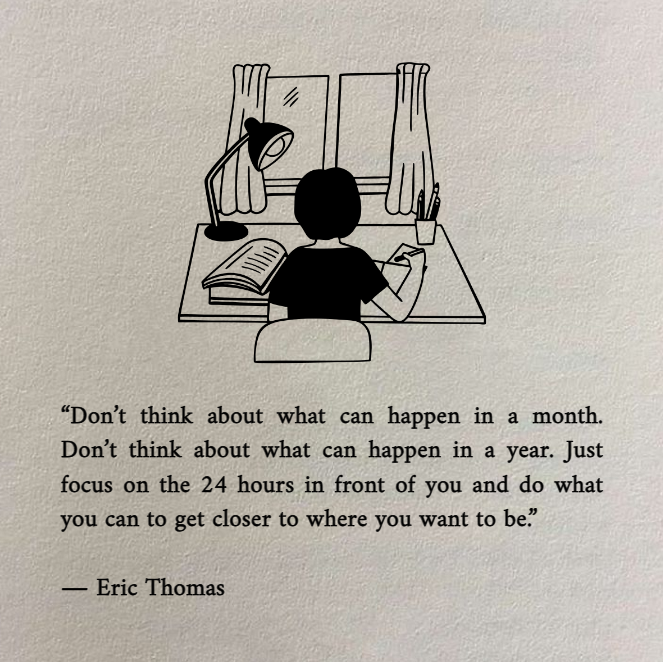
Kill the fear of failure. Go after what you want relentlessly, with everything you’ve got. No excuses.
72
960
5,690
84,314
Blob Graphics retweeted

May 28
The hair started falling out first.
Then came the blackouts.
The crushing exhaustion.
The unexplained pain.
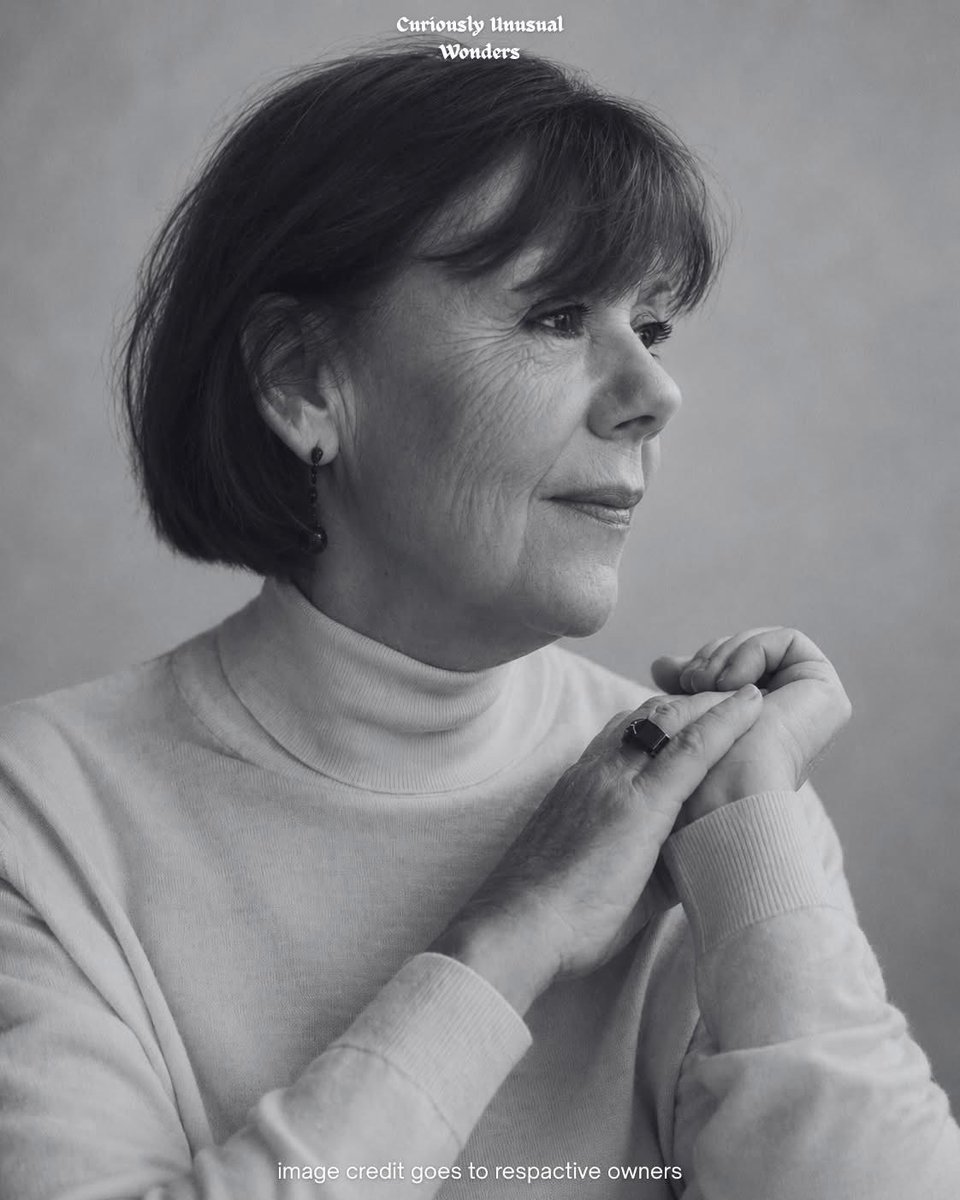
For years, Gisèle Pelicot knew something was terribly wrong with her body.
One day, she looked at her husband and asked directly:
“Are you drugging me?”
Dominique Pelicot looked offended.
He denied everything.
After nearly fifty years of marriage, she believed him.
Why wouldn’t she?
They had raised children together.
Built a life together.
Retired to a quiet village in southern France where people saw them as the perfect couple.
But in 2020, everything shattered.
Police arrested Dominique for secretly filming women under their skirts in a supermarket.
When investigators searched his computer, they uncovered something horrifying:
Thousands of videos showing Gisèle unconscious in her own bed while men assaulted her.
For nearly a decade, Dominique had allegedly crushed sedatives into her food and drinks before inviting strangers into their home to rape her while she was unconscious.
He filmed everything.
The men came from all walks of life:
firefighters, nurses, journalists, soldiers,prison guards, husbands and fathers
Many later claimed they thought she was pretending to sleep.
Others argued that because her husband allowed it, it must have been consensual.
But an unconscious person cannot consent.
Gisèle remembered none of it.
She only knew she was constantly sick, confused, exhausted, and slowly losing herself while the man she trusted most manipulated her reality.
Then came the trial.
French law would have allowed Gisèle to remain anonymous.
She refused.
At 72 years old, she chose to reveal her identity publicly and demanded an open trial.
Her reason was simple:
“Shame must change sides.”
For months, she sat through testimony and watched evidence of what had been done to her.
She listened while men tried to excuse the inexcusable.
And she never backed down.
In December 2024, all 51 defendants were convicted.
Dominique Pelicot received the maximum sentence:
20 years in prison.
Outside the courthouse, Gisèle said:
“I wanted society to see what was happening. I never regretted this decision.”
Her courage transformed the conversation in France around drug-facilitated assault, consent, and victim shame.
Because what made her story so powerful was not only the horror of what happened.
It was what she refused to carry afterward.
Silence.
Embarrassment.
Shame.
She handed those back to the people who deserved them.
Gisèle Pelicot showed millions of survivors something the world too often forgets:
The shame does not belong to the victim.
It belongs to those who chose to harm them.
94
1,386
5,206
94,205
Blob Graphics retweeted

May 28
Architecture inspired by leaves never gets old




31
5,202
24,028
399,188
Blob Graphics retweeted

May 28
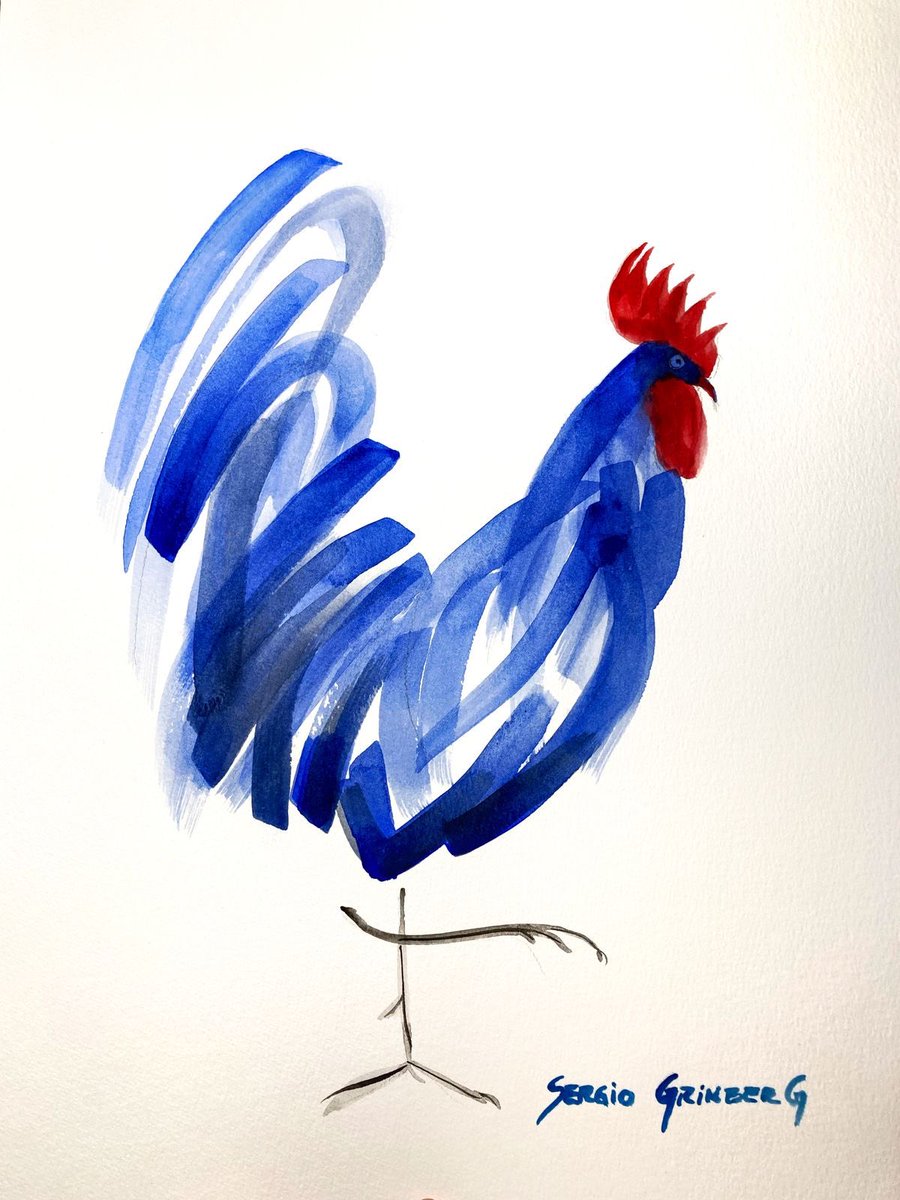
By Sergio Grinberg.
93
1,984
23,052
329,088
Blob Graphics retweeted
May 28
I’m in love with this sentence:
“The strongest version of you is buried under the habits you're afraid to break.”
130
7,069
41,048
579,378
Blob Graphics retweeted
May 27
Underrated life advice: Have a life outside of work. Build real friendships. Pursue your interests. Create memories. Drive with the windows down. Go on adventures. Get lost in a good book. A career is important, but it should be part of your life story, not the entire story.
48
156
1,262
28,574
Blob Graphics retweeted

May 23
Measure your success by effort not by results. Results can be delayed but effort never lies. A strong man judges his day by how hard he worked. Weak men quit when results are slow. Focus on doing the work at the highest level. Keep your eyes on the effort. Measure yourself by effort and keep pushing harder right now.
12
3
25
436
Blob Graphics retweeted

May 8
How to master any skill fast:
- stop studying
- outline a project
- start building it
- hit a roadblock
- figure out how to overcome it
- repeat 4 and 5 for the rest of your life
Most people don't get past 1, the rest spiral into complacency after 4.
400
1,585
12,449
367,971
Blob Graphics retweeted
May 5
Choose your words carefully. The way you talk about your life shapes how you experience it. Call everything stressful, & it'll feel that way. Over time, the way you speak becomes the way you think. The way you think becomes the way you act. And the way you act becomes your life.
48
164
997
31,092
Blob Graphics retweeted

May 2
Take risks: if you win, you will be happy; if you lose, you will be wise.

40
868
5,795
113,645
Blob Graphics retweeted

Apr 26
The ceiling of the Uffizi Galleries in Florence, Italy.

31
1,075
6,100
84,031