
Block Horology - 21 Months to Diminished Emissions - A Zodiac for 2140 and Beyond || Bitcoin Block Horology is 625 Difficulty Adjustments in 6 Halvings
Joined October 2021
- Tweets 275
- Following 166
- Followers 47
- Likes 796
3 Photos and videos



Pinned Tweet

15 Nov 2021
Bitcoin reproduces the facts.
Bitcoin reproduces the code.
Bitcoin reproduces time¹, matter², and space³
¹Nakamoto motor (diffAdjPoW)
²coinbase/utxo
³blockspace
Bitcoin is personal property.
Bitcoin is speech.
My node is my temple.
Bitcoin is our body.
Bitcoin is our blood.
5
12
BlockHoro retweeted

Jun 14
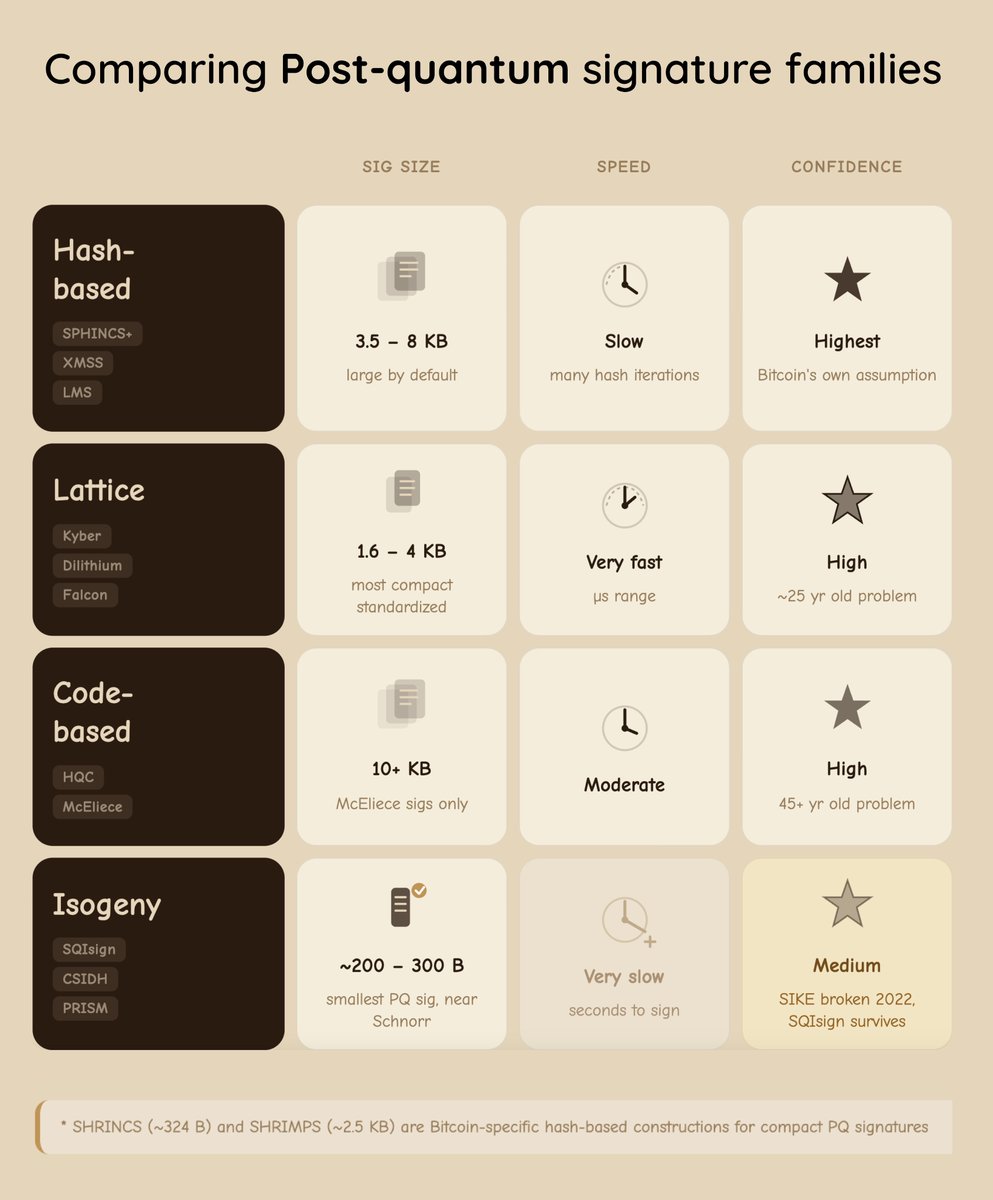
Comparison of post-quantum signature candidates
- Hash-Based
- Lattice
- Code Based
- Isogeny
12
35
1,563
BlockHoro retweeted
Hey, you seem interested in Bitcoin.
If you'd like to learn more about how Bitcoin works and why it's a force for good in the world feel free to enroll in @BitcoinCreds for the most comprehensive understanding of Bitcoin pre-requisite, basic, intermediate and advanced topics.
2
4
21
BlockHoro retweeted

Jun 13
What’s wrong with investing in bitcoin startups?
2
2
10
1,209



BlockHoro retweeted

Jun 9
I love @NoahWalletHQ ⛵️
Throwback to when we had our Noah's Ark Wallet workshop at the @BitcoinVeterans summit in Nashville @bitcoinpark_



3
7
24
978
Jun 10
RT @BitcoinCreds: #Forkgivening
: a Bitcoin chainsplit constellation — arriving at Forkgivening height 977429
•Your coins do not stop bei…
14
BlockHoro retweeted

May 23
Coming Soon:
Puerto_Crypto LARP on X Spaces
Live-Action Research Podcast
@Puerto_Crypto

1
11
15
132
BlockHoro retweeted

May 16
Privacy is necessary for an open society in the electronic age.
Privacy is not secrecy. A private matter is something one doesn't want the whole world to know, but a secret matter is something one doesn't want anybody to know. Privacy is the power to selectively reveal oneself to the world.
- Eric Hughes -
A Cypherpunk's Manifesto, 9 March 1993.
1
7
11
192
BlockHoro retweeted

May 16
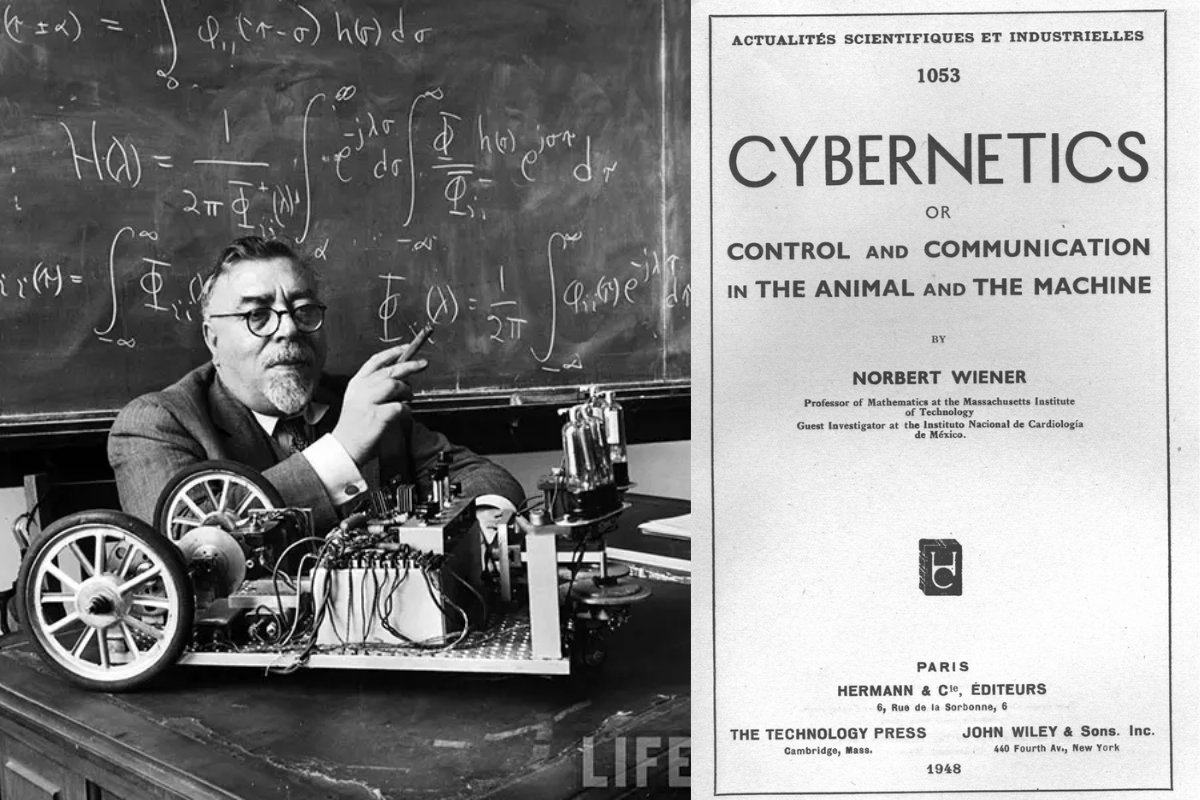
A child prodigy who finished his Harvard degree at 14 and his PhD at 17 sat down in 1948 and wrote a single book that invented the entire conceptual vocabulary we still use to talk about AI, robotics, self-driving cars, and reinforcement learning.
He never got the credit. Most people have never heard his name.
His name was Norbert Wiener. The book was called Cybernetics.
Every feedback loop running inside every system you interact with today traces back to one problem he was handed during World War II.
The problem was this: how do you aim a gun at a fast-moving airplane?
By the time your shell arrives, the plane is somewhere else. You cannot aim at where the plane is. You have to aim at where the plane will be. And the plane's pilot, knowing this, is constantly changing course to make that prediction wrong.
Wiener spent years on this. What he built to solve it was not a better gun. It was a new science.
He noticed something that nobody had formally described before. The gun system and the human nervous system were solving the same problem using the same method. You observe where the target is. You compare it to where you want to hit. You calculate the gap. You correct. You observe again.
He called that loop feedback.
Not in the casual sense people use it today. In the precise mathematical sense. A signal goes out. The result comes back. The system compares the result to the goal. The gap between them drives the next action. The loop closes.
That mechanism, exactly as Wiener described it in 1948, is what runs inside every thermostat, every autopilot, every cruise control system, and every AI training loop on the planet right now.
When GPT-4 learned to answer questions better, it was doing feedback. When AlphaGo learned to play Go, it was doing feedback. When a self-driving car adjusts its steering because it drifted two inches toward the curb, it is doing feedback.
The word they all use, the concept underneath the word, the mathematics formalizing the concept, all of it came from one book written by a child prodigy in 1948 who was trying to figure out how to shoot down a plane.
The deeper insight was what he proved about living systems and machines.
Before Wiener, biology and engineering were treated as completely separate domains. Organisms adapted. Machines calculated. The idea that you could describe both using the same mathematical framework was not just unusual. It was considered a category error.
Wiener proved it anyway.
He showed that a brain correcting a reaching movement and a missile correcting its trajectory were running mathematically identical control loops. The hardware was different. The math was the same. Living systems and engineered systems obeyed the same laws once you understood what those laws actually were.
He named the field after the Greek word for steersman. Kubernetes. Cybernetics. The person who holds the rudder, reads the water, and adjusts constantly to hold a course through a current that is always pushing the ship somewhere else.
That is the mental image he wanted. Not a machine that executes instructions. A system that responds to its own results.
The third thing he did is the part almost nobody connects to modern AI.
In 1948, Wiener spent an entire chapter of Cybernetics warning about what would happen when machines that learn from feedback were given control over consequential decisions.
He described the displacement of workers not as a distant possibility but as a near-term certainty. He wrote about the ethical risks of building systems that optimize for measurable proxies of human values rather than actual human values.
He described in plain language what alignment researchers today call Goodhart's Law without using that name, 25 years before Charles Goodhart published anything.
He was a mathematician in 1948 writing about problems that AI safety researchers are still trying to solve in 2026.
The book is dense in places. The equations are real and the sections on statistical mechanics require actual attention. But Wiener knew this, which is why in 1950 he published The Human Use of Human Beings, which is the same book with all the math removed. Same ideas. Same warnings. Written for anyone who reads English.
That second book has been in print for 75 years and almost nobody in tech has read it.
Wiener died in 1964 at a conference in Stockholm. He collapsed mid-conversation between sessions. He was 69.
He did not live to see a personal computer. He did not live to see the internet. He never saw reinforcement learning, neural networks, or the AI systems that run almost entirely on the mathematical architecture he designed while trying to solve a World War II gunnery problem.
Every AI lab in the world today is building systems that run on his framework. Almost none of the people building those systems know his name.
The field he founded, cybernetics, mostly disappeared as a word. The ideas did not disappear. They dissolved into every other field. Control theory. Cognitive science. Computer science. Neuroscience. AI. They each took a piece of what he built and called it their own terminology.
The word that survived is the one that proves he invented it.
Feedback.
You use it every day. You use it in code reviews, in meetings, in conversations about AI performance. Every time you use it in the technical sense, meaning a signal that closes a loop between output and goal, you are using the exact definition Wiener wrote down in 1948.
He gave the word its meaning. Most people using it have never heard of him.
The Human Use of Human Beings is free on archive. Cybernetics is in print and available anywhere books are sold. His major essays are in academic archives at no cost.
The man who built the foundation of modern AI was writing about its dangers before the first commercial computer existed.
Most people building AI today have never read a word he wrote.
22
269
1,071
51,113

BlockHoro retweeted

Mar 22
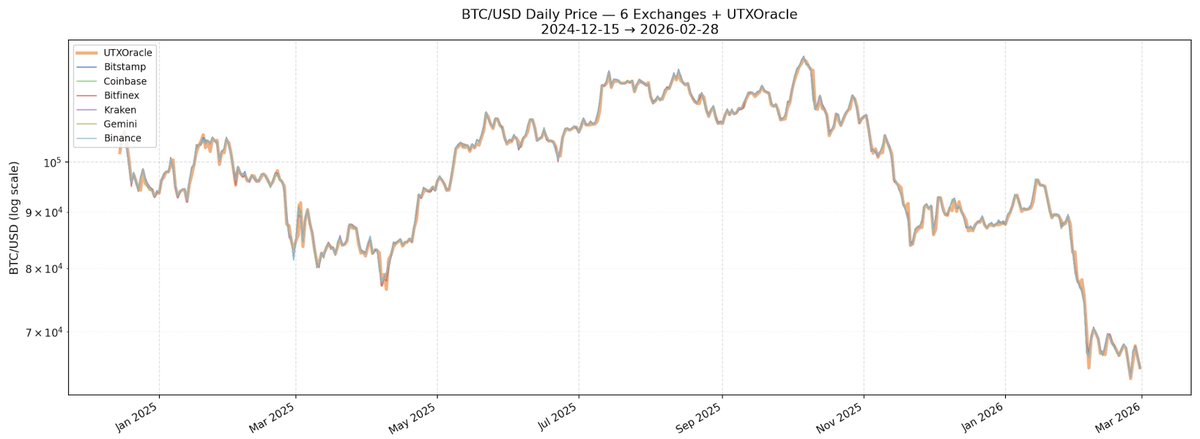
UTXOracle vs 6 popular exchanges (1 year daily vwap).
Version 9 of UTXOracle was released a year ago. It has no starting reference price. Each day the same algorithm runs on unseen data with zero knowledge of any prior price. No APIs. 100% onchain data.
utxo.live/oracle/historical.…
3
4
29
1,165

BlockHoro retweeted

Mar 22
The most attractive thing a person can do is isolate for a long time and emerge with something impressive. Music, writing, sculpture, whatever it is: shows competence, passing the marshmallow test, inner dialogue, patience, commitment, bravery in the face of potential failure
129
2,137
17,840
436,267


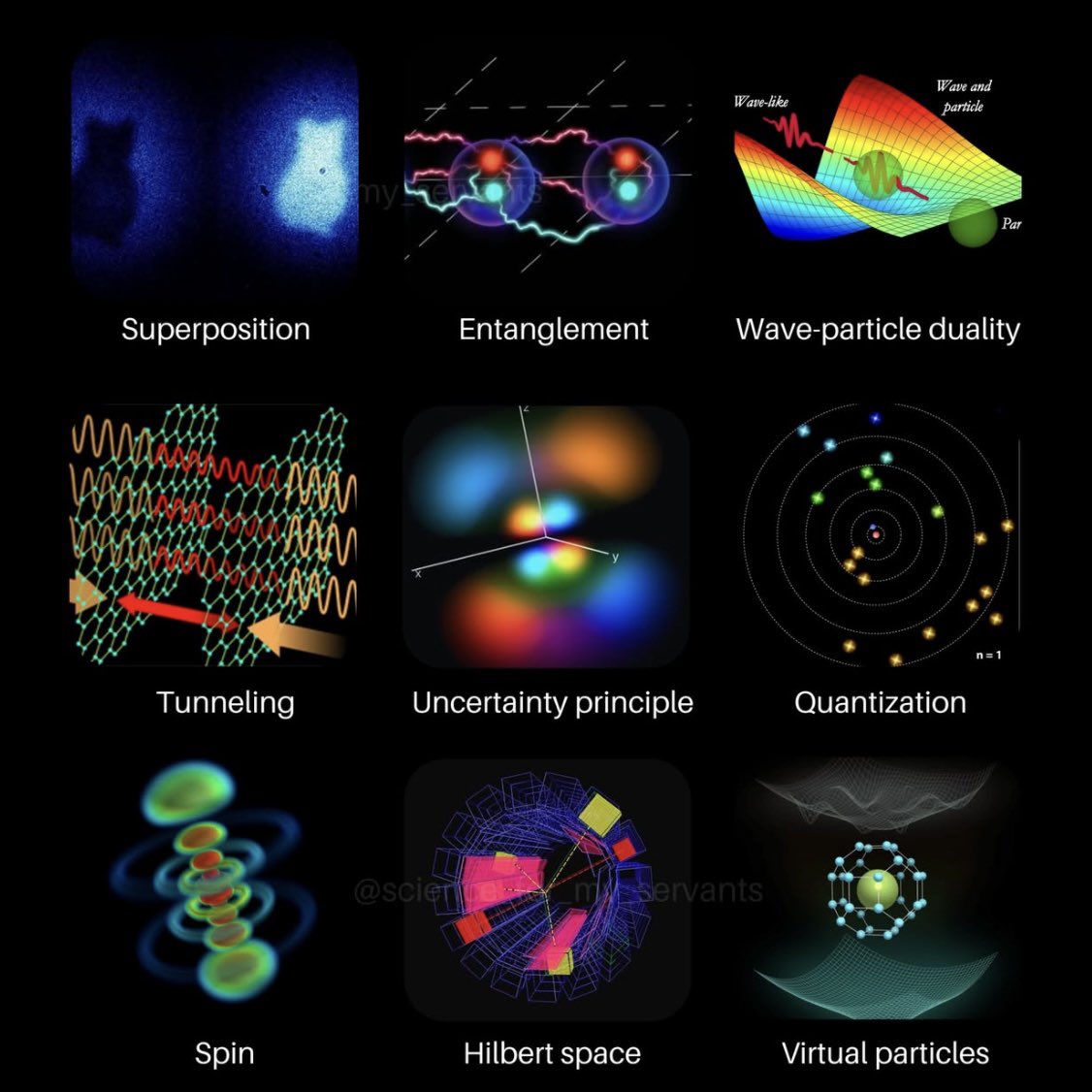
BlockHoro retweeted

Feb 20
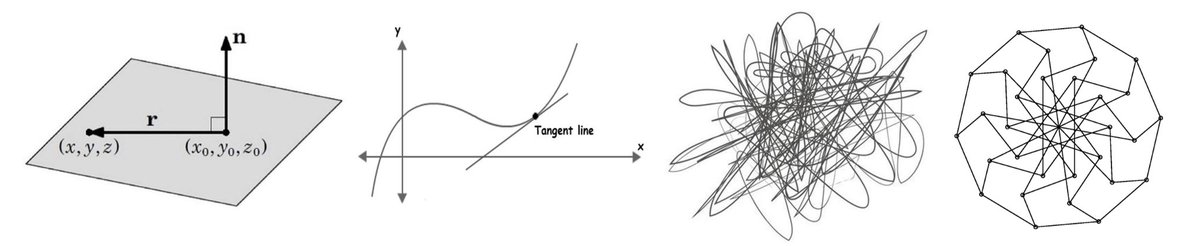
Linear algebra, calculus, topology, graph theory
6
62
1,058
28,251
BlockHoro retweeted

25 Oct 2025
1) Bitcoin was intended to be used without 3p permission.
2) Block weight is protocol limited and arbitrary data can be inserted any number of ways.
3) Miners profit from blocks found by maximizing the delta between sats unlocked/locked per tx byte.
4) Fork around and find out
4
9
143
