Founder at @DataLeafAI | Accelerating America with AI micro-factories

Joined October 2021
30 Photos and videos
Pinned Tweet
13 Mar 2025
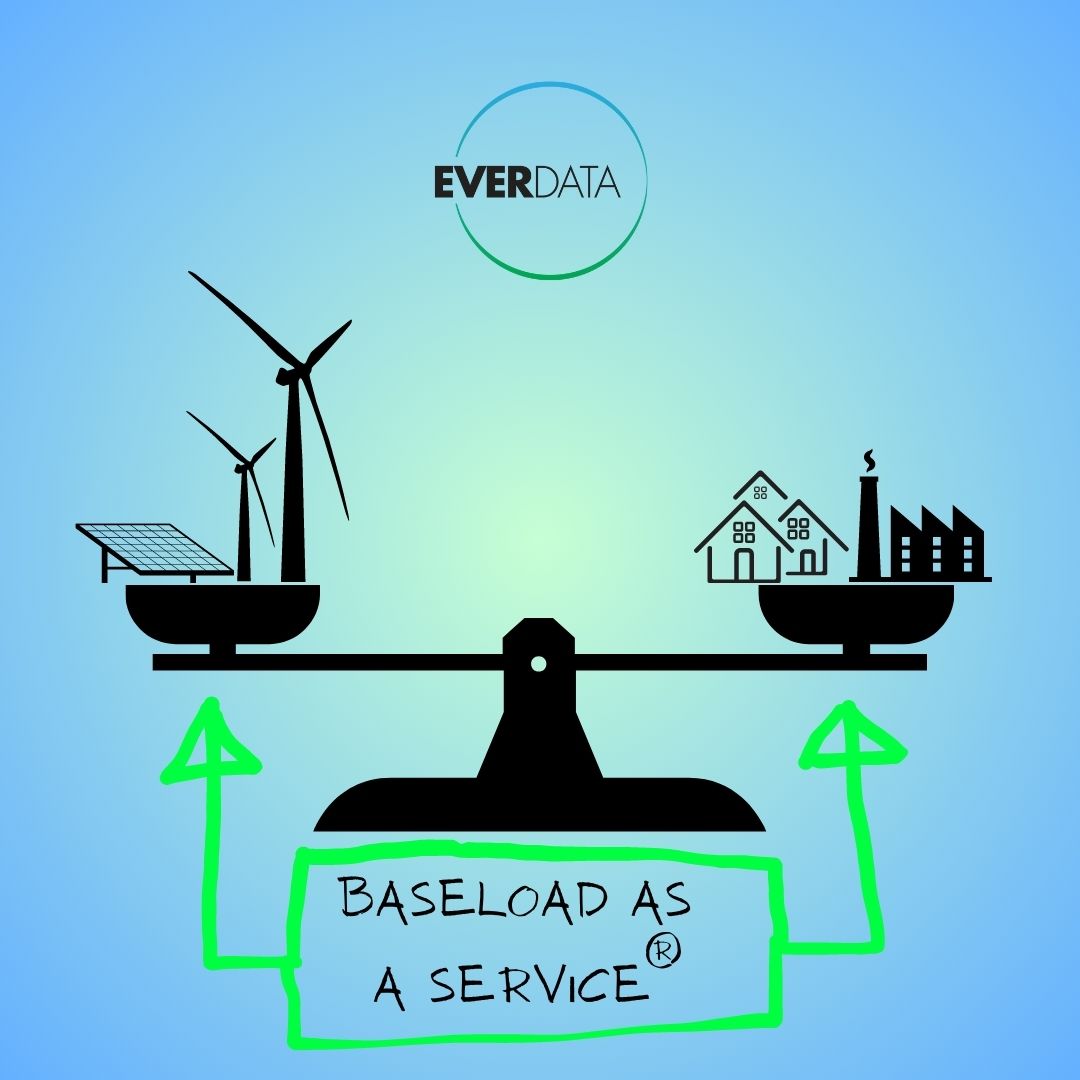
Solar Batteries Baseload as a Service™️ = cheapest electricity on Earth
3
128
Distributed factory clusters suitable for inference and asynchronous training.
Replying to @DataLeafAI
Data Leaf has a pipeline of over 400MW of grid-independent compute capacity under development and more being added weekly.
1
15
Bo Jones retweeted
A nationwide mobilization of federal and state funding initiatives are needed to generate globally superior velocity of infrastructure (power DC’s) growth. For national security the node network will need to be highly distributed to create sufficient redundancy.
If had the ear @JDVance @realDonaldTrump @DonaldJTrumpJr @GovRonDeSantis @LeaderJohnThune, I would ask them to take a trillion dollars (since trillions just get thrown around like millions now) and bypass all the protests and regulations and dot the whole country with small nuclear reactors, while also building a brand-new, state-of-the-art grid for everyone. Do this as soon as possible and secure it all from attack with the latest physical and cybersecurity; maybe even create a special Nuclear Defense Force that protects each facility, funded federally. This is the only hope of getting enough power to keep up with China, and it is the only hope we have as a country to grow enough to ultimately pay off our debt and guarantee long-term security, by not letting power be a limiting factor on our innovation.
1
1
2
64
16 Dec 2025
The team at @Vectorizeio just quietly dominating frontier labs in context engineering. Incremental improvements in capability when the biggest path to commercialization is Effective Context. Touch to change the world with a 200,000 token window.
16 Dec 2025
Introducing Hindsight. Agent Memory That Works Like Human Memory. Hindsight gives AI agents contextual, time-aware, belief-forming memory — so they can actually learn over time, not just retrieve past context.
3
5
303
Excited to lead the partnership with @GlowFND, making Data Leaf one of the earliest national installers to partner with Glow. Our renewably-powered AI micro-factories will shift the competitive landscape for America and we couldn’t be more stoked to use Glow on our projects.
Today, @DataLeafAI is proud to announce our partnership with @GlowFND as a national solar installer. Through our solar and battery powered micro-AI factories and our industry relationships, we are excited to begin deploying solar within the Glow ecosystem.
1
5
98
27 Nov 2025
America needs micro AI factories to win the AI race. Bet on Data Leaf to build it.
You heard it here, folks. @grok knows.
34
Bo Jones retweeted
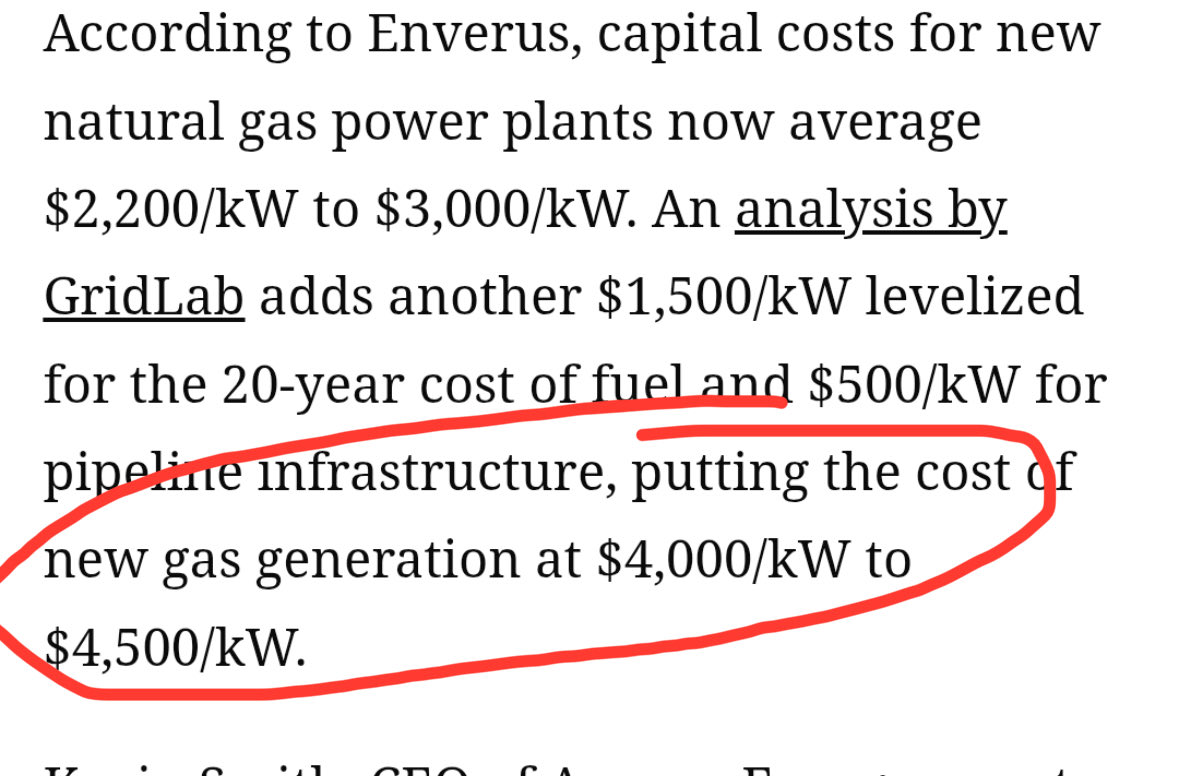
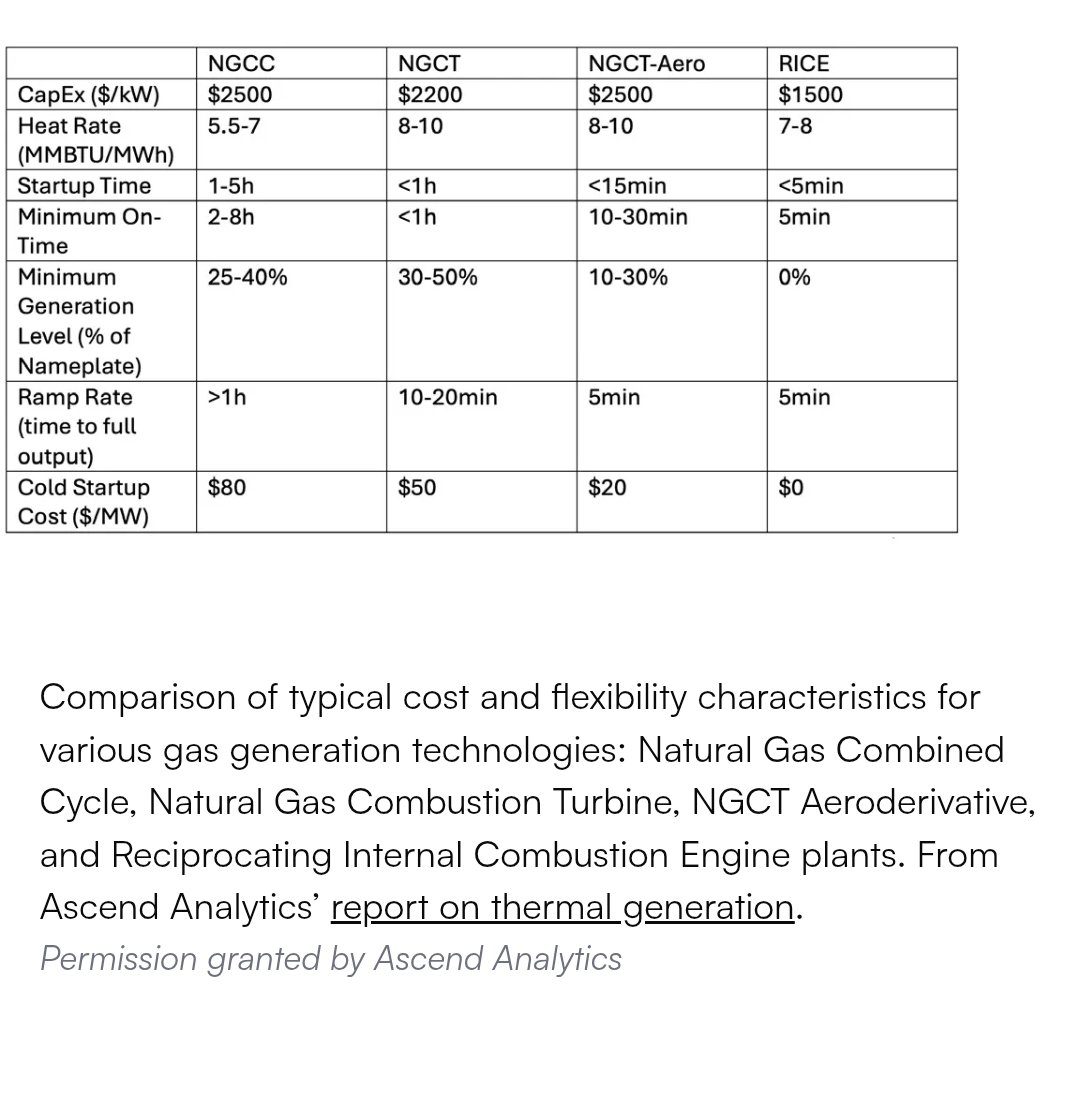
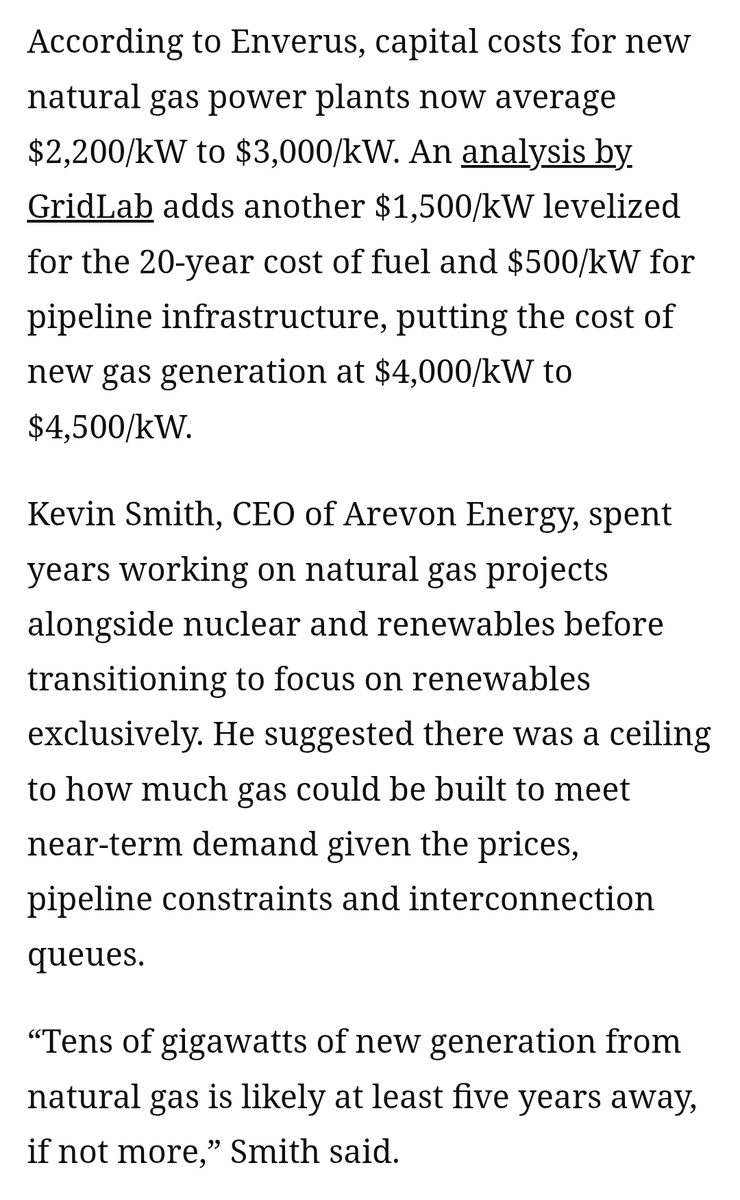
For this price one can build a solar battery data center infra and have it COD’d in 12 months! @DataLeafInc has approximately 100MW of AI capacity ready to construct in those timelines, years ahead of the expected 5yr baseline for gas powered data centers.
Cost estimates for new gas power plants just keep rising! utilitydive.com/news/gas-pow…
1
1
56
Bo Jones retweeted
The AI industry (or at least their ops teams) has known for years that existing grid infrastructure was insufficient for what’s coming. But that doesn’t mean there aren’t solutions. At Data Leaf we propose one such idea…
2 Nov 2025
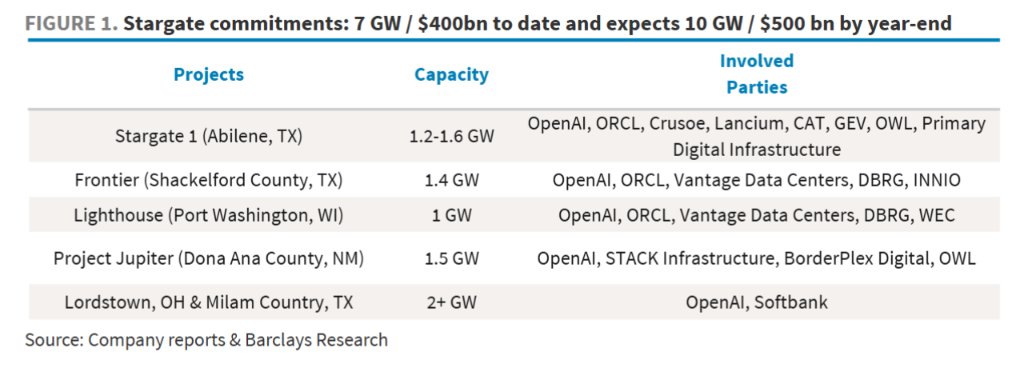
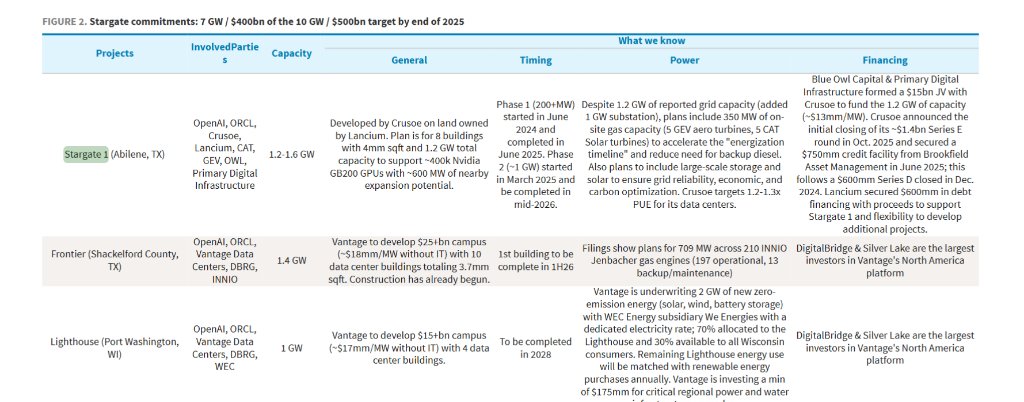
Detailed explanation of the U.S. data center frenzy: 45 GW, $2.5 trillion in investment—who is building and who is funding it? An infrastructure race driven by artificial intelligence is unfolding across the United States. Barclays’ October 31 report projects that the total installed capacity of large data center projects currently planned in the U.S. exceeds 45 gigawatts (GW), and that this building boom will attract more than $2.5 trillion in investment. The report identifies the main drivers of this expansion as OpenAI’s “Stargate” project, Amazon, Meta, Microsoft and Elon Musk’s xAI. To train and operate increasingly complex AI models, these companies are planning and building compute clusters at an unprecedented pace. This is not only an “arms race in compute” among Big Tech; it also presents an unprecedented challenge to America’s power infrastructure. Surging electricity demand is crashing into the “power wall” of the existing U.S. grid. Grid capacity shortfalls, permitting delays, and supply constraints are combining to push these tech companies toward a “Bring-Your-Own-Power” strategy. Big Tech leads: Stargate, hyperscalers, and xAI driving construction According to Barclays’ tracking, a handful of tech giants sit at the core of this 45 GW construction frenzy. OpenAI and the “Stargate” project: The project has set a target of 10 GW and $500 billion in investment by the end of 2025. Roughly 7 GW of capacity has been committed, centered on states such as Texas and Wisconsin, with partners including Oracle, SoftBank, data-center developer Vantage, and Crusoe. Meta: It is pushing multiple “Titan Clusters,” notably the 1 GW-class “Prometheus” project in Ohio and the “Hyperion” project in Louisiana, which has plans to expand to as much as 5 GW. Amazon: It added 3.8 GW of capacity globally in the last 12 months and is expected to double that again by 2027. Based on this, Barclays estimates that roughly 13 GW of capacity could be added in the U.S. alone between 2026 and 2027. Microsoft: It is building a 900 MW AI facility in Wisconsin and planning multiple similar projects in other parts of the United States. xAI: In Memphis, Tennessee, it is expanding a data center to 1.4 GW, to be used for training the Grok model. The price of this investment feast is extremely high. According to the report, data center construction costs (excluding IT equipment) have surged to more than $17 million per MW. Using OpenAI’s “Stargate” project as an example, investment commitments for 7 GW of capacity alone exceed $400 billion, and the per-MW cost (including IT equipment) reaches $57 million, underscoring the enormous capital intensity of AI infrastructure. Pressure from the “power wall”: Grid bottlenecks spark on-site generation models Grid constraints are the most serious challenge currently facing data center construction. The Barclays report emphasizes that even when grid interconnection approvals are obtained, project developers are strongly inclined to build on-site generation to pull forward the “energization date” and to secure power reliability. A representative example is the “Stargate 1” project. Although it has already received approval for 1.2 GW of grid interconnection, it plans to deploy about 350 MW of on-site natural-gas generation capacity. The report explains that this step is intended to “accelerate the project’s energization schedule” and reflects a desire to adopt natural gas rather than diesel as the long-term emergency power source. To cope with the millisecond-scale, rapid power fluctuations that come with AI workloads, the industry is adopting an “all-weather solution.” For example, Meta’s “Prometheus” project uses a combination of gas turbines, gas reciprocating engines, and diesel engines to handle baseload supply, power-variation response, and fast-start emergencies, respectively. Such hybrid power solutions are becoming the industry trend. Who is paying: Capital and costs behind trillion-dollar outlays Behind the massive investment lies a complex financing structure and steadily rising costs. In addition to the tech companies’ own capital expenditures, private equity and infrastructure-focused funds play a central role. For example, Blue Owl Capital has formed a $15 billion joint venture with Crusoe to finance the “Stargate 1” project. At the same time, the Energy-as-a-Service (EaaS) model is on the rise. Energy companies like Williams sign long-term power purchase agreements (PPAs) with data center operators and invest billions of dollars to build and operate dedicated generation assets. Williams invested $2 billion in Meta’s “Prometheus” project and signed a similar $3.1 billion contract with another major customer. This shows a growing tendency among data center operators to outsource the development and operation of energy assets to specialized companies. Supply-chain challenges: Equipment lead times and labor shortages as wild cards Explosive demand is putting massive pressure on the power-equipment supply chain. Citing a document, the Barclays report notes that as market demand has surged, prices for medium- and large-frame gas turbines have risen 50% in less than two years, and lead times have lengthened significantly. Manufacturers such as GE Vernova and Caterpillar are ramping up, but they remain hobbled by parts procurement and labor shortages. Some companies are also choosing to acquire used or “in-box” (unused) equipment to sidestep long order queues. For example, Fermi America purchased Siemens gas turbines that were not used in an LNG project, securing valuable generation capacity for data-center use.
1
1
1
55
Bo Jones retweeted
100% - data centers of the future will not be centralized, concentrated, and 3rd-party dependent. They will be distributed, interconnected, and full self-reliant. That’s why we launched @DataLeafInc, to build a compute nexus that is hardened, regenerative, and scalable.

1 Sep 2025
In 3yrs or less it will be clear that siting GW-scale load in remote places with radial access to the grid is incredibly misguided The fastest path to greatest scale w suitable reliability at sustainable costs will be through making these loads cornerstones of our infra systems
1
2
75
Bo Jones retweeted
AI needs dedicated and isolated systems to maintain capacity at all times. That’s we are building Hyperscale in Realtime™️ - distributed AI infrastructure.
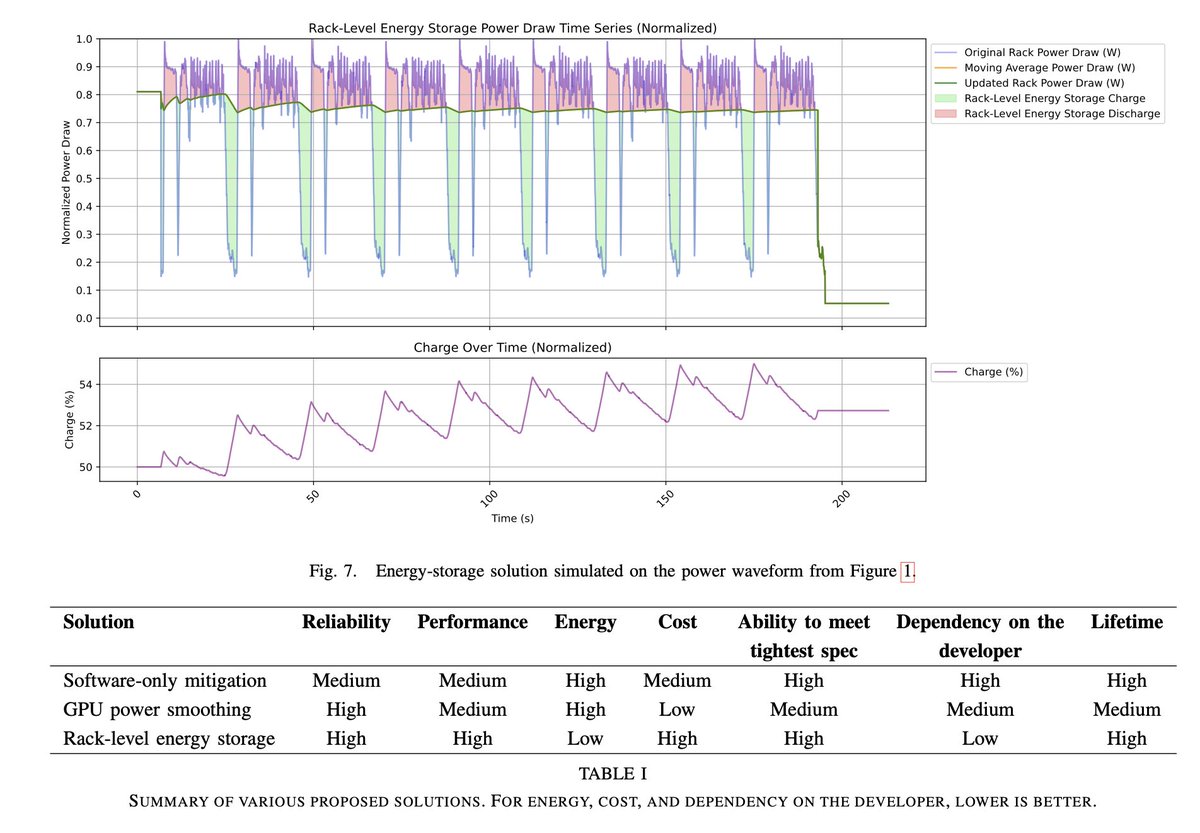
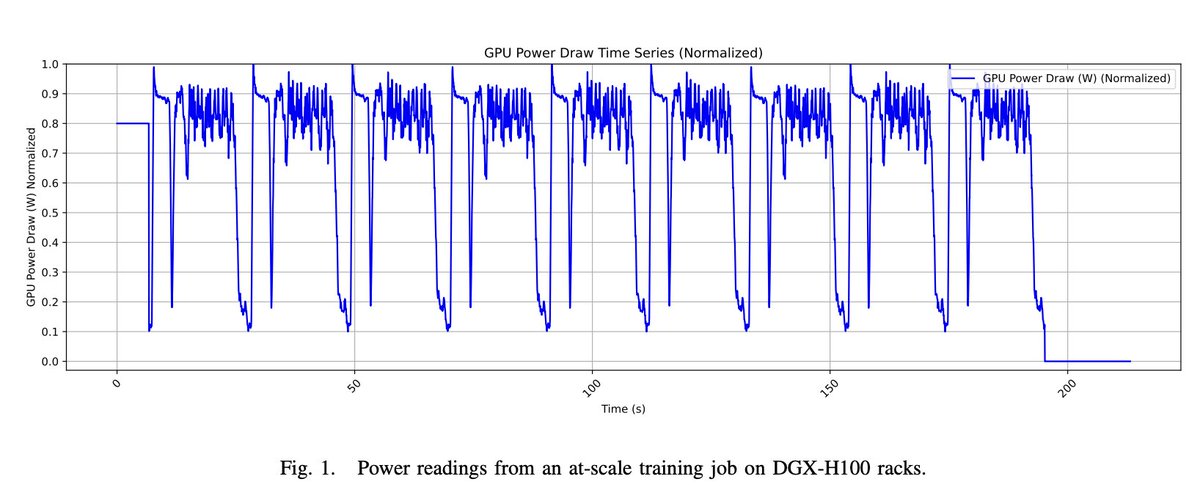
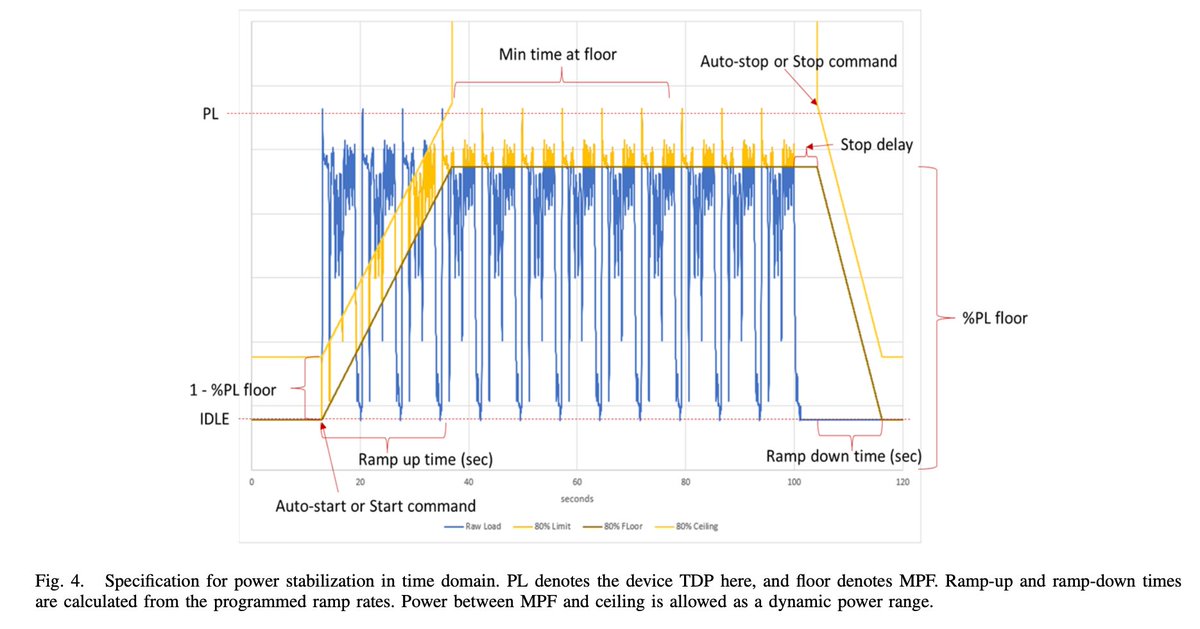
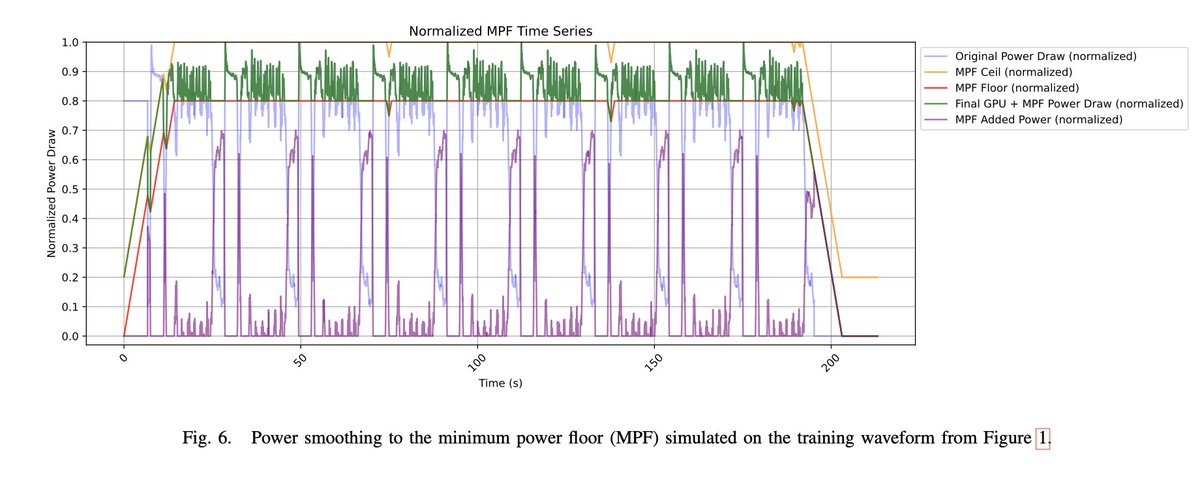
AI training is synchronous, so thousands of GPUs spike during compute and sag during communication. Aggregated, that creates big, rhythmic power swings that can excite grid 'bad frequencies'. Utilities are starting to cap both: (1) how fast/how far power moves (time-domain), and (2) how much beat sits in a sensitive frequency band (frequency-domain). Past events show low-Hz oscillations can propagate and stress plants/grids; with AI training loads, the forcing function is larger. Utilities therefore set critical frequencies magnitude limits (e.g., a wide 0.1–20 Hz guard band vs. 0.2-3 Hz AI workload FFT) so one site’s narrow beat can’t dominate the grid. Potential fixes for compliance: Expect trade-offs: energy burn (first two) vs. capex/space (latter). -Software smoothing (add controlled “filler” work when power would drop), -GPU firmware shaping (ramp limits, keep a minimum power floor) -Rack-level storage to absorb/supply the wiggle. Real-time FFT monitoring acts as a backstop. Why firmware alone often isn’t enough? On current GPUs, MPF tops out ~90% of TDP (max ppwer) and the minimum short-spike setting (EDP) is still ~1.1× TDP = at least ~20% swing remains. Tight utility limits (e.g., ~10%) typically need rack-level storage in addition to firmware and software solutions (e.g., expect hybrid fixes).
3
6
179
Bo Jones retweeted
Most data center operators (especially Bitcoin miners) are rebranding as “energy solutions” such as demand response, virtual power plants, or ancillary services.
1
1
1
122
Bo Jones retweeted
loading...
1
1
48
11 Jun 2025
In the future I’m envisioning, there won’t be any meters.
"Behind the meter" seems to be going by the wayside because it's predictably not delivering the "speed-to-market" that the maneuver was predicated upon. This debate is a bit of a distraction, & has obscured two even more 🔥 policy debates: 🧵
2
65
18 Mar 2025
Interesting
18 Mar 2025
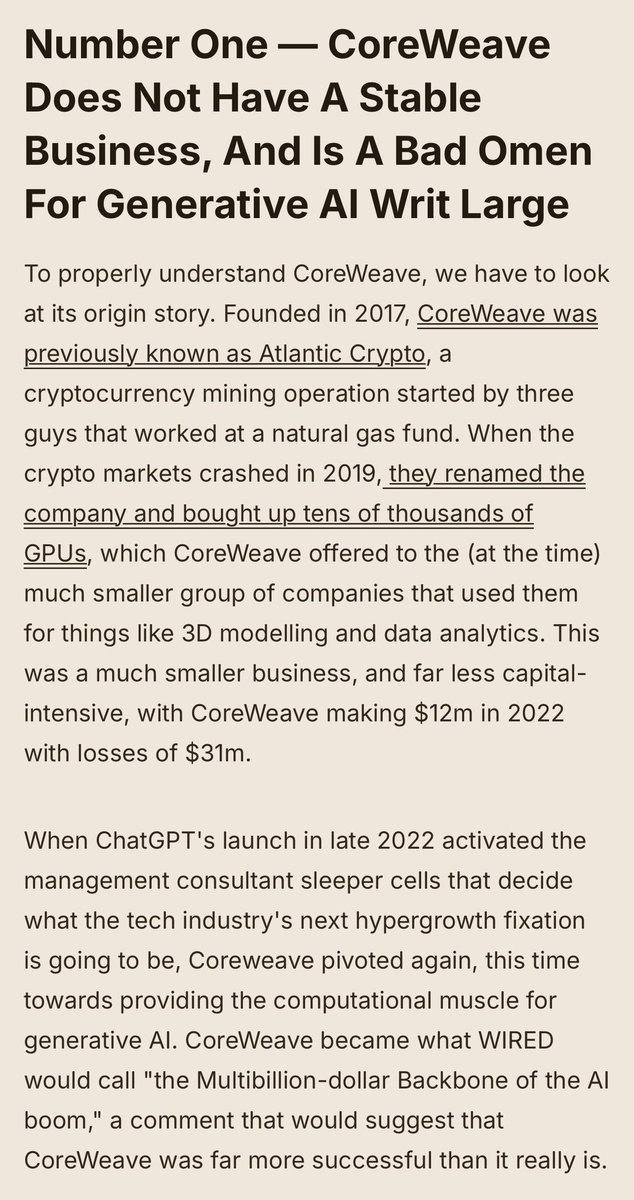
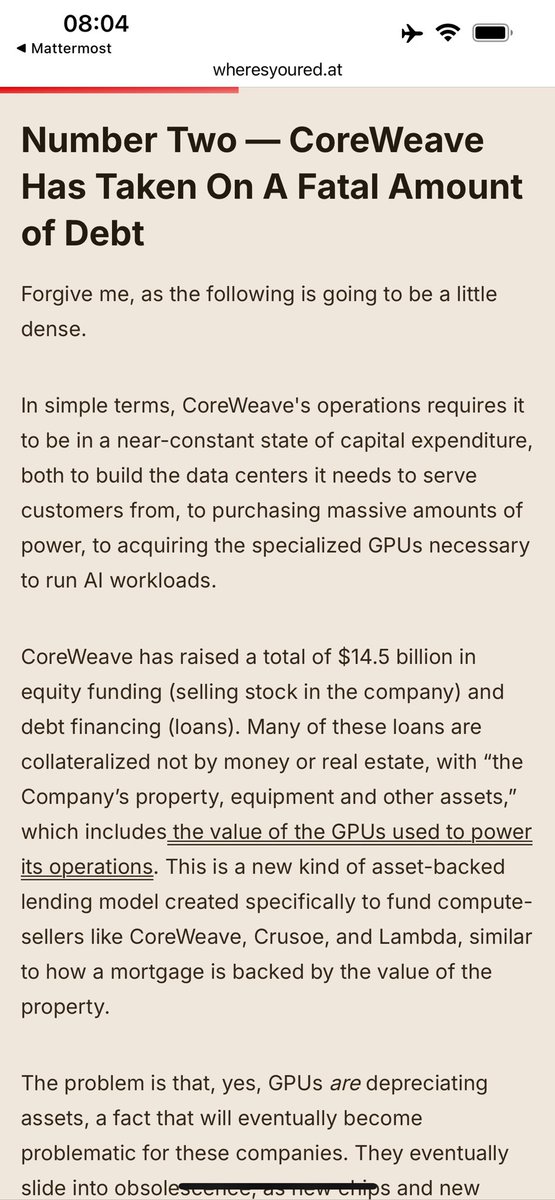
AI fantasies masterfully busted by Ed Zitron through the dissected case of CoreWeave
2
82
The US Hash Force is a something I’ve dreamed about since 2020 when I first learned about Bitcoin.
1
56
24 Oct 2024
Imagine a world in which you can charge your EV for free/almost free to consume the excess from a full solar bess power system. This can happen on small residential scale all the way to utility scale. Consuming energy on demand is a blue ocean opportunity.
1
54
18 Feb 2024
Energy dudes will see this and say ohm
5
136
12 Feb 2024
I just saw a clip of someone $NVDA’s CEO say about Pow vs PoS, “why waste energy though? One is more efficient.” Incredible that the man who is ushering in the biggest evolution of power systems in 50yrs has no idea that he’s doing so.
1
113
11 Feb 2024
Hung out with the CEO of California’s biggest energy county last night. Most of the energy development here continues to struggle with the most basic issues: interconnection, offtake, state policy, etc. Baseload as a Service™️ makes all of that go away.
1
3
132
Baseload as a Service™️ Residential coming soon.
Do you have Fu$k You Solar? F-U Solar is when you live in CA and have NEM3 and excess solar power during the day, and you decide to run space heaters or bitcoin miners just to flip the middle finger at your utility and state government versus take their paltry compensation.
1
66