Sarah Bray's lab @PDN_Cambridge @Cambridge_Uni investigating Notch signalling in Drosophila!

Joined November 2017
10 Photos and videos
Bray Lab retweeted
Happy #WorldEnvironmentDay. We are joining in the #NowForClimate campaign and share our resources for mitigating climate change. Check our free carbon footprint calculator and sustainable grants at biologists.com/sustainabilit…
1
2
181
Bray Lab retweeted
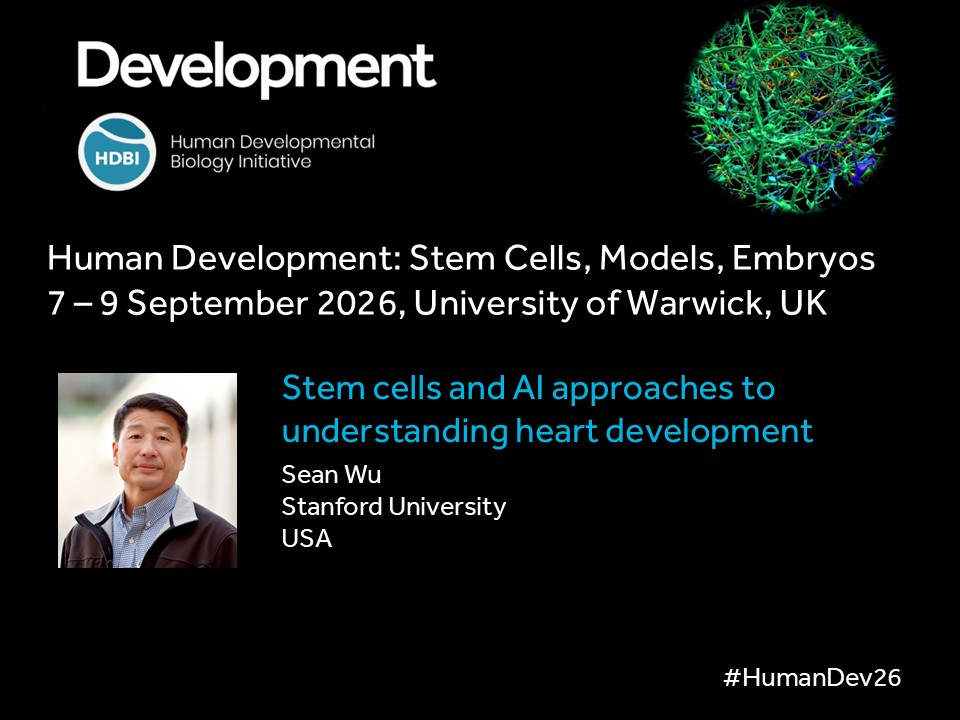
Sean Wu @SeanM_Wu will be speaking on "Stem cells and AI approaches to understanding heart development" at our Journal Meeting in the UK this September #HumanDev26 Register to attend: biologists.com/meetings/devh… Early-bird deadline: 8 May 2026
4
10
1,432
Bray Lab retweeted
One month until early-bird registration deadline for @Dev_journal & @wellcometrust-funded consortium HDBI's 2026 Meeting on Human Development: Stem Cells, Models, Embryos. Check out the programme biologists.com/meetings/devh… and register by 8 May biologists.com/meetings/devh…
5
5
747
Bray Lab retweeted
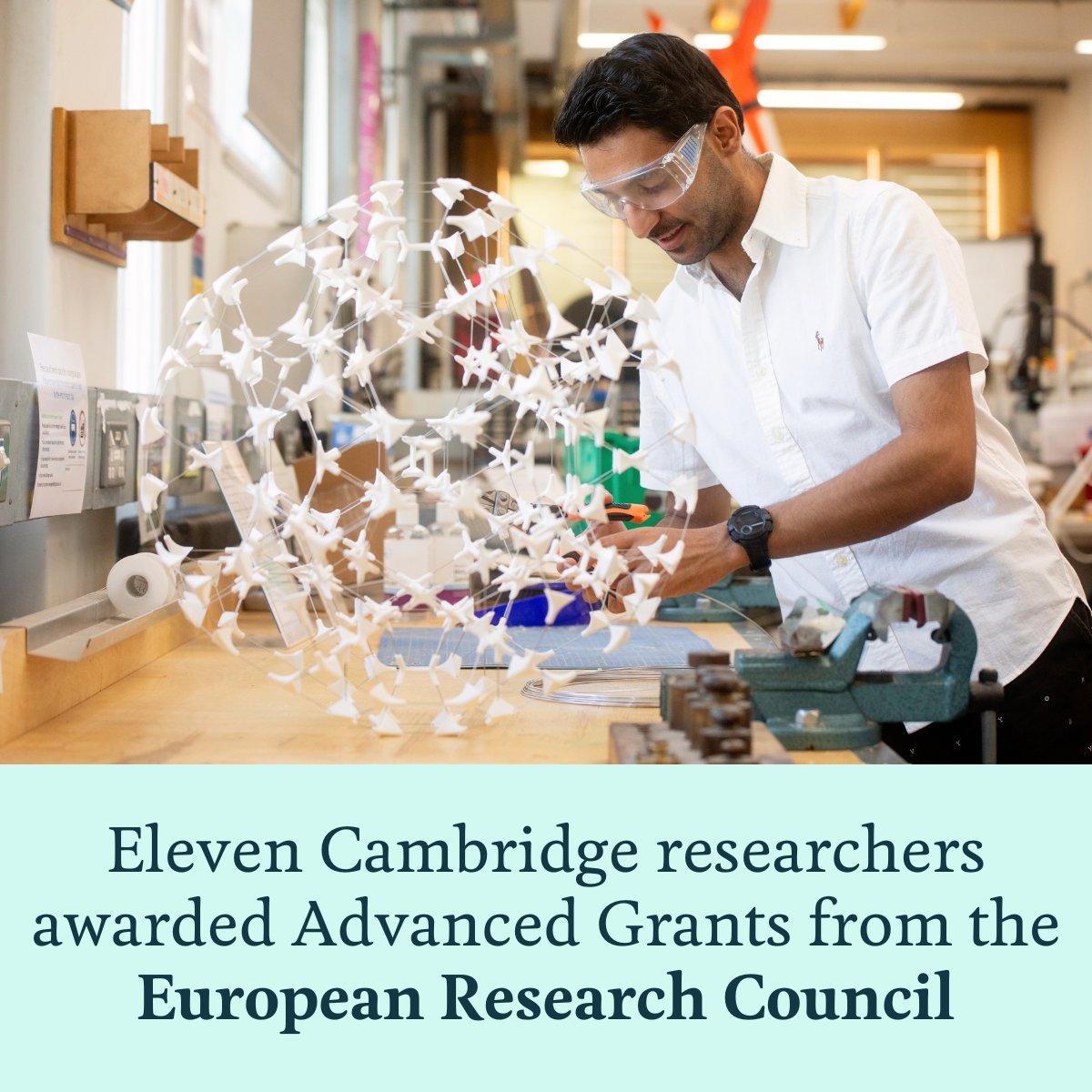
11 Cambridge researchers have been awarded Advanced Grants from the @ERC_Research – the highest number of grants awarded to any institution in this latest funding round. Explore their research 👉 cam.ac.uk/research/news/camb…
1
19
83
7,670
Bray Lab retweeted
We are delighted to welcome Dr Caren Norden to PDN as the new Charles Darwin Professor of Animal Embryology. This position plays a vital role in sustaining our thriving community of developmental and reproductive biologists. Read the story in full at pdn.cam.ac.uk/news/dr-caren-…
1
2
6
671
17 Apr 2025
Sad to see this, Benny will be greatly missed.
Benny Shilo was a great scientist and a mentor I looked up to. He will be dearly missed
3
320
Bray Lab retweeted
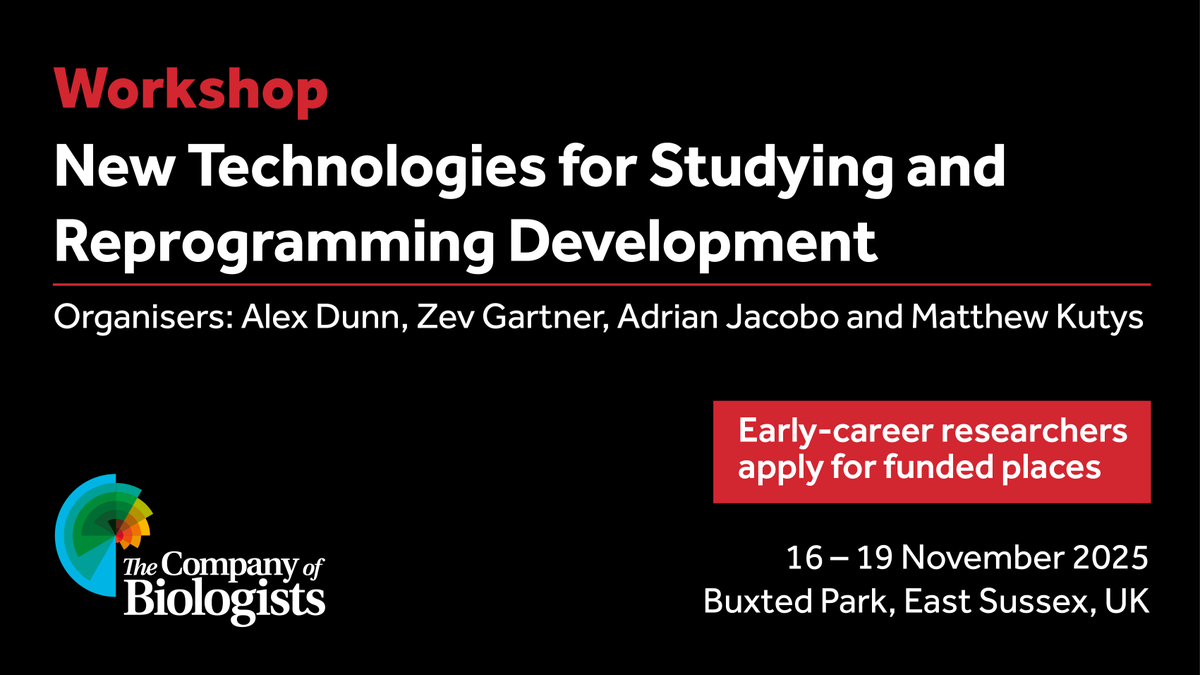
Early-career researchers can apply for a funded place at our Workshop 'New Technologies for Studying and Reprogramming Development' organised by Alex Dunn @ZevGartner @Adrian_Jacobo and Matthew Kutys. biologists.com/workshops/nov… Apply by 23 May #BiologistsWorkshops
3
8
743
Bray Lab retweeted
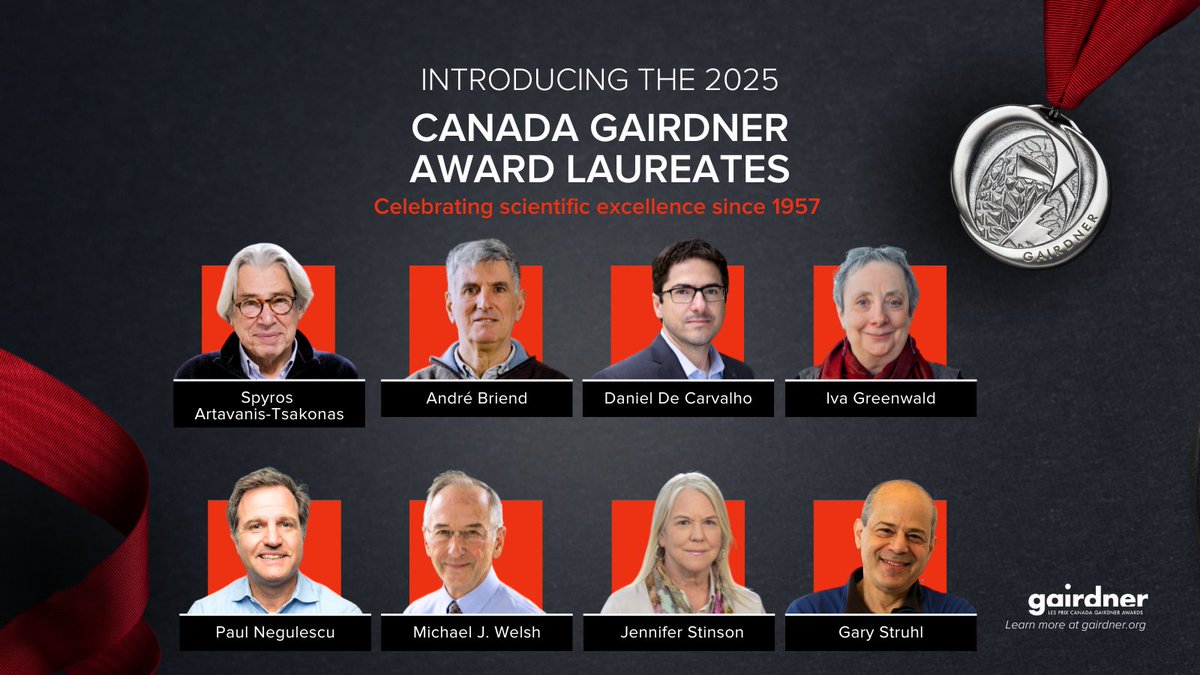
Congratulations to Artavanis-Tsakonas, Struhl, and Greenwald on the Canada Gairdner Award for their work on Notch signalling. The Notch locus has been shown to have important roles in cancer, stem-cell development, brain disease, and many other areas important for human health. The three have played a key seeding role and allowed a field to grow. At the kernel of the mechanisms that determine the progressive allocation of cell-fate in animal development lie only a few key signalling pathways. These pathways involve the communication between cells—through contact, short-range signals and long-range signals—to alter the fate of the cell that receives the signal. These key players are Wnt, Hedgehog, Receptor Tyrosine Kinase, TGF-b, NF-kappa-b and, pertinent to our discussion, Notch. I don’t think I am very much off the mark if I were to say that the leading contributors to the discovery and understanding of all these signalling pathways, but for Notch, have been honoured by one or more major awards. By conferring the Canada Gairdner International Award on Spyros Aratavanis-Tsakonas, Gary Struhl and Iva Greenwald this gap has been properly bridged. Cells acquire their fate by two ways, Sydney Brenner famously said: By who their parents are (which he called the English model) or by who their neighbours are ( the American model). A cell can also stand out amongst equivalent cells in it its neighbourhood by suppressing others, and the principal mechanism it uses for this is by Notch-mediated lateral inhibition. Lateral inhibition was first ‘detected’ by Vincent Wigglesworth, using elegant transplantation experiments to study bristle spacing in the insect Rhodnius prolixus in 1940. The position of bristle- forming cells in a field of ‘bald’ cells is determined by lateral inhibition. The mechanistic underpinnings of this process was, of course not explorable at the time, but strangely, were laid a few years earlier. Derek Poulson, in 1936 pioneered what was later to be called developmental genetics, when he showed that deletions and null mutations at the Notch locus causes the expansion of neuronal tissue at the expense of epidermis. In the 1970s the revolution in molecular biology allowed the use of genetics to explore underlying molecular mechanisms of genes involved in development. Molecular cloning of genes, relatively straightforward now, was, as we all know a long-haul at that time even for ‘simple’ genes. For genetically complex loci, such as the bithorax- complex, the decapentaplegic ( TGF-b) gene and the Notch locus, only the most daring and intelligent would venture where others feared to tread. (About Struhl and Greenwald later, their contributions are no less impressive.) But here’s more about Artavanis-Tsakonas. His taking on this challenge is a tribute to his daring and his preparedness in going for the long-haul. Success was by no means guaranteed and there was little reason to second- guess evolution and presume that the molecular analysis would readily reveal cellular or organismal function. In the event, the long-haul was a very long one that still continues but the the fruits of this labour were found all along the way. The Notch pathway and its roles in cell communication, acquisition of cell fates, modulation of stem cells, and control of oncogenesis have truly illuminated all of biology. Thus, we must see Artavanis-Tsakonas’s contribution not just by the papers from his lab but by publications on Notch from other labs too. The pathway has become so famous that very few now cite the original pathbreaking papers any more. A true sign of a pioneer. Upon sequencing the Notch gene, the Artavanis-Tsakonas lab identified key EGF-like coding sequences that were its hallmark. This was also shown to be a feature of Notch ligands too, Delta and Serrate ( identified as a ligand by Artavanis-Tsakonas’s lab). Very soon, using cell- culture experiment Artavanis-Tsakonas’s lab show how ligand and receptor interact. They then worked out the intracellular components of the pathway. These are the Enhancer of split locus, which encodes seven independent helix-loop-helix proteins; the suppressor of Hairless and deltex. The Enhancer of split and suppressor of Hairless are two of the three major nuclear targets of Notch signal transduction and deltex is an intracellular protein that binds to and regulates Notch. Artavanis-Tsakonas and colleagues also cloned the mammalian homologues of the Enhancer of split genes and deltex demonstrating that the pathway was evolutionarily conserved. As Darwin famously said "from so simple a beginning endless forms most beautiful and most wonderful have been, and are being, evolved.” The work on Notch that started with flies and worms has taught us about cancers and dementia because all life on earth has a shared chemistry. By studying so-called simple and accessible organisms, we learn about nature, and we learn about our health too. Fundamental research is intertwined like a jalebi with application and the Notch pathway illustrates this beautifully.
Congratulations to the 2025 Canada Gairdner Award laureates! This year’s laureates represent some of the world’s most significant biomedical and global health research and discoveries. Find out more about these incredible scientists and their award-winning research here: gairdner.org/resource-hub/20… #GairdnerAwards
4
14
1,371
Bray Lab retweeted
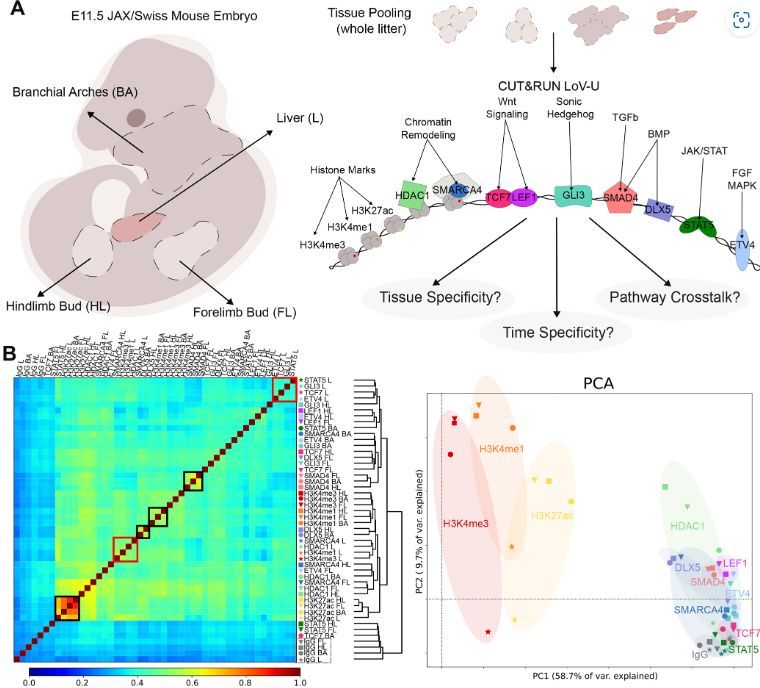
Construction of an atlas of transcription factor binding during mouse development identifies popular regulatory regions Read this Techniques & Resources Article by @AnnaNordin96, @GianlucaZamba, @MattEJonasson, @ppagella86 Claudio Cantù & co.: doi.org/10.1242/dev.204311
28
121
9,428
Bray Lab retweeted
This #InternationalDayOfForests, we’re proud to support our partner The Woodland Trust and its vision of a world where woods and trees thrive for people and nature: Planting trees for a net-zero future, Protecting vital habitats, Restoring ancient woodland woodlandtrust.org.uk/about-u…
2
1
162
Bray Lab retweeted
From the Editors-in-Chief of all @Co_Biologists journals: "In these uncertain times, we must strengthen our international scientific networks. We must speak with a unified voice in support of evidence-based policymaking and scientific freedom." journals.biologists.com/dev/…
6
18
1,956
Bray Lab retweeted
11 Mar 2025
Together with @focalplane_jcs, we're having an image competition to accompany the #Biologists100 conference. Thank you everyone who submitted their images. Shortlisting only 15 was tough! Browse through the gallery and vote for your favourite image: thenode.biologists.com/vote-…
7
10
1,573
Bray Lab retweeted
A study, published in @ScienceMagazine highlights the value of pet dogs as a model for understanding obesity in both humans and animals. The study, led by PDN Academic @EllieRaffan, illustrates how genetic obesity risk leads to weight gain. pdn.cam.ac.uk/news/dogs-prov…
1
6
14
982
Bray Lab retweeted
22 Feb 2025
Are you a researcher planning to apply for Wellcome funding in the next two years? We’re offering researchers the opportunity to observe a Wellcome funding advisory committee and learn how grant applications are assessed. Learn more ⤵️ wellcome.org/grant-funding/g…

5
84
200
36,458
Bray Lab retweeted
We are looking for a new Executive Editor on the journal, with @katemmabrown1 taking on a new role at @Co_Biologists. If you're an experienced editor with a love of developmental biology and its community, this could be the job for you: biologists.com/wp-content/up…

7
10
2,342
Bray Lab retweeted
Deeply saddened by the passing of R. Scott Hawley, whose pioneering work on meiosis and chromosome dynamics and dedication to mentoring will leave a lasting impact on the genetics community.
The Institute mourns the loss of R. Scott Hawley, PhD. A brilliant scientist, cherished colleague, & true mentor. Scott's contributions to our understanding of genetics & passion for training the next generation of scientists will forever be remembered. bit.ly/3WPqqYG
3
1
437
Bray Lab retweeted
With a month left to register, there is still time to book your place to join us at our 100-year anniversary conference in March. Register by 28 February 100yearsconference.biologist… Discover all that awaits in Liverpool in our video: youtu.be/yQ_VY86zVtg?si=qS_P…

7
7
1,467
Bray Lab retweeted
Hope you'll forgive a quick thread as I take over as the new EiC of @eLife
1
19
115
22,984
Bray Lab retweeted
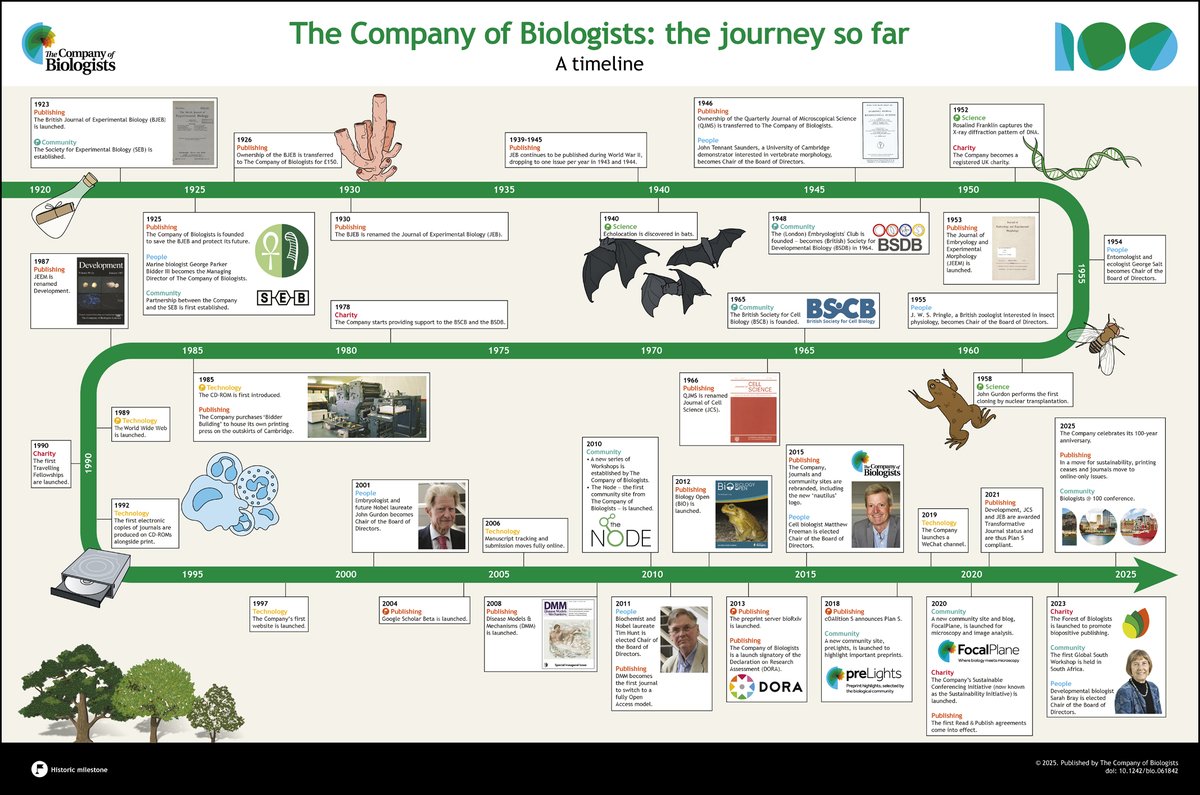
As part of our 100-year anniversary celebrations, we are publishing articles about our past, present and future in each of our five journals. In this initial, cross-title Editorial, four of our current Directors look back through events in our history: journals.biologists.com/jeb/…
8
29
2,789
Bray Lab retweeted
24 Jan 2025
EMBO Postdoctoral Fellowships support internationally mobile postdoctoral researchers in Europe and around the world. Apply here (next cut-off date is 14 February): embo.org/funding/fellowships… #ResearchFunding #LifeSciences
147
324
49,286