
Asst. Professor @ Penn Bioengineering. Cell Signaling, optogenetics, synthetic biology, cancer signaling, regenerative medicine, bio-tinkering.
Joined March 2018
- Tweets 1,162
- Following 681
- Followers 1,538
- Likes 2,337
116 Photos and videos


Lukasz Bugaj retweeted

4 Nov 2025
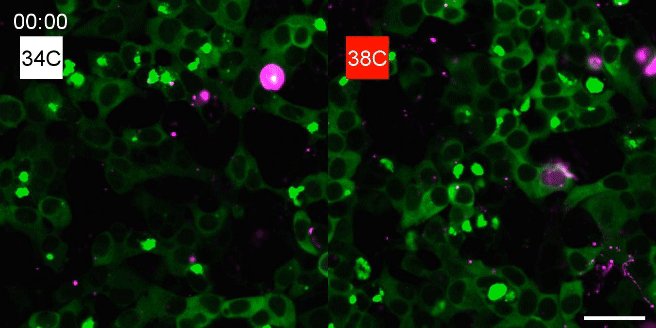
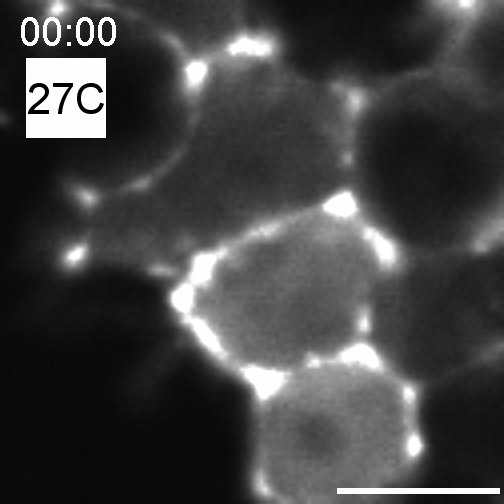
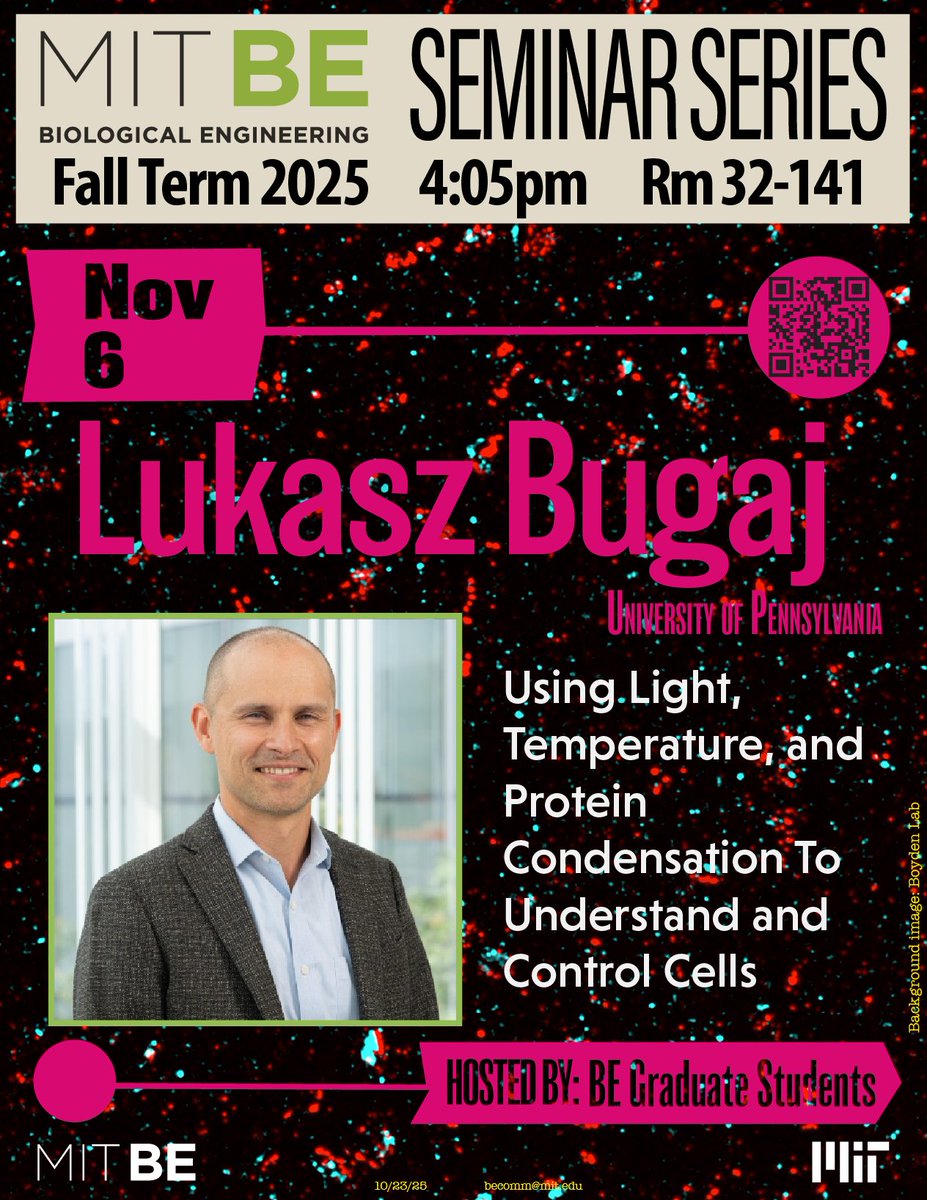
BE Seminar Series this Thurs w @BugajLab, @pennbioeng “Using Light, Temperature, and Protein Condensation to Understand and Control Cells”
be.mit.edu/our-community/sem…
3
9
1,225
Lukasz Bugaj retweeted

29 May 2025
I wrote an Op-Ed about the government's attacks on Harvard. Please share with anybody who thinks these attacks help anybody.
prosyn.org/PhWi74r?h=KyJ1iCf…
8
66
175
40,172
Lukasz Bugaj retweeted

23 Apr 2025
Check out our paper, now extensively revised and published in @MolecularCell! This has been a real tour de force led by @stephsansbury and @YSereb and we are very excited about the findings and future potential of this approach
cell.com/molecular-cell/abst…
15
27
120
16,508

27 Feb 2025
WOW👏👏👏 @RepAuchincloss gets it. More of this please!
25 Feb 2025

Basic science is inspired by curiosity, accountable to evidence, and subject to peer review. Politics should have no role.
1
11
656
12 Dec 2024
We are hiring postdocs! Projects on 1) probes for remote control of cell death and inflammation, and 2) application in vivo to study inflammation in cancer and therapy. Exciting science in an unparalleled environment @Penn @pennbioeng.
DM or email if interested!
3
8
37
3,096
Lukasz Bugaj retweeted

13 Nov 2024
Geometric packing of tubules in the developing kidney urinary collecting system leads to tissue stiffening and rhythmic mechanical stresses local to nephron-forming niches that synchronize with tubule branching. @HughesLabPenn
nature.com/articles/s41563-0…
13
72
6,503
4 Nov 2024
Thrilled that our work on the functional effects of EML4-ALK assemblies in cancer cells is now published in @NatureComms. Herculean effort through 2.5 years of peer review by @David_GonzMar and @LeeeRoth. nature.com/articles/s41467-0…
4 Feb 2022

So excited to share our latest on how oncogenes and drugs corrupt cell signal perception, feat. protein condensates, optogenetics, Erk pulses, and drug resistance -- something for everyone! Led by @David_GonzMar with huge assist from @LeeeRoth biorxiv.org/content/10.1101/…
11
17
75
10,129
4 Nov 2024
Peer review was long but did genuinely improve the paper. Importantly we refined our claims on the role of large condensates—now the more general "assemblies"— to recognize that assemblies of many sizes could account for the effects we observe. More to come on this!
1
1
339
4 Nov 2024
Another improvement was that we brought in stats help from a fantastic statistician, Magdalena Niewiadomska-Bugaj, who is also my mom:) Life goal achieved to publish a paper together 🍾
1
1
12
343
24 Oct 2024
Can't wait to return to my training grounds @UCSF @UCSFCancer to share what our group has been up to in the 6 years since my postdoc. Focusing on oncogenic condensates and thermogenetic control of cancer.

Tomorrow 10/25 at 4pm: Lukasz Bugaj, PhD, @BugajLab @Penn presents "Perturb to understand: optical and thermal control of condensation, signaling, and cell behavior" at our @ucsf Friday Seminar Series in Basic and Translational Research. ow.ly/65Me50TSQCG

ALT Lukasz Bugaj, PhD, @BugajLab @Penn
2
45
2,874
Lukasz Bugaj retweeted

Tomorrow 10/25 at 4pm: Lukasz Bugaj, PhD, @BugajLab @Penn presents "Perturb to understand: optical and thermal control of condensation, signaling, and cell behavior" at our @ucsf Friday Seminar Series in Basic and Translational Research. ow.ly/65Me50TSQCG
ALT Lukasz Bugaj, PhD, @BugajLab @Penn
2
4
3,434
Lukasz Bugaj retweeted

15 Oct 2024
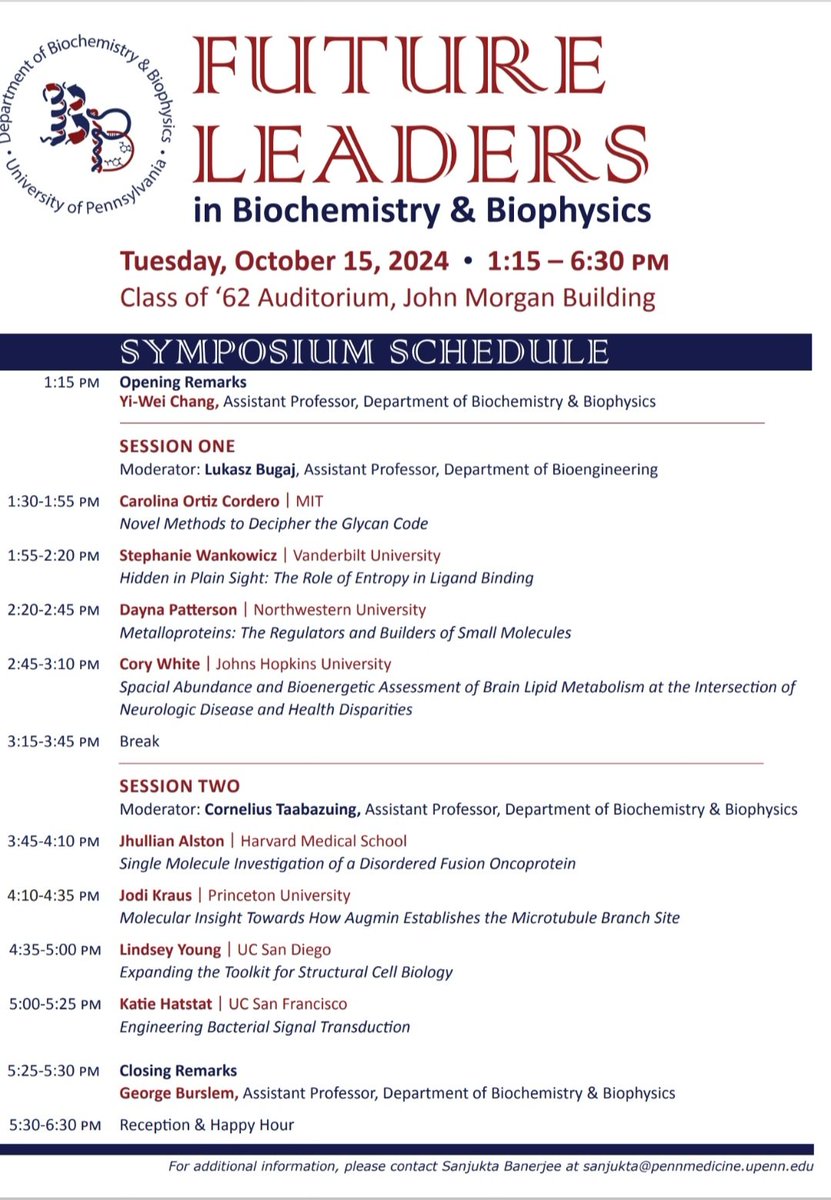
Looking forward to hosting the next generation of exceptional scholars today!! Come join us in John Morgan Auditorium for amazing talks and networking after. @PennMedicine @BMBGGUPENN
2
9
35
5,412
19 Sep 2024
The pleasure was mine — great to get to know the fantastic people and science (and weather!) at Dundee. Thanks for the invite!
1
11
901
Lukasz Bugaj retweeted

18 Sep 2024
So delighted that @NikonSmallWorld selected our replica of Vermeer’s “Girl with a Pearl Earring,” made out of cells, as an Honorable Mention!
nikonsmallworld.com/gallerie…
@AriaHzy @RiverDreamsFilm @HughesLabPenn @pennbioeng
1
5
12
4,305
16 Sep 2024
Honored you could join us John!
13 Sep 2024

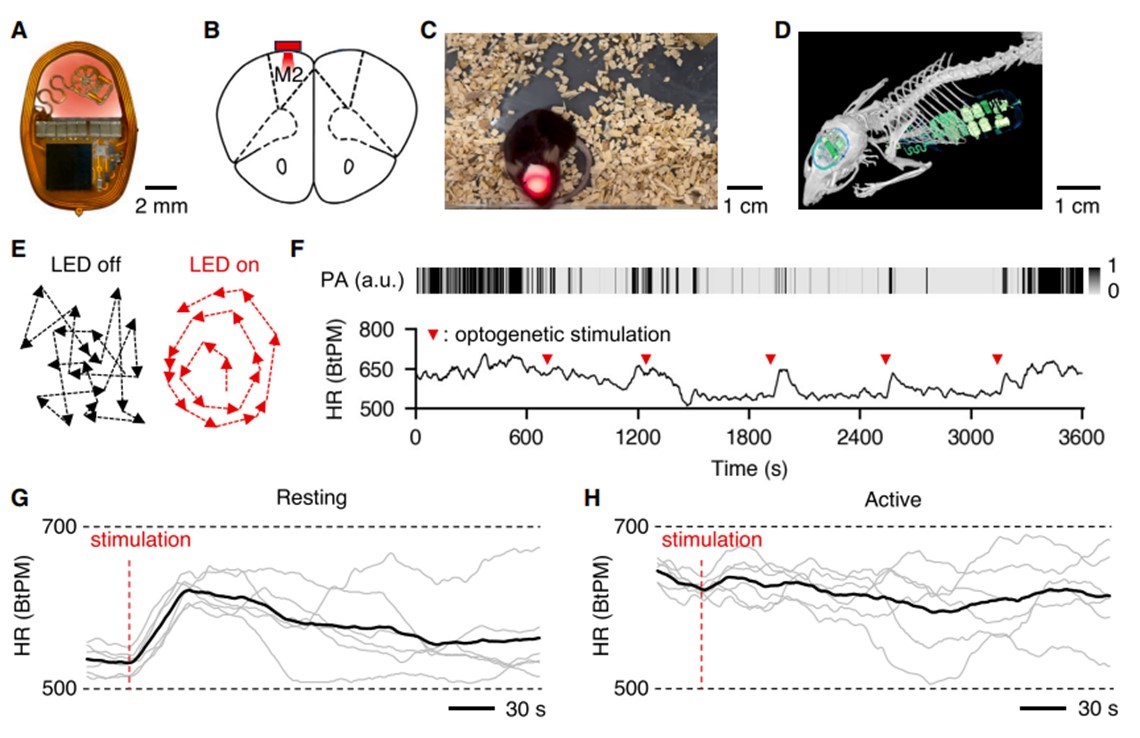
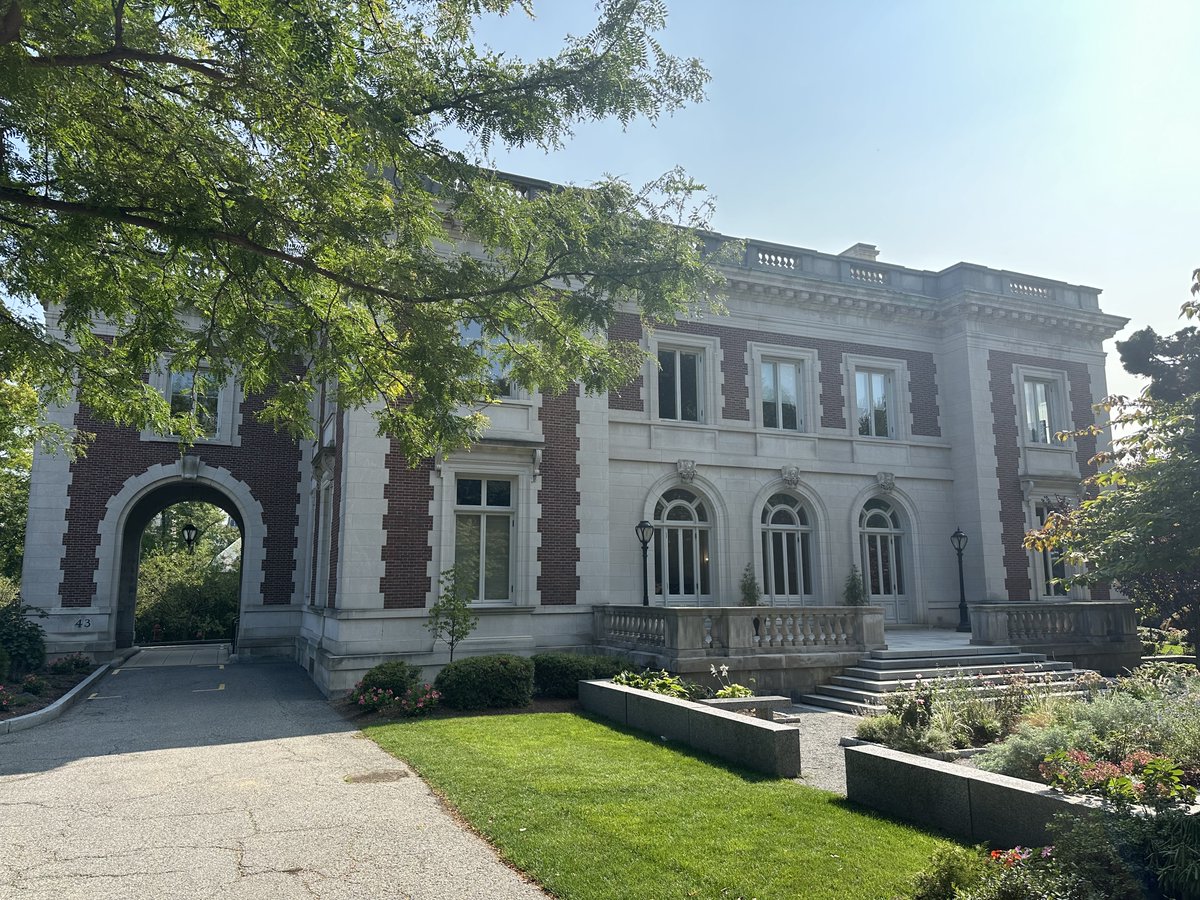
Very honored to deliver an invited talk at the 4th Optogenetic Technologies and Applications Conference at the beautiful Wightman Mansion in Boston (image below). My presentation was titled “Wireless, Battery-Free Optoelectronic Systems for Optogenetic Studies With Small Animal Models”. I presented an overview of the history of our work in this area, up to and including some very recent results that combine implantable devices for physiological/behavioral monitoring with those for optogenetic neural control in mice (Neuron, 2024 @NeuroCellPress; see below), and some unpublished work on implantable ‘optogenetic displays’. One general feature of our approach in these and other related sub-fields of neuroengineering research is to consider device designs that can be adapted for scaled production. Our aim here is not to stop with ‘hero’ publications on advanced device technologies, but to follow through to provide broad access to any interested neuroscience investigator. The vehicle for this purpose is an engineering-oriented small company (Neurolux, Inc @NeuroLuxInc) that we launched ten years ago to respond to in-bound requests for devices -- no VCs, no investors, no pitch decks, no exit strategies, etc, just engineering excellence and a robust, sustainable business model. Thanks to the conference chairs, Prof. Lukasz Bugaj @BugajLab, Prof. Emmanuel Tzanakakis and Prof. Megan McClean @McCleanLab for the invitation to participate!
cell.com/neuron/fulltext/S08…
1
4
677
Lukasz Bugaj retweeted

13 Sep 2024
Very honored to deliver an invited talk at the 4th Optogenetic Technologies and Applications Conference at the beautiful Wightman Mansion in Boston (image below). My presentation was titled “Wireless, Battery-Free Optoelectronic Systems for Optogenetic Studies With Small Animal Models”. I presented an overview of the history of our work in this area, up to and including some very recent results that combine implantable devices for physiological/behavioral monitoring with those for optogenetic neural control in mice (Neuron, 2024 @NeuroCellPress; see below), and some unpublished work on implantable ‘optogenetic displays’. One general feature of our approach in these and other related sub-fields of neuroengineering research is to consider device designs that can be adapted for scaled production. Our aim here is not to stop with ‘hero’ publications on advanced device technologies, but to follow through to provide broad access to any interested neuroscience investigator. The vehicle for this purpose is an engineering-oriented small company (Neurolux, Inc @NeuroLuxInc) that we launched ten years ago to respond to in-bound requests for devices -- no VCs, no investors, no pitch decks, no exit strategies, etc, just engineering excellence and a robust, sustainable business model. Thanks to the conference chairs, Prof. Lukasz Bugaj @BugajLab, Prof. Emmanuel Tzanakakis and Prof. Megan McClean @McCleanLab for the invitation to participate!
cell.com/neuron/fulltext/S08…
3
35
3,994
Lukasz Bugaj retweeted

3 Sep 2024
Princeton's new Omenn-Darling Bioengineering Institute (@omenndarlingbio) is running multiple faculty searches this year! We are really excited to grow our bioengineering faculty & move into a brand-new building. Postdocs on the market - apply at: puwebp.princeton.edu/AcadHir…

47
85
23,983
3 Sep 2024
Starts next week! Interact with the global leaders in optogenetics in a small-conference setting. Registration still available, hope to see you there! aiche.org/sbe/conferences/op…
23 May 2024
Join us for the 2024 Optogenetics Technologies conference in Boston! Outstanding lineup including: @AdamEzraCohen, @KhammashLab, @MoeglichLab @toettch @ProfJohnARogers @DunlopLab @coledeforest , Haifeng Ye many more.
🗓️Sept. 10-12
Abstracts due 6/7!
aiche.org/sbe/conferences/op…
1
5
14
3,821
26 Jul 2024
beautiful results @jess_ljx @arjunrajlab!

Excited to share our new
@biorxivpreprint in which we demonstrate the formation and maintenance of cellular memories in melanoma during acquisition of therapy resistance - dependent on the transcription factor AP-1 biorxiv.org/content/10.1101/… (1/9)
1
5
768
Lukasz Bugaj retweeted

28 Jun 2024
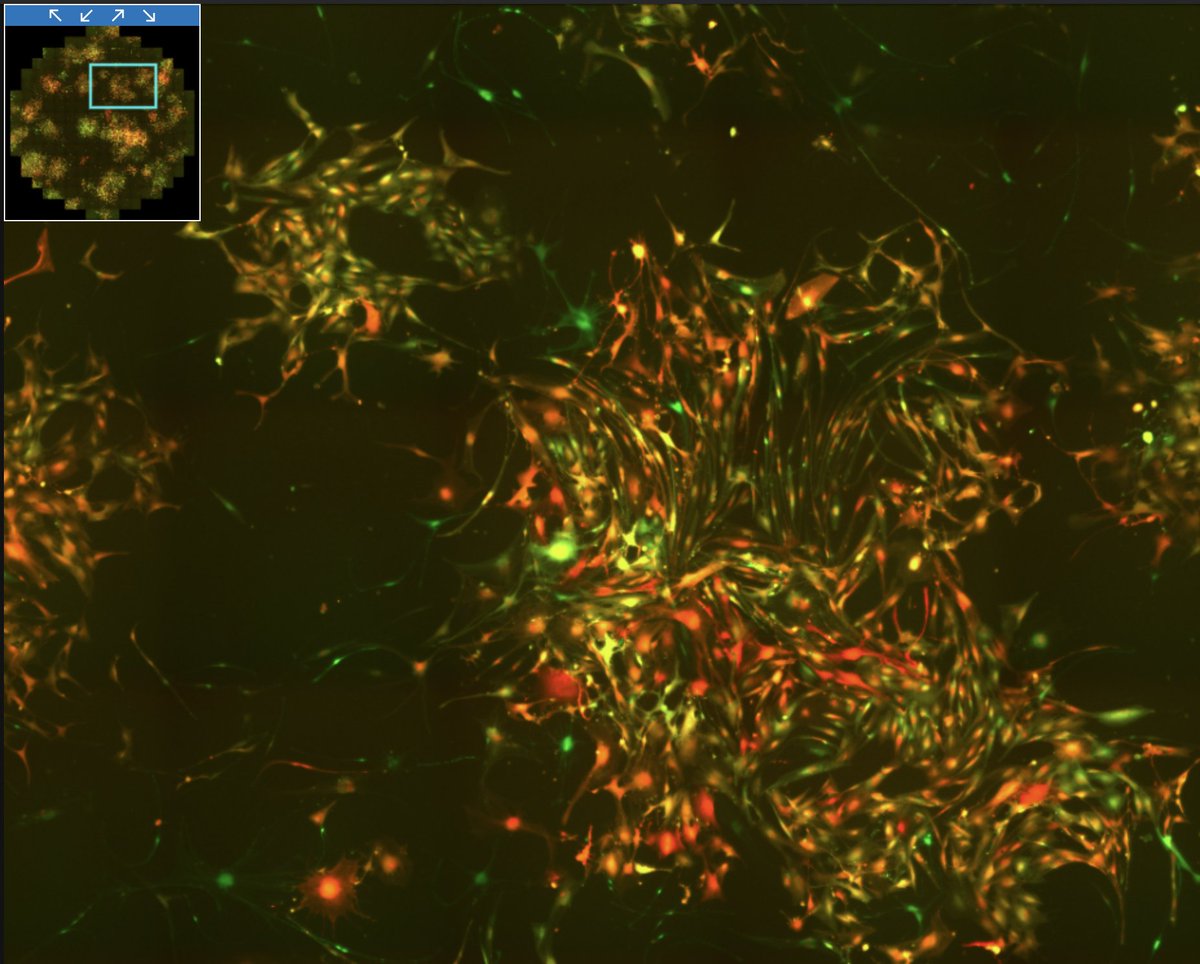
Excited to launch our cloud-based image analysis platform today at nimbusimage.org! Analyze and interact with your data, all in the browser. Follow sign-up instructions to request an account.
11
138
636
126,754