
Joined January 2013
- Tweets 546
- Following 60
- Followers 760
- Likes 459
2 Photos and videos

Chainlink East Africa Community retweeted

Jun 12
17
48
322
1,582,227
Chainlink East Africa Community retweeted

May 18
Nokia could have invented the iPhone. Three years before Apple did, a Nokia engineer walked into a meeting in Finland with a working prototype: a touchscreen phone with full internet access. Management killed it. The device looked too expensive and too risky to sell. The same year, Nokia also rejected a proposal for an online app store. Apple would launch the same idea four years later.
In 2007, Nokia controlled 40% of the world's mobile phone market and was worth more than $150 billion. By 2013, it had sold its phone business to Microsoft for $7.2 billion. The company that defined the cell phone became irrelevant in less time than it takes most kids to finish high school.
In 2016, two professors from INSEAD and Aalto University spent years interviewing 76 Nokia executives, engineers, and consultants for a research paper. Their conclusion: nobody at the company could have an uncomfortable conversation.
Senior leaders were described as "extremely temperamental." One consultant remembered then-CEO Jorma Ollila shouting at people "at the top of his lungs" in front of fifteen other vice presidents. Middle managers learned the rules fast. Bad news got you fired, so they stopped delivering it.
The engineers knew Nokia's operating system could not compete with what Apple was building for the iPhone. One design team submitted 500 separate proposals to fix it between 2001 and 2009. Not a single one got approved. When a middle manager once suggested that a colleague push back against a top executive, the colleague refused. He "didn't have the courage; he had a family and small children."
The top managers were also afraid, just of different things. They worried about looking weak to investors. So they publicly defended the old operating system while privately knowing it was dying. The middle managers heard the demand for optimism and supplied it. For four years, the people who knew the company was sinking could not get that message to the people who could do something about it.
Researchers call this shoot-the-messenger culture. It shows up in cockpit recordings before plane crashes, in hospital records before preventable deaths, and in the investigations of the 2008 financial crisis. The cost of avoiding a difficult conversation is always paid later, with interest.
Nokia's case is unusual because the math is so clean: the silence cost roughly $143 billion in market value and an entire company. The discomfort would have cost a few bad meetings.

if you think uncomfortable conversations are hard wait until you see the results of not having them
79
1,652
5,352
448,553
RT @HeyPuter: A computer in your browser, free and open-source!

5,124
Chainlink East Africa Community retweeted

Eric Schmidt (ex-Google CEO): “if you really want to make money, it’s actually easy. found an agentic AI company.”
If I had only 30 days to do that , I'd begin here and save this:
Agent Architecture
langchain.com/blog?category_…
Claude Code 101:
anthropic.skilljar.com/claud…
Claude Code in Action:
anthropic.skilljar.com/claud…
Prompt engineering (official):
docs.claude.com/en/docs/buil…
Interactive prompt tutorial (hands-on):
github.com/anthropics/prompt…
CLAUDE.md & how to give Claude memory:
code.claude.com/docs/en/clau…
Skills, teach Claude reusable workflows:
code.claude.com/docs/en/skil…
MCP, time connect Claude to Slack, GitHub, Drive:
code.claude.com/docs/en/mcp
Routines (automate tasks 24/7):
code.claude.com/docs/en/rout…
Claude Code Ultimate Guide (community):
github.com/FlorianBruniaux/c…
Awesome Claude Code (skills, hooks, plugins):
github.com/hesreallyhim/awes…
All 13 Anthropic Academy courses (free certs):
anthropic.skilljar.com
Claude Code full docs:
code.claude.com/docs/en/over…
All of this is for free at $0/month
Then read this guide by this builder

53
435
2,060
440,103
Chainlink East Africa Community retweeted

Mar 21
An article from the 90s explaining how in the 1980s, personal computers changed the dynamic of college vs high school workers. College grads learned how to use PCs and grew wages faster
Mind you, this was when interest rates were 15pct, white collar unemployment was the highest it’s been any non covid year, general unemployment was 10pct, there was a recession, 18pct mortgages, and the start of the savings and loan industry collapse.
The economy was a mess. Except it was the start of the “digital revolution “ which lead to change.
Here we are at the early days of the AI revolution. I think it will be very analogous to what happened back then.
If you think learning how to use Clause seems daunting, imagine being 50 yrs old in 1983, not knowing how to type, using a 1.0 key adding machine with a tape roll to do all your work as an analyst and realizing you had to figure out how your brand new IBM PC and lotus 1-2-3 worked.
Or having only used a typewriter your entire career , then having to learn the new PC and WordStar. Trust me. WordStar key combinations were far harder to learn than telling Claude what you want done
Lots of people couldn’t figure it out. Those who did were more productive
Ctrl QA with AI
nber.org/digest/sep97/how-ha…
170
211
1,835
1,182,223
Chainlink East Africa Community retweeted

36
91
524
822,021

In 2014, Peter Thiel gave a 1-hour masterclass on how to build a monopoly from scratch.
He broke down how:
• Google became untouchable
• PayPal beat the odds
• Facebook crushed competition
Here are 11 timeless lessons from his masterclass:
1. Create value, then capture it
123
2,547
14,246
1,972,226
Chainlink East Africa Community retweeted

18 Dec 2025
Stablecoins have become a 'silver bullet' in payments right now: everything to everyone.
Yes, cheaper payments are good.
Yes, faster payments are good.
Yes, less interchange is good.
But the under-explored and most interesting feature is that stables (and all blockchain payments) collapse jobs like:
- authorization
- settlement
- routing
- messaging
These jobs are necessary for every payment, they are normally carried out by different parties working in-concert, they take time and bandwidth, and they don't always work - sometimes it's probabilistic whether a transaction will complete based on a potential failure in the chain.
Stablecoins provide a single method to perform those tasks instantaneously.
People from outside payments are often surprised just how hard it is sometimes to *know where your money is.*
Tokenization means that dollars become machine-readable, meaning that they become more reliable and traceable, which in-turn makes all those 'jobs to be done' of a payment easier.
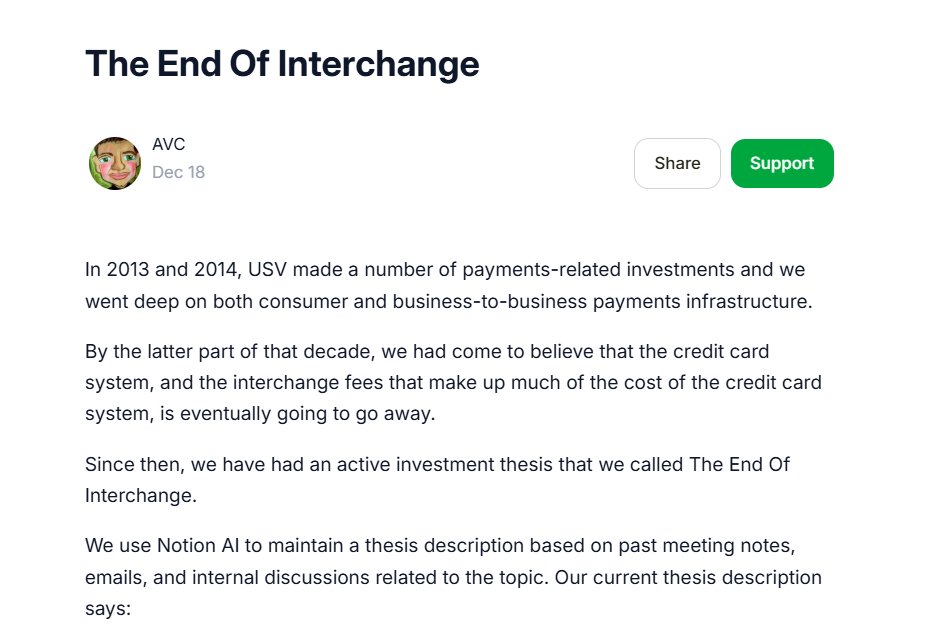
I enjoyed Fred Wilson's writeup this morning in AVC on The End of Interchange 👇
16
15
198
25,819
Chainlink East Africa Community retweeted

19 Dec 2025
All right my ambitious friends: if you're doing some year-end skill building this weekend, here are my 5 recommendations. 💪😎💻
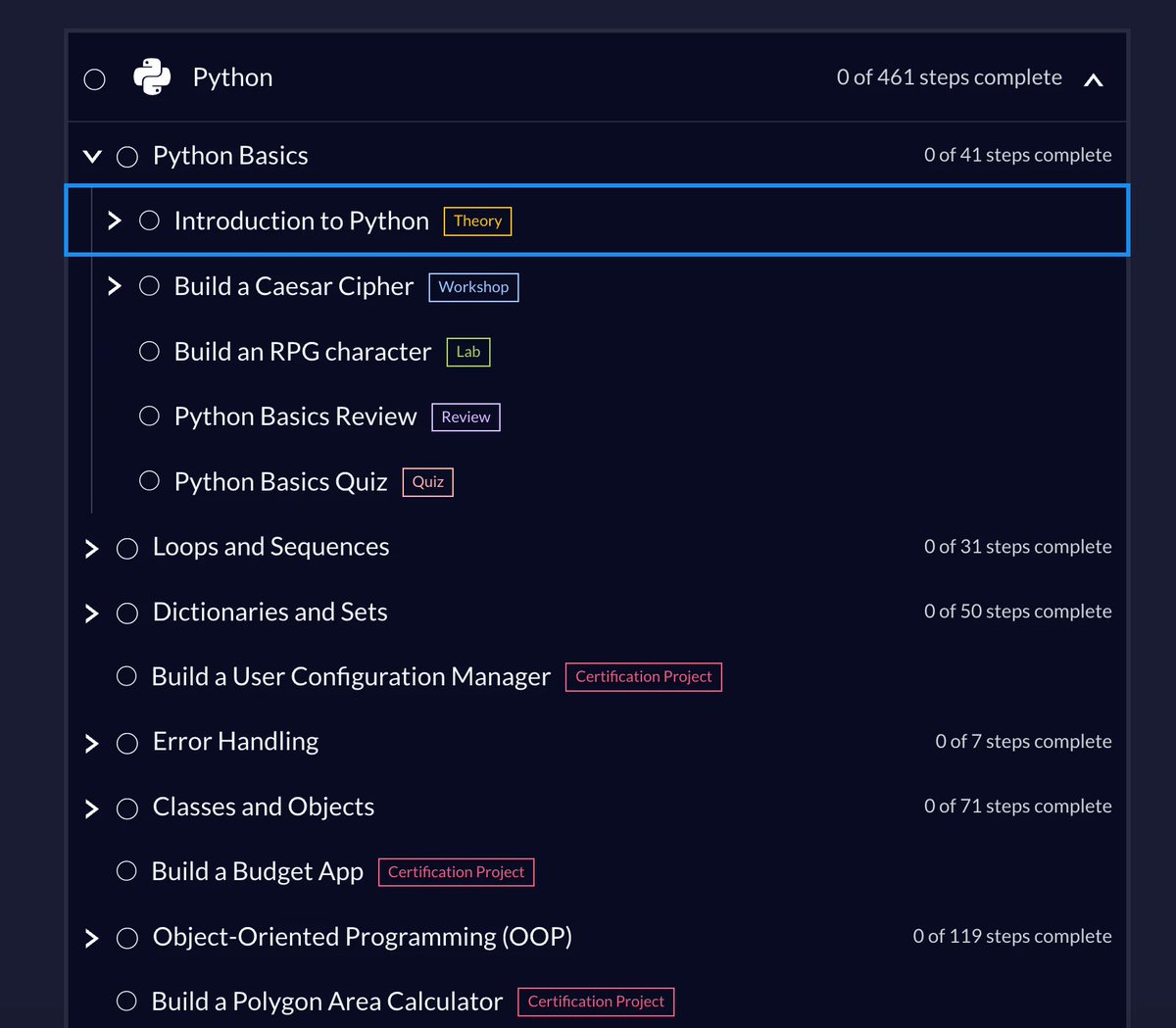
1. freeCodeCamp just launched our new Python certification curriculum. You can learn Python by building projects right in your browser. You'll learn a ton of fundamental programming concepts through our extensive theory sections. Then you'll apply that theory and get lots of reps with Python syntax by building projects. You can sit for the final exam and earn a certification that you can add to your LinkedIn or portfolio website. This is just one of the six certs in Version 10 of freeCodeCamp's Full Stack Developer Curriculum. This Python module is years in the making, and I think you're going to learn a lot from it. (comprehensive interactive curriculum): freecodecamp.org/news/freeco…
2. Learn game development fundamentals by building your own 2D pixel art tower defense game. You'll use the popular Unity game development framework. You can code along at home and learn how to set up 2D tilemap levels, animate pixel-art characters, build towers, and spawn enemy waves. Then you'll learn how to export your game to be playable on Windows, Android, and in a web browser. (10 hour YouTube course): freecodecamp.org/news/create…
3. On this week's podcast I interview Jason Lengstorf, a college dropout who taught himself programming while building websites for his emo band. 22 years later, he's worked as a developer at IBM, Netlify, and run his own dev consultancy. He shares his observation that many CEOs over-estimated the impact of AI coding tools and laid off too many developers. He says the developer job market has already rebounded a bit, but will never be the same. He shares tons of tips for how to land roles in the post-LLM labor market. (1 hour watch or listen in your favorite podcast app): freecodecamp.org/news/the-ai…
4. Learn modern web development techniques by building your own sales dashboard app using React, JavaScript, and Supabase. You'll start by architecting your database schema. Then you'll set up session management. Finally, you'll implement real-time data operations. By the end of the course, you'll have a dashboard app you can show off to your friends. (5 hour YouTube course): freecodecamp.org/news/supaba…
5. Now you can learn Spanish on freeCodeCamp. We just launched our Spanish curriculum today, which we've been working on all year. You'll learn proper Spanish pronunciation, greetings, introductions, numbers, and more. You'll also learn how to type Spanish characters like this one ñ on your phone and computer. We already have more than 200 steps live, with the rest of the CEFR A1 level going live in 2026. ¡Aprendamos! (fully interactive curriculum): freecodecamp.org/news/freeco…
It's the end of the year. The freeCodeCamp community is busy finalizing and launching all of the open source coursework we've been developing all year long. Look for a big Christmas announcement next week. In the meantime, I encourage you to get into the holiday spirit by becoming a supporter of our charity and our mission: freecodecamp.org/donate
Quote of the Week:
“The promise was that AI was going to replace developers. We’re seeing pretty clearly that’s not the case. Anything beyond a toy, anything that requires maintenance or significant feature development, you can’t vibe-code that. The strongest developers in the future are the ones who have the right skills to leverage AI effectively.” — Software Engineer Jason Lengstorf on this week's freeCodeCamp podcast
Until next week, happy coding.
15
155
1,197
63,606
Chainlink East Africa Community retweeted

9 Dec 2025
OpenBB
Workspace for investment research for everyone.
github.com/OpenBB-finance/Op…
1
5
38
11,785
Chainlink East Africa Community retweeted

14 Nov 2025
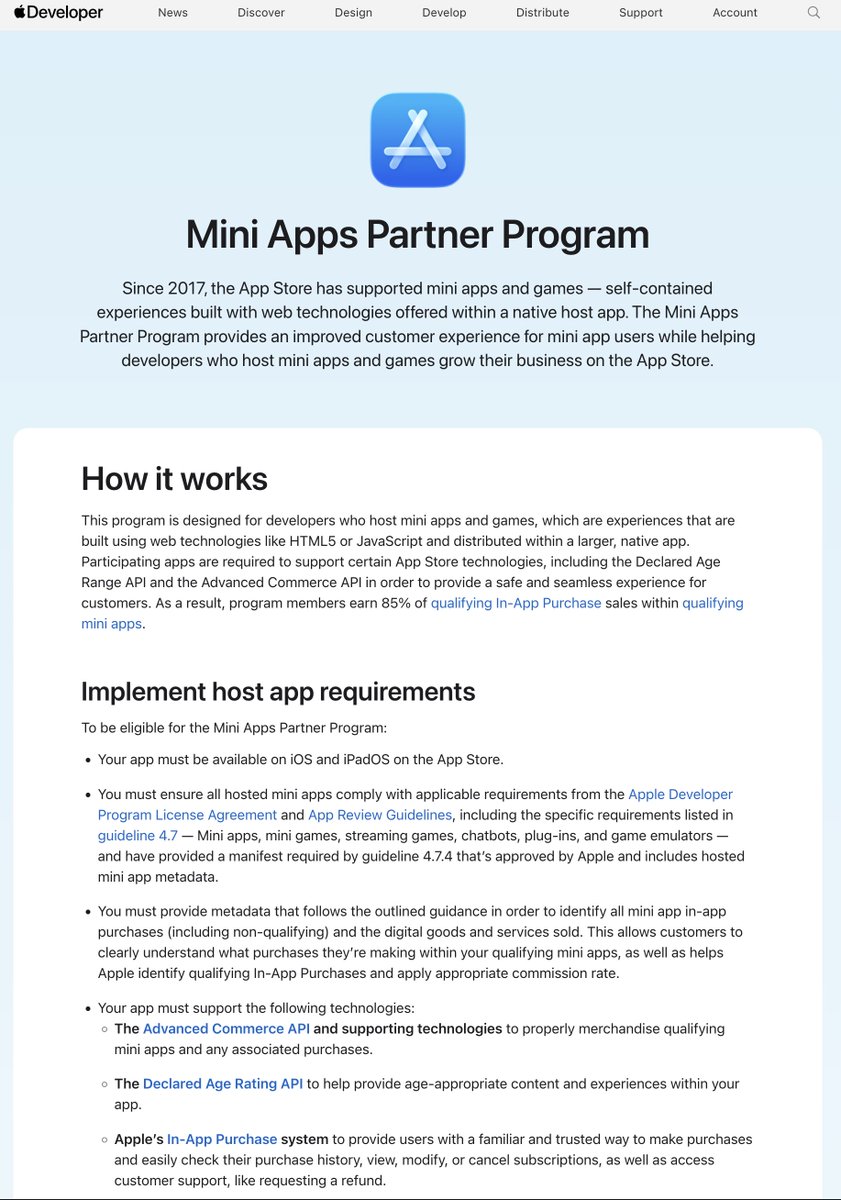
Apple JUST quietly announced something that’s a lot BIGGER than it looks: "the Mini Apps Partner Program"
Apple is admitting that the future of software is embedded, lightweight, vertical mini-apps distributed inside bigger app
For founders who want to make $$ building apps:
1. Apple just legitimized the “superapp” model for the West.
China has WeChat mini-programs. India has PhonePe Switch. The West has… nothing. Apple just opened the door. You can now run HTML/JS mini-apps inside a native host and earn 85% on qualifying purchases. That’s Apple-sanctioned platform piggybacking.
2. Distribution arbitrage becomes real again.
You don’t need to convince users to download your app. Just partner with a host app and drop in a mini-app. This is a cheat code for early traction. Think: travel apps hosting niche tools, fitness apps hosting mini workouts, marketplaces hosting micro-utilities.
3. Apple is creating a new economy layer: “embedded SaaS.”
Imagine: CRM mini-apps inside vertical tools. Math solver mini-apps inside education apps. Calendar mini-apps inside productivity apps. The TAM for tools that don’t need standalone installs just went vertical.
4. Developers get an 85% revenue share.
This is Apple basically saying: “We want this ecosystem to grow, and we’re willing to cut our take rate.” When Apple lowers its cut, I pay attention because they see a platform shift coming.
5. AI makes this 10× more important.
LLM-powered micro-apps (calculators, planners, agents, coaches, niche utilities) are tiny by design. They’re perfect mini-apps. Apple just created infrastructure for AI-native micro utilities to live inside bigger apps with built-in commerce.
6. Host apps become new “distribution landlords.”
If you own an app with traffic, you become a platform. You can host mini-apps, take a cut, and build a developer ecosystem around you.
It’s a new monetization model for existing apps with audiences.
7. This unlocks a wave of second-order opportunities.
- Agencies helping apps become mini-app hosts
- Mini-app dev shops
- “Shopify for mini-apps” toolkits
- Mini-app marketplaces
- Analytics for mini-app performance
- Discovery engines for mini-apps
- I'll be dropping mini app ideas on @ideabrowser and @startupideaspod
TLDR;
Apple just turned every high-traffic app into a potential superapp and every indie developer into a potential platform partner.
The App Store is becoming modular, composable, and layered. The next decade of consumer apps will look less like standalone products and more like ecosystems stitched together with mini-apps.
This is quietly one of the biggest distribution unlocks in years.
285
668
6,064
818,237
Chainlink East Africa Community retweeted

12 Nov 2025
Together with @NSE_PLC - East Africa's leading stock exchange - and @Hashgraph, we’re proud to launch the new NSE Innovation Lab - a pioneering initiative to transform, deepen, and expand Africa’s capital markets 🧵
40
209
1,476
1,114,707
Chainlink East Africa Community retweeted

14 Nov 2025
With Chainlink Confidential Compute, you get:
• Private smart contracts as a new industry primitive
• A privacy-preserving data economy
• Compliance adherence with selective data disclosure
• Confidential interoperability
The result: Institutional onchain finance at scale.
Gregory Neven, Research Engineer at Chainlink Labs, explains how ↓
46
125
721
123,433
Chainlink East Africa Community retweeted

7 Oct 2025
This is how Anthropic decides what to build next—and it's brilliant.
Instead of endless spec documents and roadmap debates, the Claude Code team has cracked the code on feature prioritization: prototype first, decide later.
Here's their process (shared by Catherine Wu, Product Lead at Anthropic):
Step 1: Idea → Prototype
Got a feature idea? Skip the spec. Build a working prototype using Claude Code instead.
Step 2: Internal Launch
Ship that prototype to all Anthropic engineers immediately. No polish required—just functionality.
Step 3: Watch & Listen
Track usage religiously. Collect feedback actively. Let real behavior, not opinions, guide decisions.
Step 4: Data-Driven Prioritization
- High usage positive feedback → roadmap priority
- Low engagement or complaints → back to iteration
This "prototype-first product shaping" flips traditional product development on its head. Instead of guessing what users want, they're measuring what users actually use.
The beauty? They're dogfooding their own tool to build their own tool. The feedback loop is immediate, honest, and impossible to ignore.
The takeaway: Your best product decisions come from real user behavior, not theoretical frameworks. Sometimes the fastest way to validate an idea isn't a survey or interview—it's a working prototype.
70
212
2,213
322,294


24 Sep 2025
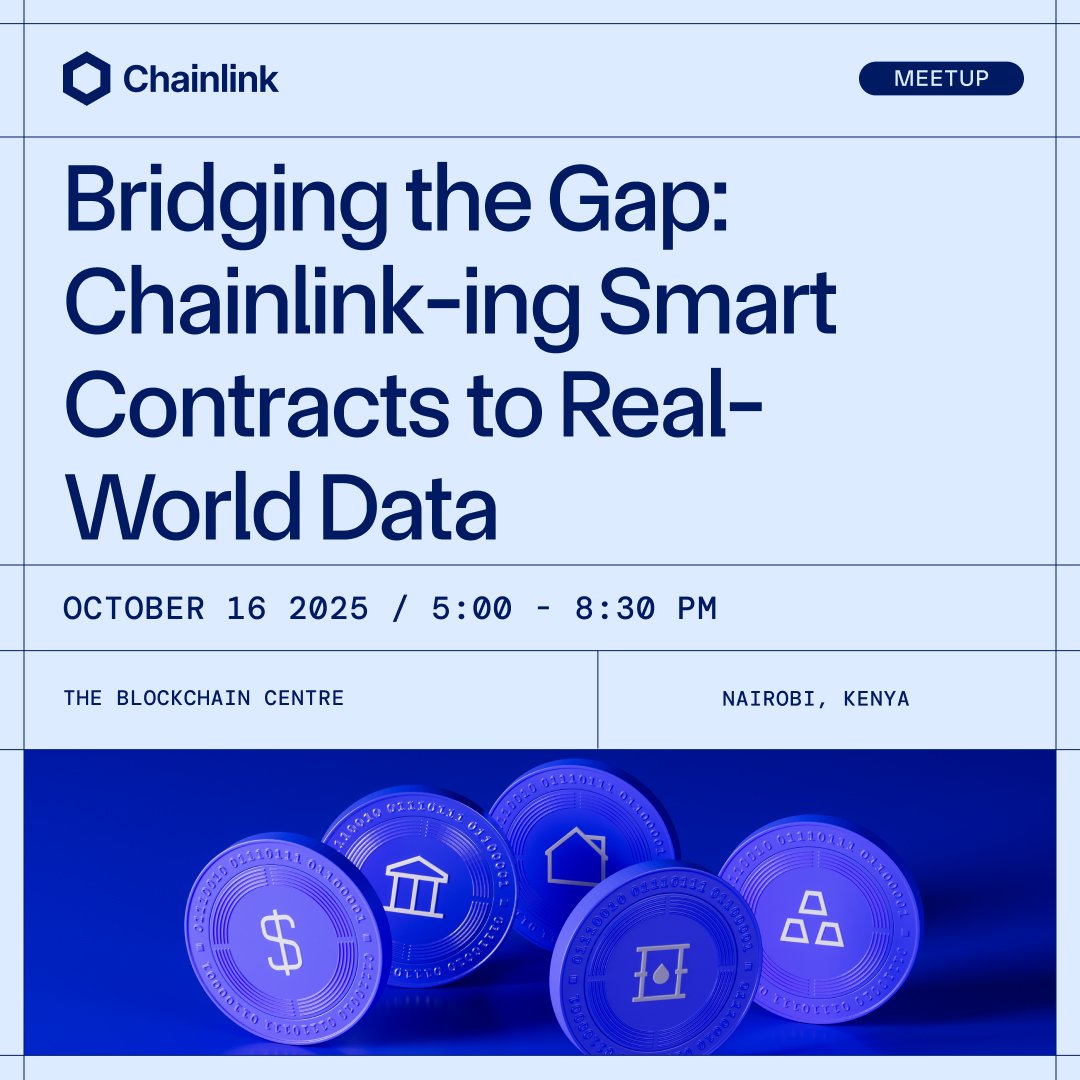
🚀 Bridging the Gap: Chainlink-ing Smart Contracts to Real World Data
Join us on Oct 16, 5-8:30PM @ The Blockchain Center Nairobi to explore how Chainlink is making blockchains smarter by connecting them to real-world data!
Register now 👇
luma.com/xtyq63ob?tk=sC044c
1
1
76
19 Sep 2025
We’ll be stirring up compliance at Enashipai Resort & Spa 29 Oct–1 Nov. With #FATF greylisting on the legal menu and fresh AML laws on the chopping board, every Kenyan professional should be in attendance.
Secure your ticket!!
#AML #ESG #RegisterNow 👉 events.amlcertification.com
1
54