
Joined April 2009
- Tweets 322
- Following 618
- Followers 13,826
- Likes 8,107
99 Photos and videos





Cooked On Chain Podcast retweeted

We're excited to lead the Series A round for @FourPillarsFP, an independent institutional-grade crypto research firm bridging Asia and the global markets.
panteracapital.com/investing…
39
13
82
65,827

3Jane has executed a $10M senior warehouse facility with LendSwift, a U.S. fintech consumer lender, to scale its loan portfolio
Funded by USD3/sUSD3 at a 15% coupon and secured by ~15,000 short-duration installment loans
Cryptonative capital now funds mainstream consumer credit
15
14
170
35,180
Cooked On Chain Podcast retweeted

Jun 1
USCC is now the @Bitwise Crypto Carry Fund.
Bitwise manages the strategy. Superstate powers the rails.
$260M in assets. 100 institutional investors. $120M used as onchain collateral.
Superstate FundOS is bringing asset management onchain.

Introducing the Bitwise Crypto Carry Fund (USCC)—a $259 million tokenized fund* built to provide yield through a market-neutral “crypto basis” strategy. Current annual yield: 4%. Powered by Superstate FundOS. Available to qualified purchasers.
More color on USCC:
- Runs a market-neutral basis-trade strategy: Holds crypto assets like BTC, ETH, SOL, and XRP and sells those assets’ futures contracts to generate yield from the difference
- Tokens accepted as collateral in major DeFi markets including Aave, Kamino, and Morpho—gives investors ability to borrow stablecoins against positions
- Originally created by @SuperstateInc in 2024. Today Bitwise takes over investment management of the fund; Superstate will continue to run its onchain infrastructure.
- Bitwise’s first-ever tokenized fund
USCC couples Superstate’s best-in-class infrastructure with Bitwise’s long track record in crypto asset management. Thrilled to partner with a true onchain pioneer to continue expanding access to the full range of opportunities in crypto.
Interested? Send us a message here or go to bitwiseinvestments.com/crypt…
*As of June 1, 2026
3
9
36
42,680

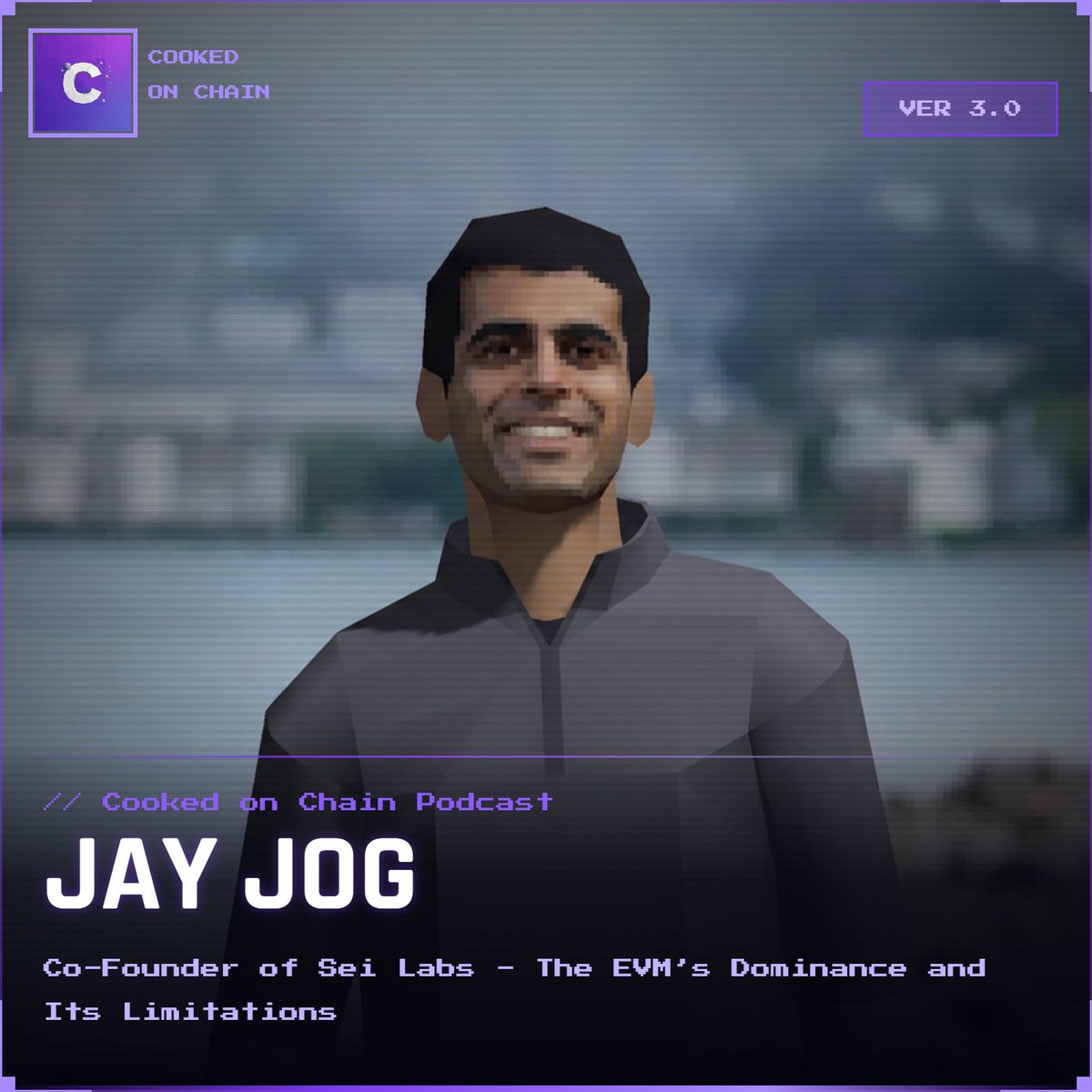
Cooking the EVM: Jay Jog, Co-Founder of Sei Labs
In this episode of Cooked on Chain, we sit down with Jay Jog, Co-Founder of Sei Labs, for a deep dive into why the Ethereum Virtual Machine keeps winning - and where its limits start to show.
Jay draws a sharp analogy between legacy cities and virtual machines: once a system becomes the default, it's incredibly hard to displace because distribution, tooling, and culture compound over time. He breaks down why user feedback loops matter more than narratives when you're trying to ship something people actually use.
We dig into the core technical thesis - why higher throughput is becoming non-negotiable, what parallelization changes (and what it doesn't), and how Sei thinks about performance without breaking developer ergonomics. Jay also reflects on memecoins - not as a joke, but as a mechanism for coordination and community movement that can bootstrap attention and identity in an ecosystem.
Before Sei, Jay spent time in traditional finance and on the crypto team at Robinhood Markets - work that shaped how he thinks about consumer products and shipping for real users.
Expect a thoughtful, founder-focused conversation on execution environments, scaling constraints, and Jay's Web3 journey.
open.spotify.com/episode/51S…
30
50
182
14,657
Cooked On Chain Podcast retweeted

May 27
I am pleased to announce that Stillcore Capital @stillcorecap has invested in IOTA @IOTA_SN9 (Bittensor $TAO Subnet 9).
16
41
319
22,521
Cooked On Chain Podcast retweeted

May 25
New episode of Oneshot out now!
@im_manderson & @pythianism discuss:
- HYPE as the cycle's attention asset?
- SpaceX's IPO
- The AI compute arms race
- And more!
Timestamps
00:00 Introduction
02:52 Hyperliquid as the New Attention Asset?
07:01 Institutional Flows & ETFs
13:44 SpaceX IPO Breakdown
15:49 NeoClouds & The Compute Bottleneck
19:12 Data Centers in Space (Really?)
23:03 Figma, Unlocks & IPO Mechanics
27:21 Google I/O & Token Price Compression
28:06 Anthropic & OpenAI ARR Projections
32:27 The SaaS Apocalypse & Intuit's Crater
36:03 Macro, Bonds & The CLARITY Act
10
7
30
7,393
Cooked On Chain Podcast retweeted

May 19
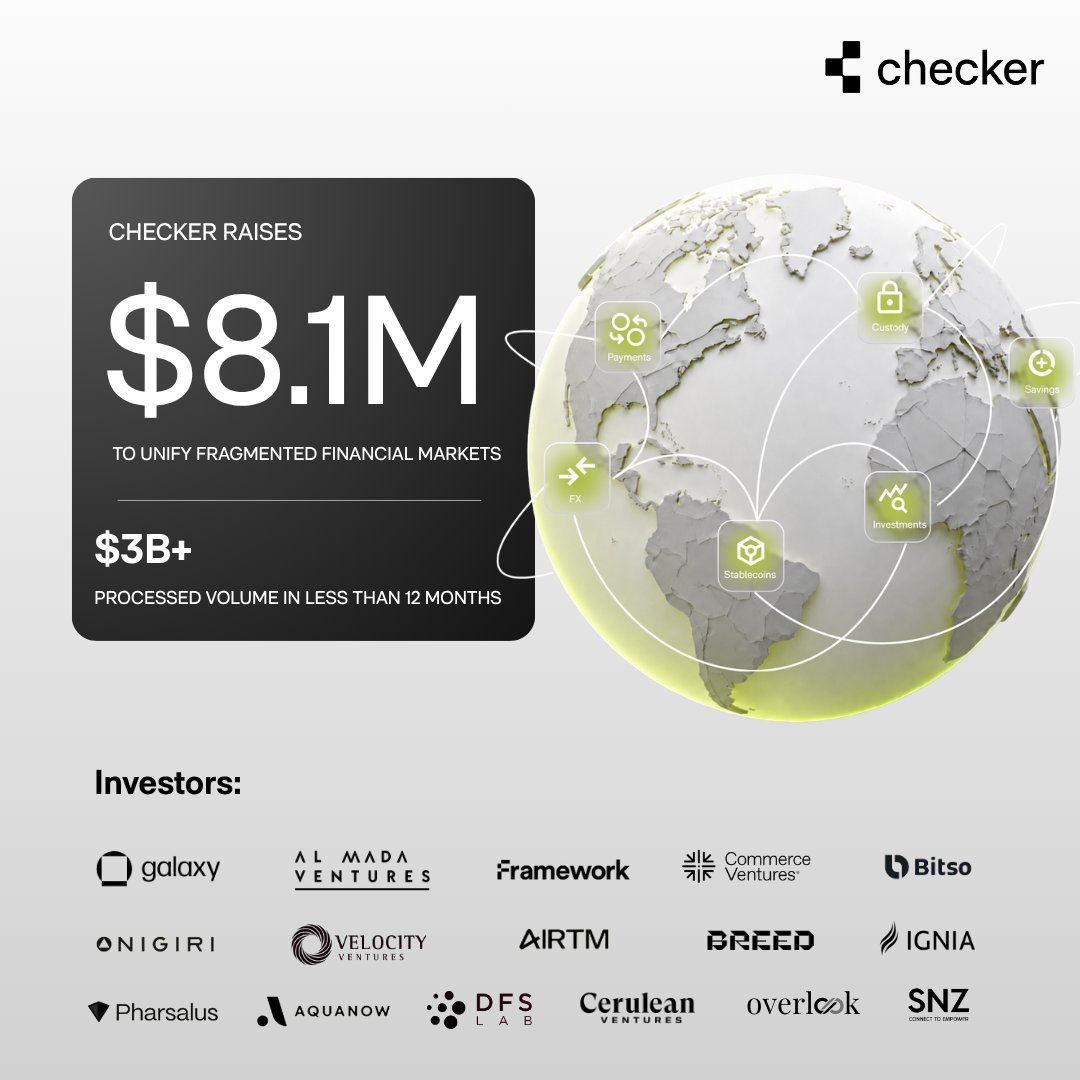
We’ve raised $8.1M to accelerate our mission of building a global network for modern financial institutions.
These rounds were led by @galaxyhq, @almadaventures, and @hiFramework Ventures, alongside leading crypto investors.
Read more on @TheBlockCo: theblock.co/post/401906/stab…
73
28
368
47,814
Cooked On Chain Podcast retweeted

Sky Protocol recorded its strongest quarter in history in Q1 2026.
In this clip from the inaugural Sky Frontier Foundation Quarterly Insights Call, @RuneKek breaks down what drove the results, and why institutional demand for USDS is accelerating.
Watch the full clip below ↓
2
6
27
5,927
Cooked On Chain Podcast retweeted

May 14
New weekly roundup out now! @JasonYanowitz @HadickM @santiagoroel
We discuss:
- The AI mania
- Anthropic SPVs
- Circle raises $222M
- The Clarity Act & more!
Timestamps:
05:44 AI Feels Like Crypto In 2017
27:12 Circle Raises $222M
46:15 The Clarity Act
59:03 Anthropic Cracks Down On SPV’s
01:10:30 Content of The Week
1
11
3,017
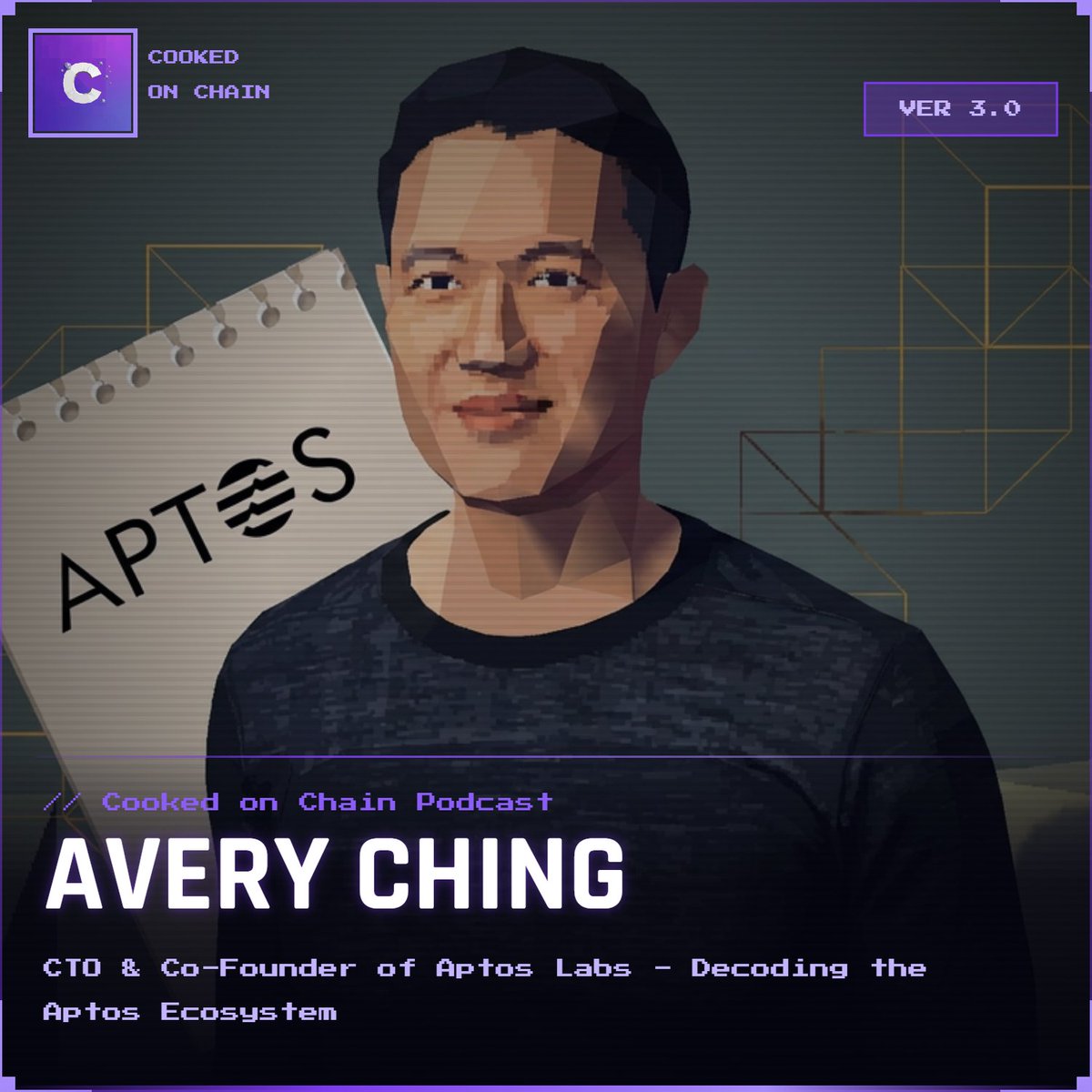
Cooking L1 Infrastructure: Avery Ching, CTO & Co-Founder of Aptos Labs
In this episode of Cooked on Chain, we sit down with Avery Ching, CTO and Co-Founder of Aptos Labs, for a deep dive into the Aptos ecosystem - and what it actually takes to build an L1 with mainstream-scale ambitions.
Avery shares his outlook on the intersection of crypto and AI, walks through Aptos' fundraising journey, and breaks down the design differences between Aptos and other L1s like Solana and Ethereum. We dig into where Aptos believes it can win - performance, developer experience, and the kinds of consumer-facing applications that demand speed without sacrificing safety.
We also get into use cases emerging on Aptos today, the realities of adopting the Move programming language - what's powerful, what's painful - and the roadmap Avery is most focused on as the ecosystem matures.
Before Aptos, Avery spent over a decade building distributed systems at massive scale and led the crypto platform team at Meta, spanning wallet infrastructure and L1 development including work on Diem.
Expect a technical founder-focused conversation on L1 tradeoffs, ecosystem building, and where crypto meets AI next.
open.spotify.com/episode/1yT…
31
38
194
15,466
3 Big Things That Happened in Crypto x AI This Week
Ethereum is quietly becoming the default home for the crypto and AI convergence. Three deep-dives with Dragonfly, Paradigm, and Nat Eliason this week made one thing clear: the agent thesis is less about creation and more about execution.
Here's the breakdown.
Agents Are Tools, Not Thinkers
The most consistent theme across all three conversations - agents are amplifiers, not idea generators. They pull from the center of their training data, which means genuinely novel business thinking is outside their reach. The edge still has to come from humans who've built real knowledge over time.
@nateliason's @FelixCraftAI is a good example of how this works in practice. The agent handles execution while the underlying intelligence - years of productivity and knowledge management expertise - comes from Nat himself. The marketplace it runs sells exactly what agents can't produce on their own.
Same logic applies to trading. An agent can execute a proven strategy faster and more consistently than any human. But it won't find the alpha. That part is still on you.
New toolkits dropped this week to support this kind of specialized agent work - @austingriffith's Ethereum dApp toolkit, @OpenZeppelin's smart contract integration, and @clanker_world's token deployment tools.
Agents and Crime Are a Natural Fit
@hosseeb made the point bluntly - agents are uniquely suited to operating in grey areas. No sleep, no jail time, persistent execution. Crypto is already the front line of this because it's permissionless by design.
The threat isn't abstract. As agents start interacting with more unknown counterparties, bad actors will impersonate tools, inject themselves into workflows, and probe for exploits continuously.
ERC-8004 is one of the more interesting responses to this - onchain identity and reputation scoring for agents, so you can verify who you're actually dealing with before any interaction happens. As agent activity scales up, this kind of infrastructure stops being optional.
AI Is Getting Genuinely Good at Security
@0xalpo's EVMBench paper with OpenAI put some real numbers on something the space has been speculating about for a while. Six months ago AI models caught around 12-13% of critical smart contract bugs. That number is now above 70% with the latest models. Top human auditors are expected to be outperformed within the next six to eight months.
The insight from @hosseeb that reframes this - crypto's notoriously bad UX, all text and code, no visual noise, is actually ideal training data for AI. The environment that frustrated users for years is the same environment that makes agents exceptionally capable.
@pashov, who has audited Aave, Pump, Ethena, and Uniswap, released an open-source Solidity auditing agent last week. If the defender side deploys these tools faster than attackers do, AI becomes one of the most important security layers the industry has ever had.
The trust ceiling is the real bottleneck for crypto growth right now. Better AI auditing is one of the most direct ways to raise it.
14
33
93
13,451
Cooked On Chain Podcast retweeted
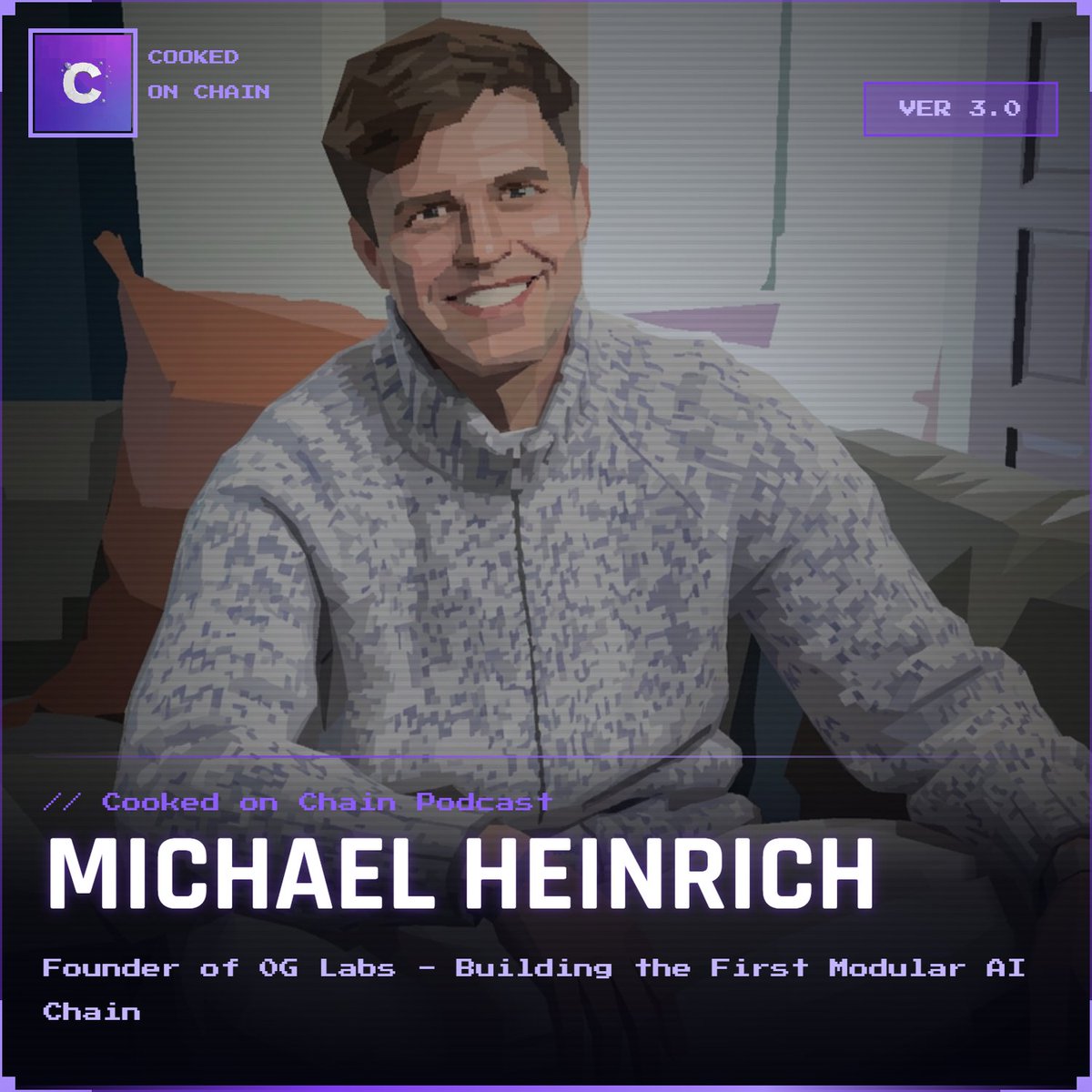
Cooking Modular AI: Michael Heinrich, Founder of 0G Labs.
In this episode of Cooked on Chain, we sit down with Michael Heinrich, Founder of 0G Labs, to explore a bold thesis - the future of AI infrastructure may need its own modular crypto-native stack.
Michael shares his unconventional journey from high school boredom to building 0G Labs, and how practices like spiritual reading and meditation reshaped his leadership style as a founder. We get into the less-discussed side of company building - clarity, emotional regulation, and staying consistent when the market and your own head are both volatile.
On the product side we dive into what the first modular AI chain actually means in practice, why decentralized AI infrastructure is emerging as a real category, and why Michael believes a community-owned approach is essential for the future of AI and data. 0G Labs is building a modular Web3 platform aimed at unlocking data infrastructure and storage for advanced AI workloads - connecting decentralized networks with tooling designed for machine-learning-native applications.
Expect a wide-ranging conversation on decentralized AI, community ownership, founder psychology, and what it takes to build at the frontier where crypto meets compute.
open.spotify.com/episode/4lt…
31
47
174
15,094
Cooked On Chain Podcast retweeted
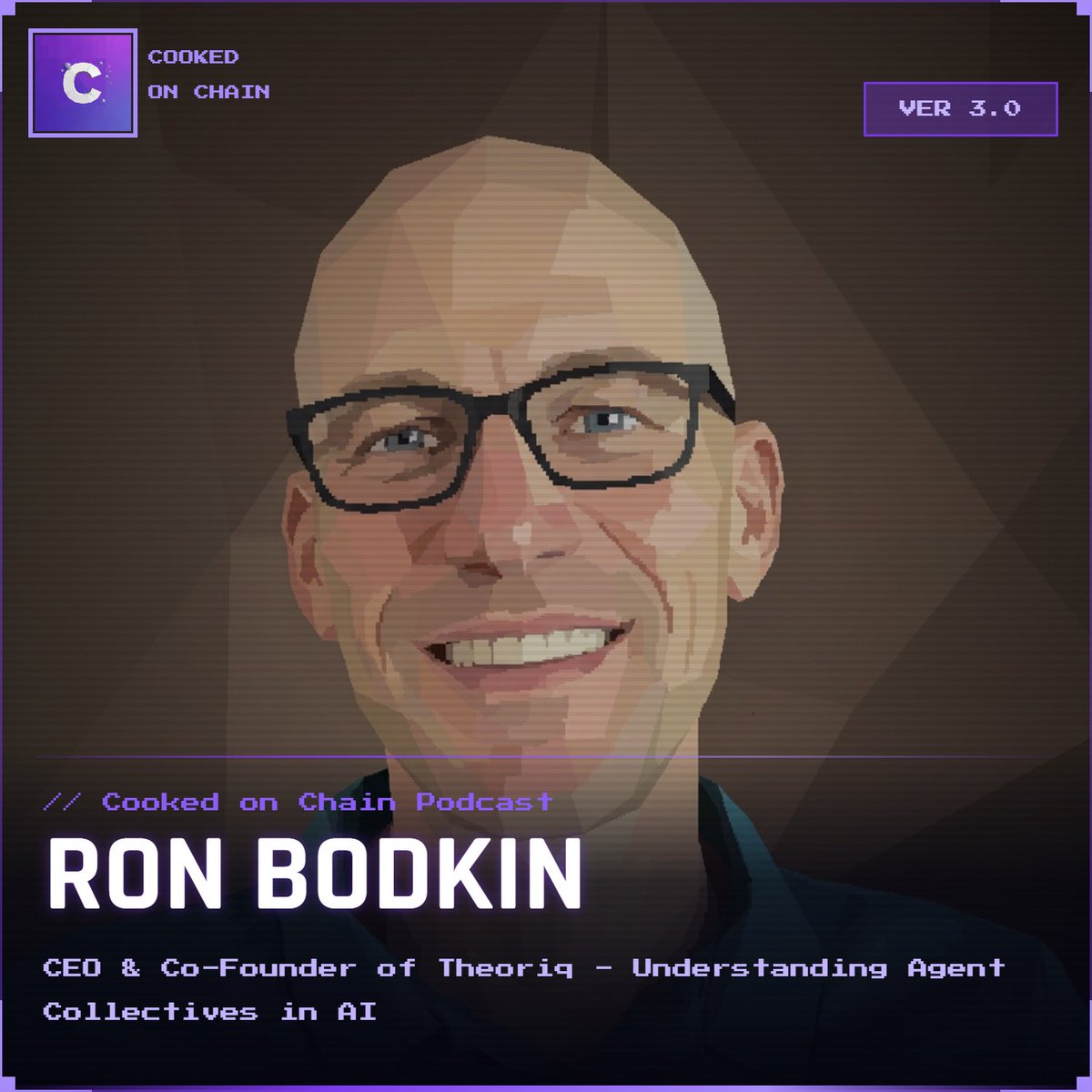
Cooking Agent Collectives: Ron Bodkin, CEO & Co-Founder of Theoriq.
In this episode of Cooked on Chain, we sit down with Ron Bodkin, CEO and Co-Founder of Theoriq, to unpack what agent collectives really are - and why the next wave of AI may be coordinated by crypto-native incentives.
Ron explores the intersection of AI and Web3 through the lenses of responsibility, governance, and long-term alignment. He shares his journey from Google to founding Theoriq and ChainML, and reflects on what actually changes when you move from corporate AI leadership to startup execution.
The conversation dives into agent collectives, why standardization in AI is still a mess, and what metrics might actually matter for decentralized AI success. Ron introduces Proof of Contribution and Proof of Collaboration as trust-building mechanisms for agents and teams - and explains Theoriq's core pillars: interoperability, composability, and decentralized innovation.
We also get into token economics, governance design, and how company culture shapes what a protocol becomes over time. Ron closes with lessons on leadership and a forward-looking view of where decentralized AI could go next.
open.spotify.com/episode/3tb…
26
55
168
14,030
Cooked On Chain Podcast retweeted

Apr 27
“You’re not building the systems for the 363 days when everything is smooth.
You're building the system for the 2 days when everything goes crazy.”
Chainlink CCIP: Engineered for the extremes.
36
134
1,062
46,704
Cooked On Chain Podcast retweeted

Apr 22
my full conversation today with @cobie
01:04 offering to work at Coinbase for free
06:05 the K-shape crypto thesis
10:33 thoughts on Saylor
14:39 why UpOnly hasn't come back
22:37 the last 10 years of Crypto
44:52 trillion dollar IPOs
57:02 Cobie's legendary buy wall
1:02:57 top 5 Crypto traders of all time
1:21:20 reasons to be optimistic on Crypto
218
265
3,163
892,298
Cooked On Chain Podcast retweeted

It all started on May 16, 2025
After 347 days of relentless building, almost here
Pharos Pacific Ocean Mainnet will launch at 6AM EDT on April 28, 2026. Airdrop claims start at 7AM EDT on April 28, 2026 ⚓
THE WAIT IS OVER 🌊
386
115
535
91,513
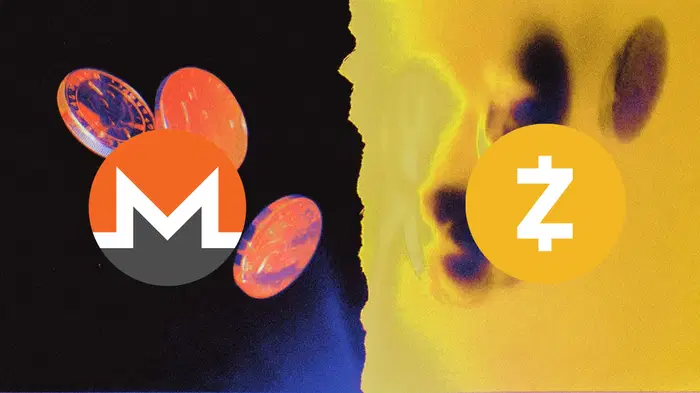
The privacy trade has been one of the few bright spots in a sluggish market.
ZEC had a massive run - hitting a nine-year high in November, 28x above its yearly low - before collapsing when the Zcash core dev team announced they were leaving over a governance dispute. XMR has taken command of the privacy narrative since.
Ahead of our episode with Zooko next week, here's how Zcash and Monero actually differ. 👇
Origin Stories
The fundamental difference starts with how they were born. Monero came from forums, Zcash came from universities.
Monero launched in 2014 as Bitmonero by an anonymous user, based on the CryptoNote protocol. The community famously took the project over early on. No CEO, no office, development funded entirely through voluntary donations. Zcash traces back to 2013 academic research at Johns Hopkins, eventually launched in 2016 by Zooko Wilcox and the Electric Coin Company. Unlike Monero, Zcash has worked alongside regulators rather than against them.
These origins shaped very different reputations. Monero's mandatory privacy made it the preferred choice for darknet markets - nearly half of new darknet marketplaces in 2024 used XMR exclusively according to TRM Labs. Zcash is rarely cited in ransomware or darknet reports.
That reputation cost Monero exchange listings. Binance dropped XMR in February 2024, OKX in January 2024, Kraken removed it for European users in October 2024. Zcash avoided major delistings - Binance actually removed its Monitoring Tag in July 2025 and OKX relisted it in November 2025.
How the Privacy Actually Works
Think of any transaction as a message. With Monero, your message gets mixed into a crowd - you speak at the same time as 15 others so an observer can't prove it was you. With Zcash's shielded transactions, your message goes into a locked box only the recipient can open.
Monero uses three mechanisms together - Ring Signatures hide the sender by mixing your transaction with around 16 decoys, RingCT hides the amount by encrypting values while proving no new coins were created, and Stealth Addresses hide the receiver by generating a one-time address per transaction.
Zcash uses zk-SNARKs - transactions are proven valid without revealing sender, receiver, or amount. When you send a shielded transaction Zcash generates a cryptographic proof confirming you have the right to spend the coins without anyone inspecting the details.
Mandatory vs Optional Privacy
With Monero privacy is mandatory. You cannot send a transparent transaction. This creates herd immunity - all transactions look identical. The argument is simple: optional privacy isn't real privacy. If only suspicious people use the private option they become targets.
Zcash offers privacy by choice. ZEC can be used transparently or moved to a shielded address. The shielded pool is growing though - around 30% of ZEC supply now sits in shielded addresses, up from 8.7% a year ago.
What's Coming
Both protocols have major upgrades in development.
Monero is working on FCMP which would replace ring signatures entirely. Instead of mixing with around 16 decoys, transactions would mix with the entire blockchain history - expanding the anonymity set from a crowd of 16 to a crowd of everyone.
Zcash has Tachyon in development for major scaling improvements, plus Crosslink for a hybrid PoW/PoS transition. One technical note worth flagging - Zcash's privacy layer is quantum-resistant while Monero's ring signatures are not. Monero developers plan to address this through future upgrades.
The Bottom Line
Monero offers stronger privacy today but faces steeper adoption headwinds. Zcash offers a path to broader adoption but requires users to actively choose privacy - and most don't.
Both have returned to relevance after dormant years. The question now is which architecture can outlast the other.
Episode with Zooko drops next week. 👀
13
31
106
9,336
Cooked On Chain Podcast retweeted
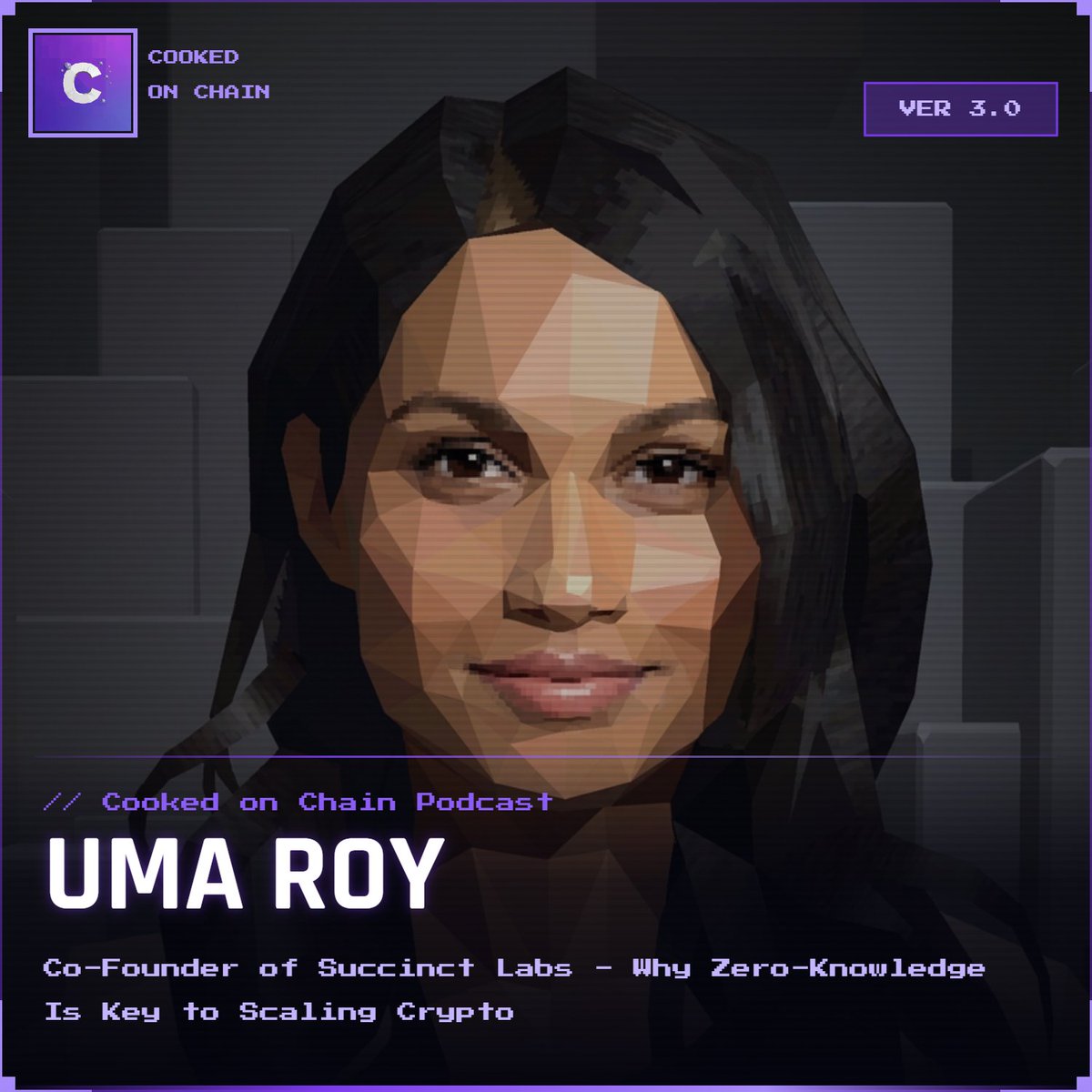
Cooking Zero-Knowledge: Uma Roy, Co-Founder of Succinct Labs.
In this episode of Cooked on Chain, we sit down with Uma Roy, Co-Founder of Succinct Labs, to unpack why zero-knowledge proofs are becoming one of the most important primitives in crypto - for both scalability and privacy.
Uma shares her path into Web3 and the motivations behind building Succinct Labs, including how the team formed and grew in San Francisco with a strong preference for in-person collaboration. We get into what ZK actually enables beyond faster chains, the practical tradeoffs teams face when adopting proof systems, and why developer tooling is the real unlock for mainstream ZK adoption.
Uma also goes deep on SP1 - a ZK virtual machine - covering the hardest engineering challenges they hit while building it and the solutions they developed to make ZK systems more usable, reliable, and production-ready.
Expect a technical but accessible conversation on building ZK infrastructure, founder lessons, and where the ecosystem is headed next.
open.spotify.com/episode/4bO…
21
33
173
12,974