
Ops @zonkeafrica || absquatulatist || Music Hustler || PM, @playitloudnow
Joined August 2010
- Tweets 126,611
- Following 2,784
- Followers 4,107
- Likes 3,542
3,770 Photos and videos


Mwami Kiyimba retweeted

How many more times would you like to hear it?
They started telling us in 2005.
They kept emphasizing it and now they have the leadership of the Legislature paying tribute to the CDF/1st son, and the CJ swearing in at the president’s home.
What constitution exists anymore?
14h

Let them just tell us we’re no longer using the constitution and we move on.
1
15
42
1,323

1. A test of the public’s patience levels
2. A message to your rivals
3. A distraction
18

Mwami Kiyimba retweeted

Are you still wondering and asking yourself why Kyagulanyi ran away??
15
43
467
12,432
Mwami Kiyimba retweeted

19h
That’s why half the time I move like a foot soldier. This government doesn’t deserve intelligent and rational debate. Lukwago has literally used the courts to fight for his client like we are told and he is in a basement abducted. Once in a while, Nyoko is a better reply.
5
95
495
9,521
Mwami Kiyimba retweeted

Ibrahim Ssemujju Nganda has responded to Muhoozi Kainerugaba’s threats on his life.
📷 Baker Batte.
32
321
2,240
84,459
Mwami Kiyimba retweeted

We’ll not reshare the torture images of @EriasLukwago, as to do so would be to further the interest of the folks carrying out the unlawful actions and to perpetuate his undignified and humiliating treatment.
We’ll say, though, that such actions are a daylight manifestation of the state of our country, captive to the shallow interest of a small clique to whom the law is a suggestion, rather than a command.
You humiliate the man, torture him, but you’ll never match the power of his ideas; the high moral grounds on which he stands will be a summit you will only glance from afar.
We’d demand that he be set free or taken to court through a lawful process if he has committed any crime, but i doubt you’ll heed to such calls. It is out of your grapes. So we will only ask that when you have satisfied your cheap desires, leave him alive to return to his family, cause, and country. He’ll meet and vanquish you in the arena of ideas, law, and morality.
50
449
1,358
51,593

Every generation thinks it is the standard!
Intergenerational Literacy is indeed a must.

Someone inform the children that we were able to contact friends before social media existed by doing things like… texting.
2
324
Mwami Kiyimba retweeted

The man mocks our optimism for a better Uganda every day. Doing such a lawless act is one thing but coming online to boost is a whole new level of wrong.
25
220
722
19,922
Mwami Kiyimba retweeted

that’s the question isn’t it. what WILL she do? there are no youth clubs for her to attend. food, cinema tickets, any sort of third space activity is all too expensive. their parents are underpaid, saturday jobs don’t exist any more, children have truly been abandoned by the govt

BBC: “What was your screen time?”
Student: “Nine hours.”
BBC: “You’re gong to have a lot more time to fill. What will you do?”
Student: “Stare at a wall.”
480
14,103
134,062
2,910,680
Mwami Kiyimba retweeted

Jun 7
June 1981.
Parliament, Nakasero Kampala.
Milton Obote stood before Parliament and told the packed chamber:
"Uganda is economically sick, and the economy needs major surgery."
He had reclaimed the presidency seven months earlier.
Now he was taking a scalpel to the shilling.
The patient was on the table.
But beyond the chamber walls, a different sickness was already spreading.
The Uganda Obote addressed was still reeling from a decade of catastrophic disintegration.
Eighteen months earlier, the country had whipsawed through Amin, Lule, and Binaisa in a frantic scramble for order.
Inflation was rampant, the black market had devoured legitimate commerce, and the nation's infrastructure lay in ruins.
He offered no gentle reassurance.
The patient was on the table, and the scalpel was in his hand.
This would not be gradual adjustment but radical intervention, a gamble that could save the patient or kill it outright.
The audience was a volatile mixture of democratic formality and military reality.
Speaker Francis Butagira, a Harvard‑trained lawyer, presided with constitutional calm.
Vice President Paulo Muwanga, the quiet architect of Obote's disputed electoral victory, sat nearby.
In uniform, the Okello Generals, Tito Okello and Bazilio Olara‑Okello, watched with the silent weight of men whose loyalty was already fraying.
Obote began with promises: salt projects, cement factories, textile mills.
But the chamber sensed he was building toward something larger.
Then came the first tremor.
The official exchange rate of 7.08 shillings to the dollar would no longer be paid.
He paused, and the chamber burst into nervous laughter, men who understood the old system was finished.
He let the mirth settle, then continued:
The shilling would find its own level.
The laughter died.
A profound silence descended.
The currency would be set free, dictated solely by supply and demand, a radical leap into the orthodoxy demanded by the IMF and World Bank.
Obote observed the chaos, removed his spectacles, and smiled.
"BEER," he declared, naming an exception, and the tension shattered into genuine hilarity.
Then his face grew solemn.
"Just like a human body," he said, "Uganda needed surgery."
But the surgeon had made his incision on a patient already bleeding from wounds no scalpel could reach.
Even as he spoke of floating currencies and IMF conditionalities, the Luwero insurgency was spreading.
The checkpoints on Jinja Road were multiplying.
The "bandit" he had dismissed from his State House garden was consolidating an army.
The very forces seated before him, the UNLA generals in their uniforms, were fracturing along ethnic lines.
The economic reforms would eventually lay a foundation for recovery, but not under Obote.
Within four years, he would be overthrown again, and the patient would be wheeled back into the operating theatre by a new team.
On that June afternoon, however, in the high‑ceilinged chamber, Obote still believed he could heal Uganda with a speech.
He put on his spectacles, smiled at the MPs, and returned to his notes.
The applause, when it came, was polite but uncertain.
The surgery had been announced.
No one yet knew if the patient would survive the anaesthetic, or if the bleeding from the other wound, the one he refused to name, would prove fatal first.
What does it mean to operate on an economy while a war is already consuming the body?
Obote's address to Parliament was a masterclass in economic rhetoric, delivered by a man who had waited a decade to hold the scalpel again.
But the checkpoints told a different story, and the "bandits" he dismissed were already writing the next chapter.
#ughistory @NRMOnline @KagutaMuseveni @UPCSecretariat @AkenaJimmyMP @Parliament_Ug @pwatchug
7
7
3,674
Mwami Kiyimba retweeted

Jun 15
It’s always darkest before the dawn.
This madness shall end!
204
643
4,602
70,130
Mwami Kiyimba retweeted

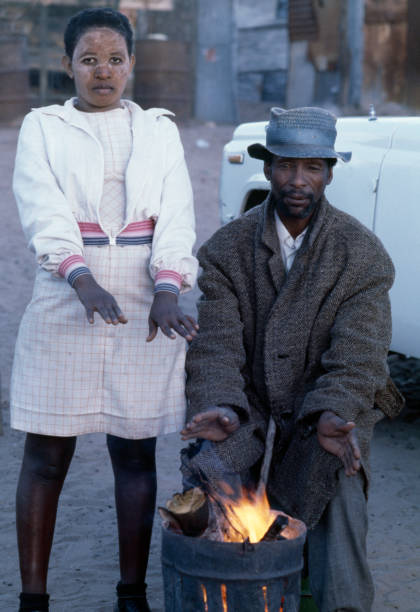
A man and his daughter warming themselves at an open fire at Crossroads squatters' camp near Cape Town, South Africa, circa November 1978. Credit: Peter Jordan
4
99
510
7,333
Mwami Kiyimba retweeted

You don't treat a wound by cutting off your leg

What if he decides to do away with elections and establish Military Rule? Which I personally support to tackle corruption.
1
3
2
642

Mwami Kiyimba retweeted

Why don't Advocates temporarily boycott Court? It's high time we learnt where everyone stands on these matters!
And only a fool will think that what's happened to Erias Lukwago is too far away to happen to him in the middle of executing their own professional duties!
35
192
946
20,393
Mwami Kiyimba retweeted

Jun 14
The man with the family will obviously accept more b.s he has a family depending on him
Jun 14

I’m not going to lie, if I’m a business owner and I have two male candidates with similar experience and resumes, I’m hiring the 33 year old with a wife and kids over the 33 year old bachelor.
Most smart business owners will agree with me.
5
120
789
40,267
Mwami Kiyimba retweeted

20h
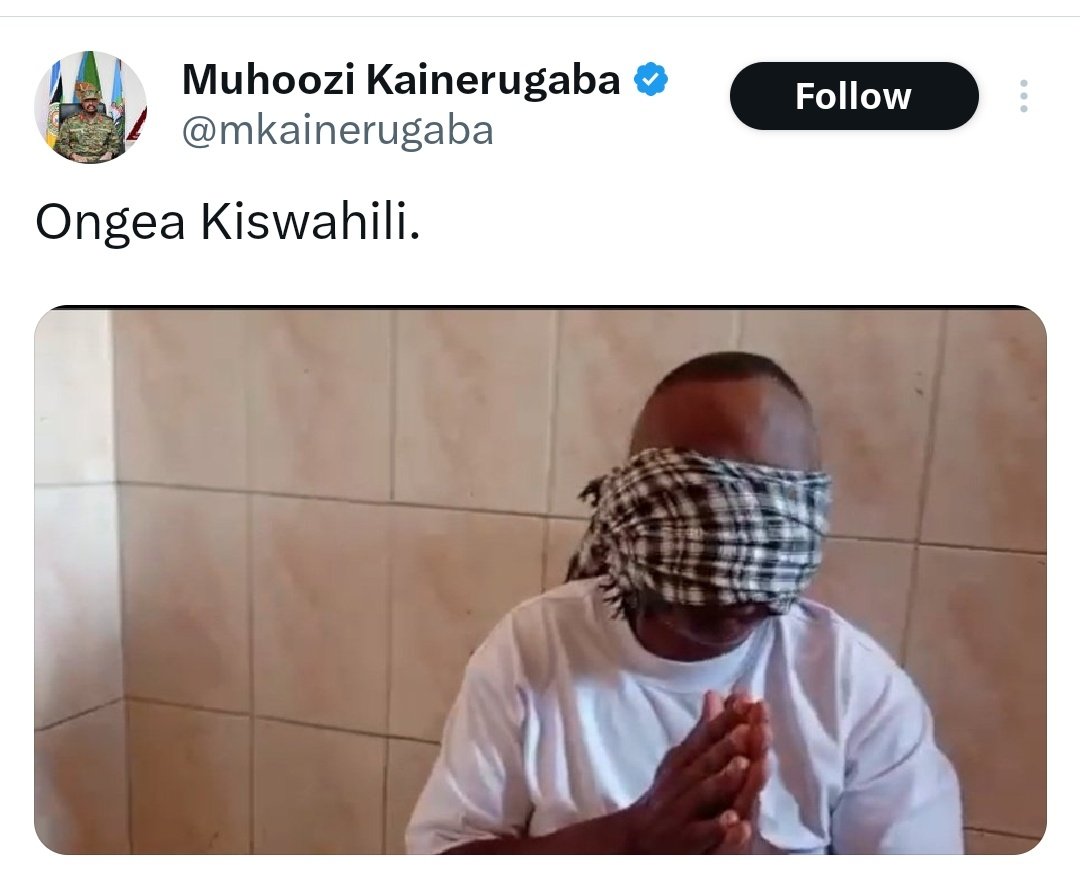
Uganda in 2026! Museveni's son just released a picture of his captive, Advocate Erias Lukwago. Blind folded! His crime? Attempting to serve him court summons! If he can do this to an outgoing Lord Mayor of Uganda's capital city, former MP, and senior lawyer, imagine what he does to our ordinary supporters who are abducted day in, day out. And yet Museveni still has the audacity to say anything about Idi Amin! The world must not look on. There will be accountability for these crimes against humanity. It's only a matter of time.
781
1,847
9,525
236,403
Mwami Kiyimba retweeted

This Sin-O-Phobia thing is going to escalate into a major conflict between locals who support immigrants, such as these taxi drivers, and the pedophiliac anti-immigrant xenophobes. It's a ticking time bomb waiting to explode.
Jun 15

“You’re killing our business” Taxi drivers confront the Xenophobic South Africans March to March folks
1
1
331
Mwami Kiyimba retweeted

Jun 15
During his final days, ensconced in his bunker as the Red Army closed in on central Berlin, a delirious and delusional Hitler ordered non-existent German military divisions to attack Moscow from three directions and seize the Kremlin. It went something like this:
Jun 15

Refuel energy markets. Rest and rearm the military. Develop a plan to support Iranians to cripple the regime. Enforce sanctions with relentless pressure. Don’t get played at the negotiating table. Test Tehran early. Give little. Demand results. Walk away fast. Hit harder.
12
258
1,536
57,002