
We build business applications. NYC and Barcelona. Since 2002.
Joined June 2009
- Tweets 2,800
- Following 169
- Followers 486
- Likes 1,471
824 Photos and videos
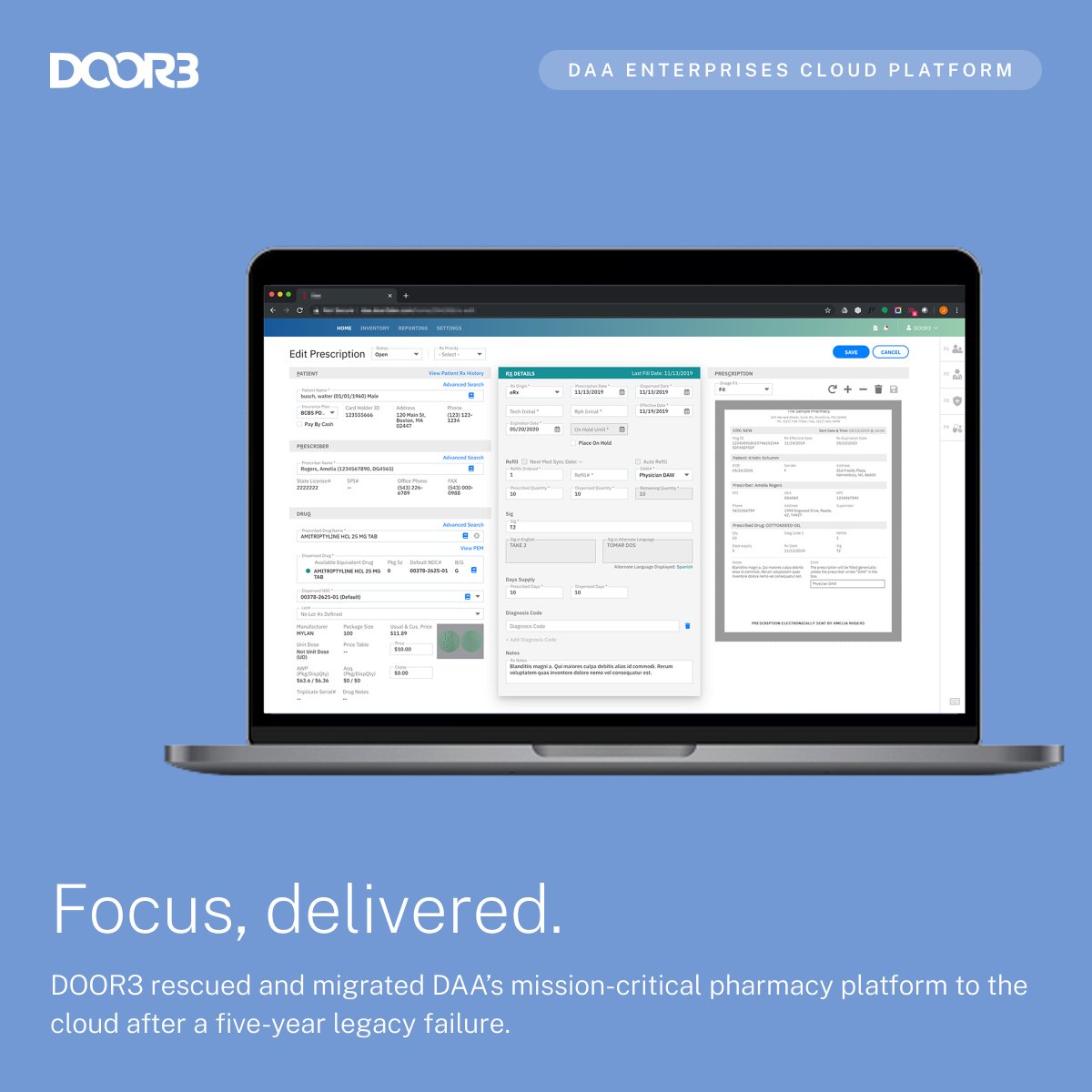





Another vendor had already tried to modernize this software. After 5 years, it failed.
DAA Enterprises — a pharmacy software company serving independent pharmacies across the U.S. since 1975 — came to DOOR3 carrying that weight. Their on-premise platform was mission-critical: drug interaction checks, insurance claims, prescription tracking. But decades of ad hoc updates had left the codebase too bloated to migrate to the cloud.
They needed a partner who wouldn't just build — but help them make the right decisions first.
What DOOR3 did:
- Ran a multi-day Envision workshop, working through 30 years of features to identify what actually mattered for the MVP
- Migrated the platform to a modern, scalable cloud architecture — eliminating the complexity that had sunk the previous attempt
- Redesigned the interface so pharmacists could multitask: filling prescriptions while checking drug interactions and patient data simultaneously
- Built in electronic insurance claims, regulatory compliance workflows, and a foundation for continuous updates
The result: a successful cloud launch — and an ongoing partnership that keeps shipping, including patient text notifications in multiple languages.
In the words of Ismail Fenni, Director of Operations at DAA:
"DOOR3 was instrumental in bringing our idea to market. They helped identify what was critical so we could focus on that and finish it in the shortest possible time at the lowest possible cost."
Full case study: hubs.ly/Q04l2LfB0
See what our clients consistently say on Clutch: hubs.ly/Q04l1mJ40
#HealthcareTech #CloudMigration #PharmacySoftware #CustomSoftware #ProjectRescue #SoftwareDevelopment #CaseStudy #UXDesign
4
Why the Path Decision Matters More Than the Capability Decision in Insurance AI.
Building, buying or partnering in AI is not just a technology decision – it’s about speed to production, talent, data ownership and risk.
The right path depends on where you are as most carriers are at different levels of AI maturity:
- If you have unique data, talent and a true differentiating capability, then build.
- Buy for mature, well-defined functions where vendor offerings meet your needs.
- Partner to leverage specialized AI with InsurTechs, balancing speed and customization.
What’s the biggest risk? Going down the wrong path and wasting years, or creating dependencies that impede your competitive advantage.
DOOR3’s AI Pathfinder helps insurers make this decision through data readiness, governance and sequencing – so you’re building the right foundation for real AI impact.
Read more here: hubs.ly/Q04kL-HY0
#InsuranceAI #InsurTech #AIstrategy #BuildVsBuy #DigitalTransformation
7
The standard actuarial table is no longer enough to protect your margins.
Early AI leaders in the P&C sector are generating roughly 6x the total shareholder returns of their AI-laggard peers. That gap isn't narrowing—it is widening by the quarter because traditional actuarial models price to the mean of a risk class, forcing profitable accounts to subsidize unprofitable ones.
THE PRICE OF AN AVERAGE RISK:
INDIVIDUAL LEVEL RISK: Two commercial properties in the same ZIP code shouldn't get the same base rate. Modern predictive models process up to 1,500 variables—incorporating satellite imagery and geospatial hazard data—to price individual risk in real time.
DYNAMIC PREDICTION: Actuarial pricing is locked at inception. AI-driven predictive modeling continuously monitors telematics and IoT signals, allowing carriers to adjust to behavioral changes before a loss occurs.
EARLY FRAUD SENSING: Traditional fraud detection happens at the claims stage. Predictive AI flags image manipulation and application inconsistencies at the point of underwriting, stopping soft fraud before the policy is bound.
The carriers winning the market aren't replacing their actuaries—they are giving them richer data and a faster feedback loop to price the actual risk instead of a historical segment.
👉Read our full guide to moving beyond traditional actuarial tables: hubs.ly/Q04kwnGd0
#InsuranceInnovation #PandCInsurance #PredictiveModeling #InsurTech #DataAnalytics #RiskManagement #ActuarialScience
14
World-class climate risk data. A frontend that couldn't keep up.
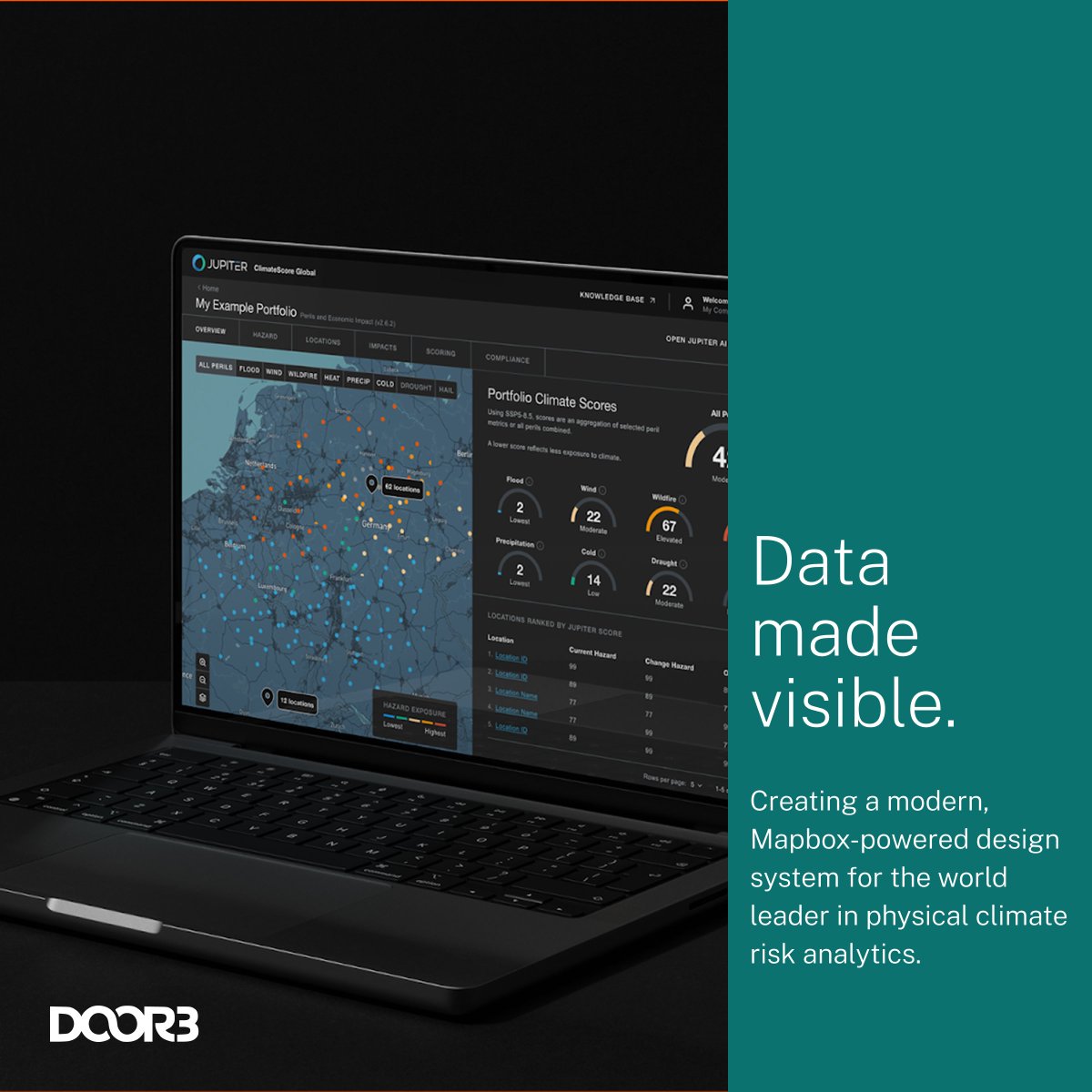
Jupiter Intelligence — the gold standard in physical climate risk analytics — needed their flagship product, ClimateScore Global, to match the quality of the data powering it.
The problem: performance bottlenecks, inconsistent data visualizations, and legacy UI patterns that were slowing down risk analysts and limiting scalability.
What DOOR3 did:
- Migrated to React.js MUI with React Query for faster data caching
- Built a design system focused on color theory and accessibility for complex datasets
- Integrated Mapbox for clearer geospatial risk insights
- Delivered a reusable component library for rapid future deployments
The result: a modern, high-performance platform that puts critical insights front and center — and positions Jupiter to keep leading the climate risk analytics space.
"We were impressed with their strong communication and tight engagement."
— Anupama Rao, Head of Engineering, Security & Cloud Ops, Jupiter Intelligence
Full case study: hubs.ly/Q04k3fPH0
See what our clients say on Clutch: hubs.ly/Q04k34_N0
#ClimateRisk #DataVisualization #FrontendDevelopment #ReactJS #UXDesign #DigitalTransformation #DOOR3
1
1
42
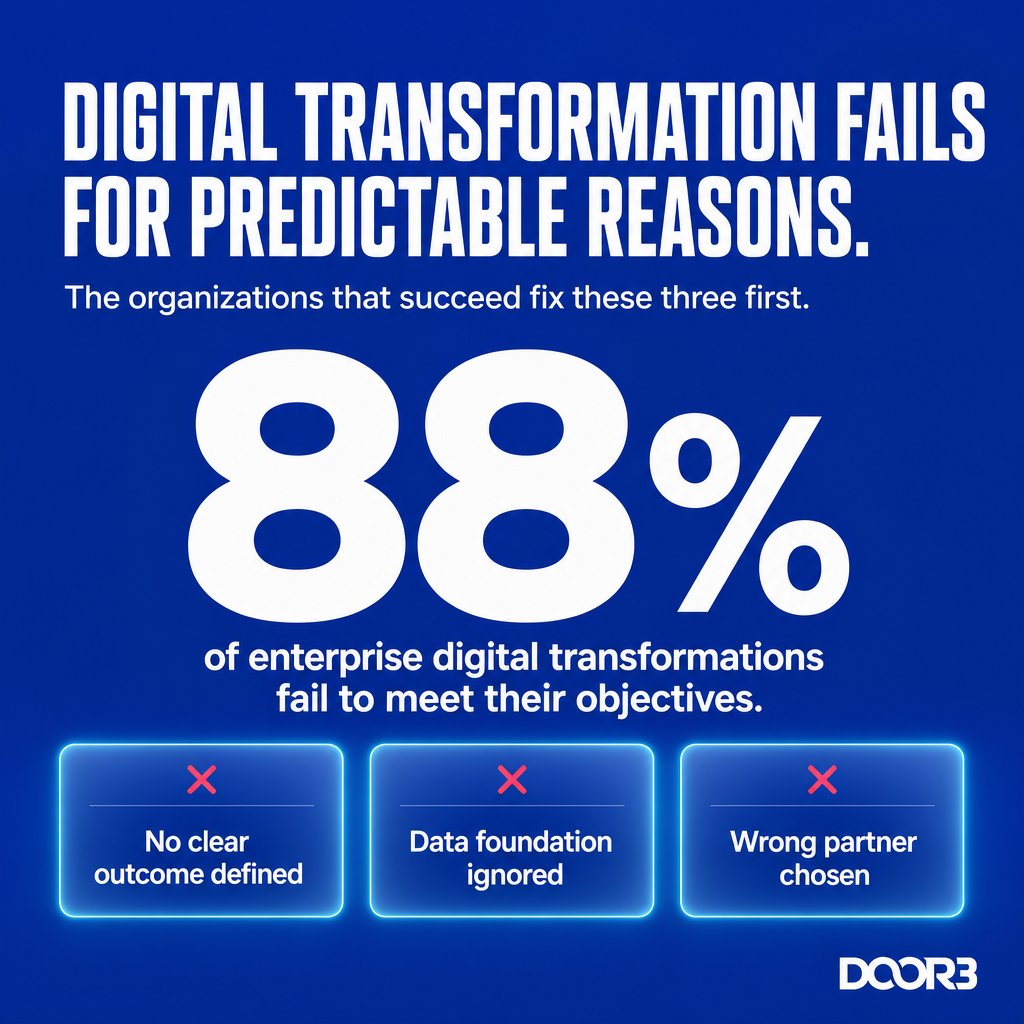
Insurers are spending $10.5B on core IT modernization. Yet McKinsey reports results are "mixed." Landmark failure cases include an 8-year modernization that led to a $500M write-off.
Why do these programs collapse mid-transformation? A thread 🧵 hubs.ly/Q04j-h070
42
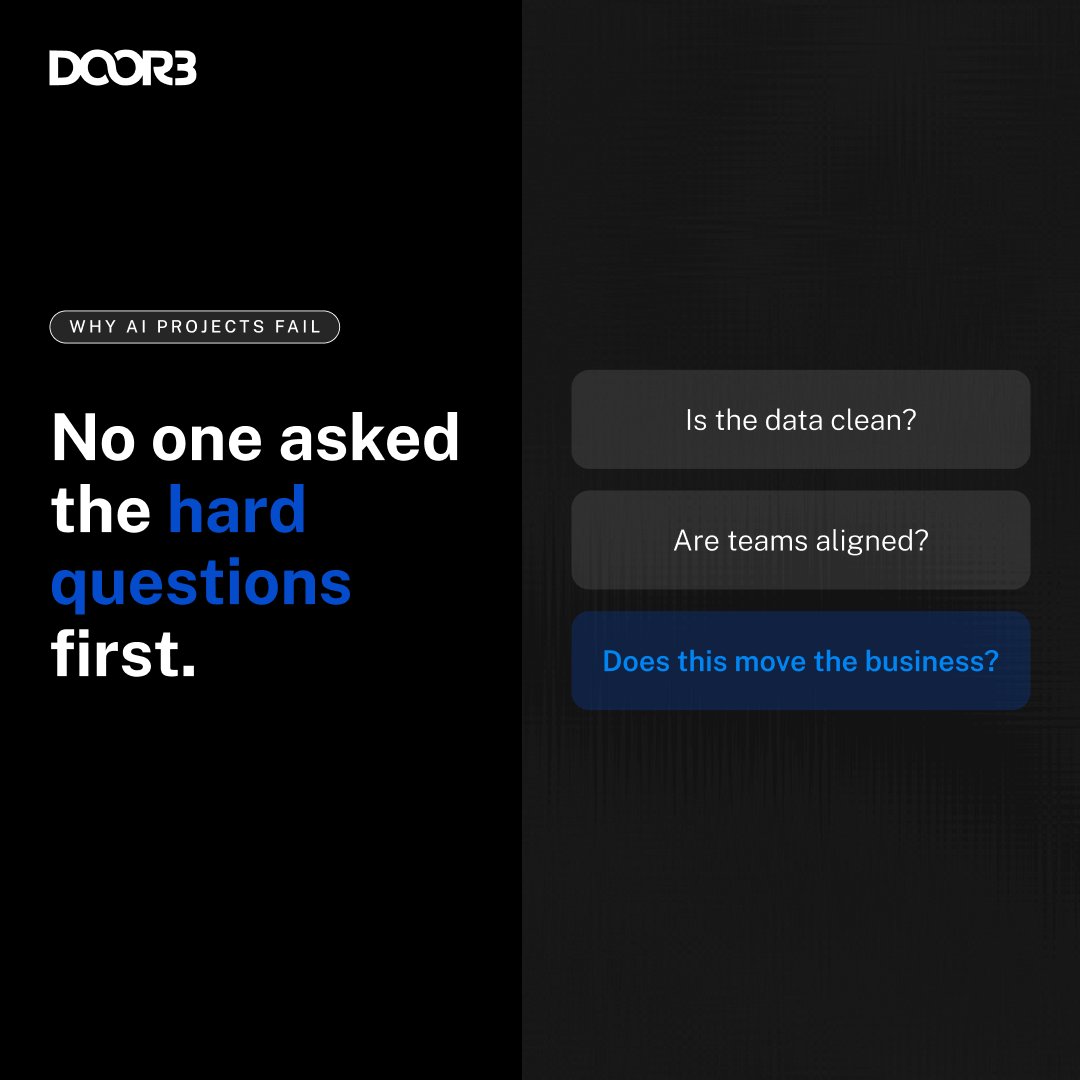
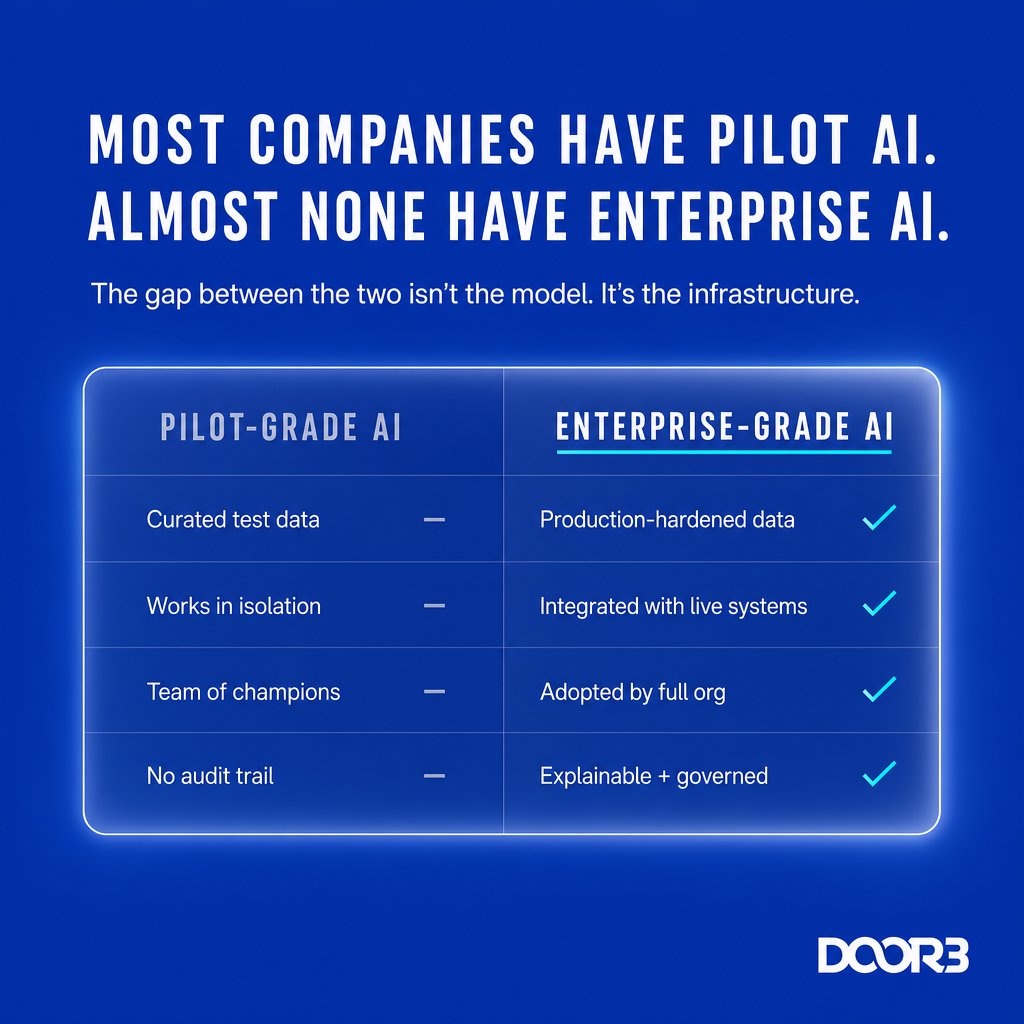
Before you build AI, find out if you're ready for it.
We put together two free resources to help:
→ AI Discovery Guide: evaluate readiness, identify high-impact use cases, and build a strategic roadmap
→ AI Readiness Checklist: assess your capabilities, spot opportunities, and uncover risks before you commit
Both free. Both practical. No fluff.
hubs.ly/Q04jJMXC0
#AI #AIReadiness #AIStrategy #EnterpriseAI #DOOR3
6
The insurance platform market is a $143B machine today, heading to $366B. Every carrier and MGA will make a core platform decision soon. Most will frame it as "upfront cost vs. flexibility."
That framing is broken. Here is why: 👇 hubs.ly/Q04jzyxM0
10