

Jun 12
🤯 Stuck with AI & Machine Learning Research Challenges? 🧠
#phdizone #airesearch #machinelearningresearch #artificialintelligence #machinelearning #deeplearning #neuralnetworks #datapreprocessing #predictivemodeling #algorithmdevelopment #researchinnovation #researchguidance
7

Jun 12
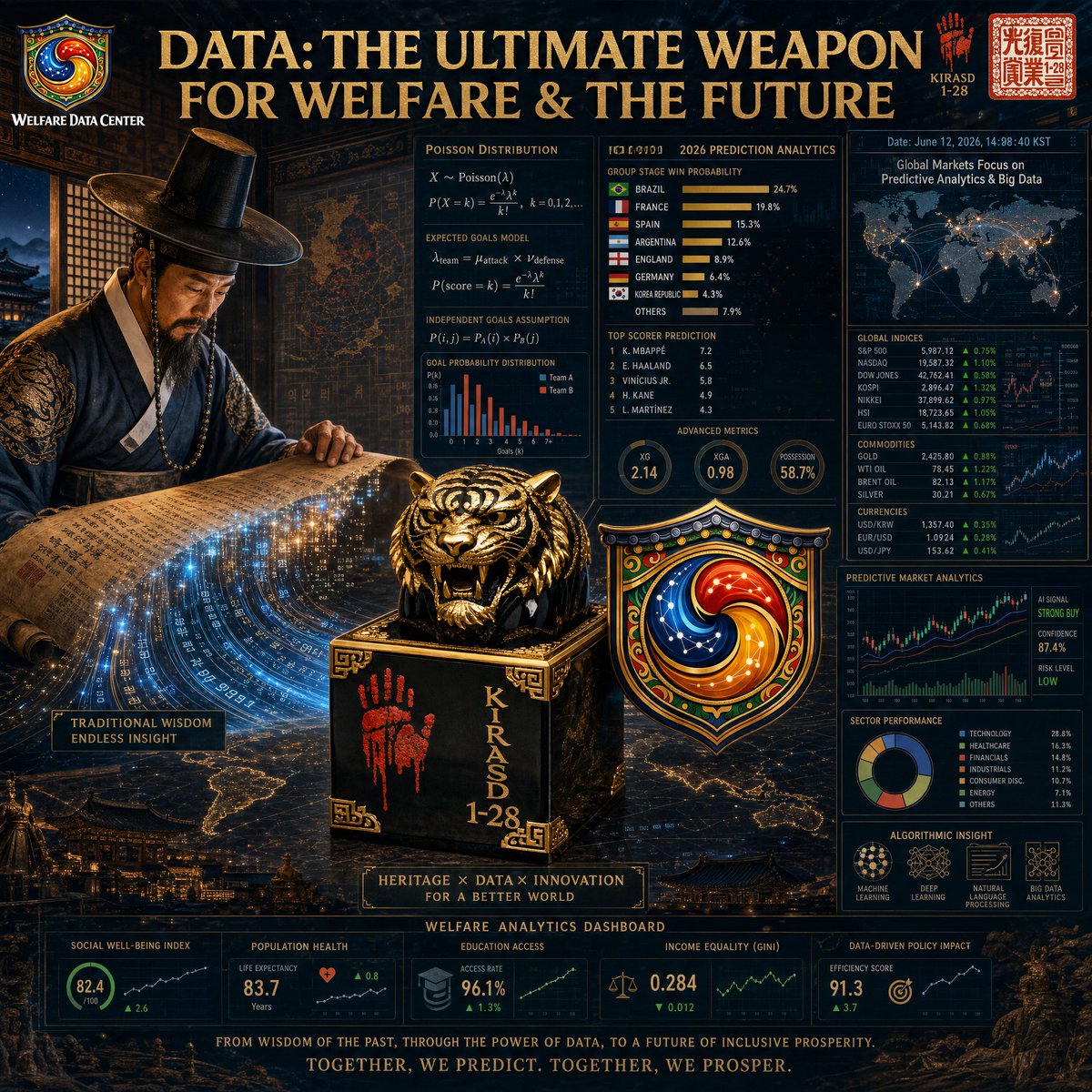
데이터는 미래를 여는 가장 강력한 무기입니다.
조선의 선비가 지녔던 '맑은 눈'으로 세상의 흐름을 깊이 읽고,
현대의 첨단 빅데이터와 정교한 예측 분석으로
우리 사회의 복지와 다음 세대의 밝은 내일을 설계하는 곳.
전통의 지혜(Heritage)와 혁신(Innovation),
그리고 데이터(Data)가 조화롭게 어우러져
'홍익인간(弘益人間)'의 이상을 실현하고자 합니다.
웰페어 데이터 센터는
과거의 유산을 계승하고, 현재를 정확히 읽으며,
미래를 겸손하게 준비하는 공간입니다.
더 나은 세상을 향한 작은 기여가
모두의 삶에 따뜻한 빛이 되기를 진심으로 기원합니다. 🙏🐯🛡️
많은 관심과 격려, 부탁드립니다.
#WelfareDataCenter #DataForWelfare #홍익인간 #PredictiveAnalytics #미래통찰
#WelfareDataCenter #DataForGood #홍익인간 #PredictiveAnalytics
#WelfareDataCenter #DataAnalytics #PredictiveModeling #BigData #KoreanHeritage #HongikIngan #미래예측 #데이터과학 #선비정신
2
23

Jun 11
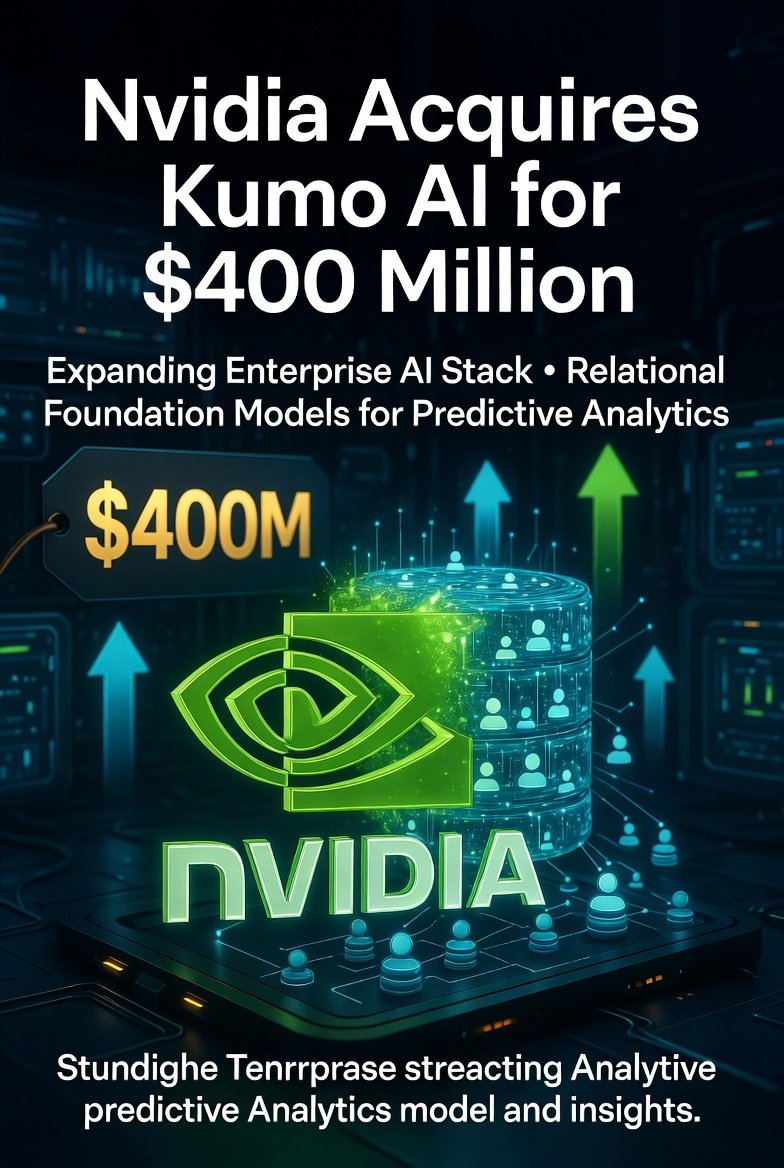
TECHNOLOGY NEWSWIRE: Nvidia Reports Acquisition of Kumo AI for $400 Million
Nvidia is expanding its enterprise software capabilities by acquiring Kumo AI to integrate relational foundation models into its predictive analytics stack.
Nvidia is quietly expanding its grip on the enterprise AI stack, reportedly acquiring Kumo AI in a deal valued at over $400 million.
While the chipmaker has yet to issue a formal announcement, the move signals a strategic shift.
Nvidia is no longer content with merely selling the hardware that powers AI.
it is aggressively moving to control the software layers that turn raw business data into actionable predictions.
For years, generative AI has excelled at processing unstructured data like text and images, leaving the vast, structured troves of information in relational databases largely untapped.
Kumo AI addresses this gap with its relational foundation model, which treats database records as nodes in a graph.
This allows companies to run complex predictive tasks—such as churn analysis, fraud detection, and demand forecasting—without the months of manual feature engineering typically required by traditional machine learning pipelines.
By bringing this technology in-house, Nvidia is positioning itself to offer predictive analytics as a seamless, bundled capability for the enterprise.
This acquisition carries significant weight for technology leaders.
If Nvidia integrates Kumo’s technology into its existing enterprise software suite, it could drastically lower the cost and complexity of deploying predictive AI.
However, the move creates friction for major data warehousing platforms like Snowflake and Databricks, which now find a powerful predictive AI vendor absorbed by a critical hardware partner.
While the integration roadmap remains unconfirmed and the technology faces the challenge of independent validation, the deal represents a calculated bet.
Nvidia is betting that the next massive wave of enterprise value lies within the data warehouse, and it is moving early to ensure that when that wave breaks, the underlying intelligence is powered by its own ecosystem.
FILED UNDER:
#Nvidia, #NvidiaAcquisition, #KumoAI, #NvidiaKumo, #EnterpriseAI, #RelationalAI, #PredictiveAnalytics, #AIAcquisition, #DataWarehouseAI, #GraphAI, #NvidiaSoftware, #AIstack, #RelationalFoundationModel, #FraudDetectionAI, #ChurnPrediction, #DemandForecasting, #NvidiaEnterprise, #AIacquisition, #TechMergers, #PredictiveAI, #DataGraph, #NvidiaNews, #EnterpriseSoftware, #AIdatabases, #400MillionDeal, #NvidiaStrategy, #AIModels, #WarehouseAI, #NvidiaExpansion, #RelationalDatabaseAI, #AIPoweredAnalytics, #TechAcquisition, #NvidiaAI, #BusinessIntelligence, #GraphNeuralNets, #EnterprisePredictive, #NvidiaKumoAI, #AIEcosystem, #DataScienceAI, #CorporateAI, #Nvidia2026, #TechnologyNewswire, #PredictiveModeling, #DatabaseAI, #NvidiaBet, #EnterpriseStack, #AIintegration, #TechConsolidation, #AIfoundationModels
2
161

Knocked out two hours of Continuing Ed today at Bank of Canton’s HQ. QB’d by @barshcohen, with keen input from others, the topic was real estate related insurance issues. Enjoyed it.
•The more claims you make, the more your premiums will be, longterm
•#PredictiveModeling
7
86

Shipped a new ML dashboard for Customer Segmentation! 🚀
Features include RFM metrics tracking, CLV predictions, interactive scenario simulations, and real-time model explainability using SHAP and PCA. Built with Python and Gradio. 📊🔬
#MachineLearning #PredictiveModeling


15

The standard actuarial table is no longer enough to protect your margins.
Early AI leaders in the P&C sector are generating roughly 6x the total shareholder returns of their AI-laggard peers. That gap isn't narrowing—it is widening by the quarter because traditional actuarial models price to the mean of a risk class, forcing profitable accounts to subsidize unprofitable ones.
THE PRICE OF AN AVERAGE RISK:
INDIVIDUAL LEVEL RISK: Two commercial properties in the same ZIP code shouldn't get the same base rate. Modern predictive models process up to 1,500 variables—incorporating satellite imagery and geospatial hazard data—to price individual risk in real time.
DYNAMIC PREDICTION: Actuarial pricing is locked at inception. AI-driven predictive modeling continuously monitors telematics and IoT signals, allowing carriers to adjust to behavioral changes before a loss occurs.
EARLY FRAUD SENSING: Traditional fraud detection happens at the claims stage. Predictive AI flags image manipulation and application inconsistencies at the point of underwriting, stopping soft fraud before the policy is bound.
The carriers winning the market aren't replacing their actuaries—they are giving them richer data and a faster feedback loop to price the actual risk instead of a historical segment.
👉Read our full guide to moving beyond traditional actuarial tables: hubs.ly/Q04kwnGd0
#InsuranceInnovation #PandCInsurance #PredictiveModeling #InsurTech #DataAnalytics #RiskManagement #ActuarialScience
14

📢 Most Viewed in #Forecasting
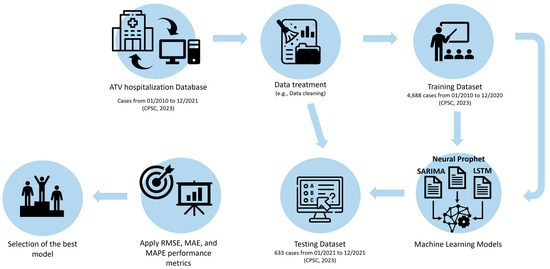
📖 Riding into Danger: Predictive Modeling for ATV-Related Injuries and Seasonal Patterns
✍️ By Fernando Ferreira Lima dos Santos et. al.
🔗 brnw.ch/21x3axE
#PredictiveModeling #PublicHealth #InjuryPrevention #RiskAssessment #ATVSafety
9

May 27
📢 #highlycited paper
📚 Artificial Intelligence in the Selection of Top-Performing Athletes for Team Sports: A Proof-of-Concept Predictive Modeling Study
🔗 mdpi.com/2076-3417/15/18/991…
👨🔬 by Dan Cristian Mănescu et al.
🏫 The Bucharest University of Economic Studies
#artificialintelligence #predictivemodeling

1
3
43

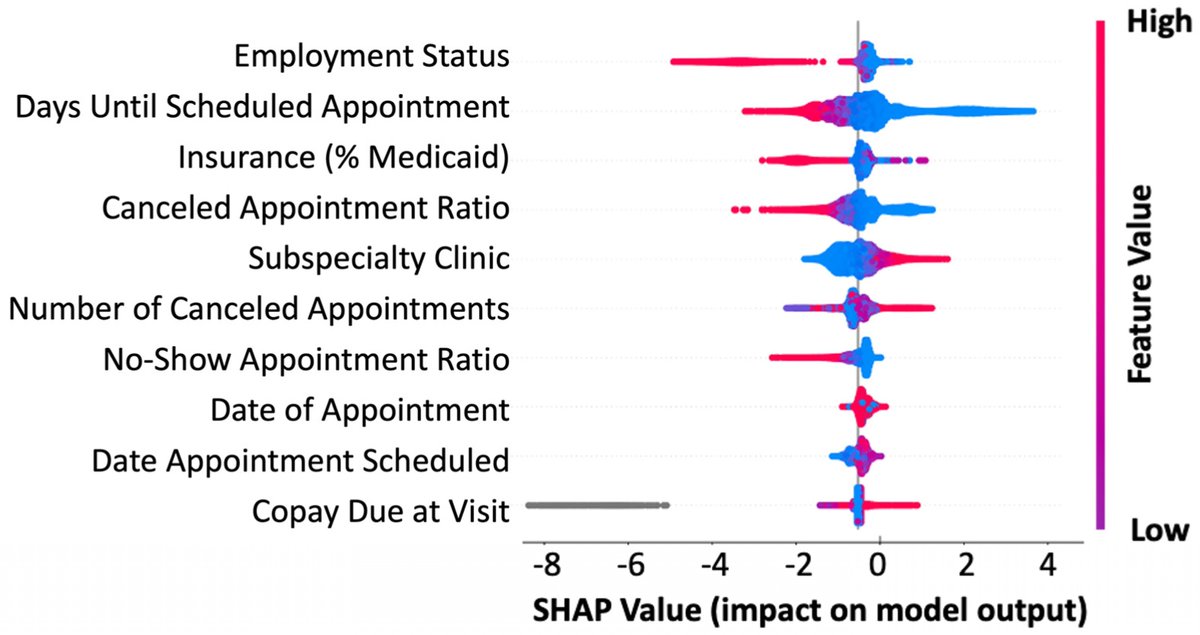
💥Excited for the publication: "Bringing Precision to Pediatric Care: Explainable AI in Predicting No-Show Trends Before and During the COVID-19 Pandemic"
📌 #HealthcareAnalytics #MachineLearning #Pediatrics #DigitalHealth #PredictiveModeling #HealthSystems #DataScience
1
4
67
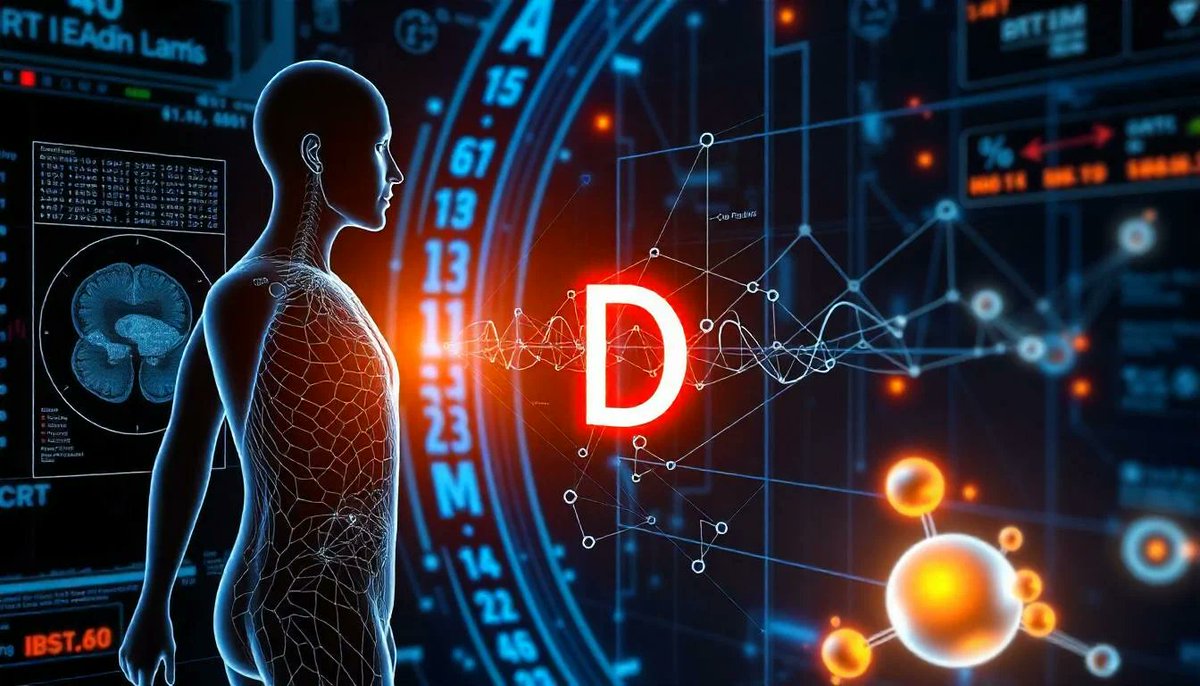
💥Excited for the publication: "Machine Learning-Driven Prediction of Vitamin D Deficiency Severity with Hybrid Optimization"
🔗brnw.ch/21x2DDZ
📌 #VitaminD #MachineLearning #DigitalHealth #NonInvasive #DataScience #PredictiveModeling #ClinicalAI #PublicHealth
2
36

👁️🌱🎙️ New Podcast Episode!
In this episode, we dive into the world of frogeye leaf spot of soybean and explore how predictive modeling and decision support tools are helping farmers stay one step ahead.
From weather data to disease forecasting, we break down the science behind smarter crop protection strategies.
🎧 Listen now:
Spotify: [open.spotify.com/episode/1sN…]
Apple Podcasts: [podcasts.apple.com/us/podcas…]
#PlantPathology #Soybeans #FrogeyeLeafSpot #PredictiveModeling #AgTwitter #CropProtection
3
6
468

May 9
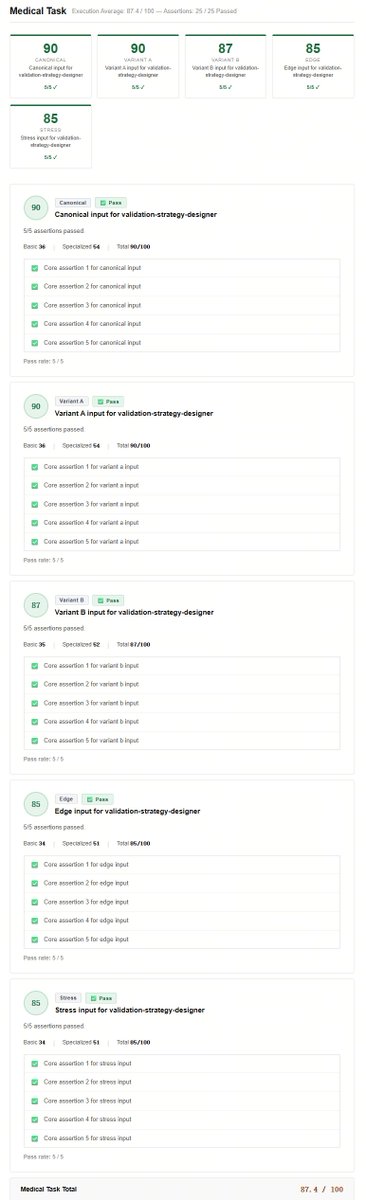
A large proportion of medical AI papers still treat validation as a late-stage checklist.
github.com/aipoch/medical-re…
AIPOCH’s Validation Strategy Designer approaches the problem differently:
validation architecture is defined *before* execution begins.
Core strengths:
• Explicit separation of internal, external, temporal, and functional validation layers
• Staged validation ladder with clear evidence thresholds and go/no-go logic
• Resource-aware validation planning that avoids unrealistic “fully validated” defaults
• Strong claim-boundary discipline to prevent overstatement and pseudo-validation framing
• Particularly effective for prognostic modeling, translational prediction, and clinical AI workflows
Best use cases:
• Clinical prediction studies
• Biomarker validation planning
• Reviewer-facing methods justification
• Protocol-stage AI research design
• External validation strategy development
Its biggest contribution is methodological discipline:
the workflow continuously asks whether the available evidence truly supports the level of validation being claimed.
#MedicalAI #ClinicalResearch #Validation #PredictiveModeling #Bioinformatics #TranslationalResearch #Biostatistics #HealthcareAI #AIPOCH
3
452


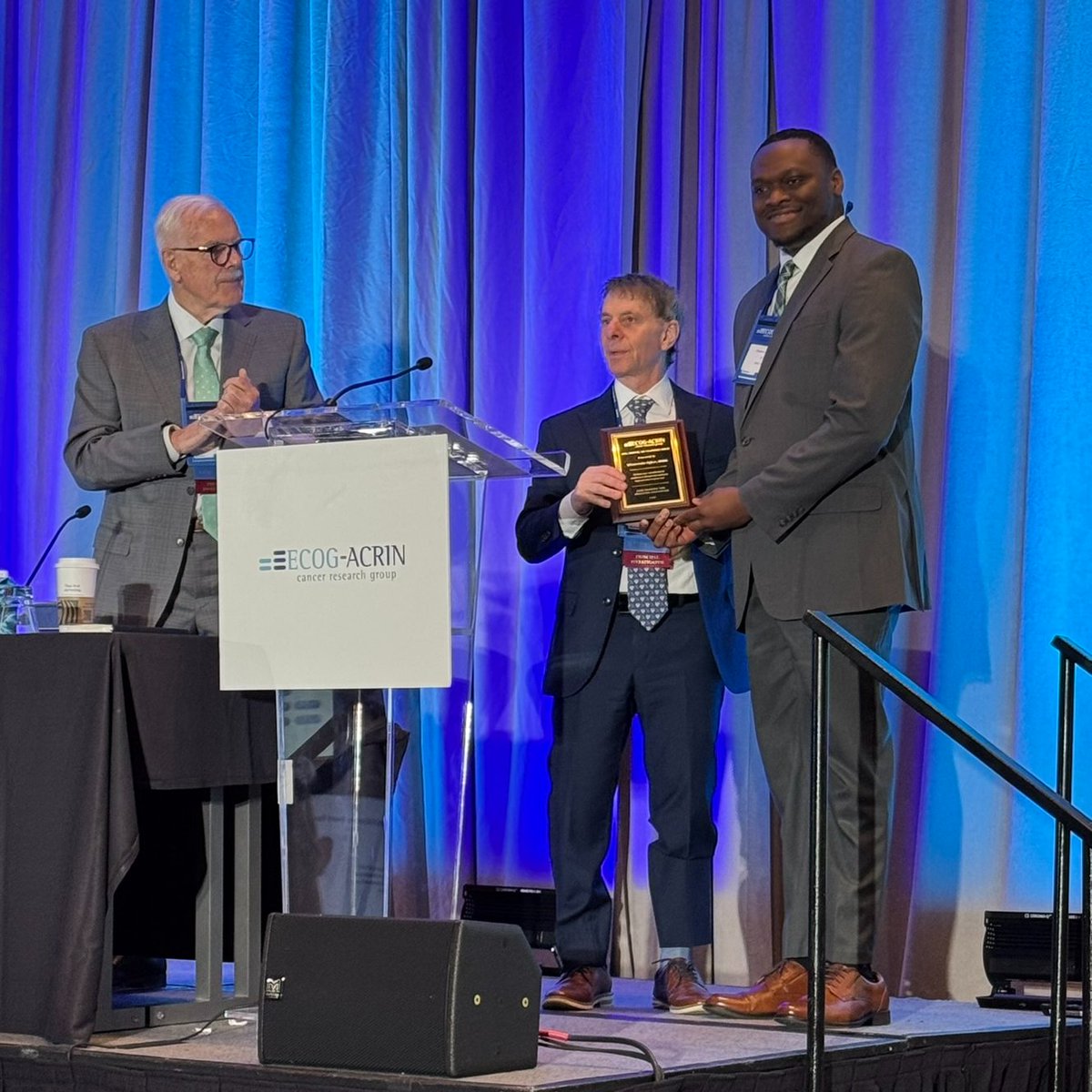
Congratulations to @olisaogbue of @MayoClinic on receiving the 2026 #EAOnc Paul Carbone, MD Fellowship Award! #PredictiveModeling #LateEffects #CancerSurvivorship #AYACancer
1
1
5
1,937

May 1
Data check: Our CAKE prediction model (DE ENSEMBLE) wrapped up the week with 92.93% accuracy! 📈
Staying on top of $CAKE price trends with advanced ensemble modeling. 🍰✨
#CAKE #DeFi #CryptoTrading #AI #PredictiveModeling
2
2
15
🦴 "Advanced Technologies for Orthopedic Repair and Regeneration" is open for submissions!
🕑 Deadline: 31 August 2026
🎉 Submit your research now!
🔗 brnw.ch/21x23b8
#TissueEngineering #Immunoengineering #PredictiveModeling

1
2
47
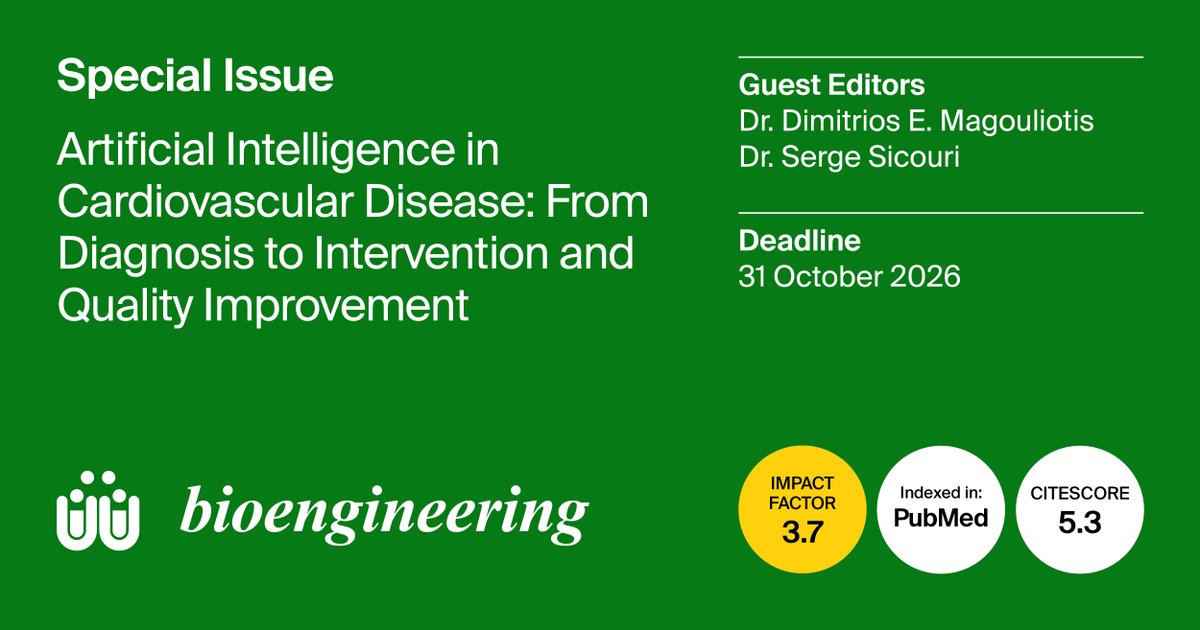
❤️ "Artificial Intelligence in Cardiovascular Disease: From Diagnosis to Intervention and Quality Improvement" is open for submissions!
🕑 Deadline: 31 October 2026
🎉 Submit your research now!
🔗 brnw.ch/21x1T3A
#PredictiveModeling #QualityImprovement
3
2
74

Postdoctoral Fellow opening at Sinai Health in Toronto. Lead multidisciplinary projects on adiposity-related cancer prevention and precision health
Postdoctoral Fellow for Precision Cancer Prevention @SinaiHealth
The Lunenfeld-Tanenbaum Research Institute of Sinai Health
See the full job description on jobRxiv: jobrxiv.org/job/the-lunenfel…
#adiposityintervention #cancerprevention #epidemiology #glp1 #machinelearning #PredictiveAnalytics #predictivemodeling #proteomics
#ScienceJobs
jobrxiv.org/job/the-lunenfel…
1
2
741
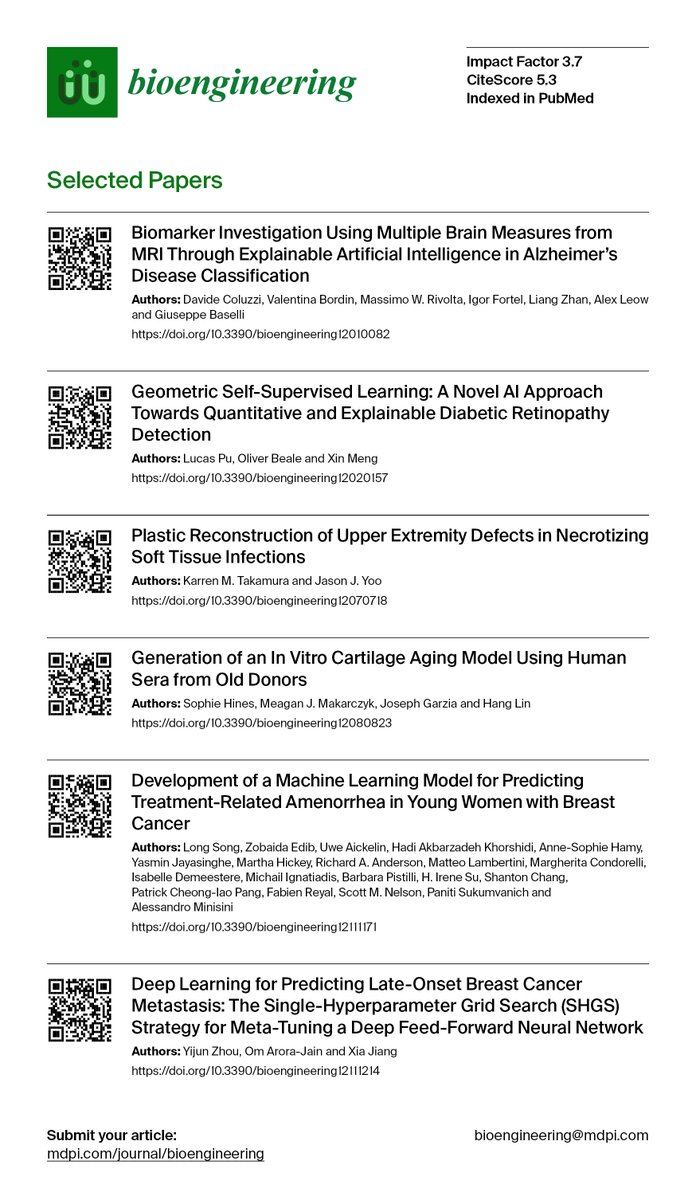
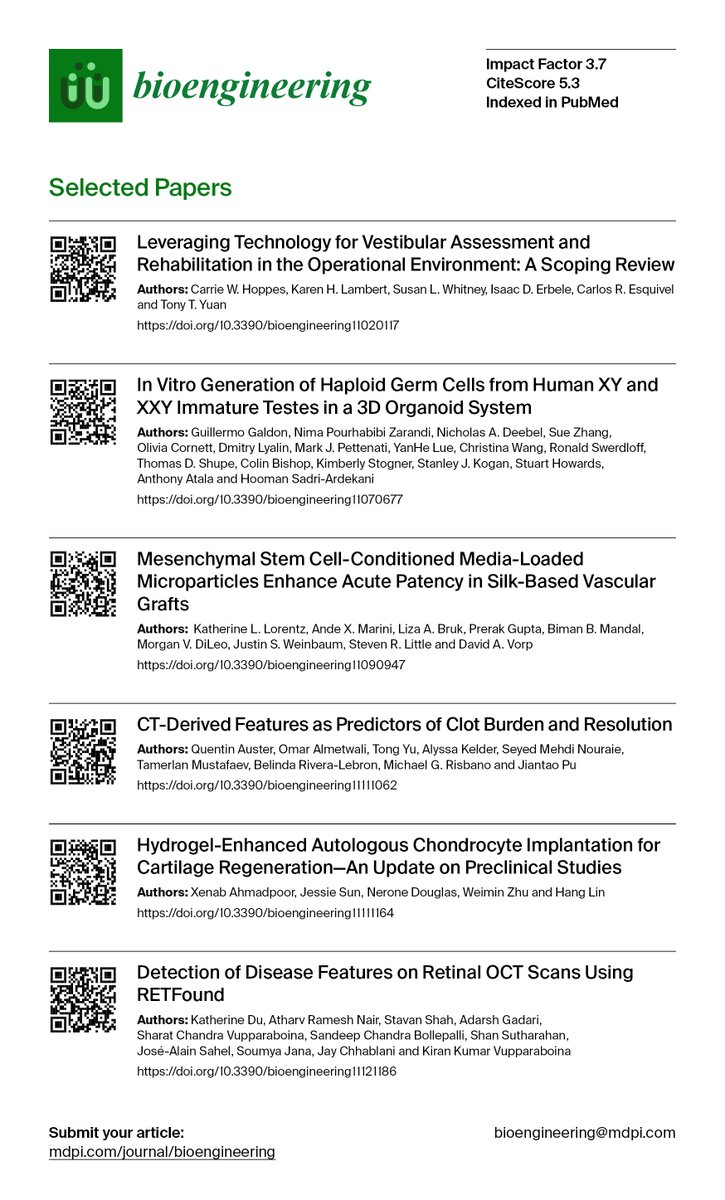
💥Check out the publications from the University of Pittsburgh in 2024-25
🏫 @PittTweet
📌#StemCellResearch #CartilageRegeneration #TissueEngineering #DeepLearning #PredictiveModeling
3
2
33