
Partner at @awakenliquidity. Contrarian at heart. Long Crypto! Opinions my own.
Joined October 2011
- Tweets 180
- Following 479
- Followers 1,296
- Likes 22,846
8 Photos and videos

Pinned Tweet

8 Mar 2016
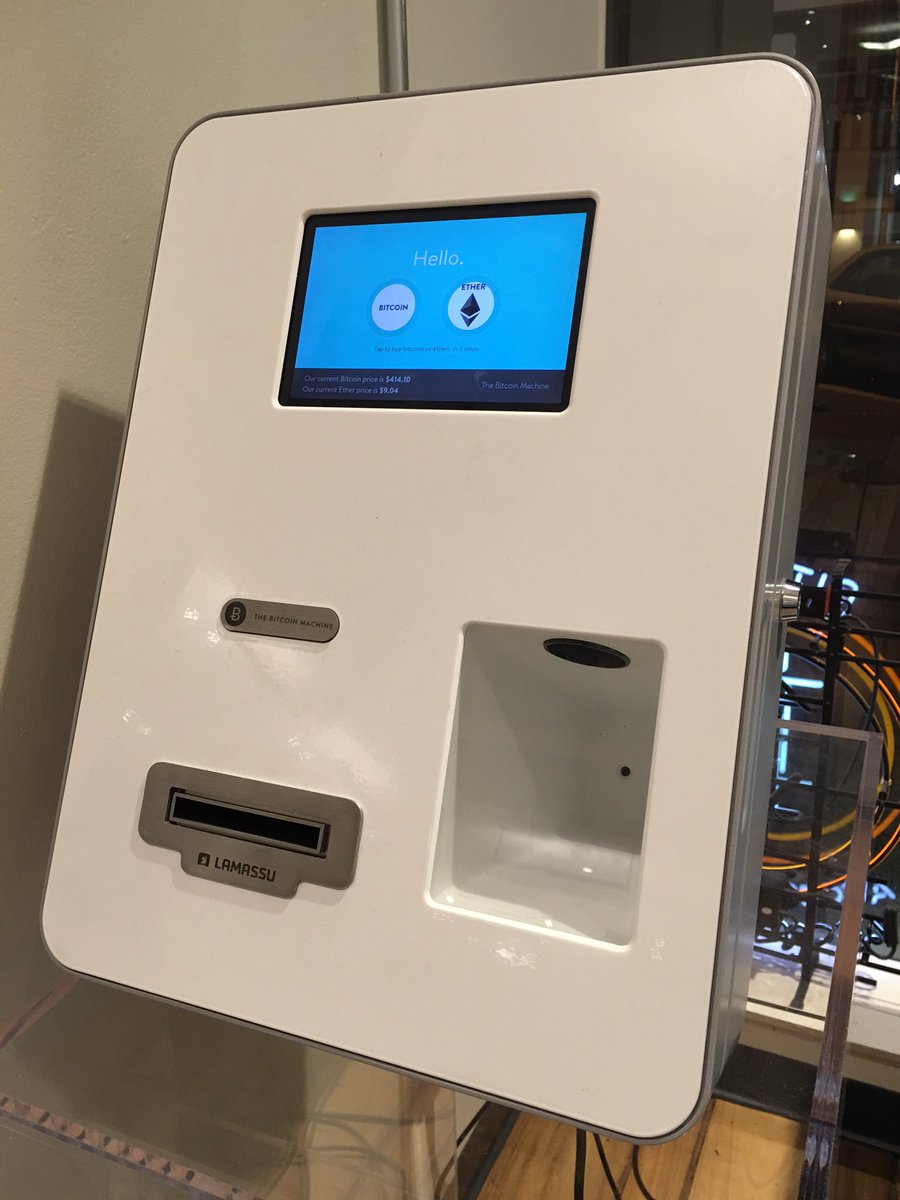
Saw this in @HeroCitySpace 1st ATM you can withdrawal Ether from? #bitcoin #blockchain #ethereum #digitalcurrency
2
3
11

After significant studying, and in keeping with President Trump’s vision to make the United States the crypto capital of the world, today I ordered the Great Fannie Mae and Freddie Mac to prepare their businesses to count cryptocurrency as an asset for a mortgage.
SO ORDERED

2,232
5,213
24,064
11,059,250

David Roebuck retweeted

17 Jun 2025
EigenCloud: The Cloud Thesis of Crypto.
Bitcoin established verifiable money and Ethereum established verifiable finance. EigenCloud's goal is to make every digital interaction verifiable.
The core promise of EigenCloud: cloud-scale programmability with crypto-grade verifiability.
EigenCloud enables developers to build powerful applications using familiar cloud containers while maintaining blockchain-level trust guarantees. By separating token logic (executed on-chain) from app logic (executed in verifiable off-chain containers), developers can leverage the full richness of cloud infrastructure - any software library, specialized hardware, external APIs - while preserving cryptoeconomic security through the EIGEN token's novel forkability mechanism.
This architectural shift unlocks entirely new application categories: verifiable onchain AI agents, permissionless prediction markets, memecoin platforms with verifiable incentives, trustworthy media feeds, and enterprise applications with crypto-grade auditability. By massively expanding the programmability of crypto applications, EigenCloud expands the addressable market of crypto and establishes the foundation for the verifiable economy.
x.com/eigenlayer/status/1934…
17 Jun 2025

The evolution is here. The age of verifiable apps has begun.
Introducing EigenCloud, a platform for verifiable apps, services, and AI, built on EigenLayer, secured by the EIGEN token. ☁️
Crypto has spent a decade building trustless infrastructure.
Now it's time to build on it.
176
74
690
104,576
David Roebuck retweeted

24 Apr 2025
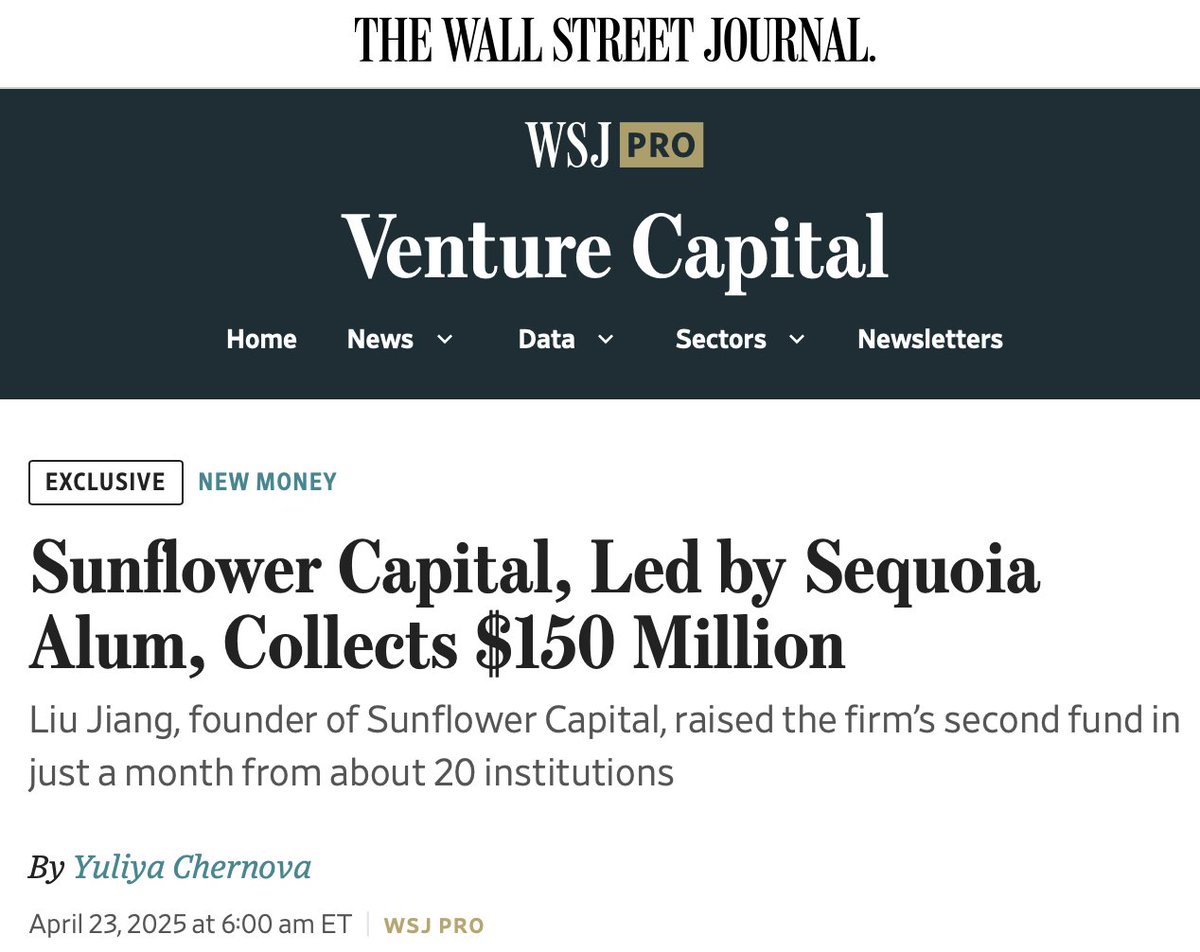
We’re excited to announce Sunflower Capital Funds I and II. Sunflower is a $250m fund that partners at the earliest stage with companies building foundations for modern enterprises, critical industries, and the physical world.
131
133
628
108,293
David Roebuck retweeted

8 Mar 2025
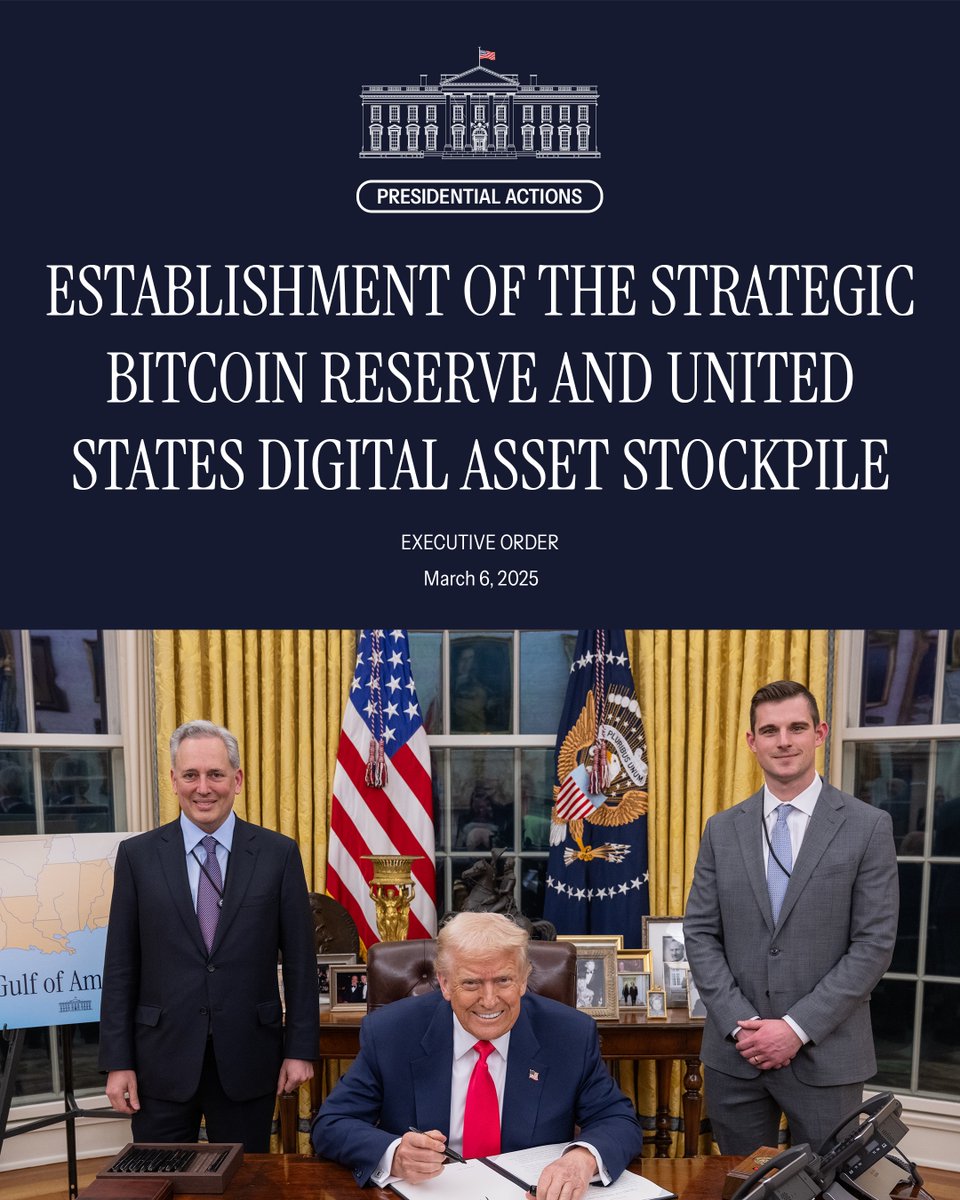
America will be the Bitcoin superpower of the world.
The Golden Age of America has BEGUN!
3,571
7,734
35,268
7,173,668
David Roebuck retweeted

23 Dec 2024
We are extremely excited to announce that Omega is officially live exclusively on @0xMantle
Omega’s mission is to foster a healthier liquidity environment across Mantle via our custom leverage infrastructure.
Make sure to read the entire thread towards 🧵
32
38
164
78,314
David Roebuck retweeted

21 Nov 2024
introducing gains.meme.
gm is a mobile app for trading memecoins on @base.
sign up with your email & start trading instantly.
discover memecoins
- explore top-performing memecoins
- get real-time updates on memecoin trends
trade memecoins
- buy and sell trending memecoins
- share your trades with friends
add gains.meme to your mobile home screen, create an account, & start trading memecoins today.
69
39
156
37,463
David Roebuck retweeted
17 Nov 2024
Many breakthrough categories are built on @eigencloud
17 Nov 2024

Cryptoeconomic security has SO much more demand than people realize...
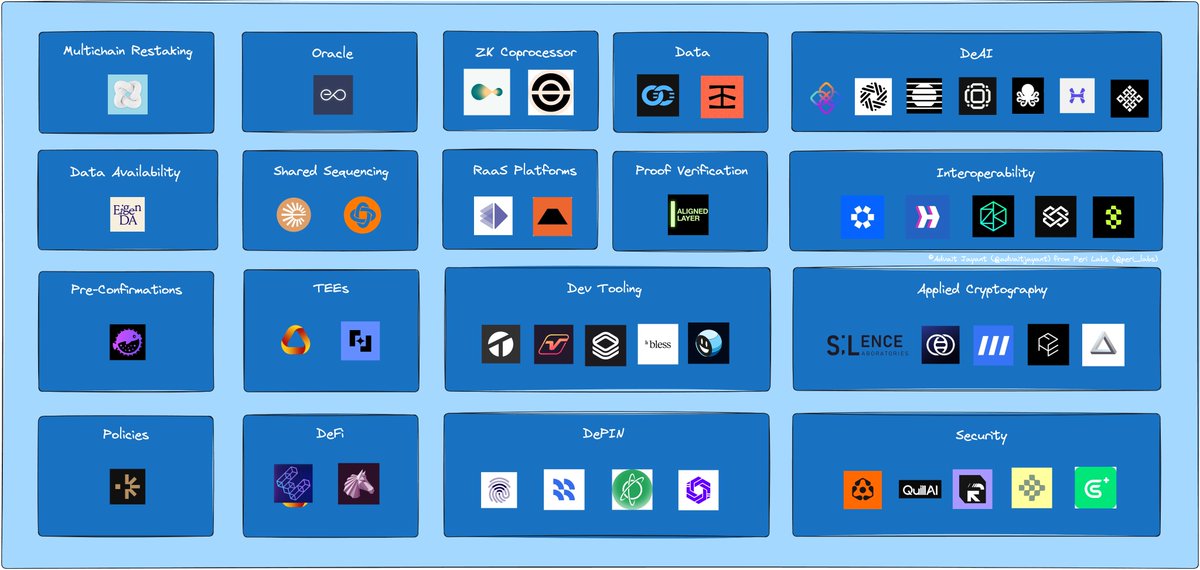
Here is a big list of companies that @altantutar and I are most bullish on in the @eigencloud ecosystem:
• Multichain Restaking: @nufflelabs
• Oracle: @eo_network
• ZK Coprocessor: @lagrangedev, @brevis_zk
• Data: @OpacityNetwork, @infura_io
• AI: @OpenGradient, @sentient_agi, @GMNetwork_AI, @Gaianet_AI,@OpenledgerHQ, @hyperbolic_labs, @ritualnet
• Data Availability: @eigen_da
• Shared Sequencing: @EspressoSys, @radius_xyz
• Rollups-as-a-Service: @alt_layer, @Calderaxyz
• Interoperability: @OmniFDN, @hyperlane, @PolyhedraZK, @Polymer_Labs, @skate_chain
• Pre-Confirmations: @puffer_finance
• TEEs: @AutomataNetwork, @0xfairblock
• Dev-Tooling: @0xOthentic, @VersatusLabs, @LayerOnEth, @theblessnetwork, @EthosStake
• Applied Cryptography: @silencelabs_sl, @0xHolonym (@mishtinetwork), @inconetwork, @fhenix, @arpaofficial
• Policy: @0xPredicate
• DeFi: @ether_fi, @Byzantine_fi
• DePIN: @witnesschain, @parasailnetwork, @BuildOnAtlas, @OpenLayerHQ
• Security: @risk_layer, @QuillAI_Network, @DroseraNetwork, @UseFirewall
7
22
145
15,376
David Roebuck retweeted

13 Nov 2024
We're thrilled to announce $290M in funding to build dAIOS, including a $40M seed raise, along with a $250M token purchase commitment. With a total raised of $325M with backing from top VCs like @hack_vc , @Delphi_Digital, @AnimocaVentures, and over 200 supporters, 0G is bringing decentralized AI closer to reality.
114
85
567
300,335
David Roebuck retweeted

1 Nov 2024
The future of gaming in Asia is Immutable!
We have 150 games in Asia building on Immutable - over half of these games have signed with Immutable in 2024 alone.
Here are the leading studios from Asia on Immutable 🧵
49
58
395
37,419
David Roebuck retweeted
31 Oct 2024
Immutable has received a Wells notice from the SEC, the latest in their de facto policy of regulation by enforcement. We received this within hours of our first ever conversation, on a timeline clearly accelerated to land before an election.
Sadly, stories like this are becoming less surprising each time. We’ve seen an increasing number of companies like @Coinbase, @Consensys, @Uniswap, @OpenSea, @cryptocom face SEC escalations, many in the last two months. With this latest move against Immutable, the SEC’s overreach continues and expands into gaming.
Immutable is well capitalized with a large war-chest to build for the future of gaming, and if needed, we will stand up and fight to defend digital ownership for gamers. But the SEC’s approach hinders every startup trying to innovate in an already difficult industry. Read our full statement here: immutable.com/blog/defending…
Under the current administration, the SEC has filed (and lost) a string of lawsuits, seeking to regulate crypto via enforcement rather than policy.
Last year, Ripple won a “landmark victory” where Judge Torres found that XRP was not a security. After publicly stating Ethereum was a commodity, the SEC secretly opened an investigation into ETH. They shut this investigation down after Consensys sued them to defend Ethereum’s ecosystem in June of this year. Last year, Grayscale sued the SEC to open the floodgates for institutional adoption of crypto. They won, with the court finding the SEC’s denial of Grayscale’s proposal "arbitrary and capricious.” In recent weeks we’ve seen the SEC’s overreach continue to expand with the livelihoods and freedoms of musicians, artists and other content creators now under threat in light of the SEC’s move against NFT platform OpenSea.
The industry desperately wants clear guidelines for compliance, and instead companies are forced to spend millions of dollars in legal fees to even get off the ground. At the end of the day, this hinders the many companies in crypto trying to build real products.
Immutable has been building since 2018 to bring digital ownership to the $110B of in-game items sold each year - we are not here to play short-term games. It’s business as usual for our team, products and services. We are confident in our position, in the value digital ownership can bring to 3.1 billion gamers across the world, and in the power of blockchain to create a better internet. If required, we will fight for these rights, and those of our industry, vigorously.
In the words of dissenting commissioner Hester Peirce: “Leaving crypto to be addressed in an endless series of misguided and overreaching cases has been and continues to be a consequential mistake”.
Until that changes, we will fight for game developers, players, and creators for digital ownership.
And we will keep building.
339
519
3,157
598,212
David Roebuck retweeted

30 Oct 2024
Introducing SXT Chain.
Build the future of AI apps and DeFi with SXT: the blockchain for ZK-proven data.
Now live in testnet.
1,790
5,514
11,920
1,672,536

David Roebuck retweeted

4 Oct 2024
Highly concerned how fast this is growing now. Over this week alone, seeing the network grow by almost 1000 unique connected nodes, every day, to almost 7500 live, connected nodes now.
Things don’t grow this fast, and also, shouldn’t grow this fast.
We seem to have flipped from individuals painstakingly running the home desktop client to industrial “miners” running a node on servers because it is hard and costly to run an always connected node. But people are doing it. And the network is currently holding up (we never stress-tested to these levels).
So @HyperspaceAI is the largest distributed network of open source models from @AIatMeta, also @GoogleAI, and also @MistralAI.
Thank you to the tireless work of the open source community who meticulously craft these models. Qr have connected 671 such LLMs in one distributed peer-to-peer network.
30 Sep 2024

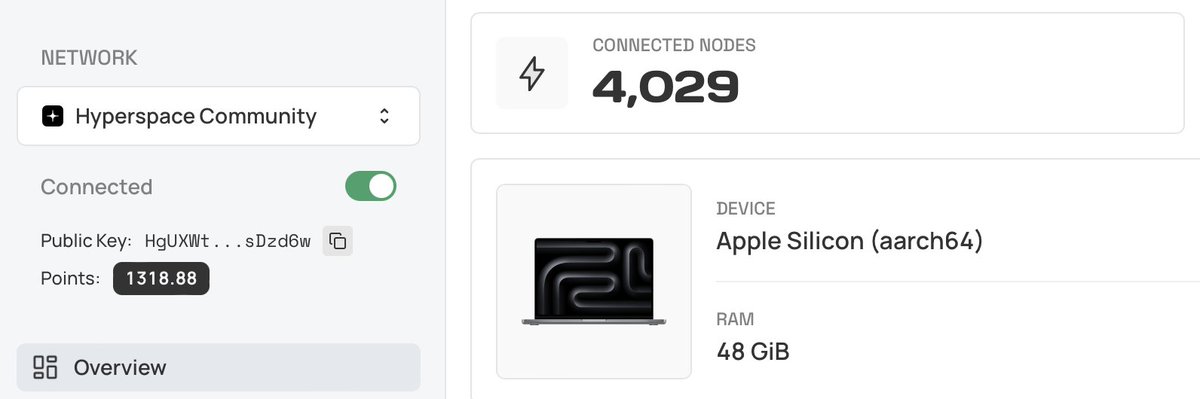
Hyperspace has now crossed over 4000 connected nodes for the first time.
This is a baffling metric, and makes Hyperspace one of the top global P2P networks in existence today. Some Q&As:
What does this even mean ?
* Each one of these nodes is available to serve inference requests for other random peers on the network.
* Each node has it's own unique identity on the network, is running an open source model either in the browser, in the desktop client or on the terminal/on a server.
* Again, this is one, interconnected network.
* Each one of these nodes is also being sent a Proof-of-FLOPS matrix multiplication challenge on an hourly basis based on their VRAM pledged to verify the authenticity of their compute provided.
How is this network supported ?
To support these 4000 connected nodes, the Hyperspace matchmaking server currently gets over 100 million requests, every day. There are engineering optimizations which we need to do across the client and the network stack in order to reduce this and make the system more efficient, in addition to pursuing a decentralization roadmap.
The average latency is also in the 500ms range - which makes the peer-to-peer network slow for a human eye for which anything over 100ms is perceptible delay. Thus such networks are better suited for use by AI agents on long-running parallel tasks where intelligence scales as a function of parallel compute, and not live feedback to humans in real-time, where it is better to run AI on-device directly (as the aiOS is built for). We view AI as a complex multi-system engineering challenge, not just on a one-off well-trained model.
How did we get here ?
Earlier this year we started seeing a spike in number of nodes, which quickly overwhelmed the system. These nodes originally were low quality, but due to the sheer number of them and across Windows, Mac and Linux, we had to do a fundamental architecture re-write across the client nodes and the network, in addition to building up an incentive structure to get more reliable nodes on the network. It is due to a summer of working hard and writing code, that we now have a stable network of good nodes which we did not have before.
People running nodes now are essentially miners, so they are incentivized to run more powerful machines with more useful models as the system specifically incentivizes that.
How does it compare to other P2P networks ?
Think about Bitcoin, it has just over 19k connected nodes, where each node is competing in a cryptographic challenge in order to earn the right to mine a block. That network is fully permissionless, unlike the Hyperspace network which currently uses a centralized architecture for orchestrating consumer peer-to-peer nodes much like Uber does.
Think about Ethereum, which collectively has just over 6k unique nodes, where each node in addition to some compute also has to provide an economic stake in order to participate in the network. That network is permissionless as well. Likewise for Solana, with 1363 unique nodes serving the network today.
It is the Lindy effect, the permissionless aspect, the much higher requirements and the long-running nature of these networks which give their underlying currency a value in the real world. In the case of Hyperspace, the underlying system currency called "flops" is an in-game worthless currency meant to use applications running on it: it is not permissionless and it is not a blockchain, and can theoretically be manipulated by the company.
NOTE: we are on a path to make the network fully permissionless in the years ahead, and you can see that roadmap in the flops announcement. Currently we are bootstrapping the habit of participating in such P2P AI networks which consumers did not have before us and using social, utility and cryptoeconomic incentives at play.
Will there be an API ?
Yes, this is coming soon and will have additional capabilities such as running embedding jobs, serving vectors and more.
Will it integrate with other decentralized AI protocols ?
Yes, we believe in offering choices to users, in this case the mining nodes on whichever protocols they want to support on their devices. We take care of the AI-related plumbing as part of aiOS such as providing access to 671 models, 3.2 TB vector database with 400 million embeddings, real-time web search and other attributes of the system to make it useful.
Will there be a full blockchain node one day as an add-on ?
Yes, we are firm believers in consumer devices being suitable for block production and validation process, and entirety of our research and engineering has focused on that for the past few years (we have written multiple papers in that regard).
Think Full Self Driving in your Tesla, for those who want it.
11
10
81
8,088

Our SDK and web console is out! Using our SDK, everyone can now fine-tune LLMs with just a few lines of code! You don’t have to set up compute instances, build ML infra, or pay ridiculous fees for GPUs. Our web console also enables anyone to fine-tune LLMs, even if you don’t know how to code!
To learn more about our SDK and web console, please visit: docs.luminolabs.ai or app.luminolabs.ai.
191
15
274
8,211
David Roebuck retweeted
24 Sep 2024
Introducing Proof-of-FLOPS
BitTorrent had over 100 million active users at one point. It had a fundamental circular economy at play: if you provided your computing resources to the network as a seeder, the network measured that and prioritized you when you needed to download your favorite movie from peers.
Today we are introducing a new verifiable economic system called Proof-of-FLOPS which does the same for AI in the context of a peer-to-peer network, and it’s first stage is available live today in Testnet on Hyperspace.
This system enables periodically and verifiably measuring your AI-relevant compute provided to the network by asking your system to solve a matrix multiplication challenge, based on which you earn the system currency called “flops”. These flops can then be used in applications built using this network, such as Compute and Play launched by Hyperspace last week.
For a detailed mathematical and game theoretical explanation of the system please see the introductory blog post: flops.hyper.space
Right now, there is no reason to trust the flops you earn as a bad employee of Hyperspace (yes, you Bob) can go and edit the database with whatever he wants, despite our stringent controls around auditing and recordkeeping. In order to build decentralized trust in the system we will utilize multiple protocols over the next few months per the roadmap outlined. Then Bob will need to spend billion of dollars in order to circumvent blockchain security, a cost which makes the system robust and tamper-proof.
It’s time to run a node and join the world’s largest AI network, and start experimenting with earning flops by simply connecting your PC, laptop, server or even a web browser on your smartphone.
This is something new, and something crazy - and we are super excited to bring a fundamentally new approach to scaling AI infrastructure.
13
28
148
98,506
David Roebuck retweeted
18 Sep 2024
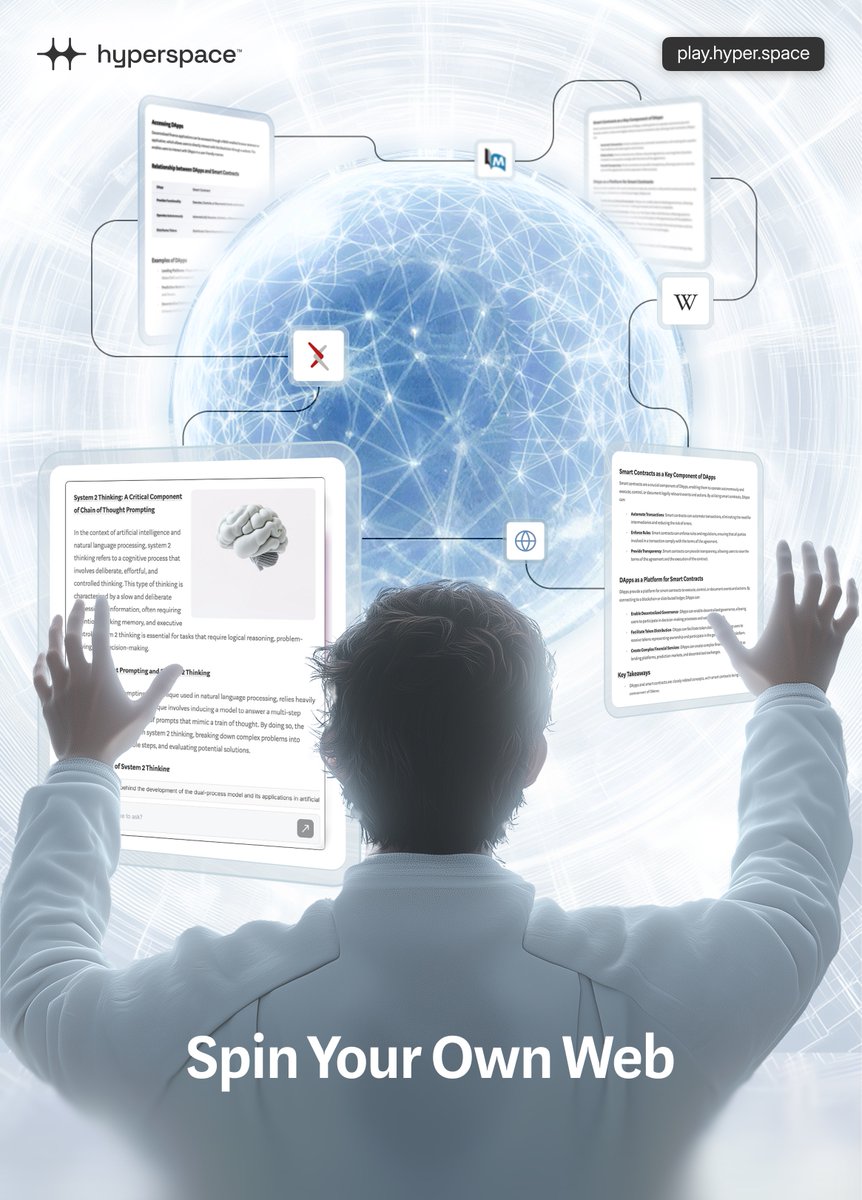
Introducing Play - a new type of an insanely crazy AI research product which enables you to spin and share your own webs quickly around focused topics.
Built using @GroqInc x Llama3.1 open source model from @AIatMeta, combined with real-time web search and a multi-terabyte vector database composed of Wikipedia, arXiv, Reddit comments, among other sources.
No filters. No bias. No subscription fees.
You are in control. What will you create ?
37
107
1,098
192,916

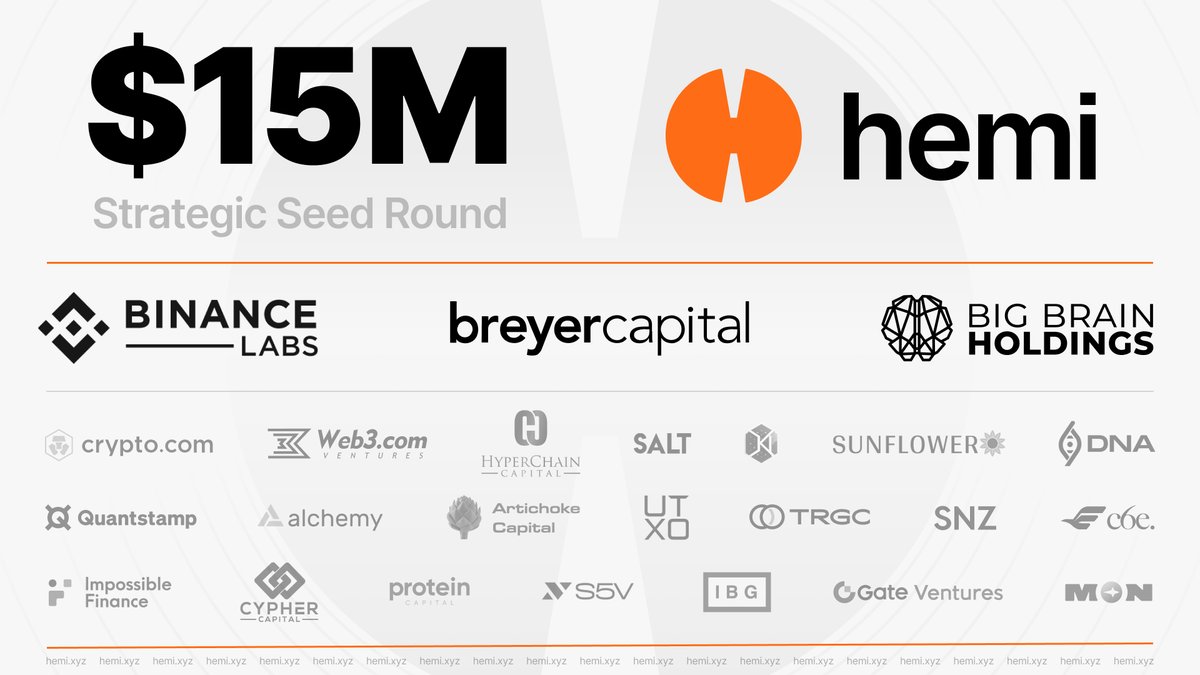
The Hemi team is proud to announce the closing of its $15M strategic seed round, led by @binancelabs, @breyercap, and @BigBrainVC. Excited for what's to come!
hemi.xyz/blog/hemi-labs-rais… #bitcoin #ethereum
939
1,885
5,124
753,489
5 Sep 2024
RT @alt_layer: 🪄Conjuring up some magic again, AltLayer proudly presents Wizard 🪄
This novel AVS-as-a-Service platform automates AVS deplo…
59
David Roebuck retweeted
27 Aug 2024
We are thrilled to announce that Space and Time Labs has secured a $20M Series A, bringing our total funding to $50 million. 🚀⏳
SxT is empowering the community to own their future in an AI-powered world by providing the tools they need to build sophisticated, data-driven applications, tokenize them onchain, and win in the AI economy.
Generate a new world with Space and Time, secured by our sub-second ZK coprocessor.
Exclusive by @FortuneMagazine: fortune.com/crypto/2024/08/2…
176
259
2,357
285,041