We are the Dewar lab at Vanderbilt University. We study the biochemistry of DNA replication using in vitro cell-free approaches. #GelsNotCells #SometimesCells
Joined August 2017
- Tweets 41
- Following 87
- Followers 337
- Likes 38
7 Photos and videos

Pinned Tweet

2 Jan 2023
Our first foray into replication fork processing is now available! 🐸🧍🧬🧪 Key points:
- Uncoupling causes degradation and reversal
- Degradation occurs before and after reversal
- Replisomes are retained throughout
See model for how we think this works🙏
nature.com/articles/s41594-0…
5
32
102
20,975
Dewar Lab retweeted

8 Sep 2023
Happy to share our study about the role of Top2 complexes in different chromatin contexts!
We find that Top2 catalytic inhibition leads exclusively to instability of the repetitive genome which depends on Top2a. For more details of how, please read:
biorxiv.org/content/10.1101/…
1
17
67
3,093
Dewar Lab retweeted

8 Apr 2023
The Cimprich lab has research assistant positions available. If you (or someone you know) might be interested please apply here:
careersearch.stanford.edu/jo…
careersearch.stanford.edu/jo…
32
32
11,416
20 Mar 2023
We're looking for a new research technician to join our lab! Reasons to join:
1. Great science 🐸🧬
2. Fun & supportive environment 😃🙌
3. Excellent training record 🥇🎉
tinyurl.com/DewarLabRA23
Please share with any class of '23 graduates who might be interested!
8
10
3,033
Dewar Lab retweeted

26 Feb 2023
AP endonuclease 2 (APE2) as an emerging therapeutic target– More from our special collection on DNA repair and cancer therapeutics. From @ShanYanlab @UNCCBiology academic.oup.com/narcancer/a…
4
21
1,721
18 Feb 2023
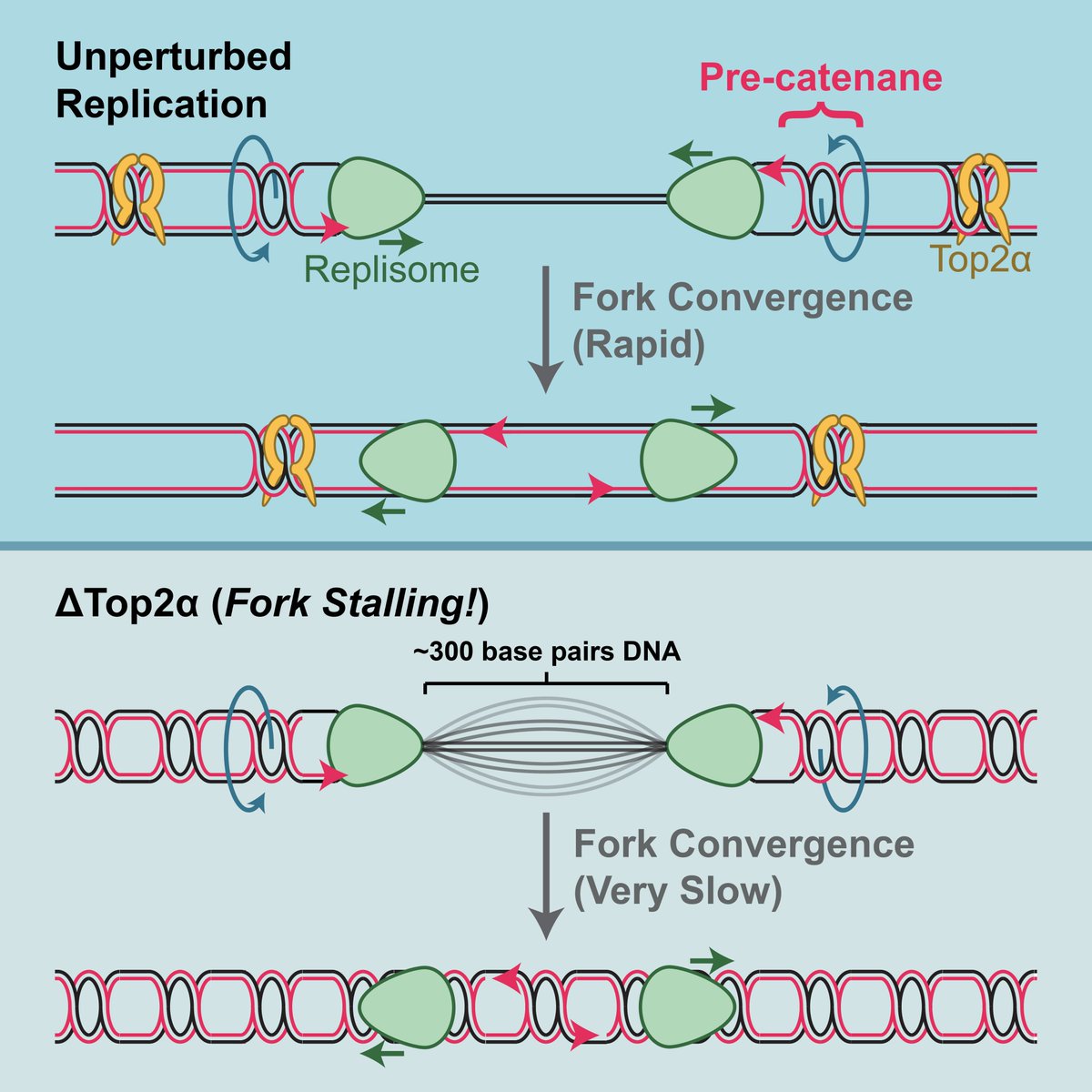
Our latest termination paper is online! 🐸🧬➡️⬅️🧬Key points:
- RTEL1-MCM10 is a 'backup' mechanism for when TOP2 is compromised
- MCM10 promotes RTEL1 binding/function
- RTEL1-MCM10 don't regulate topology but do act as a general stalled fork response
cell.com/cell-reports/fullte…
2
12
76
8,711
Dewar Lab retweeted

14 Feb 2023
Please forward this to any senior graduate students you know. Should be lots of fun! I can't wait to meet the participating trainees and hear about their research!
4
6
2,549
Dewar Lab retweeted
10 Feb 2023
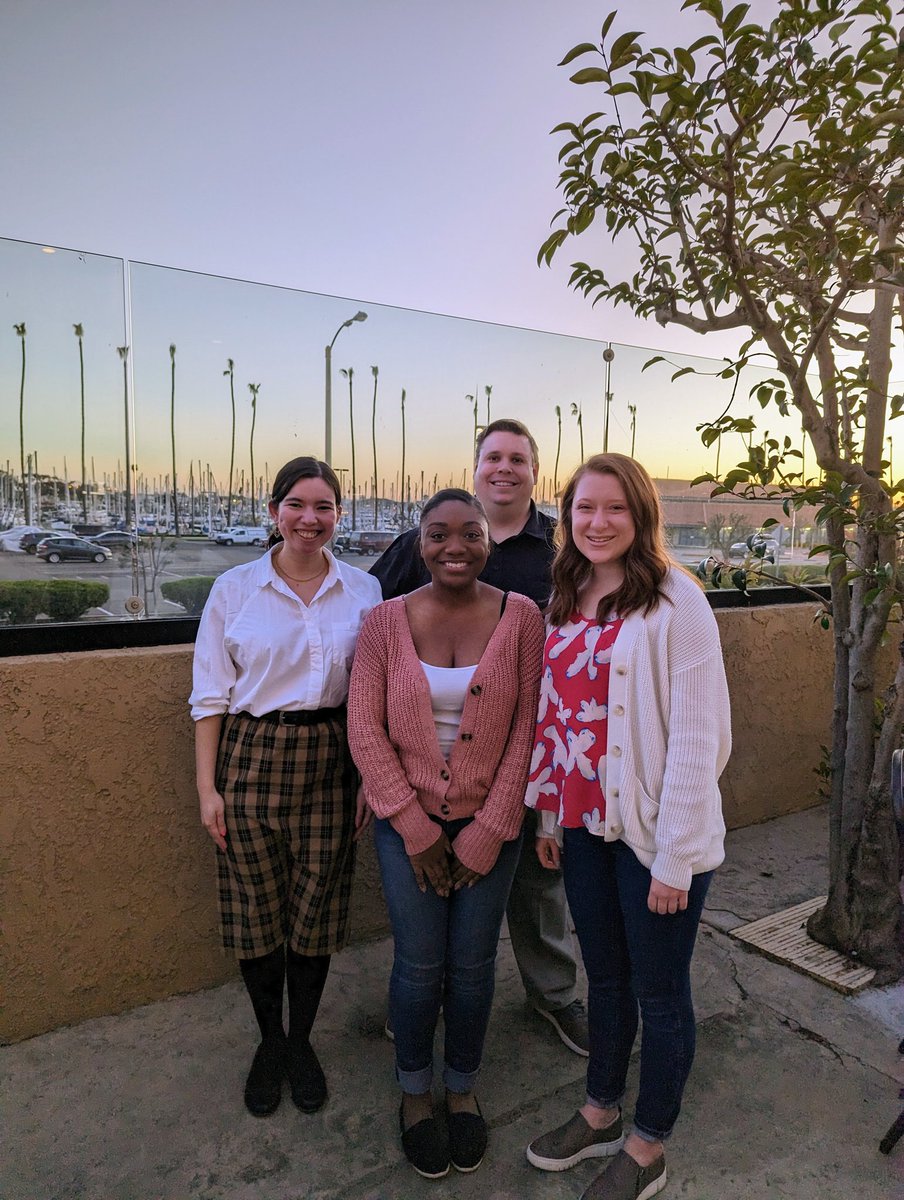
🧬🛠️ We had an amazing time at the Mammalian DNA Repair GRC in Ventura, CA. Fantastic presentations and discussions at a great location. 🙏 to @Opreskolab and @RogerRogergr for organizing. Can't wait for the next one! @GordonConf #DNARepair
4
38
1,926
Dewar Lab retweeted

Researchers from the @Topo_Lab were instrumental in the development of the first new antibiotic treatment for uncomplicated urinary tract infections in more than 20 years.
Their collaborators @GSK will soon be filing for FDA approval.
news.vanderbilt.edu/2023/01/…
1
1
3
642
Dewar Lab retweeted

17 Jan 2023
Check out our latest story in @MolecularCell. Our team pairs the dTAG system with deep genomic analysis to determine the spatiotemporal role of SMARCA5 in the maintenance of chromatin structure and function.
bit.ly/3GNCalx
3
9
59
12,748
Dewar Lab retweeted

27 Dec 2022
Postdoctoral positions available in Nussenzweig lab to study mechanisms involved in DNA repair- 1st position (wet lab) focuses on using cutting-edge cellular, molecular, and genomic tools. 2nd uses computational approaches to study DNA repair.
1
47
94
23,141
Dewar Lab retweeted

27 Dec 2022
Our new cryo-EM structure explains how the MRN complex can act both as DNA double-strand break sensor & DNA tethering device, read the paper here:
authors.elsevier.com/c/1gK10…
Huge thanks to all collaboration partners W.Roos, B.Steigenberger and C. Junge!
#cryoEM, #DNArepair, #MRN
4
52
227
38,187
Dewar Lab retweeted

5 Oct 2022
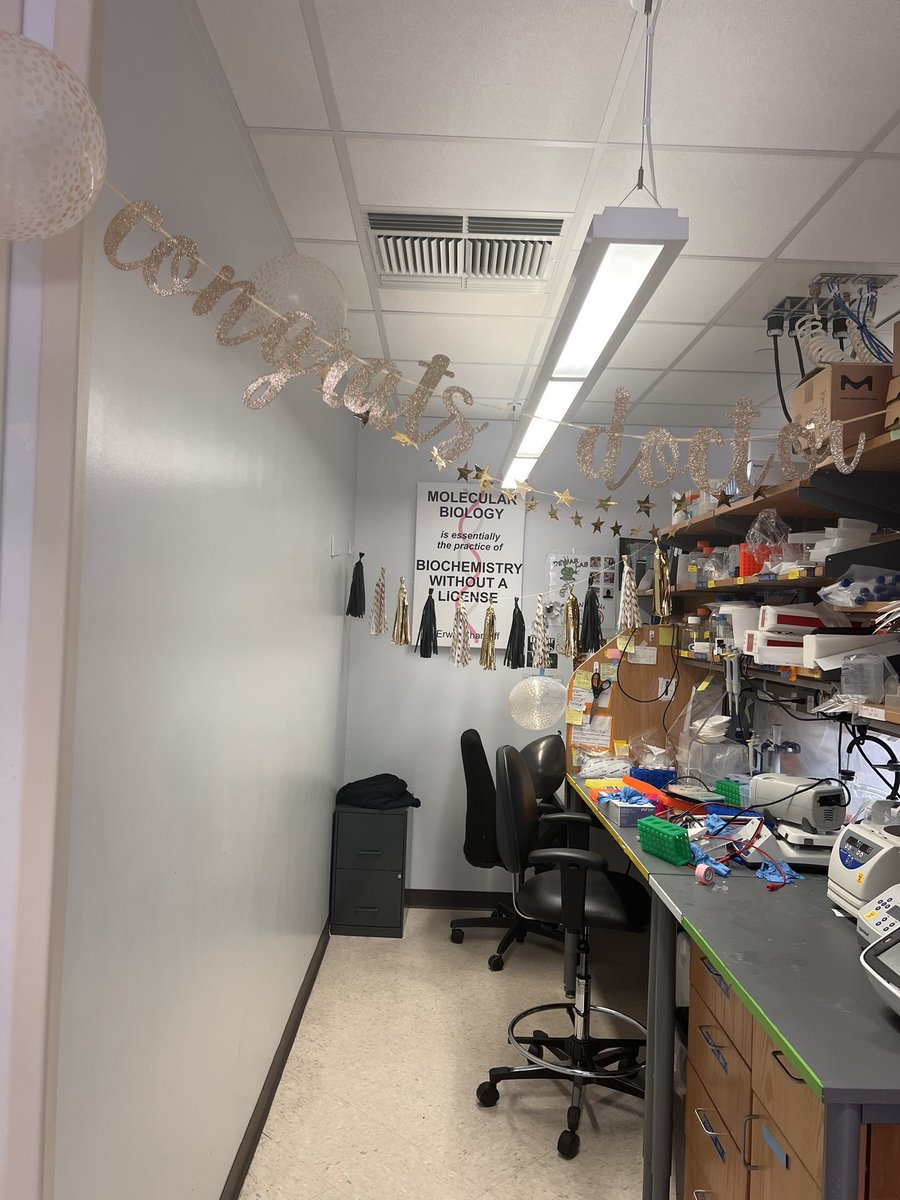
Wish my labmates had warned me.. would have cleaned up my bench. #PhDone
6
1
32
Dewar Lab retweeted

1 Sep 2022
The Department of Biochemistry @VandyBiochem in Vanderbilt Basic Sciences @VUBasicSciences is recruiting new faculty! Apply here: apply.interfolio.com/112443
42
42
Dewar Lab retweeted

20 Jul 2022
📢 Hot off the press 📢
🧬 Ever wonder why some DNA sequences are difficult to replicate?
Using reconstituted replisomes we revealed that structure-forming repeats induce robust replication stalling and uncovered structure-specific recovery mechanisms:
nature.com/articles/s41467-0…
9
43
173
17 May 2022
Excited to share our latest paper, just published in EMBO J: embopress.org/doi/abs/10.152…
We found that topoisomerase II poisons exert different and unexpected effects on DNA replication. Congrats @sabrinadoessci1! Thanks also to our collaborators @Topo_Lab and @davidkcortez
3
7
46
Dewar Lab retweeted
17 Mar 2022
Really excited to share the methods chapter we wrote for DNA Damage Responses as a part of Methods in Molecular Biology series. Here we describe really fun assays to monitor DNA replication termination using 🐸🥚 extracts! #gelsnotcells @Dewar_Lab link.springer.com/protocol/1…
3
8
28 Jan 2022
Thrilled to announce another preprint from our lab! @LillianVCampos found that RTEL1 and MCM10 help replication forks overcome topological stress during termination. Thanks also to @BFEichman @DarrenHeintzman @TKavlashvili
28 Jan 2022

RTEL1 and MCM10 overcome topological stress during vertebrate replication termination biorxiv.org/cgi/content/shor… #bioRxiv
1
14
48
Dewar Lab retweeted

5 Nov 2021
Not long left to apply for postdoc positions on 🧬 replication in my new lab @mrc_hgu @EdinUni_IGC. A range of projects available, some of them related to nature.com/articles/s41586-0…. Informal enquiries welcome.
elxw.fa.em3.oraclecloud.com/…
28
26
8 Nov 2021
A great opportunity for anyone looking for an exciting post-doctoral position!
8 Nov 2021

Postdoc positions! Come join us and address key biological questions about how Replication Gaps impact cancer, therapy response and developmental disease while learning the latest genome analysis techniques.
Interested, Sharon.Cantor@umassmed.edu
2