
Learnings
Joined April 2023
- Tweets 6,436
- Following 1,048
- Followers 331
- Likes 39,008
40 Photos and videos




Pinned Tweet

8 Mar 2024
CryptoAmsterdam @damskotrades : Very good Altcoin charting in phases
Bitcoin :
@CryptoCon_
Bloodgood @bloodgoodBTC
@bitcoinarchive
@100trillionUSD
@therationalroot
@ChartsBtc
@Bitcoin
1
9
900
Learnings retweeted
In the 1970s, one man turned $5,000 into $15 million.
No internet.
No screens like we have.
Just a computer the size of a room,
and one rule he refused to break.
His name is Ed Seykota.
Here is the man, and the 5 rules behind it 👇
1
2
7
2,254
Learnings retweeted

One of William O’Neil’s biggest edges wasn’t intelligence—it was preparation.
Every weekend he would:
• Review hundreds of charts
• Analyze earnings growth
• Study relative strength
• Build a watchlist
• Create a game plan for Monday
2
8
39
3,444

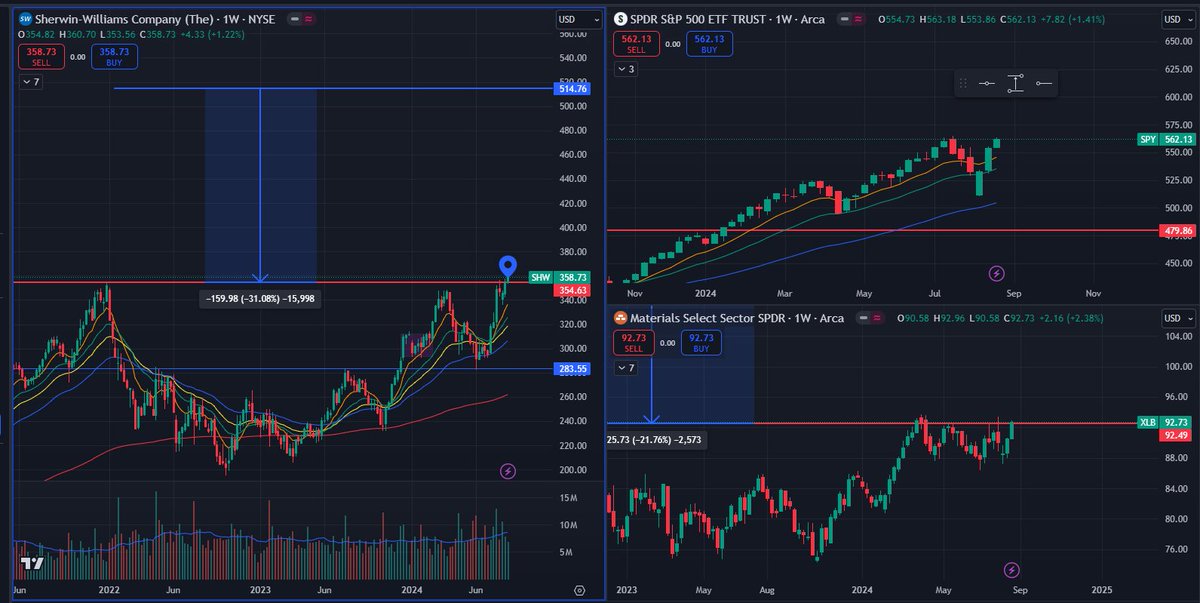
A stock spends 18 months building a beautiful base, then breaks out on monster volume.
Runs 15%.
And suddenly every trader on Earth develops an urgent need to own it immediately.
...where were you for the last year and a half?
I like to think the breakout gets everyone excited, while the pullback tells you who actually understands what's happening.
I'm waiting for volume to dry up, support to hold, and weak hands to panic because they bought the exact top of the breakout candle.
What's funny is that the people who chase the breakout usually end up selling the pullback.
The people who wait for the pullback usually end up owning the trend.
1) Patience is expensive EMOTIONALLY...
2) But chasing is expensive FINANCIALLY.
Know the difference!

I've realized the majority of my profits have never come from buying the breakout itself.
It's come from buying the pullback after the breakout.
Almost every trade I take starts with a stock coming out of a large base. I'm talking about names that have spent months, and sometimes years, moving sideways while institutions accumulate.
Then eventually something changes... maybe it's earnings, or it's a new product cycle. Maybe it's a theme gaining momentum? Whatever the catalyst is, price finally starts leaving the range.
And funny enough, that's where the 99% get excited.
Ironically, that's where I usually become patient.
The breakout gets my attention, but the pullback is often where I get involved.
1 of my favorite setups is the first pullback after a major base breakout. If I miss that one, I'll usually focus on the second consolidation. In my experience, these are often the "highest quality" opportunities because the stock has already proven it can break out, institutions have already shown their hand, and now I'm simply waiting for the market to give me a lower-risk entry.
I like to think about it this way:
- A breakout is the market making a statement.
- The pullback is the market asking a question.
"Are buyers actually willing to defend this area?"
That's what I'm trying to figure out.
When a stock pulls back after breaking out of a large range, I'm paying very close attention to how it behaves. Does it immediately fall apart? Or does it hold key levels and refuse to give back much ground?
When it comes to behavior, I look for TIGHTNESS.
If a stock breaks out 20%, then spends the next two weeks trading in a very tight range while volume dries up, that's constructive behavior to me. Sellers are becoming exhausted while buyers continue absorbing supply. The tighter the action becomes, the more interested I become!
Volume is another huge clue.
During the breakout, I want to see volume expand. That's evidence that institutions are participating. Then during the pullback or consolidation, I want volume to contract. If volume is exploding on every red day, that's usually not what I want to see. But if volume starts drying up while price remains near highs, that's often a sign that selling pressure is becoming limited.
1) Price tells me what happened.
2) Volume tells me how much conviction was behind it.
I also spend a lot of time studying the personality of a chart.
Some stocks are constructive, and some stocks are sloppy.
Some names respect the 9EMA for weeks months. Others constantly undercut and reclaim support before moving higher. Some stocks have violent shakeouts. Others grind methodically higher.
This is why I constantly study prior winners.
I'm trying to understand how a stock behaves when it's healthy.
> Does it respect moving averages?
> Does it recover quickly after pullbacks?
> Does it close near highs?
> Does it show relative strength on market weakness?
> Does it stay tight?
Those are the little nuances that I look for from a potential leader.
A simple list I look for:
1) Find a stock breaking out of a large base.
2) Confirm relative strength v.s. the market sector.
3) Wait for the first or second pullback.
4) Watch volume dry up.
5) Look for tightness near major support.
6) Execute on 15 or 30min pivot reclaim.
7) Risk against the low.
Most people think the money is made by finding the perfect breakout... but I've found the money is usually made by finding the strongest stocks and then having the patience to wait for the first real opportunity to join the trend.
If the stock is truly a leader, the breakout is often just the beginning.
The first pullback is where the real asymmetric opportunity tends to show up. That's where I want to be positioned. That's where risk is usually the smallest.
And if the trend continues, that's often where the biggest winners begin!
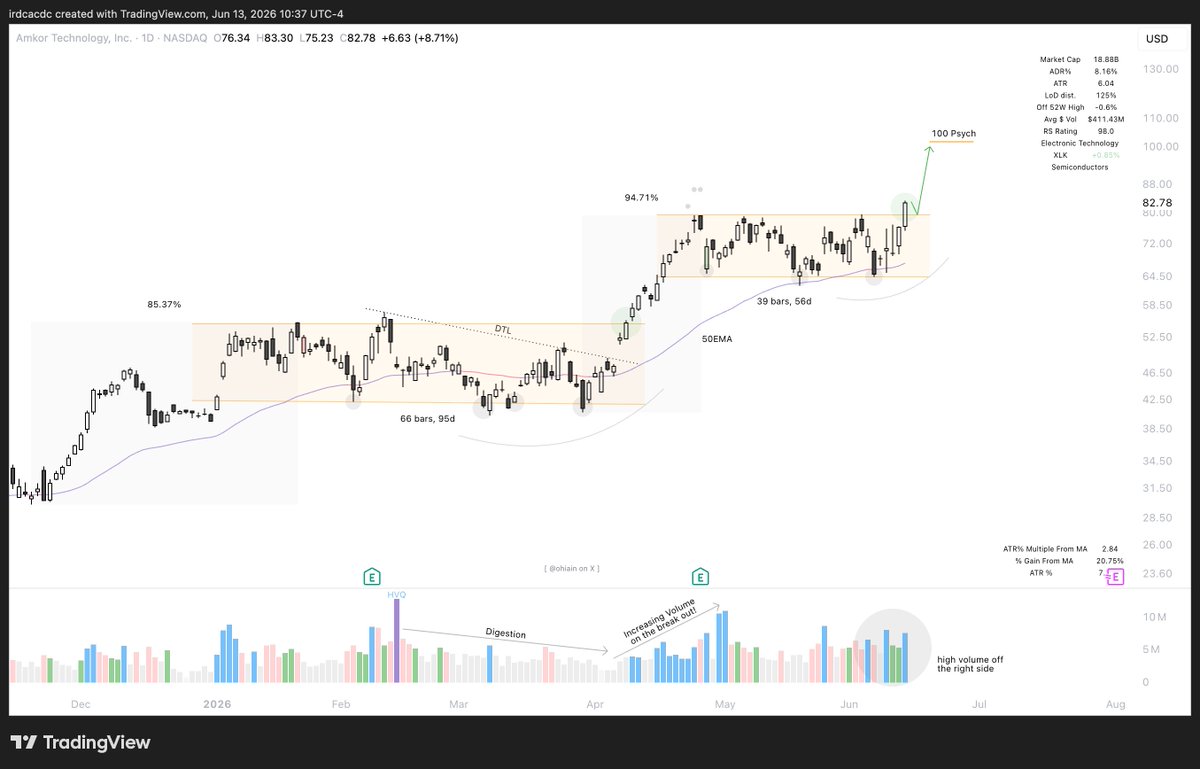
Chart: $AMKR.
5
7
76
7,548
Learnings retweeted

AMD CEO Lisa Su just killed Nvidia’s $4,000 AI box with a $1,499 lunchbox.
She walked on stage, held it in one hand, and ran a 235 billion parameter model live. No data center. No cloud. No rented GPU.
The chip inside is something nobody saw coming. AMD’s Ryzen AI Max 395 is the first x86 silicon where CPU and GPU share the same 128GB of memory. That single trick lets a desktop run models that used to need a server rack.
Out of those 128GB, Linux hands the GPU 110GB to play with. For context, an RTX 5090 gives you 32GB. A 4090 gives you 24. This box gives you more than three times either of them, in a chassis the size of a thick paperback.
The benchmark that broke the room: this chip beat an Nvidia RTX 5080 by more than 3x on DeepSeek R1 inference. A $1,499 lunchbox outrunning a $1,000 discrete graphics card on a real AI workload. Nvidia spent a decade convincing the world you needed their hardware for serious AI. AMD just put that on a desk for half the price.
Here is what nobody is telling you. A heavy AI user right now pays $200 for Claude Code Max, $200 for ChatGPT Pro, $20 for Cursor, $20 for Gemini. That is $5,280 a year leaving your account. The box pays itself off in 9 months and then runs free for the rest of its life.
Install Ollama. Pull Qwen3 235B. Point Claude Code at localhost. Same interface you already use, except now nothing leaves your machine, nothing costs per request, and no company throttles your usage at 3am when you finally have time to build.
This is the moment every AI subscription becomes optional. Lawyers stop fearing OpenAI leaks. Developers stop watching the token meter. Founders stop renting H100s for prototypes that never ship because the bill scared them.
The first thousand people to figure this out will own the next two years of private AI consulting.
Save this, and read the full breakdown article below you are watching the next shift hit before everyone else does.

Community note
The 128GB GMKtec EVO-X2 mini PC with Ryzen AI Max 395 currently costs $3,199 on Amazon, not $1,499. The 3x performance claim over RTX 5080 applies only to AI models exceeding the latter's 16GB VRAM. amazon.com/GMKtec-Compute… wccftech.com/amd-ryzen-ai-m…
345
848
6,931
1,548,398
Learnings retweeted
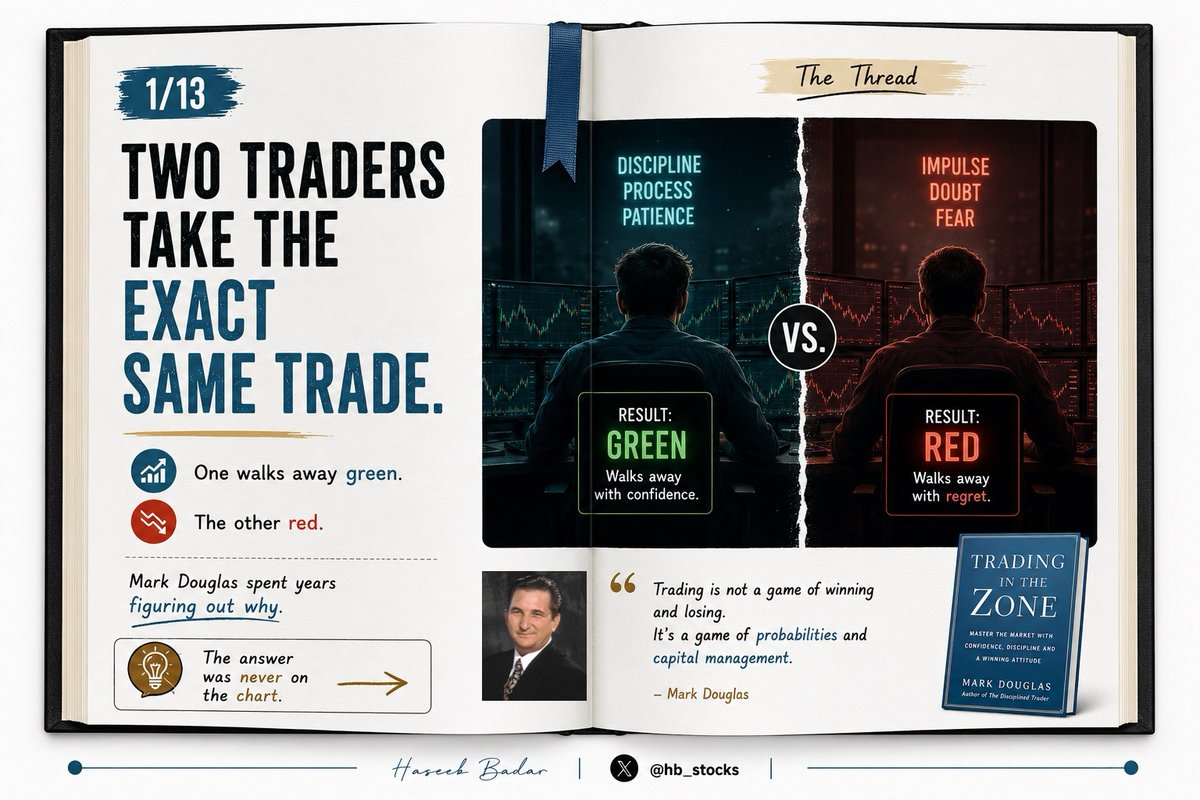
Two traders take the exact same trade.
One walks away green. The other red.
Mark Douglas spent years figuring out why.
The answer was never on the chart ↓
1
6
38
4,872
Learnings retweeted

Jun 13
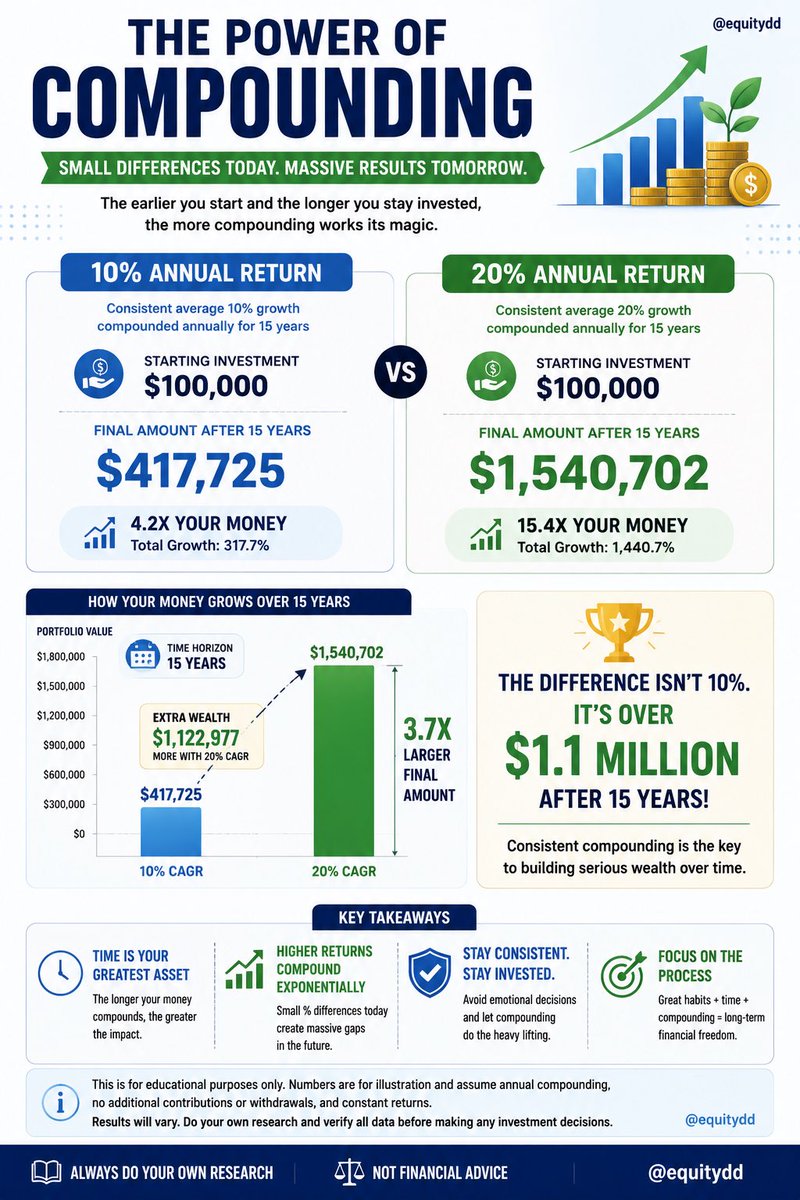
Compounding is one of the most powerful forces in investing. A portfolio growing at 20% annually instead of 10% turns $100,000 into over $1.5 million versus just $418,000 after 15 years, a difference of more than $1.1 million.
#Investing #Compounding #WealthBuilding
$QQQ $SPX $SMH $MAGS $IWM
1
8
45
2,566
Learnings retweeted

Jun 12
Ed Seykota turned $5,000 into $15 million.
so i reverse engineered his five rules, coded it from scratch with Claude Code, and backtested it.
new video breaking down everything (and if it still works):
youtu.be/bLoBNKqUTIg?si=yPtq…
5
15
85
19,811
Learnings retweeted

Jun 13
"If it's tedious to learn, it isn't a passion...you're not in the right lane."
Jun 9

My conversation with @bgurley on thinking, making decisions, and the future
0:00 Systems Thinking & Mental Models
05:21 The Power of Knowing Industry Bedrock
08:50 Traits in Founders
11:44 Surprising AI Use
13:13 The Future of AI
23:04 Is Tesla Self-driving THAT good?
24:15 Non-Consensus Opinions
24:53 The AI Buildout (Bubble?)
29:40 The Role of Retail Investors
34:26 Stablecoin
39:55 AI and Debt Analysis
45:05 Storytelling as a Superpower
50:12 Lessons from Uber
52:10 Inside the Benchmark Structure
59:42 Success
Listen and Learn!
(Includes paid partnerships.)
8
31
149
25,723
Learnings retweeted

Jun 13
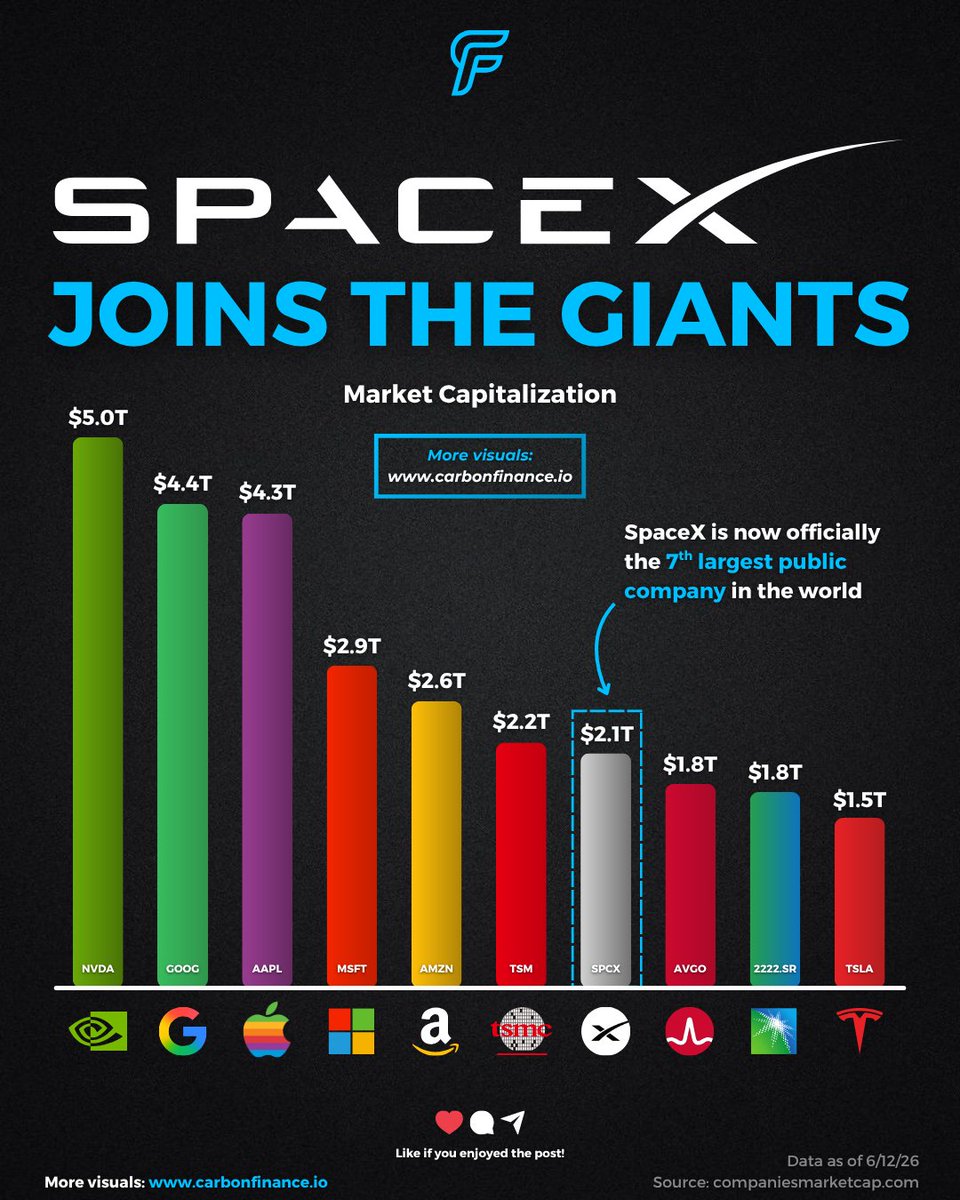
SpaceX's 11th employee just became a billionaire.
Gwynne Shotwell joined SpaceX in 2002. She was employee number 11, joining as VP of Business Development before the company had proven a single rocket could fly.
She didn't even go there looking for a job. She had taken a colleague to lunch to celebrate him leaving for SpaceX, ran into Musk at the restaurant, and got interviewed on the spot. A week later, she joined him.
Her job: sell rocket launches for a company nobody had heard of. She built the Falcon vehicle manifest to over $5 billion in commercial contracts. She managed SpaceX's growth to 22,000 employees. She was the one who told NASA, the Air Force, and paying commercial customers why SpaceX could get to orbit cheaper and faster than anyone before it.
She was also the one who said no to going public for years. "I wasn't sure the company would go public," she said on CNBC yesterday. She resisted the pressure because she believed the public markets would force SpaceX into quarterly thinking, which would kill the mission.
She finally decided it was time. "I do not want to focus on quarterly earnings," she said on IPO day. "What we're doing is very futuristic."
Her stake is now worth north of $1.3 billion. She's SpaceX's fifth-largest Class A shareholder.
The 24 years of operational work that made yesterday possible have Gwynne Shotwell's fingerprints on them.
140
1,027
9,358
418,204
Learnings retweeted

Jun 13
Take Trading Seriously,
It Will Make You RICH!

4
36
335
5,082

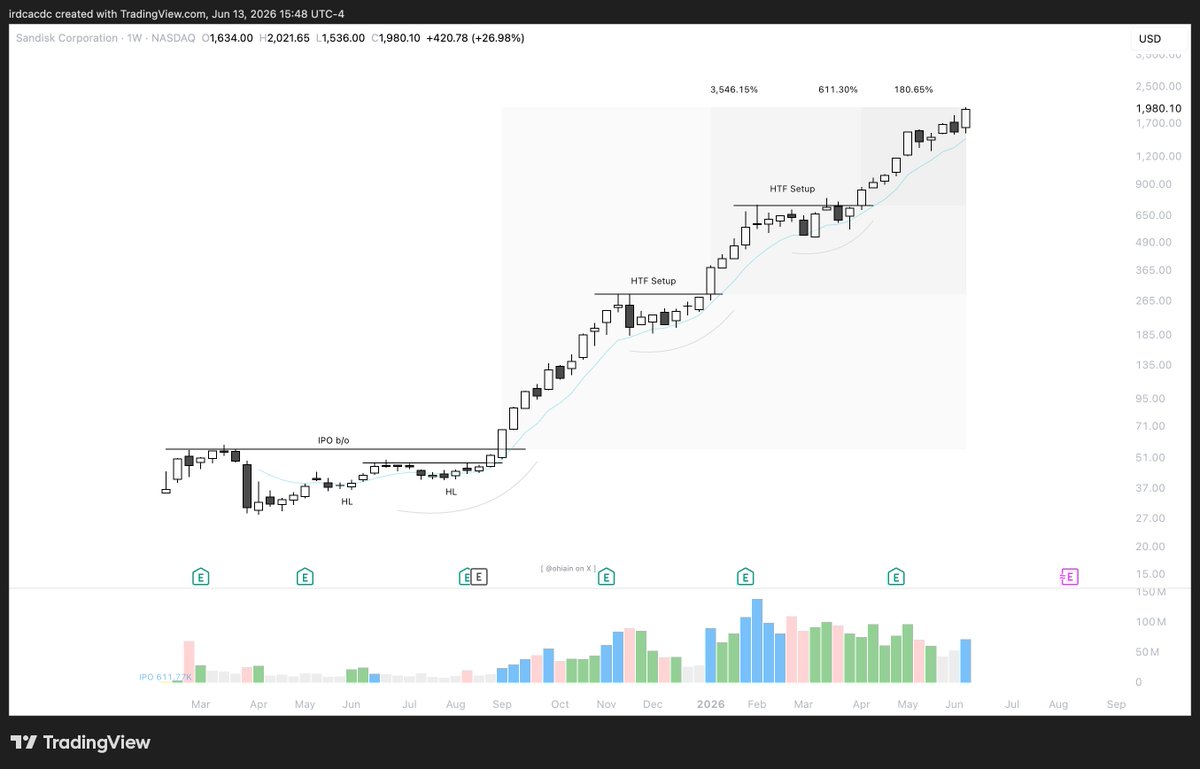
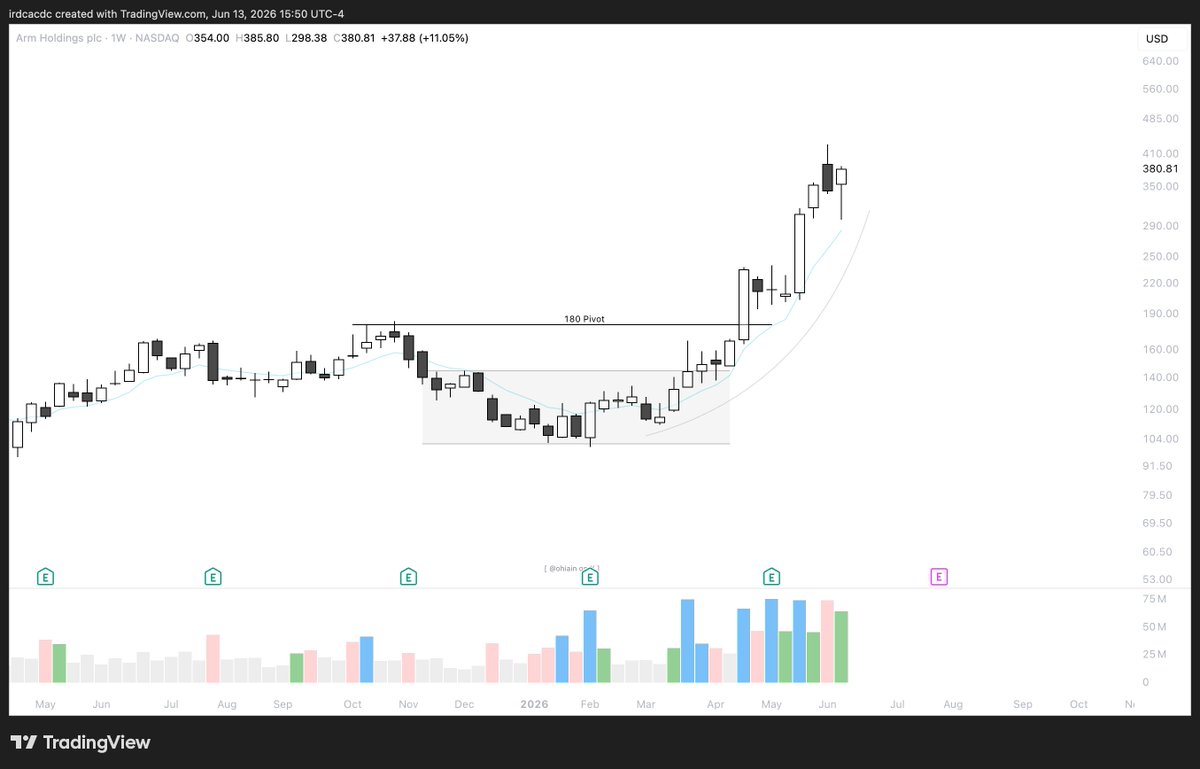
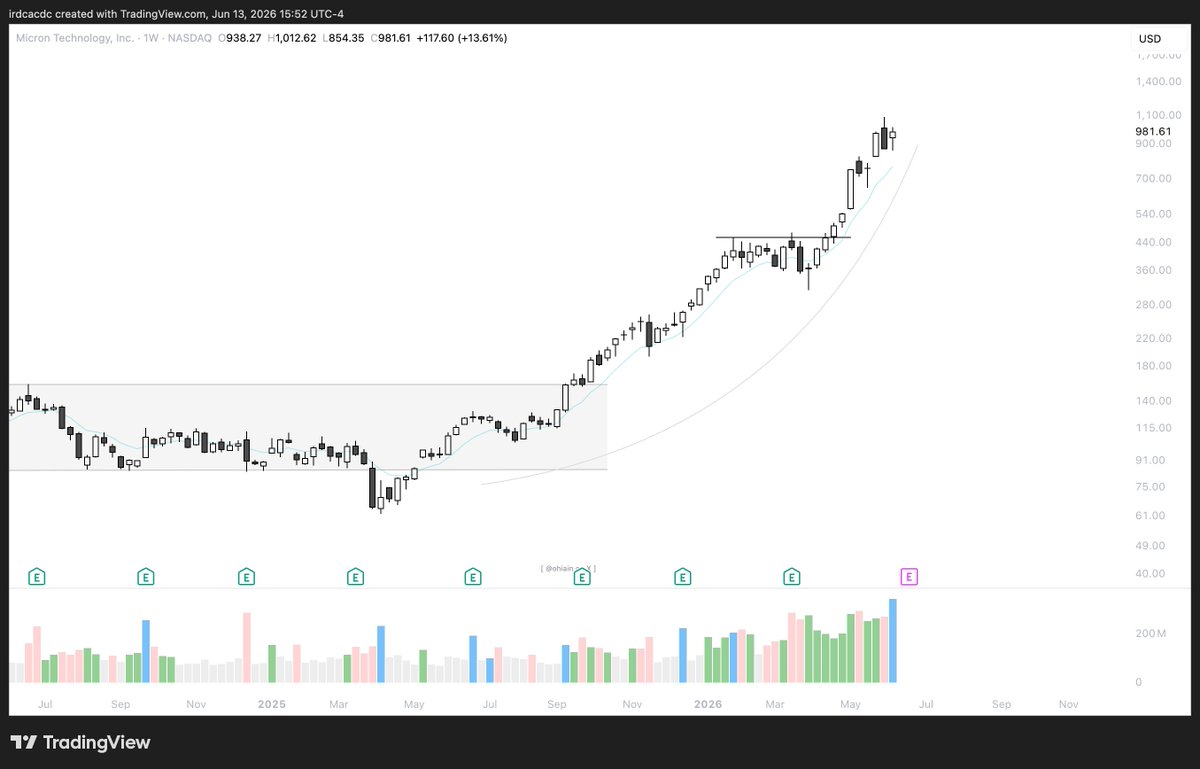
If a leader is going to HOLD UP, it usually tells me right at the 9week.
After studying prior leaders...over and over again, the biggest leaders of every cycle tend to respect the 9week during healthy uptrends.
If you go back and study stocks like $ARM, $MU, $SNDK, or countless other recent market leaders, you'll notice something very, very interesting... after breaking out of large bases, they rarely move in a straight line. Instead, they advance, digest, pull back into support, find buyers, and then continue higher.
More often than not, that support area ends up being somewhere around the 9week.
That's why I pay so much attention to this area on leading names. The 9week is where I start asking questions:
"Is this just normal profit taking?" or...
"Is institutional demand beginning to disappear?"
I do believe both questions answer different concepts.
I've picked up that the majority of traders on X see a pullback and immediately assume something is wrong, but I often see PBs as an opportunity. If a stock has already proven itself as a leader, is part of a strong theme/group, and has been outperforming the market for weeks or months, a pullback into the 9week is usually the first place I become interested again an a range move. But here's the catch...
I don't blindly buy the 9week.
I STALK the reaction.
Think about the psychology of buyers sellers... after a strong run, people begin taking profits. Short-term traders get nervous, weak hands start selling, and the stock pulls back into an area where institutions have previously supported price.
Now the question becomes:
"Do buyers show up again?"
Simply put...that's what I'm watching.
If a stock slices through the 9week with heavy selling pressure and can't reclaim it, I take note. If sellers push it into the 9week and buyers immediately begin defending the area, that makes my eyebrows perk.
The REACTION matters MORE to me than the level itself.
This is where my lower timeframe execution comes into play. Once a leading stock reaches the 9week, I immediately move down to the 15 30min TF. I'm looking for evidence that momentum is beginning to shift.
Things like...
> Undercuts and reclaims
> 15/30 min bullish pivots
> Intraday VWAP reclaims
> Higher TF failed breakdowns
> Higher lows starting to form
> Buyers defending weekly support
These are all clues that selling pressure may be exhausting itself.
My favorite entries usually come when sellers flush price below an obvious level, trap late sellers, and then buyers step in aggressively to reclaim it. Once a 15 or 30min pivot forms, I can enter with a tight stop underneath the low and/or LOD.
That's what creates the asymmetric opportunity.
I'm not trying to buy because the stock is down. I'm buying because buyers are proving they're willing to defend an area (I'm watching) that already matters on the weekly chart.
Something I've learned from studying hundreds of market leaders is that the best stocks often make it difficult to get in. They like to shake people out and create doubt. They pull back just enough to make people question the trend before continuing higher.
IMO, the 9week is often where that battle takes place.
Here's a SIMPLE process to backtest yourself:
1) Identify a leading stock with strong RS.
2) Wait for a PB into the 9week/50EMA confluence.
3) Monitor volume price behavior around support.
4) Drop down to the 15/30min charts.
5) Wait for buyers to prove they're stepping in.
6) Enter on a pivot high support reclaim.
7) Risk against the low and/or LOD.
Don't just take my words as truth... give it a try yourself!
This is the focus: to put myself in a position where risk is small, the trend is still intact, and institutions are potentially showing their hand again.
That's why I love the 9week, and again it's not an entry signal by itself. It's an area of interest where some of the best "low-risk" opportunities in leading stocks tend to develop.
I write all of this to say, watch the 9week!
Charts: $INTC, $AMKR, $AEVA, $OUST.
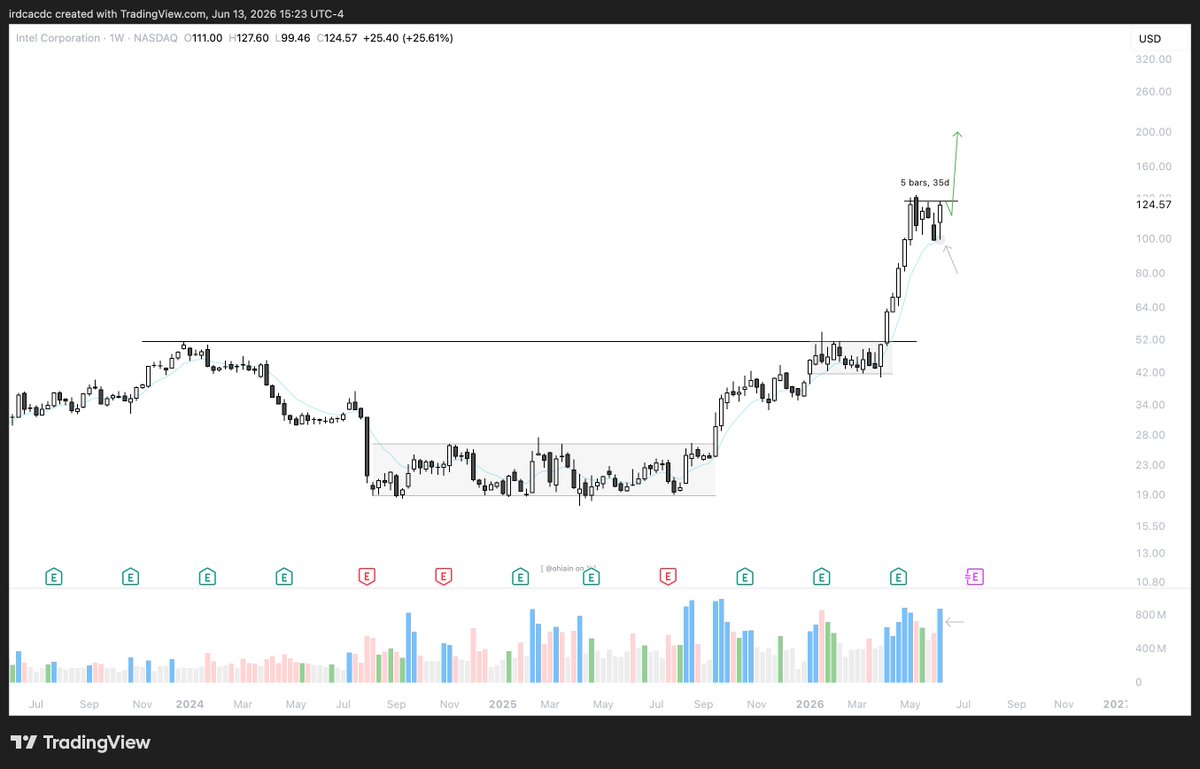
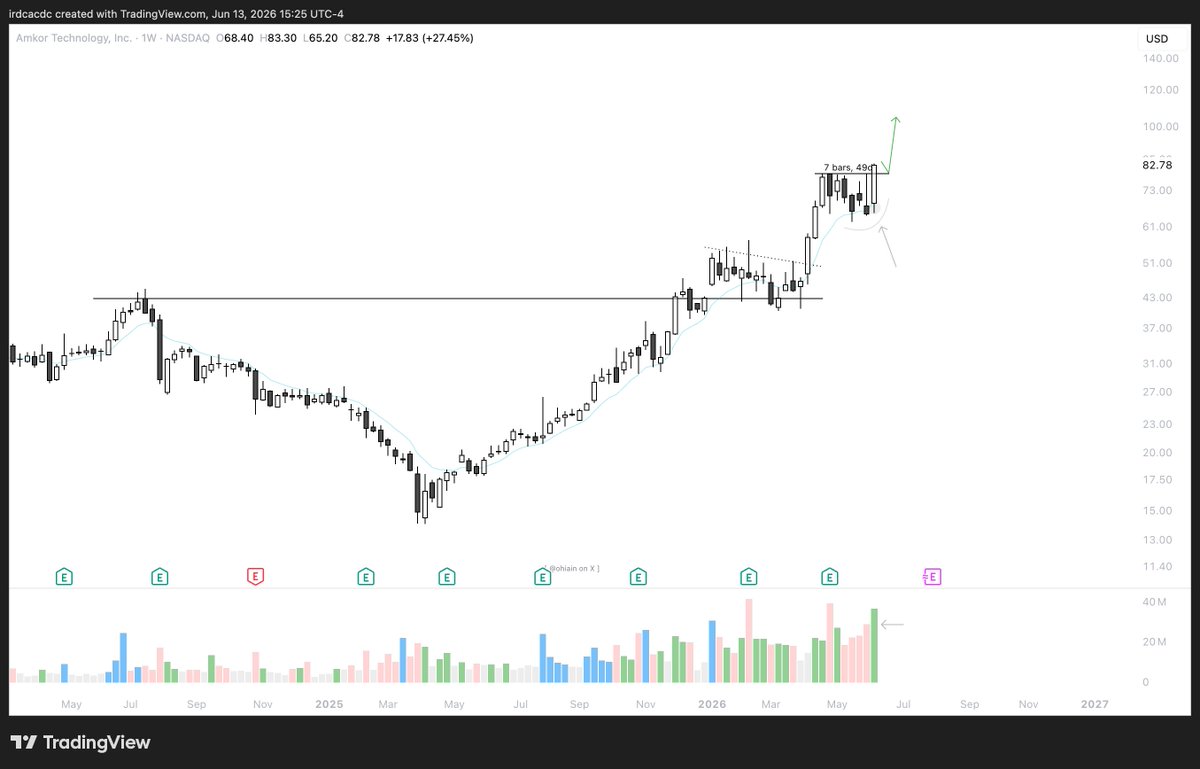
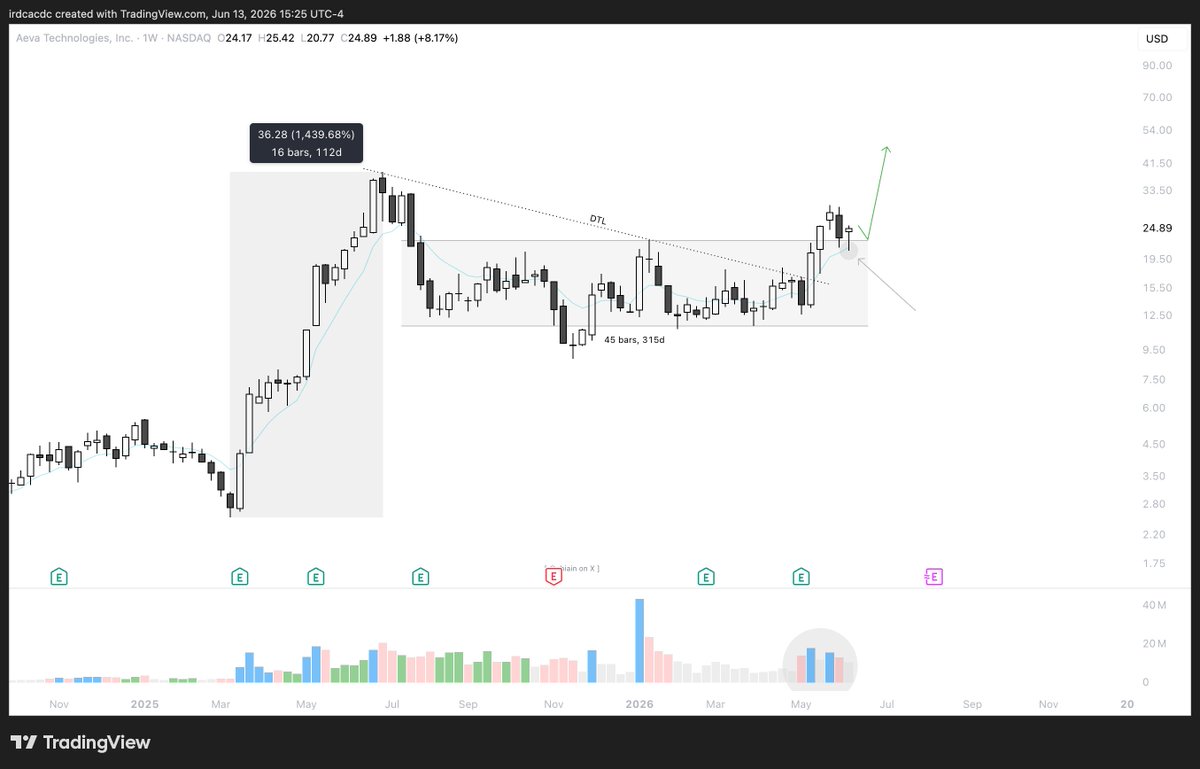
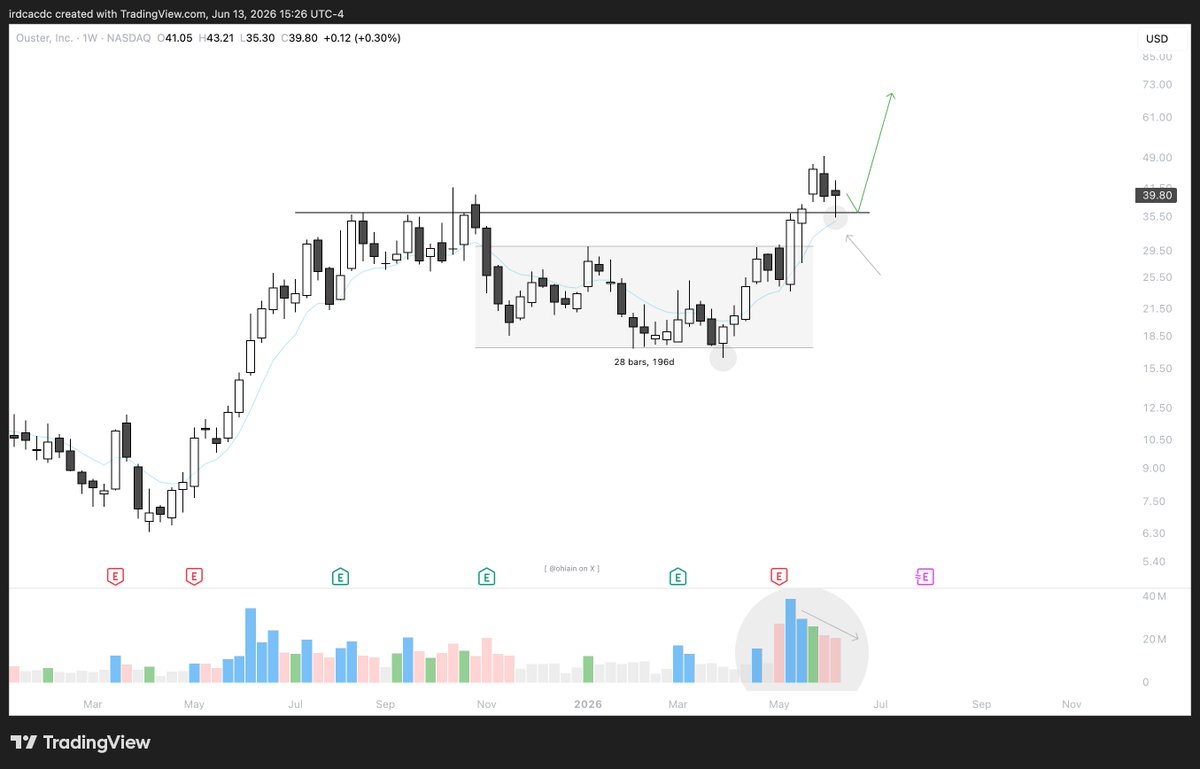
It took me years to understand that some of the best opportunities show up when multiple timeframes start telling the same story.
A setup immediately gets my attention when a leading stock starts tightening up around the daily 50EMA while simultaneously sitting on the weekly 9EMA. That area tends to attract a lot of eyes from trend followers & swing traders to larger institutions, all evaluating risk around the same spot.
When relative strength remains constructive, volatility starts contracting, and buyers continue defending that confluence of support...that's usually my cue to zoom into the smaller TFs and pay very close attention.
I just need to recognize that the stock is building pressure, building up the right side, and if expansion comes, the risk/reward can become very attractive.
This is something I pay attention to.
16
46
440
39,845
Learnings retweeted

Jun 13
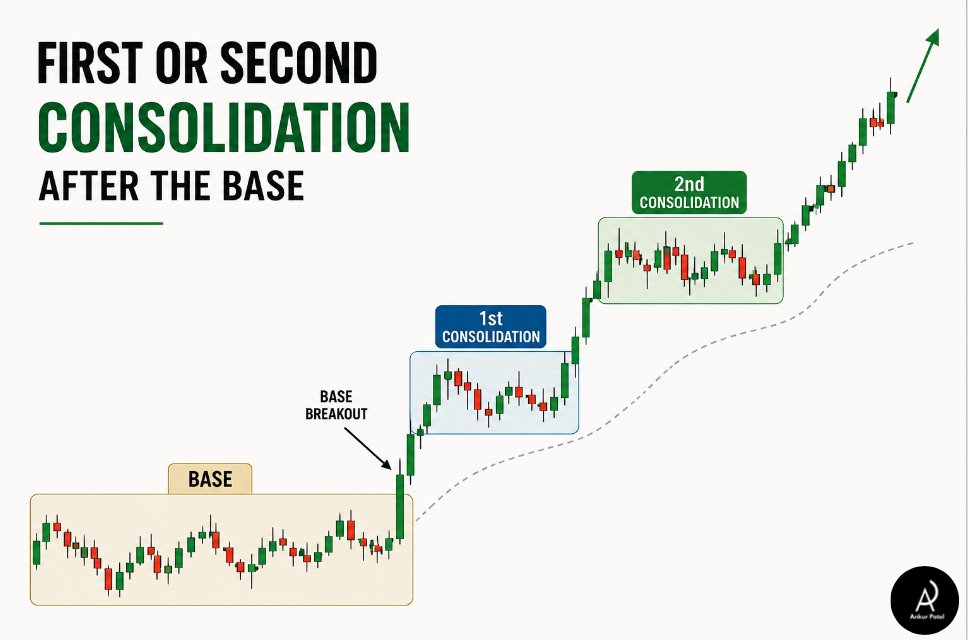
Focus on First or Second Consolidation After the Base
If you miss the base breakout, focus on the first or second consolidation after it.These are often the best opportunities because the stock has already shown strength but is still early in its move.
Your risk is usually small, while the upside can be much bigger if the trend continues.
3
23
234
9,692

Learnings retweeted

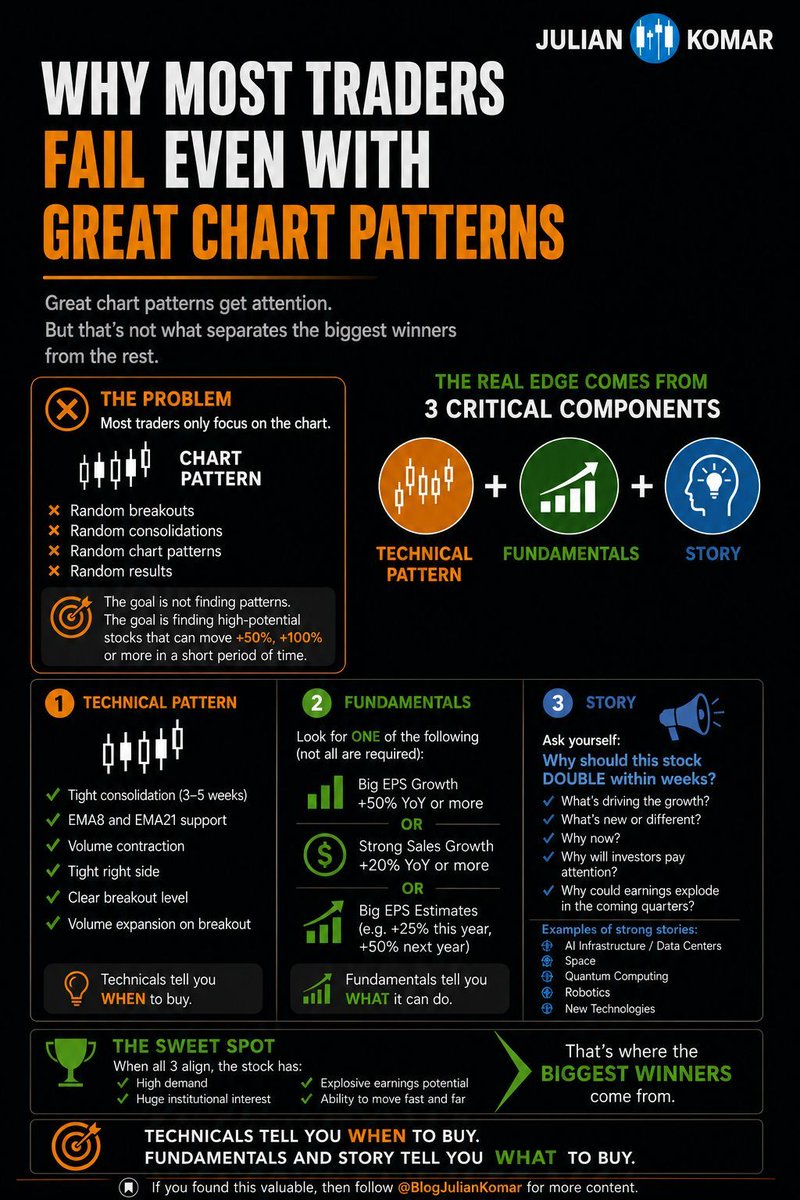
Most traders think a great chart pattern is enough.
It isn't.
The biggest winners usually combine:
1. Technical Pattern
2. Fundamentals
3. Story
That's where the biggest stock winners come from. 👇
3
14
58
4,166
Learnings retweeted

Jun 13
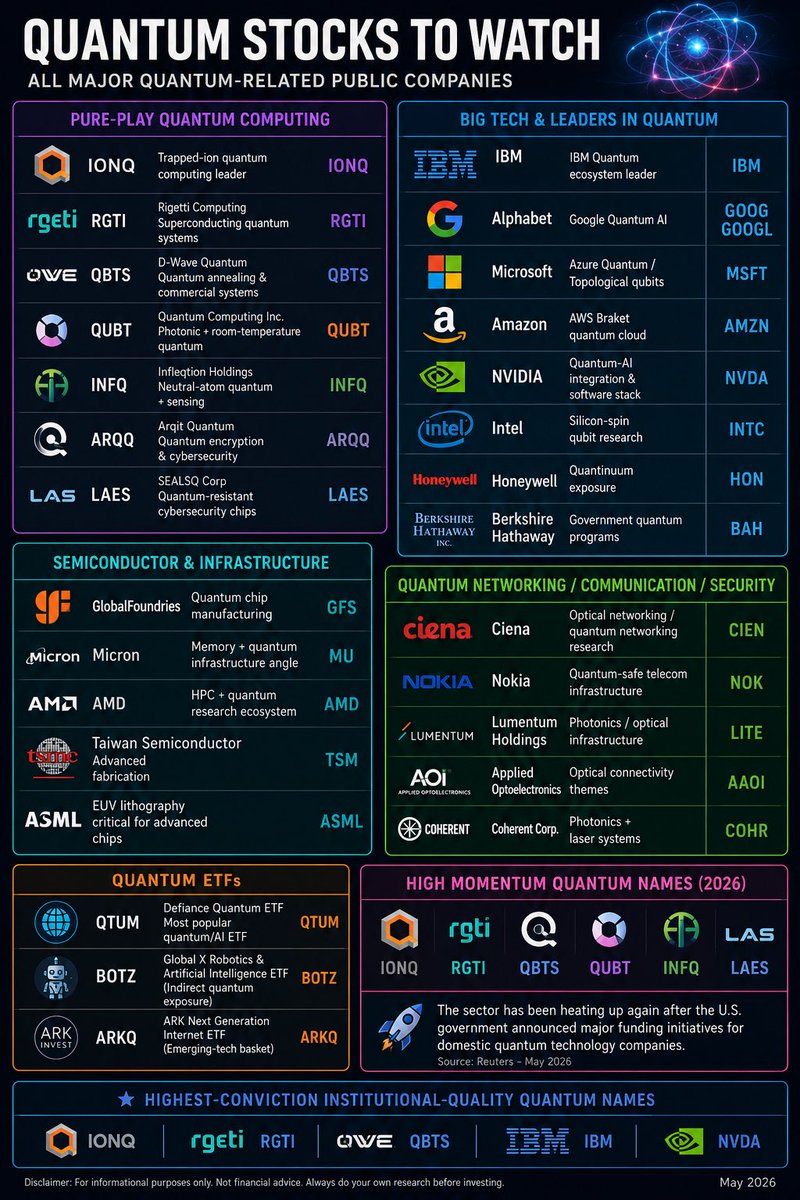
QUANTUM COMPUTING — The Full Sector Map. Every Play. One Post.
May 24

QUANTUM COMPUTING — The Full Sector Map. Every Play. One Post.
PURE-PLAY QUANTUM
$IONQ → Trapped-ion leader. Best-in-class qubit fidelity. Customers include Airbus, AstraZeneca, Hyundai. 256-qubit demo targeted 2026. The institutional-grade pure-play.
$RGTI → Superconducting quantum systems. Highest beta in the sector. When quantum runs, $RGTI moves violently. Active momentum name right now.
$QBTS → D-Wave Quantum. Annealing-based architecture. Most commercially de-risked pure-play — already generating optimization revenue with real enterprise clients.
$QUBT → Photonic room-temperature quantum. Q1 2026 revenue up from $39K → $3.7M YoY. Acquired Luminar Semiconductor for $110M. Vertically integrated photonics quantum platform taking shape. Executing quietly.
$INFQ → Neutral-atom quantum sensing. One of the least-covered names in the sector. Neutral-atom architecture is gaining credibility as a scalable path to fault tolerance. Early but worth watching.
$ARQQ → Quantum encryption and post-quantum cybersecurity. The national security angle. As quantum breaks classical encryption — this becomes critical infrastructure.
$LAES → Quantum-resistant cybersecurity chips. Hardware-level protection against quantum decryption. Defense enterprise security tailwind.
BIG TECH
$IBM → Most mature public quantum roadmap. 1000 qubit processors live. Fault-tolerant systems targeted ~2029. Every enterprise quantum conversation starts here.
$GOOGL → Willow chip demonstrated a landmark quantum error correction milestone. Google doesn’t lose science races. This is a long-term compounder with quantum upside baked in.
$MSFT → Topological qubit breakthrough. Azure Quantum as the monetization layer. Full-stack quantum integrator play for the enterprise cloud era.
$AMZN → AWS Braket quantum cloud. Positioned as the access layer for quantum-as-a-service. Already charging enterprises for quantum compute access today.
$NVDA → Quantum-AI software stack integration. CUDA for quantum is the longer-term thesis. $NVDA doesn’t need to win quantum — it needs to be the layer everything runs on top of.
$INTC → Silicon-spin qubit research. The most scalable long-term architecture thesis — leveraging existing CMOS manufacturing. Slow, but strategically important.
$HON → Majority stake in Quantinuum — the most commercially advanced quantum hardware software company currently private. When Quantinuum IPOs, $HON re-rates hard.
$BAH → Booz Allen Hamilton. Deep in U.S. government quantum programs. Every federal quantum contract flows through firms like this. The picks-and-shovels of government quantum.
SEMICONDUCTOR & INFRASTRUCTURE
$GFS → GlobalFoundries. Quantum chip manufacturing capabilities. As quantum hardware scales, fab demand follows.
$MU → Memory quantum infrastructure angle. Quantum systems require extreme classical compute support — $MU sits in that stack.
$AMD → HPC quantum research ecosystem. High-performance classical compute is the co-processor to every near-term quantum system.
$TSM → TSMC. Advanced fabrication is the foundation of every quantum chip roadmap. No quantum at scale without $TSM.
$ASML → EUV lithography critical for next-generation quantum chip manufacturing. The irreplaceable chokepoint in advanced semiconductor production.
QUANTUM NETWORKING / OPTICAL / SECURITY
$CIEN → Optical networking backbone quantum networking research. Quantum communication requires ultra-low-noise optical infrastructure — $CIEN is already there.
$NOK → Nokia building quantum-safe telecom infrastructure. Nation-state cyber threats are accelerating the quantum-safe network upgrade cycle.
$LITE → Photonics and optical infrastructure. Quantum and photonics are deeply intertwined.
$AAOI → Optical connectivity. Riding both the AI and quantum photonics buildout simultaneously.
$COHR → Photonics laser systems. Lasers are fundamental to trapped-ion and photonic quantum architectures.
24
141
13,190
Learnings retweeted

Jun 13
Moist Mango made 1.6 million dollars on a single Nvidia trade.
He had blown up his account twice before that.
The difference wasn't a better indicator or a secret setup.
Here's what actually built the big money ↓
1
6
22
6,440
Learnings retweeted

Jun 13
HOW THE SPACE BIG 4 STACK UP
1. $SPCX (The Backbone of Orbit)
• 3-year revenue CAGR 67% trading at 120x 2029 net income
• Handles ~90% of global payload mass to orbit with 10.3M Starlink subscribers across 160 countries
2. $RKLB (Vertically Integrated Defense Prime)
• 3-year revenue CAGR 30% trading at 80x 2029 net income
• Second-most-launched US rocket operator with 50 successful Electron flights & $2.2B contracted backlog
3. $ASTS (Tower in the Sky)
• 3-year revenue CAGR 156% trading at 11x 2029 net income
• Nearly 60 MNO partners covering 3B subscribers targeting ~45 BlueBird satellites in orbit by EOY
4. $PL (Eyes From Above)
• 3-year revenue CAGR 25% trading at 105x 2029 net income
• Daily imaging of Earth's entire landmass with a $900M backlog & 116% net dollar retention




84
218
1,504
262,995