
Joined June 2013
- Tweets 9,009
- Following 2,135
- Followers 2,435
- Likes 10,310
908 Photos and videos












Shahaf Peleg 🌅 retweeted

Jun 11
Mitochondria tethered to the nucleus secure its energy supply nature.com/articles/d41586-0…
1
17
49
2,710
Shahaf Peleg 🌅 retweeted

Jun 10
The majority of axonal mitochondria in mammalian neurons lack mitochondrial DNA and do not produce ATP biorxiv.org/content/10.1101/…
5
55
183
37,433

Jun 4
The call should be opened in the next few weeks. Please send me a message if you have more questions - I will also update with more information as it goes.
Please retweet to increase the reach
Jun 4

The proposal should be three pages long, for around 50,000-500,000 for a period of 1-3 years. Companies and academic labs are both invited.
As someone in the field said - its time to move the needle and make some new progress.
197
Jun 4
The proposal should be three pages long, for around 50,000-500,000 for a period of 1-3 years. Companies and academic labs are both invited.
As someone in the field said - its time to move the needle and make some new progress.
Jun 4
1Establishing a method to generate delivery of secondary energy sources in vivo that reaches mitochondria and overcome barriers such as skin.
2Demonstrating that the combined work of 1 2 is able to synthesize a threshold of 10% synthetic ATP generation
1
383
Jun 4
1Establishing a method to generate delivery of secondary energy sources in vivo that reaches mitochondria and overcome barriers such as skin.
2Demonstrating that the combined work of 1 2 is able to synthesize a threshold of 10% synthetic ATP generation
Jun 4
Design of synthetically upgraded mitochondria with the ability to absorb an alternative power source to synthesize ATP independently of oxygen in a mammalian tissue (like the eye) . For example, inner membrane-integrated light-activated proton pumps
311
Jun 4
Design of synthetically upgraded mitochondria with the ability to absorb an alternative power source to synthesize ATP independently of oxygen in a mammalian tissue (like the eye) . For example, inner membrane-integrated light-activated proton pumps
Jun 4
ANNOUNCEMENT FOR POTENTIAL FUNDING
There is going to be (soon) a call for funding where you are encouraged to submit a proposal on upgrading our mitochondria (Mito 2.0) to be able to utilize a secondary energy source (e.g. photosynthetic mitochondria). These are potential points
253
Jun 4
ANNOUNCEMENT FOR POTENTIAL FUNDING
There is going to be (soon) a call for funding where you are encouraged to submit a proposal on upgrading our mitochondria (Mito 2.0) to be able to utilize a secondary energy source (e.g. photosynthetic mitochondria). These are potential points
1
3
334
Shahaf Peleg 🌅 retweeted

Jun 1
Papers like this are why science remains endlessly exciting. This one made me feel the same wonder I felt at 15 when I first discovered science. || Homing pigeon navigation relies on superparamagnetic macrophages under overcast conditions | Science science.org/doi/10.1126/scie…
1
38
212
15,464
Shahaf Peleg 🌅 retweeted

May 28
Mitochondria in our cells have their own genome. A new paper @nature shows it mutates sharply after age 60. Now rare, one day it might be common to receive a mito-transplant later in life 🧬 nature.com/articles/s41586-0…
47
137
929
37,883
Shahaf Peleg 🌅 retweeted

May 16
Biology inspired breakthrough in robotics and a reminder that living systems still have so much to teach us. Great advances may come when engineers learn more from biology, and biologists learn more from engineering 🤝
May 15

This is WILD!
MIT just solved one of the hardest unsolved problems in robotics (Save this).
For decades, the fundamental problem with soft robots and wearable exoskeletons has not been compute or AI, it has been actuation.
The moment you try to give a soft robot meaningful strength, you run into the same wall every engineer has hit since the field began, fluid-driven systems require external pumps, hydraulic reservoirs, and heavy infrastructure that makes the entire thing impractical to wear or embed into fabric.
MIT's new Electrofluidic Fiber Muscles solve that problem by eliminating external infrastructure entirely.
The key insight is electrohydrodynamic pumping using electric fields to generate pressure directly from electricity, with no moving parts, no motors, and no external fluid reservoir.
The fibers are less than 2 millimeters thick, can be woven into fabric like ordinary textile, and operate in complete silence because nothing physically moves inside them, it is just ions propelling fluid through a closed circuit.
The performance numbers published in Science Robotics are not conceptual, they are empirical results from actual hardware.
These fibers achieve a power density of 50 watts per kilogram, matching skeletal muscle, with a contraction strain of 20% and a response time of 0.3 seconds.
A single bundled configuration lifted 4 kilograms, 200 times its own weight while a separate configuration drove a robotic arm through a 40-degree bend compliant enough to safely complete a human handshake.
Another configuration launched objects in under 100 milliseconds, which is faster than a human flinch reflex.
The design mirrors biological muscle architecture in a way that prior artificial muscle approaches never achieved.
The fibers are organized into antagonistic pairs, one contracts while the other extends, exactly like biceps and triceps and because the system runs in a closed loop, the relaxing fiber serves as the fluid reservoir for the contracting one, which is what allows the whole system to operate untethered with no external tank.
The applications are not hypothetical but rather are the exact use cases the industry has been waiting years for the hardware to catch up to.
Exoskeletons for physical labor, prosthetic limbs that move with the natural compliance of biological tissue, assistive garments for patients with motor disorders, and soft robots capable of safe physical contact with humans are all immediately unlocked by a muscle technology that is silent, lightweight, and weavable into clothing.
The deeper significance is what this technology does when it meets the AI robotics wave that is already underway.
Every major humanoid robot program, Figure, 1X, Boston Dynamics, Tesla Optimus is currently bottlenecked by the same hardware limitations these fibers address, actuators that are too rigid, too loud, too heavy, or too dependent on infrastructure to operate naturally alongside humans.
Electrofluidic fiber muscles do not just solve a materials science problem but rather they remove one of the last physical barriers between robots that live in labs and robots that live in the world.
2
4
18
2,546
May 15
“It’s such an elegant solution. All you need to do is stare at the light, which you do anyway.”
science.org/content/article/…
92
Shahaf Peleg 🌅 retweeted
May 11
I wrote something on aging, agency, and my why.
It starts with me being exactly the kind of teenager who wrote philosophy essays about Tolkien and ends with why I think aging shouldn’t be treated as fate
mariamarinova.com/writing/gi…
2
8
711
Shahaf Peleg 🌅 retweeted

Apr 19
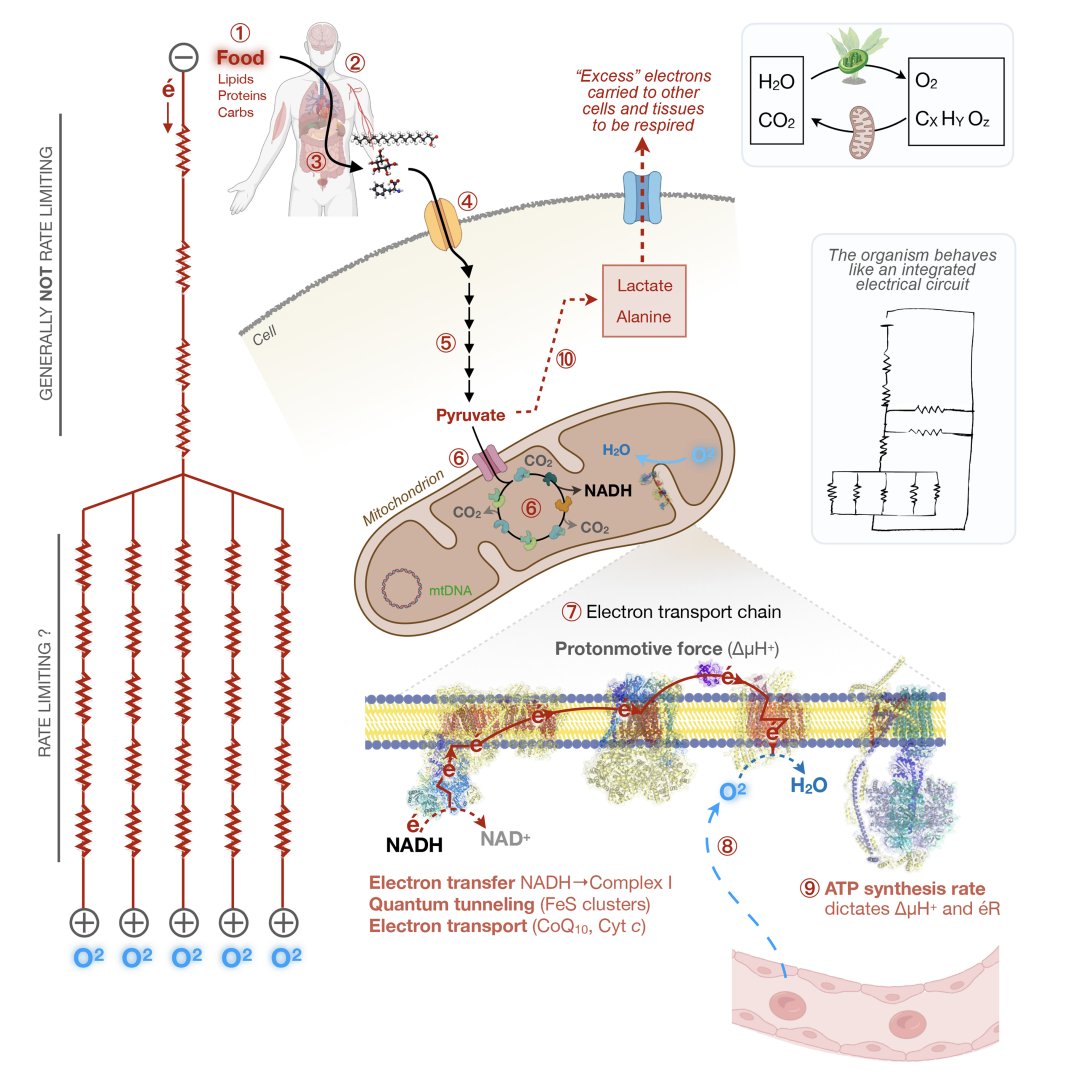
Martin Picard published one of the most important papers in modern biology in 2025.
Almost no one outside a small circle of researchers has heard of it.
The Energy Resistance Principle may explain disease, aging & energy crashes — from first principles.
Here’s the framework:🧵
30
284
1,440
114,070
Shahaf Peleg 🌅 retweeted
Apr 15
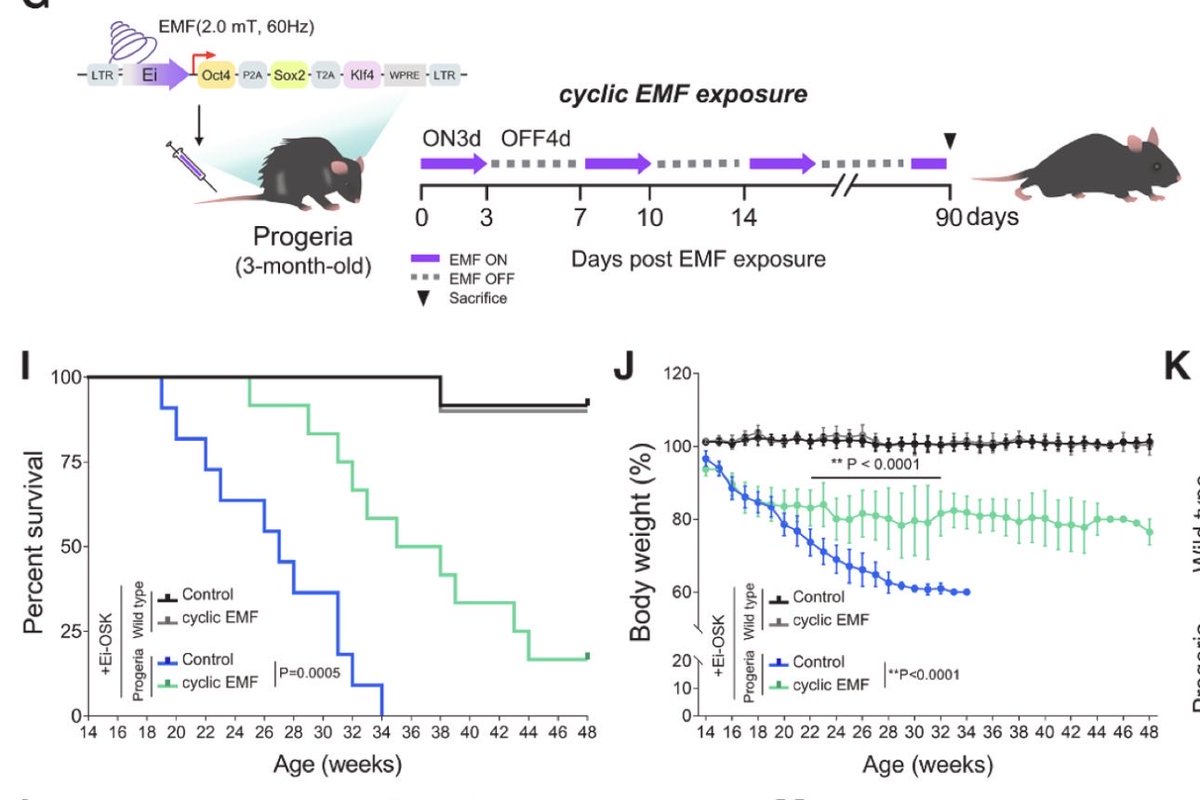
REMOTE CONTROL MICE! A group from Seoul has just published in Cell that they’ve discovered a crazy-weird protein (Cyb5b) that can be used to turn on any gene when exposed to EMFs!
They used it to turn on OSK and extend the lifespan of a progeroid mouse. More to come on this…
57
309
2,064
620,580
Apr 2
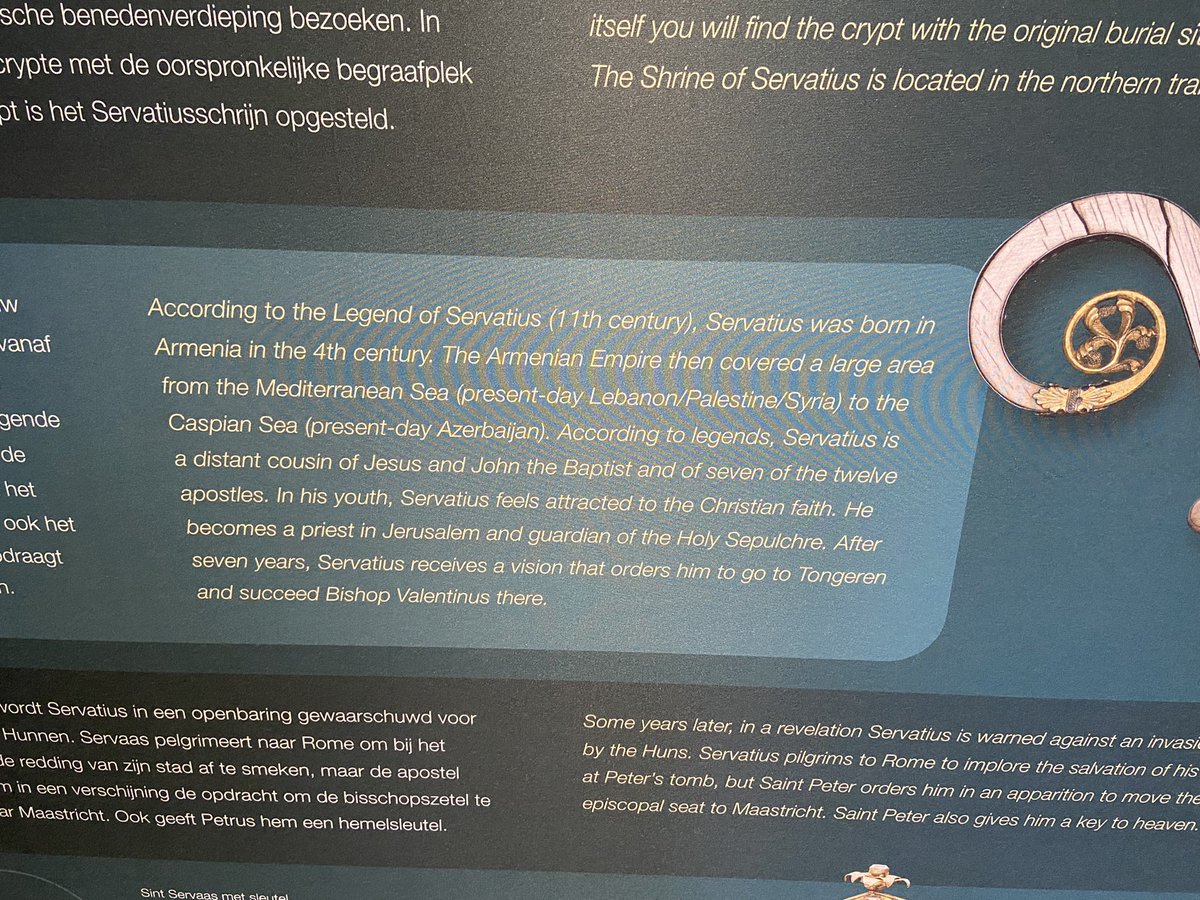
Welcome to St. Servatius - where everyone is welcomed, unless, off course, you happen to be from Israel…
According to them, there isn’t such thing as Israel
1
1
67
Shahaf Peleg 🌅 retweeted

Mar 18
A new finding after stopping GLP-1 drugs in a large cohort with Type 2 diabetes: rapid erosion of CV benefit/protection
New @bmj_latest by @zalaly @Biostayan
bmjmedicine.bmj.com/content/…
See thread: x.com/zalaly/status/20343230…

Mar 18

What happens to the heart when people stop GLP-1 drugs?
The short answer: nothing good.
New from our team: a study of 330,000 people in @BMJMedicine
🧵

28
125
436
98,101
Shahaf Peleg 🌅 retweeted

Mar 13
Richard Feynman’s savage takedown of pseudo-science still burns in 2026:
“Social science is an example of a science which is not a science. They follow the forms… but they don’t get any laws. They haven’t found out anything.”
He goes harder:
Experts who “sit at a typewriter and make up” claims — “organic food is better,” “this diet cures everything” — as if it’s settled science, when no rigorous experiments or checks have been done.
Feynman:
“I know what it means to really know something.
How careful you have to be. How easy it is to fool yourself.
I see how they get their information… and I can’t believe that they know.”
The Nobel physicist calls it straight: most of what passes for “expert” opinion is noise dressed up as knowledge.
In an age drowning in TikTok “science,” influencers, and clickbait studies — Feynman’s 1:52 rant feels more relevant than ever.
Who’s the biggest pseudo-expert that grinds your gears right now?
Clip is timeless fire — watch it and feel the clarity.
309
2,398
8,987
530,621
Shahaf Peleg 🌅 retweeted

DR is the oldest intervention to extend max lifespan, and still the strongest we have for mammals. Yet after a century of research, many key questions remain. In our latest @TheFangGroupUiO paper with 310 refs in @NatureAging we try to answer this... 🧵🧵
nature.com/articles/s43587-0…
15
25
71
11,877
Feb 14
I find that one of the important thing I have learned the last few years is trying to separate those investors that invest in aging for the sake of their own financial profit, vs the investors that invest to see real progress in the field.
The latter is far more rare
3
154