We provide alternative education opportunities to 18 via tech stuff. Our focus is on employability skills in the digital tech space. Reg'd charity in Nigeria.
Joined August 2020
- Tweets 1,826
- Following 354
- Followers 205
- Likes 2,516
96 Photos and videos

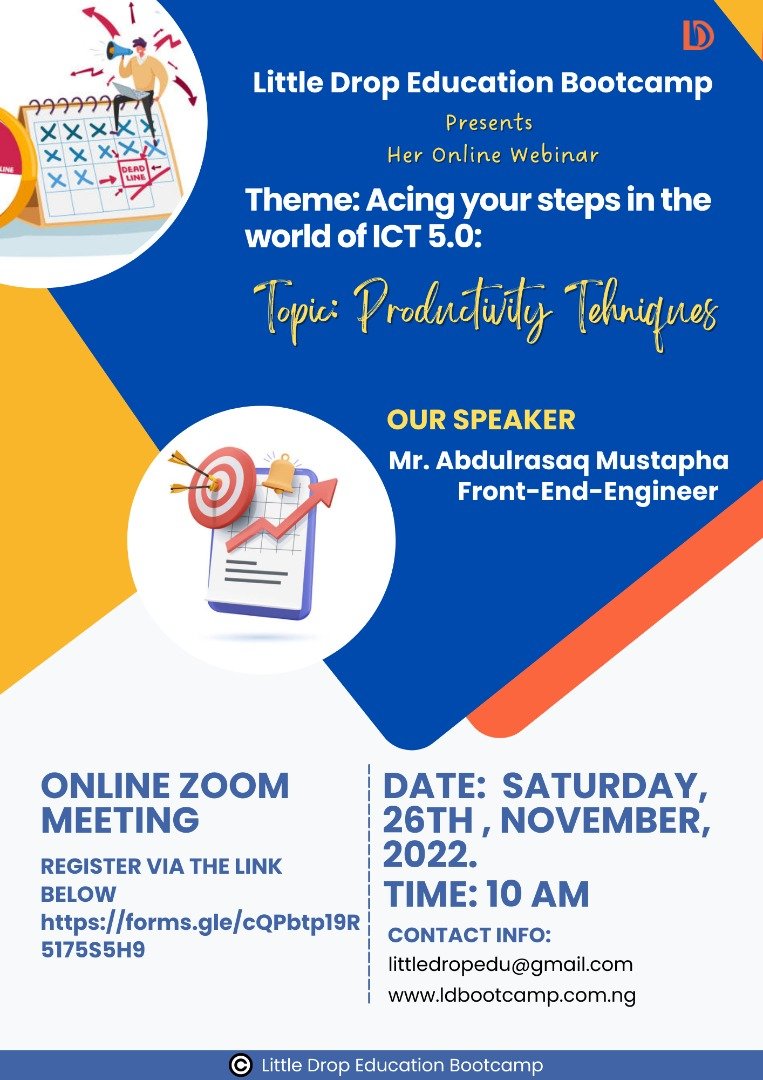
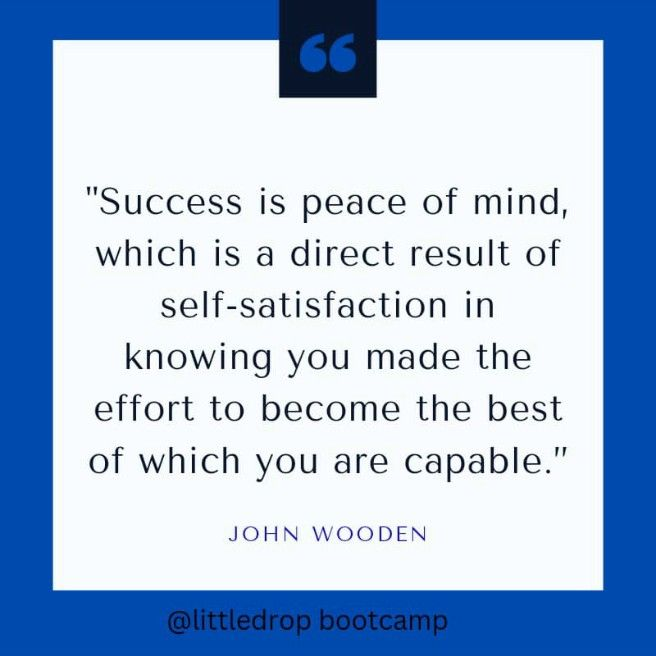
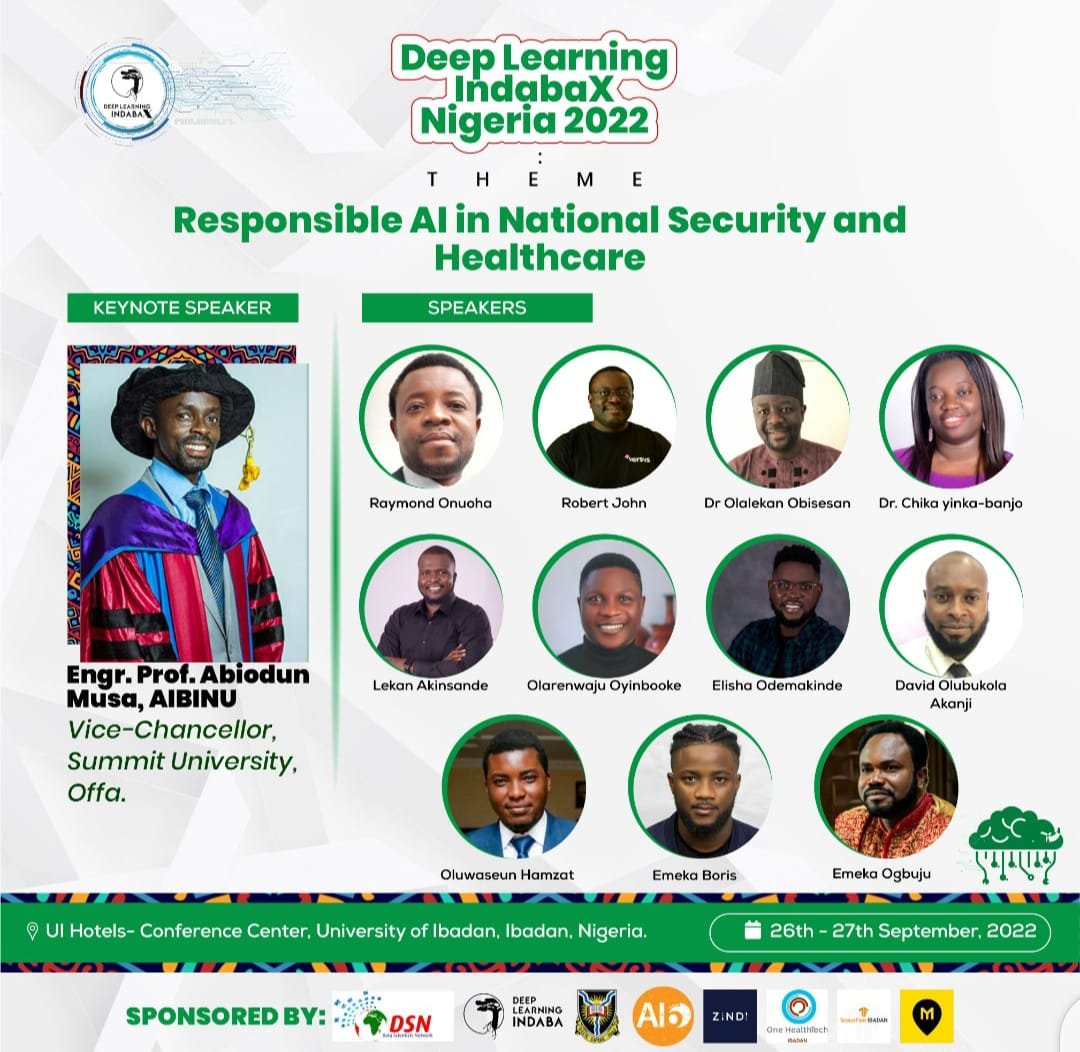
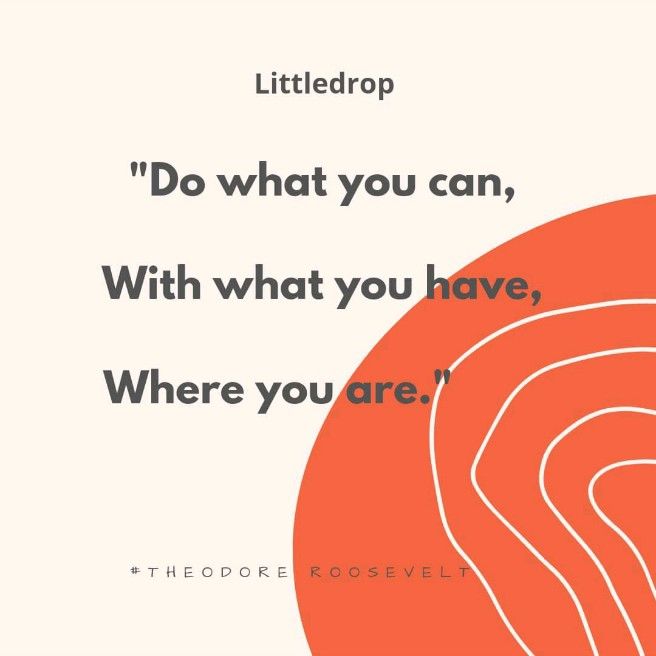



RT @ChristianLindke: @JonHaidt Ever since Pam Mueller and my friend Danny Oppenheimer published their study on the pen being mightier than…
2
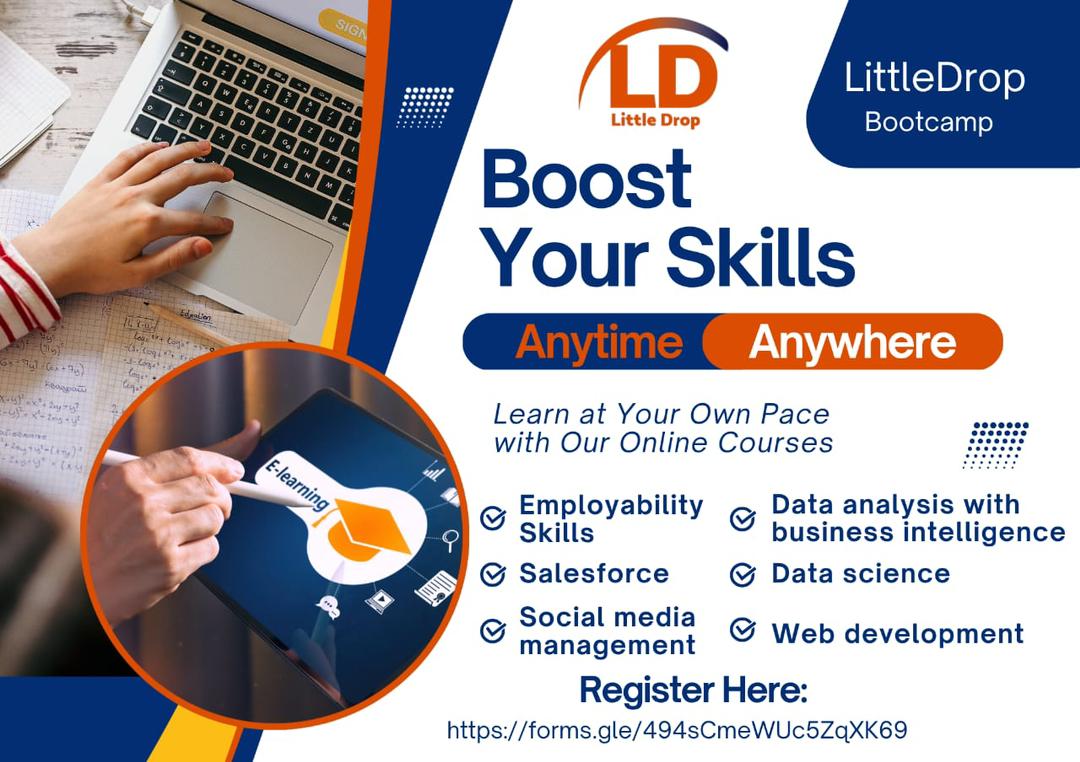
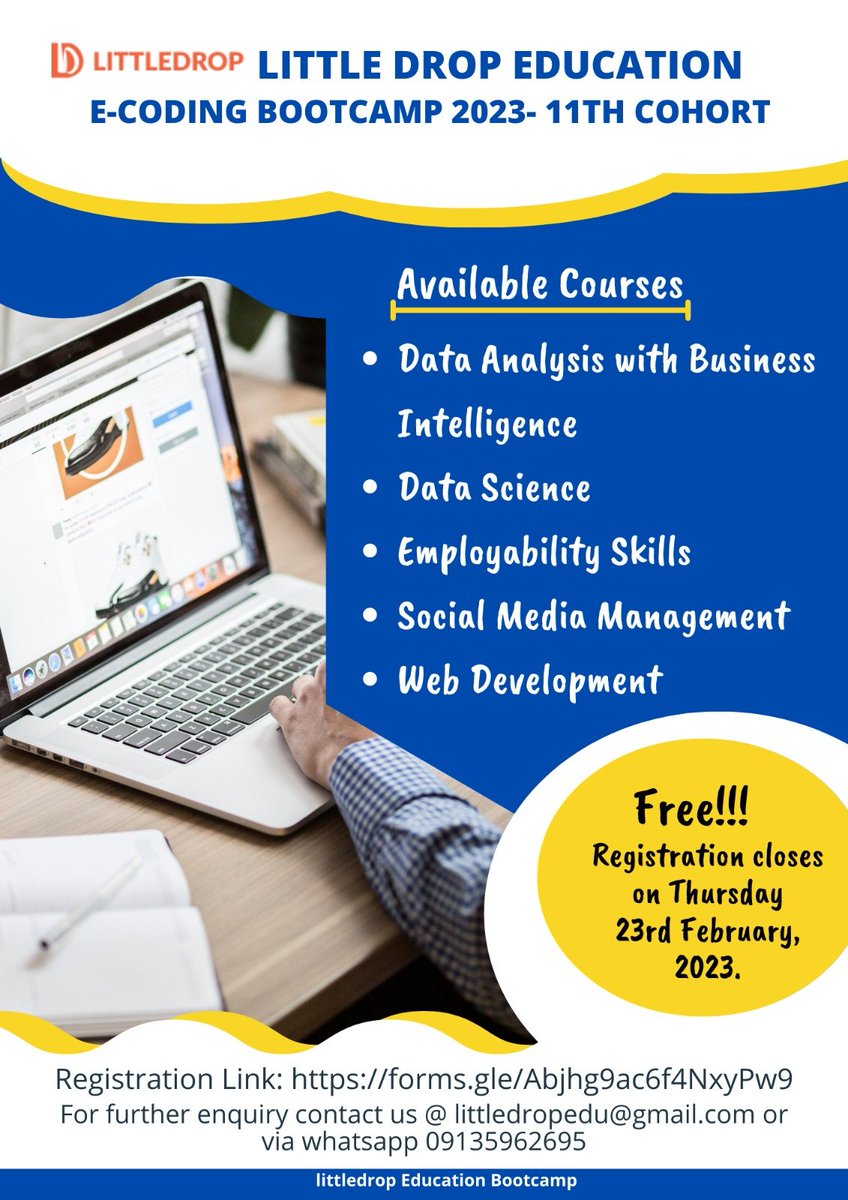
Unlock the skills that top companies are looking for!
and secure your spot at *NO COST*.
Register now and start your journey towards high-income opportunities *FOR FREE*.
📌 Registration closes on 17th of December, 2025.
👉 Fill the form to get started: forms.gle/494sCmeWUc5ZqXK69
1
11
Little Drop Coding and Non-Coding e-Bootcamp retweeted
Don’t forget to join us for Series 7.0 — a power-packed session titled “AI is Here—Are You Ready?” with Joye Sonubi!
Discover how both coders and creatives can leverage AI
Date: 25th October 2025, 5:00 PM
Don’t miss this! Secure your spot now 👇
🔗 forms.gle/mpT9Yn7axf6VJuzw7
1
1
18
Little Drop Coding and Non-Coding e-Bootcamp retweeted

15 Oct 2025
IBM reported that 1 in 4 public Wi-Fi hotspots is unsecured. In Nairobi, unsecured café hotspots are a
growing target for data interception.
Risks include “man in the middle” attacks, credential theft, and malware injection.
Best practices:
● Use VPN for sensitive transactions.
● Avoid banking/shopping on public hotspots.
● Default to mobile data when possible.
Remember: convenience shouldn’t come at the cost of your privacy.
Beware and be aware
4
91
294
18,535
Little Drop Coding and Non-Coding e-Bootcamp retweeted

14 Aug 2025
Make Something Wonderful is 250 pages of Steve Jobs in his own words, speaking directly to you. The book contains some of Steve's ideas that I've never found anywhere else.
Notes from the book:
1. He didn't care about being right. He cared about being excellent.
2. His mind was never a captive of reality.
3. He said working with great people gives you access to wisdom that you can't buy for love or money.
4. He believed technology should be streamlined and practical, simple and sophisticated, and that it should be a tool for enhancing creativity as much as productivity.
5. He believed you should ambush your customers. Meet them where they are.
6. His ideas were not arguments, but intuitions. He had a true inner freedom and an epic sense of possibility.
7. He gave an extraordinary amount of thought to how best to use our fleeting time.
8. By the time he was thirty he was the public face of a Fortune 500 company.
9. At Apple’s first board meeting he put his bare feet on a conference room table.
10. He said you should think of your life as a rainbow arching across the horizon of this world. You appear, have a chance to blaze in the sky, then you disappear.
11. He possessed unbelievable rigor that he imposed first, and most strenuously, on himself.
12. He saw clearly (1) what was not there, (2) what could be there, (3) what had to be there.
13. He said early Apple employees were more like poets and painters than cold technologists. That the passion they put into their products were completely indistinguishable from other creative fields. He said their work was a form of love.
14. He had a verbal mastery that was obvious at a young age. He used simple, descriptive language, told stories, and repeated lines and ideas that were important.
15. He thought it was inevitable that computers would be the dominant medium of human communication. He said this in 1983.
16. He had a talent for spotting markets full of second-rate products.
17. He said you could tell how important a product was based on the amount of time people spent interacting with it. As a result he thought it was inevitable that more design talent would shift from the automobile (1 or 2 hours a day) to computers (6 hours a day). He said this in the 80s.
18. He said that books kept him out of jail and that it’s a shame there are so many mediocre teachers.
19. Like many great entrepreneurs before him, Steve knew what he wanted to do, but didn't know how to do it yet. He said he wanted to make an insanely great computer that was the size of a book. What he described sounded a lot like an iPad. He said this in the 80s.
20. He believed that you should use your unique set of talents to make things that make the lives of other people better. Most people just take. He said "the ability to put something back into the pool of human experience is extremely neat."
21. He would tell his team “You work for Apple first and your boss second.” He felt strongly about that.
22. He was constantly placing the products he was making in a historical perspective, like comparing the Macintosh to the invention of the telephone.
23. He believed you needed to give yourself more time to make mistakes. He said his taste got more refined as he made mistakes. He said that making mistakes over a long period of time made his aesthetics better.
24. He said the key ingredient to making something great was time.
25. He said he wanted to spend his life building things. He could have retired to a beach in his 20s and thought that was disgusting.
26. He was interested in learning how to hone a company down to its essence.
27. You read this book and a thought jumps out at you: How many people are willing to go through a decade of failure without quitting? Steve had the capacity to take pain.
28. He believed it was better to focus on what you're actually passionate about, instead of what you think will make you the most money. He made the most money that way.
29. He listened to older, wiser entrepreneurs and let them shape and mold his thinking.
30. He wasn't afraid to fail, but had to coach himself to adopt that trait. He didn't want to fail, but he wasn't afraid of it.
31. He said don't let your differentiation evaporate.
32. He said if you let your differentiation evaporate the only solution is innovation.
33. He believed great ideas don't map onto corporate hierarchy.
34. He was incapable of thinking that his work and his life were different, separate things.
35. He said the most important things in life are not the goal-oriented, materialistic things. He said you should tap into the world’s magical, mystical, and artistic sides.
36. He paid attention to subtle insights. He was guided by intuition.
37. He didn't believe in the concept or a career, or think it was wise to follow well-worn paths laid out by others.
38. He said most people make the mistake of not thinking about death. He said: "For me it’s the opposite: to know my arc will fall, makes me want to blaze while I am in the sky."
39. He thought Walt Disney had a great idea: Edit before you make it.
40. He said no amount of technology can turn a bad story into a good story.
41. He believed storytellers were the most powerful people in the world.
42. He believed if you didn't have great people you were doomed.
43. He found great people by looking at great results and finding out who was responsible for them.
44. This is how he interviewed people: "In an interview I will purposely upset someone: I’ll criticize their prior work. I’ll do my homework, find out what they worked on and say, “God, that really turned out to be a bomb. That really turned out to be a bozo product. Why did you work on that?” The worst thing that someone can do in an interview is to agree with me and knuckle under. What I look for is for someone to come right back and say, “You’re dead wrong and here’s why.”
45. He believed the job of the leader was to make sure the work is as good as it should be, and to get people to stretch beyond their best.
46. He believed the job of the leader was to cajole, and beg, and plead, and threaten at times—to do whatever is necessary to get people to see things in a bigger and more profound way and to have them do better work than they thought they could do.
47. He believed the priorities of the leader were (1) recruit, (2) set an overall direction, and (3) inspire and cajole and persuade.
48. He believed a creative company should have a risk-taking, creative environment on the product side and a fiscally conservative environment on the business side.
49. He believed you have to choose what you put your love into really carefully.
50. He had a remarkably consistent set of values that he held dear: Life is short; don’t waste it. Tell the truth. Technology should enhance human creativity. Process matters. Beauty matters. Details matter. The world we know is a human creation—and we can push it forward.
51. He thought when deciding what to work on that you should ask yourself: "What do I give a shit about?" And then go do that.
52. He would never sell Apple. Not for all the money in the world.
53. He believed you should master the basics, simplify the product line, and focus on the gems.
54. He believed marketing was about values. That the world is noisy and you should focus on telling customers what you believe in and what you stand for.
55. He believed one way to invest in yourself is by exploring uncharted paths that are different from your past experiences. You know it's an uncharted path when you have no idea where it will lead.
56. He believed that people that think they’re following a safe path pay the highest price of all. They won't realize it for a decade or two — and by then it's too late.
57. He didn't believe in resting on laurels or sleeping on wins. Make something great. Then do it again.
58. He imagined what reality lacked and set out to remedy it.
59. He believed in straight forward, clear communication. If the work isn't good enough you have to tell them straight: "This isn't good enough. I know you can do better. You need to do better. Now go do better."
60. He remained driven by a mission to "put something back into the pool of human experience."
61. He believed in the basics: great product, great marketing, great distribution.
62. He believed you must keep up with innovations in distribution.
63. He believed brands take decades to build.
64. He would capture the evolution of his own thinking by emailing himself.
65. He viewed Apple has the world's premier bridge builder between normal people and the exploding world of high technology.
66. He wanted to demystify technology.
67. He believed excellence was a habit and we are what we repeatedly do.
68. He believed you should be curious about what came before you and you should spend time to learn about it.
69. He believed you simply could not mix messages when selling something new. A customer can barely handle one great new idea, let alone several.
70. He said it's a circus world and you'll never know what's around the next corner.
71. He believed in management by values. Which means (1) find people that want the same things you want and (2) figure out the best way to get those things along the way.
72. He believed in the mantra: Finding the right people is half the battle.
73. He said you can't plan to meet the people who will change your life.
74. He believed everything is temporary — there is no such thing as safety.
75. He believed that your life is a story and that you should remember that your life is a story and that you should always act like your life is a story.
76. He believed in rejecting dogma, which he defined as living with the results of other people's thinking. He said that dogma can be so loud that it can drown out your own inner voice and you should avoid this.
77. He believed a great place to start was by improving a product you hate. If you can make something you love, you can convince other people to love it too.
78. He said all glory is fleeting and you should just get back to making something wonderful.
I'm really proud of the episode I made about this book. You'll learn a lot from Steve by listening to it. You can watch/listen to it in full here, or in your favorite podcast app.
24
98
593
206,040
Little Drop Coding and Non-Coding e-Bootcamp retweeted

23 Sep 2025
Nine years ago, I launched Founders (@FoundersPodcast).
Today, I'm launching a new podcast called David Senra.
The first episode goes live this Sunday. Subscribe wherever you watch or listen to podcasts.
Founders will still come out every week.
@scicomm // @hubermanlab
336
206
2,638
1,504,711
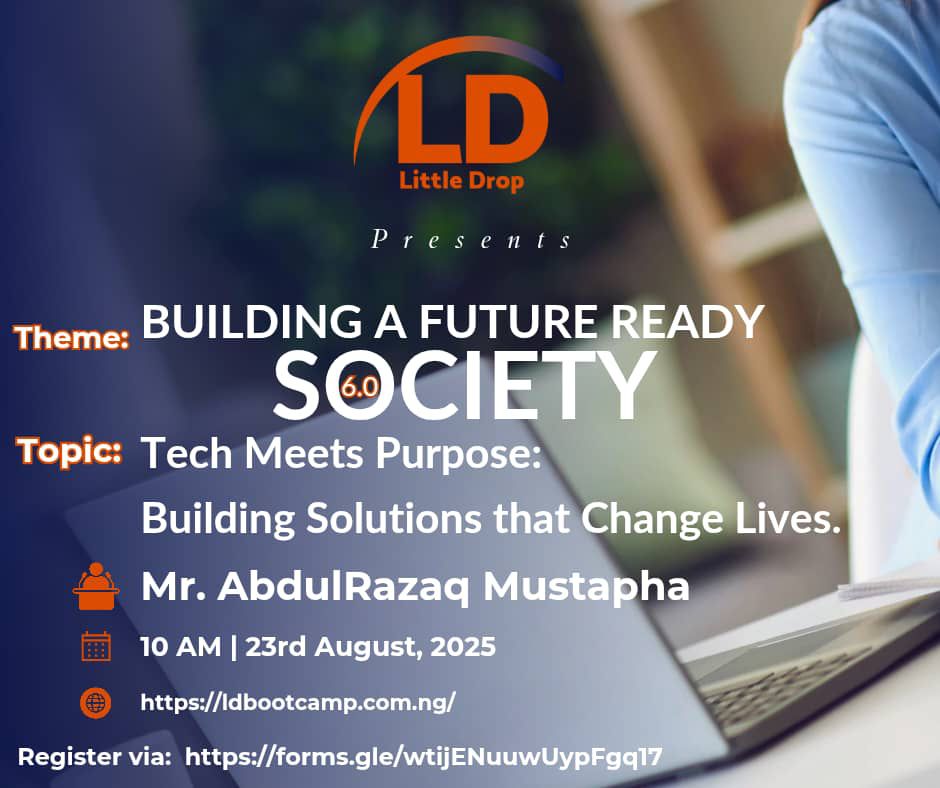
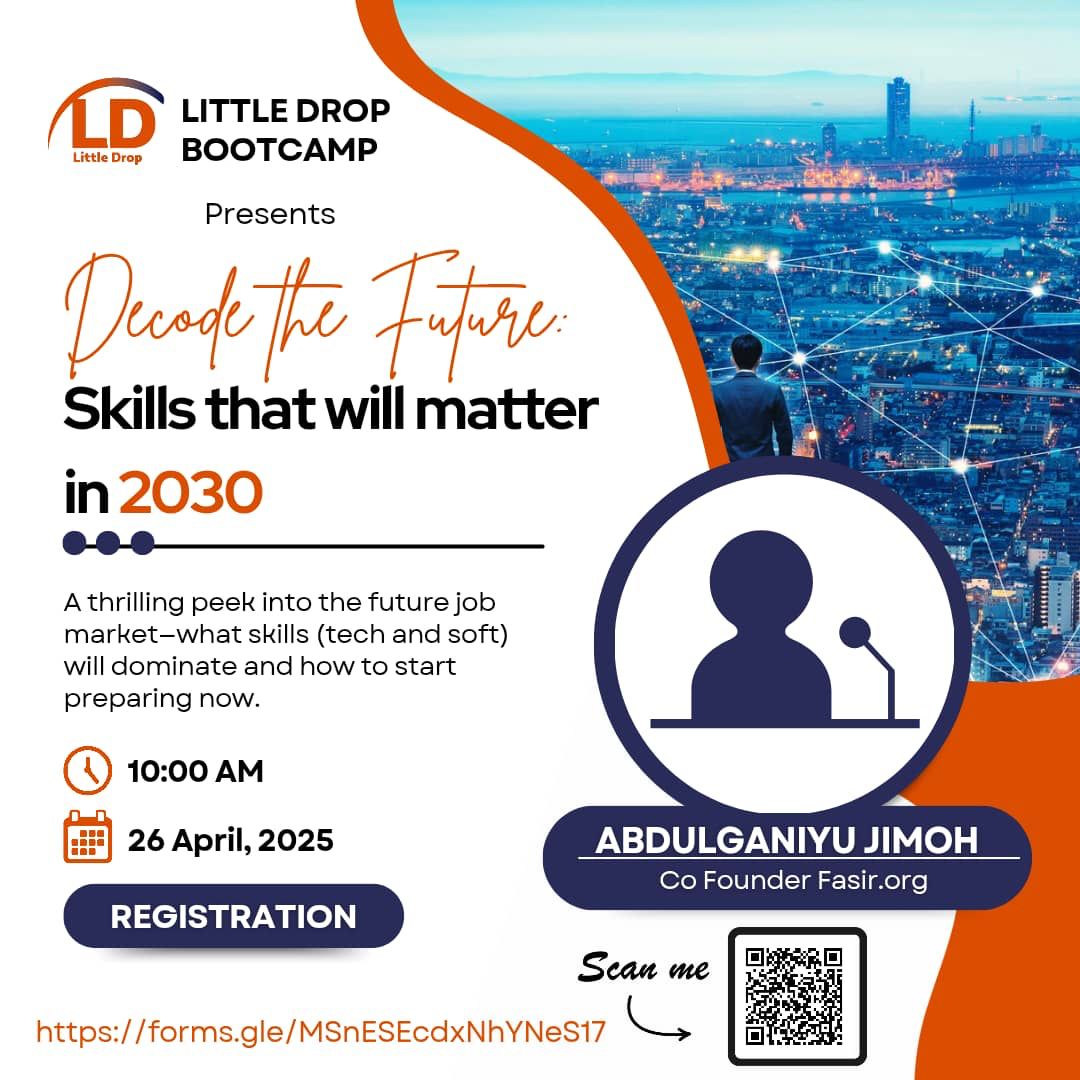
We are excited to bring you Series 6.0 webinar lineup!
This edition is packed with insights, inspiration
🗣 Topic: Tech Meets Purpose: Building Solutions that Change Lives
🎙 Speaker: Abdulrasaq Mustapha
🔗 Registration Link: Click here to register👉forms.gle/wtijENuuwUypFgq17
1
12
Little Drop Coding and Non-Coding e-Bootcamp retweeted

29 Jun 2025
The most enduring marker of success isn't wealth, fame, or power. It’s what we create and contribute to others.
In the short run, status symbols capture attention. In the long run, achievement is judged by impact.
The highest accomplishment is improving the lives of others.
83
609
2,346
149,811
RT @sapinker: The humanities should be harder, by @mattyglesias. Not just humanities. Even at Harvard I feel pressure from Intro Psych stud…
252
Little Drop Coding and Non-Coding e-Bootcamp retweeted
7 Aug 2025
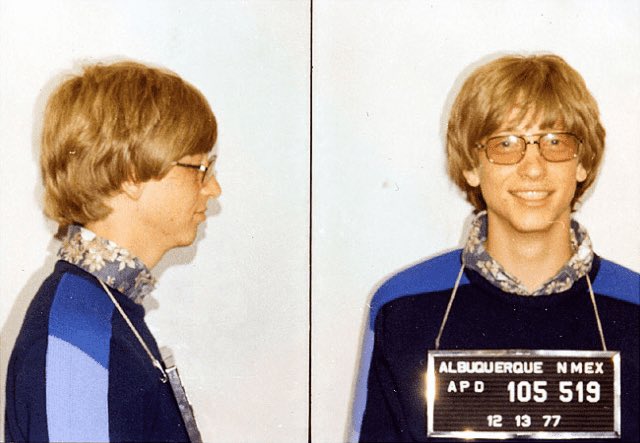
A few surprising things I learned from reading a biography about a young Bill Gates:
1. He said he went to Harvard to learn from people smarter than he was —and left disappointed.
2. Everything he did, he did to the max.
3. “I can do anything I put my mind to.” (He was 11 when he said this)
4. “We really got into computers. I became hardcore. It was day and night." (He was 13)
5. He would ignore everything else and stay out all night working at the computer lab. (He was in 9th grade)
6. His parents said the computer had a supernatural hold on him.
7. Gates devoured everything about computers and how to communicate with them. He would teach himself as he went.
8. He read obsessively. Biographies. He said he wanted to know how the great figures of history thought.
9. He would go around telling people he would be a millionaire by the time he was 30. (He overshot that goal by 350x and was a billionaire by 31.)
10. He talked about the future as if his success was predestined.
11. He would work 36 hours straight, collapse for ten hours, wake up, eat a pizza, and then go back at it. If that meant he was starting again at 3am, so be it.
12. Paul Allen’s mom described Bill as an edgewalker.
13. He believed the computer industry was about to reach critical mass and launch a technological revolution of astounding magnitude. He could either lead the revolution or be swept along by it.
14. He was sure of himself. Aggressive. Intimidatingly smart.
15. He had a hard-nosed, confrontational style. He made a lot of enemies. He stepped on a lot of toes.
16. His intensity could boil over into raw, unthrottled emotion.
17. He had giant goals from the very beginning. He said that Microsoft's mission was to provide all the software for microcomputers.
18. He would recruit high-IQ insomniacs. Young people with a passion for computers. People who wanted to drive themselves to the limits of their ability and endurance.
19. He told his employees to focus on personal performance over management.
20. He was very cautious with Microsoft’s money. He wanted a 1 year buffer. He didn’t need to raise VC. There was no unnecessary overhead.
21. He sustained Microsoft through tireless salesmanship. For several years, he alone made the cold calls and haggled, cajoled, and browbeat the hardware makers, convincing them to buy Microsoft's products.
22. He was the best kind of salesman there is: he knew the product and he believed in it.
23. Microsoft was lean. When they got to 30 employees it was just Bill, a secretary, and 28 programmers. He wrote all the checks, answered the mail, took the sales calls.
23. Bill said if he lost a 50k contract he considered it a 100k loss because Microsoft lost 50, and the other company gained 50. He wanted to kill competitors.
24. He had a monomaniacal quality. He would focus on something and stick with it. He had a determination to master whatever he was doing. He was deciding where he was going to put his energy and to hell with what anyone else thought.
25. This is worth reading in full:
When the chief counsel for Pertec came to Albuquerque to assess the situation and talk with Gates, he took one look at the long-haired, scraggly, 21-year-old and decided the legal battle against Microsoft was going to be easy. Roberts had warned Pertec that it would have its corporate hands full with Gates, but no one listened to him. “Pertec kept telling me I was being unreasonable and they could deal with this guy," Roberts said. "It was a little like Roosevelt telling Churchill that he could deal with Stalin."
26. Microsoft was the first company in history to sell more than a billion dollars of software in a single year.
27. He was the undisputed mastermind of Microsoft.
20
75
708
154,021
Little Drop Coding and Non-Coding e-Bootcamp retweeted

24 Jul 2025
🚨| Sir Lewis Hamilton was asked 'why' he made documents for the team, he gave a detailed answer and highlighted why he thinks Ferrari has 'not had the success it deserves':
"The reason for it is that I see a huge amount of potential within this team. The passion, nothing comes close to that. It is a huge organisation, and there's a lot of moving parts, and not all of them are firing on all the cylinders that [they] need to be."
"That's ultimately why the team's not had the success that I think it deserves. So I feel that it's my job to challenge absolutely every area, to challenge everybody in the team, particularly the guys that are at the top who are making the decisions."
"If you look at the team over the last 20 years, they've had amazing drivers. You've had Kimi, you've had Fernando, you've had Sebastian, all world champions, however, they didn't win a World Championship [with Ferrari, apart from Raikkonen]."
"And for me, I'm like, I refuse for that to be the case with me. So I'm going the extra mile."
“I've obviously been very fortunate to have had experiences in two other great teams. And while things for sure are going to be different, because there's a different culture and everything, I think it's sometimes if you take the same path all the time, you get the same results. So I'm just challenging certain things."
"They've been incredibly responsive. We've been improving in so many areas, through marketing, through everything we're continuously delivering for sponsors. The way the engineers continue to work, there's lots of work and improvements to be made, but very responsive."
"I guess ultimately, just trying to really create allies within the organisation and get them G-ed up, getting them pushing for ‘I'm here to win’, and I don't have as much time as this one here (points to Kimi Antonelli), so it's like it's crunch time."
"I truly believe in the potential of this team. I really, really believe that they can win multiple world championships moving forwards, they already have an amazing legacy, but during my time, that's my sole goal."
[via The Race]

73
575
8,588
550,685
Little Drop Coding and Non-Coding e-Bootcamp retweeted

20 Jul 2025
FYI: If you post your bookshelves, I’m zooming in on the titles and judging you.
326
120
2,557
164,850
Little Drop Coding and Non-Coding e-Bootcamp retweeted

18 Jul 2025
Practice data cleaning using these 'Messy' dataset as a beginner in Data Analytics:
8
64
467
35,010
Little Drop Coding and Non-Coding e-Bootcamp retweeted
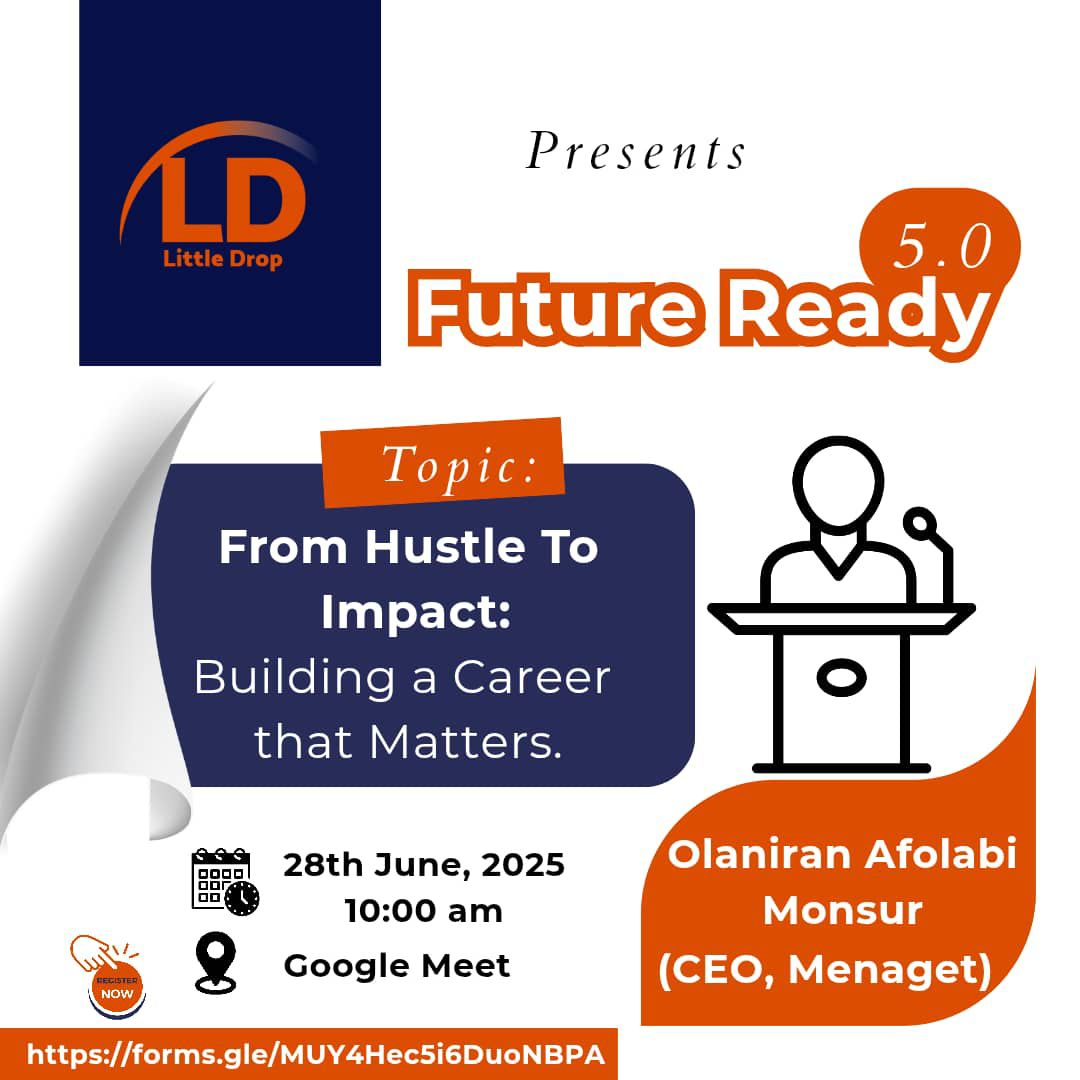
🚀 WEBINAR ALERT!Join us for Future Ready 5.0
🎯 Topic:From Hustle to Impact: Building a Career that Matters
Speaker:Olaniran Afolabi Monsur CEO Menaget
📅Date:28th June 2025
⏰Time:10:00 11:30 am
✅ Register here: forms.gle/MUY4Hec5i6DuoNBPA
🔗 Webinar Link: calendar.app.google/15cSG49C…
1
1
20
The Webinar is on now!!!
You can still join in
Click on the link below to join
calendar.app.google/hW2hHD2C…
5
Little Drop Webinar series
May 31 • 10:30 AM – 12:30 PM • View details & RSVP calendar.app.google/hW2hHD2C…
10
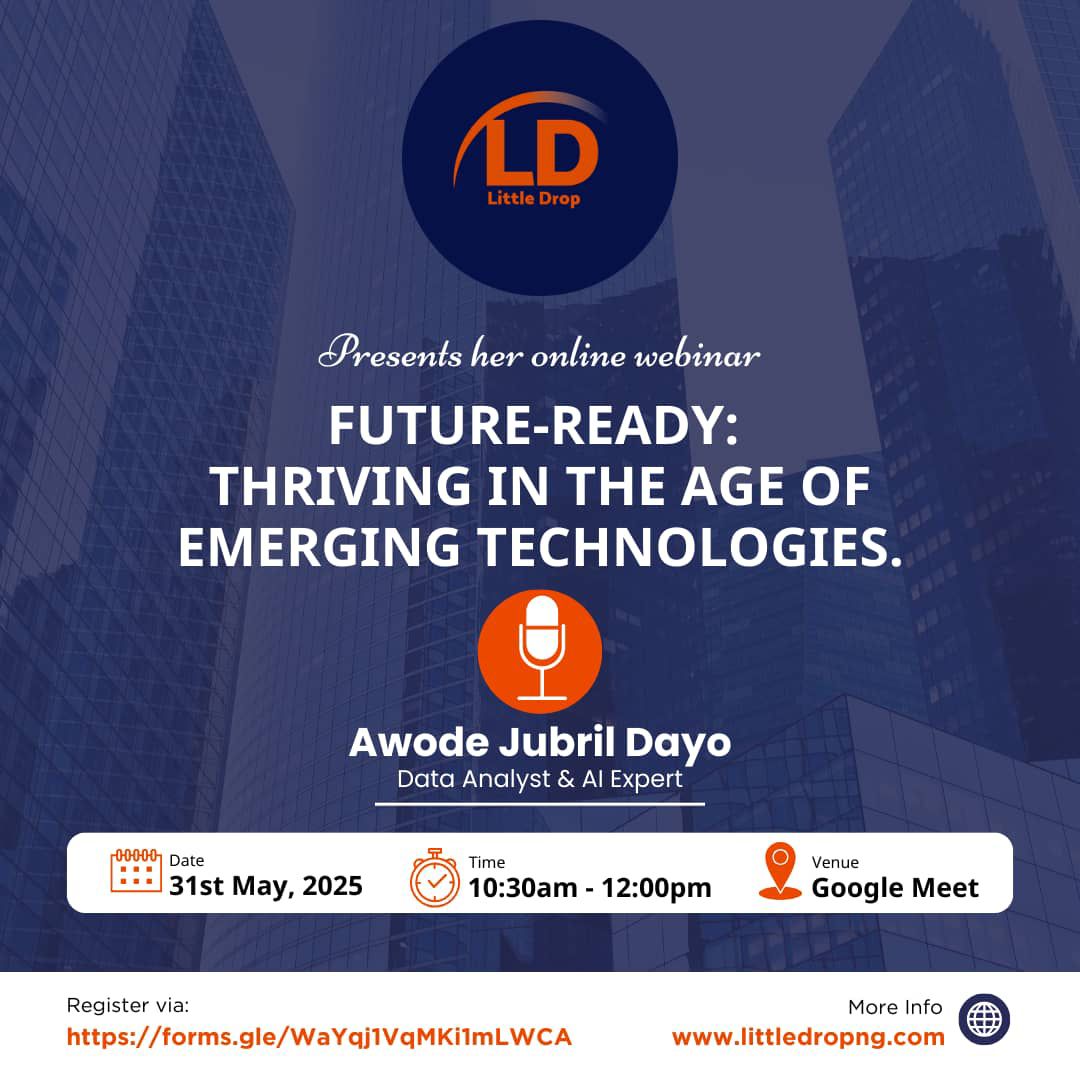
Join us for the LITTLEDROP Webinar Series
*Topic*: Future-Ready: Thriving in the Age of Emerging Technologies
📅 Date: Saturday, 31st May, 2025
⏰ Time: 10:30 AM – 12:30 PM (WAT)
*✅ Register here: forms.gle/WaYqj1VqMKi1mLWCA*
*🔗 Webinar link*: calendar.app.google/Xkag8nDM…
1
88
Little Drop Coding and Non-Coding e-Bootcamp retweeted

20 May 2025
Your vision deserves more than just a plan — it deserves execution.
Gonie Project Management delivers innovative solutions that turn ideas into impact.
Ready to bring your vision to life? Visit goniepm.com and let’s get started

1
3
19