
***VIEWS ARE MY OWN*** Twitter account of the @EMSAvenger TikTok channel dedicated to evidence-based medicine and best practices.
Joined June 2010
- Tweets 5,575
- Following 933
- Followers 1,296
- Likes 3,575
313 Photos and videos



21 Mar 2025
Get 20% off @FlightBridgeED 's #FAST25 conference in Lexington, KY with code EMSAVENGER10 until tomorrow at noon!
flightbridgeed.com/fast25/
2
262
21 Feb 2025
No, the most important step is ventilate and oxygenate. They can wait for Narcan. They can't wait for oxygen.
2
197
3 Feb 2025
You respond to a cardiac arrest for a patient who was just discharged home following open chest/open heart surgery. Do you prioritize transport for resternotomy? Or is their best chance an on scene resuscitation, particularly since mCPR would probably be inappropriate?
36%
Transport
64%
Scene
11 votes • Final results
252
28 Dec 2024
I asked a medic co-worker how many of the hugs she received every day were hugs she didn't want. The answer "Almost all of them."
28 Dec 2024

Yes. I ask every single time.
"May I _____?" is an entirely underused phrase.
3
434
EMS Avenger retweeted

24 Nov 2024
NAEMT is pleased to report that Sen. Joe Manchin and Sen. Susan Collins have introduced a Senate companion bill for the Treat In Place (TIP) Program pilot (H.R. 8977) — S. 5400. Take action! Ask your Senators and representative to support these bills. buff.ly/3M13jp9
2
20
711
17 Nov 2024
I'll be closing up shop here on Twitter soon. I never worked to establish myself here as much as I did on other socials, but it certainly fed me a steady diet of #FOAM for years. However, I wouldn't join it today if it was new. So time to leave. See you on #BlueskySocial
1
1
160
14 Nov 2024
What's the impact of body-worn cameras when EMS crews have them during out-of-hospital cardiac arrest? This Taiwanese study looked at the impact they would make on sustained ROSC when targeting 6 QIs (Taiwan has similar survival dates as the US).
tandfonline.com/doi/full/10.…
1
237
EMS Avenger retweeted

12 Nov 2024
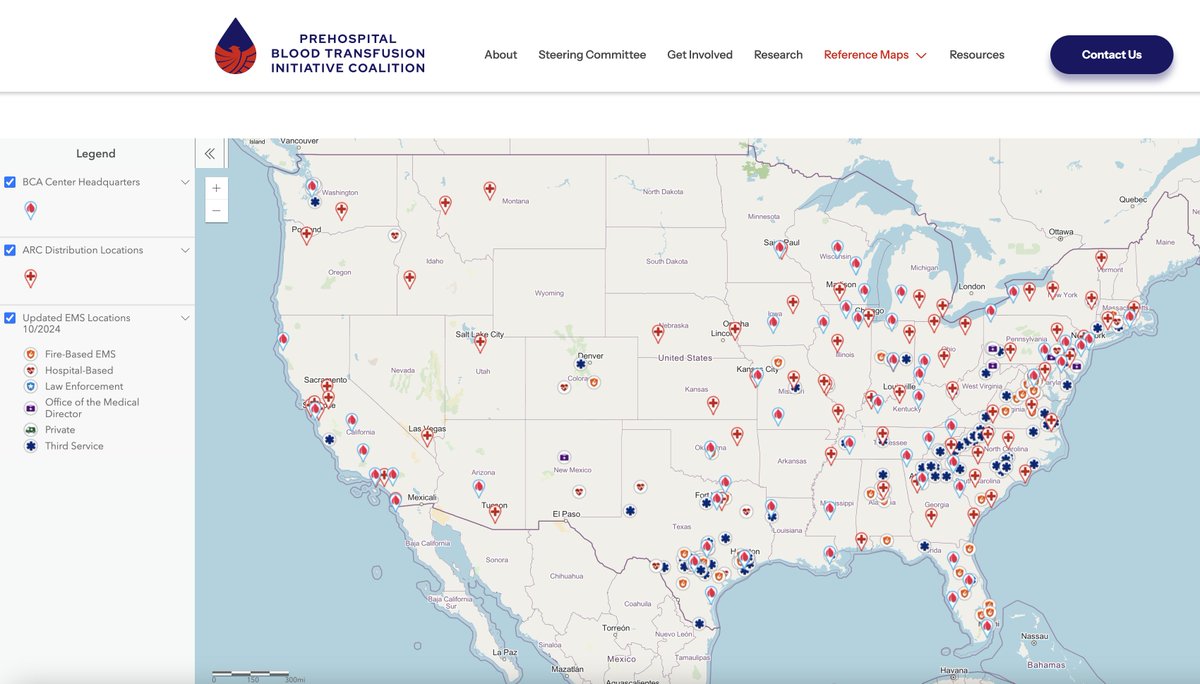
There are 184 pre-hospital #WholeBlood programs in the US.
Is your city on this list?
Check out the interactive map:
prehospitaltransfusion.org/b…
#Work as hard as you can to make it happen. Lives depend on it.
5
16
60
4,885
EMS Avenger retweeted

4 Nov 2024
It is time that prehospital systems begin transitioning their resuscitative sequence intubation to not begin the induction process until SBP >100, SpO2 >94%-E.Bauer @FlightBridgeED #AMTC24 @AAMS
1
2
13
382
31 Oct 2024
The long-awaited Paramedic-3 trial comparing IO to IV in Out-of-hospital cardiac arrest is out, and the results are that first-line IO access did not impact neurologically intact survival (No statistical differences between the two).
nejm.org/doi/full/10.1056/NE…
4
198
EMS Avenger retweeted

29 Oct 2024
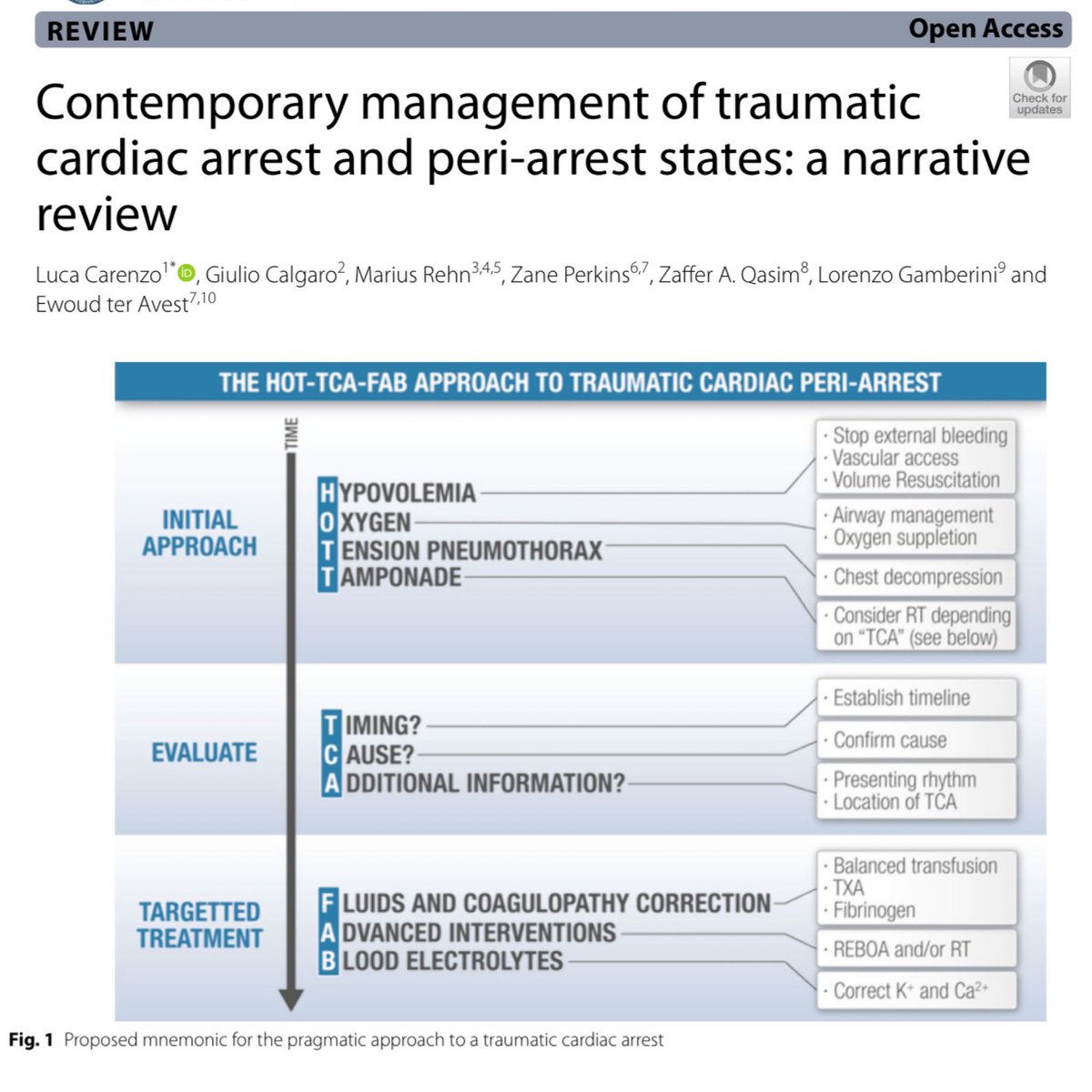
Outcomes in traumatic cardiac arrest have been improving but there’s still work to be done. Mnemonics are helpful in organizing thoughts and processes in high-stakes, high-intensity environments. 🎩 tip to the authors including @carenzmd
eddyjoemd.com/foamed/
17
63
4,093
22 Oct 2024
"No. No. Go!", anyone?
21 Oct 2024

🚨 Alarming Study on 911 Response Times 🚨
• Median time to transfer 911 calls between centers: 41 sec
• 90th percentile transfer time: 86 sec (almost 1.5 min!)
• Some agencies seeing transfer times up to 117 sec at 90th percentile
#6min2live
Source: doi.org/10.1080/10903127.202…
1
1
4
350
18 Oct 2024
After learning about the decision to allow blocked accounts to view your activity, I can't imagine that I'm staying on this platform. I still find some utility here, and that's actually why I feel it's important to leave. It wouldn't be impactful if there was no impact to be had.
1
151
16 Oct 2024
IO Epi associated with decreased #ROSC as compared to IV Epi in #OHCA despite time to delivery of first Epi being faster with IO.
tandfonline.com/doi/full/10.…
@DrKrankyPants
2
1
7
315
EMS Avenger retweeted
15 Oct 2024
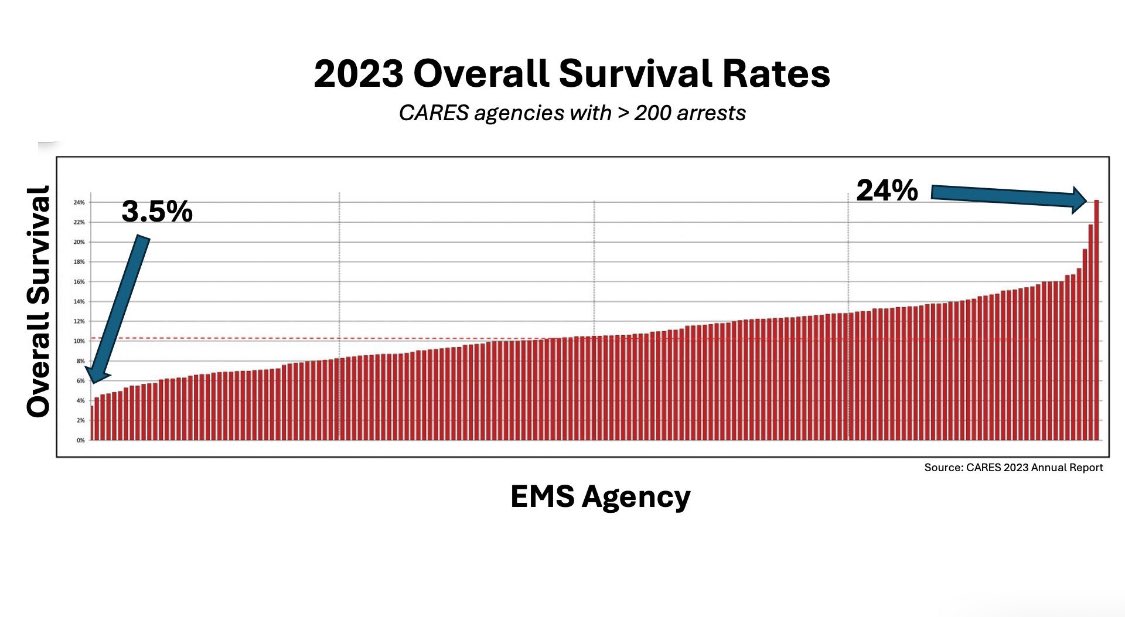
The graph below is from the @CARESRegistry 2023 Annual Report (with my annotations).
It shows that the highest performing EMS agency has an almost 700% increase in cardiac arrest survival compared to the lowest performing agency.
Would you want to know which cities these data represent?
I would.
@6Min2Live | @Gladwell
Data source: lnkd.in/gVfCZs_g
1
9
32
2,097
EMS Avenger retweeted
14 Oct 2024
In my 25 years of practice, I had never written a letter to the editor of a peer-reviewed medical journal.
In the past three months, my colleagues and I have written two.
Why? Because we felt the content of these two publications was significantly off course, and we felt compelled to offer a different perspective.
To my surprise, one of our submissions was relegated to the comment section of the journal, rather than being formally published.
The other was placed behind a paywall, despite the original article being open access.
Both letters address topics that I’ve dedicated many years to:
1. Management of Pre-hospital Pediatric Cardiac Arrest
2. Pre-hospital Whole Blood
I would value your thoughts on these editorials.
On a deeper level, innovation in medicine is difficult and it requires open and honest discourse. Everyone, including those of us not in the ivory tower, should feel safe speaking truth to power, as long as it can backed up with data.
Here are the links to the editorials:
JAMA Network Open Letter (scroll to the bottom)
jamanetwork.com/journals/jam…
Academic Emergency Medicine Letter
onlinelibrary.wiley.com/doi/…
For context here is the open access whole blood publication which states that pre-hospital transfusion does not have a 1-month mortality benefit.
onlinelibrary.wiley.com/doi/…
If you’d like a PDF of the Whole Blood letter, feel free to DM me, as it's not permitted to be shared on social media.
@markpiehl @SPARC2024 @RandiSchaefer8 @NAEMSP @FL_NAEMSP @LifeFlow__ @QinfloWarrior @dcfireems @noemsf

3
8
37
3,394
EMS Avenger retweeted

10 Oct 2024
This is ATRIAL FIBRILLATION. Fibrillating right atria and rapid ventricular response
22
546
3,801
251,650
EMS Avenger retweeted
3 Oct 2024
The FDA has approved Traumagel, a plant-based gel designed to rapidly stop bleeding and enhance the body’s natural clotting process. This development could be crucial for first responders, military personnel, and those providing care in remote locations.
7
138
498
42,701
2 Oct 2024
I watch a video like this and realize how progressive health nations and Americans take basic CPR and ACLS principles for granted.
1 Oct 2024

Wrong shock ⚡️
How many mistakes were made here?❓Tell me what you find wrong with this.
🙋♂️ I’ll start:
✅ Basic CPR training step 1 — It’s vital to carefully assess patient for responsiveness and normal breathing before initiating CPR.
😨 Seems like common sense, but performing CPR & ACLS on someone with a pulse or who doesn’t need it potentially cause harm to individual.
It leads to physical injuries, psychological distress, wasted time, and potential legal consequences.
🔎 Specifically, CPR and defibrillation, while lifesaving, come with risks. During CPR, common risks include rib and sternal fractures due to the force of chest compressions, particularly in older adults. These fractures can lead to lung injuries, such as pneumothorax (collapsed lung), or internal organ damage, including to the liver and spleen, potentially causing internal bleeding. Incorrectly performed compressions may also reduce blood flow to vital organs.
Defibrillation, used to restore normal heart rhythms, can cause burns to the skin from electrode pads or paddles. Misuse of the defibrillator, such as shocking a patient without a shockable rhythm, can further harm the heart.
There’s also a risk of accidental shock to rescuers or bystanders if proper safety precautions aren’t followed. Both procedures, while vital, must be executed carefully to minimize these risks.
❗️Don’t fight the victim!
🙋♂️Always follow ACLS Guidelines and be sure to take a good CPR class!
Thanks to @medicaltalks for this amazing video and they are a must follow!
Please DM for credit or removal. For educational purposes only and no copyright issue intended.
#cpr #acls #FOAMcc #cardiacarrest #icu #criticalcare #icunurse #anesthesia #anesthesiology #nurse #medicine #mbbs #medstudent #health #meded #sccm #sccmsome
1
5
475
EMS Avenger retweeted
1 Oct 2024
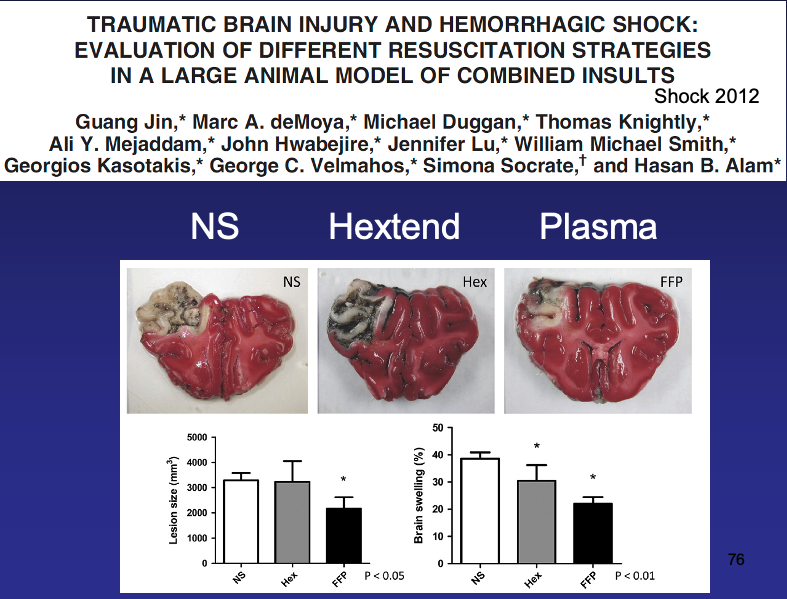
The images below demonstrate the outcomes of swine brains resuscitated using NS, Hextend, or Plasma, after TBI Hemorrhagic Shock. Plasma reduced the size of brain lesion and associated swelling in the model.
In 2018 the #PAMPer Study (501 trauma patients) showed that mortality at 30 days was significantly lower in the plasma group than in the standard-care group (23.2% vs. 33.0%; P = 0.03).
@PBCFR is now working with renowned trauma surgeon John Holcomb, MD to begin providing liquid plasma in the pre-hospital setting to patients with TBI. This treatment will health the endothelium and prevent the devastating secondary injuries often seen with TBI.
This is current practice in the trauma bay in hospitals across the globe, and we are now bringing this therapy closer to the point of injury, similar to what we've done with #WholeBlood.
A huge thank you to Chief Kennedy, Chief Charles Coyle, Kenneth Scheppke, MD, FAEMS, Dr. David Farcy, Dr. Rich Giroux, Chief Phil Olavarria, Dr. Tony Zitek, Madison Philbin, and the entire PBCFR team for making this happen.
1
4
19
1,546